 By Stephanie

Wondering how to tell if a couch is real leather without damaging it? Some genuine leather sofas look surprisingly similar to synthetic ones, making it difficult to judge by appearance alone. This guide shows you how to examine your couch safely, recognize misleading clues, and check whether different parts use the same upholstery material. You’ll also learn what to do when the evidence is inconclusive, whether you’re checking an older living room couch or considering a new one.
Table of Contents
How to Check If Your Couch Is Real Leather at Home
Here’s how to tell if a couch is real leather at home: start with the manufacturer’s material information, then inspect accessible edges, grain, and texture. This order matters because written specifications provide a stronger starting point than appearance or feel alone. You don’t need special equipment or destructive tests to make an initial assessment.
Step 1. Check the Label and Material Information
Start by looking for the manufacturer’s label, which may be attached beneath the sofa or along the underside of the frame. If the label only provides manufacturing or safety information, check your original receipt, product manual, or the manufacturer’s website.
Look for specific upholstery descriptions:
Full-grain or top-grain leather: Made from real animal hide.
Genuine leather: Indicates real leather but doesn’t specify the exact grade or finish.
PU or faux leather: Synthetic materials designed to resemble leather.
Bonded leather: A composite containing leather fibers combined with binders.
A missing material label doesn’t automatically mean your couch is fake leather. It simply means you’ll need additional evidence.
Step 2. Inspect Accessible Edges and Backing
If you can safely access an unfinished leather edge or a matching upholstery sample, examine its structure. Real leather typically has a dense, fibrous underside that resembles suede. Some synthetic upholstery has a woven fabric backing beneath its coated surface.
However, finished couches often conceal these areas. A dust cover beneath a cushion or frame is not necessarily the backing of the upholstery itself.
To inspect your sofa safely:
1. Remove loose seat or back cushions if they’re designed to come off.
2. Examine exposed seams and accessible upholstery edges under good lighting.
3. Look for a loose material sample or manufacturer’s swatch.
4.Leave permanently attached cushions, stitched seams, and protective covers intact.
If the actual upholstery backing isn’t visible, move on to the next check. Don’t cut into the leather or pull apart the seams.
Step 3. Look Closely at the Grain
Natural leather often shows subtle variations in grain, pores, wrinkles, and color. Under natural daylight, compare several spots on the same cushion, using your phone’s camera to examine fine details if needed.
Synthetic leather may have a noticeably repeated pattern, although real leather can also be embossed or finished for a more consistent appearance. Grain variations can offer clues, but they cannot establish authenticity on their own.
Step 4. Feel the Surface and Notice the Smell
Gently press the upholstery and notice how the surface creases and feels against your hand. Real leather may feel supple and gradually warm to your touch, but some synthetic materials behave similarly.
A leather-like smell can offer another clue, though finishes and adhesives affect odors. Neither sensation confirms authenticity on its own.

Which Leather Clues Are Reliable—and Which Can Mislead You?
Some leather clues are easier to notice than they are to interpret. The important question isn’t how many signs your couch matches, but how much each finding actually tells you about the material.
| Evidence or Test | What It Can Tell You | What to Do Next |
| Model-specific material specifications | Identifies the upholstery material claimed by the manufacturer | Check the exact model and whether the description covers all panels |
| Accessible leather edge or matching sample | Can reveal the underlying material structure | Make sure the sample matches the sofa’s upholstery |
| Grain, softness, and smell | Provides supporting clues affected by surface treatments | Don’t use these clues as final proof |
| Water-drop test | Mainly shows how the finish reacts to moisture | Skip this test to avoid staining |
| Scratch or burn test | May damage the upholstery without confirming authenticity | Never use destructive tests |
For example, a uniform-looking grain doesn’t necessarily contradict a manufacturer’s top-grain leather specification. Likewise, a sofa that smells and feels like leather isn’t necessarily genuine if its material label identifies PU upholstery. When clues disagree, prioritize model-specific documentation over surface impressions.
Different aniline, semi-aniline, and pigmented leather finishes can also affect how genuine leather looks and feels.
How to Check If Your Couch Uses Real Leather on Every Side
Some sofas use genuine leather on body-contact surfaces and matching synthetic upholstery on the outer panels, a construction often called leather match. Checking the seat alone won’t tell you what covers the rest of your couch.
To check your couch, examine these areas separately:
- Seat cushions: The upper surfaces where you sit.
- Inside backrests: The surfaces supporting your back.
- Armrests: Both the tops and exterior sides.
- Outer back and side panels: Areas that may use a different covering.
Take photos of the seat, armrests, outer sides, and back under the same lighting, paying particular attention to where different panels meet at the seams. If you notice an abrupt change in grain or sheen, record which panels look different. These differences are worth investigating, but they don’t prove that different materials were used.
If your couch sits against a wall, don’t drag it across the floor just to inspect the back. Start with the visible side panels and record any areas you can’t safely examine. You can then distinguish what you’ve actually checked from what still needs verification.
What to Do If You Still Can’t Confirm the Material
Even after checking the available clues, you may not have a definite answer. The next step depends on whether you’re shopping for a new leather sofa or trying to identify one you already own.
If You’re Buying a New Leather Couch
When buying online, knowing the leather type is a good starting point, but it’s also worth considering how the sofa will feel in everyday use. The leather’s finish, cushion filling, and seat depth all affect how comfortable it is to sit and relax.
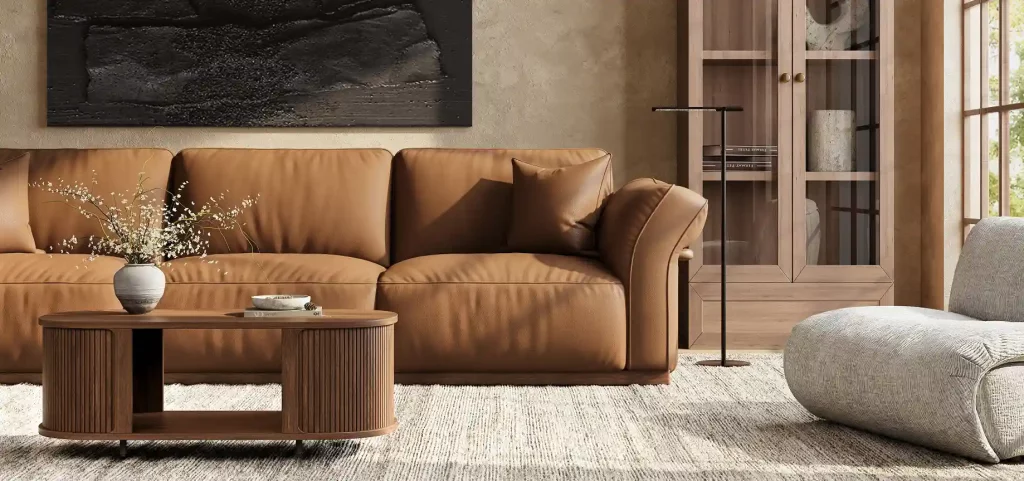
The Cronus Genuine Leather Modular Sofa combines soft top-grain leather with a fine pebble-grain texture and matte finish. Its plush down-filled cushions offer a soft, relaxed feel, while the 26-inch seat depth gives you room to curl up, sit cross-legged, or stretch out after work. Natural wood details add warmth to the design, making it well suited to a relaxed family living room.

Cronus Genuine Leather Modular Sofa
A good fit for family movie nights and everyday lounging, with clearly listed leather details you can check before buying.
If You Already Own the Couch
Send the manufacturer photos of your couch, its labels, and any model or serial markings. Ask for the original upholstery specifications associated with your exact model and color.
If those records conflict with the material you see, request written clarification rather than assuming the label is incorrect. When reliable documentation is unavailable, a qualified leather upholstery specialist may be able to examine a matching material sample.
Conclusion
Knowing how to tell if a couch is real leather starts with checking the material information and examining accessible upholstery details. Grain, texture, backing, and smell can provide clues, but none should be treated as absolute proof. Pay particular attention to whether the same material covers every part of your sofa. When the evidence is unclear, request specific documentation rather than relying on additional home tests. Whether you’re checking an older living room couch or shopping for a new one, clear material information helps you make a more confident decision.
Real Leather. No Guesswork.
Explore leather sofas with clearly described materials and inviting comfort, made for everyday lounging.
FAQ
Does Peeling Mean My Couch Is Made of Fake Leather?
Not necessarily. Faux and bonded leather can peel when surface layers separate, but genuine leather can also experience finish damage or coating deterioration. Check what lies beneath the peeling area and review the manufacturer’s material information. Peeling alone doesn’t establish whether the underlying upholstery is real leather.
How Can I Verify the Leather on a Reupholstered Couch?
The original label may describe upholstery that has since been replaced. Ask for the reupholstery invoice, fabric or leather sample, and details of the replacement material. If those records are unavailable, contact the upholsterer who performed the work. The sofa’s original model number can’t verify its current covering
What Photos Should I Request When Buying a Used Leather Couch?
Request a photo of the manufacturer’s label, close-ups of worn areas, and any original purchase records. Ask whether the couch has been reupholstered. If the seller can’t verify the material, inspect it in person and clarify the return policy before paying a genuine leather price.
Can I Use Leather Conditioner If I’m Unsure of the Material?
Avoid applying conditioner until you know the upholstery type and finish. Products intended for genuine leather may leave residue on synthetic materials or affect delicate finishes. The appropriate method for cleaning a leather couch safely at home depends on its construction and care instructions. Start with gentle dry dusting.
Should I Check a Reclining Sofa’s Footrest Separately?
Yes. A recliner’s footrest may use different upholstery from its seat. Ask the retailer to confirm the material used on the footrest. For a physical inspection, extend it first, disconnect the power, and examine only visible upholstery. Never reach into the reclining mechanism.


