 By Kelvin
When your living room is also where your kids play, finding space for both can be challenging. Toys spread across the floor, the coffee table gets in the way, and the sofa still needs to work for everyday family life. A well-planned living room playroom combo can give children their own activity area without turning the entire room into a playroom. The key is working around your existing furniture, keeping walkways clear, and choosing a layout that supports everyone’s routine. Here are five practical arrangements for different room sizes and family needs.
Table of Contents
5 Living Room Playroom Combo Layout Ideas
The right layout depends on your room’s shape, the position of your sofa and TV, and how much floor space your children actually use. Rather than choosing a design based on appearance alone, start with the furniture you already own. These five living room playroom ideas accommodate different layouts without requiring a separate room.
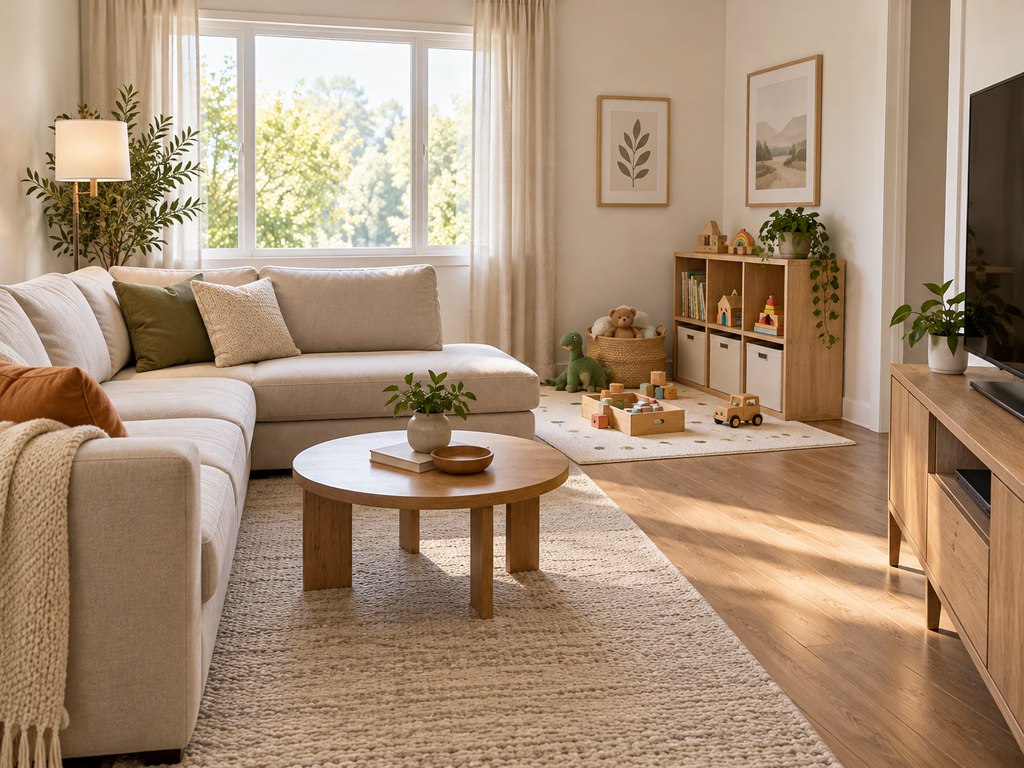
1. A Play Corner Beside the Sofa
Best for: Small, square living rooms.
Keep your sofa and TV in their usual positions, then use an available corner beside the sofa for children’s activities. A small rug can mark the play area, while a low storage unit keeps favorite books and toys nearby.
This arrangement lets parents supervise play without leaving their seats. It works well for reading, puzzles, or building blocks that don’t require much room.
Avoid corners next to frequently used doorways or narrow passages. The play area should feel like part of the room, not an obstacle everyone needs to walk around.
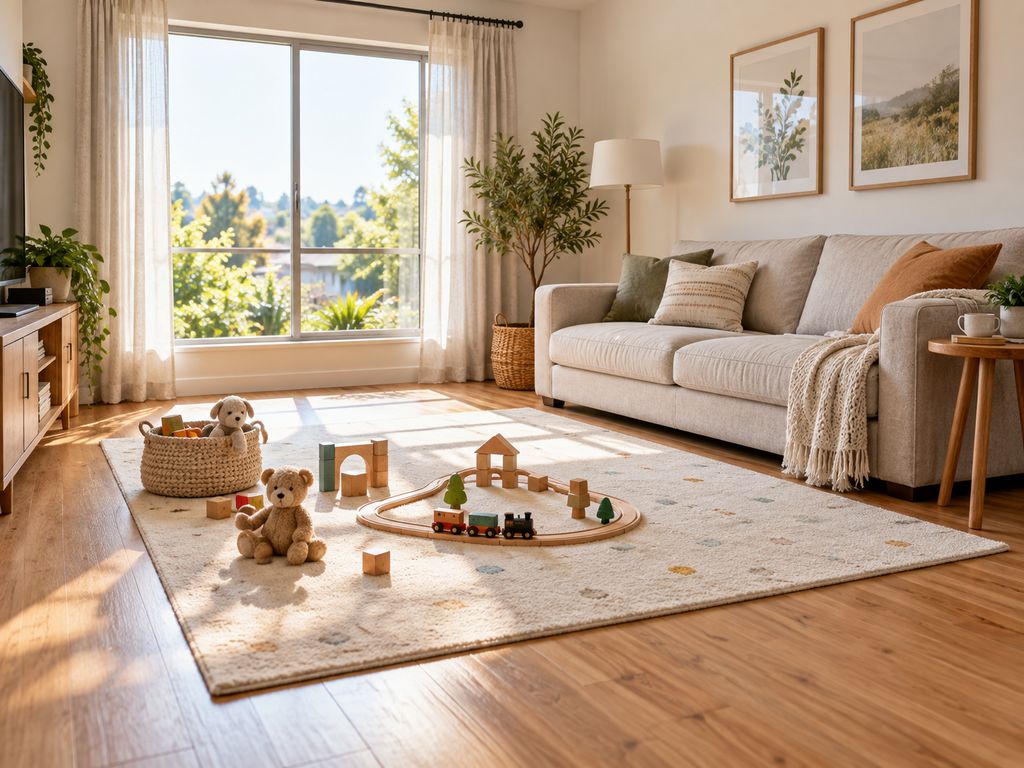
2. An Open Center for Floor Play
Best for: Compact living rooms with limited floor space.
Place the main seating against a wall and leave the center available for play. Instead of a large coffee table, use a compact side table for drinks and remotes. A lightweight play mat can define the area during the day.
This is one of the more flexible small living room layouts because it doesn’t require permanent children’s furniture.
On a rainy afternoon, kids can spread out a train set or building blocks while parents sit nearby. Once playtime ends, the mat and toys can be cleared so the room returns to its usual arrangement.
The trade-off is having less permanent tabletop space for adults.
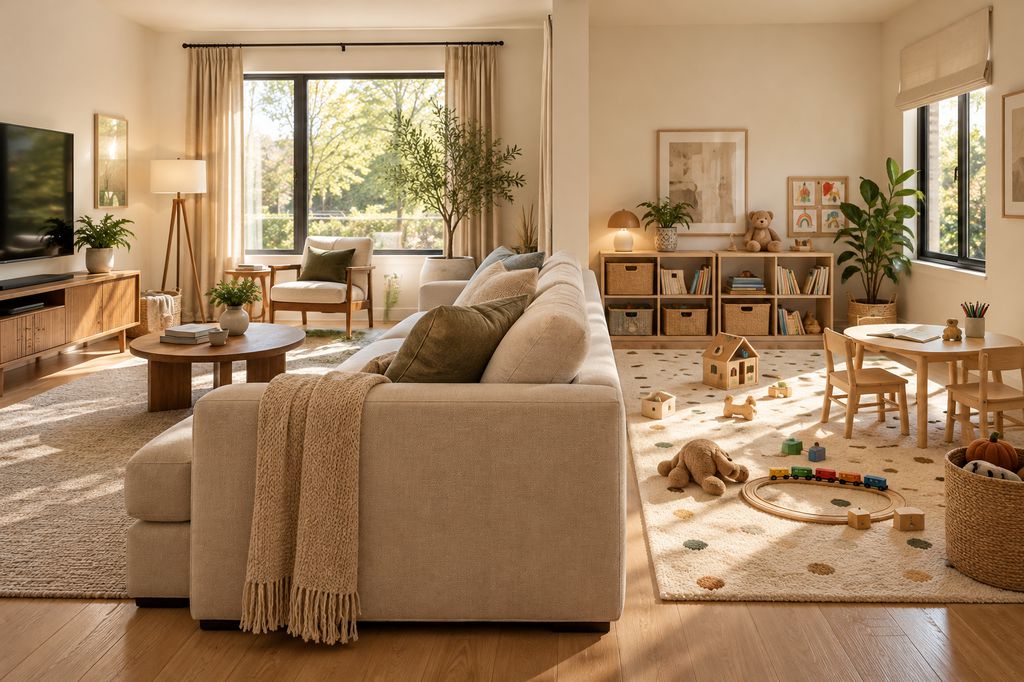
3. A Play Zone Behind the Sofa
Best for: Deep rectangular living rooms.
If your living room has enough depth, move the sofa away from the wall and use the space behind it for a children’s activity area.
Place low toy storage against the back wall and keep a clear route between the two zones. The sofa creates a natural visual boundary without requiring a partition.
This works particularly well when the TV area faces one direction and children’s activities can occupy the opposite side.
However, a high-backed sofa may block a seated parent’s view of younger children. Check visibility before committing to this arrangement.
4. A Wall-Side Play Strip in a Narrow Room
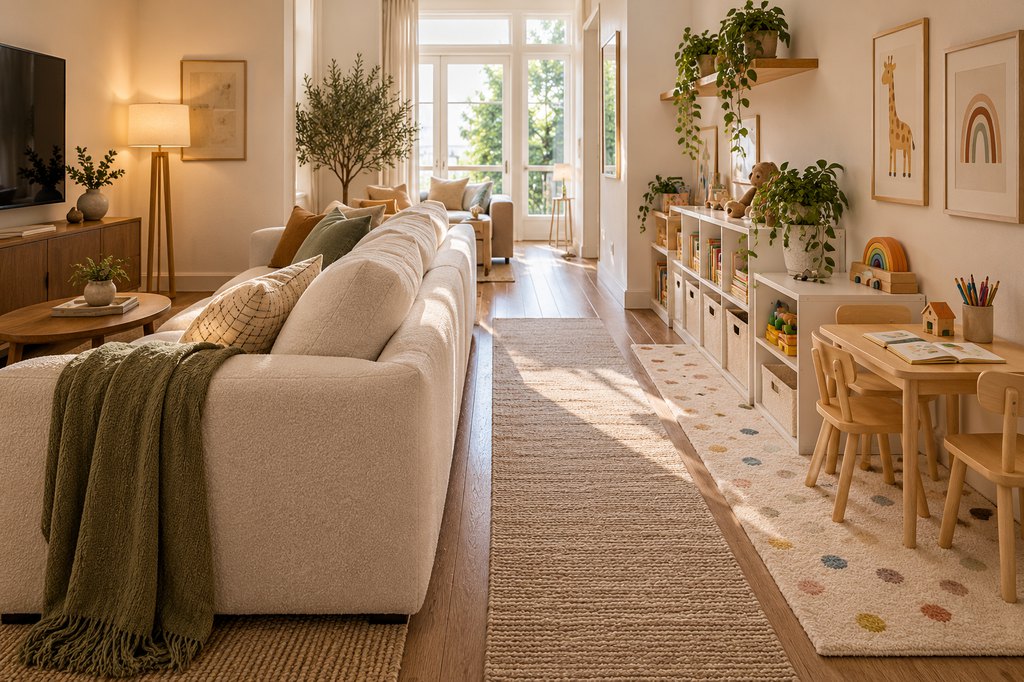
Best for: Long, narrow living rooms.
In a narrow room, the main walkway usually matters more than creating a large square play area. Keep toys, books, and a compact activity table along one wall, leaving the route between doorways open.
A narrow rug can help establish the play zone without extending into the traffic path.
Avoid arranging several storage units at different depths. Even small pieces can make a narrow room difficult to navigate when they project into the walkway.
5. Side-by-Side Zones in an Open-Plan Family Room
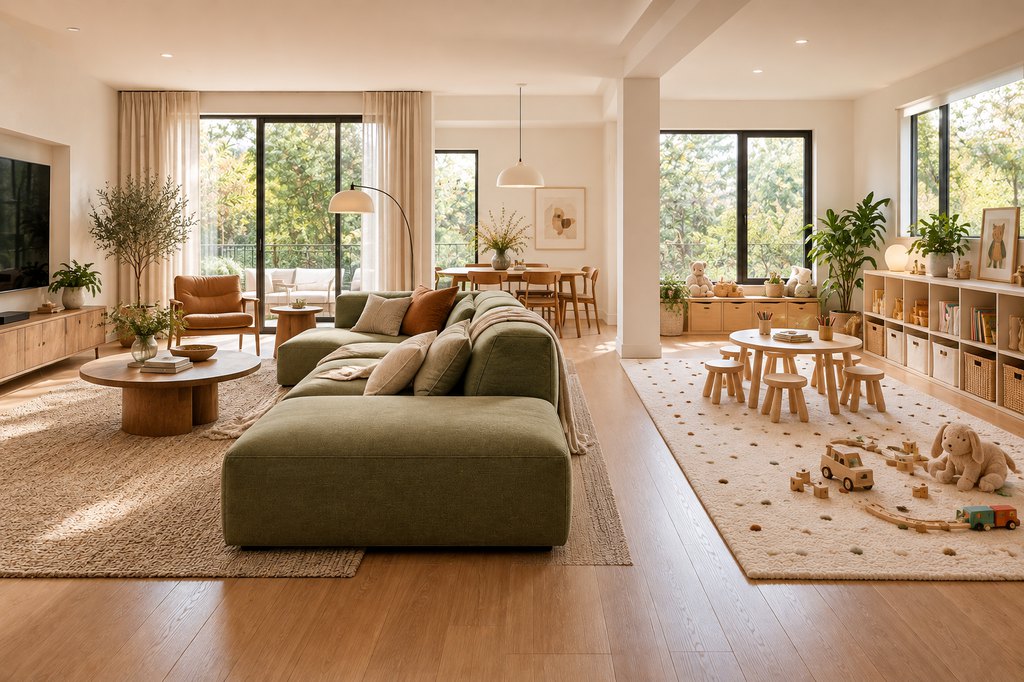
Best for: Spacious, open-concept living rooms.
A larger family room playroom combo can support two distinct areas without constant furniture movement. Arrange adult seating around the TV or conversation area, then establish a children’s zone beside it using a separate rug and low storage.
An adult-scale modular sofa can help define the seating area while allowing adjustments when the family’s needs change.
For an open-plan room that needs substantial adult seating, the Cronus Genuine Leather Modular Sofa offers separate seating modules that can help establish a clear lounge boundary. Its solid wood frame and top-grain leather provide a comfortable adult seating arrangement, while the modular construction allows changes to the configuration when needed. Check the combined footprint before choosing the layout.
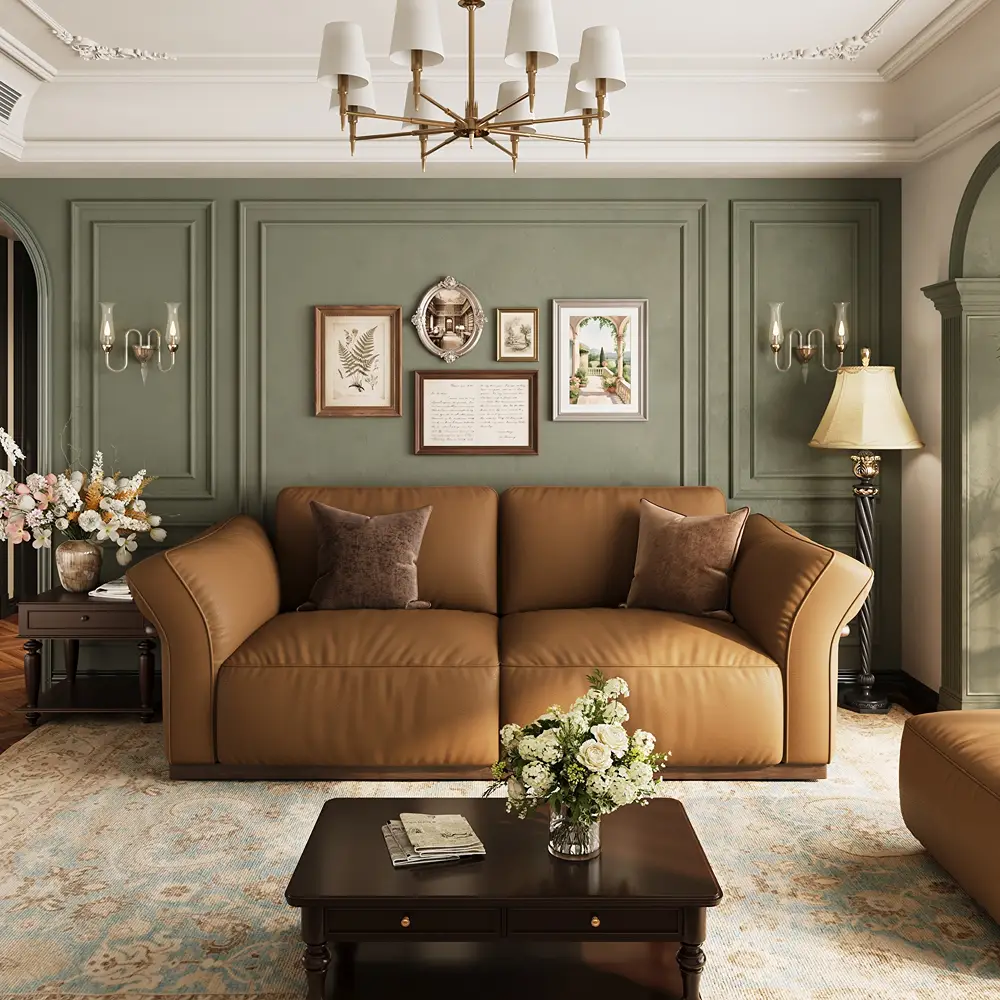
Cronus Genuine Leather Modular Sofa
Flexible adult seating helps organize larger family rooms with distinct play zones.
👍 Best for: Larger open-plan family living rooms
✨ Premium top-grain leather upholstery
✨ Solid wood frame construction
✨ Configurable modular seating sections
Separate armless sections and armrest modules allow a coordinated seating arrangement without filling the room with individual chairs. Consider the available space before changing the configuration, since moving heavy sections frequently may be impractical.
How to Keep the Living Room Comfortable for Adults
A shared living room should still feel comfortable when the toys are put away. Start with the activities adults use the space for most often, whether that’s watching TV, reading, or spending time together after dinner.
Keep the main seating at a comfortable distance from the TV and make sure at least one surface remains available for drinks or personal items. Parents should also be able to sit comfortably while keeping an eye on their children.
For families who want more lounging space after playtime, the Aurora Power Sofa Bed offers adjustable seating without requiring a permanently deep sofa. Its powered seat extension lets adults stretch out when the floor is clear, while the retracted position leaves more room for daytime activities. Water- and scratch-resistant chenille also helps with everyday family use.
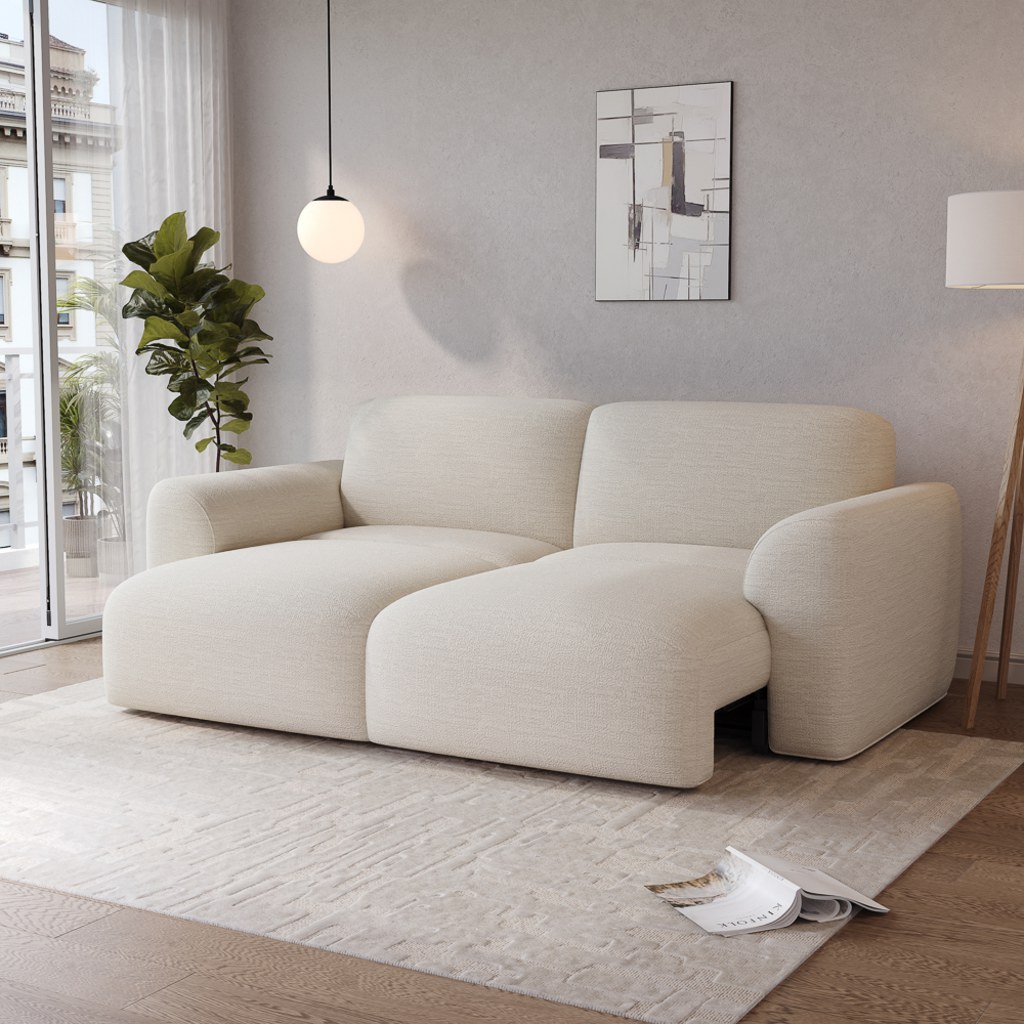
Aurora Power Sofa Bed
Adjustable lounging keeps adult relaxation flexible in a busy shared living room.
👍 Best for: Shared rooms with adult lounging needs
✨ Adjustable 27–45.5-inch seat depth
✨ Remote-controlled seat extension
✨ Water- and scratch-resistant chenille
Motorized movement provides additional seat depth when parents want to stretch out after the children’s activities have ended. The front extension area must remain clear whenever the sofa is adjusted.
Aurora works better when the room has enough depth for its extended position. In a compact living room where children’s floor activities occupy the space directly ahead of the sofa, a fixed-depth model may be simpler to manage.
What Furniture Works for Both Kids and Adults?
Furniture in a shared room should be chosen for how it supports everyday activities, not just its appearance. Start with what your household actually needs before adding another chair, table, or storage cabinet.
| Furniture | Best Use | What to Check |
| Regular sofa | Consistent adult seating | Seat depth, upholstery care, room fit |
| Modular sofa | Adaptable seating arrangements | Module sizes and overall footprint |
| Storage coffee table | Adult surface and small-item storage | Opening mechanism and floor clearance |
| Low storage cabinet | Accessible children’s supplies | Stability and required anchoring |
When comparing sofas for a shared family playroom, consider who sits on them most often. A sofa designed primarily for adults may offer better everyday support than a child-sized play couch, while a lightweight foam sofa may suit younger children who need movable play furniture.
The goal isn’t to make every piece serve two purposes. It’s to avoid adding furniture that creates more obstacles than useful functions.
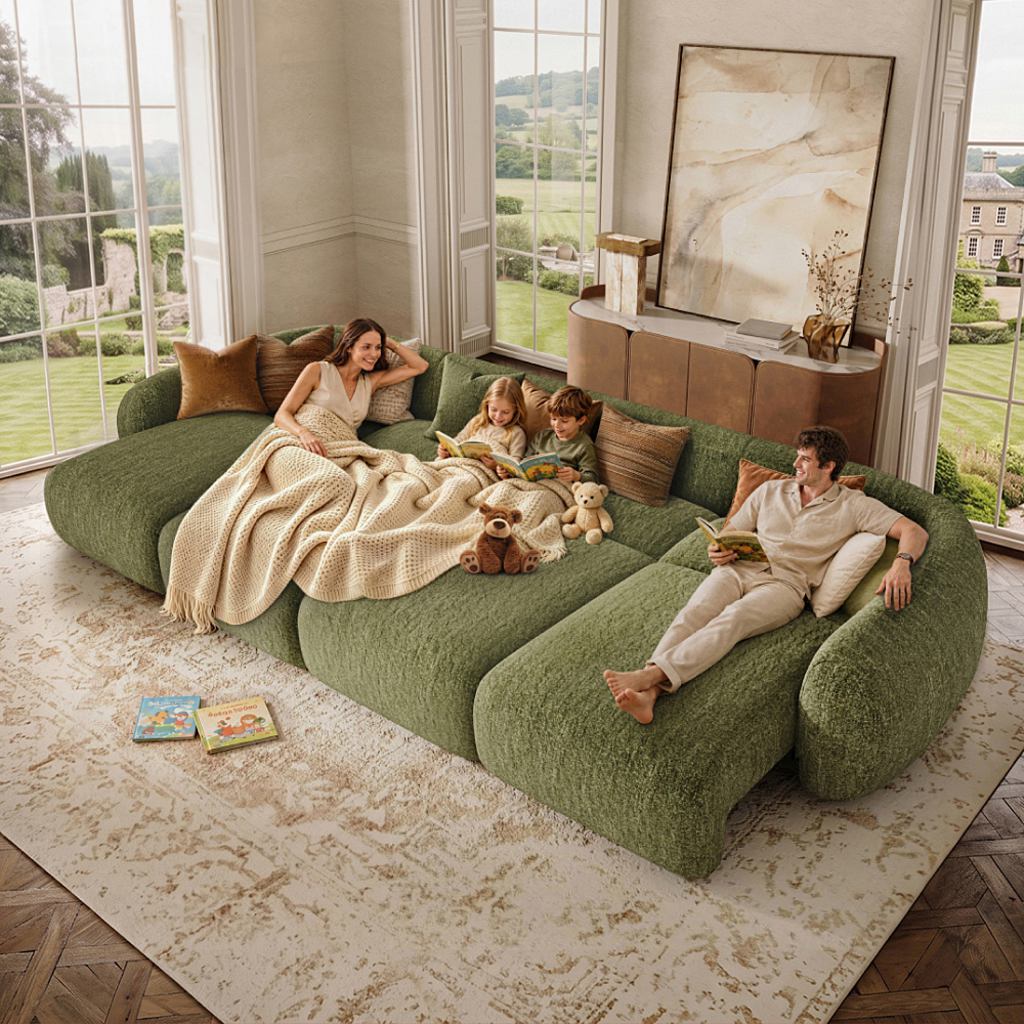
How to Check Whether Your Layout Actually Works
A layout can look spacious in a photo but become inconvenient once people start using it. Before purchasing furniture or moving heavy pieces, test how the room performs during an ordinary day.
Use this three-part check:
- Adult seating: Sit on the sofa and check whether you can comfortably watch TV, talk with family members, and reach everyday essentials without crossing the play area.
- Children’s activities: Mark the planned play zone with painter’s tape. Place the largest frequently used toys inside it and check whether there’s enough room for actual play.
- Daily movement: Walk between the entrance, sofa, kitchen, and other connected spaces. Open cabinet doors and check that no furniture blocks normal movement.
If you’re considering adjustable furniture, remember that different power sofa bed configurations for sitting and lounging can change how much floor space is available. Measure the deepest position you expect to use, not just the sofa’s closed footprint.
A practical layout should work without requiring someone to move heavy furniture every time the room changes activities.
Where Should Toys Go Without Taking Over the Living Room?
Toy storage works better when it’s positioned near the children’s activity area rather than spread across the entire room. Keep frequently used toys accessible and larger collections inside closed cabinets or baskets.
For more detailed toy storage ideas for a shared living room, the most useful approaches are those that support children’s independence while making daily cleanup manageable.
Adult belongings also need designated storage. Remote controls, chargers, and books shouldn’t end up mixed with toys simply because they share the same space.
In living rooms with a separate adult seating area, the Silva Lift-Top Round Coffee Table offers a way to store smaller everyday items without adding another cabinet. Its hidden compartment and two drawers help keep frequently used essentials organized, while the raised tabletop provides an occasional adult work or snack surface. Place the table outside children’s main play area, with adults handling the lift mechanism.
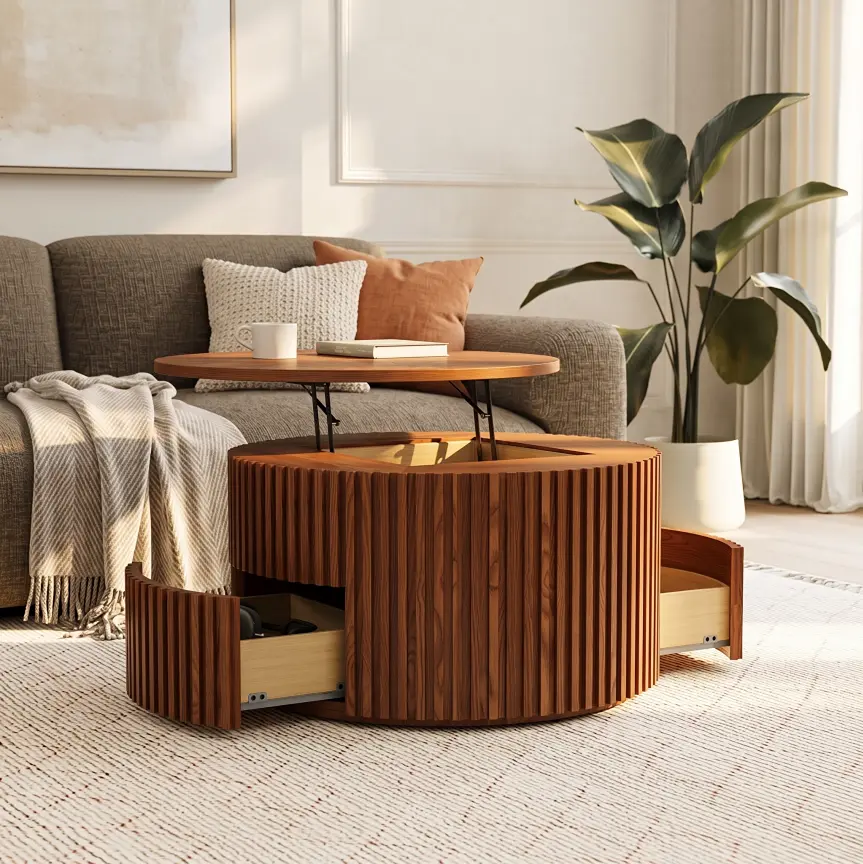
Silva Lift-Top Round Coffee Table
Keeps adult essentials organized without adding extra cabinets beside children’s play areas.
👍 Best for: Adult seating with nearby play areas
✨ Hidden storage beneath tabletop
✨ Two built-in storage drawers
✨ Rounded walnut-finish table design
A compact circular design provides convenient access to everyday belongings near the sofa. Consider where the tabletop opens and whether children can move around the closed table comfortably.
Avoid using large storage furniture to fill every available corner. Keeping some floor space open often makes the living room more useful than adding another cabinet.
Conclusion
A successful living room playroom combo should make everyday life easier for both children and adults. The right arrangement depends on your room’s shape, your existing furniture, and how your family spends time together. A play corner can work in a smaller room, while a deeper or open-plan living room may support separate activity zones. Before adding furniture, check the available floor space, walking routes, and adult seating needs. With a thoughtful layout and a manageable amount of storage, your living room can support playtime without giving up the comfort adults need.
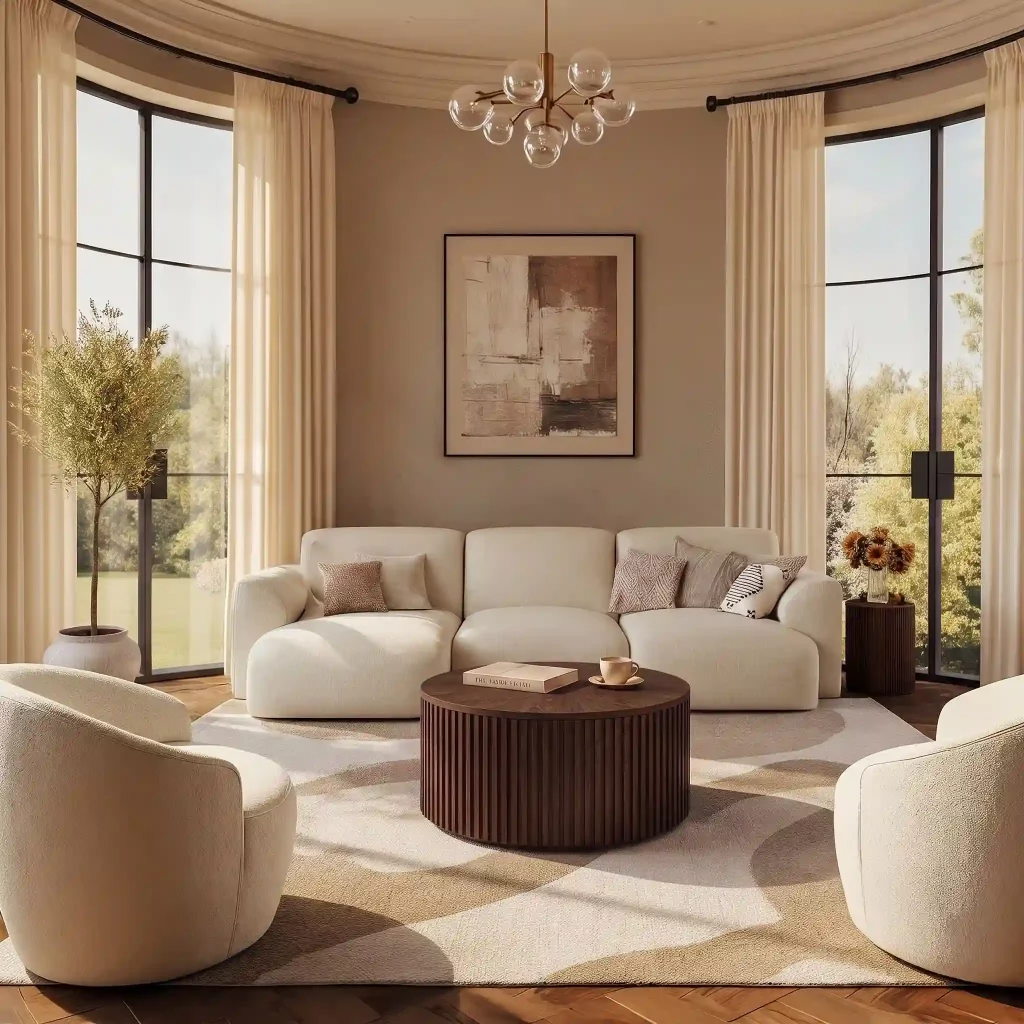
Make Room for Everyone
Explore comfortable, adaptable sofas designed for shared living spaces and everyday family life.
Frequently Asked Questions
Can Siblings of Different Ages Share One Living Room Play Area?
Yes, but activities should account for the youngest child’s safety. Keep small building pieces and other age-restricted toys inaccessible to younger siblings. Older children can use a separate activity tray or table for detailed projects, while younger children play nearby with age-appropriate toys and adult supervision.
Can You Keep a Lift-Top Coffee Table in a Playroom Living Room?
Yes, provided the table is stable and doesn’t interfere with children’s movement. Adults should operate the lift mechanism and keep children’s hands away from moving parts. Close the tabletop before active play begins, and avoid leaving heavy or unstable objects on a raised surface.
How Should You Secure a TV in a Living Room with Toddlers?
Wall-mount the TV or secure it with an appropriate anti-tip restraint, following the manufacturer’s instructions. Anchor furniture that could tip, and avoid placing toys or remote controls where children might climb to reach them. Keep electrical cords secured and out of children’s reach.
Can Renters Create a Living Room Play Area Without Built-Ins?
Yes. Rugs, freestanding storage, and movable furniture can establish a children’s activity area without permanent room alterations. However, dressers, shelving, and other furniture that require anti-tip restraints must still be secured correctly. Check your lease before drilling or installing wall-mounted storage.
What If Kids Keep Bringing Toys into the Adult Seating Area?
Allow a small amount of quiet play near the sofa rather than expecting children to remain within a strict boundary. A basket for books or a few favorite toys can support shared time. Keep larger building sets, messy crafts, and activities that spread across the floor within the designated play area.


[…] may change. It is useful for families planning a move, expecting a new child, adding a pet, or turning part of the living room into a play area or work zone. The ability to separate or rearrange seating can prevent a large sofa from becoming a […]
[…] vs loveseat vs couch: when your living room is doing double-duty as a playroom, dog park, and occasional home office, the difference actually matters. You’re not just […]
[…] Most families do not need a playroom defined only by tiny furniture and themed decor. They need a place where kids can build, draw, read, and spread out—without leaving the rest of the home feeling taken over. The best playroom ideas make everyday life easier: toys are simple to reach, cleanup does not take an hour, and adults still enjoy being in the room. Whether you have an extra room, a second living area, or one corner beside the sofa, a thoughtful layout can support playtime now and family routines later. […]
[…] Zones: If you have children, create a designated play area with storage for toys and games. Consider soft, washable fabrics for furniture and a durable, easy-to-clean […]