 By Kelvin
If you like putting your feet up but dislike the size or look of a traditional recliner, you have several ways to keep that comfort. The right recliner alternatives depend on what you actually use the chair for: raising your legs, leaning back, stretching out, or changing positions throughout the evening. A sofa with an ottoman gives you movable leg support; a sofa with chaise offers a dedicated place to stretch out; and an extendable sofa adds lounging depth only when you need it. This guide helps you match those options to your routine and your room.
Table of Contents
What Do You Want to Keep From Your Recliner?
Start with the position you would miss. If you mainly want your feet elevated, you may not need a reclining mechanism. If you regularly shift from upright sitting to a supported, leaned-back posture, a fixed sofa and footstool may feel like a compromise.
Watch how you sit over a few ordinary evenings. Do you face forward while reading, lie sideways across the cushions, or share the seating with someone who prefers a different position? Those habits reveal more than a brief showroom sit. The distinction between a reclining sofa and a regular sofa becomes useful when deciding whether adjustable support matters more than an open seating surface.
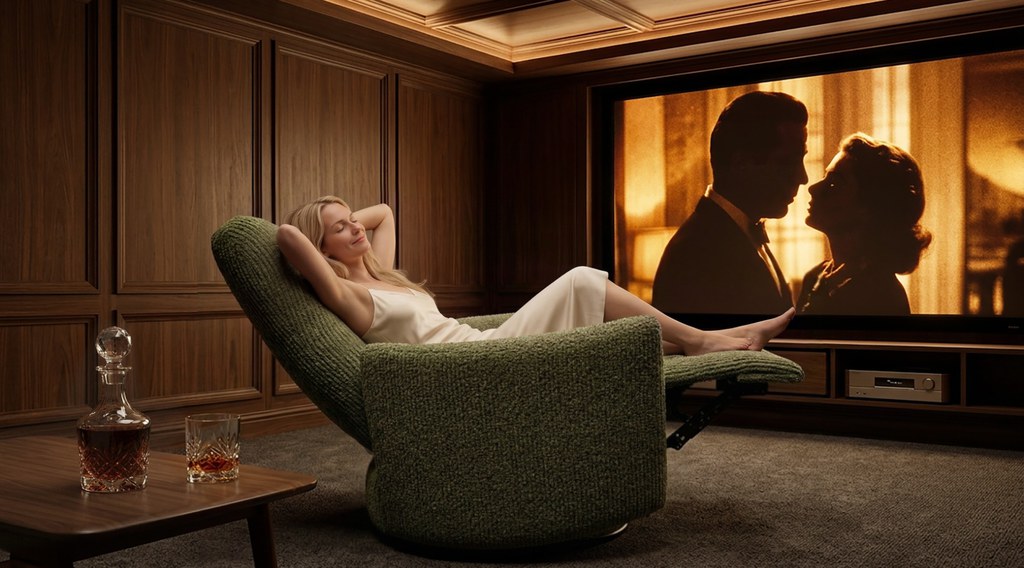
A direct answer: choose an ottoman for movable leg support, a chaise for a permanent stretch-out seat, and an extendable sofa when you want deeper lounging without keeping that space occupied all day. If independent back and leg adjustment is essential, a recliner may still be the closest fit.
Which Recliner Alternatives Fit Different Lounging Needs?
These options solve different parts of the recliner problem. Some support your legs without changing your back angle; others give you room to shift your whole body. Consider who uses the seat, whether the lounging position needs to move, and what the floor area must do when nobody is resting.
| If your priority is… | Consider | Main trade-off |
| Moving leg support between seats | Sofa with ottoman | The footrest needs a place to go |
| Stretching out in the same spot daily | Sofa with chaise | The extension occupies floor space all day |
| Curling up or sitting sideways | Deep-seat sofa | No built-in leg elevation or moving backrest |
| Adding lounging depth as needed | Extendable power sofa | Needs clear space in front and access to power |
| Changing your back angle and creating a sleep surface | Adjustable sofa bed | Requires room in its fully open position |
Sofa With an Ottoman: Leg Support That Can Move
An ottoman works when different people want to use the footrest or the center of the room needs to open up at other times. Position it near enough to support your legs without making you reach forward. Compare its top height with the sofa seat, and decide where it will sit when moved aside.
For a shared living room, the Povison Cronus Modular Sofa gives you more than one way to put your feet up. You can choose an ottoman for movable leg support, a chaise arrangement for a settled stretch-out spot, or a combination of both. Its modular construction and top-grain leather make it suited to households with different lounging habits.
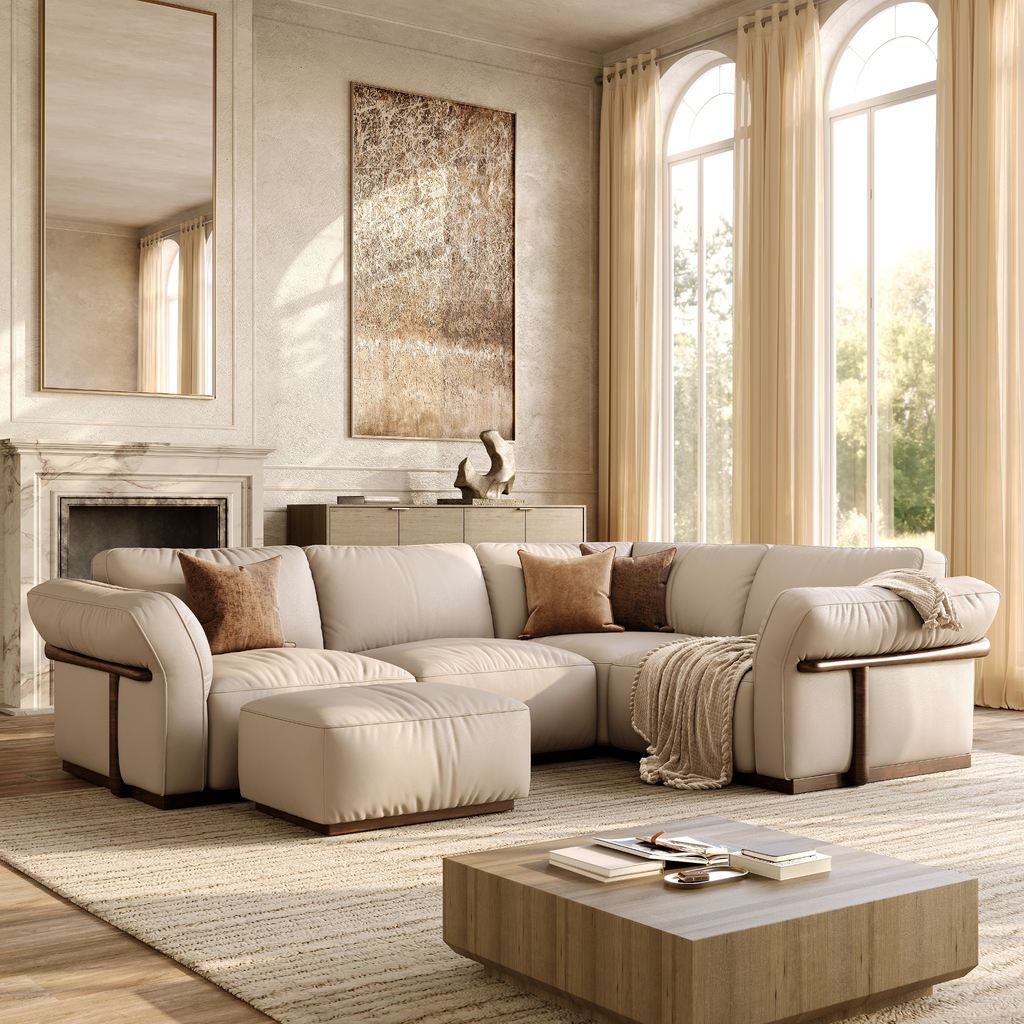
Cronus Modular Sofa
Modular leather seating supports shared lounging with an optional separate footrest.
👍 Best for: Living rooms where lounging positions change
✨ Top-grain leather upholstery
✨ Modular seating construction
✨ Ottoman and chaise options
Sofa With a Chaise: A Dedicated Stretch-Out Spot
A chaise supports your legs on a continuous surface, with no separate piece to pull into position. It suits a household where the same person often reads or rests in one corner of the sofa. Its direction matters: an extension that points into the route between the sofa and a doorway can become an everyday obstacle.
If you are choosing between these two approaches, the practical difference in a sofa with an ottoman versus a chaise is whether the leg support can move independently. A reversible or modular chaise offers some layout flexibility, but still occupies its full lounging footprint once placed.
Deep-Seat Sofa: Room to Change Position
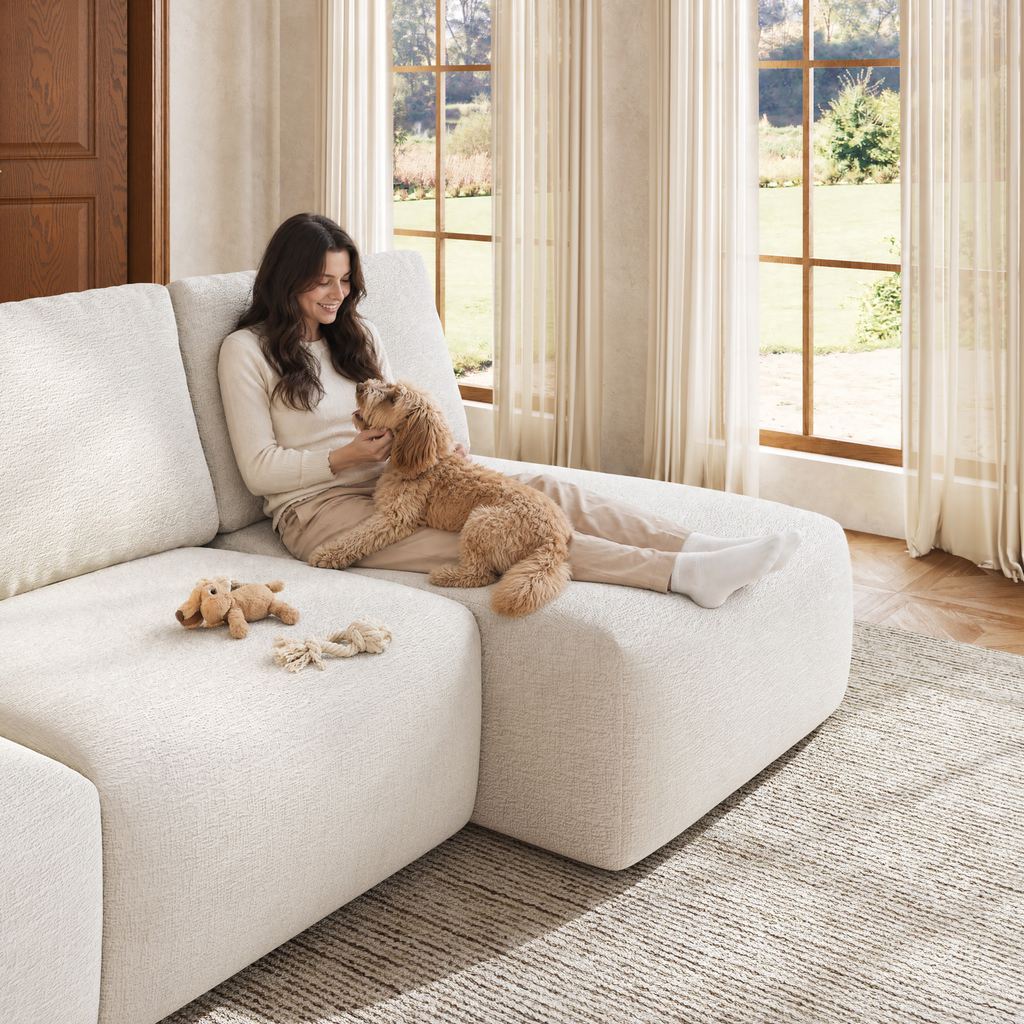
A deep-seat sofa can suit someone who curls up, sits cross-legged, or lies across the cushions. It also preserves a continuous surface for several people instead of assigning one person the reclining chair. Check the usable seat depth with the back cushions in place; an overall sofa depth does not tell you how much sitting space remains.
This option is less convincing if your main need is to raise your legs while sitting upright. You may still need an ottoman, which changes the space calculation.
The Povison Hudson Sailboat Deep Sofa suits a shared living room where someone sits upright to talk, then wants more room to curl up and relax. Its adjustable backrest changes the usable seat depth from 22.83 to 33.46 inches, so you can change positions without extending the sofa into the room. The water-resistant suede fabric also suits everyday use around dogs and drinks.
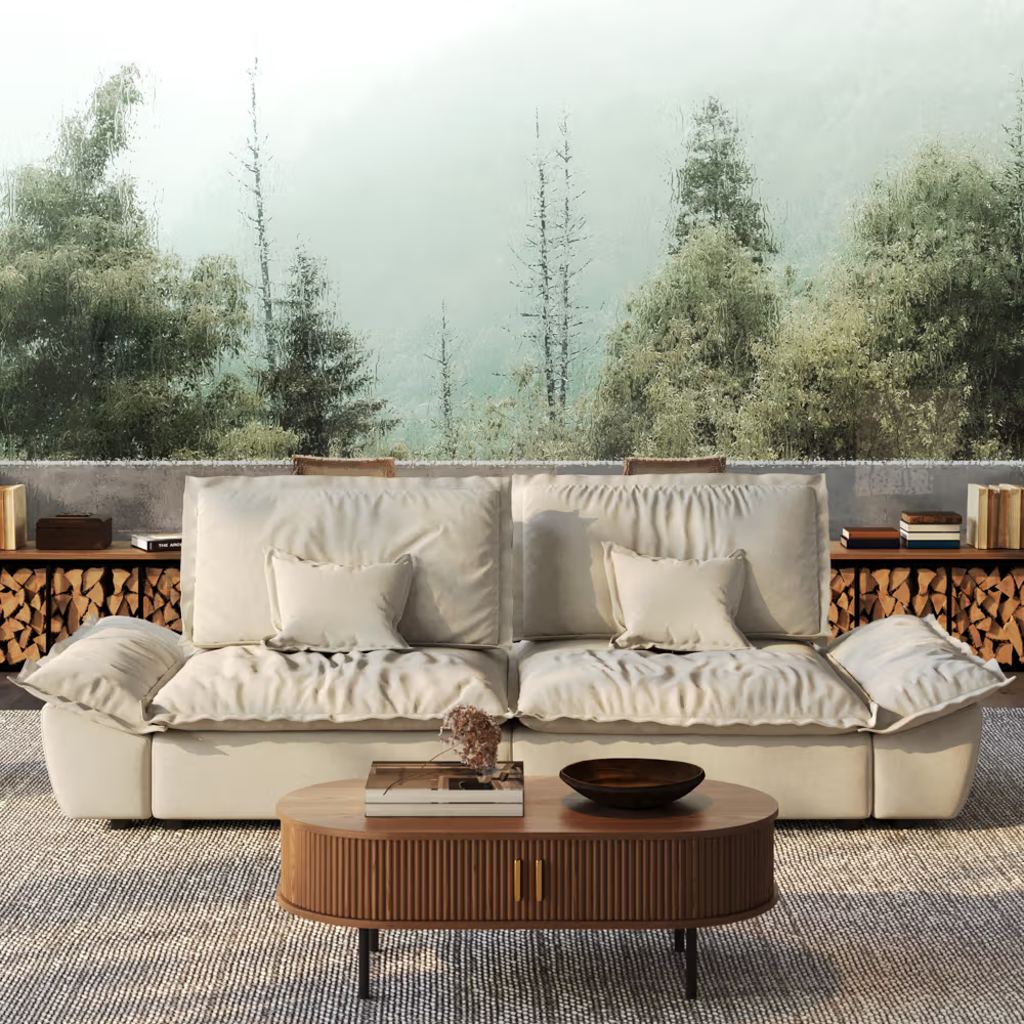
Hudson Sailboat Deep Sofa
Adjustable backrest creates room to curl up while preserving upright seating.
👍 Best for: Shared living rooms with changing sitting positions
✨ Adjustable usable seat depth
✨ Water-resistant suede fabric
✨ Deep lounging without powered extension
Extendable Power Sofa: Depth When You Need It
An extendable sofa addresses a common problem with alternatives to recliners: fixed lounging furniture can occupy valuable floor space even when everyone is sitting upright. A powered extension lets you use a conventional seating position, then create more depth when it is time to rest.
The POVISON Aurora Power Sofa Bed suits a living room that needs open floor space during the day and a deeper seat in the evening. Its powered surface adjusts from 27 to 45.5 inches, while chenille upholstery provides a soft, textured finish. Measure the area in front of the sofa at full extension, especially if a coffee table stays nearby.
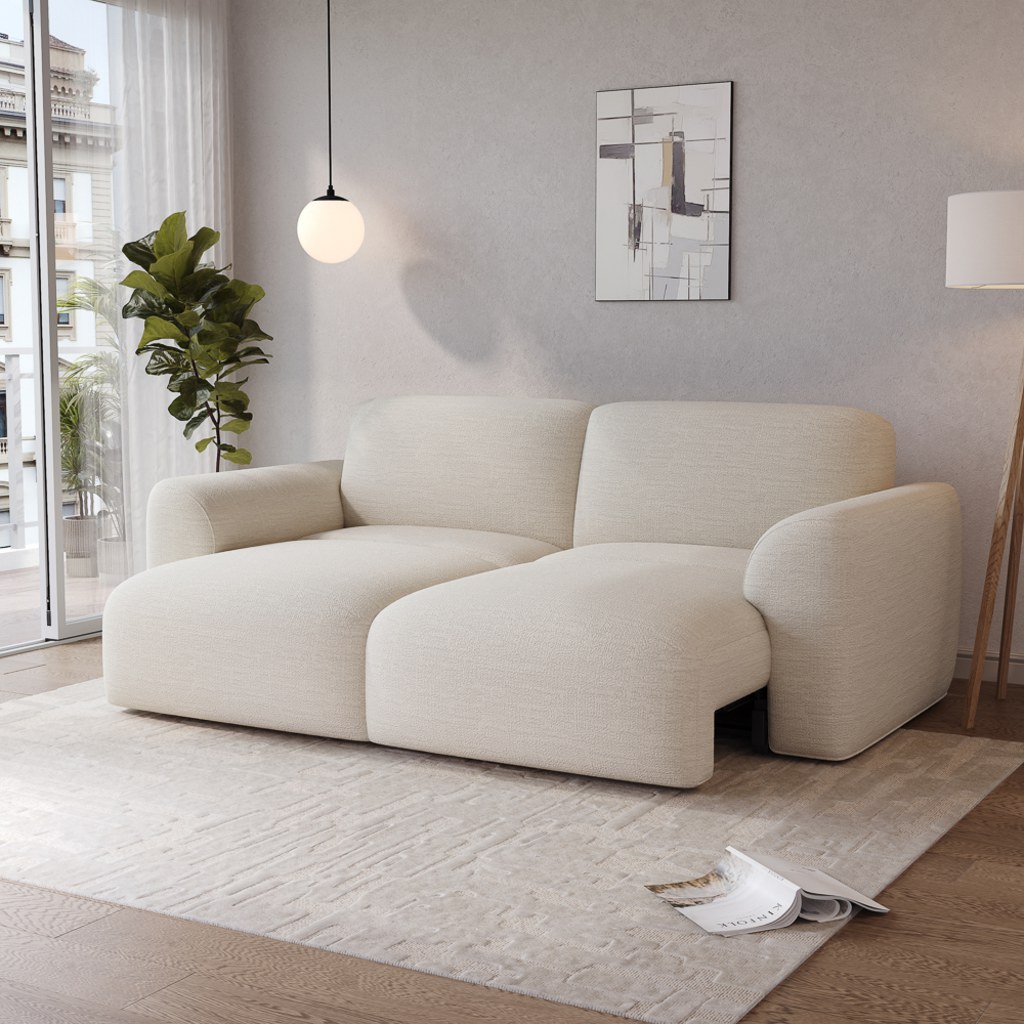
Aurora Power Sofa Bed
Powered extension creates deeper lounging without a permanently projecting chaise.
👍 Best for: Flexible living rooms with limited floor space
✨ Adjustable seating depth
✨ Powered extension mechanism
✨ Lounge and sleep modes
How Much Space Does Each Alternative Use in Real Life?
Furniture measurements need two views: how the room works when everyone is sitting normally and how it works when someone puts their feet up. A chaise occupies its full footprint in both states. An ottoman can move, but only helps circulation if there is a useful second place for it. An extendable sofa needs a clear operating area.
Before buying, make a quick floor plan:
- Mark the normal footprint. Use tape to show the sofa, chair, or chaise in its everyday position.
- Mark the lounging footprint. Pull the ottoman into place or use the product’s fully extended measurement.
- Walk the usual route. Check access to doors, other seats, and the coffee table while someone occupies the lounging spot.
In a pass-through living room, a chaise can narrow the path to the kitchen even when nobody is using it. A retractable seat may free that route during the day, provided its open position does not block it every evening. The same normal-versus-active measurement is central to recliner placement in a living room.
When Does an Adjustable Sofa Bed Make More Sense?
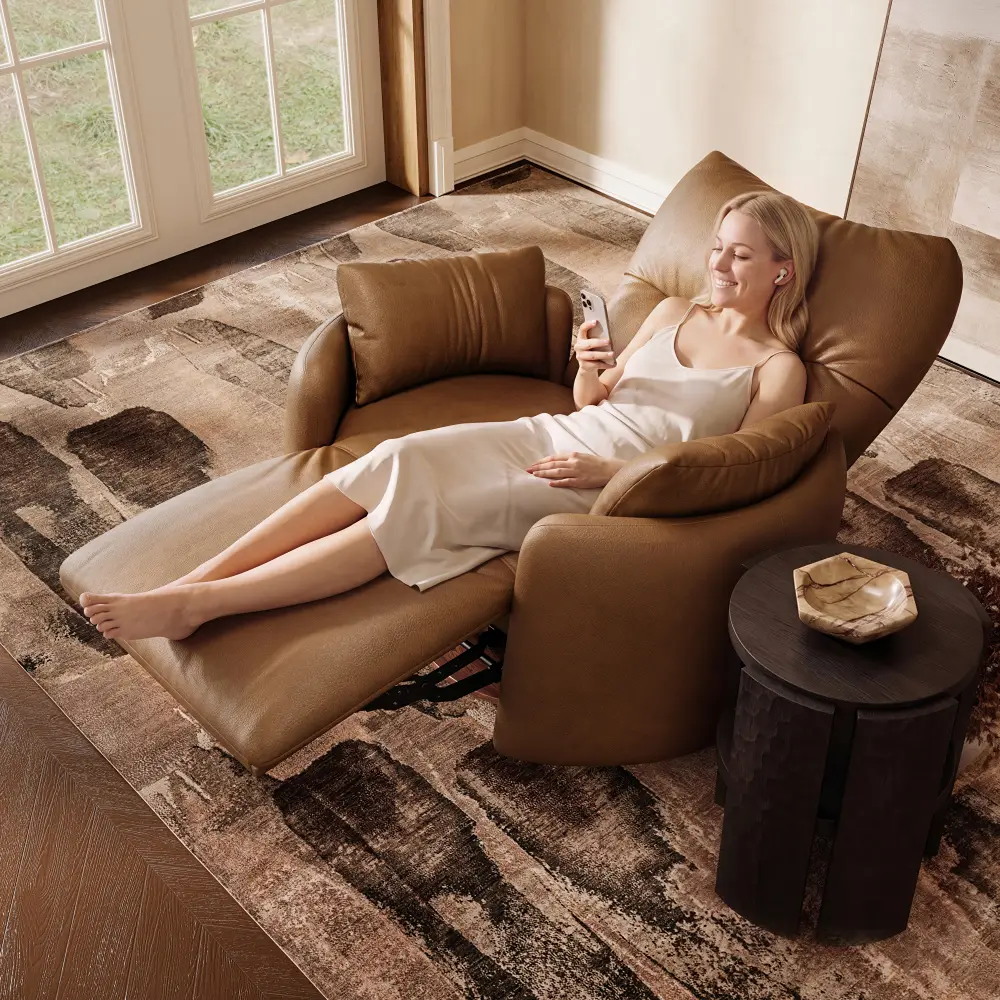
Consider a power sofa bed when the living room also needs to host overnight guests. An ottoman raises your legs, and a chaise gives one person room to stretch out, but neither automatically provides a sleeping surface intended for a guest.
Start with how often someone stays over. If it happens only once or twice a year, daily seating comfort should lead the decision. If guests stay more regularly and there is no separate guest room, check the sofa bed’s usable sleeping length and width, whether the surface lies sufficiently flat, and how much cushion separation a sleeper would feel.
Then check what opening it changes in the room. A sofa bed may leave more floor space free while closed, but it still needs room to extend at night. Make sure a guest can get in and out without moving heavy furniture or blocking the route to the bathroom. The strongest fit is a layout that works comfortably as everyday seating and remains practical when the bed is open.
When Is a Recliner Still the Better Fit?
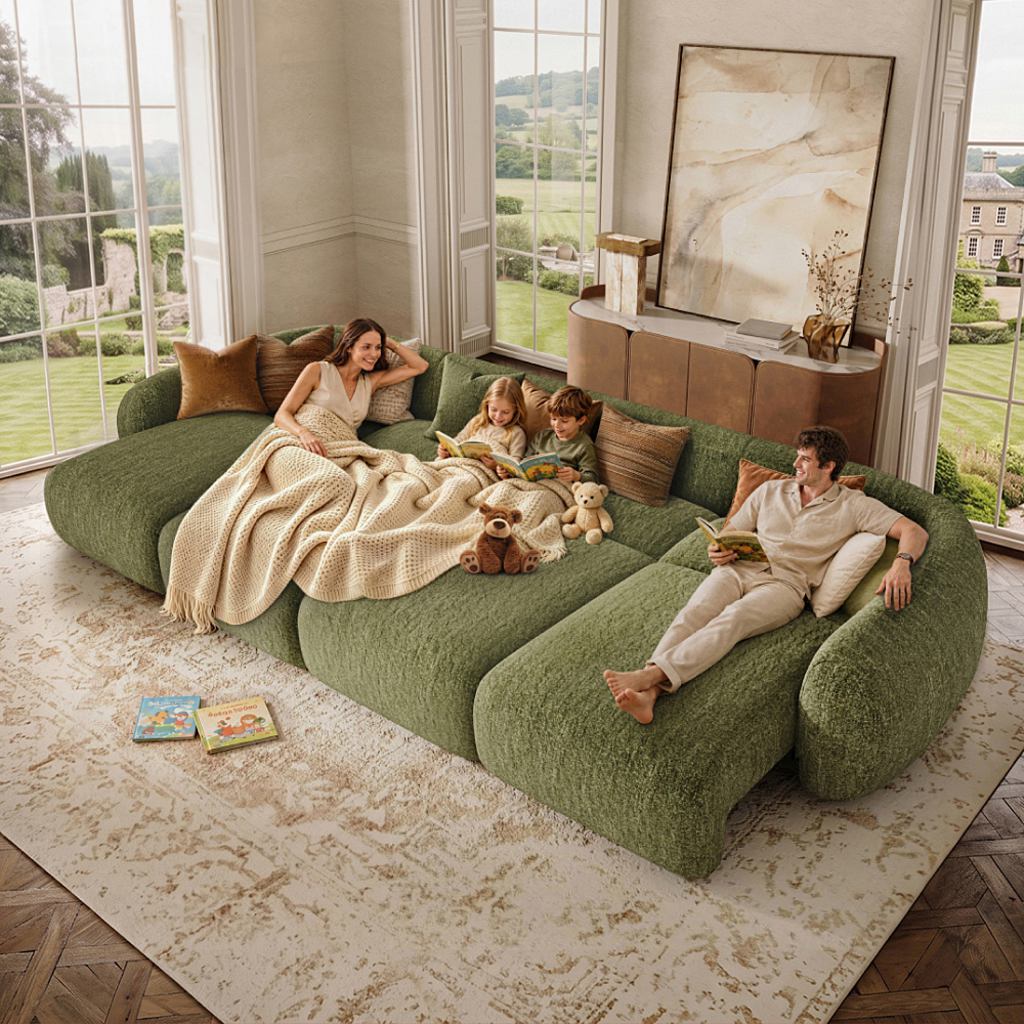
A traditional recliner remains a sensible choice when one person wants a dedicated seat and regularly adjusts the back and leg position while staying forward-facing. A sofa, chaise, or ottoman can offer more room to stretch, but those qualities do not automatically reproduce the same supported sitting posture.
Also consider whether a separate chair fits your household better than changing the main sofa. If other people prefer ordinary seating and only one person uses the adjustable position, replacing the entire sofa may solve a problem the rest of the room does not have. Decide on the required posture first, then compare how each piece fits the available space.
Conclusion
The most useful recliner alternatives preserve the part of reclining you enjoy without forcing the room into a layout that works only in one position. Choose an ottoman when leg support needs to move, a chaise when one stretch-out spot is used daily, or a deep-seat sofa when you prefer changing position across the cushions. An extendable sofa adds depth when needed, while an adjustable sofa bed can also accommodate a guest. Measure each option as it will be used, and keep a recliner in the running if adjustable back and leg support remain your priority.
Find the Right Sofa for Lounging
Compare flexible seating, extendable designs, and room-friendly layouts.
FAQs
Can I use an ottoman as an extra seat when guests visit?
Only if the manufacturer specifies that the ottoman is intended for seating and gives an appropriate weight limit. A firm-looking top does not establish its capacity. If the household regularly needs another guest seat, count the ottoman only after checking that specification.
What should I check if an ottoman keeps sliding away?
First identify whether the ottoman itself moves across the floor or adjoining sofa modules separate. A removable, floor-safe grip may help with the first problem; connected modules require a different fix. Avoid an adhesive solution until you have checked its suitability for the floor finish.
Does a power sofa still provide useful seating during an outage?
Yes, it remains a seat, but you should check the model’s instructions for what happens to its powered position when electricity is unavailable. If easy movement between upright and lounging positions is essential every day, ask about the controls and any manual recovery procedure before purchase.
Which upholstery is easier to manage in a home with pets?
Choose based on the specific fabric or leather care instructions, rather than the material name alone. Check whether spills should be spot cleaned, how scratches are handled, and whether direct sunlight is restricted. A textured fabric and top-grain leather can require different maintenance routines.
Will an extendable sofa fit through a narrow apartment entrance?
The assembled sofa’s width is not enough to answer that. Compare the packaged module dimensions with the narrowest doorway, hallway turn, elevator, and stair landing on the delivery route. Then check the space needed for assembly and full extension inside the room.


