 By Kelvin
Turning a living room into a guest room isn’t just about finding space for a bed. It’s about arranging everyday furniture so the room still works for seating, relaxing, and moving around when someone stays overnight. The best living room guest room ideas start with the shape of your room, the position of existing furniture, and the space needed for sleeping. Whether you’re working with a narrow apartment or a spacious family room, these six layouts show how to combine both functions without rearranging everything each time guests arrive.
Table of Contents
How to Plan a Living Room Guest Room Combo
A successful living room guest room combo starts with the furniture and architectural features that cannot easily move. Identify doorways, windows, electrical outlets, and the main TV wall before deciding where the sleeping area should go.
Next, identify where guests could sleep, using either existing furniture or a temporary bed. Measure the full footprint of that arrangement and check the available walking space around it.
When planning a small living room layout, prioritize the main walkway before adding coffee tables, chairs, or storage. A layout that works for everyday use may become impractical once a temporary sleeping surface is added.
The goal is to find a furniture arrangement that supports both uses without requiring major changes to the room.
6 Living Room Guest Room Layout Ideas
The most practical living room guest room ideas depend on room shape and furniture placement rather than a particular type of guest bed. The following six arrangements explain where to position the main furniture, why each layout works, and what to avoid.
1. Wall-Aligned Layout for Small Living Rooms
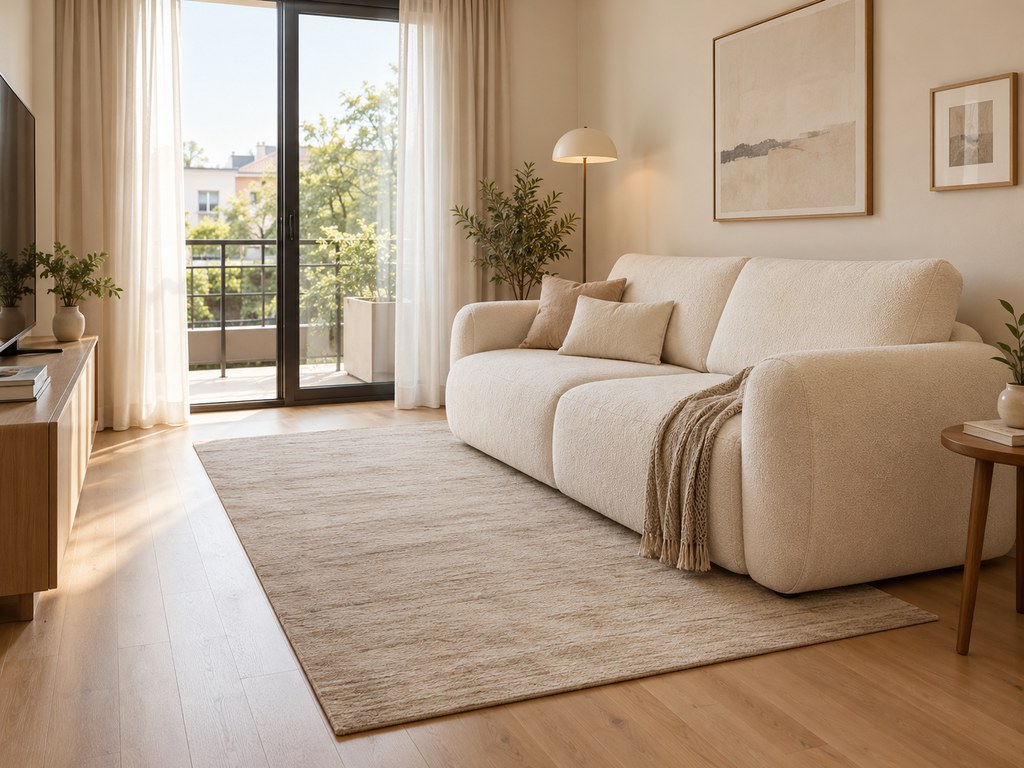
Best for: Compact rectangular living rooms
Place the main sofa against the longest uninterrupted wall, leaving the center available for a temporary guest mattress. Keep the coffee table outside the planned sleeping area or give it a designated place to move when guests stay.
This arrangement keeps the main seating area in one location, so the room doesn’t require a complete furniture reset when guests stay.
For households that prefer not to store a separate guest mattress, a convertible sofa can make the same layout easier to use.
The Povison Aurora Power Sofa Bed supports this layout through its wall-hugging design and powered seat adjustment. Its depth extends from 27 to 45.5 inches, allowing the seating area to expand without pulling out a separate mattress frame. The main requirement is to reserve sufficient floor space in front of the sofa and keep the extension area clear.
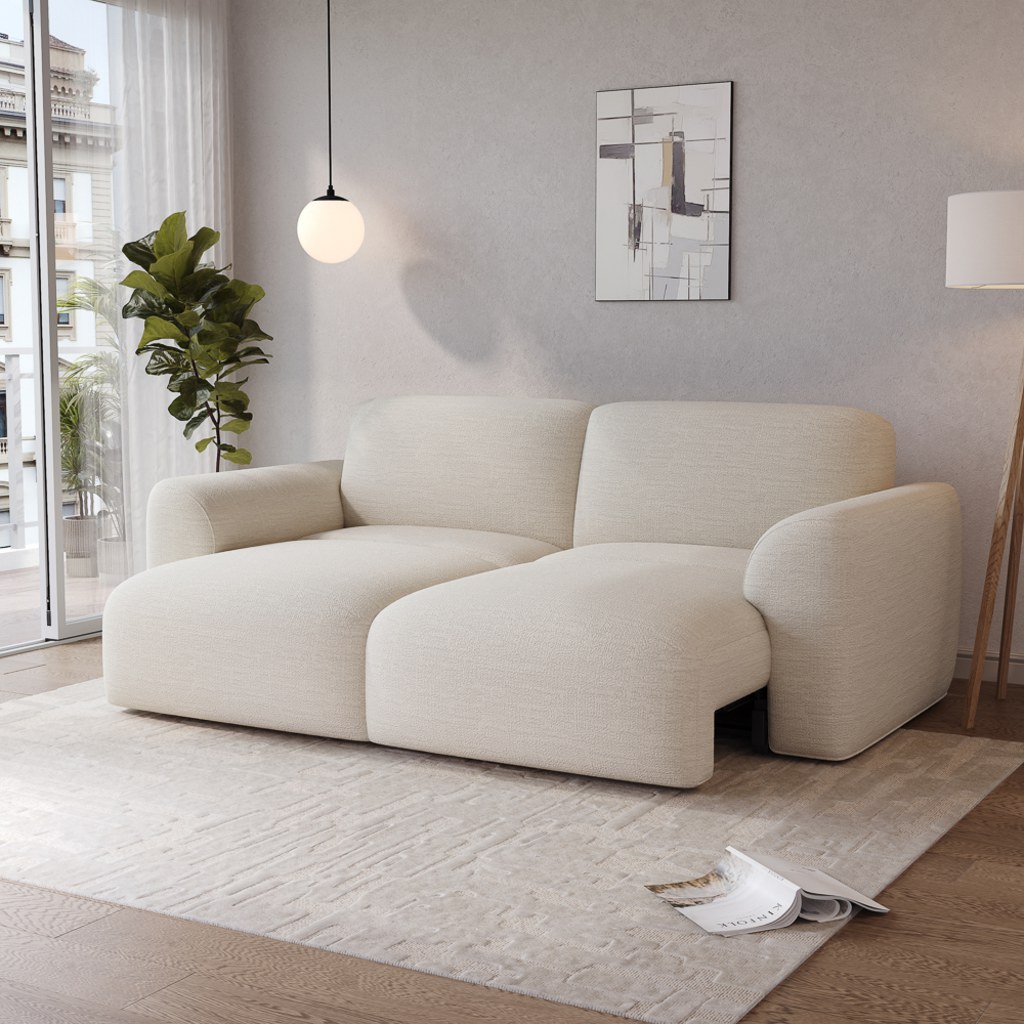
Aurora Power Sofa Bed
Creates a flexible guest-ready layout without adding a separate bedroom furniture piece.
👍 Best for: Small, wall-aligned multipurpose living rooms
✨ Stepless powered seat extension
✨ Wall-hugging placement design
What to avoid: Keeping a heavy coffee table in the only usable overnight sleeping area.
2. Long and Narrow Living Room With a Side Walkway
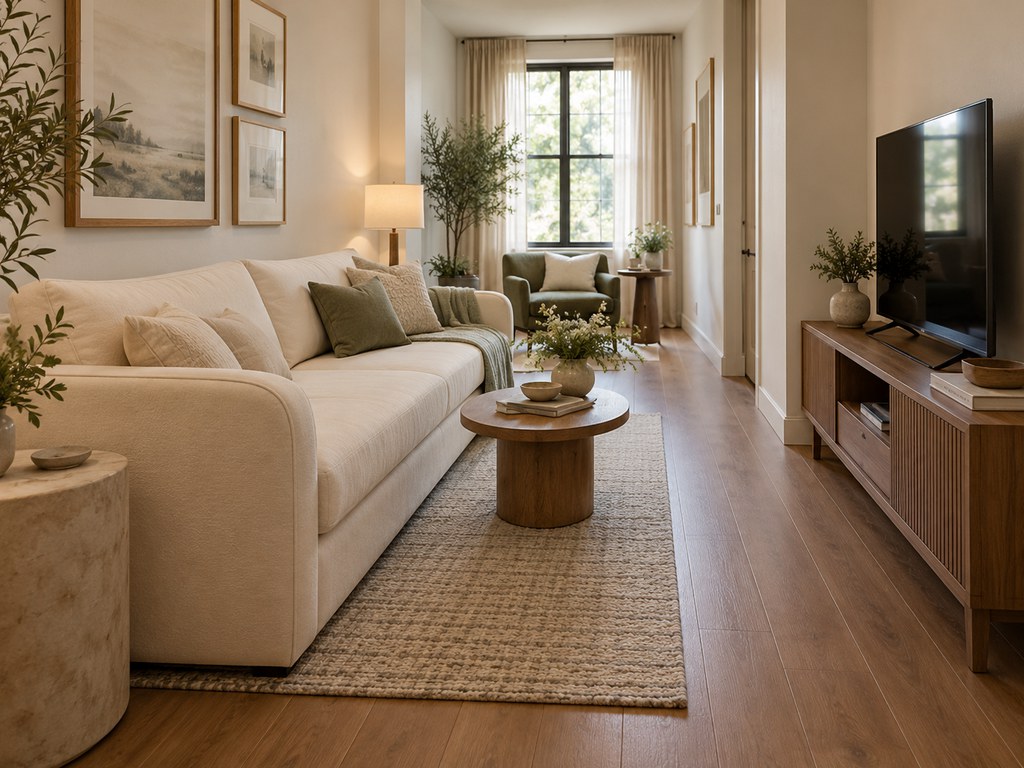
Best for: Narrow living rooms with entrances at opposite ends
In a long, narrow room, the main challenge is keeping a continuous path between doorways when a temporary sleeping area is in use.
Arrange the main sofa along one long wall and reserve the opposite side for circulation. If guests use a foldable mattress, position it within the seating zone rather than across the walkway. A slim TV stand or wall-mounted television can help avoid unnecessary furniture depth.
Rather than centering every piece around a coffee table, keep smaller furnishings closer to the seating area or toward the ends of the room.
Why it works: The sleeping area occupies one side while household members retain a predictable route through the space.
What to avoid: Adding chairs, storage cabinets, or side tables that narrow the only available walkway.
3. Open-Plan Living Room With a Defined Guest Zone
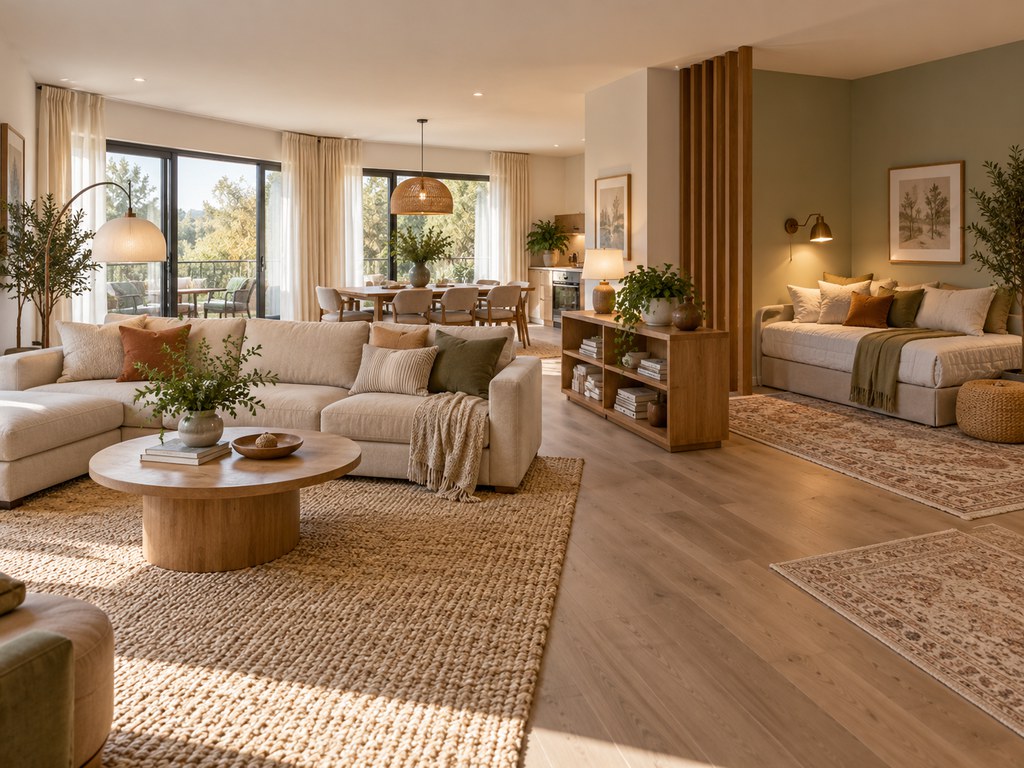
Best for: Open-plan living and dining rooms
An open-plan living room benefits from a visual boundary between the temporary sleeping area and everyday activities.
Position the main sofa along the living area’s outer edge, using its back to define the boundary between seating and dining. A temporary mattress or daybed can occupy the designated guest zone when needed. A rug can establish the living zone without adding a physical barrier.
If additional separation is needed, position a low bookcase or folding screen beside the sleeping area rather than directly across the main walkway.
Why it works: The sleeping area feels more clearly defined while the dining or kitchen area remains accessible.
What to avoid: Using tall furniture that blocks natural light or interrupts movement between the room’s main functional areas.
4. Corner Guest Sleeping Zone in an L-Shaped Room
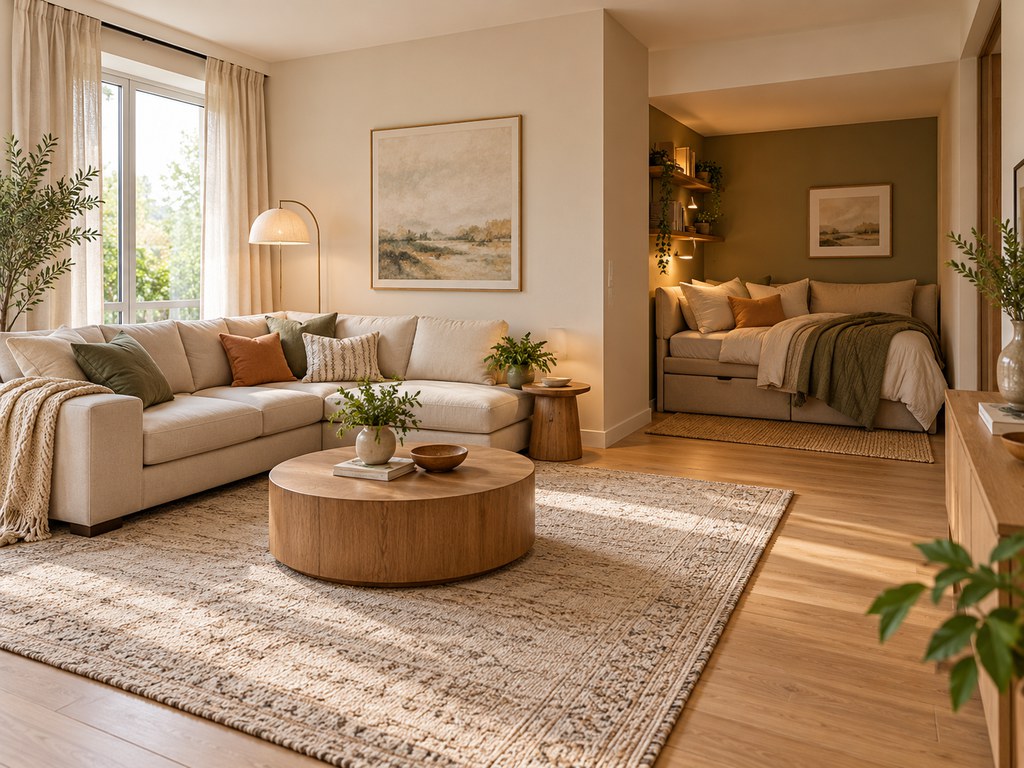
Best for: Living rooms with an alcove or recessed corner
An L-shaped living room can accommodate a temporary sleeping area without making the entire room function as a bedroom.
Use the shorter section for a foldable guest mattress or daybed, provided the full sleeping surface fits within the available space. Keep the larger section arranged for seating, conversation, or television.
The existing wall angle helps separate the two areas without adding permanent partitions.
Why it works: Guests occupy a more defined area while the central living space remains available.
What to avoid: Assuming a recessed corner can accommodate a guest bed based on wall length alone. Measure both the sleeping footprint and the space needed for access.
5. TV-Centered Layout With a Fixed Media Wall
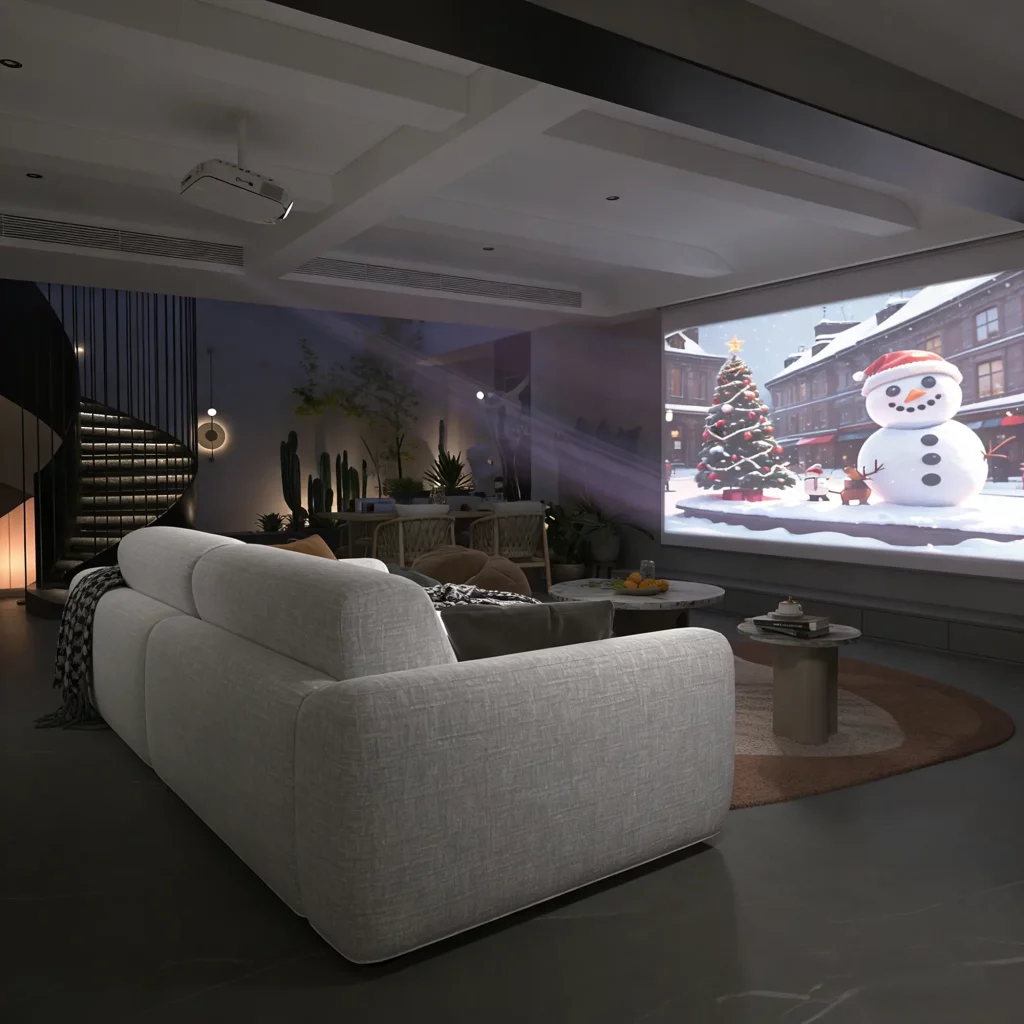
Best for: Family living rooms centered around television use
In a TV-focused living room, keep the media cabinet against its existing wall and arrange everyday seating opposite it. This allows the television and connected equipment to remain in place when the guest sleeping area opens.
The main consideration is the distance between the planned guest sleeping area and the front of the media cabinet.
The Povison Delven Verse TV Stand provides a fixed storage area for media equipment. Its 70.86-inch-wide cabinet has three enclosed compartments, removable shelving, and dedicated cable openings. These features help keep devices and wiring organized along one wall instead of spreading equipment across the floor. At 21.85 inches deep, the cabinet is better suited to rooms with enough space for both the media wall and the designated guest sleeping area.
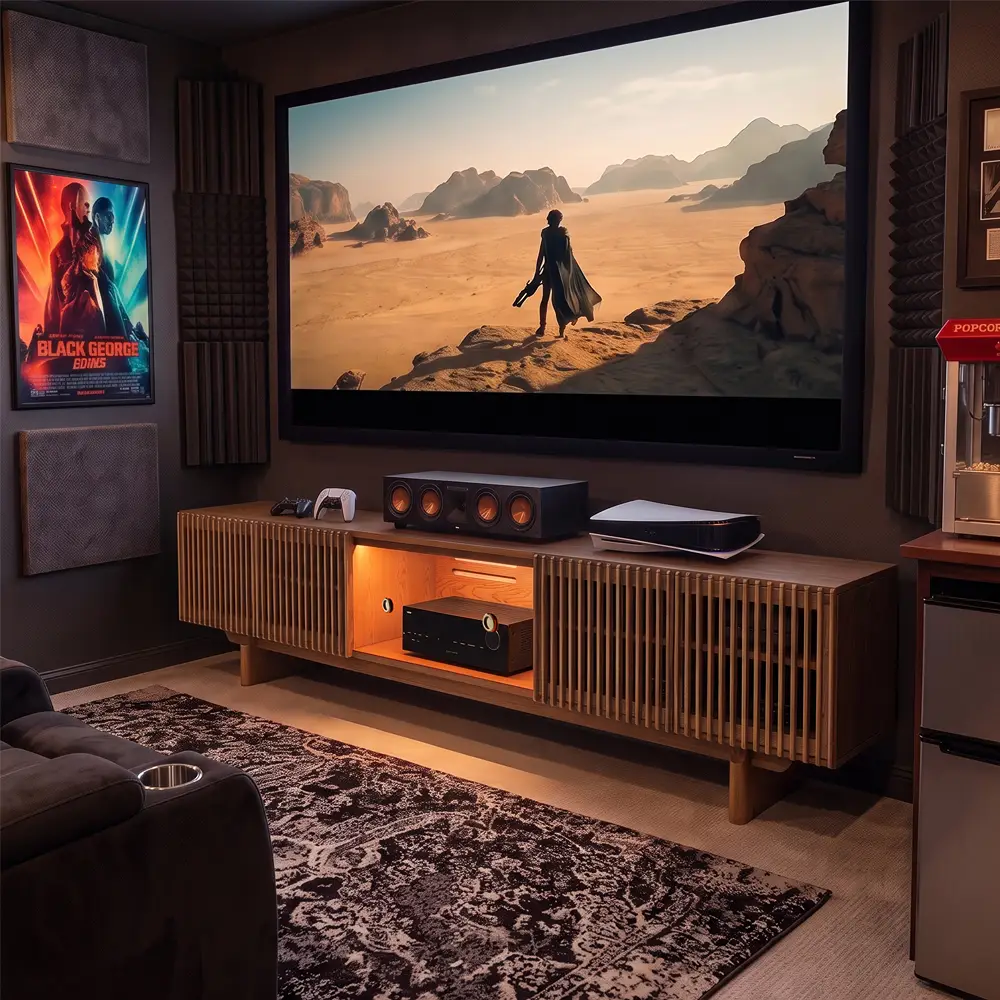
Delven Verse TV Stand
Keeps television equipment organized while the living area accommodates overnight guests.
👍 Best for: TV-focused multipurpose family living rooms
✨ Three enclosed storage compartments
✨ Six internal cable openings
✨ Removable rear access panel
What to avoid: Placing the media cabinet so close to the guest sleeping area that access to its doors, outlets, or nearby walkways becomes restricted.
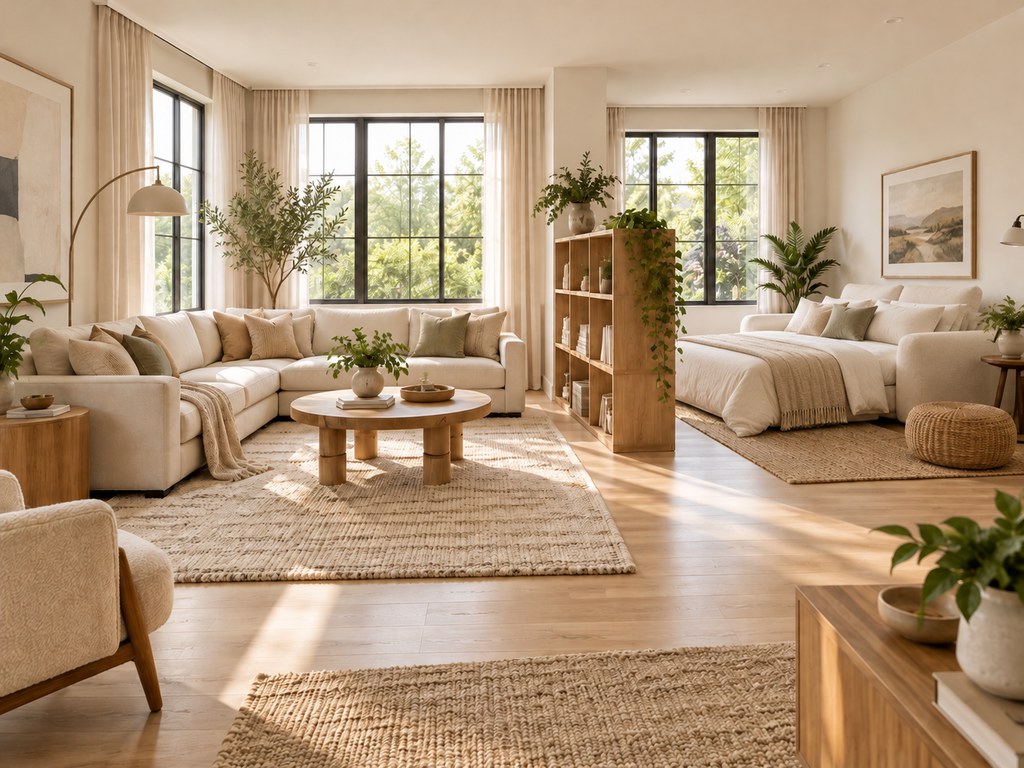
6. Spacious Living Room With Two Functional Zones
Best for: Large living rooms with room for separate activities
A larger living room doesn’t need to convert entirely into a guest bedroom. Instead, divide it into two functional areas: one for everyday activities and another that accommodates occasional sleeping.
Reserve one zone for an existing daybed, foldable mattress, or convertible sofa, and maintain a separate conversation or coffee-table area elsewhere in the room. A rug or furniture orientation can visually connect the spaces while keeping their functions distinct.
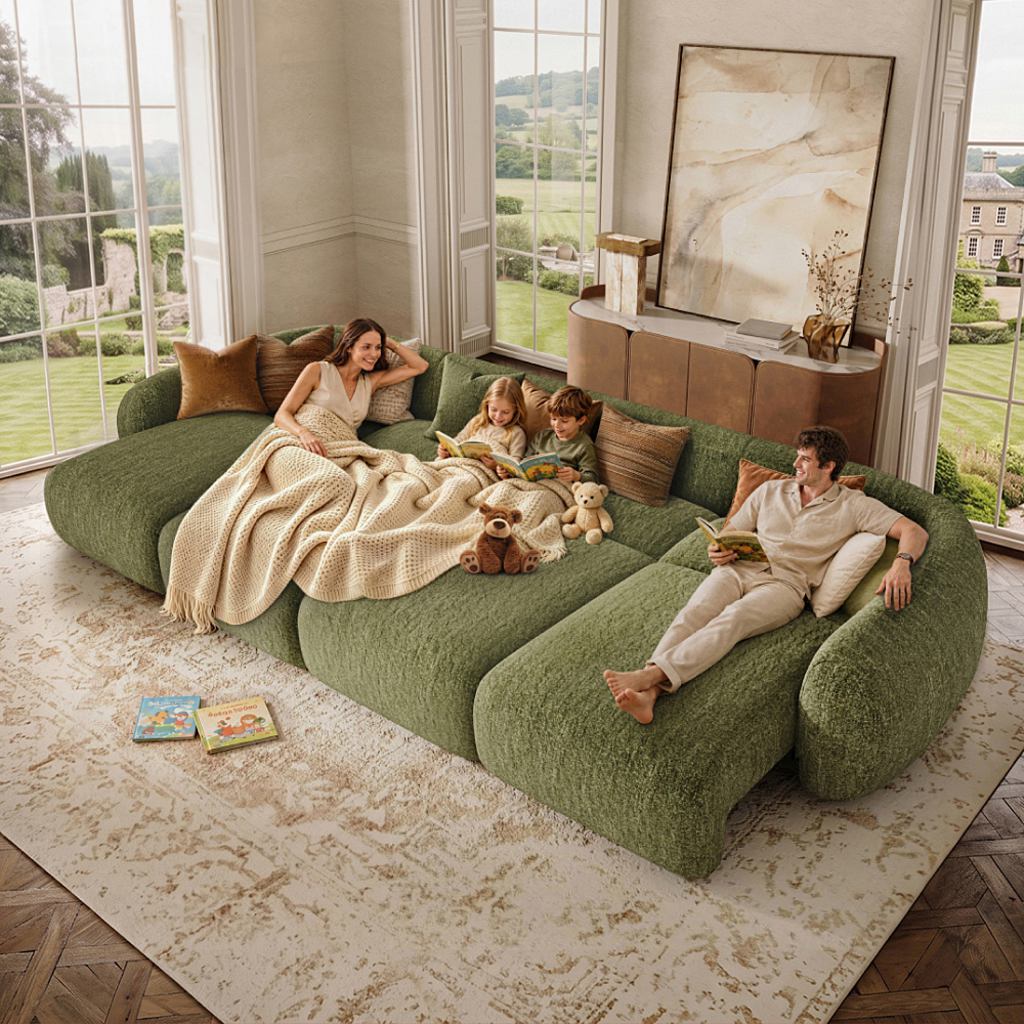
For households that want the guest zone to serve as additional seating during the day, the Povison Mila Power Sofa Bed offers an adjustable alternative to a separate guest bed. Its 32–59-inch powered seat extension and 105°–180° backrest adjustment allow the area to shift between lounging and overnight sleeping. Mila works best when the second zone has enough space for its substantial footprint and full extension.
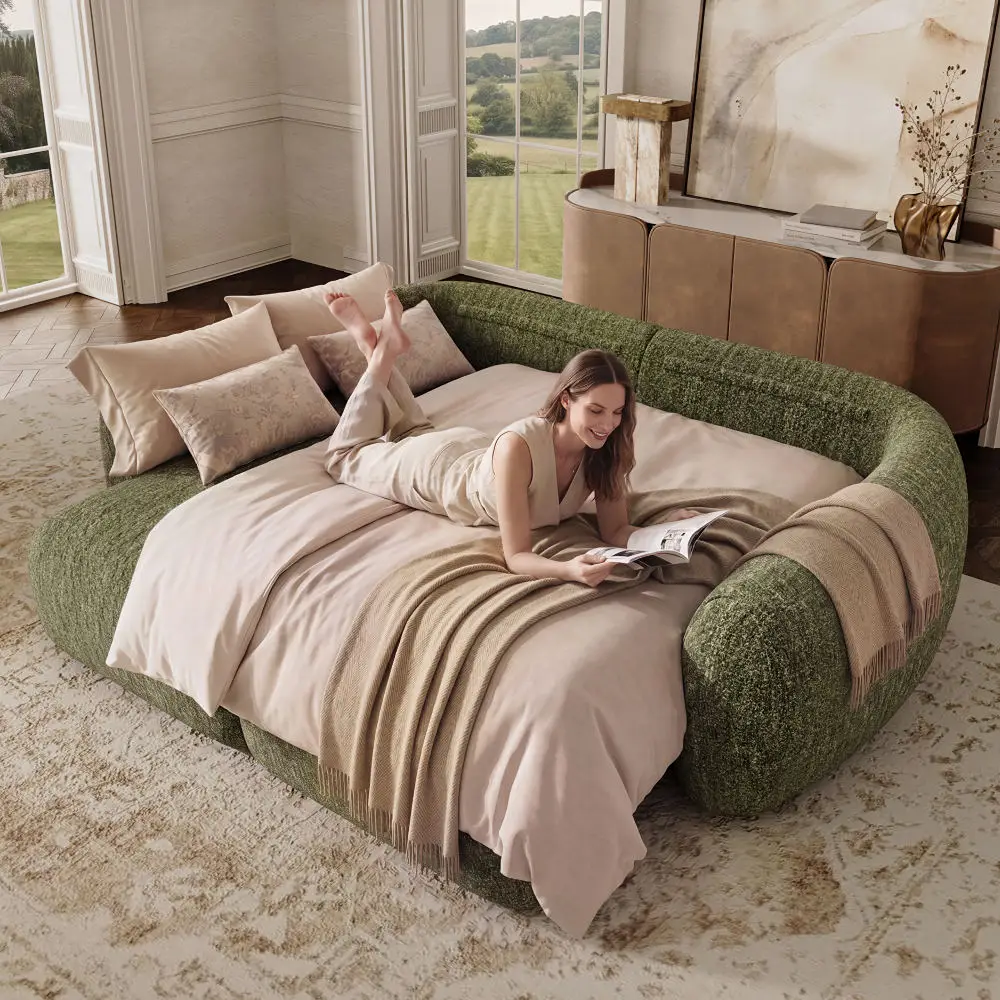
Mila Power Sofa Bed
Creates a comfortable second seating zone that converts for overnight guests.
👍 Best for: Spacious living rooms with guest zones
✨ Stepless powered seat extension
✨ 105°–180° adjustable backrest
✨ Near-King extended resting surface
What to avoid: Positioning a large, heavy table within the area needed for overnight sleeping.
Which Layout Fits Your Room Shape?
Choosing a layout becomes easier when you start with the room’s physical limitations. A design that works in an open-plan apartment may not fit a narrow living room with multiple doorways.
Use this comparison to narrow down the most practical arrangement.
| Your Room | Recommended Layout | Main Priority |
| Small rectangular room | Wall-Aligned Living Area | Keep the center available |
| Long and narrow room | Side Walkway | Protect the main circulation route |
| Open-plan room | Defined Guest Zone | Separate activities visually |
| L-shaped room | Corner Guest Zone | Use existing room geometry |
| TV-focused family room | Fixed Media Wall | Preserve everyday viewing |
| Large living room | Two Functional Zones | Keep daily activities separate |
Room shape is only the starting point. Door placement, windows, existing storage, and the fully opened sleeping footprint ultimately determine whether a layout works.
For example, a wide living room with multiple doorways may offer less usable furniture space than a smaller room with uninterrupted walls.
What Should You Check Before Choosing a Layout?
Before committing to a particular arrangement, test how the room functions with the planned sleeping setup in place.
Use this short layout checklist:
- Open Footprint: Confirm the complete sleeping surface fits without overlapping essential furniture.
- Door Access: Check that doors can open and close normally.
- Fixed Furniture: Identify pieces that are too large or heavy to move regularly.
- Walking Routes: Preserve a practical path between the sleeping area, exit, and adjoining rooms.
- Everyday Function: Make sure the space still works for everyday seating when the guest setup is put away.
Rug position and accessory placement matter too, particularly when decorating a sofa bed for day and night without obstructing its moving sections.
A practical way to test the arrangement is to mark furniture footprints with painter’s tape before making permanent placement decisions.
Conclusion
The most practical living room guest room ideas start with the room’s shape, fixed furniture, and available walking space. A wall-aligned arrangement can make a compact room more functional, while larger or open-plan spaces may benefit from clearly defined activity zones. Before choosing a layout, check the sofa bed’s fully opened footprint and determine which furnishings need permanent positions. The goal isn’t to recreate a separate bedroom, but to create a living room that remains comfortable for everyday use while accommodating guests without unnecessary rearranging.

Find the Right Sofa Bed for a Flexible Living Room
Explore sofa beds designed for everyday seating, adjustable lounging, and occasional overnight guests.
Frequently Asked Questions
Can a Guest Sleeping Area Sit Beneath a Window?
Yes, provided the arrangement doesn’t block window operation, ventilation, heating equipment, or emergency escape access. Check curtain clearance and drafts before placing the sleeping surface beneath the window. Avoid positioning the bed against equipment that needs unobstructed airflow.
Can Renters Divide a Living Room Without Drilling?
Yes. Freestanding folding screens, rugs, and furniture orientation can create visual separation without permanent installation. Choose stable pieces appropriate for the room, follow furniture safety instructions, and avoid blocking exits. Check lease restrictions before adding ceiling-mounted curtains or fixed partitions.
What if the Coffee Table Is Too Heavy to Move?
Keep the table in a permanent location outside the opened bed’s footprint. If the room is too small for that arrangement, reconsider the sleeper’s position or use lighter nesting tables instead. Avoid relying on repeated heavy lifting for occasional guest stays.
Where Should You Store a Temporary Guest Mattress?
Store it in a clean, dry location that is easy to access without moving heavy furniture. Follow the mattress manufacturer’s folding or rolling instructions, and ensure it is completely dry before storage to prevent moisture buildup.
Can a Rug Stay Under an Extending Sofa Bed?
It depends on the sleeper mechanism and the rug’s thickness. Flat-weave rugs are less likely to interfere than thick, loose-pile designs, but compatibility isn’t guaranteed. Test the extension carefully and keep rug edges away from moving tracks or support legs.


[…] a compact home where the living area sometimes becomes a guest space, the POVISON Aurora-Power Sofa Bed can support both seating and casual overnight use without adding […]
[…] the living room regularly doubles as a sleeping area, a standard couch may not provide enough space to stretch out or change positions comfortably. A […]
[…] Sofa: Because the sofa is usually one of the largest pieces in the room, consider what functions it needs to cover before adding more furniture. A multifunctional sofa can make more sense when the living room also serves as an office, lounge, or occasional guest space. […]
[…] A guest-ready lounge should work on ordinary days and change only when someone stays overnight. A sleeper sofa suits a room used mainly for sitting, while a daybed may fit a quieter reading room or office. […]