 By Kelvin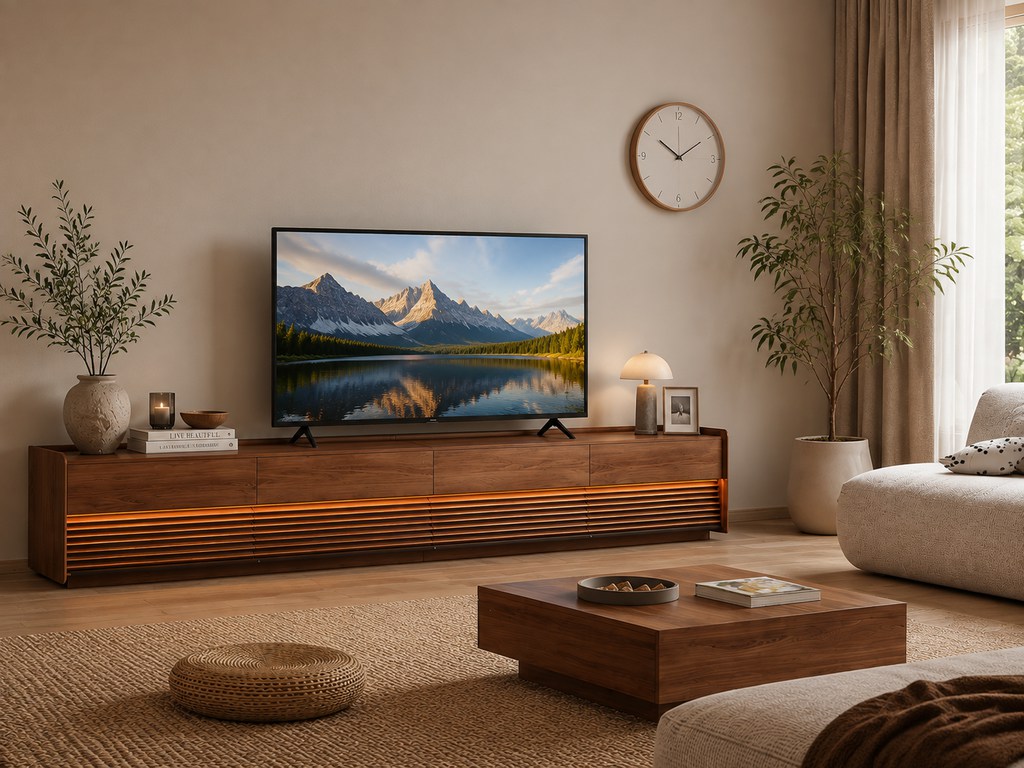
Introduction
A stable TV stand depends on more than cabinet weight or a high tabletop capacity. Base design, height, depth, structural rigidity, floor contact, and the way the television fits on the cabinet all contribute to how well the complete setup is supported.
For shoppers, the important question is not whether one specification looks impressive. It is whether several design factors work together: a suitable support footprint, appropriate proportions for the TV, reliable structural connections, and a clearly documented load rating.
This guide explains which TV stand stability factors are worth checking before you buy, especially when choosing a console for a larger television.
Table of Contents
What Makes a TV Stand Stable?
A stable TV stand stays consistently supported when ordinary forces around it change.
That means three different things should happen at the same time:
- The cabinet remains in full, even contact with the floor.
- The television stays completely supported by the usable tabletop.
- Opening storage or making normal adjustments does not cause noticeable rocking, sliding, or forward movement.
This is slightly different from asking whether a TV stand is sturdy. Structural sturdiness describes how well the cabinet resists bending, sagging, loose joints, or distortion, while stability describes how consistently the complete setup remains supported.
Understanding flimsy vs. sturdy TV stand construction is useful because a structurally rigid cabinet can still rock on uneven flooring, while a level cabinet can still have weak structural connections. For buying decisions, these should be treated as related but separate checks.
How Base, Height, and Depth Affect Stability
The dimensions that matter are not limited to the cabinet’s advertised width.
A Wide Cabinet Is Not Automatically a Wide Base
The effective base is determined by where the furniture actually contacts the floor.
A 75-inch-wide cabinet with supports positioned well inside its outer edges may stand on a narrower footprint than its appearance suggests. By comparison, a properly designed plinth or support system that reaches farther across the cabinet can create a more planted stance.
When shopping online, look for front, side, and underside photos instead of judging the base only from the hero image.
Front-to-Back Support Matters Too
Width is only one part of the support footprint. Front-to-back depth also matters, particularly when a television uses a deep pedestal or widely positioned feet.
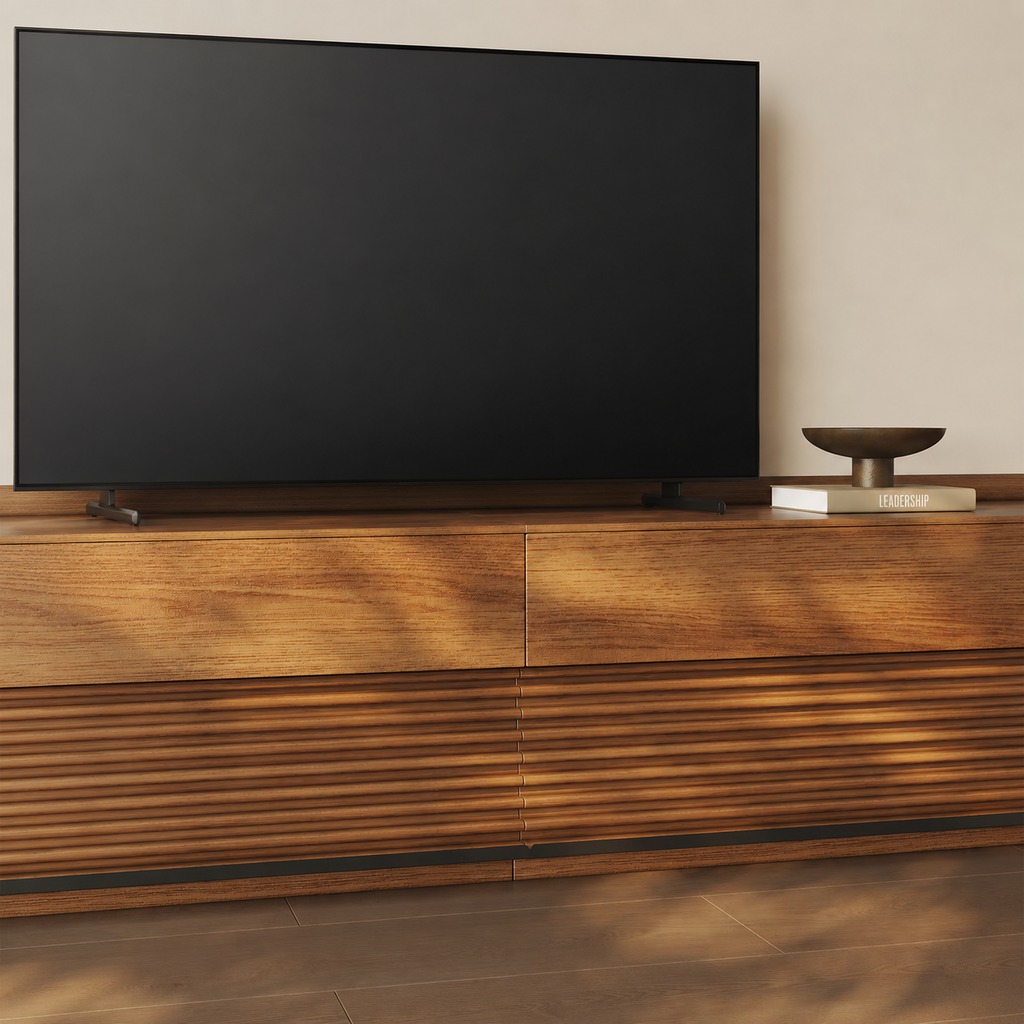
Check the usable tabletop rather than exterior depth alone. The television’s complete feet or pedestal should remain inside the flat supporting surface, without depending on raised trim, rounded edges, or overhang.
A Lower Setup Reduces Unnecessary Height
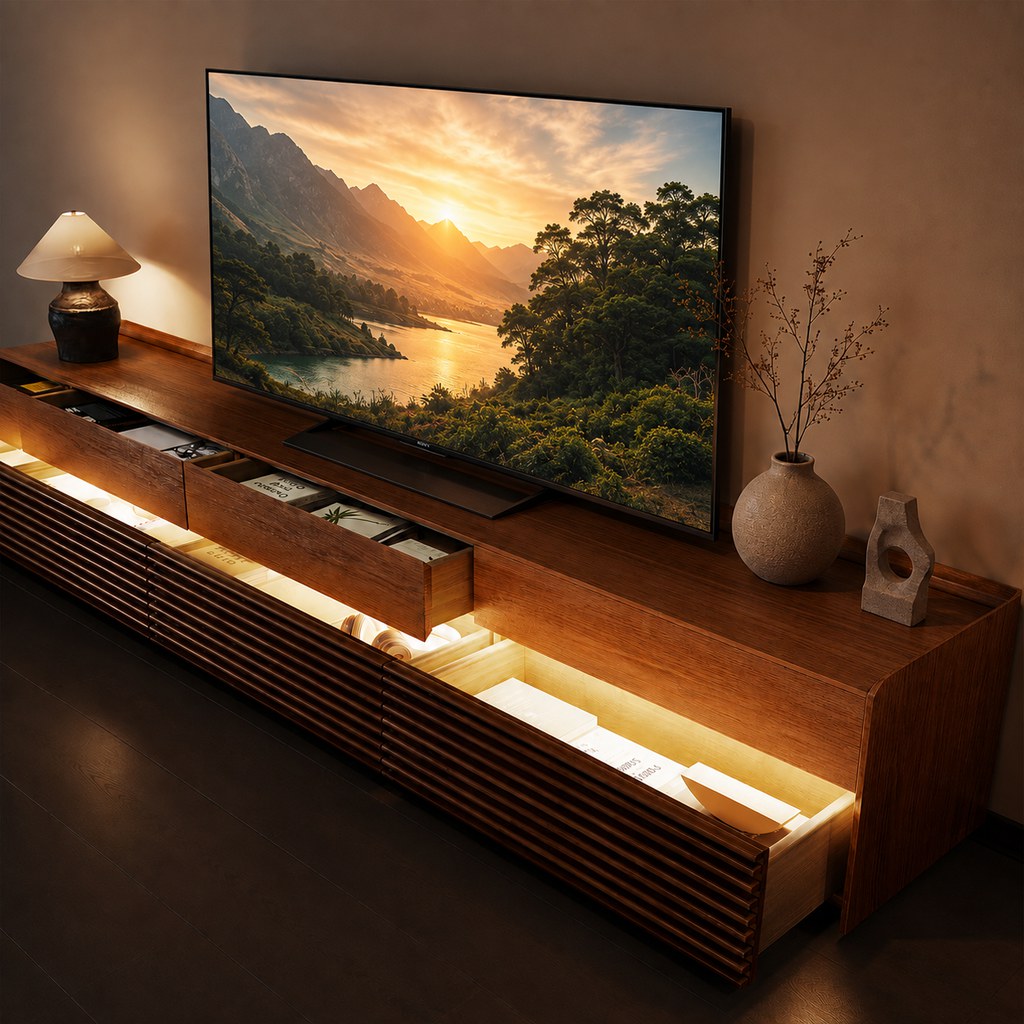
All else being equal, a lower TV stand reduces the height of the combined TV-and-furniture setup. This becomes especially relevant with larger screens, where a tall cabinet can push the display unnecessarily high and make the media wall feel visually top-heavy.
Height alone does not determine stability. A low cabinet with poor floor contact or weak structural connections is not automatically more stable than a taller, well-designed stand. Low height should therefore be evaluated together with base geometry, depth, structural rigidity, and TV placement.
A low-profile TV stand for large TVs and low seating can also help keep a larger screen closer to a practical seated viewing position without requiring a tall entertainment cabinet.
Why Fully Assembled Construction Matters
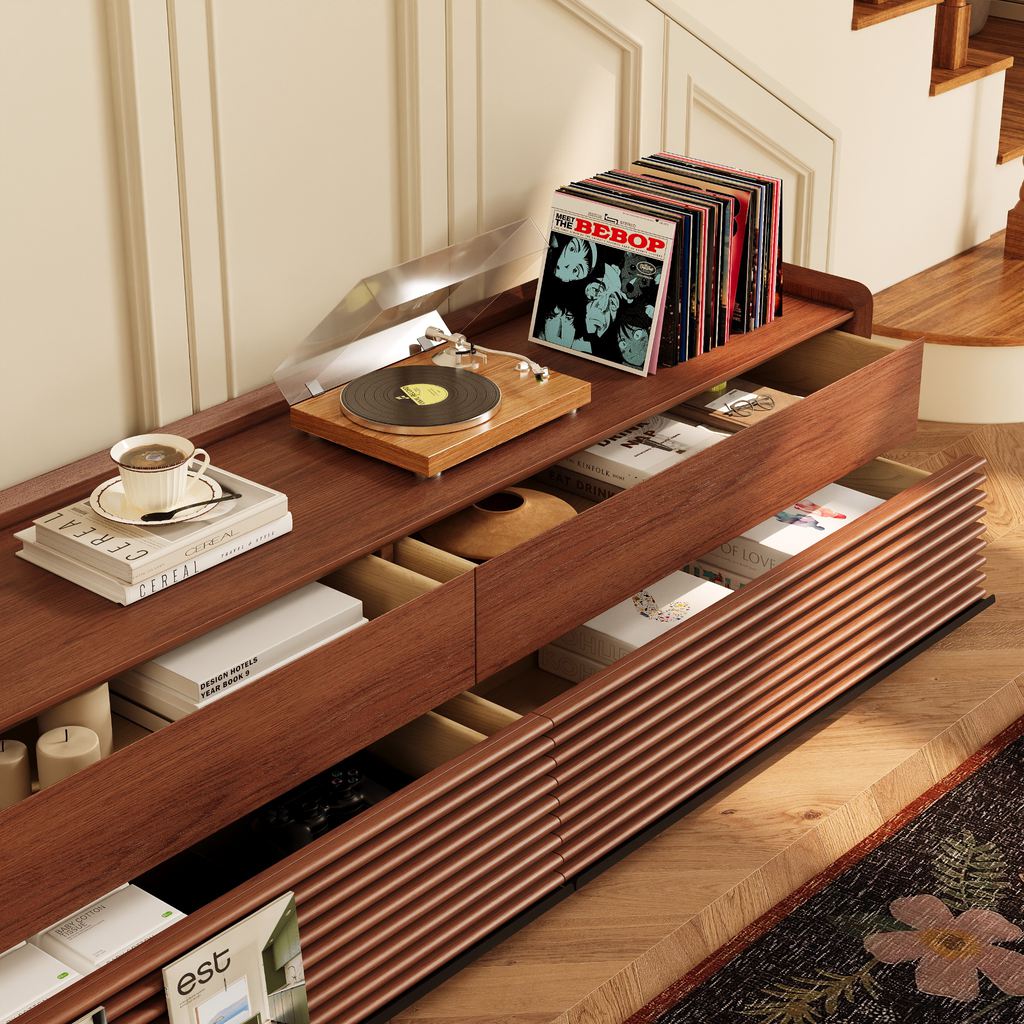
Fully assembled construction does not automatically make every TV stand more stable. Its advantage is more specific: the cabinet’s primary structural geometry is already established before it arrives in the room, reducing dependence on customer-installed structural joints.
Furniture that requires substantial assembly can still perform well when it is properly designed and assembled. However, incorrectly tightened, misaligned, or incomplete connections introduce another variable that can affect cabinet rigidity. A fully assembled cabinet removes much of that variation from the customer setup process.
For a large TV stand, this makes fully assembled construction a useful structural consideration alongside base design, cabinet dimensions, floor contact, and tabletop capacity—not a stand-alone guarantee of stability.
Weight Placement and TV Stand Stability
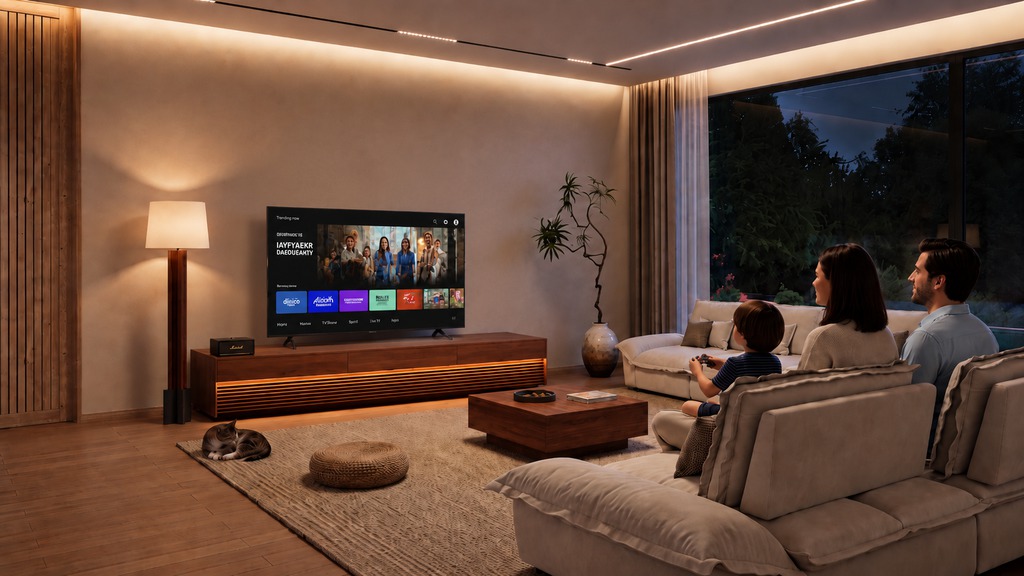
Weight capacity tells you how much a specified surface is rated to support. Weight placement tells you where that load acts on the furniture.
The two should not be confused. A high tabletop weight rating can indicate substantial load capacity, but it does not by itself guarantee TV stand stability. The final setup still depends on where the weight sits, how the cabinet is supported, and whether the TV fits properly on the usable surface.
Start with the television itself. Its entire pedestal or both feet should rest on the flat top, without hanging over an edge or sitting on raised trim. Position the screen according to the television and furniture manufacturers’ instructions rather than pushing it toward the front for easier cable access.
Storage matters as well. A closed drawer keeps its weight inside the cabinet; opening it shifts that weight outward. The heavier the contents, the more noticeable that change can become.
Keep dense permitted items lower in the cabinet, avoid overloading drawers, and distribute stored weight reasonably across the cabinet. If normal drawer use causes noticeable rocking or movement, check the floor contact, load distribution, and structural connections rather than adding more weight to “hold it down.”
What to Check on a TV Stand Product Page
A product page cannot guarantee how a TV stand will perform in every room, but it should provide enough information to evaluate the main design factors before ordering.
Check:
- Overall height: A lower cabinet can keep a large-screen setup from becoming unnecessarily tall.
- Base and floor contact: Look beyond overall width and check where the cabinet is actually supported.
- Usable depth: Make sure the television’s complete feet or pedestal fit on the flat tabletop.
- Tabletop capacity: Confirm that the published rating applies specifically to the surface supporting the television.
- Assembly method: Check whether the primary cabinet structure arrives assembled or depends on customer-installed structural connections.
- Construction: Consider dimensions, material, structural support, and joints together rather than treating one material name as proof of strength.
Shipping weight should not be treated as a substitute for stability, and a heavy cabinet is not automatically a better-supported one. Floor conditions still matter after installation, so all intended support points should make consistent contact with the final surface.
How These Features Work Together in a Large TV Stand
These buying checks become more useful when they are applied together rather than treated as separate specifications.
The POVISON Ansel Mid-Century TV Stand combines a 19.29-inch cabinet height, 70.86-inch width, fully assembled plywood construction, and a 200-pound rated desktop. Its low profile helps keep a larger television from gaining unnecessary height, while the fully assembled cabinet reduces dependence on customer-installed structural joints. The 200-pound rating serves a separate purpose: it provides documented evidence of how much weight the desktop is rated to support.
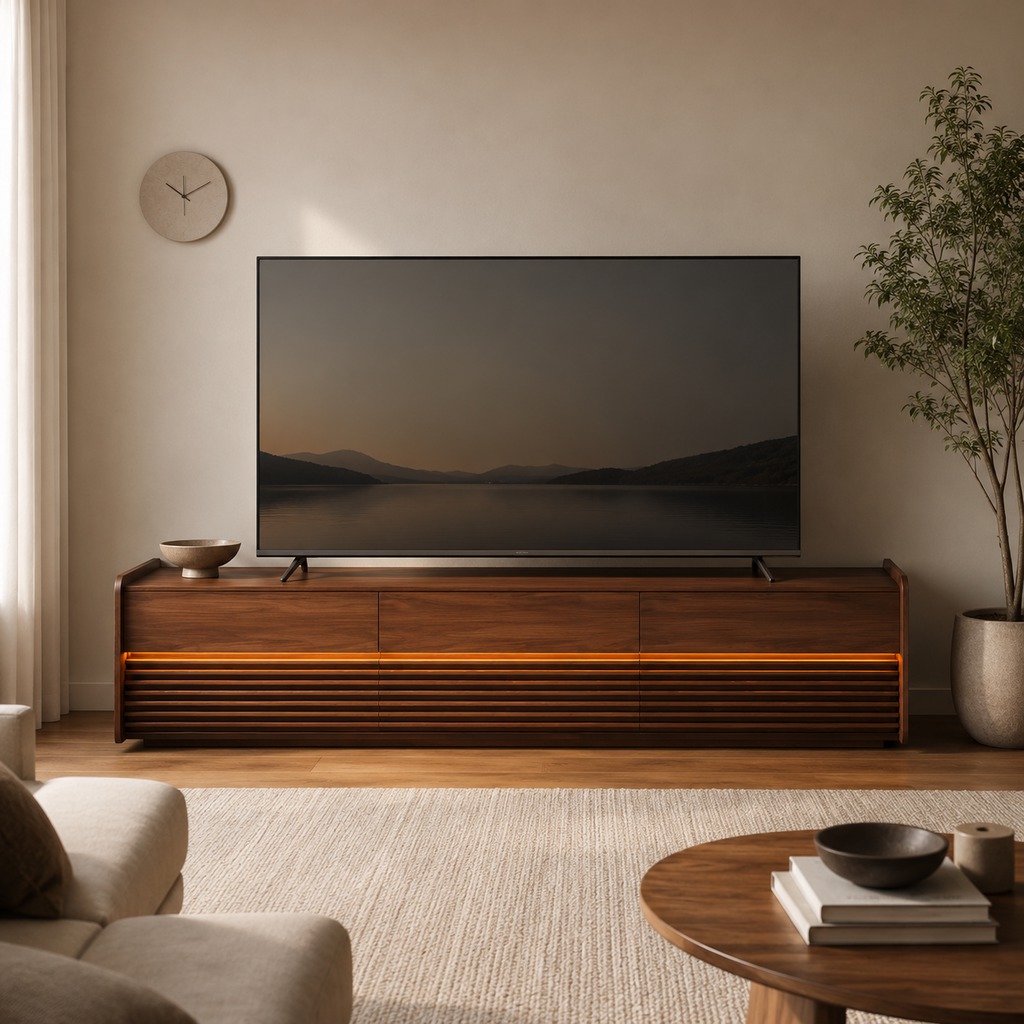
Ansel Mid-Century TV Stand
👍 Best for: Low-profile setups with larger TVs
✨ 19.29-inch low-profile height
✨ Fully assembled plywood construction
✨ 200-pound rated desktop
✨ Six concealed storage drawers
None of these features alone proves stability. Together, however, they address several of the design factors shoppers can evaluate before buying: overall geometry, structural setup, large-screen proportions, and supported load.
Conclusion
A stable TV stand should not be judged by cabinet weight or one impressive capacity number. The better buying decision comes from looking at the complete design: base support, height, depth, usable tabletop space, structural rigidity, assembly method, and the load the desktop is actually rated to support.
For larger televisions, a low-profile design, fully established cabinet structure, and documented tabletop capacity can each add useful evidence. The key is to evaluate those factors together rather than treating any one feature as a guarantee of stability.
Find the Right TV Stand
Explore TV stands built for different screen sizes, room layouts, and everyday living needs.
Frequently Asked Questions
How wide should a TV stand be for a large TV?
The stand should be wide enough for the television’s complete feet or pedestal to sit securely on the usable tabletop. For visual balance, many shoppers also prefer a console wider than the screen itself. However, exterior cabinet width alone does not guarantee a wider or more stable support footprint.
Do separate TV feet need more tabletop space than a center pedestal?
Usually, yes. TVs with widely spaced feet require enough usable width and depth at both support points, while a center pedestal concentrates support closer to the middle. Check the television’s actual stand dimensions rather than screen size alone, especially when comparing narrow or low-profile TV stands.
Does wall-mounting a TV make stand stability less important?
It changes what the cabinet needs to support. A wall-mounted TV removes the television’s weight from the tabletop, but the media console may still carry speakers, gaming equipment, storage, or other electronics. Cabinet rigidity, floor contact, and appropriate load capacity therefore remain relevant even without a TV sitting on top.
Can an 85-inch TV sit on a 71-inch TV stand?
Yes, potentially. The console does not always need to be wider than the screen, but the TV’s complete feet or pedestal must fit safely within the usable tabletop and stay within its rated capacity. Check the TV’s actual base width and depth rather than relying on the 85-inch screen size alone.
Do adjustable feet make a TV stand more stable?
They can help when the floor is slightly uneven because individual levelers allow all support points to make more consistent contact with the surface. On a flat floor, adjustable feet may offer little additional benefit. They also cannot compensate for weak structural joints, inadequate depth, or a poorly designed support footprint.


[…] better choice combines a clearly rated top, a supported load path, a rigid cabinet structure, and stable floor contact. When those details agree, the furniture is more likely to support your setup confidently through […]
[…] does not eliminate tip-over risks from pulling, climbing, impacts, or opened storage. This guide to stable TV stand design explains how floor contact, support geometry, weight placement, and anchoring affect the complete […]