 By Stephanie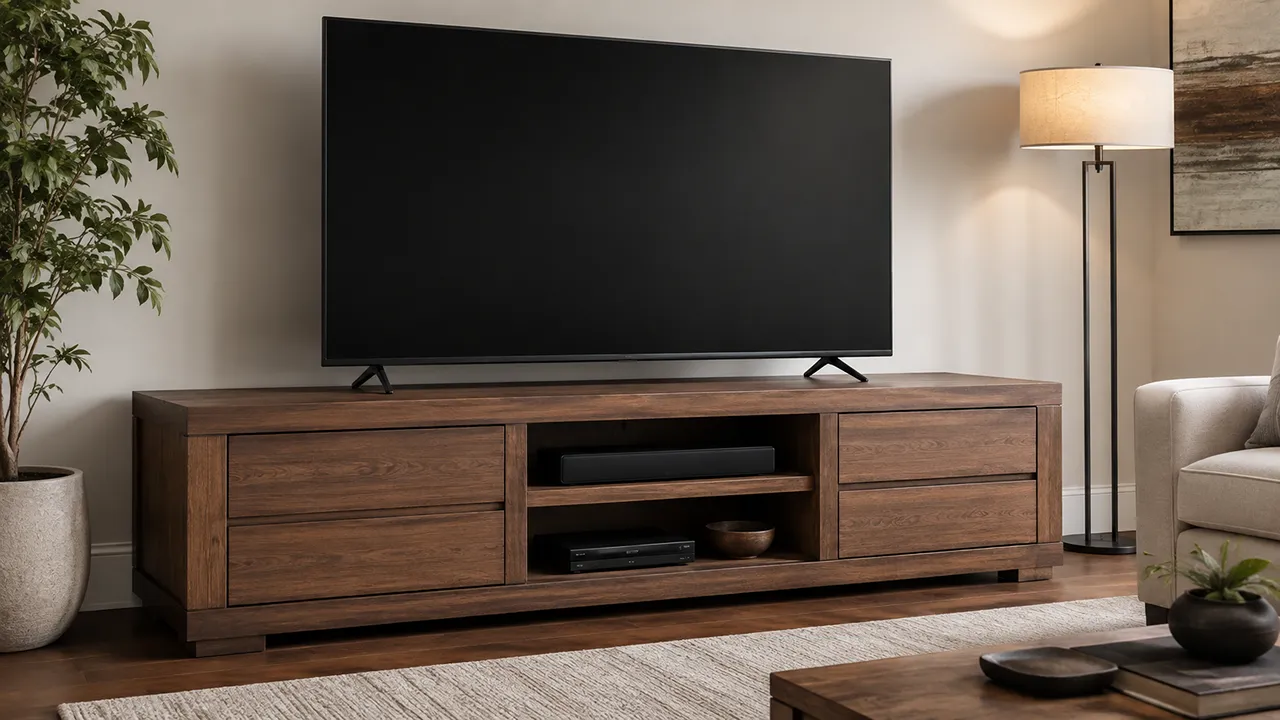
A TV stand can look substantial online and still develop a bowed top, loose joints, or a worrying side-to-side wobble once it enters your living room. This guide to flimsy vs. sturdy TV stands explains how to recognize those problems before you buy by examining the cabinet’s support structure, connections, floor contact, and published weight limits. Instead of assuming heavier furniture or thicker-looking panels are automatically stronger, you will learn which design details actually help a media console support your television and stay stable through everyday use.
Table of Contents
What Actually Separates a Flimsy TV Stand From a Sturdy One?
A sturdy TV stand safely supports its intended load, resists sagging across unsupported spans, stays rigid against sideways movement, and maintains stable contact with the floor. These are separate performance requirements. A console can pass one and still fail another.
A cabinet rated to hold your television, for example, may still wobble because its connections allow the frame to twist. Another may feel solid when empty but develop a bowed top if the television sits over a long unsupported section.
Understanding how TV stand weight limits apply to different surfaces helps separate a published desktop capacity from the load limits of interior shelves and drawers.
| Structural check | Flimsy warning sign | Stronger structural signal | What it helps prevent |
| Desktop capacity | No published limit or unclear weight claims | A stated capacity for the TV-supporting surface | Overloading |
| Top support | Long unsupported spans | Clear support beneath the loaded area | Bowing and sagging |
| Frame rigidity | Loose connections or twisting | Cabinet stays square under normal use | Wobble and racking |
| Floor contact | Rocking or uneven support | Stable contact with the floor | Uneven loading |
| TV placement | TV base extends beyond the usable surface | Full support for the TV feet or pedestal | Unstable placement |
These signs answer what makes a TV stand sturdy without relying on appearance, furniture weight, or marketing language alone.
Which Design Details Reveal a TV Stand’s Real Strength?
A dependable console has to carry weight downward, resist sideways distortion, and stay planted on the floor. Those jobs happen in different parts of the cabinet. Inspect the top, internal support, rear structure, and base separately, because a strong material cannot compensate for a missing support path.
Top Panels, Internal Dividers, and Center Support
Follow the television’s weight from its feet or pedestal through the cabinet top and down toward the floor. A shorter supported span generally places less bending stress on the surface than a long panel bridging an empty opening.
Internal vertical dividers, structural framing, a continuous base, or a manufacturer-designed center support can help carry that load. A visible middle leg is not essential when the cabinet uses another properly supported structure.
Material matters, but only in context. Plywood can provide dependable structural performance when paired with adequate support and a clearly published desktop capacity. A decorative wood finish alone does not reveal how the cabinet is built underneath.
For living rooms where a large TV needs reliable support, the POVISON Ansel Mid-Century TV Stand pairs a durable plywood cabinet with a 200-pound desktop capacity. Its low, wide design gives larger screens a stable, balanced foundation without overwhelming the room, while the fully assembled construction reduces uncertainty around loose or misaligned structural connections that can occur during at-home assembly.

POVISON Ansel Mid-Century TV Stand
A reliable choice for buyers who want a sturdy TV stand that supports everyday use while keeping a clean, modern look.
Joints, Back Panels, and Side-to-Side Movement
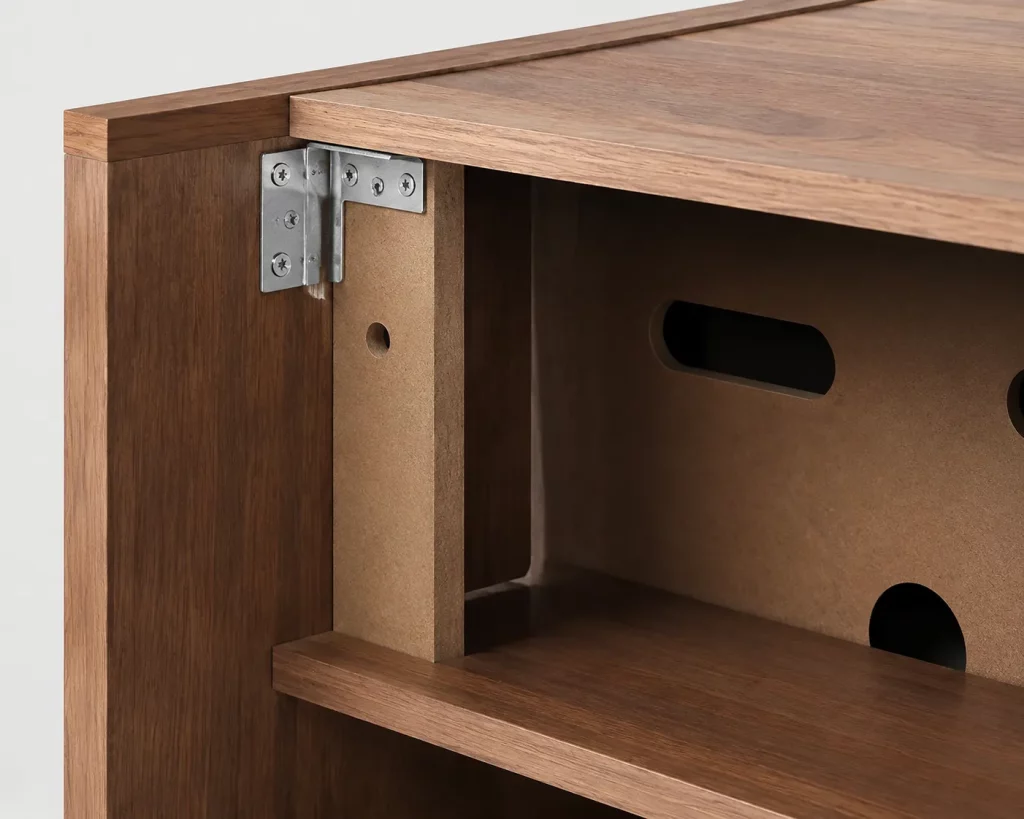
A cabinet may support downward weight yet shift sideways because its frame lacks sufficient rigidity. This movement, commonly called racking, stresses the connections and can eventually leave drawer fronts or doors misaligned.
Look for securely connected corners, consistent gaps, and a rear panel or framing system that helps the cabinet retain its shape. An open back is not automatically a structural weakness, but the cabinet should use another method to resist sideways movement.
Cable openings do not necessarily make a back panel ineffective. What matters is whether the remaining structure keeps the cabinet square during ordinary use.
Base Footprint and Full Contact With the Floor
A reliable base transfers weight onto the floor without rocking. Whether the cabinet uses individual legs or a continuous base, each intended contact point should rest evenly on the surface.
Decorative legs should connect to the supporting structure rather than simply attach to a thin exterior panel. A cabinet with an attractive silhouette can still feel unstable if its support points are poorly positioned or unevenly loaded.
The television’s feet or pedestal must also fit completely on the flat, usable surface. Rounded edges, raised trim, and shallow tops can reduce the area available for safe placement.
Assembly Quality and Structural Connections
Assembly affects stability when important connections are left loose, installed incorrectly, or dependent on hardware that gradually works free.
A flat-packed stand can perform well when its components, instructions, and bracing are properly designed. Fully assembled construction reduces uncertainty about customer-installed structural joints, but it does not replace a published capacity, proper floor contact, or manufacturer-recommended anti-tip protection.
What Changes When the Stand Enters a Real Living Room?
A TV stand rarely fails during a quiet moment when everything is perfectly still. Problems often appear during ordinary routines: opening a drawer, adjusting a game console, reconnecting a cable, or reaching behind the cabinet.
Imagine pulling open a storage drawer while your television, soundbar, and accessories are already in place. A well-built cabinet should stay square and planted instead of shifting slightly with each movement. Small amounts of twisting may seem harmless at first, but repeated stress can loosen connections over time and create uneven doors, gaps, or wobbling.
The same applies when you upgrade your setup. Adding a new streaming device or moving cables should not require the entire cabinet to flex or move. A thoughtfully designed TV stand provides stable support while allowing everyday access to the equipment inside.
Safety also matters in a real home. The U.S. Consumer Product Safety Commission’s Anchor It! campaign recommends securing furniture with drawers, doors, and shelves to help prevent tip-over injuries (U.S. Consumer Product Safety Commission). A sturdy cabinet supports your television reliably, but proper anti-tip measures remain an important part of a safe entertainment setup.
How Can You Verify a TV Stand’s Stability Before Ordering?
When shopping online, you cannot test a TV stand’s stability in person, so focus on the information that reveals how the cabinet is built and supported. Product photos show appearance, but specifications, measurements, and customer feedback often reveal whether the design can handle real use.
Before ordering, check:
- Confirm the published specifications. Make sure the listed weight capacity applies to the desktop surface supporting your television, and look for clear details about dimensions and construction.
- Measure your actual setup. Compare your TV’s feet or pedestal with the usable surface area instead of choosing a stand based only on screen size. Checking TV dimensions by screen size can help you understand the difference between a TV’s diagonal measurement and the actual width and footprint your stand needs to support.
- Look for repeated structural complaints. Reviews mentioning bowed tops, loose joints, uneven doors, or persistent wobbling are more useful than general comments about appearance.
- Be cautious when key details are missing. If a listing does not provide clear weight limits, dimensions, or support details, ask the seller for specific information before buying instead of making assumptions based on appearance or materials.
Choosing a sturdy TV stand online is less about finding the heaviest-looking option and more about finding clear evidence that the cabinet matches your television and daily use.
Conclusion
A sturdy TV stand should do more than meet a weight requirement. The better choice combines a clearly rated top, a supported load path, a rigid cabinet structure, and stable floor contact. When those details agree, the furniture is more likely to support your setup confidently through everyday use.

Find a TV Stand That Supports More Than Your Screen
Explore TV stands with thoughtful construction, stable foundations, and practical designs for everyday living.
FAQ
Can a center pedestal overload one part of the top?
A center pedestal concentrates the television’s weight into a smaller area than widely spaced feet. Check whether the pedestal sits above an internal divider or another supported section, and confirm that the entire base fits the usable top. A broad desktop rating does not prove every unsupported spot tolerates the same concentrated load.
Do adjustable feet fix a structurally weak TV stand?
Adjustable feet can correct rocking caused by minor floor irregularities, but they cannot repair loose joints, a distorted cabinet, a bowed top, or missing structural reinforcement. Level the unloaded stand first. If the cabinet still shifts sideways or gaps remain uneven afterward, the problem is structural rather than floor-related.
Can wall-mounting the TV make a weak TV stand less of a concern?
Wall-mounting removes the television’s weight from the cabinet top, but it does not fix weak joints, poor floor contact, or a frame that racks during normal use. The stand still needs adequate support for media equipment and storage. Evaluate the cabinet’s structure independently rather than assuming a wall-mounted TV makes structural weaknesses irrelevant.
Can unevenly loaded storage affect TV stand stability?
It can. Heavy equipment concentrated on one side or placed high inside the cabinet can change how weight is distributed through the stand. Follow individual shelf and drawer limits, keep heavier items lower when possible, and avoid exceeding the manufacturer’s stated capacities. Good cabinet construction still depends on the load being used as intended.


[…] a busy home, a modern TV stand with sturdy wood or wood-look surfaces, metal legs, and a practical, easy-to-clean finish will usually give you […]
[…] flimsy vs. sturdy TV stand construction can help shoppers compare support layout, cabinet rigidity, structural connections, and published […]