 By Kelvin
Introduction
Choosing between a sectional and a reclining sofa means deciding whether your living room needs more shared seating, more adjustable positions, or both. The right answer depends less on showroom comfort than on who uses the room, how often they recline, and what happens when the footrests open. This sectional vs reclining sofa comparison breaks the choice into three practical options: a stationary sectional, a straight reclining sofa, and a reclining sectional. You will learn how to evaluate usable seats, everyday routines, room flow, and furniture configurations without paying for features your household rarely needs.
Table of Contents
What Is the Difference Between a Sectional and a Reclining Sofa?
A sectional describes a sofa’s layout: connected pieces create an L-shaped, U-shaped, or otherwise extended seating arrangement. A reclining sofa describes a function: one or more seats have adjustable backrests and extending footrests. These categories overlap because a sectional can also contain reclining seats.
The most useful sectional vs reclining sofa comparison includes three distinct configurations:
| Decision factor | Stationary sectional | Straight reclining sofa | Reclining sectional |
| Layout | Connected corner or extended arrangement | One linear sofa | Corner arrangement with selected motion seats |
| Typical seating priority | More shared, continuous seating | Individual adjustable comfort | Group seating plus limited reclining positions |
| Reclining seats | None | Usually one or two; verify specifications | Varies by configuration; never assume every seat reclines |
| Main room demand | Width, corner depth, and open circulation | Forward footrest clearance and electrical access | Corner footprint, moving-footrest clearance, and power planning |
| Best fit | Families, frequent guests, and flexible lounging | One or two people who recline regularly | Larger households that genuinely need both functions |
The deciding question is not which category sounds more comfortable. It is whether your household needs additional seating, additional reclining positions, or a carefully balanced combination.
How Many Seats Do You Need—and Who Actually Reclines?
Start with two separate numbers: how many people need supported seats and how many people will recline simultaneously. A five-seat sectional with two reclining positions remains a five-seat sofa, but only two people can use powered footrests at once.
Count backed corner positions, armless modules, and fixed seats separately. An ottoman provides legroom but does not create another supported seat. A wide cushion may accommodate two children yet function as one adult seat.
For a couple who both recline after dinner, two independent motion seats may matter more than four stationary places. For a household hosting grandparents and children every weekend, extra backed seating usually delivers more value. When choosing a large sectional couch for a family room, prioritize real seating capacity over an impressive overall width.
Which Option Fits How Your Household Uses the Room?
Furniture needs change with the activity taking place, not simply the number of people present. Shared conversation benefits from connected seating, while regular television viewing may justify independent adjustments. A mixed-use room requires particular attention to whether stationary and reclining positions can coexist without disrupting everyone else’s routine.
Shared Seating, Kids, Pets, and Frequent Guests
A stationary sectional keeps seating continuous, making it easier for children to shift positions and guests to face one another. A movable ottoman adds flexible leg support without introducing mechanical parts. Pet-friendly, easy-clean upholstery can matter more than powered features when the sofa serves as the household’s main gathering place.
Individual Reclining and Regular TV Viewing
A straight reclining sofa works well when one or two adults use the same seats daily. Independent controls let one person raise the footrest while another stays upright. Separate headrest adjustment also helps maintain a comfortable viewing angle without requiring an oversized corner arrangement.
When Different Household Members Want Different Things
A reclining sectional makes sense when several people need normal seats while one or two consistently want powered support. For example, a parent can recline after work while children remain upright nearby. Confirm the actual placement of motion seats rather than assuming the entire sectional adjusts.
What Happens to the Room When the Seats Open?
A sofa that fits while closed may interrupt daily movement once the footrests extend. Evaluate the layout in three operating states:
- Everything upright: Check entrances, corner access, and the normal route through the room.
- One seat reclined: Confirm the footrest clears the coffee table and nearby furniture.
- Two seats reclined: Verify that other people can still enter, leave, and reach their seats.
Use the manufacturer’s fully reclined depth rather than estimating from upright dimensions. A wall-hugger mechanism can reduce rear clearance, but it does not eliminate the space required in front. Reviewing reclining sectional sofa size and clearance requirements helps confirm whether open seats preserve a practical walking route.
When Is a Reclining Sectional Actually Worth It?
A reclining sectional earns its larger footprint when the room regularly serves multiple seated people and at least two household members genuinely use adjustable positions. It becomes less convincing when only one person reclines, the corner blocks circulation, or the powered seats face awkwardly away from the television.
Before choosing a hybrid, confirm the number and location of powered seats, the fully open footprint, outlet access, delivery clearance, and warranty coverage for the motors. A carefully selected power reclining sectional for a family room should solve both seating needs without creating a daily obstacle.
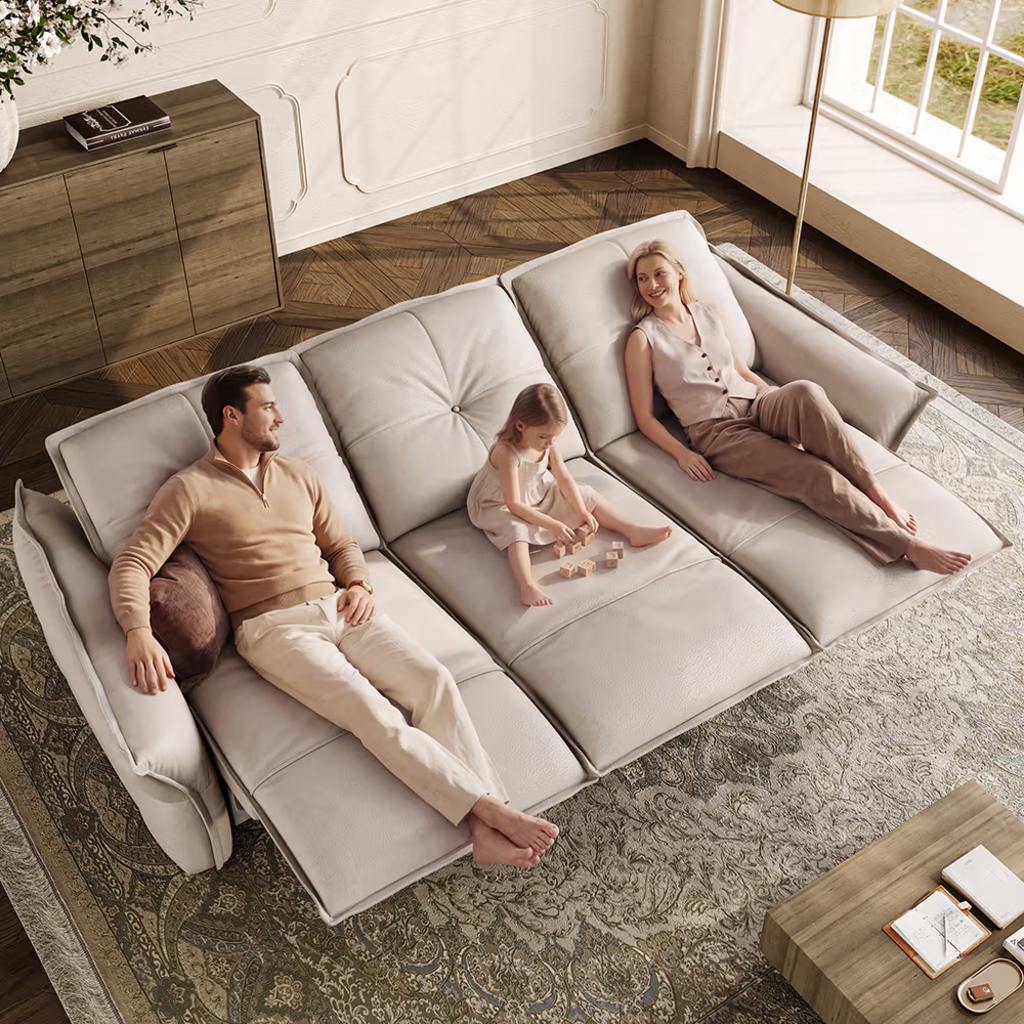
POVISON Picks for Three Different Seating Priorities
These three configurations represent different answers to the same buying decision: a stationary sectional for flexible shared seating, a straight reclining sofa for personalized comfort, and a reclining sectional that combines both. Compare the actual layout and number of motion seats instead of assuming every sectional position reclines. Prices shown reflect regular listed prices or published collection ranges and may vary by configuration, region, promotions, and availability.
Best Stationary Sectional for Flexible Family Seating
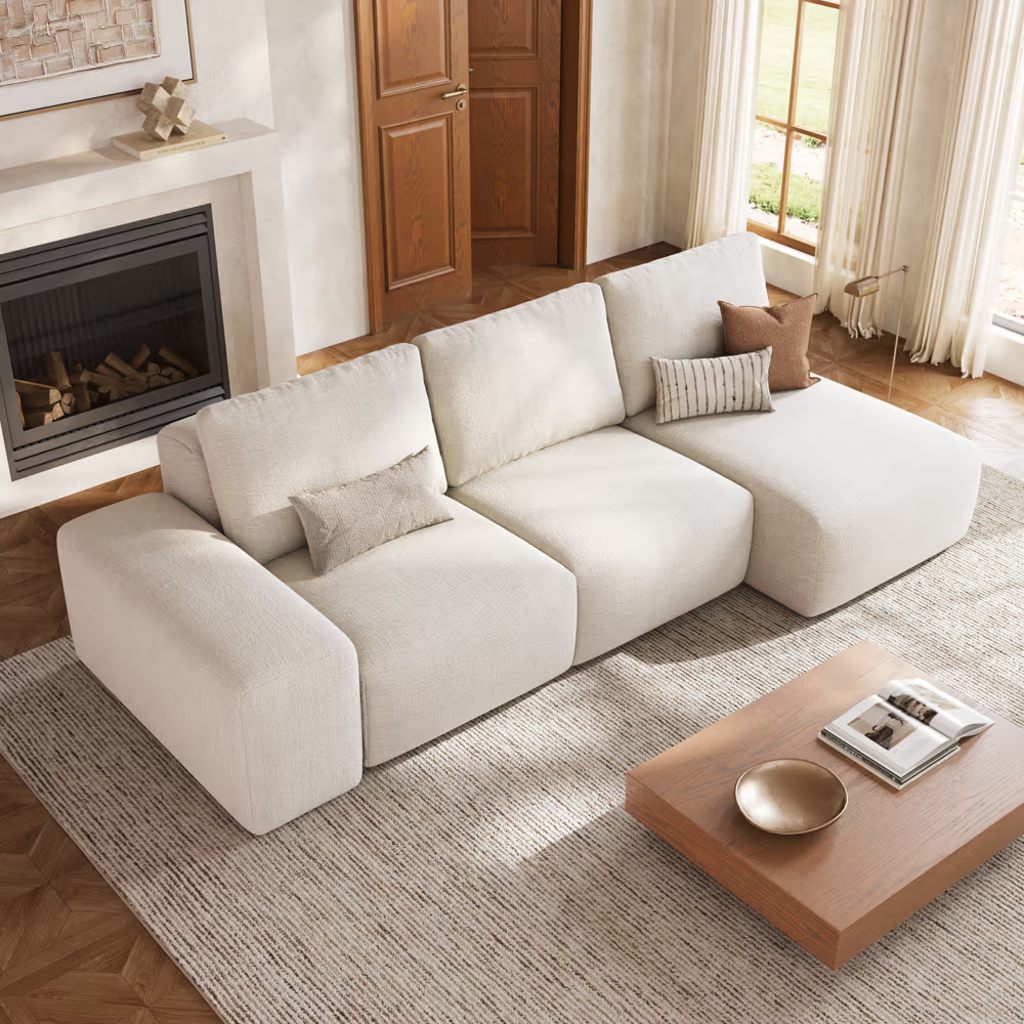
Moku Modular Block Sofa 4-Piece Sectional with Chaise
Modular chaise seating creates flexible shared comfort without cords or reclining mechanisms.
👍 Best for: Families wanting flexible chaise seating
✨ Highlights
- Modular chaise layout supports shared seating and relaxed lounging.
- Convertible armrest functions as a side table or footrest.
- Water-repellent chenille helps simplify everyday cleanup.
- Detachable components make relocation and rearrangement easier.
🎯 Features
Moku combines connected seating with a dedicated chaise, creating a genuine sectional layout without requiring powered mechanisms or electrical access. The modular construction allows individual components to be repositioned as room arrangements change, while the convertible armrest provides a convenient surface for drinks or additional leg support. Water-repellent chenille helps manage everyday spills. Choose this configuration when shared seating, flexible lounging, and uncomplicated room flow matter more than adjustable reclining positions.
🗨️ Buyer Review
“I can stretch out and lie half-reclined on the chaise lounge while watching TV.” — Heather
Best Straight Reclining Sofa for Everyday Comfort
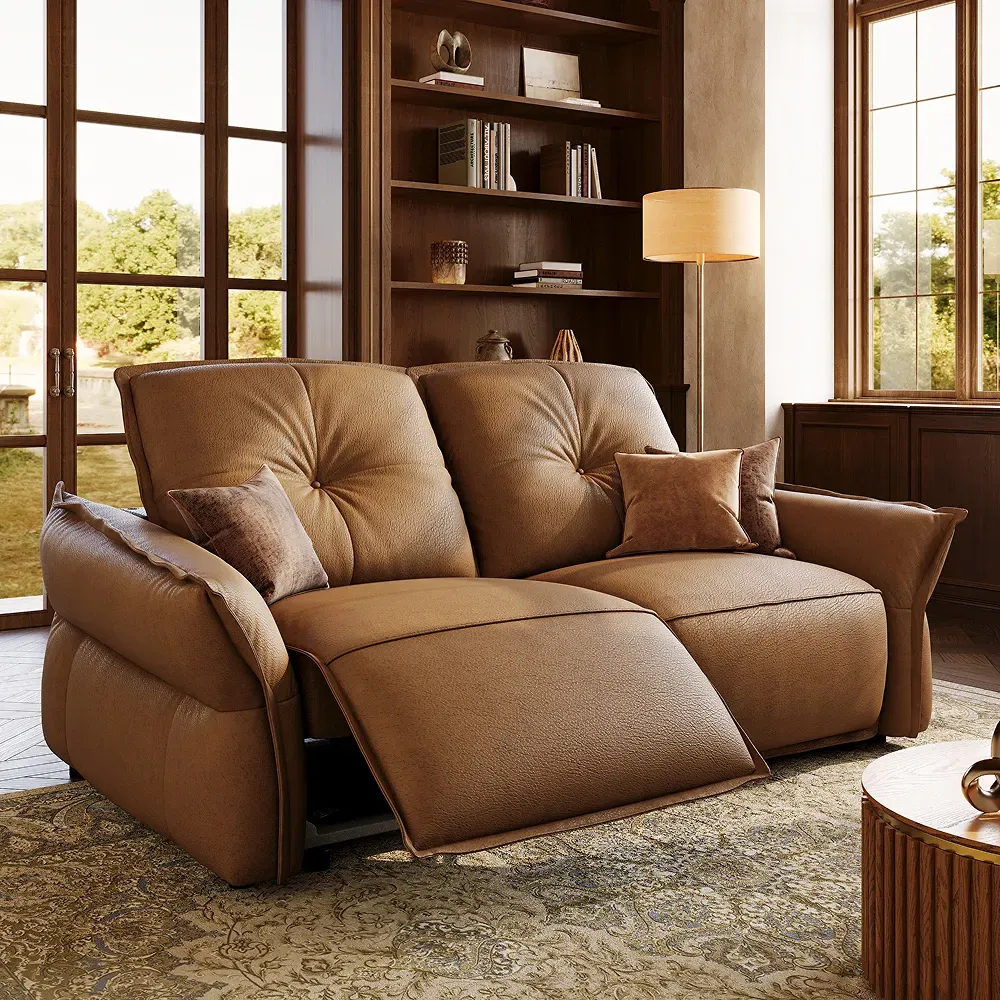
Marlowe Dual Power Reclining Loveseat
Independent powered adjustments deliver personalized comfort without requiring a sectional layout.
👍 Best for: Couples prioritizing adjustable leather seating
✨ Highlights
- Independent power headrest and footrest adjustment.
- Smooth 90°–145° reclining range.
- Top-grain leather upholstery with easy-wipe maintenance.
- Straight layout avoids occupying an entire room corner.
🎯 Features
Marlowe suits households that value individual reclining comfort more than an extended seating arrangement. Independent headrest and footrest adjustments let users fine-tune support for reading, watching television, or relaxing, while the straight loveseat layout keeps the room easier to organize than a large corner sectional. Top-grain leather adds a durable, easy-clean surface, and the dual-motor mechanism provides controlled movement without relying on a fixed reclining position.
🗨️ Buyer Review
“The independently operating head and foot rest helps you find the perfect comfort level” — Margaret
Best Reclining Sectional for Shared Family Seating
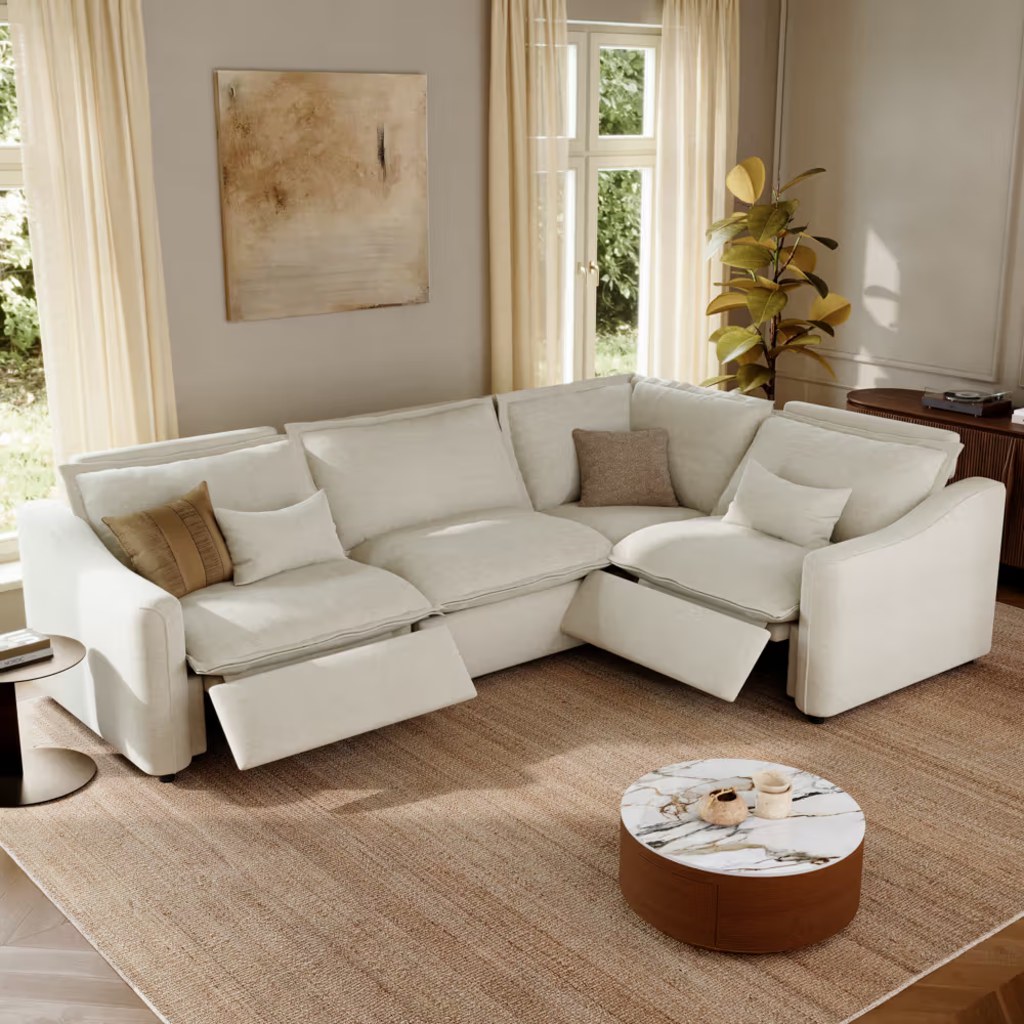
Ergopals-Power Reclining Sofa
Connected corner seating combines family capacity with independently adjustable reclining positions.
👍 Best for: Families needing seating and reclining
✨ Highlights
- Genuine corner configuration accommodates approximately five to six people.
- Available layouts include two or three reclining positions.
- Wall-hugging design reduces rear clearance requirements.
- Removable covers and discreet charging support everyday use.
🎯 Features
The selected Ergopals configuration includes a dedicated corner piece, creating an actual L-shaped sectional rather than a straight reclining sofa. Two or three powered positions provide adjustable comfort, while the remaining seats stay available for family members who prefer sitting upright. Reclining seats adjust between 90° and 145°, and the wall-hugging mechanism limits the space needed behind the sofa. Check forward footrest clearance before choosing this larger configuration.
🗨️ Buyer Review
“The reclining features are smooth and easy to use, making it the perfect spot to relax after a long day.” — Tiffany
Conclusion
The right sectional vs reclining sofa decision comes down to three practical questions: how many people need real seats, how many actually recline, and whether the room still works when the footrests open. A stationary sectional prioritizes connected family seating, a straight reclining sofa focuses on individual comfort, and a reclining sectional combines both when its larger footprint makes sense. Compare the actual configuration rather than the category name, including the number of powered positions and their placement. The most useful sofa is the one that supports your household’s regular routine without complicating the room.

Find the Right Sofa
Explore designs for different room sizes, layouts, and everyday needs.
FAQs
Can a reclining sofa float without a floor outlet?
Yes, but a powered sofa still needs a safe electrical connection. Route the cord toward a nearby wall outlet without crossing walking paths or passing beneath moving mechanisms. Use a battery pack only when the sofa manufacturer explicitly confirms compatibility; backup power and wireless operation are not standard features.
Can a wall-hugger recliner sit directly against a baseboard?
Only if the manufacturer specifies zero rear clearance for that exact configuration. Baseboard depth, protruding outlets, plugs, and uneven walls may still prevent flush placement. Position the sofa, inspect the back and power connections, and test a full recline before assuming a wall-hugging label guarantees direct wall contact.
Can reclining modules be moved to different positions?
Only when the manufacturer confirms that the powered modules, connectors, and cable routes support that arrangement. Some sectional pieces move freely, while reclining units have fixed left- or right-facing positions. Before reconfiguring, check electrical lead length, attachment hardware, and whether the control panel remains accessible.
Can a center console reduce usable seating?
Yes. A fixed console can replace a supported seat even when a reclining sofa looks wide enough for three people. Check whether the middle position includes a backrest and usable cushion or permanently contains storage, cup holders, or controls. This matters when household seating needs change between weekdays and gatherings.
Is a chaise enough if only one person needs legroom?
Often, yes. A stationary chaise or movable ottoman provides leg support without requiring motors, power cords, or additional opening clearance. However, neither automatically offers adjustable backrest angles or independent footrest control. Choose a reclining seat instead when the user regularly needs several supported sitting positions.


[…] family homes, a mid century modern reclining sofa or sectional in stain-resistant fabric can handle movie nights, snack plates and the occasional pillow fort. Use […]
[…] in zones. In small apartments, a single reclining sofa plus a slim accent chair may be more functional than a giant sectional that blocks doorways. In large family rooms, an L-shaped or U-shaped sectional with a couple of […]