 By Stephanie
Choosing record album storage means finding furniture that protects LPs, supports their weight, and fits the way you actually listen. This guide explains how to check interior dimensions, plan capacity, compare low cabinets with taller shelving, and place the furniture in a shared living room. It also covers access, environmental risks, and setup after delivery. The goal is not simply to hide a collection, but to keep records upright, easy to browse, and properly separated from heat-producing audio equipment as the collection grows.
Table of Contents
How Should Record Albums Be Stored Safely?
Safe vinyl storage keeps LPs upright, fully supported, and protected from heat, moisture, and direct sunlight. Records should not be stacked flat or left leaning across a wide compartment. Both positions create uneven pressure that can affect records or damage their outer jackets over time.
The Library of Congress recommends sturdy shelving because grooved discs can weigh more than 35 pounds per shelf-foot (Library of Congress). It also advises using immovable dividers every 4–6 inches that support the entire face of each sleeved record.
Apply those principles at home:
- Store records vertically with the spines facing outward.
- Use full-height dividers rather than narrow bookends that press against one small area.
- Keep the row comfortably filled but not so tight that removing one record bends the jacket.
- Use a suitable inner sleeve for the disc and an outer sleeve for the jacket.
- Avoid windows, radiators, fireplaces, damp exterior walls, and areas exposed to spills.
- Keep records above floor level in rooms where plumbing leaks or minor flooding are possible.
A closed cabinet can reduce everyday dust, but doors do not correct poor support, excess heat, or inadequate shelf strength. The cabinet still has to pass the same storage checks as an open shelf.
What Size Vinyl Storage Do You Need?
Most 12-inch LP jackets are approximately 12.5 inches high and wide. A practical compartment should therefore provide about 13 inches of clear interior height and depth so sleeved records can stand upright without rubbing against the top, door, hinges, or back panel.
When evaluating record album storage furniture, measure the usable opening rather than relying on the product’s overall dimensions. A 15-inch-deep cabinet may provide considerably less interior depth after accounting for the doors, frame, and rear panel.
Capacity should also be based on the collection you own. Stand the records upright in one supported row, measure the total linear width, and add 15–20% for growth. This method is more reliable than advertised record counts because gatefold albums, box sets, and outer sleeves vary in thickness.
Check these measurements before ordering:
| What to Check | How to Measure It | Reject the Furniture If |
| Clear interior height | Measure the smallest opening from the cabinet floor to the shelf or frame above | A sleeved LP cannot stand without rubbing |
| Clear interior depth | Measure from the usable front edge to the closed door or back panel | Jackets overhang or prevent the door from closing |
| Required shelf width | Measure the actual collection and add 15–20% | The current collection already fills the compartment |
| Per-shelf capacity | Find the rating for the exact shelf or cabinet floor | The seller cannot confirm that surface can carry the measured record row |
| Divider support | Check the height, spacing, and stability of dividers | Records must lean across a long unsupported run |
| Door clearance | Open the door and test the full access width | Hinges or door frames block comfortable browsing |
Do not apply a desktop or total-cabinet rating to an interior shelf. If the relevant surface has no published limit, ask the manufacturer to confirm it before purchase; do not estimate from the top rating.

Which Storage Type Fits How You Listen?
The right format depends on how often you browse the collection, how quickly it is growing, and whether the same furniture must hold a turntable or other equipment. Height alone does not determine suitability. A low cabinet can be practical for a shared living room, while a tall unit mainly benefits collections that need more capacity from limited floor width.
| Storage Type | Choose It When | Daily Access | Main Buying Check |
| Front-facing crate or bin | You have a smaller active collection and like flipping through covers | Fastest for browsing | Stable base, full jacket support, and usable carrying weight |
| Low or standard-height cabinet | You want concealed storage that fits naturally into a living room | Comfortable from a seated or kneeling position | Clear LP dimensions and door opening |
| Cube shelf | Your collection is growing and needs simple categories | Easy spine-out browsing | Per-cube load rating and anti-tip installation |
| Tall cabinet | Floor width is limited and capacity matters more than surface area | Upper rows may be harder to reach | Wall anchoring and weight kept toward the bottom |
| Media console | Records, a TV, and audio equipment share one wall | Good when bays have separate roles | Removable shelves, cable routes, and equipment ventilation |
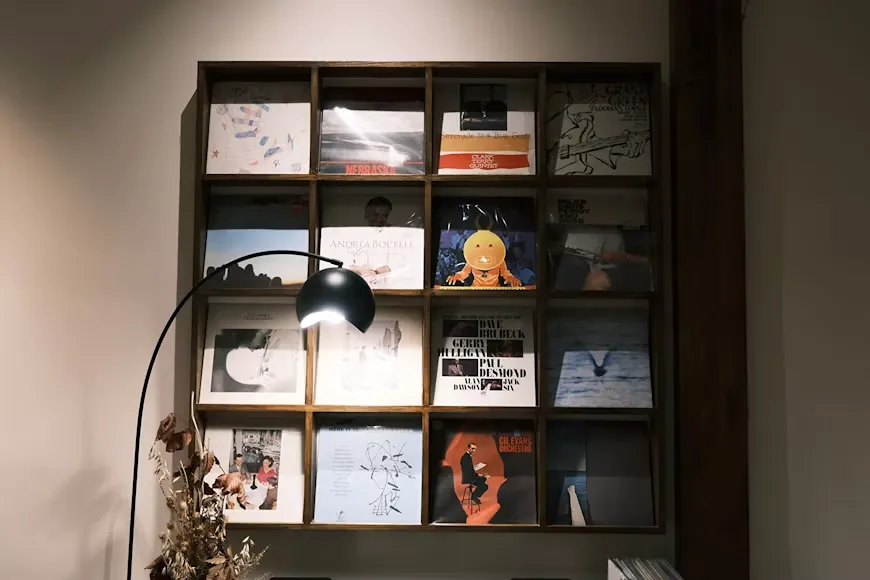
| Wall display ledge | You want to show a few current favorites | Easy for a small rotation | Treat it as display, not primary collection storage |
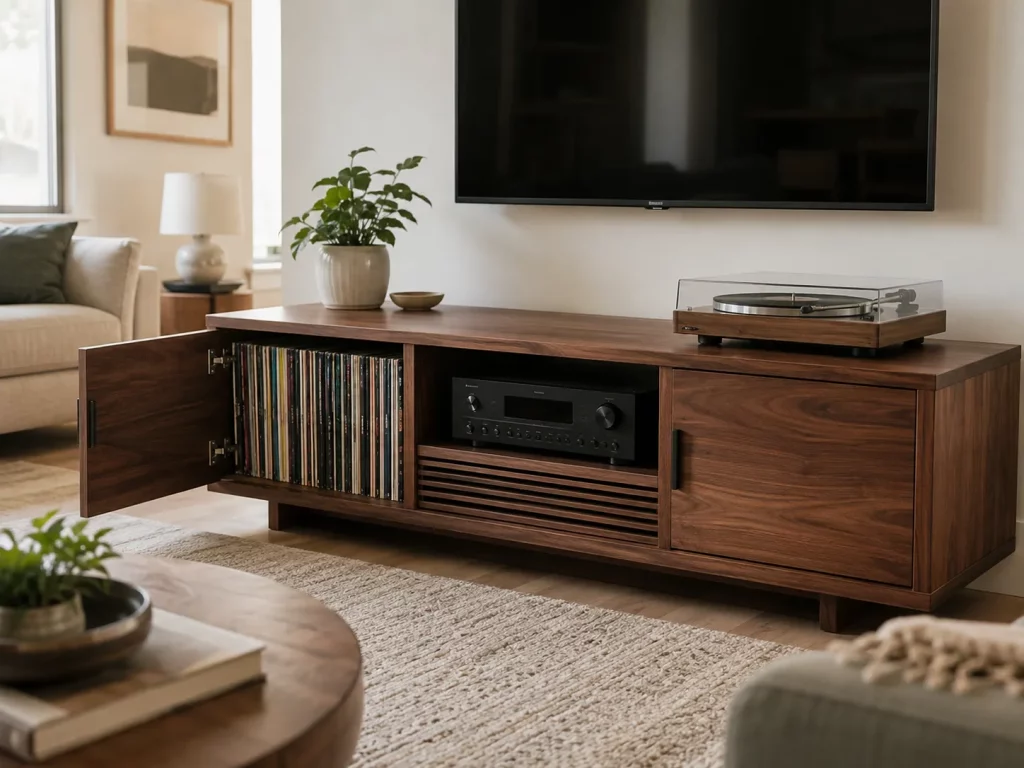
Listeners who want the turntable and LPs in one piece of furniture can compare record player stands with storage for vinyl and audio gear. A dedicated stand usually places the turntable higher, while a low media console provides more horizontal surface area and fits more naturally below a television.
For most shared living rooms, a low or standard-height cabinet is the more flexible starting point. Choose a tall cabinet only when its extra vertical capacity solves a genuine floor-space problem and the unit can be safely anchored.
Where Should Record Storage Go in a Living Room?
Useful record album storage ideas for living room layouts begin with the wall and daily routine, not the furniture photo. The cabinet must fit the room when its doors are open, keep records away from environmental risks, and place frequently played albums where they can be reached without unloading other items.
Use painter’s tape to mark the cabinet footprint. Include the open door path, nearby floor vents, speaker stands, and the route people use between the sofa and hallway. A cabinet that fits against the wall can still be inconvenient if its doors block the main passage.
Next, divide the setup into three zones:
- Record zone: Upright LPs with full-height support and space to browse.
- Equipment zone: Receiver, preamp, streaming device, or game console with suitable airflow and cable clearance.
- Accessory zone: Cleaning supplies, spare sleeves, remotes, and cables kept away from warm electronics.
A household that plays a few favorite albums every weekend can keep those records in the most accessible side bay while placing less-used titles in a lower compartment. This reduces repeated handling without turning album covers into permanent wall decor.
If a receiver and turntable also share the wall, turntable media consoles for vinyl and audio gear provide a more relevant comparison than general storage cabinets because they account for equipment access and cable depth.
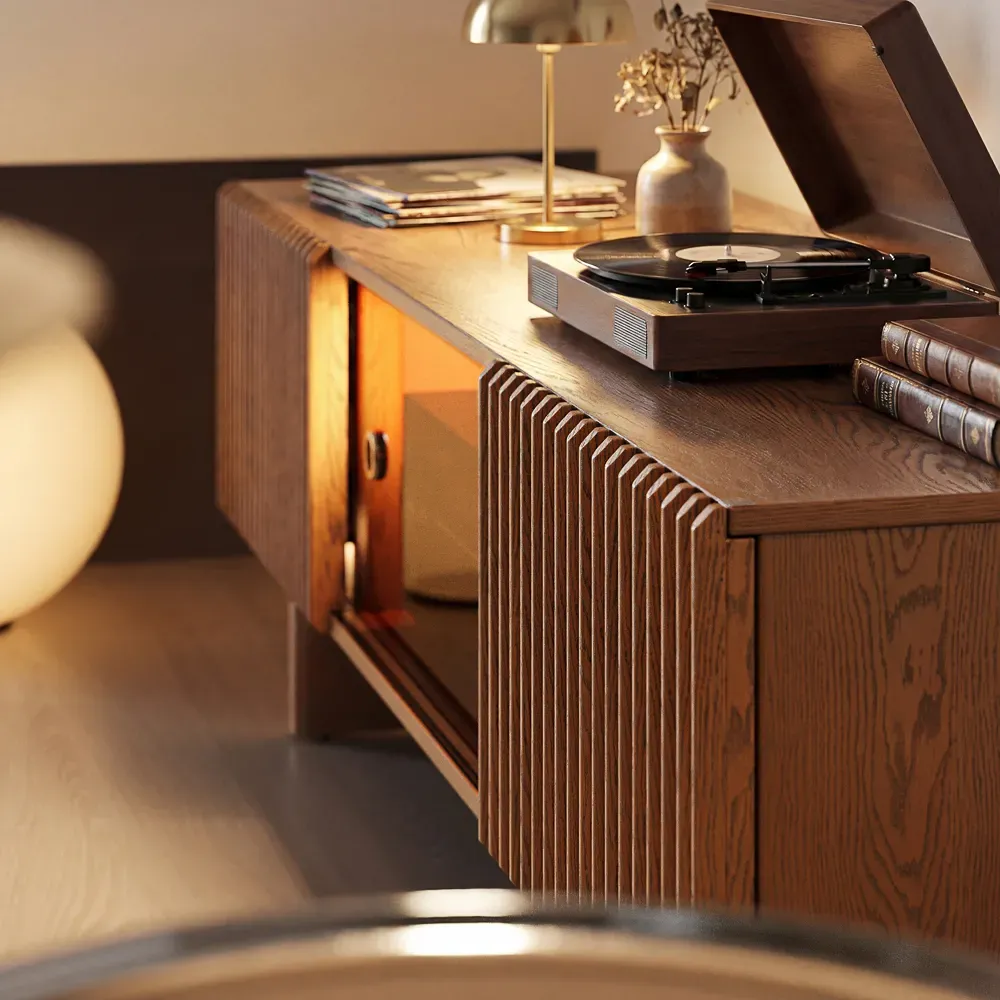
For a shared vinyl-and-TV wall, the POVISON Delven Verse Media Console organizes records, electronics, and accessories across three practical zones. Removing one of its two shelves creates clearance for upright LPs, while 18.3 inches of interior depth accommodates a receiver and rear plugs in another bay. Six internal and three rear cable openings keep wiring away from the record bay, and slatted doors with rear vents help heat escape from enclosed electronics.
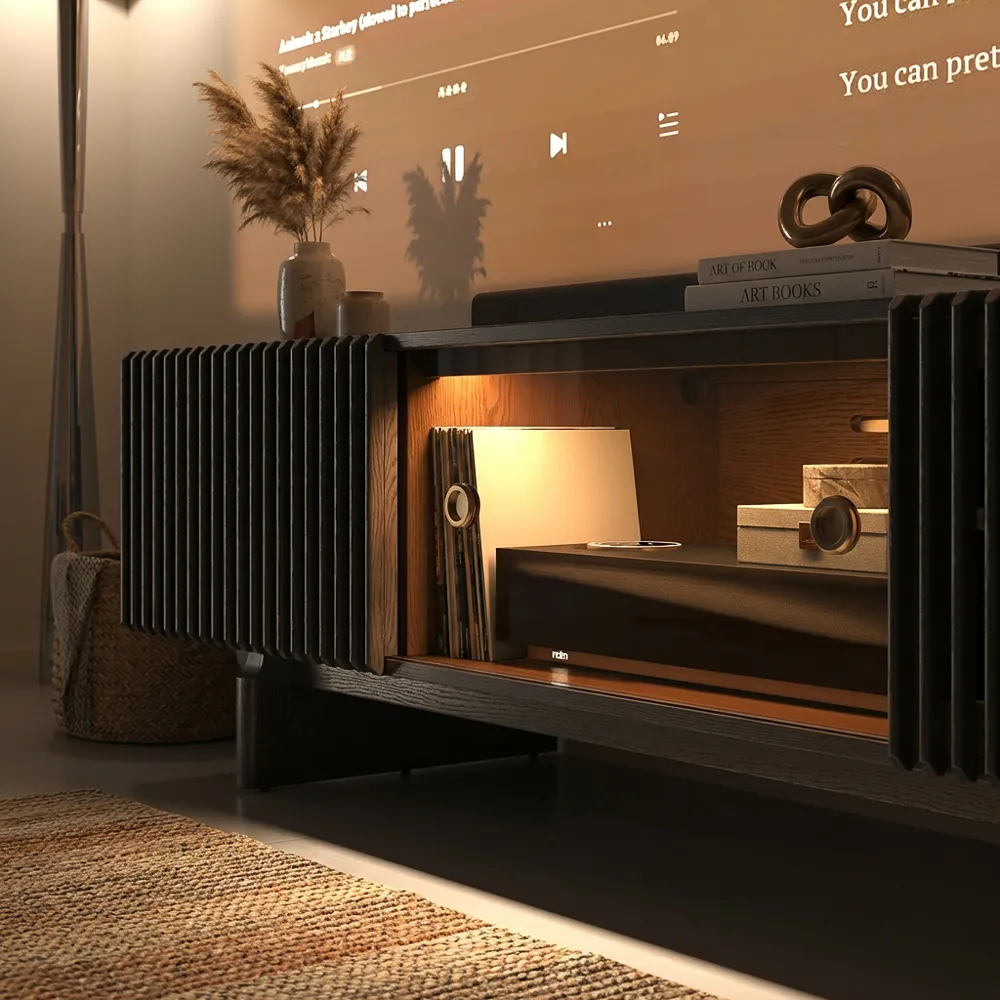
POVISON Delven Verse Mid-Century Modern TV Stand
The low profile keeps records close at hand without letting storage dominate the TV wall.
How Should You Set Up a New Record Cabinet?
A cabinet is not ready when it reaches the wall. Its position, internal support, and load distribution must be checked before the collection goes inside.
- Level the furniture. An uneven cabinet can cause doors to shift and records to lean toward one side.
- Follow the anchoring instructions. Use the supplied anti-tip hardware when required, especially for cube shelves and tall cabinets.
- Lock the dividers in place. Use full-face dividers that remain stable under pressure, and reset their positions as the collection grows so no partial row is left leaning.
- Load lower compartments before upper ones. This keeps the center of gravity lower and makes it easier to distribute weight.
- Test the thickest album. Use a gatefold or box set to confirm that it can slide out without bending neighboring jackets.
- Keep categories practical. Choose artist, genre, or listening frequency as the main system instead of mixing several inconsistent methods.
- Recheck after 30 days. Look for shelf bowing, leaning rows, door contact, and heat entering the record compartment from nearby electronics.
When removable shelving serves both records and media devices, the same process used to organize a media cabinet with adjustable shelves can help preserve one tall LP bay while keeping shorter compartments available for accessories.
Conclusion
The right record album storage should match both the collection and the room. Choose by usable LP clearance and the capacity of the actual record-bearing surface, not by exterior dimensions or a desktop rating. In most shared living rooms, a low or standard-height cabinet balances browsing access with TV and audio storage; a tall unit makes sense only when limited wall width outweighs harder upper-row access. Once loaded, review the cabinet after 30 days and correct bowing, leaning, heat transfer, or blocked doors before adding more records.
Build a Better Entertainment Setup
Explore media consoles designed for organized storage, ventilation, and modern entertainment equipment.
Q&A
Can 7-Inch Records Share a 12-Inch Compartment?
Yes, if each size has its own fitted container or fully divided section. Do not place loose 7-inch sleeves in the same row as 12-inch LPs. Smaller jackets can slide behind the LPs and receive pressure from taller records, making browsing harder and potentially damaging the sleeves.
Can a Record Cabinet Sit Over a Floor Vent?
Avoid placing it directly over a floor vent. Heated or cooled air creates repeated temperature changes, while the cabinet may restrict circulation and collect more dust. If another location is unavailable, use an HVAC-approved deflector that directs airflow completely past the furniture without reducing the vent’s intended output.
Can Speakers Sit on the Same Record Cabinet?
They can if the top’s published capacity covers the speakers and turntable, but separate stands are preferable. Speaker vibration is more likely to disrupt playback than damage stored LPs. If equipment must share the cabinet, use isolation pads and test for feedback or skipping at normal and higher listening levels.
Can Vinyl Records Stay in a Basement Cabinet?
Only if the basement is finished, climate-controlled, and consistently dry. Use a hygrometer to verify roughly 35–40% relative humidity. Reject the location if you find seepage, condensation, a musty odor, or previous flooding, and recheck conditions during the most humid and coldest months.


