 By Kelvin
Introduction
A pouf and an ottoman can look similar in a product photo, but they do not always work the same way once you bring them home. If you are comparing pouf vs ottoman, the useful question is not simply what each piece is called—it is which one better handles the job you need. This guide compares structure, stability, mobility, seating, storage, and sofa fit so you can choose based on daily use rather than a retailer’s label.
Table of Contents
What Is the Difference Between a Pouf and an Ottoman?
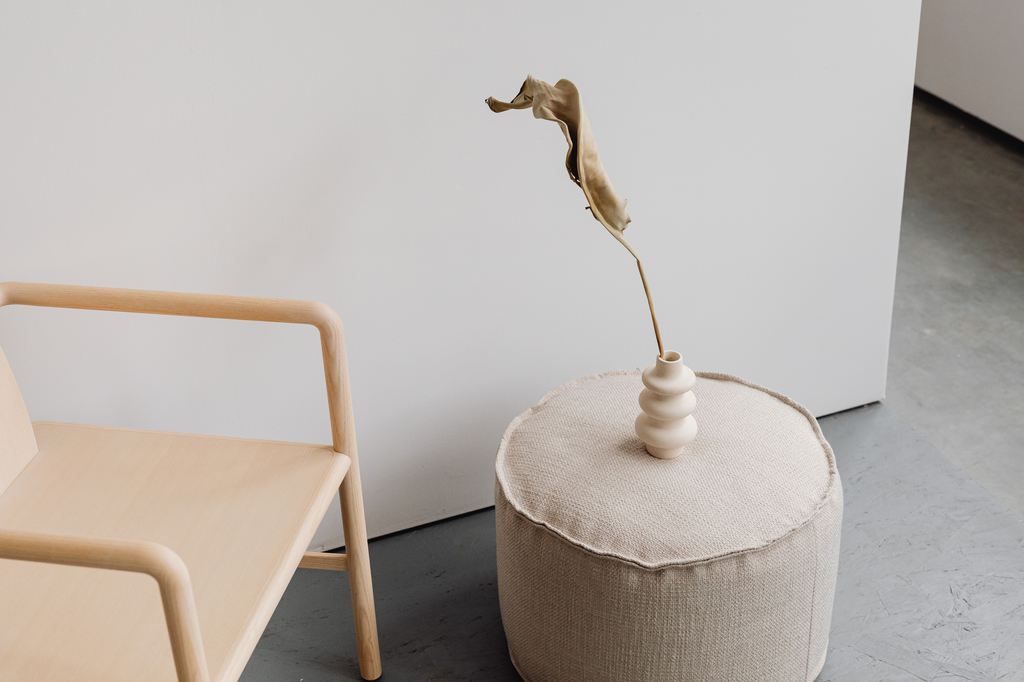
A pouf is usually a soft, low piece with little or no rigid framing, while an ottoman is typically more structured and more likely to include a firm base, legs, storage, or a design that coordinates with a sofa. There are exceptions, and retailers sometimes use the terms interchangeably.
That is why a pouf vs ottoman comparison should start with construction rather than the product name.
| What to Compare | Pouf | Ottoman |
| Construction | Usually soft or lightly structured | Usually has more internal structure |
| Base | Commonly sits directly on the floor | May have legs or a defined base |
| Mobility | Usually easier to move | Often heavier or more furniture-like |
| Footprint | Commonly compact | Available in a wider range of sizes |
| Extra seating | Better for casual use when approved for seating | Often more stable, but intended use still matters |
| Storage | Uncommon | Common on dedicated storage designs |
| Tray use | Depends heavily on top compression | Firmer tops are usually easier to use |
| Visual effect | Relaxed, low-profile accent | More substantial extension of the seating area |
Understanding what an ottoman is and what it is used for helps explain why the category covers more than footrests. Some ottomans act almost like small upholstered furniture pieces, while a typical pouf stays closer to a movable cushion or casual perch.
The practical takeaway is simple: do not buy by label alone. A product called a “pouf ottoman” may behave more like one category than the other. Look at its frame, filling, base, dimensions, and stated uses.
When Should You Choose a Pouf or an Ottoman?
Choose according to the job the piece will perform most often. Asking whether a pouf or ottoman is more stylish is less useful than asking what you expect to do with it five days a week.
A pouf usually makes more sense when you want a compact footrest, movable occasional perch, or soft accent that can shift between seats. In a small living room, for example, a lightweight pouf can sit beside the sofa during the day and move out of the main walkway when guests need more floor space.
An ottoman usually makes more sense when you need greater stability, hidden storage, a coordinated extension of a sofa, or an upholstered center piece that stays in roughly the same position.
Use the primary job as your filter:
- Easy-to-move footrest: Start with a pouf.
- Casual extra perch: Consider a pouf, but confirm it is intended for sitting.
- Blanket or remote storage: Start with an ottoman.
- Sectional extension: Look for a compatible ottoman.
- Regular tray use: Favor a firm, stable ottoman top.
- Large sofa needing a proportional companion: An ottoman often provides better visual and physical balance.
- Small room where furniture moves frequently: A compact pouf usually creates less commitment.
Neither type automatically wins for seating. A solid-looking ottoman is not necessarily designed to support a seated adult, and a dense pouf may be more supportive than its appearance suggests. Check the individual product’s intended use rather than relying on the category name.
How Should a Pouf or Ottoman Fit Your Sofa?
Once you know which type better suits the job, test whether its dimensions work with the sofa and the way people move through the room. Height, reach, and footprint matter more than an isolated width measurement. A simple floor test can reveal problems that are difficult to notice in styled product photography.
Compare the Usable Height
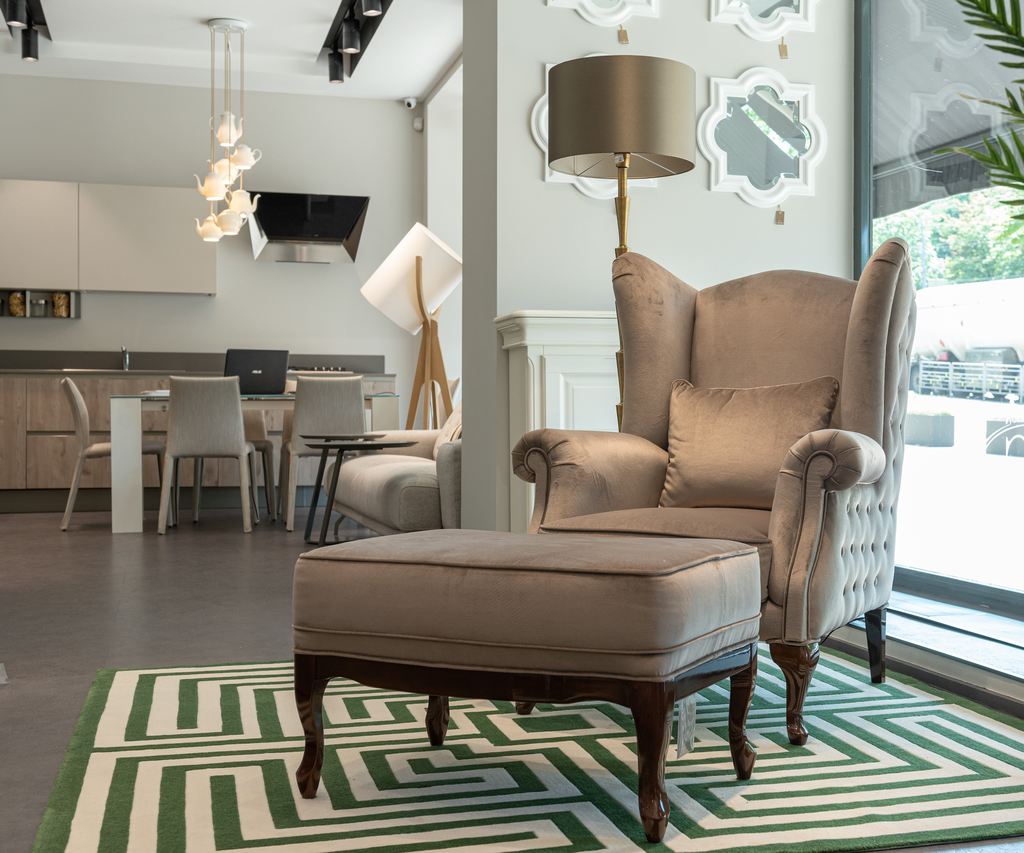
For regular footrest use, compare the top of the pouf or ottoman with the sofa’s seat height. It does not need to match perfectly, but a major height difference can put your legs at an awkward angle.
With a soft pouf, also consider loaded height. A pouf that measures close to the sofa seat when empty may compress several inches once you rest your legs on it. The useful measurement is how it behaves under normal use, not simply its listed height.
Test Your Natural Reach
Sit in the sofa position you use most and check where your feet naturally land. A compact pouf can be easy to pull closer. A larger ottoman may work better when several seats need access to the same footrest.
If a piece is so far away that you constantly drag it forward—or so close that standing up becomes awkward—the nominal dimensions are not solving the room correctly.
Mark the Full Footprint
Use painter’s tape to mark the product’s width and depth on the floor. Then sit down, stand up, and walk through the main route around the sofa.
This becomes especially useful with larger upholstered pieces. The same principle used when choosing a round ottoman coffee table size for your sofa applies here: a dimension can look reasonable online while still interfering with normal circulation once it occupies real floor space.
For a living room where the ottoman should feel like part of the sofa rather than a separate accent, the Cronus Genuine Leather Modular Sofa with Ottoman keeps the proportions coordinated from the start. Its 19.5-inch sofa seat sits close to the matching ottoman’s 17.9-inch height, while top-grain leather carries the same material across both pieces.
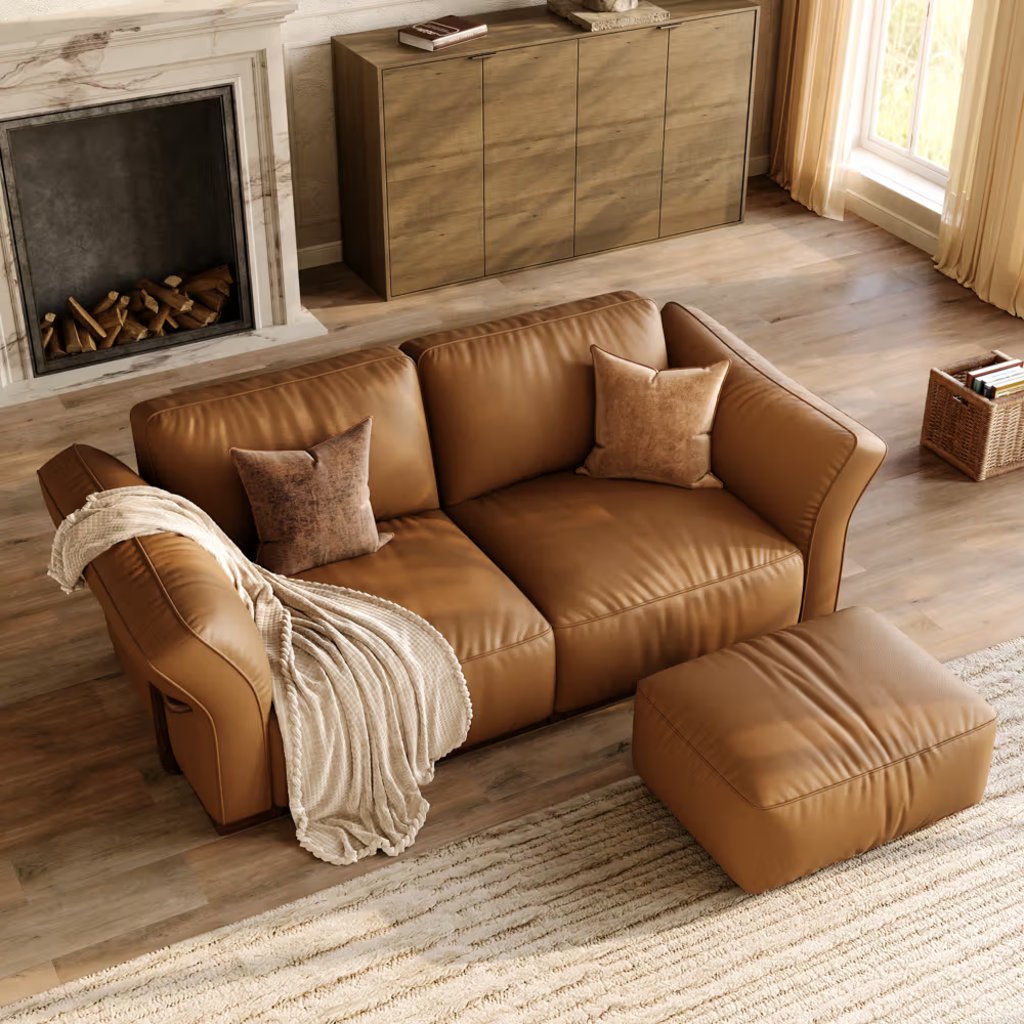
POVISON Cronus Genuine Leather Modular Sofa with Ottoman
Coordinated leather sofa and ottoman designed for comfortable footrest height, flexible placement, and a cohesive seating setup.
✨ Top-grain genuine leather
✨ Matching ottoman included
✨ Solid wood frame
Check These 4 Things Before You Buy
Once size and purpose are clear, inspect how the specific piece is built. These checks prevent a common mistake in an ottoman vs pouf comparison: assuming that every soft piece can serve as a seat, footrest, storage unit, and temporary table equally well. Those functions place different demands on the furniture.
1. Is It Actually Intended for Seating?
If adults will sit on it regularly, look for explicit seating language and available weight or support guidance from the manufacturer.
Do not assume a decorative pouf is a stool because the top looks flat. The same caution applies to ottomans with movable lids, trays, or unusual bases. Product-specific construction matters more than category expectations.
2. How Much Does the Top Compress?
Compression affects more than comfort. It changes usable height and determines whether a tray, book, or laptop will stay level.
Pressing your feet into a soft pouf may be exactly what you want from a footrest. The same amount of movement becomes inconvenient when supporting drinks. If surface duty matters, the checks involved in how to use an ottoman as a coffee table become more important than the upholstered look alone.
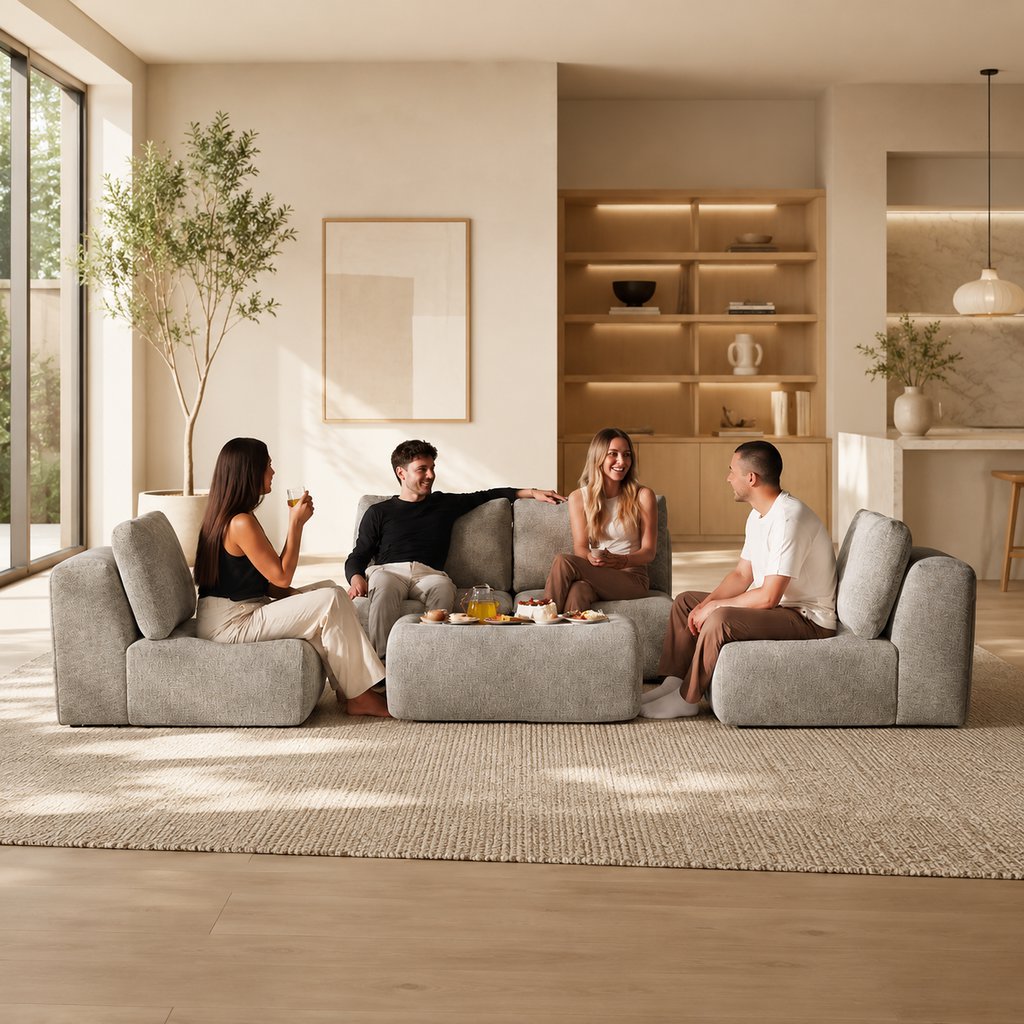
3. Is the Structure Rigid or Flexible?
A rigid frame tends to hold its shape and position more consistently. Flexible filling makes a pouf easier to move and can create a softer feel, but the shape may change under pressure.
Neither construction is inherently better. Match it to the task. A piece that moves between an armchair, sofa, and bedroom benefits from portability; a piece supporting a tray in the center of a seating group benefits from stability.
4. What Function Would You Lose by Going Smaller?
A compact pouf may preserve valuable floor area, but it may also remove storage, shared footrest space, or the ability to visually balance a large sectional.
Reverse the question too. A large storage ottoman is only efficient if you actually need that storage. If it spends every day narrowing a walkway just to hold one throw blanket, the extra function is costing more floor space than it saves.
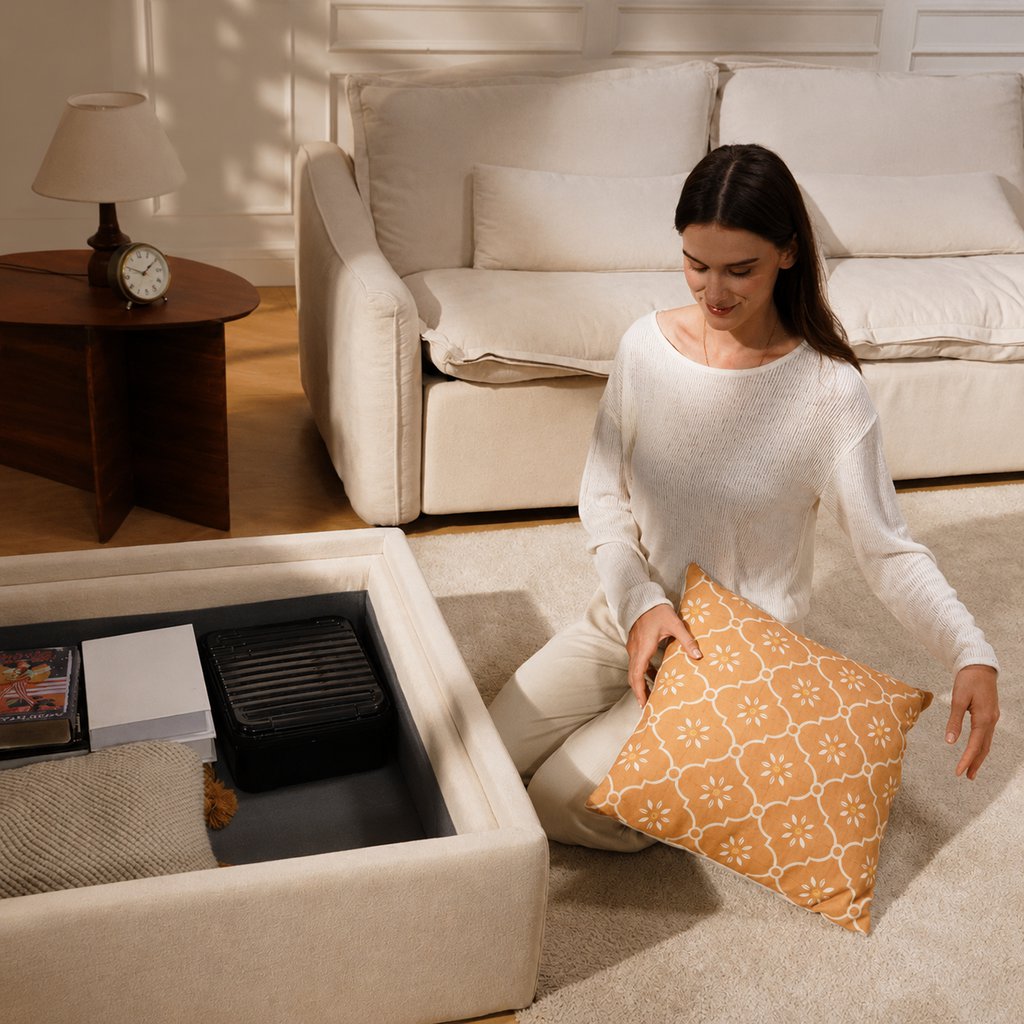
How Can an Ottoman Add More Function?
An ottoman becomes especially useful when one footprint needs to handle two compatible jobs. The important word is compatible. More features do not automatically make a piece more practical.
A storage ottoman can combine a footrest with a place for throws, toys, or living-room clutter, but the lid still needs to work with the way you use the top. A sofa-matched ottoman can extend the lounging area, but it may be less convenient to move frequently. A firm upholstered ottoman may support a tray, while deep tufting or a soft cushion can make that secondary function less reliable.
When hidden storage matters as much as putting your feet up, the Arlo Storage Coffee Table Ottoman and Sofa gives the ottoman a more defined job in the seating area. Its storage design keeps everyday items out of sight, while the 39.7-by-30.3-inch footprint provides a more substantial shared surface than a compact pouf.
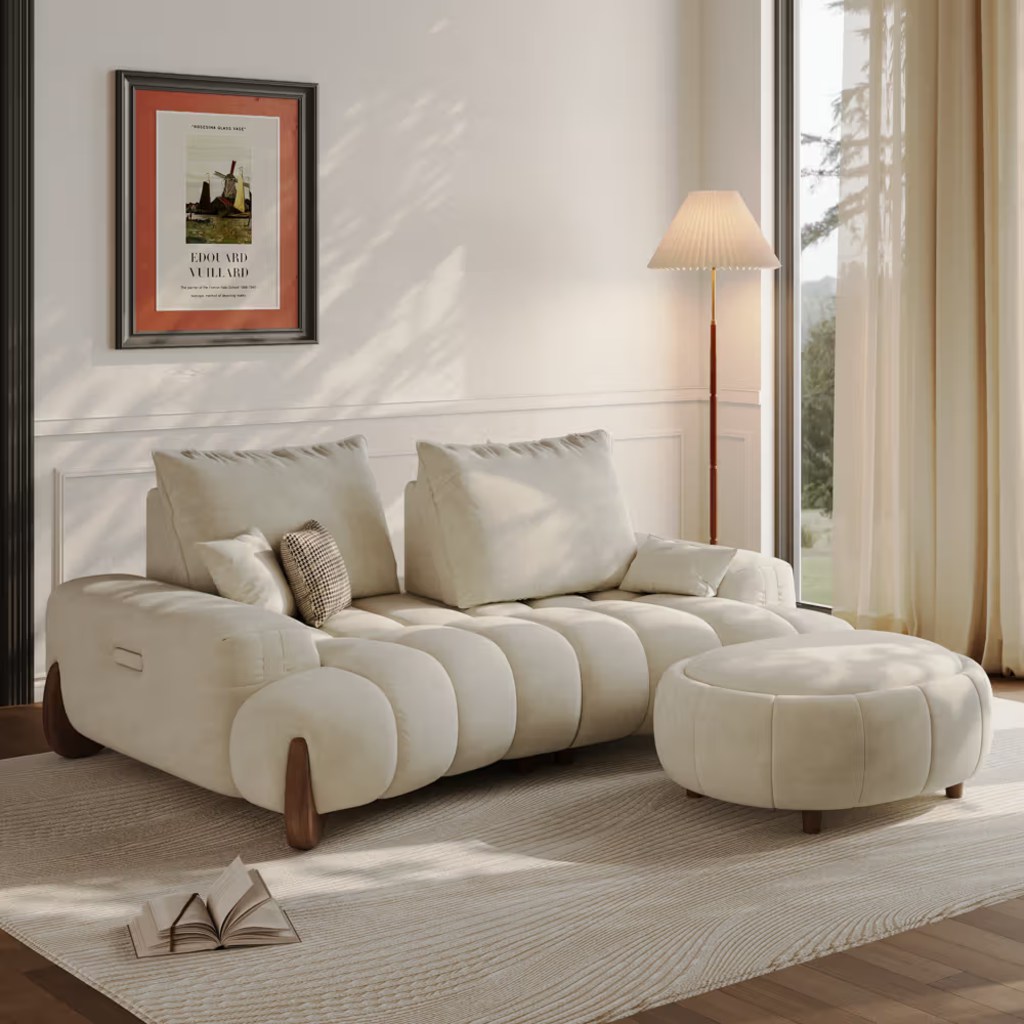
POVISON Arlo Storage Coffee Table Ottoman and Sofa
A sofa-and-storage-ottoman set for living rooms that need a stable footrest, hidden storage, and a more substantial center piece.
✨ Built-in ottoman storage
✨ Pet-friendly, easy-clean fabric
✨ Adjustable sofa cushions
If storage is the deciding factor, the real question is whether storage ottomans are worth it for living rooms after accounting for usable interior space, floor area, and daily access.
Use one rule: choose for the primary job first, then evaluate secondary functions as bonuses.
Conclusion
The pouf vs ottoman decision becomes easier when you stop treating the names as strict furniture categories. Choose a pouf when compact size, softness, and easy movement matter most. Choose an ottoman when structure, storage, sofa integration, or a firmer surface has more value. In either case, check the actual construction, intended use, loaded height, and room footprint before buying. The right piece is the one that performs its main daily job without creating a new space or usability problem.
FAQs
Can a pouf work as a seat at a desk?
Only for occasional use if its height and firmness place you at a workable desk level. Many poufs sit low or compress enough to leave your knees high and your arms reaching upward. For regular work sessions, use seating designed to maintain a stable working height and posture.
Can a pouf or ottoman sit on a thick rug?
Yes, but test stability on the actual rug. Deep pile can make narrow ottoman legs wobble or allow a lightweight pouf to shift when pushed with your feet. A thick rug also raises the piece slightly, so recheck its height relative to the sofa before using it regularly as a footrest.
How do you keep a pouf from becoming flat?
Follow the manufacturer’s care instructions and redistribute or fluff the filling when the design allows it. Rotate the pouf occasionally so one area does not receive all the pressure. If long-term shape retention matters, a refillable design also makes it easier to restore volume after the filling settles.
How much clearance does a storage ottoman lid need?
Measure the ottoman with its lid fully open, not just its closed footprint. Hinged lids may need clearance behind or above the piece, while removable tops need somewhere nearby to be placed. Test the opening zone before positioning a storage ottoman tightly against a sofa, wall, or table.
How far should an ottoman sit from a reclining sofa?
Measure with the recliner fully extended. The ottoman should stay beyond the moving footrest while still leaving enough room to stand up comfortably. Because extension depth varies by sofa, use the actual open position of your recliner rather than relying on a universal clearance number.


