 By Kelvin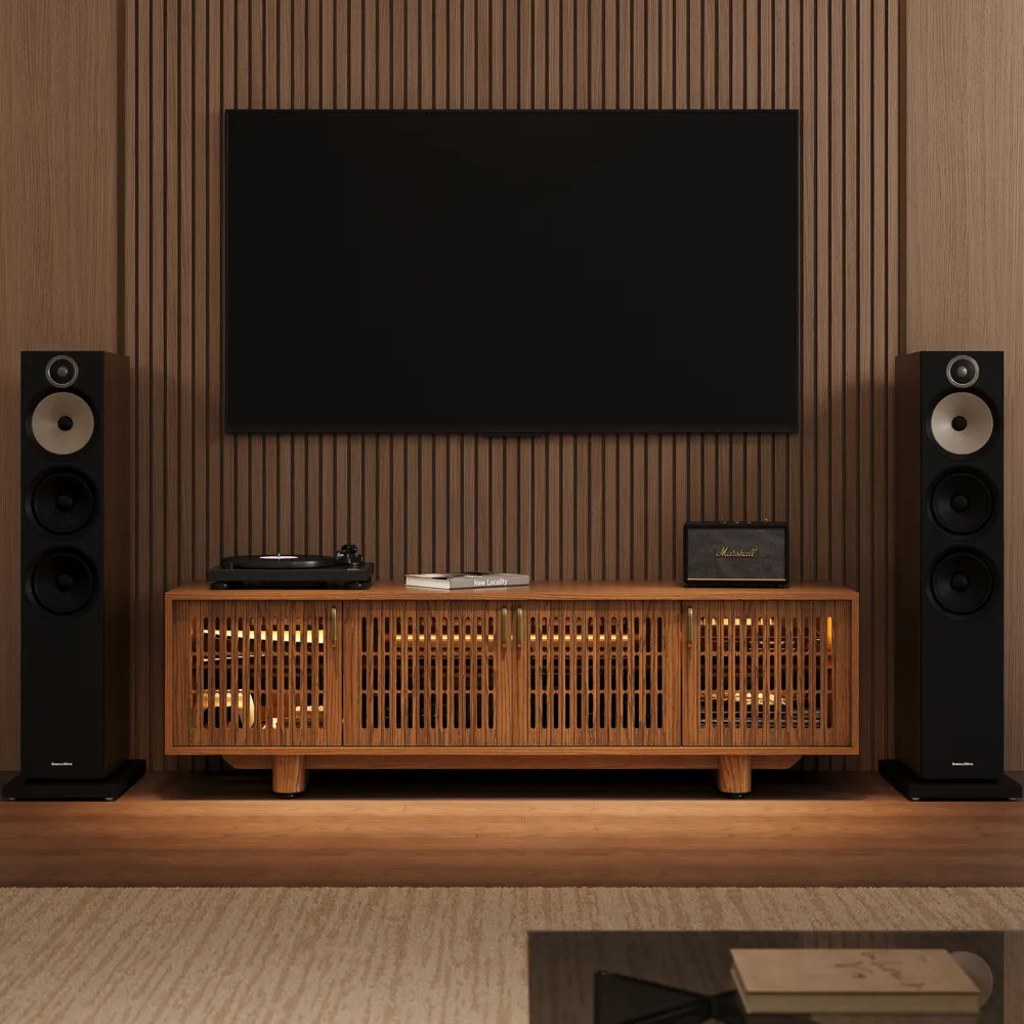
Introduction
Choosing a TV stand starts with more than finding a style you like. The right piece must fit your room layout, support your screen, hold your media equipment, and work with the way you install or move furniture. This guide explains the main types of TV stands, where each one works well, and what trade-offs to check before buying. You will also learn how storage, doors, ventilation, and wall conditions affect the final decision, so you can narrow your options without getting lost in product names.
Table of Contents
What Are the Main TV Stand Types?
The most useful way to compare different types of TV stands is by structure and installation. Start with whether the unit sits on the floor, mounts to the wall, fills a corner, surrounds the television, or supports the screen on an integrated bracket. Storage, material, and style can then be added as secondary features.
| Type | Best For | Storage Level | Installation | Main Trade-Off |
| Standard media console | Most living rooms and wall-mounted TVs | Medium to high | Simple | Uses floor space |
| Floating TV stand | Compact rooms and clean media walls | Low to medium | Wall mounting | Harder to move |
| Corner TV stand | Awkward layouts and unused corners | Low to medium | Simple | Limited width and viewing angles |
| Entertainment center | Large walls and high storage needs | High | More involved | Visually heavy |
| Integrated-mount stand | No-drill TV support and adjustable viewing | Low to medium | Moderate | Requires VESA and weight checks |
| Rolling TV stand | Multiuse rooms and movable screens | Low | Moderate | Less furniture-like |
| Fireplace TV stand | Living rooms needing storage and supplemental heat | Medium | Electrical setup | Heat-clearance limits |
Standard TV Stand or Media Console
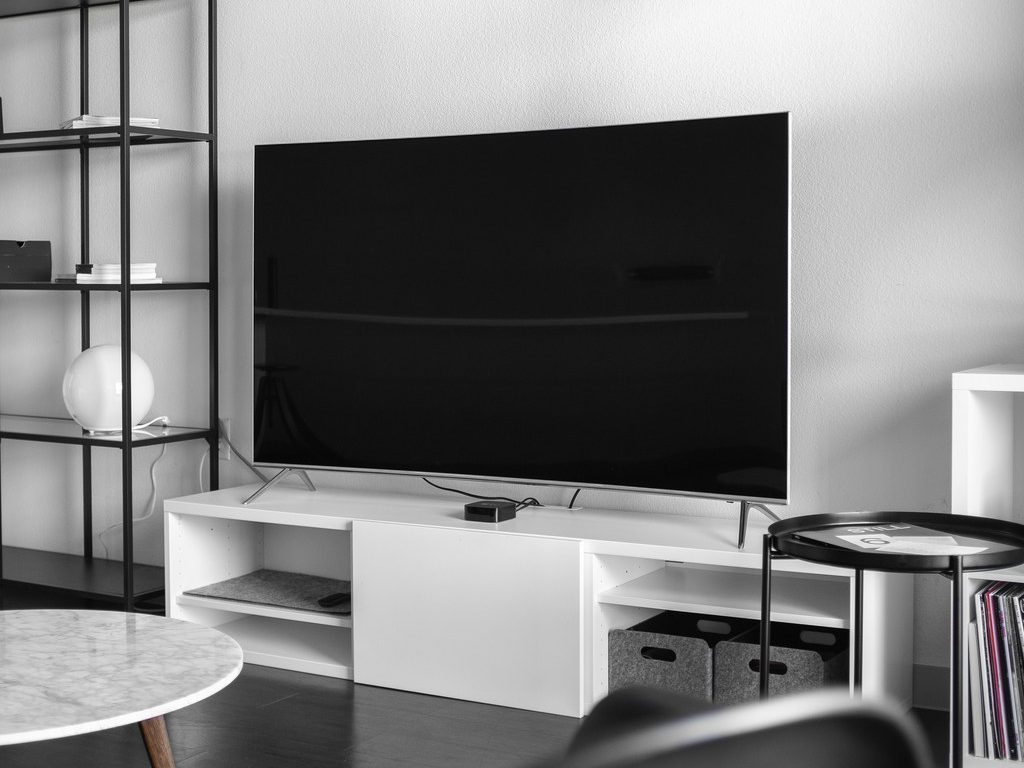
A standard floor console is the most flexible furniture-style option. It may hold the television directly or sit below a wall-mounted screen, with drawers, cabinets, shelves, or a mix of all three. The difference between a TV stand and a media console is often less important than the actual width, depth, storage layout, and cable access.
Floating TV Stand
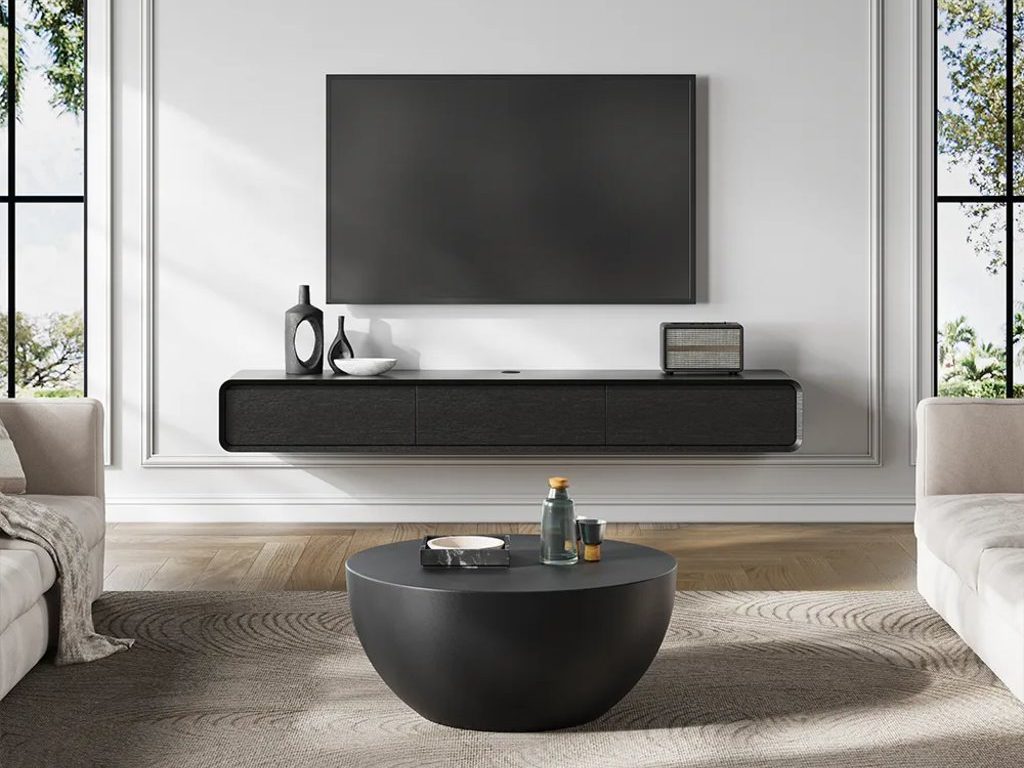
A floating TV stand attaches to the wall and leaves the floor visible below. It suits small rooms, robot-vacuum households, and planned media walls where the television is already mounted. It is less practical when a lease limits drilling, the wall lacks suitable framing, or the room layout changes frequently.
Corner TV Stand
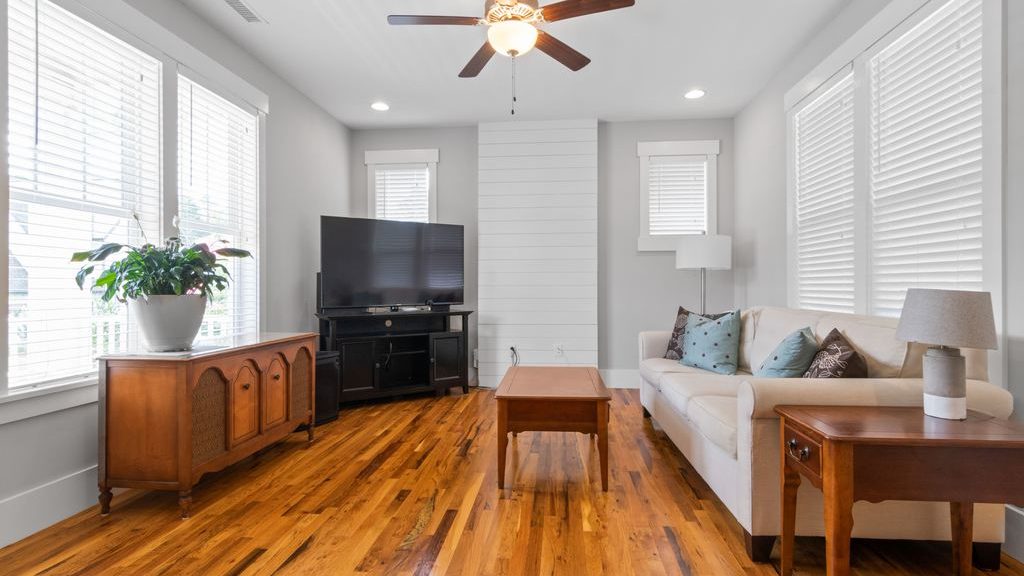
A corner unit uses space that a rectangular console may not fit. It can help preserve a walkway in a narrow living room or angle the screen toward two seating zones. Measure the corner depth and the TV’s actual width carefully; a compact cabinet can still project farther into the room than expected.
Entertainment Center or Hutch
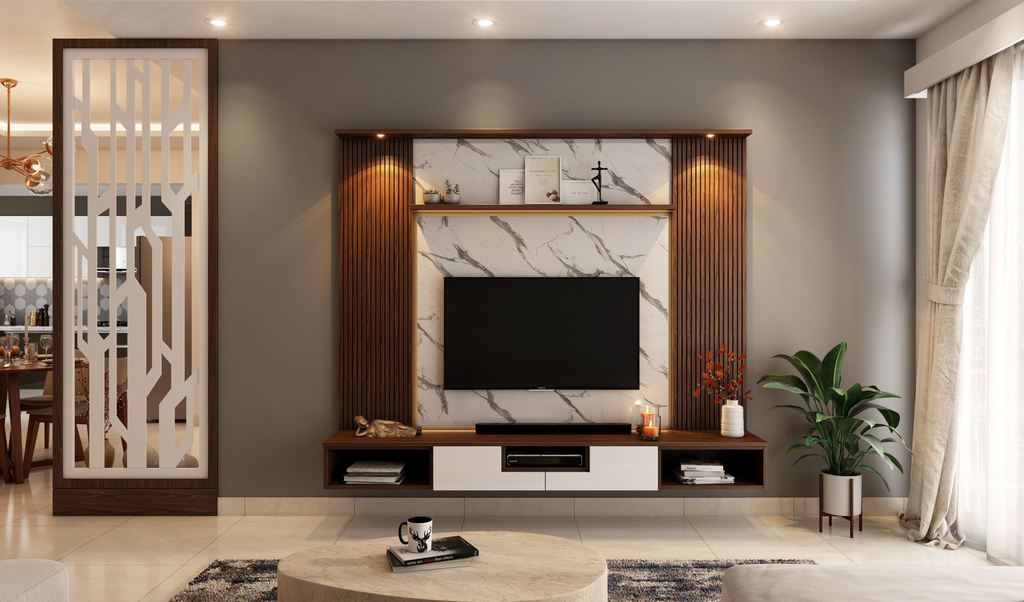
An entertainment center frames the television with upper shelves, side towers, or closed cabinets. It works well when one wall must store games, books, speakers, and family-room clutter. The trade-off is flexibility: a fixed TV opening may limit future screen upgrades, and the larger unit can overpower a short or narrow wall.
TV Stand With an Integrated Mount
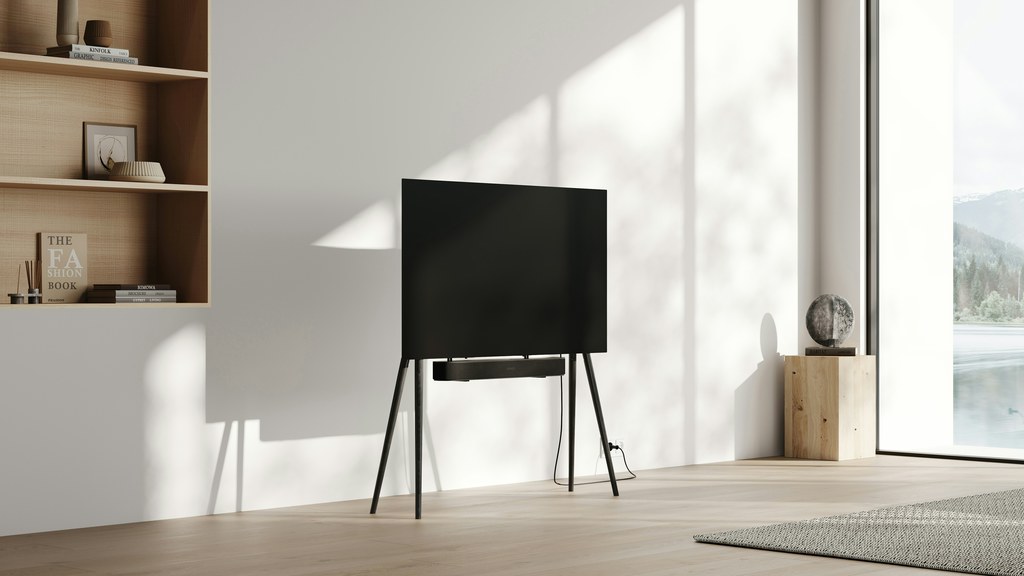
This design supports the television on a vertical bracket connected to the stand. It can create a wall-mounted look without drilling into the wall and may allow height or swivel adjustment. Check the VESA pattern, screen-weight limit, bracket height, and base stability rather than assuming every mounted stand fits every TV.
Rolling or Mobile TV Stand
A rolling stand is useful when one screen moves between a workout area, guest room, office, and open living space. Locking casters and a wide base matter more than decorative storage. Keep cables secured so they do not drag or catch when the stand moves, especially across rugs or floor transitions.

Fireplace TV Stand
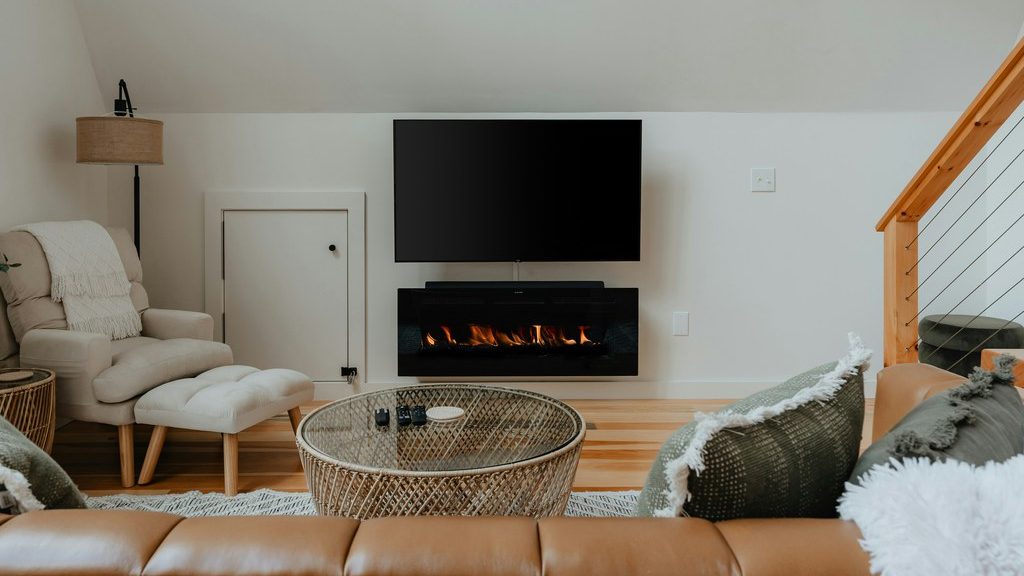
A fireplace TV stand combines a floor console with an electric fireplace insert. It can add atmosphere and supplemental heat while keeping media storage in one unit. Confirm the required clearances, outlet load, heat direction, and television placement. It should not be treated as a substitute for the room’s primary heating system.
Which Type Fits Your Room and Media Setup?
Room constraints should eliminate unsuitable options before color or finish enters the decision. A floating vs. floor TV stand comparison is especially useful when deciding between a permanent media wall and a renter-friendly layout.
- Small apartment: Start with a slim floor console or floating unit. Check wall permission, door swing, and walkway clearance.
- Rental home: A floor console or integrated-mount stand avoids permanent wall changes and is easier to reposition.
- Wall-mounted TV: Use a low floor console or floating cabinet to store devices and visually anchor the screen.
- Large family room: A wide media console or entertainment center can balance a long wall and hold shared storage.
- Open-plan room: A swivel or integrated-mount design can improve viewing from the sofa and nearby kitchen.
- Gaming or AV setup: Prioritize internal depth, ventilation, adjustable shelves, and access to rear connections.
- Awkward corner: Use a corner stand only after checking the screen angle from every main seat.
A couple using a living room for both gaming and movie nights may need a deeper floor console, even if a floating cabinet looks lighter online. A renter with only a streaming box may benefit more from a narrow console that can move to the next apartment.
How Should Storage and Door Design Affect Your Choice?
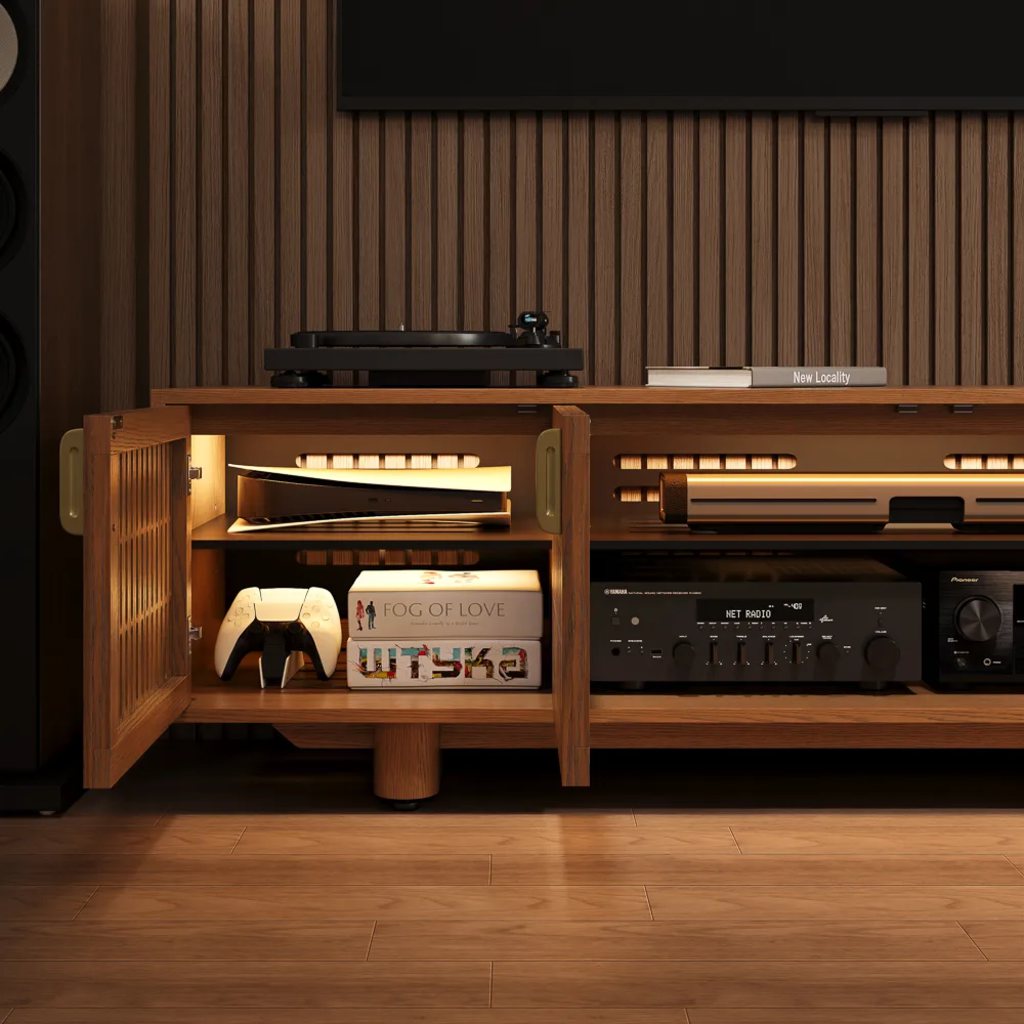
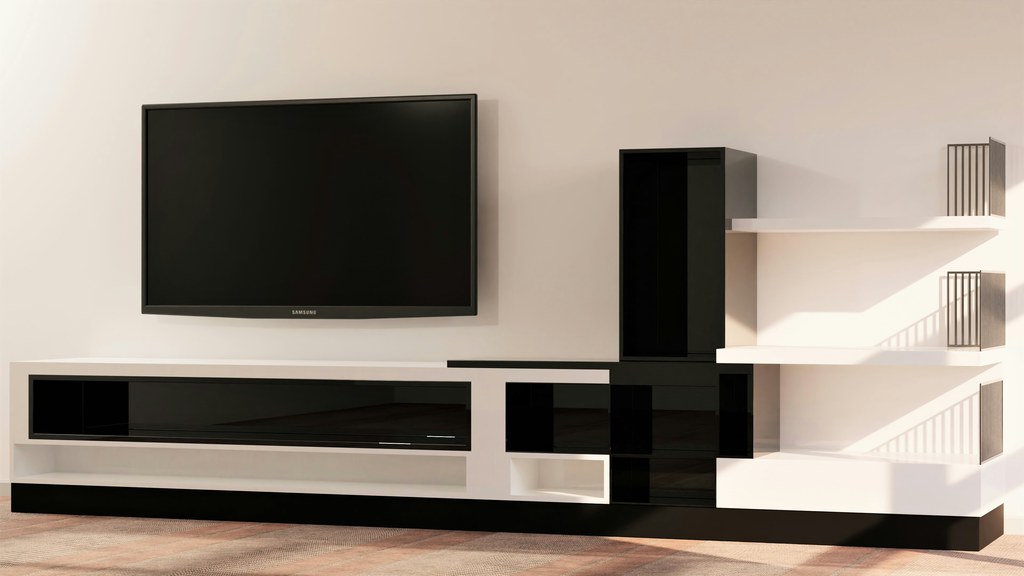
Storage changes how a stand performs after the room is styled. Open shelves provide easy access and airflow but expose controllers and cables. Closed cabinets reduce visual clutter but can trap heat or block remote signals. Hybrid storage is usually the most adaptable because frequently used electronics remain accessible while smaller items stay hidden.
Before trying to choose a TV stand with enough storage, list every device and measure its full depth with plugs attached. Use drawers for remotes, game cases, chargers, and manuals—not for equipment that releases significant heat. Slatted, mesh, glass, or partially open doors may improve airflow or signal access, but their performance depends on the exact construction.
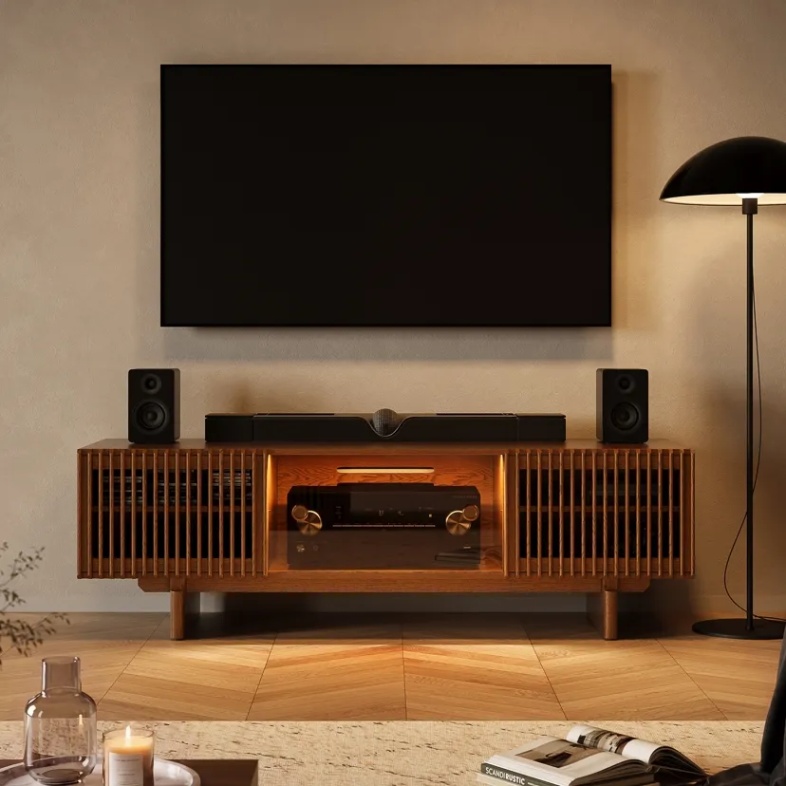
For a living room with a full-size AV receiver, game console, and turntable, the Arboren-71” Mid-Century Modern TV Stand with storage addresses the shallow-cabinet problem with an 18.3-inch internal depth. Adjustable shelves and rear ventilation slots help accommodate larger components while allowing heat and cables to move through the cabinet more easily.
What Should You Check Before Buying Any Type?
Once the structure fits the room, verify the details that determine safety and daily usability:
- Measure the television’s actual width; advertised screen size is diagonal.
- Confirm that the TV feet or center base fit fully on the top.
- Compare the combined equipment weight with the stated load limit.
- Measure receivers and consoles with front knobs and rear plugs included.
- Leave space for ventilation rather than packing each compartment tightly.
- Check where wall outlets, cable ports, and power strips will sit.
- Confirm VESA compatibility for any integrated TV mount.
- Locate studs or suitable masonry anchors for a floating unit.
- Measure cabinet-door, drawer, and nearby room-door clearance.
- Consider delivery access, assembly, and how the unit would be moved later.
A stand that is wide enough can still fail if the TV base is too deep, the receiver cannot clear the doors, or a rigid plug pushes the cabinet away from the wall.
Which Labels Describe Style Rather Than Type?
Retail filters often mix structure with appearance. “Modern,” “mid-century,” “farmhouse,” “industrial,” “walnut,” “metal,” “low-profile,” “long,” “LED,” “fluted,” and “slatted” usually describe style, material, proportion, or an added feature—not a separate structural category.
One product can belong to several different kinds of TV stands at once. A low-profile walnut console with slatted doors may still be a standard floor media console with closed storage. Choose the structural format first, then use finish and design labels to match the room.
Conclusion
The right choice begins with structure, not style. Compare types of TV stands by how they use the floor or wall, how much equipment they hold, and whether the installation suits your home. A standard console works for most rooms, while floating, corner, mounted, mobile, entertainment-center, and fireplace designs solve more specific problems. After choosing the format, check width, depth, weight capacity, airflow, cable access, and door clearance. Finish and decorative details should be the final filter, not the first.
Frequently Asked Questions
Can a TV stand be narrower than a wall-mounted TV?
Yes, because the furniture does not physically support a wall-mounted screen. However, a much narrower console can make the wall look top-heavy and leave little room for speakers. For a more balanced layout, choose a stand at least as wide as the television whenever the available wall space allows.
Can a TV stand sit in front of a floor vent?
It should not block a supply or return vent. Restricted airflow can reduce HVAC performance, warm nearby electronics, and expose some finishes to repeated heat. Choose a floating stand or a console with enough leg clearance, and follow the clearance requirements for the vent or heating system.
What type of TV stand is safest for homes with children or pets?
A low, wide floor console is generally easier to stabilize than a tall or narrow unit. Secure both the television and furniture with compatible anti-tip hardware, keep heavy objects in lower compartments, and avoid climbable open shelving. Locking doors can also limit access to cables, remotes, and electronics.
Can a TV stand block a soundbar or center speaker?
Yes. A raised cabinet edge, shelf, door frame, or decorative object can obstruct sound or cover the television screen’s lower edge. Measure the speaker height before buying, place it near the front of the surface, and confirm that cabinet doors can still open without hitting it.
Can a low-profile TV stand work in a bedroom?
Yes, but check the viewing height from the bed rather than from a sofa. A very low console may force viewers to look downward, especially with a tall mattress. Mounting the television above the stand can improve the viewing angle while preserving storage below the screen.
Can a regular TV stand hold an ultra-short-throw projector?
Only if the top is deep, level, and low enough for the projector’s required throw distance. The lens must align correctly with the screen, and the cabinet cannot block ventilation. Check the projector manual before choosing the stand, since an ordinary shallow console may produce the wrong image size or position.


