 By Stephanie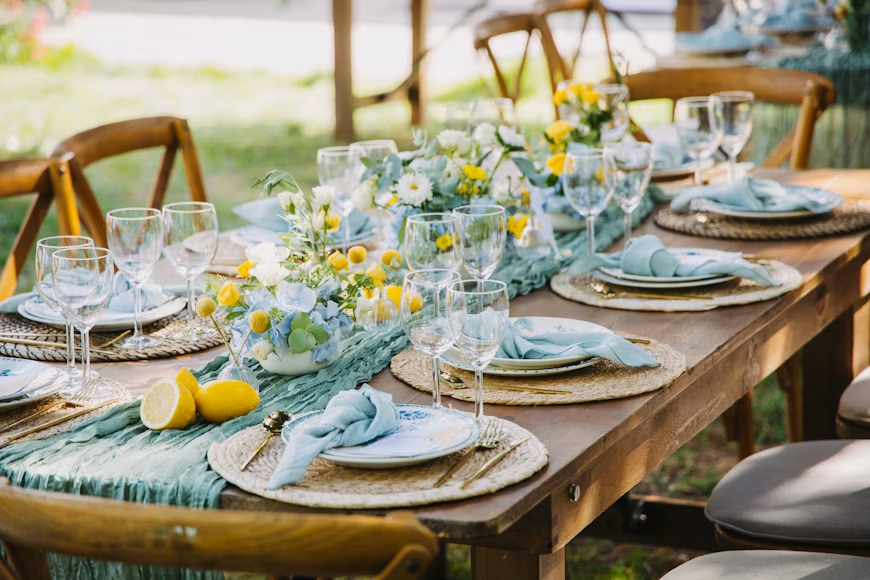
A centerpiece for a long dining table should make a room feel ready for summer meals, not turn the tabletop into an obstacle course. Long rectangular tables need a different approach than round ones: a lone vase gets lost, while one oversized arrangement steals space from plates, shared salads, and conversation. The right plan follows the table’s usable length, its width, and the way your household eats. Use the ideas below to build a focal point that feels polished on a Tuesday and still clears for a July dinner with friends.
Table of Contents
Run the Place-Setting Test Before You Decorate
Long rectangular tables work in zones rather than around one central point. Before choosing any decor, set the table as you normally would for a meal. Add placemats, glasses, and the shared dish you reach for most often. The open strip left between place settings is your decorating zone.
Choose a centerpiece that stays inside that strip instead of stretching into the space guests need to eat. Before you commit, make sure the arrangement passes three simple tests:
- Guests can set down a glass without reaching around it.
- A serving bowl or platter can be added without rearranging the table.
- The centerpiece can be lifted away as one group when the meal needs more room.
Once the place-setting test is complete, table length will tell you whether the right layout is one contained group, a three-piece rhythm, or two balanced zones.
Long Dining Table Centerpiece Layouts by Table Length
Once you know how much space a meal needs, table length becomes the simplest way to choose a layout. The goal is not to fill every open inch. It is to create a visual rhythm that suits your table while preserving room for plates, serving bowls, and easy movement during everyday meals or summer gatherings.
| Table Length | Best Layout | Best For | Avoid |
| 63–71 in. | One contained group | Daily meals for 4–6 | One tiny vase on its own |
| 72–86 in. | Three related low pieces | Six-seat tables and casual hosting | A full-length arrangement |
| 87–108 in. | Two low visual anchors | Eight-seat tables and shared meals | Filling the middle with décor |
| 109 in. and up | Two or three repeated zones | Larger gatherings | One oversized centerpiece |
63–71 Inches: One Contained Centerpiece Group
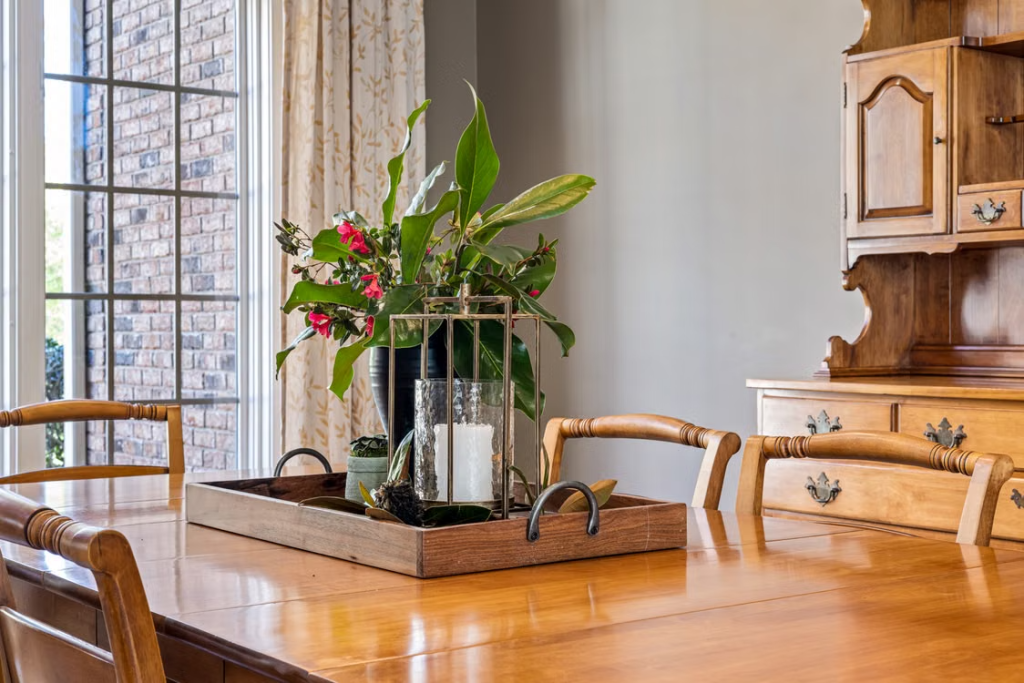
For a 63- to 71-inch table, one compact arrangement is enough. A slim tray with a shallow bowl, low vase, and small candleholder gives the center a clear focal point without taking over the meal. Leave the surrounding surface open for a pitcher or serving dish.
A single small vase in the exact middle often feels accidental rather than minimal. A grouped arrangement looks more finished and can be moved in one step when the table needs to be cleared.
72–86 Inches: A Three-Part Centerpiece Rhythm
For a 72- to 86-inch table, use three related low pieces to spread visual weight across the center. Three ceramic bud vases, a low bowl with two votives, or three small vessels in the same finish all work well. Make the middle piece slightly larger, then place the outer pieces about 14 to 18 inches away.
This is one of the most practical rectangular dining table centerpiece ideas for six-seat summer dinners. A slight stagger feels relaxed, while the gaps still leave room to pass salad bowls, bread, and drinks. Keep the color palette or material consistent, so the pieces read as one arrangement.
87–108 Inches: Two Visual Anchors With an Open Middle
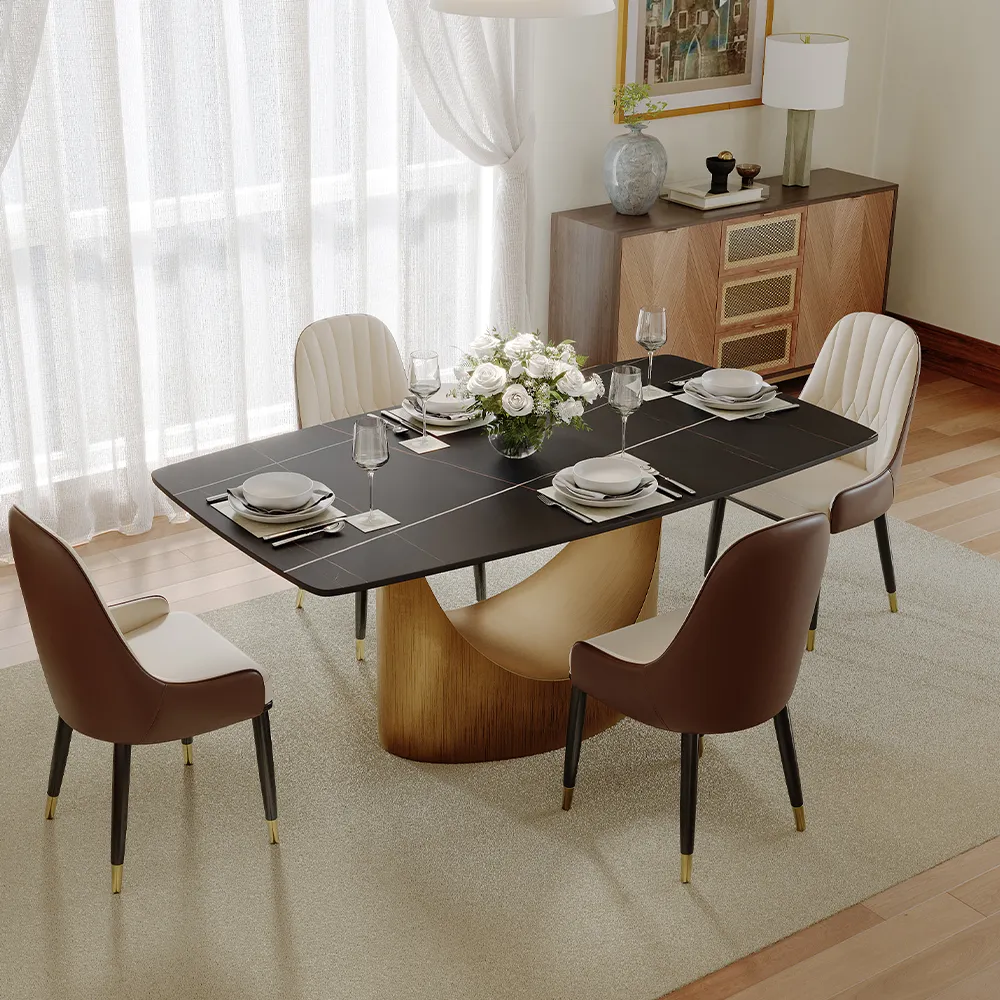
An 87- to 108-inch table needs two low centerpiece groups rather than one oversized arrangement. Place one group just left of center and the other just right of center, leaving the middle open for shared dishes. This layout gives a long table visual structure without turning the center into an obstacle during a meal.
For summer hosting, make the two groups feel related rather than identical. A pair of low ceramic bowls—one holding citrus and the other loose greenery — adds seasonal color without creating a second serving obstacle. This is one of the most practical long dining table centerpiece ideas for an eight-foot table because the open middle still works for bread, salads, chilled drinks, or a larger serving platter.
That two-zone layout works especially well on a 94-inch table, where there is enough length to separate the centerpiece groups without losing the serving area in the middle. The Hobart Rectangular Sintered Stone Dining Table gives that arrangement a clean, uninterrupted surface: two low bowls or vase groupings can sit to either side, while shared dishes remain easy to reach. Its sintered-stone top is scratch-, heat-, and stain-resistant, making it a practical choice for summer meals with warm serving dishes, chilled drinks, and the occasional spill.
For tables longer than 109 inches, repeat the same low arrangement in two or three zones rather than making one centerpiece larger.
Style an Extendable Dining Table for Everyday Meals and Summer Guests
An extendable dining table for everyday meals and summer guests needs a centerpiece that can change with the tabletop. A setup that feels balanced when the table is closed may look too small once leaves are added. Instead of styling around one fixed arrangement, choose a few low pieces that can sit together during the week and spread outward when more guests arrive.
When the Table Is Closed: Keep the Arrangement Compact
When the table is at its everyday size, use one low centerpiece with a defined footprint. A shallow bowl, a sculptural vase, and two small candleholders can read as one complete arrangement without taking over the table. This setup works well for weeknight dinners, quick breakfasts, and the occasional work-from-home afternoon.
Avoid long runners, oversized branches, or heavy decorative objects that make the smaller table feel crowded. The goal is to keep the center visually finished while leaving enough surface for the way the table is used most days.
When the Table Is Extended: Split the Arrangement Into Two Zones
When guests are coming, separate the original centerpiece into two related groups and shift them outward as the leaves are added. This keeps the extended tabletop visually anchored from end to end while preserving the center for serving platters, chilled drinks, and family-style dishes. Let the two groups share one material or color, but avoid making them exact copies.
A pair of low ceramic vessels, two small fruit bowls, or matching candleholders usually works better than one oversized centerpiece. This approach makes the longer table feel intentional from end to end without interfering with extra place settings. Avoid anything that must run the full length of the table, since it limits flexibility once the table is extended.
Summer Centerpiece Ideas That Leave Room to Eat
Once the layout suits the length of the table, choose details that fit the way you actually use the room. Summer centerpieces should add color and texture without making every meal feel like a special-event setup. The best options stay low, feel relaxed, and work just as well for a quick lunch as they do for a casual dinner with friends.
For Everyday Meals: Use One Easy-to-Move Centerpiece Group
A narrow tray with a stoneware bowl and two rechargeable votives is one of the easiest everyday options for a long dining table. It keeps small objects together, gives the tabletop a finished look, and leaves no loose pieces to gather before lunch or dinner.
For a casual kitchen dining area, use a wide, low bowl filled with lemons, limes, peaches, or other seasonal fruit. Add a few leafy stems, but keep them loose and low. The bowl brings in summer color without asking you to restyle the table every time someone sits down for coffee, homework, or an evening meal.
For Six-Seat Summer Dinners: Add Low Color and Soft Texture
Three ceramic bud vases can make a six-seat table feel ready for guests without blocking conversation across the table. Choose one color family—soft white, pale blue, or sandy beige — and use just a few clipped branches or small garden flowers in each vessel. The arrangement feels light, but it still gives the table a clear focal point.
A linen runner can add warmth to a modern dining room, especially on a wood or stone table. Keep it narrower than the tabletop and stop it short of both ends. Instead of using one continuous garland, place a few low branches in small vessels along the runner. The result feels seasonal and considered while leaving room for plates, salad bowls, and drinks.
Match the Centerpiece to Your Table Material and Dining Room
After choosing a layout, use the tabletop as the starting point for your materials. The centerpiece should add contrast, warmth, or softness—not compete with the table’s finish. This matters most in summer, when natural light makes shine, texture, water marks, and color differences more noticeable.
| Table Surface | Best Centerpiece Materials | Visual Effect | Everyday Care |
| Wood | Linen, matte ceramic, smoked glass, loose greenery | Adds softness and warmth | Use a tray or felt pads beneath vessels to help prevent water rings |
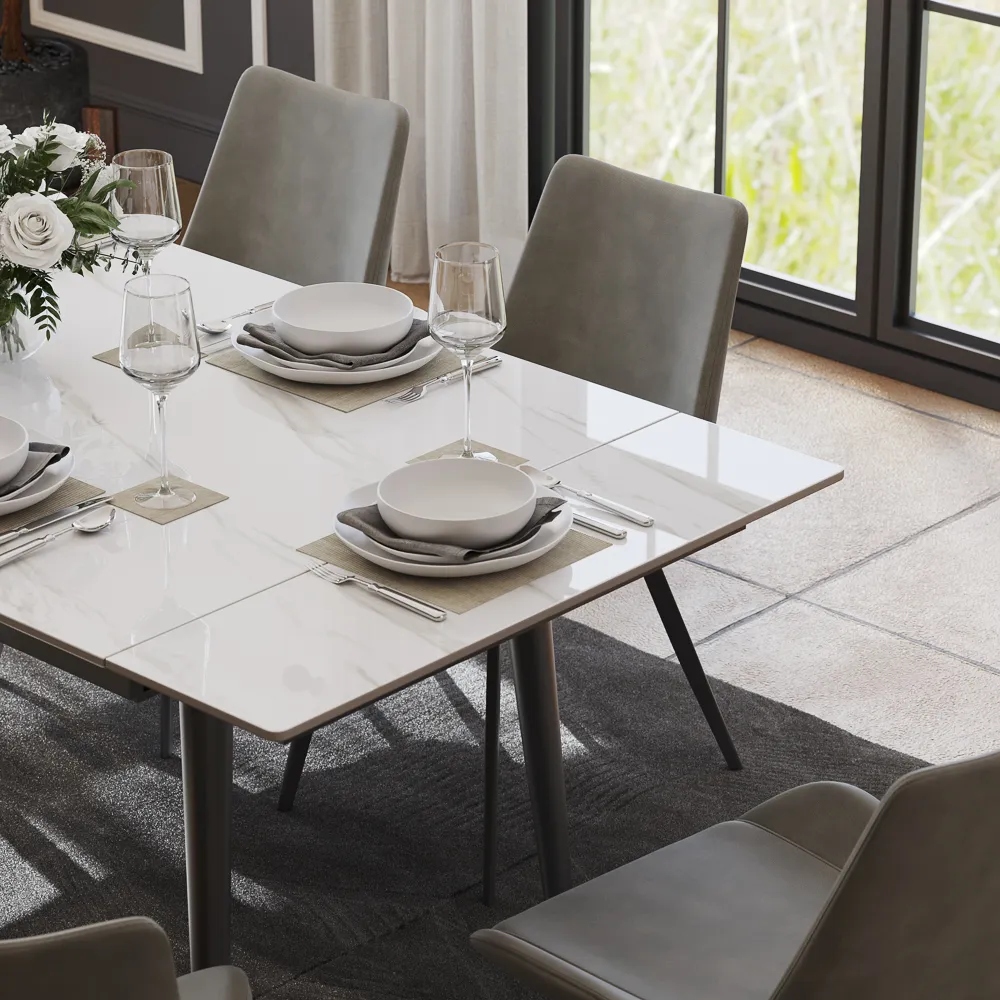
| Stone or sintered stone | Light wood, textured ceramic, woven details | Softens a cool, clean surface | Wipe vase condensation promptly and keep rough bases off the tabletop |
| Glass or dark finishes | Pale ceramic, clear glass, small green stems | Keeps the center light and open | Limit reflective finishes so the table does not look visually busy |
Wood tables usually look best with matte, tactile pieces rather than highly polished decor. Stone and sintered-stone tops often benefit from warmer details, such as a wooden bowl, hand-finished ceramic, or a folded linen runner. On glass or dark tables, lighter materials help prevent reflections from making the centerpiece feel heavier than it is.
You do not need to decorate every part of a long dining table to make the room feel complete. Repeat one detail—ceramic, brass, soft green, or natural wood—then let the pendant, sideboard, artwork, and dining chairs carry the rest of the visual weight. This is the same principle behind minimalist dining room ideas that keep a table feeling finished: fewer materials, repeated with intention, usually feel more settled than a crowded tabletop.
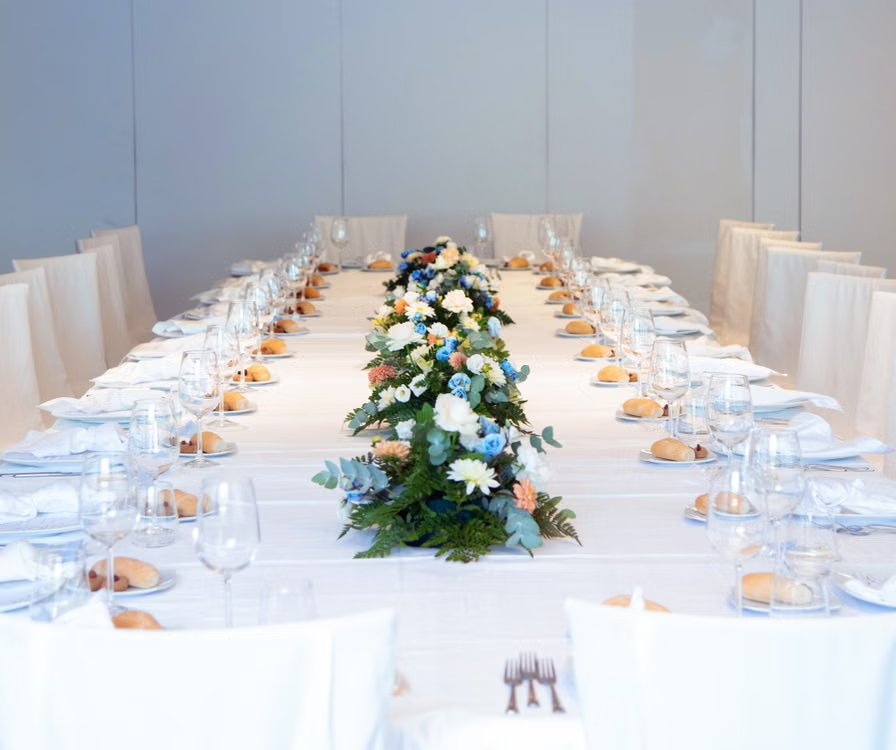
Conclusion
A centerpiece for a long dining table earns its place when it helps the room feel welcoming without limiting how people gather. Start with the space your meals actually need, then choose a low, contained arrangement that matches the table’s length and surface. In summer, favor elements that can be moved, wiped, and restyled in minutes: fruit, bud vases, linen, and small lights. Whether dinner is for two on a quiet weeknight or eight after a sunny afternoon, the table should stay ready to serve, share, and linger around together.
FAQs
Are Real Flowers or Faux Stems Better for a Summer Dining Table?
Real flowers bring freshness, but they need water changes and wilt faster in heat. Faux stems are better for a table that stays styled all week. For a balanced option, use faux greenery as the base and add a small, fresh bunch only when guests are coming.
Can I Mix Metals in a Long Table Centerpiece?
Yes, but keep one metal dominant. Pair brass candleholders with a small black or nickel accent, then repeat the dominant finish once elsewhere in the room. Too many competing metals make the centerpiece look collected without looking coordinated.
Which Summer Colors Work Best With a Dark Dining Table?
Pale blues, soft whites, butter yellow, leafy green, and clear glass create contrast without feeling harsh. Choose two main colors and one natural material, such as wood or woven fiber. The darker tabletop will make light ceramics and fresh fruit stand out.
What Is the Safest Centerpiece for a Table Used by Kids?
Choose one low, stable arrangement with no loose glass pieces, sharp stems, or open flames. A wide fruit bowl, a short ceramic vessel, or a tray with rechargeable votives is easier to live with than tall flowers or scattered accessories. Keep the setup light enough to move before crafts, homework, or dinner.


