 By Kelvin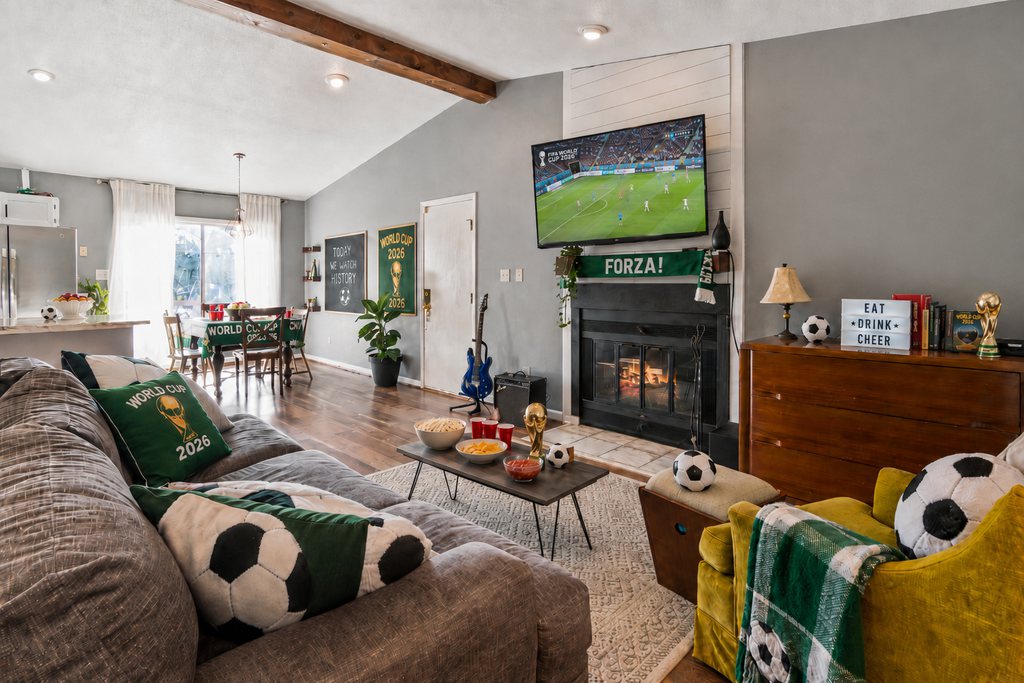
Introduction
An open layout can make hosting feel easy until a match begins and the living room, kitchen, dining area, and walkway all compete for the same space. The most useful open concept living room ideas do more than make a room look connected. They help people watch the screen, grab a drink, pull out a chair, and return to their seats without turning the space in front of the TV into a constant crossing point. For a World Cup watch party, the goal is not more furniture. It is giving each existing surface and zone a clear job.
Table of Contents
Why Does an Open Concept Living Room Need a Match-Day Plan?
An open concept living room works best for match viewing when it separates activity by purpose rather than by permanent walls. During a regular evening, someone can move casually from the sofa to the kitchen or dining table. During a match, that same path may cut through the TV view, crowd the coffee table, or leave guests standing behind the sofa with nowhere useful to go.
A practical plan creates four roles in the room:
- A viewing core for people following the game.
- A service edge for quick access to essentials.
- A halftime zone for refills, food, and conversation.
- One dependable route that stays outside the main screen line.
This approach is especially helpful in an open concept kitchen living room, where the easiest path to the refrigerator or island may otherwise run directly through the most important viewing area.
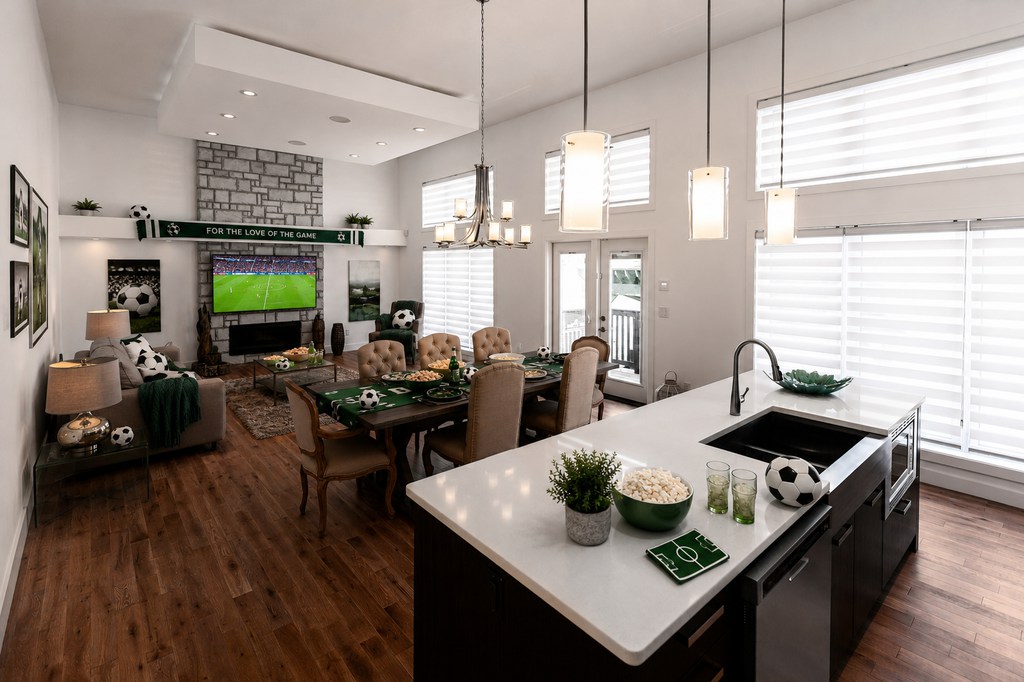
How Do You Create Zones Without Making the Room Feel Closed Off?
The best open concept living room ideas do not try to recreate walls with furniture. Instead, they create clear expectations: where people settle in, where they walk, and where activities move when the game pauses. The zones should feel related, but they should not all perform the same job at the same time.
Let the Sofa Area Become the Viewing Core
The sofa, main chairs, rug, coffee table, and nearby side tables should work together as the viewing core. This area is for people who intend to stay seated through most of the match. It should feel settled rather than crowded.
Keep the main TV view clear from people passing through. A coffee table can support the group already seated, but it should not become the place where every guest stops to pour drinks or reach for backup supplies. When the center of the room becomes the busiest part of the home, people will repeatedly block the screen.
Set a Service Edge Beside, Not Through, the Seating Area
A service edge sits just outside the viewing core. It may include the TV stand, a sideboard, a console, or the outer edge of the kitchen island. Its purpose is to hold the things that may be needed quickly but do not belong in the middle of the room.
This is where an open-plan layout benefits from furniture that has a defined role. The same thinking applies when you choose furniture for an open-plan living and dining room: each zone should work on its own without making the entire room feel like one oversized furniture set.
Let the Dining Area Handle the Pause Between Plays
In an open concept living and dining room, the dining table should not automatically become a second row of permanent TV seating. It works better as the halftime zone: a place for refills, serving, short conversations, and guests who are not watching every minute.
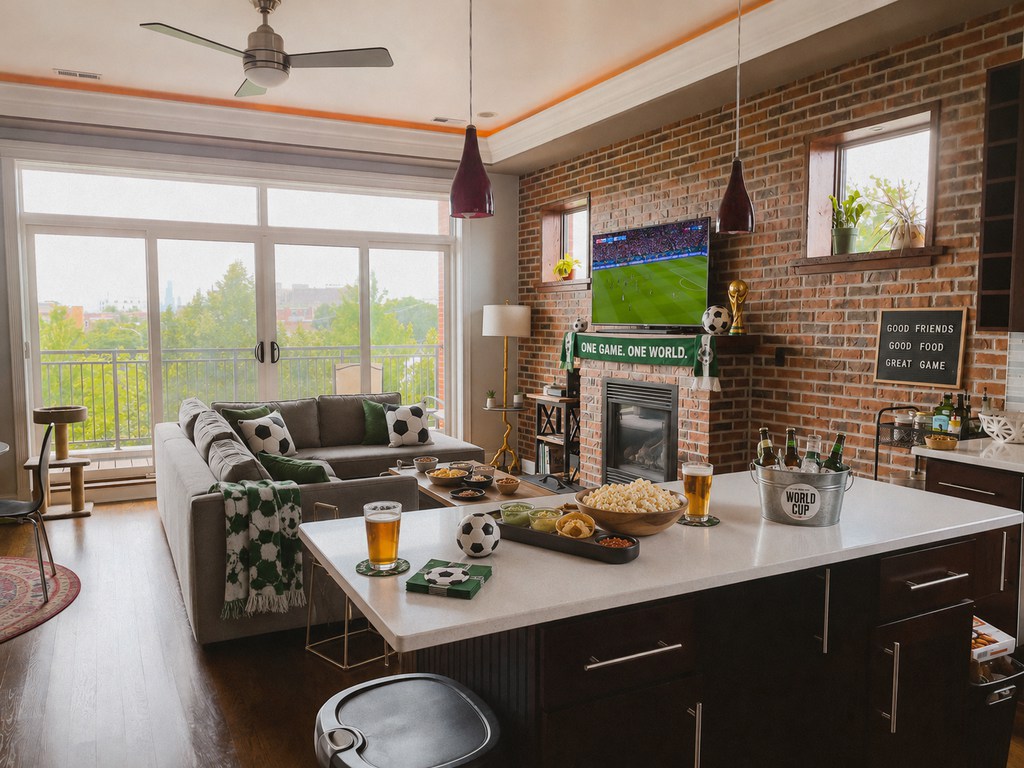
A bar-height table or kitchen island can play a similar role. Someone who arrives late, checks the score while helping with food, or prefers standing for a few minutes can stay near that edge without interrupting the people seated in the living room.
Which Furniture Roles Keep the Room Easy to Use?
Furniture should support different stages of the match, not compete for the same small patch of floor. Use the table below to assign roles before guests arrive.
| Furniture Piece | During Live Play | At Halftime | Avoid Using It As |
| TV stand | A calm control point for media devices and small essentials | A place to return remotes, chargers, and loose items | An open buffet beside electronics |
| Coffee table | A shared surface for seated viewers | A surface that can be cleared quickly | The room’s full food and drink supply |
| Side table | A personal landing spot beside an edge seat | A temporary support surface | A stop in the main walkway |
| Dining table | A clear, secondary zone away from the screen | Refill, serving, and conversation space | Permanent overflow seating |
| Bar table or island | A short-stay perch for guests who are moving in and out | Drink and snack service point | A bottleneck between kitchen and sofa |
| Sideboard or cabinet | Hidden support storage | A reset point for cups, napkins, and small clutter | A place for everyday piles |
The difference matters. A world cup watch party becomes easier to manage when no single table has to carry every drink, bowl, remote, phone, bag, and serving tray.
How Should Furniture Roles Change Through the Match?
A flexible match-day layout is not about moving your sofa or dining table every time a game starts. It is about changing the temporary layer around them. Before kickoff, prepare what people may need. During play, reduce unnecessary movement. At halftime, move active tasks away from the screen.
Before Kickoff: Keep the Viewing Core Light
Start by preparing the service edge and halftime zone first. The TV stand, sideboard, dining table, or island can quietly support the match before anyone sits down. The coffee table should stay relatively open.
This prevents the common problem of turning the living room into a staging area. When unopened supplies, bags, serving pieces, and extra cups are already spread across the seating zone, the room feels crowded before the match begins.
During Play: Support People Who Are Already Seated
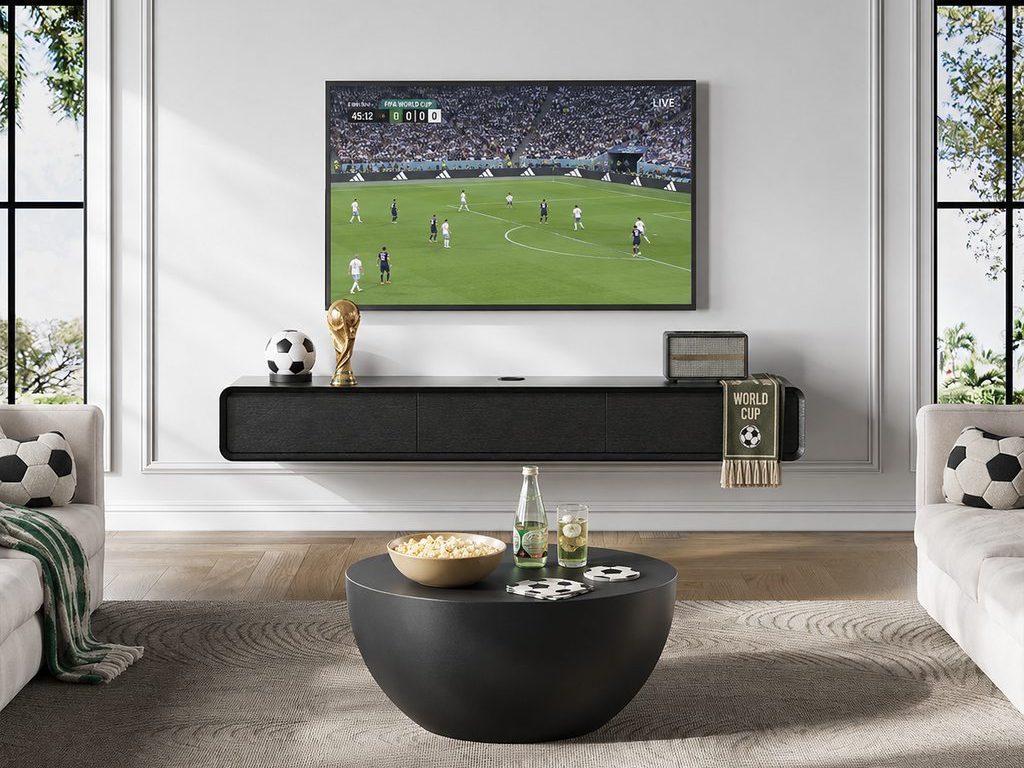
During live play, the coffee table and side tables should serve people who are already in the viewing core. Keep surfaces simple enough that someone can set down a drink, use a remote, or reach a small plate without asking everyone else to move.
The detailed division between food, media gear, and backup supplies belongs in a World Cup snack station with a coffee table and TV stand. In an open room, the bigger priority is making sure those functions do not pull people back and forth across the screen line.
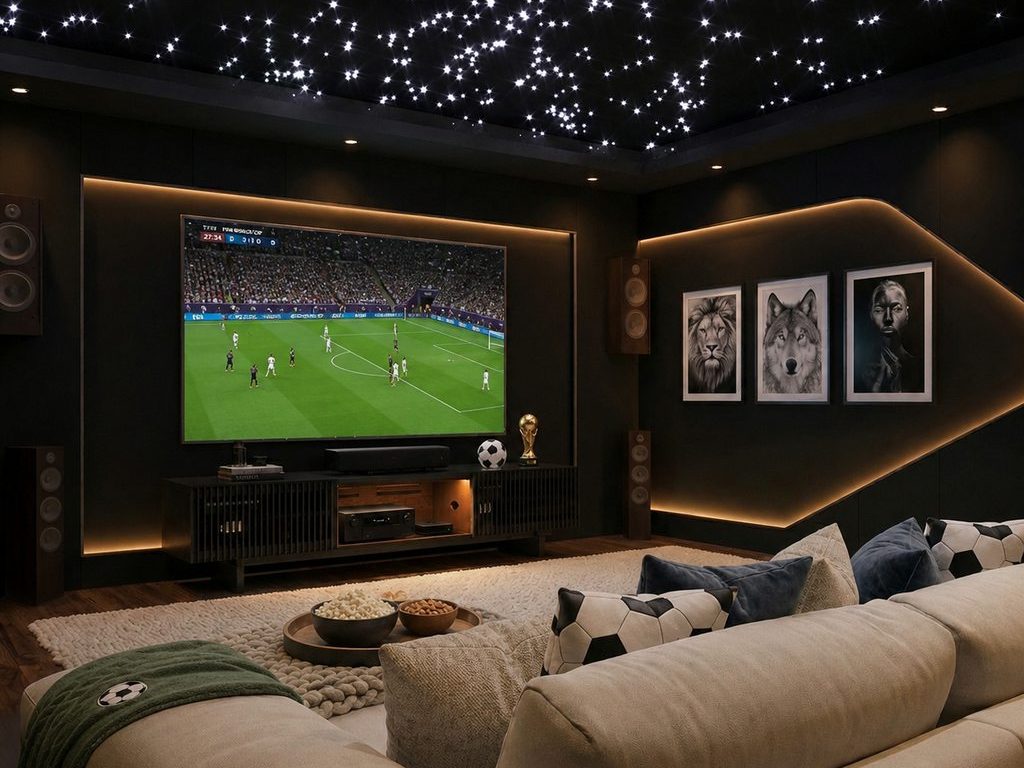
At Halftime: Move Activity Toward the Dining or Bar Zone
Halftime is when the room should become more social and active. The dining table, island, or bar area can absorb the movement that would otherwise collect around the sofa. Guests can refill drinks, clear used cups, or chat without standing directly in front of the TV.
This also protects the living room from becoming an all-night mess. When the game resumes, people can return to a viewing core that still feels focused and usable.
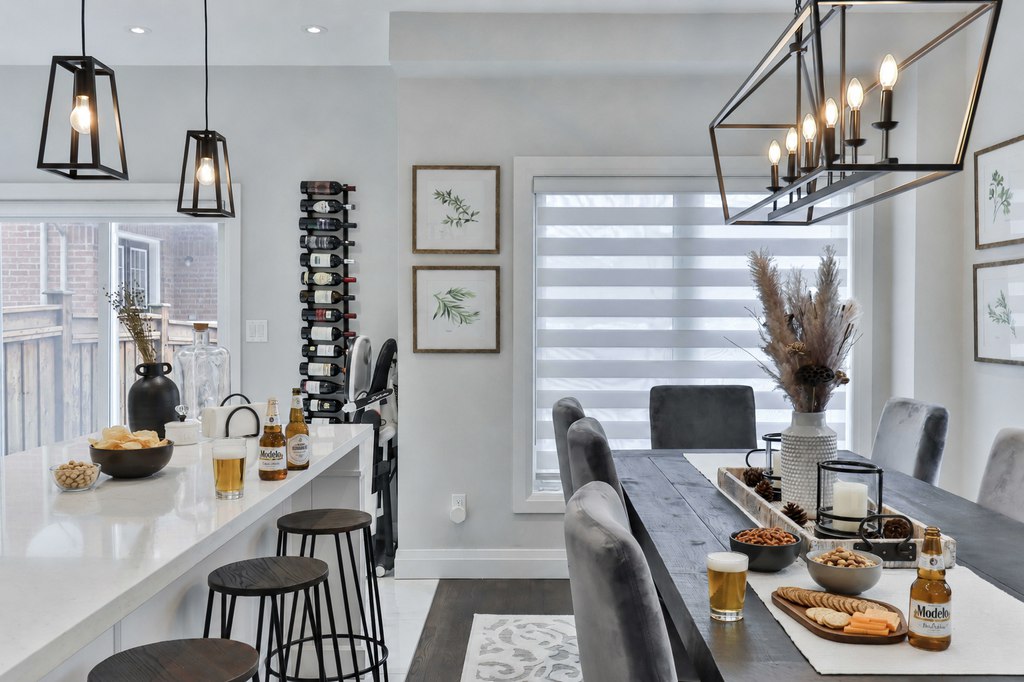
What Space Checks Keep the TV, Kitchen, and Dining Area Usable?
Before deciding where temporary stools, extra chairs, or serving surfaces should go, test the room from the perspective of someone who is walking through it. In open layouts, the usable room is not measured wall to wall. It is measured from one furniture edge to another.
Check the Screen Line
Sit in the main sofa seat, then stand at the dining table, island, and kitchen entrance. Notice where someone would naturally walk if they needed a drink or wanted to leave the room. That route should not repeatedly pass between the sofa and TV.
A temporary seat belongs at the outer edge of the viewing zone only when it does not block the screen or force people to step around it every time they head to the kitchen.
Check the Service Route
The kitchen, dining table, and entry should remain connected by one obvious route. Aim for enough room that two people can pass without brushing the sofa arm, chair back, or side table. A practical starting point for a main pathway is around 36 inches, with more room where people regularly carry dishes or pull out chairs.
When you plan a living room combined with dining, this route matters every day. On match night, it becomes even more important because people tend to move in short bursts during breaks.
Check the Chair Pull-Out Route
Dining chairs and bar stools take up more room when someone is actually using them. Pull them out before guests arrive and look at the route behind them. If a chair blocks the only path between the kitchen and living room, it should not become overflow seating for the whole match.
This check is especially useful in a small house open concept kitchen and living room, where a few extra inches can decide whether the room feels flexible or blocked.
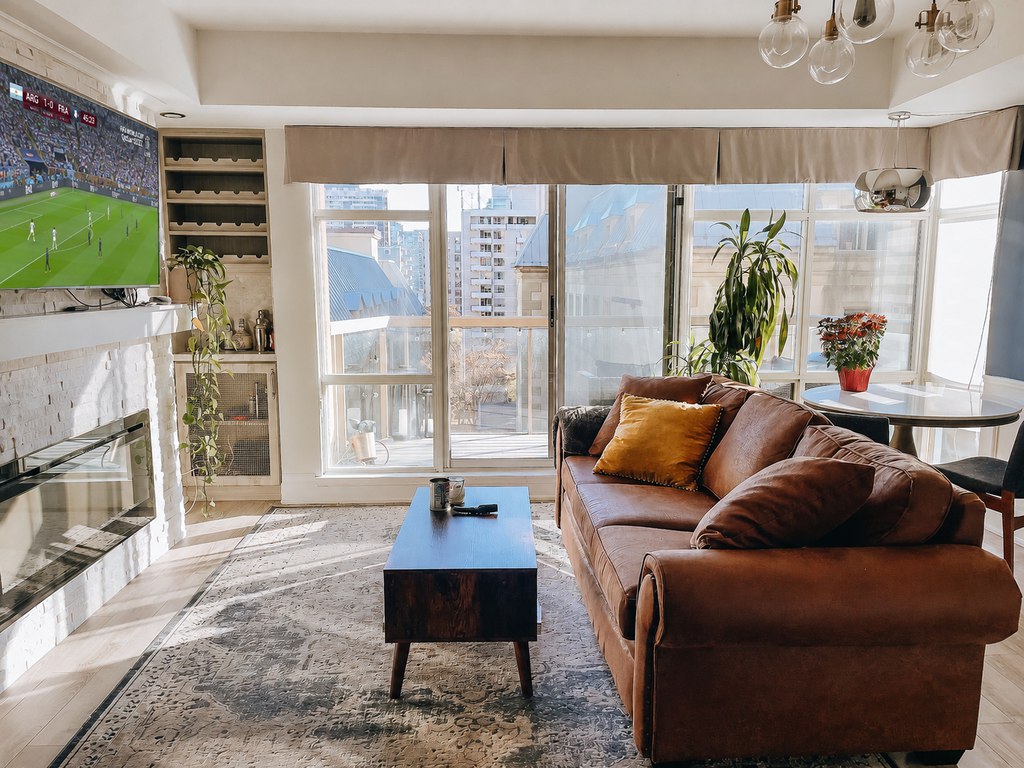
How Do You Reset the Room After the Match?
A well-planned open room should return to normal without a major furniture move. The sofa, TV stand, coffee table, and dining table can stay where they belong. Only the temporary layer needs attention.
Clear the coffee table first so the viewing core feels calm again, then clean your room after a World Cup watch party by returning small items to closed storage, moving flexible seating away from the main route, and resetting the dining surface before the next meal. The room should still support daily lounging, eating, and conversation after the final whistle.
Conclusion
The most useful open concept living room ideas are not about making every area look identical or turning every spare inch into seating. They give the room a practical rhythm: viewers stay comfortable near the screen, movement happens along one reliable route, and refills shift toward the dining table or bar area when the match pauses. When the TV stand, coffee table, side tables, dining table, and storage furniture each handle a different part of the evening, the room stays easier to use before kickoff, during the game, and after everyone goes home.
Q&A
What should I measure before ordering fully assembled furniture for an open-concept home?
Measure the delivery path as well as the final room. Check entry doors, elevators, stair landings, hallway turns, and the narrowest point between the truck drop-off and the room. Fully assembled furniture saves setup time, but a large sofa, sideboard, or media cabinet still needs enough clearance to enter safely.
Is performance fabric or protected leather easier beside an open kitchen?
Performance fabric is often easier for households that want a soft feel with routine spot cleaning, while protected leather is useful when spills need to wipe away quickly. Choose based on daily habits: pets, children, casual meals, and cooking frequency matter more than the material’s appearance in a showroom.
Is a pedestal dining table easier to use than a four-leg table?
A pedestal table is often easier when seating changes regularly because chairs can move around the edge without hitting table legs. A four-leg table can feel more structured and stable, especially with a rectangular top. Review the base shape and underside clearance, not only the tabletop dimensions.
Are dining benches practical for an open-concept dining area?
Dining benches can be practical when you want flexible seating without adding several visually heavy chair backs. They work best when the bench can slide fully under the table and when the household does not need strong back support for long meals. Families with young children may also find benches easier to clean around.
What sofa cushion construction is easiest to maintain in a shared kitchen and living area?
Loose, reversible cushions are usually easier to rotate, vacuum, and refresh when the sofa sits near cooking and dining activity. Attached cushions can look neater and stay in place better, but crumbs and pet hair may be harder to remove from the seams. Check whether cushion covers are removable before purchasing.
How do I choose furniture that will still fit if I move to another home?
Prioritize pieces with broadly useful proportions rather than furniture designed for one exact wall or corner. Modular seating, extendable tables, and storage furniture with moderate depth are often easier to reuse. Before buying, compare the piece’s full dimensions with both your current room and the likely size of a future apartment or house.


