 By Jenny Smith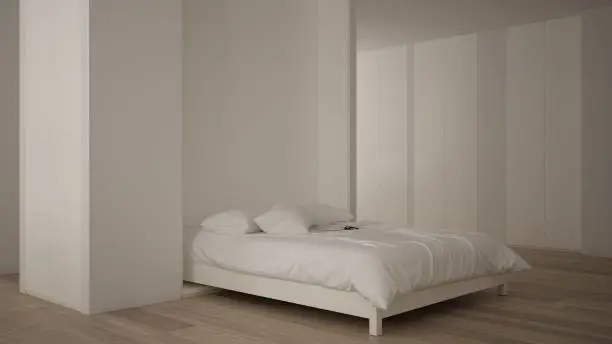
Choosing a sleeper sofa vs Murphy bed is less about which design is cleverer and more about how your room works on ordinary days. A Murphy bed can create open floor space, but an electric sleeper sofa can support work, lounging, movie nights, and overnight guests from one familiar spot. The right choice depends on sleep frequency, the value of daily seating, installation limits, and how much effort you want to spend changing the room. This comparison helps flexible homes choose with confidence.
Table of Contents
What Is the Real Difference Between a Sleeper Sofa and a Murphy Bed?
Start by separating the furniture’s primary job from its occasional job. Both options make room for sleeping, but they do so through opposite priorities. One protects your seating function; the other protects the open floor. That distinction matters more than a product label or a perfect-looking showroom layout.
A Sleeper Sofa Makes the Room Useful Every Day
A sleeper sofa is seated first and guests sleep second. Closed, it is your place to relax, host, or take a laptop call; open, it gives a visitor a defined sleep surface. That suits dens, living rooms, and home offices with a daily role.
Power models simplify conversion with a button or remote instead of lifting frames and reshuffling cushions. Less effort is more than a luxury: it makes spontaneous overnights easier to manage.
A Murphy Bed Favors Regular Sleep and Clear Floor Space
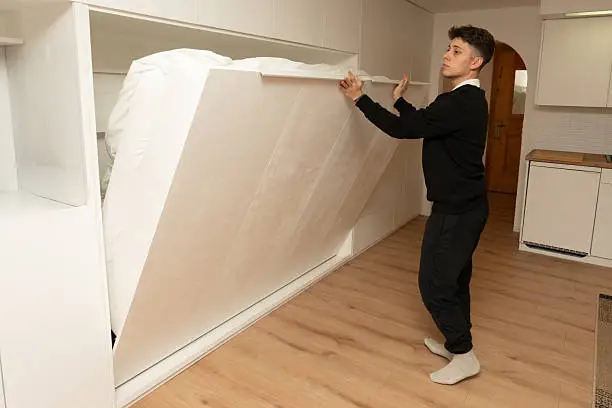
People who type “what is murphy beds” usually mean wall beds: a mattress and frame that fold into a cabinet. A Murphy bed supports a more traditional sleep setup and frees the room’s center when closed, making it useful in sleep-first guest rooms.
A murphy bed with couch adds seating, and “murphy bed couch” often describes an integrated wall-bed-and-sofa system. Still, it needs wall width, a stable layout, and a clear opening zone—less ideal for renters or frequent rearrangers.
Quick answer: Pick a sleeper sofa for everyday seating and occasional guest sleep. Pick a Murphy bed for frequent sleeping and maximum daytime floor space.

Why Can an Electric Sleeper Sofa Be Better for Everyday Living?
Electric sleeper sofas are not the better answer for every room. Their advantage is practical: they reduce the friction of using one space for several purposes. In an apartment, shared living room, or guest-ready office, a solution that is simple to operate often earns more value from the same square footage.
It Gives You a Real Sofa, Not Just an Empty Zone
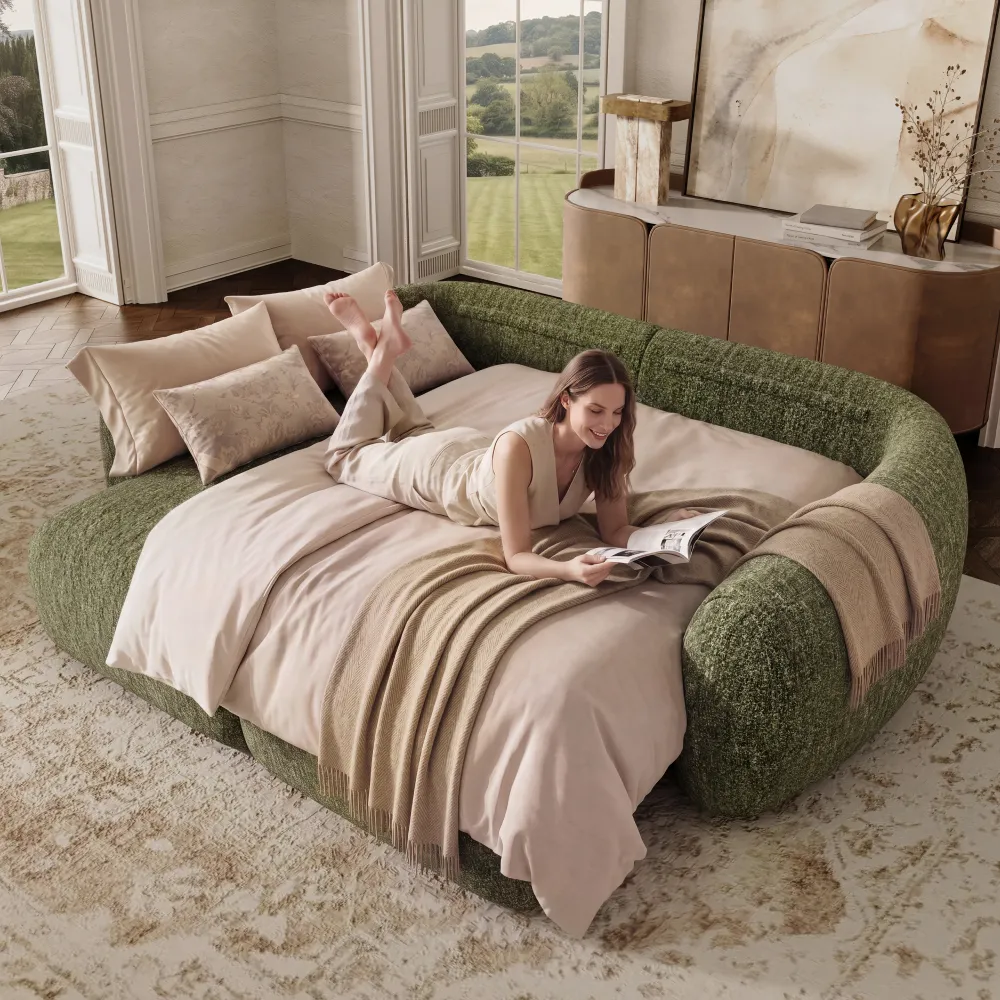
A Murphy bed clears space, but that area may still need seating if it is where you unwind every day. An electric sleeper sofa already does both jobs: it creates a lounge-ready room, then becomes a bed only when needed.
In one small home office layout, the sofa served as a reading spot all week, then became a guest bed for a Saturday visit. The room felt lived in, not staged around a rarely used bed.
One-Touch Conversion Makes Hosting Easier
The murphy bed vs pull out couch question changes when the couch is motorized. Manual sleepers can mean bending, pulling, moving cushions, and clearing a coffee table. A power sleeper reduces the job to a controlled extension—useful when you host alone or prepare a bed late.
That is where an power sleeper sofa with adjustable seating can feel more practical than a traditional pull-out design. Its independently adjustable sections let the same piece shift from upright seating to a relaxed chaise, daybed, or guest-ready sleep surface, without turning bedtime into a furniture-moving task.
Furniture that is awkward to convert tends to stay unused. Multi-functional studio apartment furniture ideas can help keep work and downtime zones clear while leaving room for overnight flexibility.
How Do Comfort, Space, and Cost Compare?
Neither choice wins every category. A Murphy bed favors frequent sleep and a clear daytime floor. A sleeper sofa favors daily seating, easier setup, and mobility. Compare both closed and open states, then decide which inconvenience you would rather avoid: a fixed sofa footprint or a wall-based installation.
| Factor | Electric Sleeper Sofa | Murphy Bed |
| Daily role | Seating + guest sleep | Sleep + open floor |
| Best sleep use | Occasional stays | Frequent or nightly use |
| Setup | Usually no wall mounting | Often anchored |
| Moving | Portable, though heavy | Best for a stable layout |
| Costs to compare | Delivery and warranty | Cabinet, mattress, wall work |
Sleep Comfort: Frequency Should Decide the Winner
A Murphy bed usually has the edge for routine sleep because it can use a mattress closer to a standard bed setup. Adults ages 18–60 are generally advised to sleep at least seven hours per night, so the surface deserves more attention than a quick nap (Centers for Disease Control and Prevention).
A sleeper sofa can work well for occasional guests. Look for an even, level extension surface and enough width. Good bedding and a slim topper help short stays, but a true bed remains the safer choice for nightly sleep.
Space: Measure Useful Space, Not Just Empty Space
A Murphy bed wins when an unobstructed center floor is your main goal. Yet a closed sofa does not waste space if it is the seat you use every day. Ask which piece earns its footprint during an ordinary week, not which one disappears for the best before-and-after photo.
One test I use is to mark the open-bed dimensions with painter’s tape and walk through the room carrying a laundry basket. If the closet or bathroom becomes hard to reach, the “space-saving” choice is not working in real life.
Cost: Compare the Price of Change, Too
A sofa bed usually has a simpler budget path: select it, confirm delivery access, and place it in the room. A Murphy bed can add the cost of a cabinet, mattress, professional installation, wall anchoring, and possible repairs when you move.
That does not automatically make one option cheaper. It changes what you are paying for. A Murphy bed may be worth more in a long-term, sleep-first room. But for renters, frequent movers, or households that need a sofa every day, an electric sleeper sofa can offer a more predictable total cost with fewer changes to the home itself.
When Is a Sofa Bed Better Than a Murphy Bed?
Let your calendar settle this decision. Count overnight stays, but also the hours you read, work, host, or rest here. Your furniture should support the activity you repeat most, not sacrifice daily comfort for an occasional guest visit.
Choose an electric sleeper sofa when:
- The room is a living room, den, or office first.
- Guests stay occasionally.
- You rent, may move, or cannot anchor furniture.
- You need comfortable seating and easy conversion every day.
Choose a Murphy bed when:
- Someone sleeps there several nights weekly or nightly.
- Open floor matters more than a full sofa.
- You have wall space, installation permission, and a stable layout.
How to Choose an Electric Sofa Bed That Feels Worth It
Power conversion should improve daily life, not become a feature you notice only in a showroom. Start with bed mode: can an adult sleep comfortably, can people walk around it, and does the sofa still feel supportive when it is closed? Checking these basics prevents a compact-looking purchase from creating a cramped room later.
Check the Mechanism, Comfort, and Access
Operate the mechanism or watch a full demonstration. Notice whether cushions must be removed, whether movement is controlled, and where the controls sit. Then test the sofa as you would after a long day. A polished guest bed that feels shallow for daily sitting will disappoint.
Choosing a comfortable sleeper sofa for a small room means judging both modes. Check the mechanism, daily support, level sleep surface, fabric durability, nearby outlet, and every delivery turn.
- Mechanism: Smooth movement and clear warranty terms
- Seating: Support for reading, TV, and work breaks
- Sleep surface: Flat enough to limit pressure points
- Fabric: Realistic for children, pets, and regular use
- Power plan: A nearby outlet and an outage plan
- Delivery: Doors, hallways, elevators, and stairs measured
What Should You Measure Before Buying?
Furniture can fail a room when you measure only its closed, photo-ready state. Map both modes with painter’s tape and test your walking routes. This simple step gives you a practical answer before delivery day, when a tight doorway or blocked closet becomes much harder to solve.
Measure the sofa’s closed width and depth, then mark its full extension. Leave a walking route around the open bed and check doors, drawers, radiators, and desk chairs. For a Murphy bed, add cabinet depth, wall width, ceiling height, and the anchoring zone.
Now imagine someone is asleep. Can another person reach the bathroom, make tea, or close the office door without stepping over bedding? A piece may technically fit yet still make the room frustrating to share. That final test is often more useful than dimensions alone.
Conclusion: Choose the Option You Will Enjoy Using Every Day
A Murphy bed is a smart answer for sleep-first rooms, frequent guests, and layouts that need open floor above all else. Yet for most living rooms, apartments, and home offices, an electric sleeper sofa creates a more natural rhythm: a genuine place to sit every day, a guest bed when needed, and less setup stress when life changes. Choose the option that serves your usual week, not just the occasional overnight visit. The best multi-use room should feel comfortable before guests arrive and effortless after they leave.
FAQ: Sleeper Sofa vs Murphy Bed
These questions cover practical details that can change the decision after you compare comfort, footprint, and price. Always use the manufacturer’s instructions for a specific model, especially for motor operation, wall mounting, bedding limits, and basic household safety.
Can you leave sheets on a Murphy bed when it is closed?
Usually, fitted sheets and a thin blanket can stay in place when the manufacturer permits it and the bedding remains within the cabinet’s depth limit. Thick duvets, stacked pillows, and heavy throws may prevent secure closing. Check the manual before storing bedding upright.
Do power sleeper sofas need to stay plugged in?
Yes. Povison power sleeper sofas are designed for plug-in use, so they need access to a suitable wall outlet for motorized movement. Position the sofa near the outlet and keep the cord behind the sofa or along the wall, away from walking paths. Before buying, check the product page or confirm with customer service for the exact power requirements.
Will a pull-out couch scratch hardwood floors?
It can, especially when the sofa shifts during conversion or has narrow legs. Use felt pads suited to your floor type, keep grit away from the legs, and avoid dragging the frame. A low-pile rug can help, provided it does not interfere with the mechanism.
How does a sofa bed vs day bed comparison affect a home office?
A daybed can read as a bench and work for reading or short rests, but it usually offers less lounge seating. A sofa bed is stronger when the office also needs a real everyday couch and a comfortable sleep surface for occasional adult guests.
Can a power sleeper sofa work during a power outage?
It can be used in whatever position it is already in, but motorized conversion needs electricity. Since Povison power sleeper sofas are designed for plug-in use, the sofa may remain in its current position until power returns.Check the product page or confirm with customer service for the exact power requirements.


