 By Charles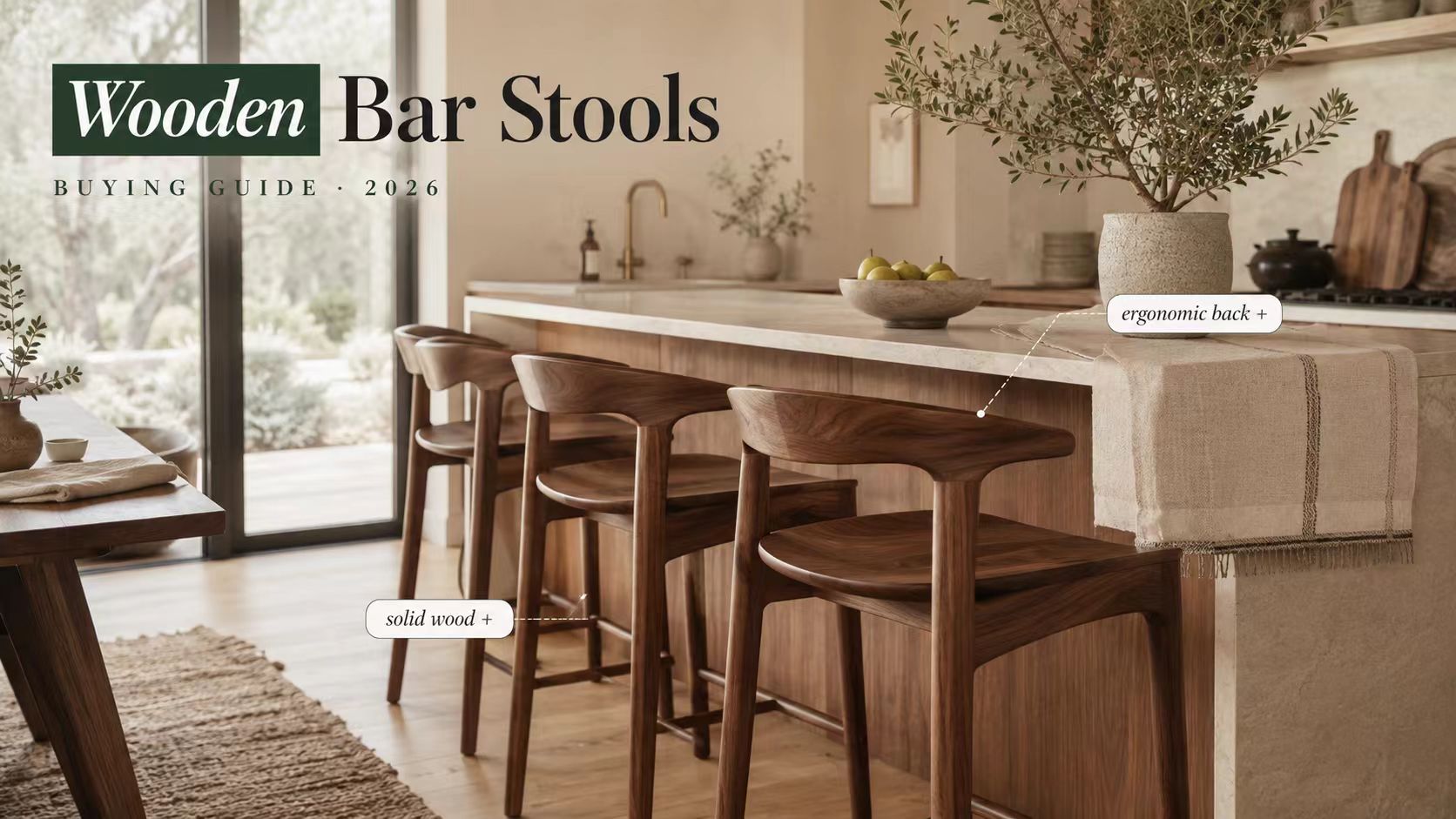
After finishing her kitchen renovation last month, my neighbor Liz texted me five product photos of wooden bar stools with one question: “Are these going to hurt to sit on?” She’d narrowed it down based on how they looked next to her new white oak floors, but every reviewer with a bad back was warning her off wood, and she didn’t know whether they were right or being dramatic. It’s the question I get most often about wooden bar stools, and it has a more useful answer than the internet usually gives it.
Wooden bar stools are different from upholstered or metal stools in three specific ways that matter for daily life: how they feel after 20 minutes, how they survive a kitchen full of oil and water, and how they treat your floors. This guide skips the seat-height and stool-spacing math (other guides cover that — links at the end) and focuses on the three things the spec sheet usually leaves out.
Are Wooden Bar Stools Right for Daily Kitchen Use
The honest answer depends on how long you sit. Wooden seats are firm by definition — there’s no foam doing the cushioning work — so the “are they comfortable” question is really a “for how long” question.
Per general ergonomic principles from sources like NIOSH’s ergonomics research, seated comfort drops off sharply once a firm surface starts compressing soft tissue against the bone, and that breakpoint varies by surface contour. In practical kitchen terms: a well-shaped wooden seat with a slight saddle contour and rounded front edge can hold up for a meal. A flat, perfectly horizontal wooden seat — the “stool that looks like a tabletop on legs” — gets uncomfortable noticeably faster.
Three buckets of use that decide whether wood is the right choice:
- Short use (a meal, a coffee, half an hour of homework). Wood is fine, often preferred for the warmth and easy wipe-down.
- Medium use (a long dinner, a couple hours of conversation at the island). Wood works if the seat has contour or a thin removable cushion. Flat seats start to feel like a problem.
- Long use (working from the island, all-day hosting, hours of homework). Wood without a cushion isn’t the right tool. This is the “who should skip” group — go upholstered or rattan, or plan a tied-on seat pad from day one.
Seat depth matters at least as much as the material. Per Dimensions’ stool data, bar stool seat depth runs 14-18 inches. If you have shorter thighs, a 14-15 inch seat distributes weight across more of your femur and feels noticeably better than a deep 18-inch seat where the front edge hits the back of your knees. The same wood, same finish, two inches of seat depth different — completely different comfort experience.
Best Homes for Wooden Bar Stools
Wood fits some kitchens better than others. Two clear sweet spots.
Warm Modern Kitchens
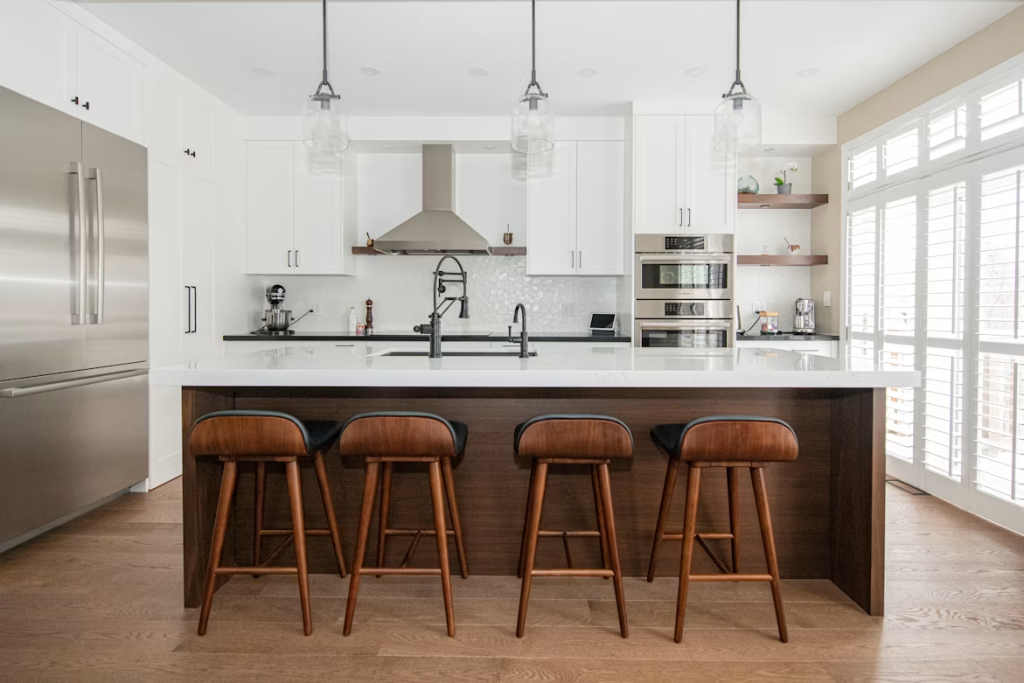
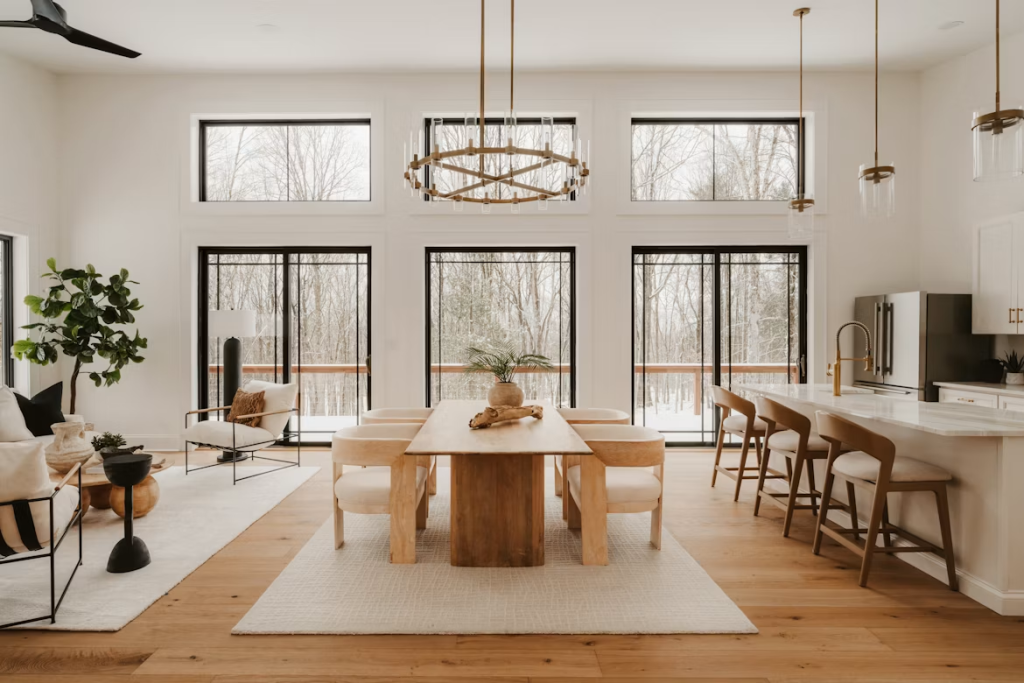
If your kitchen leans toward natural materials — oak or walnut floors, butcher block accents, warm white walls — wooden stools are almost always the right call. They tie the floor and the cabinetry together in a way that metal or upholstery can’t. The trick is keeping the wood tones in the same family rather than matching exactly: stools two shades darker or lighter than the floor read as intentional layering; an exact match reads like flat-pack matching.
Family Breakfast Bars
The second strong fit is the breakfast bar that gets daily use from kids and adults eating short meals, doing homework, and morning coffee. Wood survives spills and crumbs better than upholstery (no fabric to launder) and treats the floor better than metal stool feet do when dragged repeatedly. The constraint here is duration — kids eat fast, parents stand and lean as often as sit, and the seat doesn’t see hours of continuous pressure. That’s the use pattern wood handles best. If your breakfast bar doubles as a homework station for kids who sit two hours, plan to add a cushion. Wood + cushion is a totally legitimate combination; pretending you don’t need the cushion is where regret comes in.
Wooden Bar Stools With Backs vs Backless Styles
The general backless-vs-back comparison has been written to death; the wood-specific angle is this: a backless wooden stool puts all the support burden on your core, and a wooden seat already lacks the give that helps. Pair those two together and a 40-minute meal starts feeling longer than it is.
A wooden bar stool with a back changes the calculation. Even a low spindle back (5-7 inches above the seat) lets your lower back settle in and shifts the fatigue point out by a meaningful amount. A full back (12+ inches above the seat) makes wooden stools workable for long meals because you’ve replaced “core engaged” posture with “leaned-back” posture.
Backless wood works for tight kitchens, stools that tuck under the counter, short island sessions, and the visual lightness of an open layout. Wood with a back works for longer meals, kids who want to lean back, dedicated dining at the island, and visual anchor in a larger kitchen.
A wood-specific nuance: the back angle matters more than the back height. A vertical back (90° to the seat) pushes you forward; a back angled 5-10° rearward lets you actually rest. If you can’t sit on the stool in a showroom, ask the seller for the back angle spec, not just the back height.
Oak Bar Stools, Finishes, and Cleaning Trade-Offs
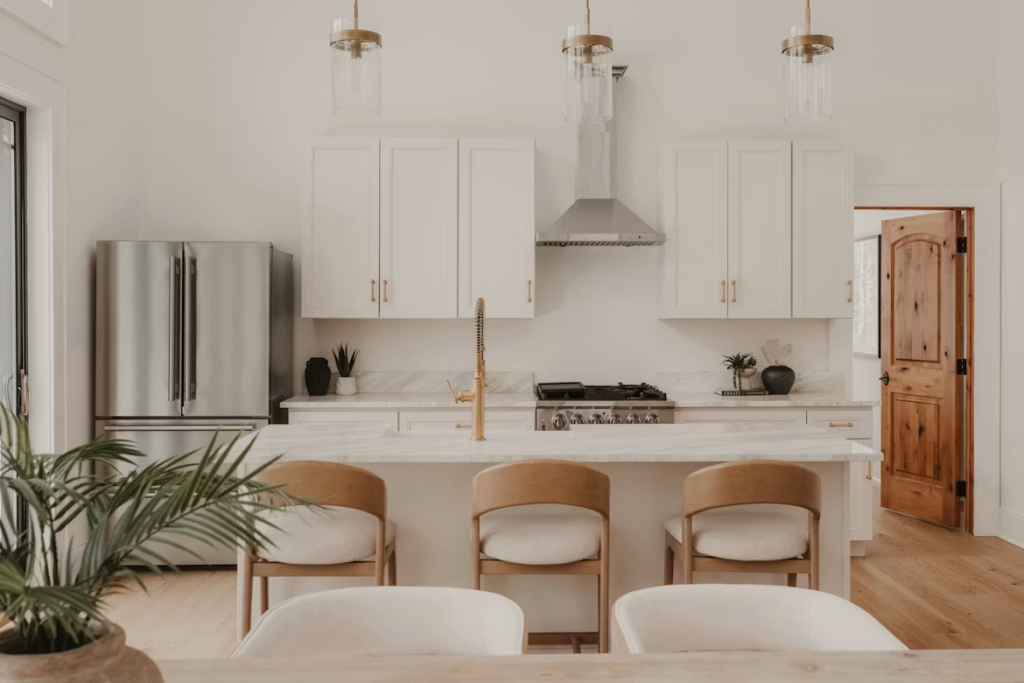
Oak shows up over and over in kitchen seating for good reason. Here’s how the common wooden stool species compare for kitchen use:
| Wood Species | Janka Hardness (lbf) | Grain Hides Wear? | Kitchen-Use Verdict |
| Hard Maple | 1,450 | No (uniform surface shows scuffs) | Hard but reveals wear |
| White Oak | 1,360 | Yes (pronounced grain) | Top choice for daily use |
| Red Oak | 1,290 | Yes (pronounced grain) | Solid daily-use pick |
| Black Walnut | 1,010 | Moderate | Beautiful, more careful use |
| Cherry | 950 | Moderate (darkens with age) | Lighter-duty seating |
The practical translation: oak resists dents from dropped utensils and the back-of-a-stool bumps a kitchen island generates better than walnut or cherry. Hard maple is harder still, but oak’s pronounced grain hides the small wear marks better — maple shows every scuff because of its uniform surface.
That said, hardness isn’t everything. Finish does most of the day-to-day work in a kitchen, and there are three kinds you’ll see on wooden bar stools:
- Water-based polyurethane. The kitchen-friendly default. Clear, durable, doesn’t yellow much over time, wipes clean of food, oil, and water. Most modern oak stools use this. Look for low-VOC formulations if you care about indoor air quality.
- Oil finishes (tung, linseed, hardwax oil). Beautiful — they let the wood feel like wood — but require periodic reapplication (typically once a year on a kitchen stool) and stain more easily from acidic spills.
- Lacquer. Hard, glossy, factory-applied. Resists water and abrasion well but can chip on impact, and chips show.
If a stool’s seat or any internal panel uses MDF or particleboard, the formaldehyde standards under EPA’s TSCA Title VI rule apply — the product should be labeled TSCA Title VI compliant, which matches the CARB Phase 2 limits. Solid hardwood doesn’t fall under this rule because the limits target composite wood resins, but if you see an MDF base under a solid wood seat, the label should be there. No label, no purchase.
For sourcing, FSC certification tells you the wood came from forests managed for long-term health rather than clear-cut sources. It’s not required for a stool to be good, but in 2026 it’s common enough on responsibly-made furniture that its absence is a question worth asking.
What to Check Before Buying Online
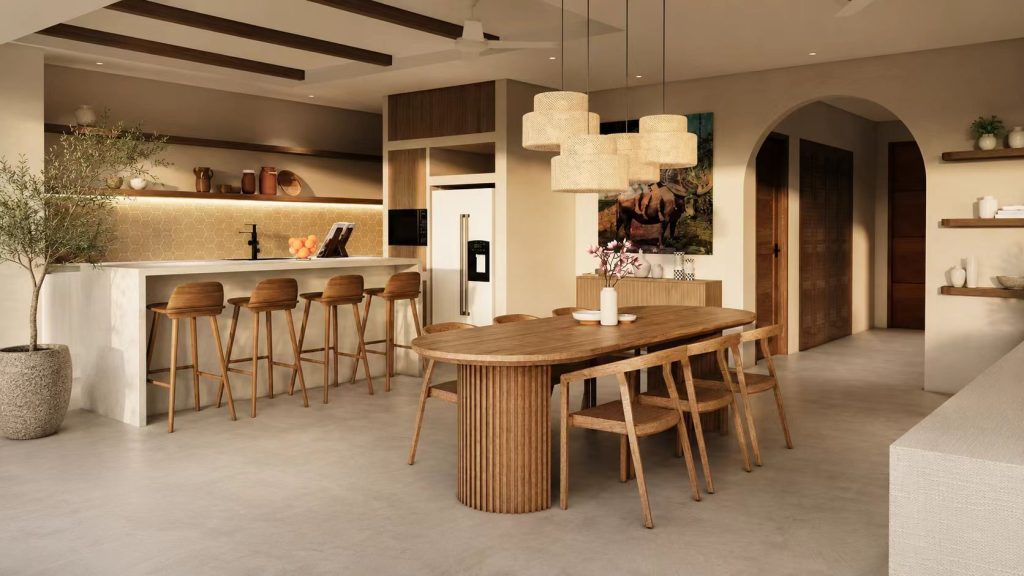
Six checks before clicking buy on a wooden bar stool you can’t sit in:
- Wood species, and whether it’s solid. “Wood” on a listing can mean solid hardwood, hardwood veneer over MDF, or rubberwood (a softer common-furniture species). Ask which one. Janka rating tells you whether daily use will dent it.
- Finish type and VOC class. Water-based poly is the default for kitchen use. Oil finishes look better but need yearly maintenance. If you smell the stool when it arrives, it should air out within 48 hours — anything longer is a finish or composite-wood problem.
- Seat depth and contour. 14-18 inches is the range. Pick the depth that matches your leg length; ask for a side-profile photo to see the seat contour.
- Foot rest position. Roughly 12 inches below the seat is the ergonomic standard. If a stool doesn’t have a footrest or has one mounted in the wrong spot, your legs will dangle and you’ll feel it within 15 minutes.
- Foot pad / glide type. Felt pads work on hardwood and protect against scratching but pick up grit; rubber pads grip on tile but can leave marks on light oak floors; nylon glides are the all-rounder. Confirm what comes pre-installed and whether replacements are available.
- Weight capacity and cyclic durability.ANSI/BIFMA’s seating standards (X5.1 for chairs, X5.4 for lounge/public seating) define the cyclic load tests that separate well-built seating from decorative pieces. A stool tested to either standard is built to handle daily residential use; one with no published durability spec is a guess.
A note on assembly and delivery: wooden stools take their stress at the joinery between legs and seat. DIY-assembled stools — even with good hardware — tend to develop wobble within a year because the joints get tightened by hand rather than torqued to spec. For a set of 2-4 stools, that also means 2-4 boxes of parts, 2-4 sets of instructions, and 2-4 chances for one stool to end up slightly wobblier than the others. Browsing POVISON’s fully assembled bar stool collection gets you stools that arrive with the joinery factory-set, the foot glides pre-installed, and the set shipped together with damage-replacement terms covering the full order — which is the difference between a stool that’s still tight in year three and one that starts squeaking in month six.
FAQ
Are wooden bar stools comfortable for everyday sitting?
Wooden bar stools are comfortable for everyday sitting in short sessions and become less comfortable as time on the seat increases. A contoured wooden seat handles a 30-45 minute meal well; for longer use, either choose a stool with a seat cushion built in or plan to add a tied-on pad. Comfort also depends on seat depth and footrest position — a well-shaped 14-15 inch seat with a foot rest at the right height stays comfortable longer than a deep flat seat without one.
Are wooden bar stools with backs better for daily use?
Wooden bar stools with backs are generally better for daily use than backless versions because the back transfers some of the support burden off your core. The exact benefit depends on the back angle: a back tilted 5-10° rearward lets you actually rest, while a vertical back doesn’t relieve much. Backless wooden stools work well for tight kitchens and short sits; stools with a back work better for longer meals, homework sessions, and any seating that lasts more than 30-40 minutes.
Are oak bar stools durable for kitchen islands?
Oak bar stools are durable for kitchen islands because oak’s hardness rating (1,290-1,360 lbf on the Janka scale) resists denting from dropped utensils and the day-to-day knocks an island generates. Oak’s pronounced grain also hides small wear marks better than smoother woods like maple. Long-term durability also depends on the finish — water-based polyurethane handles kitchen spills well, while oil finishes need yearly reapplication to maintain stain resistance.
Do wooden bar stools scratch floors easily?
Wooden bar stools scratch floors based on what’s between the leg and the floor, not the leg material itself. Felt pads work well on hardwood and protect against scratching but pick up grit over time and need periodic replacement; rubber pads grip on tile but can leave marks on light hardwoods; nylon glides are the most floor-neutral. The risk depends on your floor type (hardwood, LVP, tile, polished concrete all behave differently) and how often the stool is pulled out and pushed back. Felt or nylon, replaced annually, prevents most issues.
Conclusion
Wooden bar stools work for most kitchens that want warmth and easy cleanup, if you match the seat shape and back style to how long you actually sit. Pick oak or a comparably hard species for daily use, choose a water-based polyurethane finish for kitchen-spill resistance, and pay attention to the foot pad spec for your specific floors. The wrong wooden stool gets returned within a month; the right one quietly anchors the kitchen for fifteen years.
Related Reading:


