 By Charles
I bought my first set of kitchen bar stools the wrong way. New island, a free Saturday, and I eyeballed the height. Two of them arrived too tall, my heels never reached the footrest, and dinner became a low-grade core workout. So before you order anything, let me save you that afternoon. This guide is about how kitchen bar stools actually live at an island or breakfast bar — the heights that fit, the number that fits, whether you want a back, and why the ones that show up already built will outlast the ones you assemble at 10pm.
How to Choose Kitchen Bar Stools in 2026
Here’s the thing nobody tells you: only one measurement decides whether a stool works, and it’s seat height. Get that wrong and no amount of style saves it.
The math is short. Measure from the floor to the top of your surface, then subtract 10 to 12 inches. That gap is the legroom you sit in. A standard kitchen counter or island lands around 36 inches (the realistic range is 34–37″), which pairs with a 24–26″ counter stool. A true bar surface runs 40–42 inches and wants a 28–30″ bar stool. Anything above that — the 33–36″ “spectator” seat built for 44–47″ surfaces — belongs at a custom-tall counter, not an ordinary kitchen. If your island isn’t genuinely in that range, skip them; your feet will tell you the moment they leave the footrest.
| Stool type | Surface height | Seat height | Best for |
| Counter stool | 34–37″ (standard counter/island) | 24–26″ | Most kitchen islands and breakfast bars |
| Bar stool | 40–42″ (true bar) | 28–30″ | Home bars, raised back ledges, pub tables |
| Spectator stool | 44–47″ (custom-tall) | 33–36″ | Rare — tall entertainment bars only |
Those ranges aren’t my invention. Reference data on counter and bar stool seat-height ranges puts counter stools at 23–28″ and bar stools at 29–32″, and recommends at least 10 inches between the seat top and the underside of the surface so your knees clear.
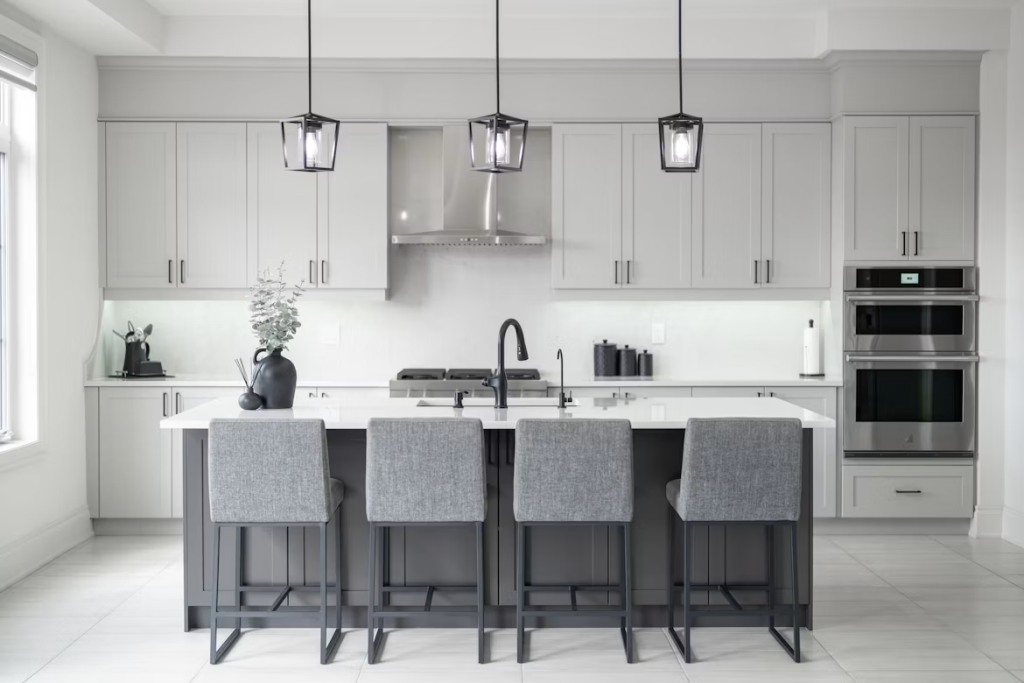
One trap eats a lot of orders: the two-tier island. The prep counter sits at 36 inches while the raised eating ledge behind it sits at 42. Measure both. I once watched a friend buy four matching bar stools for a counter-height island because he trusted his eyes. Pull out the tape instead. Better yet, run my favorite pre-purchase trick — lay painter’s tape on the floor to mark the stool’s footprint and tape a line at your target seat height on the cabinet. You’ll feel the fit before you spend a dollar.
Match Stools to Your Island or Breakfast Bar
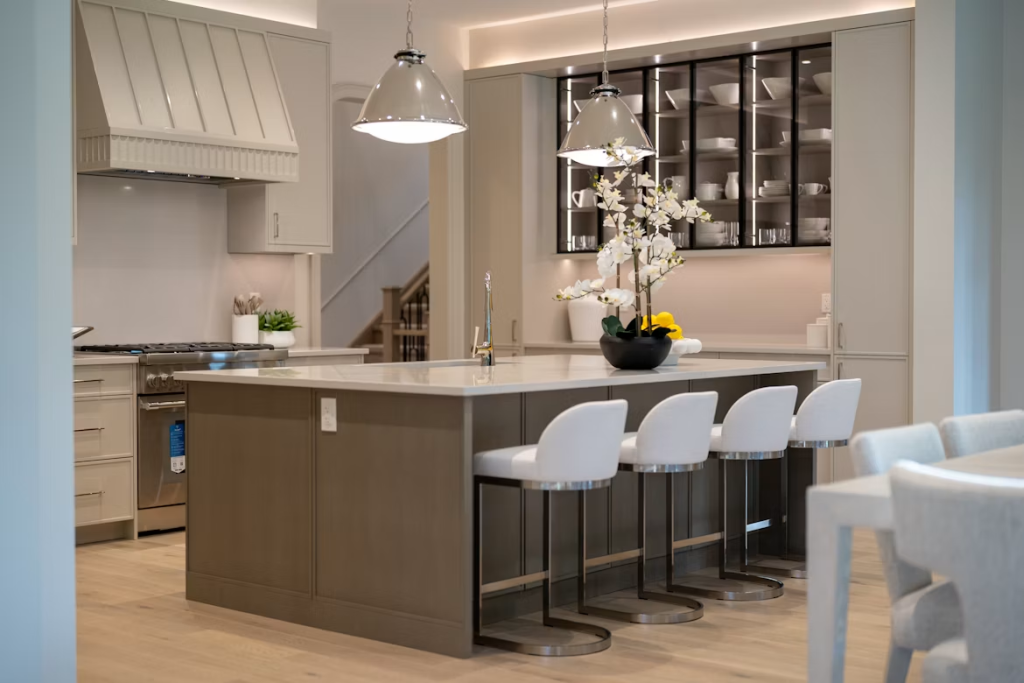
Seat height tells you what fits the surface. Footprint and use tell you what fits the room. An island isn’t just a place to perch — it’s where breakfast happens, where homework spreads out, where guests cluster while you cook. Match your kitchen bar stools to that job, not just to the counter.
Small Kitchen Islands
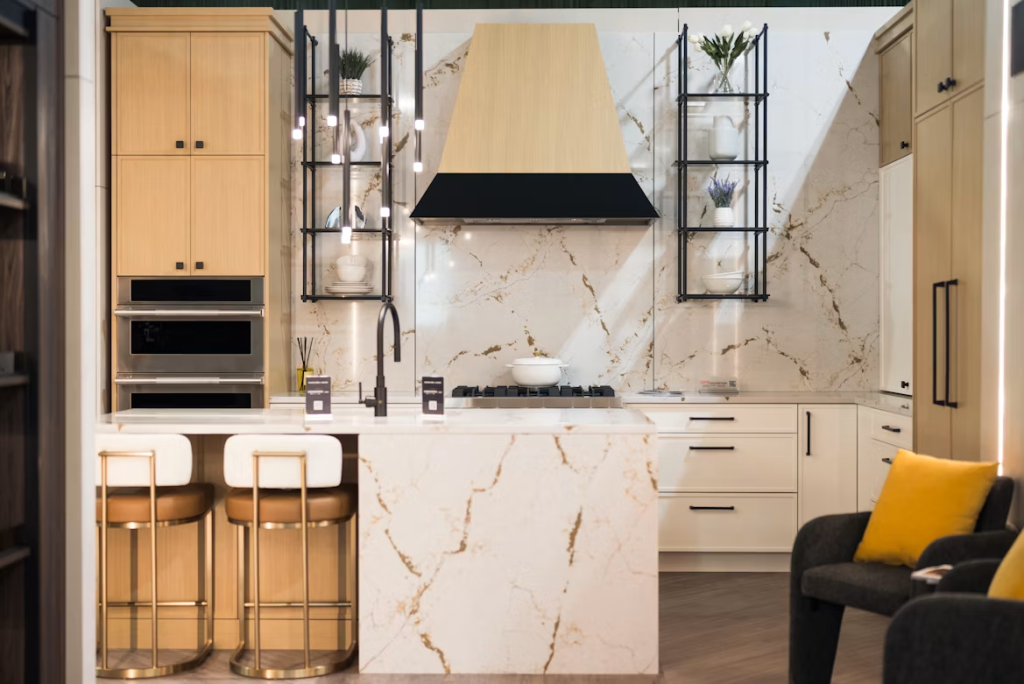
When the island is short, the stool’s footprint matters more than its looks. Backless counter stools are the small-kitchen workhorse: a narrow ~15″ seat slides fully under the overhang when nobody’s sitting, so the walkway stays clear and the room reads larger. No back also means nothing to bump as you pass with a hot pan. You lose long-sit comfort, but for a quick cereal-and-coffee island, that trade is usually worth it. Two tucked-away backless stools beat three crowded ones every time.
Family Kitchens
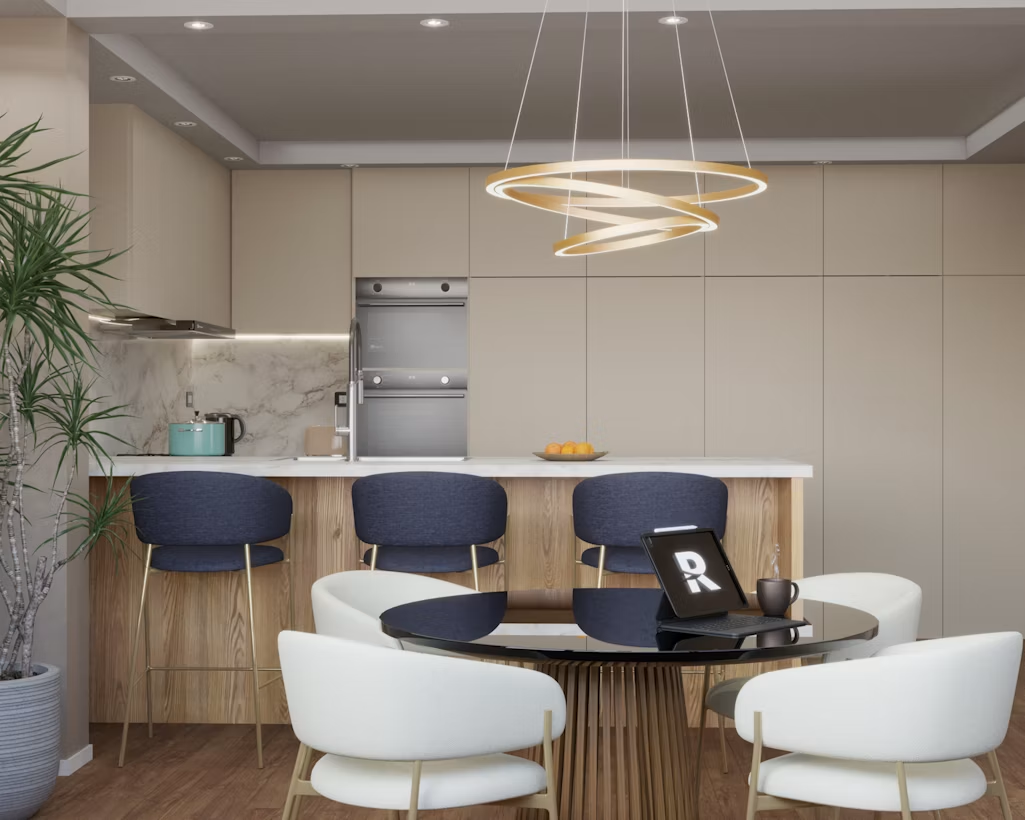
Family kitchens are where cohesion earns its keep. Picture the common setup: a 36″ island for breakfast that flows straight into a dining table for dinner. Those two seating zones have to talk to each other, or the room turns into three separate guesses. The fix is buying from one place so the wood tones and the gaps under each surface match — island counter stools and dining chairs in the same finish family, the same warm walnut, the same line of thinking. When the heights are right and the finishes agree, an open-plan kitchen reads as one designed space.
Durability is the other family non-negotiable. A stool that seats a 7-year-old doing math homework and a grandparent at Sunday dinner needs real load tolerance and a wipeable seat. A solid-wood-and-faux-leather counter stool that holds 300 lbs and cleans with a damp cloth handles that life without drama.
Backs, Arms, Swivel, or Backless
Kitchen bar stools come in four basic flavors here, and the choice is about how long people sit and how much room you have to spare.
Backless reads lightest and tucks away, which is why it wins in tight kitchens and for short sits. A back changes the equation: it supports the spine through a real meal, a homework session, a second glass of wine — worth it if your island doubles as the dinner table. Arms add the most comfort of all, but they’re also the widest, so you’ll fit fewer stools and they may not slide under the counter at all. Swivels are the family favorite for a reason: kids and grandparents get in and out without the awkward side-shuffle, and the seat turns to face whoever’s talking. The catch is clearance — a swivel needs extra room to rotate without clipping the next stool.
One quiet detail decides whether any of these stays comfortable: how it’s built. A stool is only as steady as its tightest bolt, and a half-turned leg bracket is exactly where wobble is born. Flat-pack stools leave that tightening to you — and swivels, with a moving mechanism stacked on top of the legs, are the least forgiving of a rushed assembly. Stools that ship fully assembled skip the leveling-screw lottery entirely: the steadiness you test on day one is the steadiness you keep.
How Many Stools Fit Comfortably
People almost always plan for one too many kitchen bar stools. The benchmark to use comes from NKBA’s kitchen planning guidelines: allow 24 inches of width per seated person at the counter, plus a 24″-wide by 15″-deep knee space at a 36″ counter (12″ deep at a 42″ bar). Those same guidelines call for 36 inches of clearance behind the seats where no one walks past, and 44 inches if that strip is also a traffic lane.
Run your own number before you fall in love with a photo. A 60″ island gives you comfortable room for two stools, not three — 24 inches each plus breathing space adds up faster than you’d think. A 72–84″ run handles three. And remember the stool’s legs usually splay 2–4 inches wider than the seat, so leave 6–10 inches between stools so elbows and knees don’t collide.
If you want to see how that plays out across actual seat widths and heights, it’s worth filtering POVISON’s bar and counter stool collection by counter or bar height — the exact seat height sits right in the specs, which is the one number this whole guide hinges on.
What to Check Before Buying Online
Buying kitchen bar stools online means you can’t sit in them first — so the specs have to do the sitting for you. Before checkout, confirm the seat height (against your surface minus 10–12″), the weight capacity, whether there’s a footrest, and the material and care notes. Then check two things people forget: the return window, and the box dimensions versus your doorway.
Add one more line to that checklist: assembly status. This is where fully built furniture quietly wins. There’s no “fully assembled” claim that arrives wobbling, no Allen key, no kneeling on the kitchen floor while a flat-pack stool refuses to sit flat. As a concrete example, this fully-assembled counter stool set ships at the 24″ counter height, holds 300 lbs, and comes in a set of two for $899 with a 30-day return window and a 2-year warranty — built before it reaches you, so the only step left is choosing where it goes.
On materials, don’t take “eco-friendly” at face value. If sustainability matters to you, look for a named certification and know what it covers. The label on a solid-wood stool, for instance, is meaningful only if you understand what an FSC label actually verifies — the FSC Recycled mark, unlike a vague “recycled” claim, confirms the wood content was independently traced. A specific certification beats a marketing adjective every time.
And do the tape-out. Mark the footprint on the floor, mark the seat height on the cabinet, walk around it for a day. The five minutes of tape is cheaper than a return.
FAQ
What kitchen bar stools are best for a kitchen island or breakfast bar?
The best kitchen bar stools for a standard island or breakfast bar are 24–26″ counter stools, because most islands sit at 36 inches and that pairing leaves the 10–12″ of legroom you need. Choose backless for small islands and a supportive back for islands you eat full meals at.
Should kitchen bar stools have backs for daily use?
Kitchen bar stools should have backs if the island is also where you eat dinner, help with homework, or linger — the back supports your spine through longer sits. For quick coffee-and-cereal use or a tight kitchen, backless stools tuck fully under the counter and keep walkways clear.
How many bar stools can comfortably fit at my kitchen island?
To know how many bar stools fit comfortably, allow 24 inches of width per seated person per NKBA guidelines. A 60″ island fits two stools comfortably, a 72–84″ run fits three, and you should leave 6–10 inches between stools so legs and elbows don’t collide.
Are fully assembled kitchen bar stools worth the extra cost?
Fully assembled kitchen bar stools are worth it because a stool’s steadiness depends on its tightest bolt, and factory assembly removes the leveling-screw lottery that makes flat-pack stools wobble. You skip the tools, the floor-kneeling, and the day-one instability — the stool is steady from the moment it lands.
Conclusion
Choosing kitchen bar stools comes down to four honest questions: Does the seat height match my surface minus 10–12 inches? Do I need a back for the way we actually sit? How many genuinely fit at 24 inches each? And do I want to build them, or have them arrive ready? Get those right and the stools disappear into daily life the way good furniture should — nobody’s thinking about them, everybody’s comfortable. Skip them if your surface is truly bar-height-plus and you’d rather a different seat, or if you enjoy the assembly ritual. Otherwise, measure with tape, buy at the right height, and let the island be Ready To Live In from the first breakfast.
Related Reading:


