 By Charles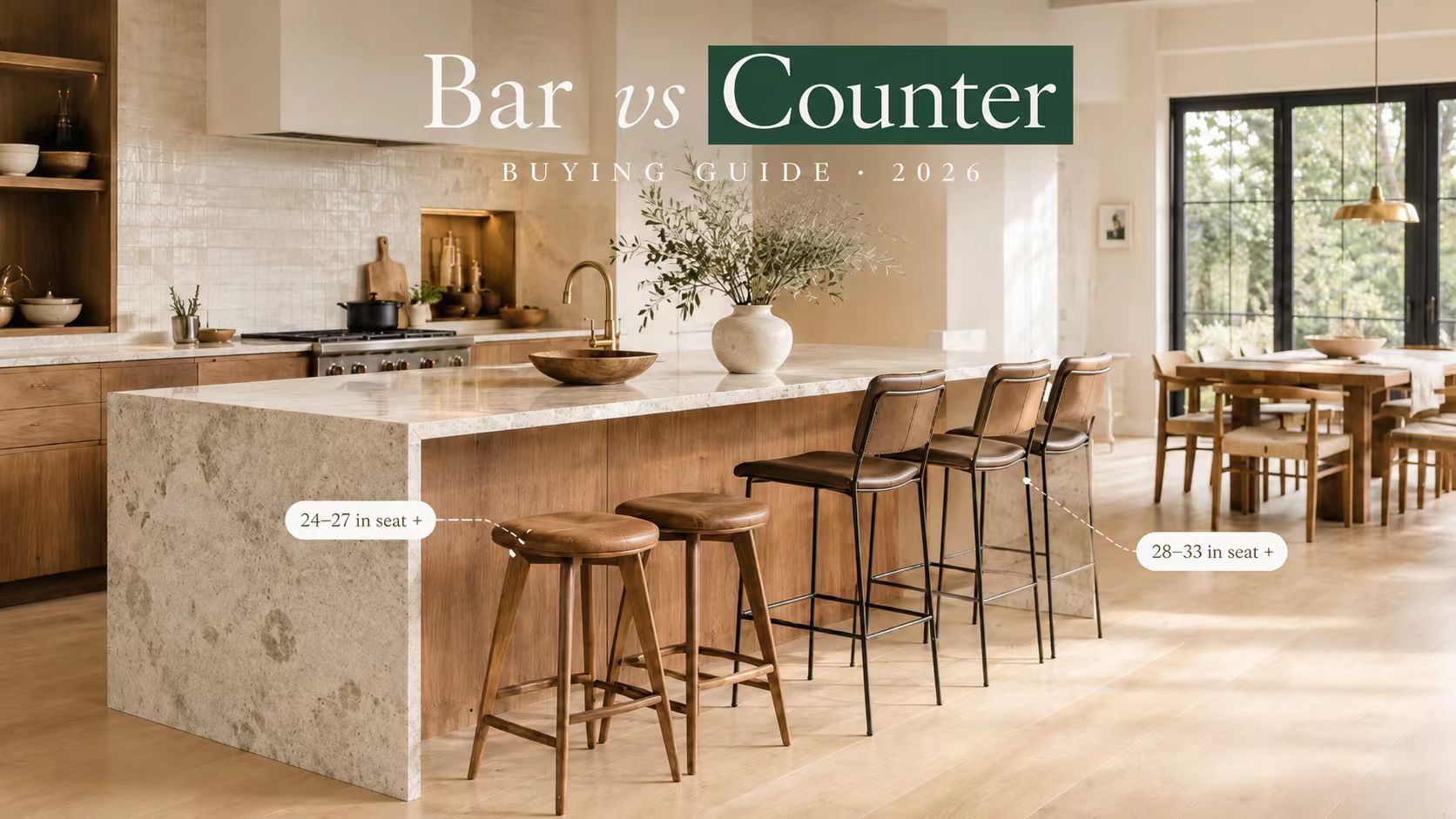
Here’s the return I see more often than any other: a perfectly nice stool that’s two inches off. Bar height vs counter height stools is the one furniture call people get wrong before the box is even open — they read “bar stool” on the label, click buy, and end up with their knees jammed under a 36-inch island or eating at chin level against a 42-inch bar.
I’ve measured a lot of counters with a tape in one hand and a phone full of conflicting size charts in the other. So this guide skips the styling talk. It’s about one thing: getting the height right the first time, so you never have to repackage anything.
Bar Height vs Counter Height Stools at a Glance
The difference between bar height and counter height stools comes down to seat height and the surface each one fits. Counter stools have a 24–26 inch seat for a roughly 36-inch counter. Bar stools have a 28–30 inch seat for a 40–42 inch bar. Pick by measuring your surface, not by the name on the listing.
| Stool type | Seat height | Made for surface | Where it lives |
| Counter height | 24–26″ | 34–37″ counter | Kitchen counters, most islands, breakfast bars |
| Bar height | 28–30″ | 40–42″ bar | Home bars, pub tables, raised island tier |
| Extra-tall / spectator | 33–36″ | 44–47″ surface | Tall entertainment bars (uncommon at home) |
| Dining chair (for reference) | 17–19″ | 28–30″ table | Standard dining tables |
That bottom row matters more than people expect: a dining chair is not a short stool, and a stool is not a tall chair. They’re built for completely different surface heights, so swapping one in “to save money” is exactly how you end up sitting wrong.
How to Measure Your Counter or Bar
Forget the label for a second. The number that decides everything is the gap between the seat and the underside of your surface, and the comfortable target there is 10–12 inches. So the method is simple: measure from the floor to the very top of your counter or bar, then subtract 10–12 inches. The result is your ideal seat height. That single step lines up with the standard stool seat-height ranges published by Dimensions, which also flags 10 inches as the bare minimum clearance you want under any surface.
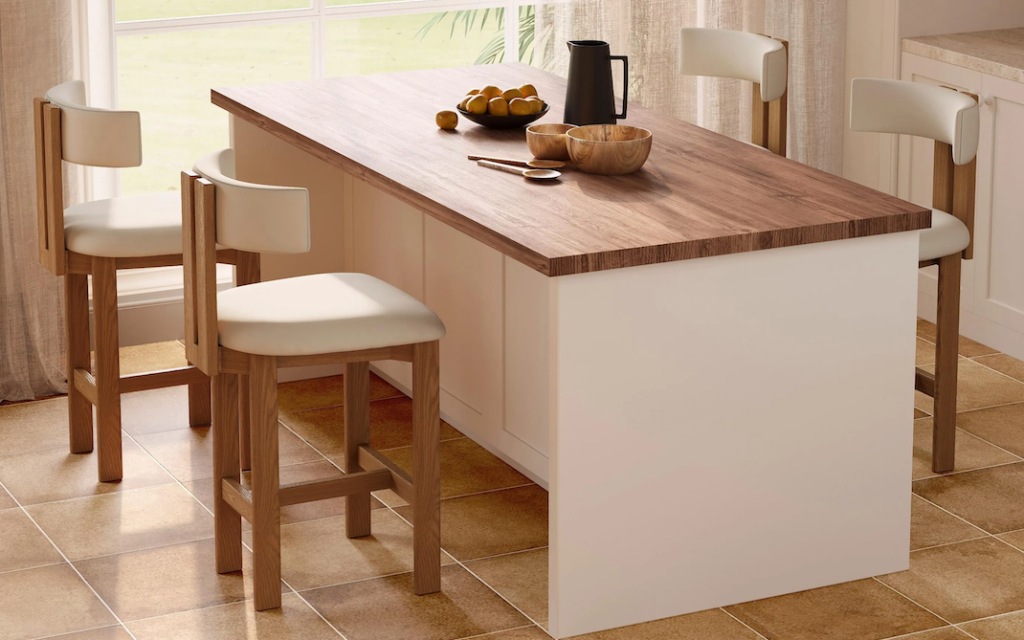
Here’s where I get pushy: tape it out before you buy. Grab painter’s tape, mark your surface height on a wall or doorframe, then pull over a chair or stool you already own and sit. If your thighs press the underside or your feet can’t find the floor, the math on the listing is lying to you about real life. Ten minutes with a tape beats any room visualizer.
One more thing people skip — measure your surface, not the internet’s idea of it. Two-tier islands, custom counters, and older homes drift off the standard all the time.
Standard Counter Height
A standard counter (and most kitchen islands) lands at about 36 inches, with the realistic range running 34–37 inches. That pairs with a 24–26 inch counter stool. One exception worth knowing: if a section of your island is a lowered or accessible counter, it tops out lower. The U.S. Access Board’s built-in element standards set accessible dining and work surfaces between 28 and 34 inches, so a lowered 34-inch section still wants a counter stool — not a bar stool, and not a regular dining chair.
Standard Bar Height
A true bar height surface measures 40–42 inches: home bars, freestanding pub tables, and the raised back ledge some islands add for seating. Those want a 28–30 inch bar stool. The trap is the two-tier island — the main prep counter sits at 36 inches while the eating ledge behind it sits at 42 inches. Measure both. I’ve watched someone buy four matching bar stools for a counter-height island because they eyeballed it instead of pulling out the tape.
When Extra Tall Stools Make Sense
Extra-tall (sometimes called spectator) stools run a 33–36 inch seat and only make sense for 44–47 inch surfaces — think a raised entertainment bar or a custom-built tall counter. For ordinary kitchens, they’re too tall, and you’ll feel it the moment your feet leave the footrest. If your surface isn’t genuinely in that 44-inch-plus range, you don’t need them.
What’s more common than an extra-tall surface is a mixed one: an island at counter height feeding into a dining table, or that two-tier setup. This is where ordering everything from one place pays off, because heights and finishes have to talk to each other. When the island stools and the dining seats share the same wood tone and the gaps under each surface are sized right, the room reads as one space instead of three guesses. If you’re building out that kind of mixed seating, it’s worth browsing Povison’s bar and counter stool collection, where the seat height is listed on every product page so you can match a counter and a bar zone without cross-referencing four tabs.
Comfort, Footrests, and Legroom Checks
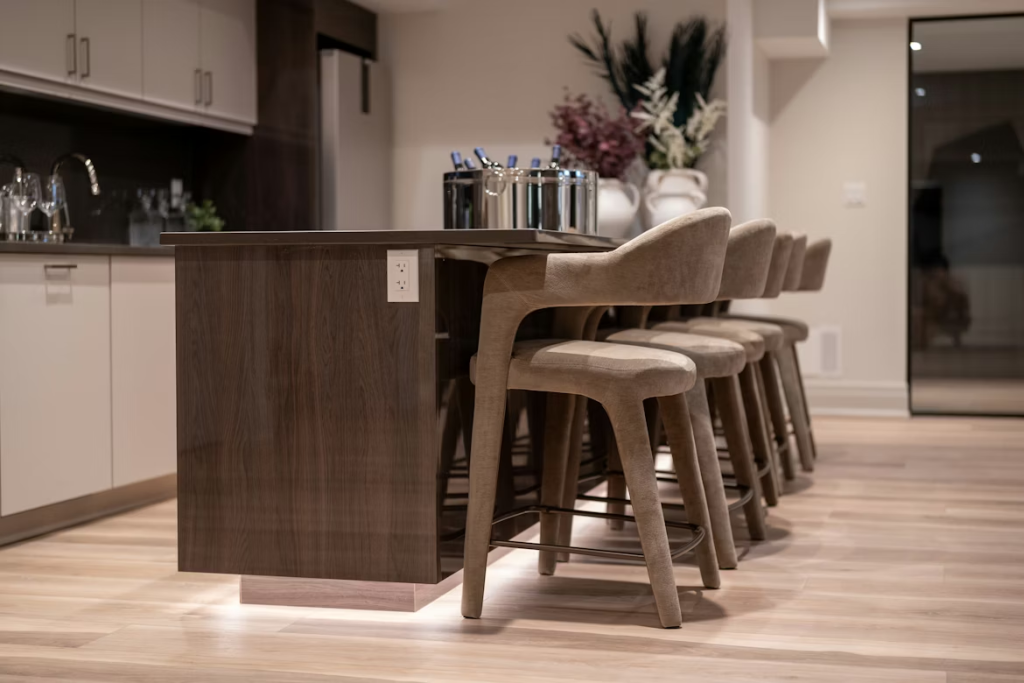
Legroom is the whole ballgame, and it’s the part the height label can’t tell you. Aim for 10–12 inches between the top of the seat and the underside of the counter. Less than that and your thighs hit; much more and you’re perched.
Knee depth matters too, and the numbers shift with surface height. The NKBA’s kitchen planning guidelines call for about 15 inches of clear knee space at a 36-inch counter and 12 inches at a 42-inch bar — taller surface, shallower reach. The same guidelines set 36 inches of clearance behind seated stools when no one walks past, and 44 inches when there’s a traffic lane behind them. In a tight kitchen, that one rule decides how many stools actually fit.
A few comfort checks that have nothing to do with height:
- Footrest position. On any stool taller than a chair, your feet leave the floor, so the footrest is the floor. A footrest that’s too high cramps your knees; too low and your legs dangle. This is the single most overlooked comfort spec on tall bar stools.
- Seat width and spacing. Seats run 16–18 inches wide for most adults. Leave roughly 6 inches between seats, or 26–30 inches center-to-center, so elbows and hips aren’t fighting.
- Counter overhang. A 16-inch-deep seat won’t always tuck fully under a 10–12 inch overhang. Check the overhang before you assume the stools disappear under the counter.
What to Check Before Buying Online
Online, you can’t sit on it, so you read the spec sheet like a skeptic. In order:
- Seat height — not total height. “30-inch bar stool” sometimes means seat height, sometimes overall height to the backrest. Confirm which. The seat number is the only one that determines fit.
- The surface it’s built for. A good listing tells you the counter or bar height it targets. If it doesn’t, do the subtract-10-to-12 math yourself.
- Back, backless, or swivel. Backless tucks away and reads lighter in a small kitchen; a back supports longer sits; swivels need extra spacing to turn.
- Weight capacity and how it ships. Plenty of stools arrive flat-pack, and a stool is only as steady as its tightest bolt — a half-turned leg bracket is where wobble is born. Povison ships its stools fully assembled, so the steadiness you test on day one is the steadiness you keep, with no leveling-screw lottery. On Povison’s stool product pages the exact seat height sits right in the specs, which is the number this whole guide hinges on.
FAQ
What is the real difference between bar height and counter height stools?
The real difference between bar height and counter height stools is seat height and the surface each one fits. Counter stools sit 24–26 inches off the floor for a roughly 36-inch counter. Bar stools sit 28–30 inches off the floor for a taller 40–42 inch bar. Same job, different surface — so the surface decides.
How can I fix wobbling or instability on my bar height bar stools?
Tighten all bolts and check that the floor is level. Fully assembled stools tend to stay steadier long-term. If the issue continues, verify they match your surface height — bar height bar stools on a standard counter or counter bar stools on a tall bar will always feel less stable.
Are 30 inch bar stools too tall for a standard counter?
Yes — 30-inch bar stools are too tall for a standard 36-inch counter. They leave only about 6 inches of legroom instead of the comfortable 10–12 inches, so knees hit the underside and posture suffers. A 36-inch counter wants a 24–26 inch counter stool, not a 30-inch bar stool.
How do I make my counter bar stools more comfortable for daily use?
Add seat cushions if needed and check that the footrest height feels natural. Ensure 10–12 inches of clearance under the counter. If the stools feel too high or low, you may have mismatched them to your counter — counter bar stools work best on standard kitchen islands, while bar height bar stools suit taller bars.
Conclusion
Bar height vs counter height stools isn’t really a style decision — it’s a measuring decision, and almost every wrong order traces back to trusting a label over a tape measure. Measure your surface, subtract 10–12 inches, and buy the seat height closest to that: 24–26 inches for a ~36-inch counter, 28–30 inches for a 40–42 inch bar, and 33–36 inches only for those rare 44-inch-plus surfaces. Skip the extra-tall stools unless your surface genuinely calls for them, and don’t let a “bar stool” tag override your own numbers. Get the height right and the stool quietly does its job for years. Get it wrong by two inches and you’ll feel it at every meal.
Related Reading:


