 By Charles
Two springs ago, my Aunt Rachel called me from the floor of her dining room. The glass dining table she’d ordered online had arrived in three pieces — none of which were supposed to be three pieces. The freight company had stacked something heavy on the wrong side of the crate. She wasn’t crying. She was laughing. The kind of laugh you do when you’ve already accepted the disaster.
That’s the moment I started taking glass dining tables seriously — not as a “sleek look” question, but as a real-world durability and logistics question. Because here’s the thing nobody tells you when you’re scrolling Pinterest at 11pm: a glass dining table is the most visually rewarding piece of furniture you can put in a small dining area, and the one most likely to expose a brand’s quality control. There’s no MDF to hide behind. Either it’s right, or it isn’t.
So is a glass dining table actually practical for a 2026 home? Short answer: yes, if you pick the right type, in the right room, from a brand that ships it intact. Let me walk you through what I’ve learned.
Is a Glass Dining Table Practical for Your Home?
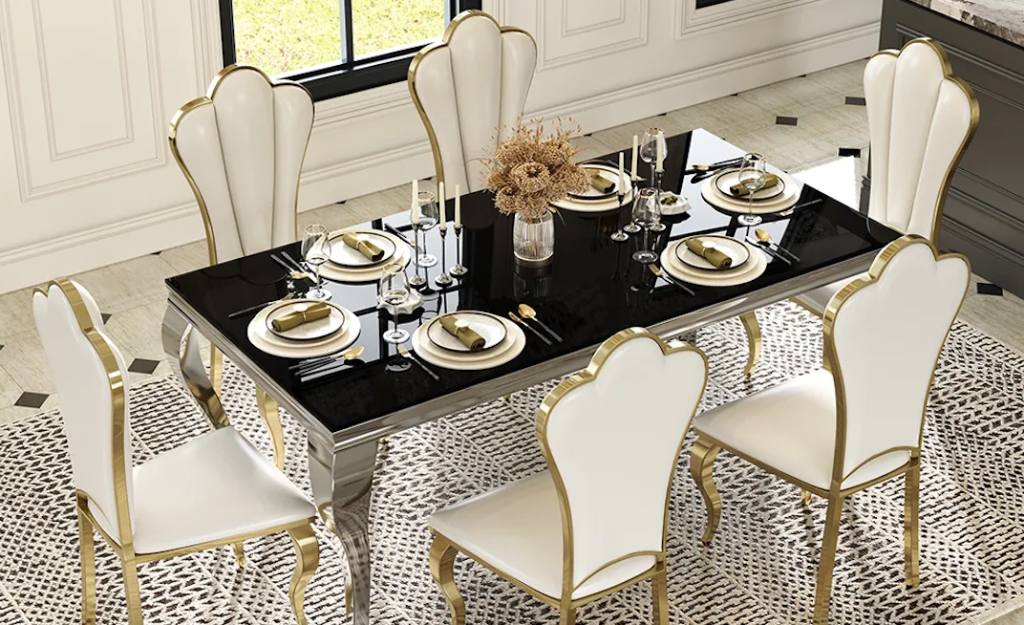
Here’s the honest framework I use. A glass dining table earns its keep when visual lightness matters more than hiding mess. If your dining space is small, dark, or visually cluttered, glass disappears in a way wood never can. Light passes through it. Sight lines stay open. The room reads bigger than it is.
But the trade-off is real: glass shows everything. Fingerprints, water rings, dust, the toast crumbs your kid swears they didn’t leave. You’re trading one type of maintenance (scratches on wood) for another (visible smudges). The question isn’t whether glass is “good” or “bad” — it’s whether your household runs on quick wipe-downs or weekend deep cleans.
You’ll love a glass dining table if: you have a small or narrow dining space, you prefer visual breathing room over storage, you eat off plates and placemats more than directly on the table, and a 30-second microfiber pass after dinner sounds reasonable.
You’ll regret it if: you have toddlers who finger-paint on every surface, you eat directly on the tabletop, or you live somewhere with very hard water (the spots get loud, fast).
Best Rooms for a Glass Dining Table
Small Dining Areas
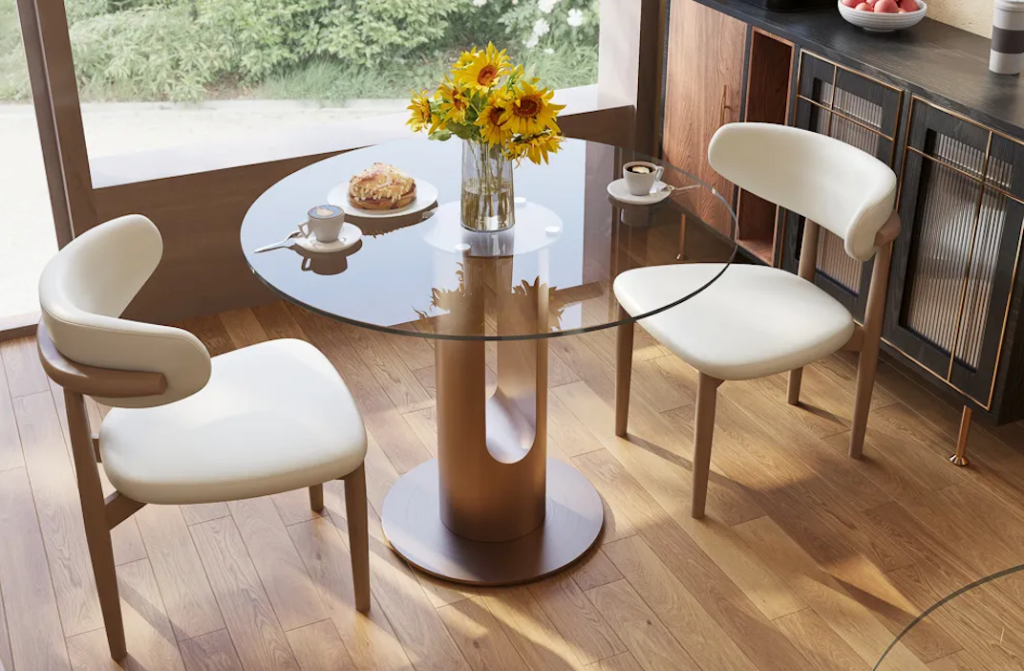
This is where glass earns its place. In rooms under about 100 square feet, the visual weight of a solid wood table dominates everything. A glass top with a slim base — pedestal, X-frame, or thin cross legs — keeps the floor visually open. Your eye runs all the way to the wall. The room feels like it has more air in it, even though nothing changed dimensionally.
A practical sizing note before you fall in love with anything: per the National Kitchen & Bath Association’s planning guidelines for dining clearance, you need at least 36 inches between the table edge and the nearest wall or piece of furniture — and 44 inches if anyone has to walk behind a seated diner. Glass tops don’t change that math. They just make the space look like the math worked out better than it did.
My tape-out trick before buying: paint the table’s outer footprint on the floor with painter’s tape. Set chairs at the edge, fully pulled back. Live with it for two days. If you keep clipping the tape, the table is too big — glass or not.
Bright Open Layouts
Open-plan kitchen-living-dining combos are the other room where glass earns top marks. In a big open space, three or four solid wood pieces start to compete with each other — sofa, console, dining table, sideboard, all shouting “look at my grain.” A glass dining table quiets the room down. It anchors the dining zone without adding to the visual noise.
There’s a real architectural reason this works. In open layouts, you’re already managing multiple sight lines from kitchen island to sofa to dining area. A transparent top lets light from your kitchen pendant pass through to the seating area instead of casting a heavy shadow. The room reads as one space, not three.

Round vs Square Glass Dining Tables
Shape matters more with glass than with wood, because glass amplifies whatever silhouette you choose.
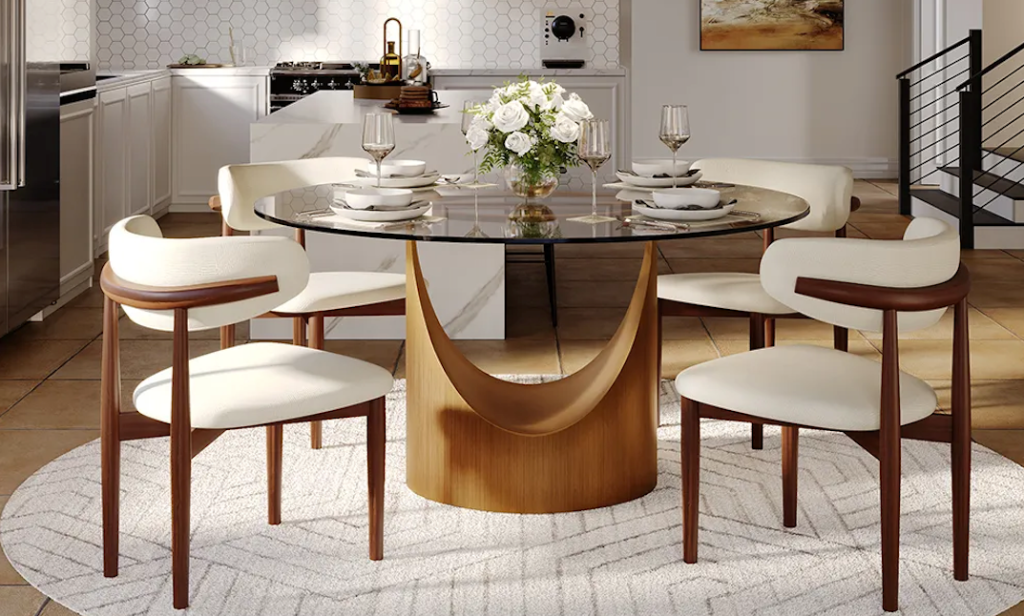
Round glass tables are the gentler pick. No corners means no pointed edges sticking into your hip when you walk past, which matters more than people admit in small rooms. Round also handles awkward room shapes better — a 47-inch round seats four comfortably and fits where a 60-inch rectangle never could. Conversation flows better, too. Nobody’s stuck at “the end.”
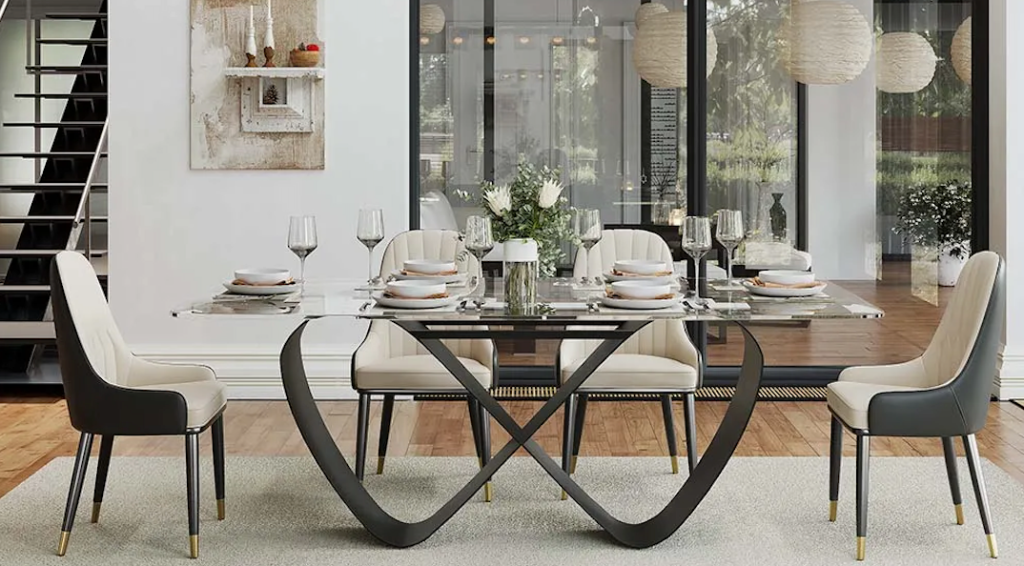
Square (or rectangular) glass tables make sense when you want a more formal feel, or when your dining area is genuinely rectangular and a round table would leave dead corners. They also seat more bodies per square foot — a 36×60 rectangle seats 6 in a footprint that a round table couldn’t.
Here’s how I think about it in practice:
| Factor | Round Glass | Square / Rectangular Glass |
| Best for room shape | Square or awkward rooms | Rectangular rooms |
| Daily seating | 4 people | 4–6 people |
| Edge safety with kids | Better (no corners) | Watch for sharp 90° corners — choose beveled edges |
| Visual weight | Lighter, more casual | More formal, more “anchored” |
| Easiest to walk around | Yes | Tighter at corners |
If you want to compare across shapes and sizes side by side, the POVISON dining tables collection lets you filter by tempered glass plus round or rectangular — useful for sanity-checking your shortlist before you commit. The Maxwell round tempered glass table is a good benchmark for what well-engineered round glass looks like in this category, and there are pedestal and X-frame options on the rectangular side too.
Cleaning, Scratches, Chips, and Safety
This is where most people get nervous about glass. Let me walk through each real concern.
Fingerprints and spills. Yes, they show. No, they’re not that hard to handle. A microfiber cloth plus a 50/50 mix of water and white vinegar — or any standard glass cleaner — handles 95% of daily cleaning in under a minute. The trick is to wipe in one direction (left-to-right, then top-to-bottom), not circles. Circles spread smudges; lines remove them. I’ve timed it: 25 to 30 seconds after a normal dinner. Less than you spend wiping a wooden table to get water rings out.
Scratches. Tempered glass is harder than most things you’ll put on it. It scores roughly 5.5–6 on the Mohs hardness scale, which means everyday utensils, ceramic plates, and even most stoneware won’t scratch it. What will scratch it: dragging anything with grit underneath — a vase you didn’t realize had sand in the base, a heavy serving bowl you slid instead of lifted. The fix is one rule: lift, don’t drag. Placemats handle the rest.
Chips and edges. This is the real question, and it’s about edge treatment, not glass quality. There are three edge types you’ll see on dining tables:
- Polished flat edge — clean modern look, but if it’s not properly finished, it can feel sharp.
- Beveled edge — a small 45° cut along the top. Softer to the touch, much safer around kids.
- Pencil-rounded (bullnose) edge — fully rounded over. The safest option, slightly more traditional aesthetic.
For households with toddlers, beveled or pencil-rounded is non-negotiable. Polished flat edges are fine for adult-only homes but I wouldn’t choose one if a kid is doing laps around the table.
Safety and breakage. This is where the word “tempered” earns its keep. Tempered glass is heat-treated to be roughly 4–5 times stronger than regular annealed glass, and — critically — when it does break, it crumbles into small blunt pebbles instead of long shards. That’s why it’s the only kind of glass that meets the U.S. Consumer Product Safety Commission’s safety standard for architectural glazing, 16 CFR Part 1201, the federal benchmark used for safety glazing in homes. Any dining table worth buying uses tempered glass — usually 8mm to 12mm thick — and a reputable brand will say so on the spec sheet. If a product page doesn’t specify “tempered,” that’s your signal to walk away.
What to Check Before Buying Online
Glass dining tables have the highest “spec sheet matters” rating of any furniture category I’ve reviewed. Here’s the checklist I run through:
- Glass thickness. Minimum 8mm for a daily-use dining table. 10–12mm for tables over 60 inches long. Thinner glass flexes under weight and feels cheap.
- Tempered confirmation. The product page must say “tempered” or reference CPSC 16 CFR 1201 / ANSI Z97.1. No exceptions.
- Edge treatment. Listed explicitly — polished, beveled, or pencil-rounded. If it’s not listed, ask.
- Weight capacity. A good rectangular glass top should hold at least 200 lbs distributed load. POVISON’s 71″ glass dining set, for instance, lists a 300 lb table capacity.
- Base stability. Heavy bases matter more with glass tops because there’s no friction to stop the top from sliding. Look for metal bases with leveling feet.
- Delivery method. This one’s huge. Glass freight damage is a real industry problem — and the reason I almost talked my sister-in-law out of replacing hers. Look for white-glove or threshold delivery rather than a freight pallet dumped at your curb.
That last point is where POVISON’s fully assembled, white-glove delivery model earns its premium for glass tables specifically. The top arrives in a fitted crate with custom foam, the team places it for you, and you inspect it on the spot before they leave. Damage during transit gets handled by the brand, not by you spending an afternoon on hold with a freight broker. That’s not a small detail when you’re talking about a 70-lb piece of tempered glass.
FAQ
Is a glass dining table suitable for homes with kids or pets?
Glass dining tables can work well for families with children or pets, but edge design and habits matter a lot. Opt for beveled or pencil-rounded edges to minimize injury risk from bumps. For pets that like jumping on tables, consider using a protective cover when the table is unsupervised or training them to stay off. Many families find that with these precautions, a glass table remains practical and beautiful long-term.
How does a glass dining table feel in different seasons and climates?
This is a common concern before buying. Glass tops can feel cooler in air-conditioned rooms or winter, so using fabric placemats or table runners helps improve comfort. In hot or humid climates, glass actually performs better as it stays cooler and is less prone to mold. Pairing it with the right accessories and chair materials can greatly reduce any seasonal discomfort.
How do I properly maintain a glass dining table to keep it looking new for years?
The key is “lift, don’t drag.” Clean daily with a microfiber cloth and gentle glass cleaner, and avoid abrasive products. Every few months, apply a glass polish to help prevent minor scratches and water spots. Users who follow these habits often report their table still looks clear and attractive even after 5–8 years of regular family use.
What should I do if my glass dining table gets damaged? Is repair or replacement easy?
Most quality brands offer 1–3 years warranty on the glass top. Minor chips can often be polished by a professional glass service, while major damage usually requires replacing just the top (keeping the base). Check before buying whether the brand sells replacement tops separately — this can save significant cost later. Always document any damage right after delivery.
Conclusion
So — practical for 2026 homes? Yes, with conditions. A tempered glass dining table with beveled edges, a stable metal base, and a brand that ships it intact will give you years of visual lightness in a small dining room or open layout. You’ll wipe it more often than a wood table. You won’t be sanding out water rings ten years from now either.
The deal-breakers are the ones I’d be honest about: if your household is currently in the toast-on-the-table phase of toddler life, or if you genuinely hate cleaning, get wood. Otherwise, a well-spec’d glass table delivered properly is one of the few furniture decisions that actually makes your room feel bigger without you having to move walls.
Tape the room out first. Then decide.
Related Reading:


