 By Kate
Introduction
A glass tips during dinner. A movie night on the sofa turns into a panic. Someone reaches across the dining table, and red wine lands on your favorite fabric chair. The good news: red wine stains can often be removed if you act fast. The key is simple—blot, do not rub, avoid heat, and check the fabric care label before using any cleaner. This guide explains how to get red wine out of fabric, what to do immediately, which method fits each fabric, and whether dried stains can still be saved.
Table of Contents
How to Get Red Wine Out of Fabric Immediately?
When red wine hits fabric, the first minute matters more than the cleaning product you choose. Before thinking about deep stain removal, focus on stopping the wine from spreading. These quick steps work for clothing, tablecloths, fabric dining chairs, sofas, and most upholstered surfaces.
Blot, Don’ t Rub
The first rule of how to get red wine out of fabric is to blot the stain gently with a clean white cloth or paper towel. Rubbing may feel natural, but it pushes the wine deeper into the fibers and can make the stain wider. Start from the outer edge and press toward the center. The goal is to lift as much liquid as possible before adding any cleaner, so the stain stays controlled instead of spreading across the fabric.
Use Cold Water or Club Soda First
Cold water or club soda helps dilute the wine before it bonds more tightly with the fabric. Pour a small amount onto the stained area, then blot again with a clean cloth. Do not soak the fabric unless it is washable clothing or a removable cover. Club soda is not magic, but it can slow the stain-setting process while you prepare a safer cleaning method.
Do a Small Spot Test Before Using Cleaners
Before using vinegar, dish soap, baking soda, oxygen bleach, or any stain remover, test it on a hidden area. This is especially important for upholstery, velvet, silk, wool, dark fabrics, and patterned textiles. Wait a few minutes and check for color transfer, fading, texture change, or water rings. A spot test may feel slow, but it can prevent a bigger problem than the wine stain itself.
Quick 60-Second Rescue Checklist
Use this checklist when you need to move fast:
- Blot with a clean white cloth.
- Press from the outside toward the center.
- Place a towel under the fabric if possible.
- Add cold water or club soda in small amounts.
- Choose the cleaning method based on fabric type.
This is the fastest starting point for anyone searching how to remove wine stains without damaging the fabric.
What Is the Best Way to Remove Red Wine by Fabric Type?
Not every fabric should be treated the same way. A cotton tablecloth can handle more water and cleaning solution than velvet upholstery or wool. Use the table below as a quick decision tool before choosing a method. When in doubt, start mild and avoid heat.
| Fabric Type | Safest First Move | Best Cleaning Option | Avoid |
|---|---|---|---|
| Cotton / Linen | Blot, rinse with cold water | Laundry detergent or oxygen bleach | Dryer before stain is gone |
| Polyester / Nylon / Spandex | Blot, cold water soak | Mild detergent | Hot water, harsh bleach |
| Upholstery / Fabric Sofa | Check cleaning code | Water-based or solvent cleaner by code | Soaking cushions |
| Velvet / Silk / Wool | Blot only | Professional cleaning | Scrubbing, peroxide, heat |
Cotton and Linen
Cotton and linen are usually more forgiving than delicate upholstery, especially if the item is washable. Rinse the back of the stain with cold water, then apply laundry detergent or an oxygen-based cleaner if the care label allows it. Let it sit briefly, rinse, and repeat if needed. Do not put the fabric in the dryer until the stain is fully gone because heat can set any remaining pigment.
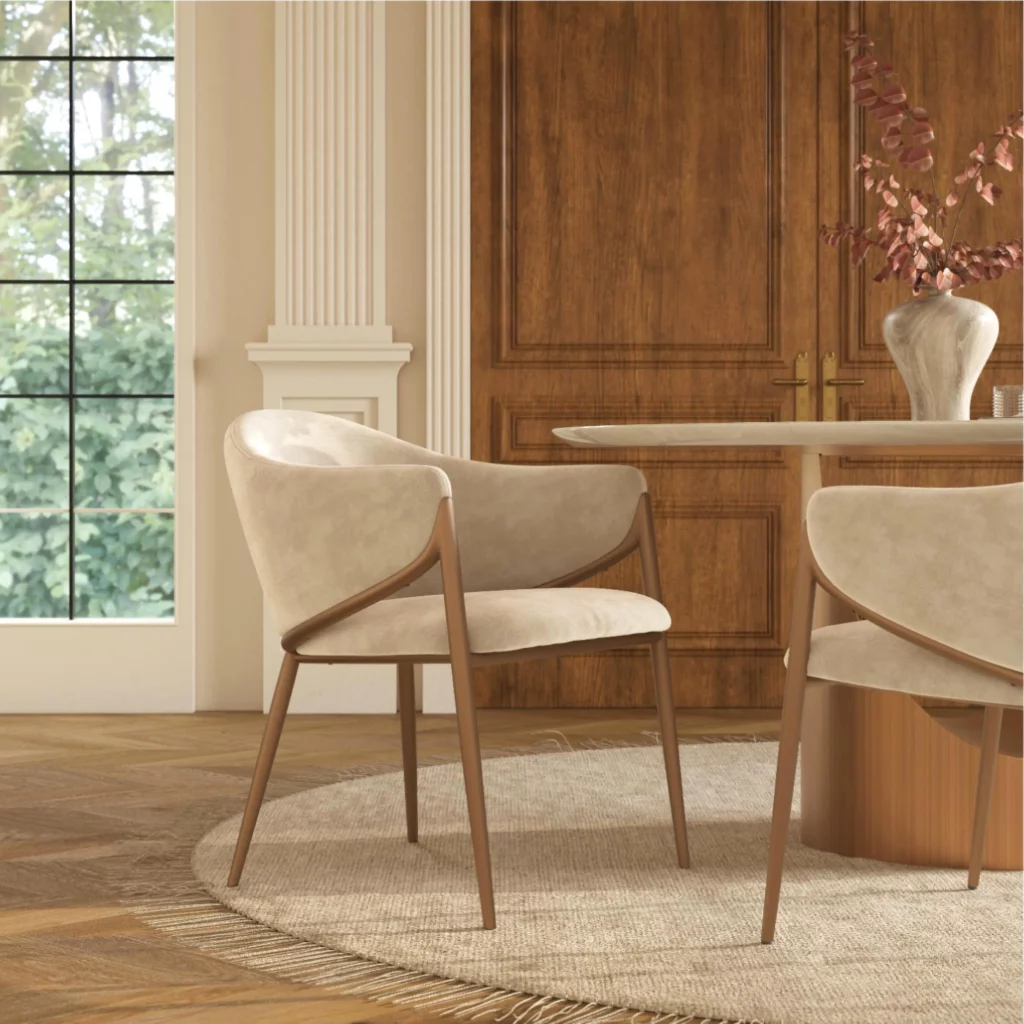
Cotton-linen dining seats need gentle cleaning and fast action after spills. The use cotton linen upholstery, making them a useful reference point when discussing breathable fabrics that feel comfortable but should be protected from high heat and aggressive scrubbing.
In dining areas, cotton-linen upholstery feels breathable and relaxed, but it also absorbs liquid faster than smooth synthetic surfaces. If red wine lands on pieces such as the upholstered dining chairs, quick blotting matters more than heavy cleaning. Keep moisture light, work from the edges inward, and avoid heat until the mark disappears.
Polyester, Nylon, and Spandex
Synthetic fabrics often respond well to mild detergent and cool water, but they still need gentle handling. Blot first, then soak washable items in cold water with a small amount of detergent. For blends with spandex, avoid strong bleach because it can weaken elastic fibers. If the stain remains after rinsing, repeat the treatment instead of increasing heat or scrubbing harder.
Upholstery and Fabric Sofa
For sofas and fabric chairs, check the cleaning code before applying liquid. “W” allows water-based cleaners, “S” requires solvent cleaners, “WS” allows both, and “X” means vacuum or professional cleaning only. If you want to understand how to clean a fabric sofa, the same basic rule applies here: fabric code first, cleaner second.
A spill-resistant upholstery choice gives you more time to react before a stain settles. The pet-friendly fabric sofa fits naturally into homes where movie nights, pets, snacks, and drinks share the same space, but even easier-care fabric still benefits from quick blotting.

Velvet, Silk, and Wool
Velvet, silk, and wool need extra caution. Blot with a dry white cloth and avoid heavy moisture, peroxide, heat, or firm brushing. Velvet can crush or lose its nap, silk may watermark, and wool can shrink or distort. If the stain is large, dark, or on expensive furniture, stop after blotting and call a professional cleaner. This is safer than trying several home remedies at once.
How to Remove Fresh vs. Dried Red Wine Stains?
Fresh stains and dried stains need different strategies. Fresh wine is still sitting closer to the surface, while dried wine has had time to attach to the fibers. If you are learning how to get rid of wine stains, always ask one question first: is the stain wet or dry?
For Fresh Red Wine Stains
For fresh stains, start with cold water and mild detergent. Club soda can help dilute the wine, while white vinegar mixed with a little dish soap may help on washable fabrics. Baking soda paste can absorb moisture on sturdy materials, but it should be brushed away gently after drying. A practical sofa fabric guide can also help you choose upholstery that fits real-life spills before they happen.
For Dried Red Wine Stains
Dried red wine is harder to remove because pigments and tannins have settled deeper into the fibers. Re-wet the stain with cold water, apply enzyme detergent or oxygen bleach if the care label allows, and let it sit before rinsing. Repeat the process if needed. Do not use a hot dryer between attempts. Learning how to take out red wine often means being patient, not more aggressive.
When to Stop DIY Cleaning
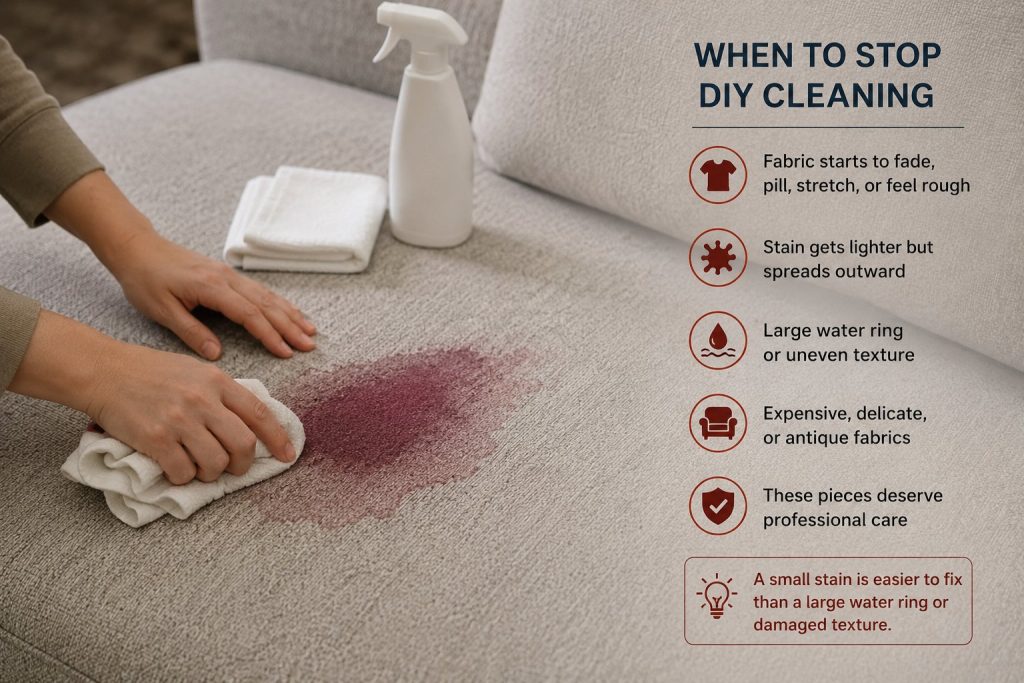
Stop DIY cleaning if the fabric starts to fade, pill, stretch, or feel rough. Also stop if the stain gets lighter but spreads outward, which can happen when too much liquid is used on upholstery. Expensive sofas, delicate dining chairs, silk, wool, antique textiles, and velvet pieces deserve professional care. A small stain is easier to fix than a large water ring or damaged texture.
What Should You Avoid When Cleaning Red Wine Stains?
Many red wine stain mistakes happen because people panic. They scrub, pour on too much cleaner, or rush to hot water. This section keeps the “don’ts” in one place so you can clean with more control and avoid turning a small spill into permanent damage.
Don’t Rub the Stain
Rubbing spreads wine across a larger area and pushes it deeper into the weave. It can also roughen the fabric surface, especially on linen, velvet, chenille, and upholstery. Always press and lift instead. Rotate to a clean part of the cloth as wine transfers. This simple habit is one of the most important steps in how to clean wine stains safely.
Don’t Use Heat Too Soon
Heat can lock red wine pigment into fabric. Avoid hot water, dryers, irons, steamers, and hair dryers until the stain is completely removed. Even if the fabric looks clean while wet, check again after air-drying. A faint pink shadow may become much harder to remove once heat is applied. Cool treatment and air-drying are safer during stain removal.
Don’t Use Hydrogen Peroxide on Every Fabric
Hydrogen peroxide can help on some white washable fabrics, but it may bleach or discolor dark, delicate, or patterned materials. Never pour it directly onto upholstery without testing. If you use it on a washable item, apply a small diluted amount and watch closely. For furniture fabric, especially colored chenille or velvet-like textures, choose a gentler stain remover or professional help.
Textured chenille can feel plush and refined, but it still needs fabric-aware cleaning. The modern dual power reclining sofa highlights why spot-cleaning guidance matters: soft performance-style upholstery should be treated gently, especially around deep color, texture, and moisture-sensitive finishes.

Be Careful With Salt
Salt can absorb some moisture from a fresh spill, so it may help temporarily if nothing else is available. But it is not a complete stain remover and may leave residue in textured fabrics. On dried stains, salt is usually not useful. If you use it, remove it gently once it absorbs liquid, then continue with a fabric-safe cleaning method.
Q&A
Can milk remove red wine from fabric?
Milk is sometimes used as a home remedy because it may help loosen pigments, but it is messy and not ideal for upholstery. It can also leave odor if not fully rinsed. Mild detergent, cold water, or oxygen-based cleaners are usually more reliable for washable fabrics
Is white wine good for removing red wine stains?
White wine may dilute a fresh red wine spill, but it is not a real cleaner. It can add more liquid and sugar to the fabric. Cold water or club soda is a better first step, followed by a cleaning method that matches the fabric type.
Can I use dish soap on a red wine stain?
Yes, dish soap can help on many washable fabrics when mixed with cold water or white vinegar. Use only a small amount and rinse well. On upholstery, test first and check the cleaning code, because too much soap can leave residue or water marks.
How long should I let stain remover sit?
Most fabric-safe stain removers need 5 to 15 minutes, but always follow the product label. Do not let cleaners dry completely on delicate fabrics. For upholstery, shorter contact time and repeated blotting are usually safer than soaking the area heavily.
What if the red wine stain turns brown?
What if the red wine stain turns brown?
A brown mark may mean residue, oxidation, or a stain that has dried deeply into the fibers. Re-wet with cool water, blot, and use an appropriate pre-treatment. If the fabric is delicate or expensive, professional cleaning is the safest next step.
Conclusion
The safest way to handle red wine is simple: blot first, choose by fabric, and never heat until the stain is gone. That is the core of how to get red wine out of fabric without making the damage worse. Red wine, dining chairs, and cozy sofas are part of real life at home. With easier-care fabrics, a clean white cloth nearby, and a calm first response, one small spill does not have to ruin the evening.


