 By Kelvin
Introduction
If your TV area looks empty, crowded, or disconnected from the rest of the room, the problem is usually not the TV itself. It is the way the stand, screen, storage, and small decor pieces work together. Good tv stand decor should make the media wall feel finished without blocking the screen or turning the surface into a clutter zone. This guide focuses on practical styling choices: what to place on a TV stand, where each item should go, how much to leave empty, and when decor cannot fix the setup.
Table of Contents
What Makes TV Stand Decor Look Intentional?
Strong tv stand decor should make the TV area look finished without making it harder to use. Before adding accessories, check whether each item supports the screen, the stand, and the room around it.
Good decor for a TV stand should:
- Keep the screen and remote sensor clear.
- Balance the width and height of the TV.
- Leave enough empty space on the surface.
- Group small items instead of scattering them.
- Hide or organize remotes, cords, and daily clutter.
- Repeat colors or materials already used in the room.
If the TV stand is completely empty, the screen can feel heavy and disconnected. If it is filled with small objects, the area can look busy. A better approach is to use a few clear choices: one low group near the center, one taller accent near the side, and enough open space so the TV still feels like the main function of the wall.
What Should You Put on a TV Stand Without Clutter?
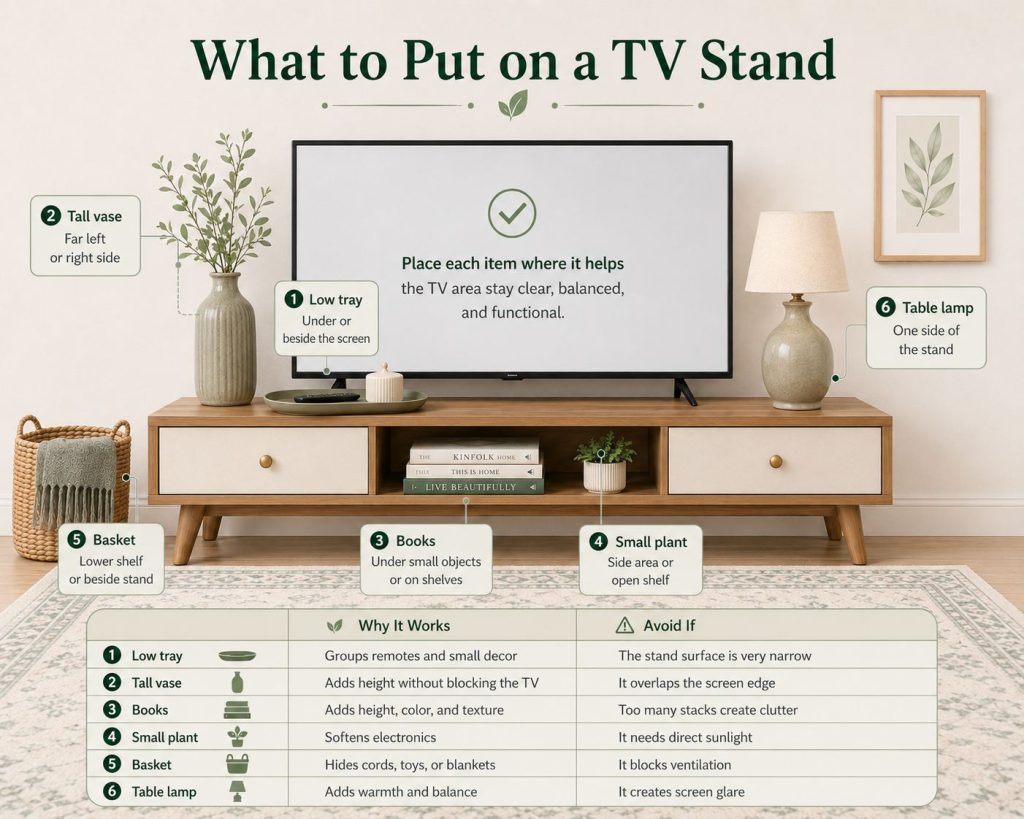
The most useful tv stand decor ideas are both decorative and practical. Instead of asking only what looks nice, think about where each item belongs and what problem it solves. Low pieces keep the screen clear, taller accents balance the sides, and trays or storage pieces prevent everyday items from spreading across the surface.
Use Low Pieces Near the Screen
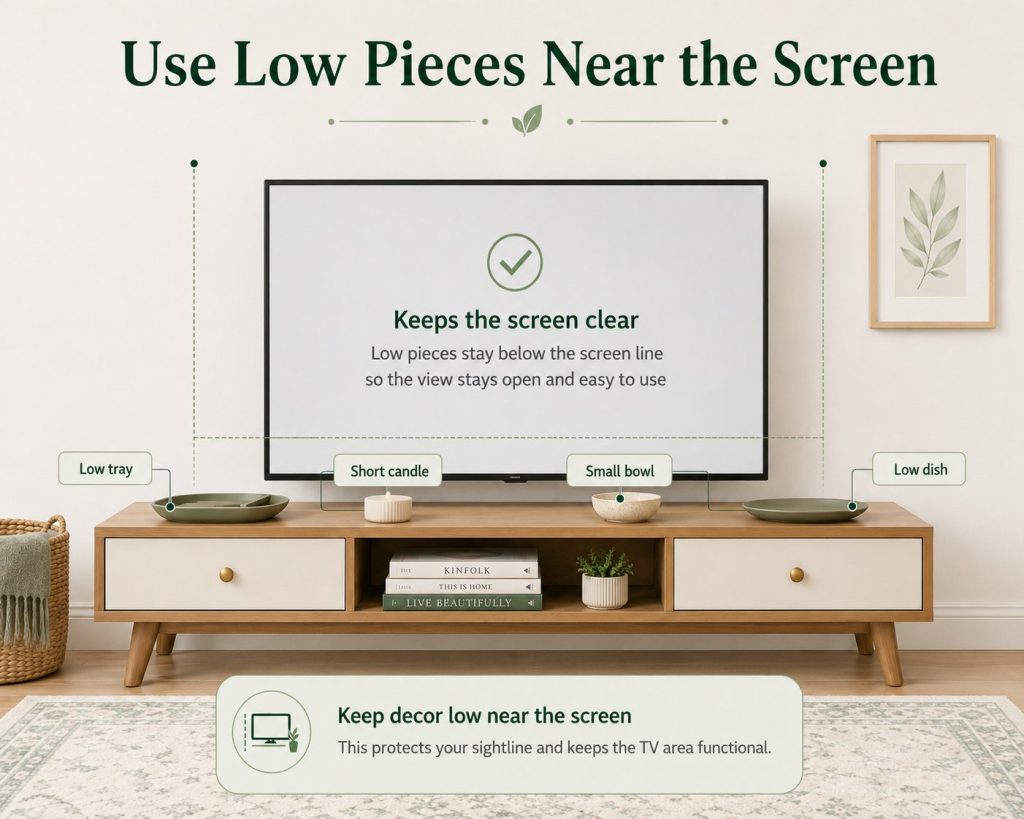
Low-profile decor works best near the TV because it will not block subtitles, the remote sensor, or the bottom of the screen. A shallow tray, short candle, small bowl, low book stack, or ceramic dish can add texture without distracting from the viewing area.
In a daily-use living room, this also keeps essentials easy to reach. A simple tray with remotes and one small decorative object often looks cleaner than several loose items placed across the stand.
Add Height Outside the TV Width
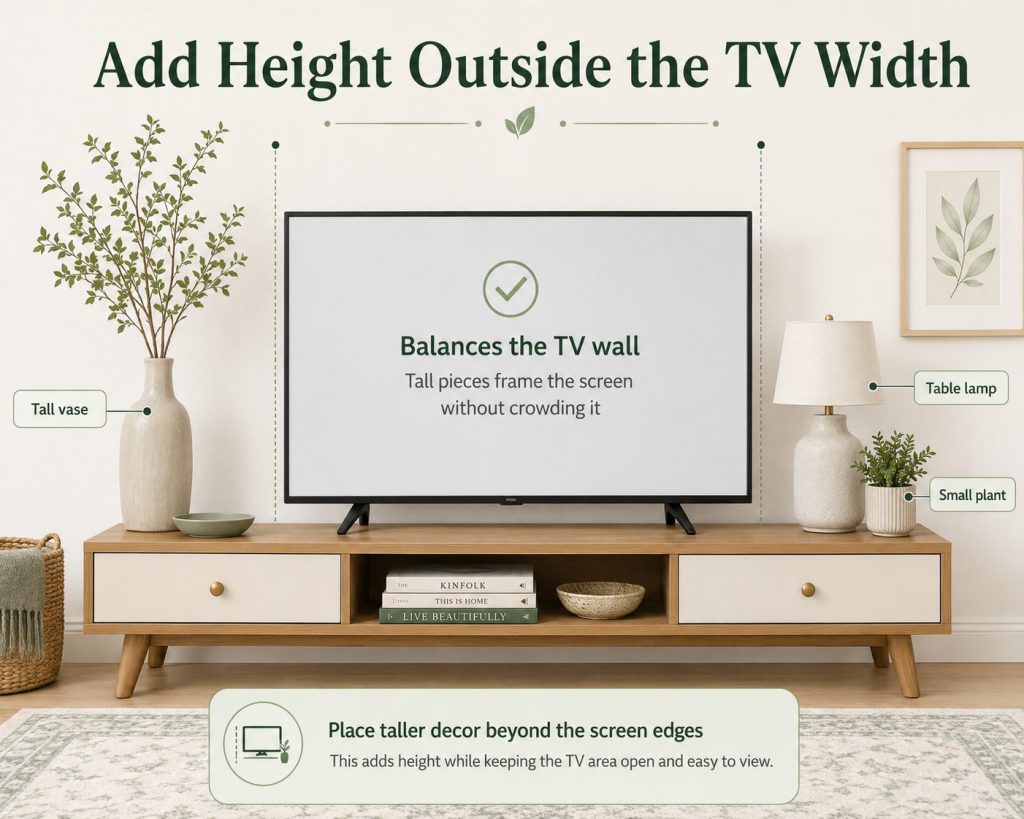
Taller decor should usually sit outside the width of the TV, not directly in front of it. A slim vase, small plant, lamp, or framed photo can soften the hard rectangle of the screen and make the TV wall feel more balanced.
This is especially important when the TV sits directly on the stand. If a tall object overlaps the screen edge, it can make the setup feel crowded even when the item itself looks attractive.
Hide Everyday Items Before Styling
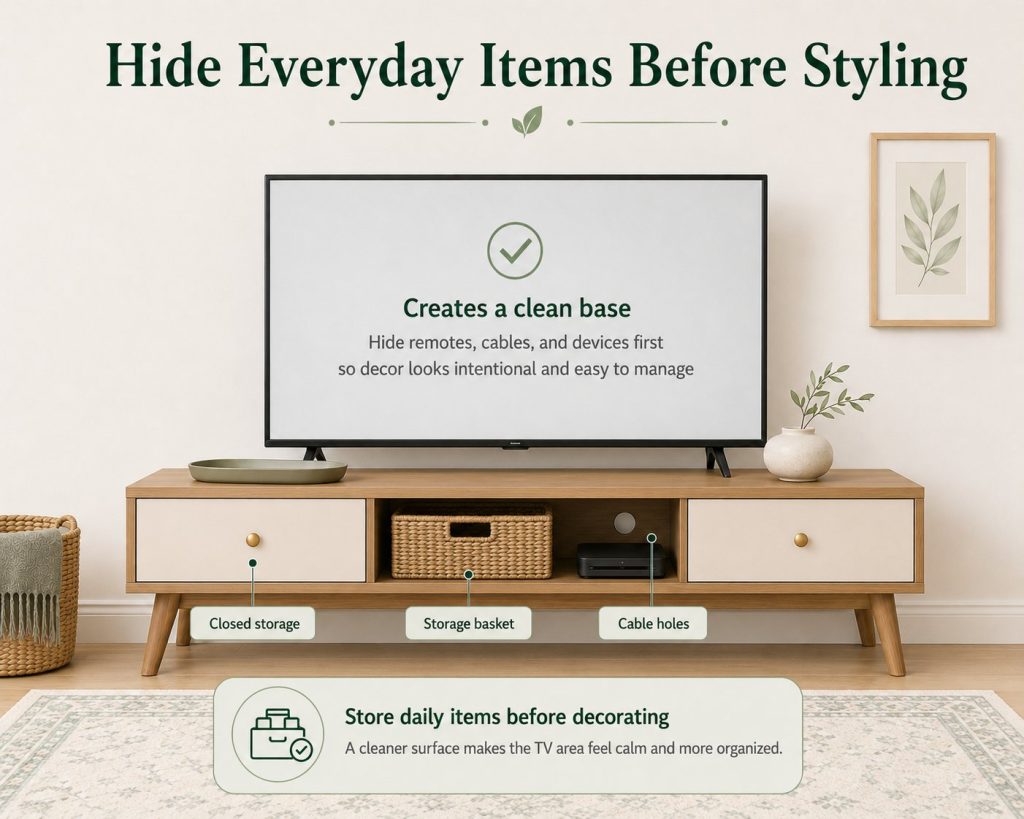
A TV stand can quickly collect remotes, chargers, game controllers, routers, streaming devices, and loose cords. These items should be handled before decor is added. Otherwise, the styling will only sit on top of clutter.
Closed cabinets, baskets, cable holes, and adjustable shelves help keep the surface clear. In a busy family room, a TV stand with hidden storage can make decor easier because the top can stay open for a tray, vase, or lamp while daily items stay out of sight.
A simple rule is to style in groups, not rows. On a long TV console, two or three small visual groups are usually enough. On a shorter stand, one tray and one vertical accent may be all the decor you need.
| Item | Best Placement | Why It Works | Avoid If |
| Low tray | Under or beside the screen | Groups remotes and small decor | The stand surface is very narrow |
| Tall vase | Far left or right side | Adds height without blocking the TV | It overlaps the screen edge |
| Books | Under small objects or on shelves | Adds height, color, and texture | Too many stacks create clutter |
| Small plant | Side area or open shelf | Softens electronics | It needs direct sunlight |
| Basket | Lower shelf or beside stand | Hides cords, toys, or blankets | It blocks ventilation |
| Table lamp | One side of the stand | Adds warmth and balance | It creates screen glare |
How Should Decor Change by TV Setup?
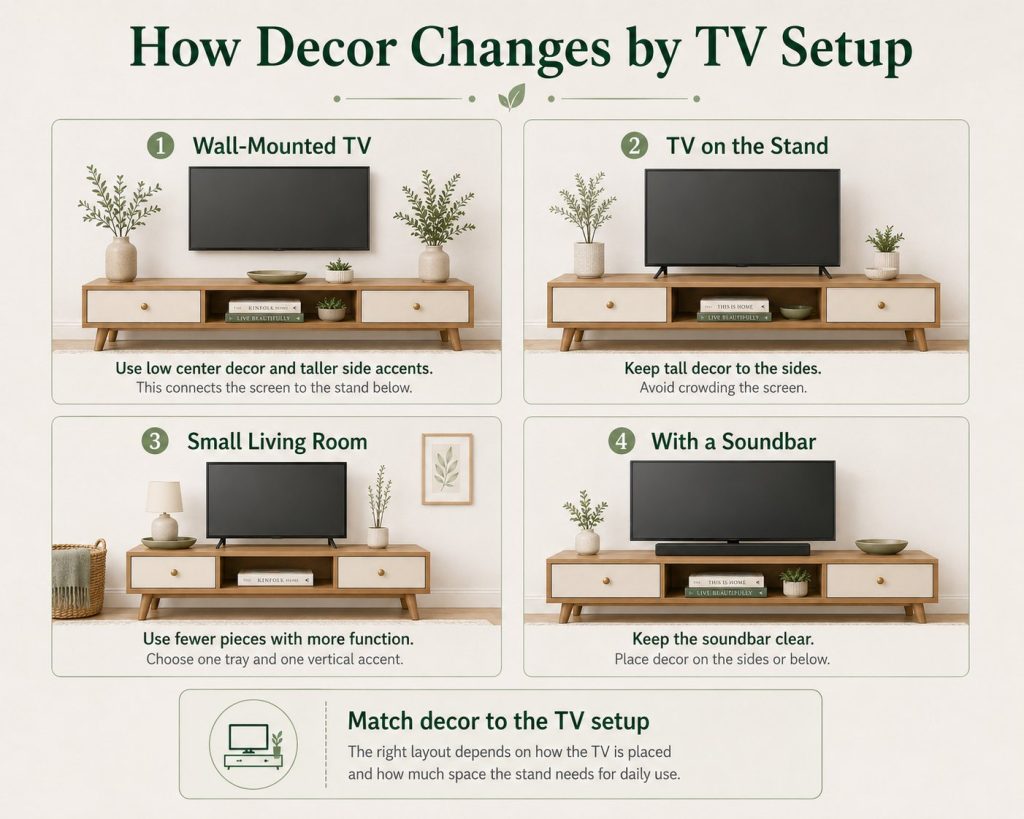
The right styling depends on how the TV is installed and how the room is used. A wall-mounted TV, a TV sitting on the stand, a small living room, and a media console with a soundbar all need slightly different choices. This is where many generic tv stand decoration ideas fall short.
If the TV Is Wall-Mounted
A wall-mounted TV often leaves an empty gap between the screen and the stand. Keep the surface decor low in the center, then add height on the sides. This helps connect the mounted screen to the furniture below it.
If the wall still feels blank, floating shelves, vertical art, or soft wall texture can help. The key is not to crowd the screen. More detailed decorating ideas for the wall behind a TV stand work best when the stand surface is already simple.
If the TV Sits on the Stand
When the TV sits directly on the stand, surface space is limited. Avoid tall decor in the middle. Use the two sides, lower shelves, or nearby floor space instead. A small plant on one side and a low tray on the other can be enough.
If the TV base takes up most of the top, do not force extra accessories. Use open shelving, side baskets, or wall decor to add style without crowding the screen.
If the Living Room Is Small
Small rooms need fewer pieces with more function. Choose one low tray, one soft texture, and one vertical accent. A slim lamp beside the stand or a narrow plant can add height without using valuable surface space.
Avoid oversized branches, multiple picture frames, and large decorative bowls if they make the TV area feel heavier than the seating area.
If You Have a Soundbar
A soundbar should stay visually and physically clear. Do not place candles, books, or small objects directly in front of it. Keep decor to the sides, use lower shelves for storage, or add texture with baskets underneath.
If the soundbar and TV already create a strong horizontal line, use one taller item to one side to keep the setup from looking flat.
When TV Stand Decor Cannot Fix the Setup
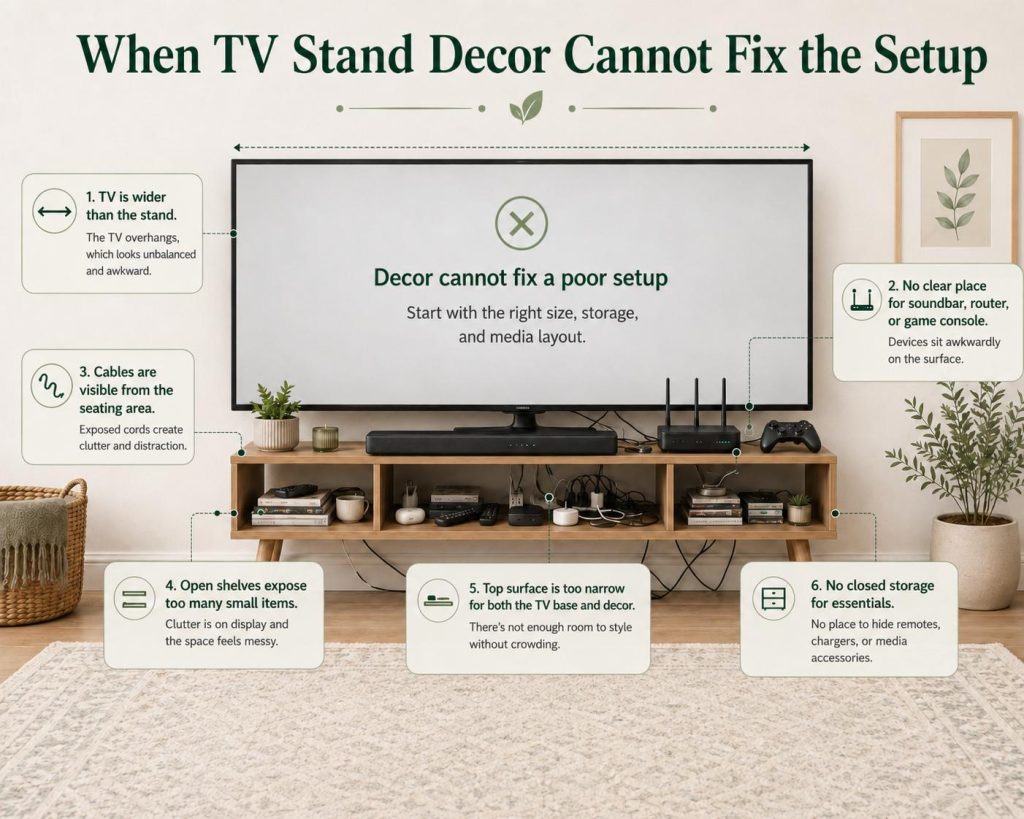
Sometimes the decor is not the real issue. A TV wall may still look crowded because the stand is too narrow, too open, too shallow, or missing the storage needed for real media use. In that case, adding more accessories can make the problem worse instead of better.
Decor may not be enough if:
- The TV is wider than the stand.
- The soundbar, router, or game console has no clear place.
- Cables are visible from the seating area.
- Open shelves expose too many small items.
- The top surface is too narrow for both the TV base and decor.
- The stand has no closed storage for remotes, chargers, or media accessories.
If the space beside the cabinet feels unfinished, a plant, lamp, accent chair, slim cabinet, or basket can fill the gap without crowding the stand itself. The best option depends on walkway clearance, wall width, and how much storage you need, so what to put next to a TV stand should be based on both balance and function.
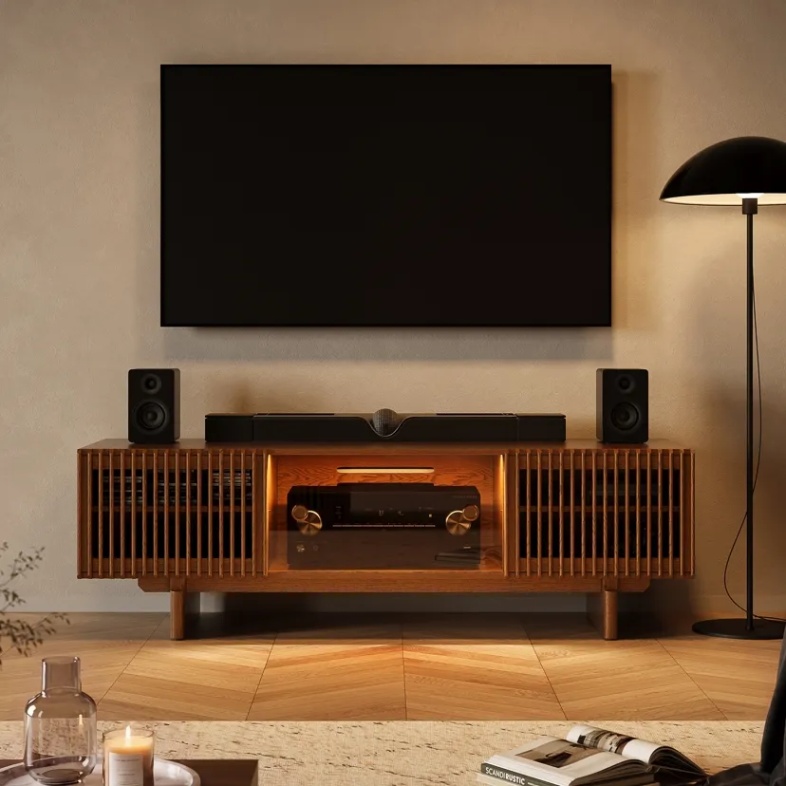
A stronger foundation makes decor easier. The Arboren-71” Mid-Century Modern TV Stand with storage works well in a living room where media devices, cords, and daily clutter need a cleaner home. Its slatted mid-century look adds texture, while deep storage, interior shelves, and cable holes help hide wires, remotes, and streaming devices without overloading the top surface.
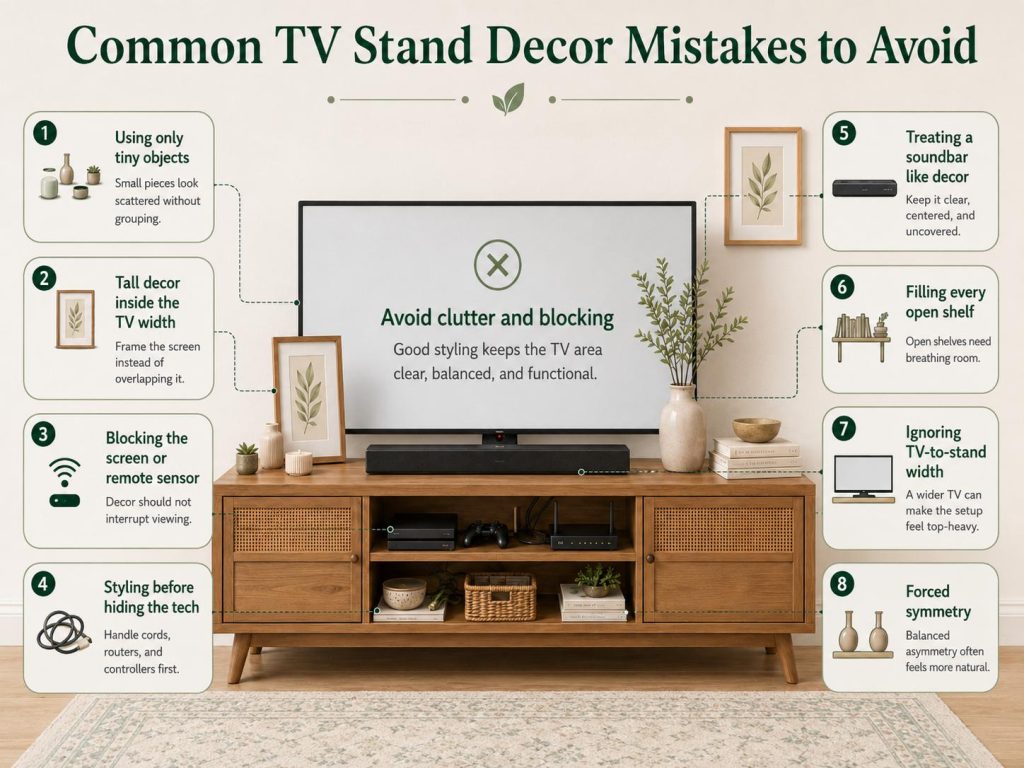
Common TV Stand Decor Mistakes to Avoid
Small mistakes can make a TV area feel busy even when the individual pieces are attractive. Use this section as a quick final check before you finish styling.
- Using only tiny objects: Small pieces need grouping, or they look scattered.
- Placing tall decor inside the TV width: Tall items should frame the screen, not overlap it.
- Blocking the screen or remote sensor: Decor should never interrupt daily viewing.
- Styling before hiding the tech: Cords, routers, and controllers should be handled first.
- Treating a soundbar like decor: It needs a clear, centered position and should not be covered.
- Filling every open shelf: Open shelves need breathing room, not a display item in every space.
- Ignoring TV-to-stand width: A TV that is wider than the stand can make the setup feel top-heavy.
- Making both sides identical by force: Symmetry can work, but balanced asymmetry often feels more natural.
Conclusion
The best tv stand decor is practical before it is decorative. Start by clearing cords, remotes, and devices, then add a small number of pieces that support the screen instead of competing with it. Low decor belongs near the center, taller accents work better on the sides, and closed storage helps keep the surface calm. When the stand has the right width, storage, and material finish, you need fewer accessories to make the whole TV wall feel balanced, useful, and connected to the rest of the room.
Q&A
How do I know if my TV stand is too narrow for decor?
A TV stand may be too narrow if the TV is wider than the cabinet, the base leaves no usable surface, or decor has to sit directly in front of the screen. For a balanced look, choose a stand that extends several inches beyond both sides of the TV and still leaves room for low accents or storage.
What should I do if my TV stand looks messy even after styling?
Remove decorative items first, then check the daily-use items. Visible cables, remotes, routers, game controllers, and small electronics often make the area look messy even when the decor is attractive. Use closed storage, cable holes, baskets, or trays before adding vases, books, or plants back to the surface.
How much decor is too much on a TV stand?
It is too much when the decor competes with the screen, blocks daily use, or fills every open surface. A long TV console usually only needs two or three styled groups. A smaller stand may only need one tray, one low object, and one side accent.
What kind of TV stand is easiest to keep looking clean?
A TV stand with closed cabinets, cable management holes, and enough depth for media devices is usually easier to style and maintain. Open shelves can look nice, but they expose more clutter. If you use game consoles, routers, or extra remotes, hidden storage will make the decor look cleaner with less effort.
What can I use instead of plants on a TV stand?
Use branches in a vase, ceramic bowls, framed art, stacked books, woven baskets, or wood objects. Plants soften electronics, but they are not required. The main goal is to add height, texture, or warmth without blocking the TV, remote sensor, soundbar, or daily storage access.
Should TV stand decor match the rest of the living room furniture?
It does not need to match exactly, but it should repeat at least one element from the room. This could be wood tone, black metal, stone texture, warm white ceramic, or woven material. Repeating one or two finishes makes the TV stand feel connected instead of styled separately.
What if there is no TV on the stand?
The styling rules change when the screen is removed. The stand can act more like a console table with art, a mirror, lamps, books, or a larger centerpiece. A screen-free setup gives more freedom for height, symmetry, and layered objects, especially when you decorate a TV stand without a TV.


[…] furniture. A clean entertainment setup depends on both styling and function, which is why planning TV stand decor ideas without clutter often starts with storage rather than […]
[…] looks busier than the seating area, the issue may be surface clutter rather than color. Keeping TV stand decor organized without clutter helps preserve that quieter background […]