 By Charles
I bought my first “real” wood dining table six years ago. It was an oak rectangle, 72 inches long, and I genuinely thought I’d ruined it within the first month. My toddler drew on it with a fork (yes, a fork). My partner set a hot pan straight on the surface during a dinner-party emergency. A red wine glass tipped during a game night and just sat there, bleeding, while we all watched in slow motion.
That table is still in my dining room. The fork marks faded. The pan ring buffed out. The wine spot is gone. And I have very different feelings now about what a wood dining table can actually take.
This is the honest 2026 guide I wish someone had handed me back then — built around how a wood dining table actually performs under real daily use, not how it looks in a styled photo.
How to Decide if a Wood Dining Table Fits Your Home
Before you fall for a finish, do the boring part: measure. A wood dining table only earns its space if there’s enough room around it to actually sit, slide back, and walk past someone mid-meal.
The numbers I work from come from the National Kitchen & Bath Association: you want a minimum of 36 inches of clearance from the table edge to any wall or piece of furniture so chairs can pull back. If anyone needs to walk behind a seated diner, bump that to 44 inches. These aren’t suggestions from a magazine — they’re the standards designers and builders actually use.
Here’s my tape-out method, which I do every single time before ordering:
- Painter’s tape the exact footprint of the table on your floor.
- Add a chair-pulled-out rectangle on every seated side (roughly 24 inches deep).
- Walk through the space. Sit at the “table.” Pretend to get up.
- If you bump into anything or have to suck in your stomach, the table is too big.
Quick sizing reference for the most common wood dining table footprints:
| Seats | Rectangular size | Round/Oval diameter | Room minimum (with 36″ clearance) |
| 4 | 48″ × 32″ | 42″ round | 10′ × 9′ |
| 6 | 72″ × 36″ | 54″ round / 78″ oval | 12′ × 10′ |
| 8 | 84″ × 42″ | 60″ round / 96″ oval | 13′ × 11′ |
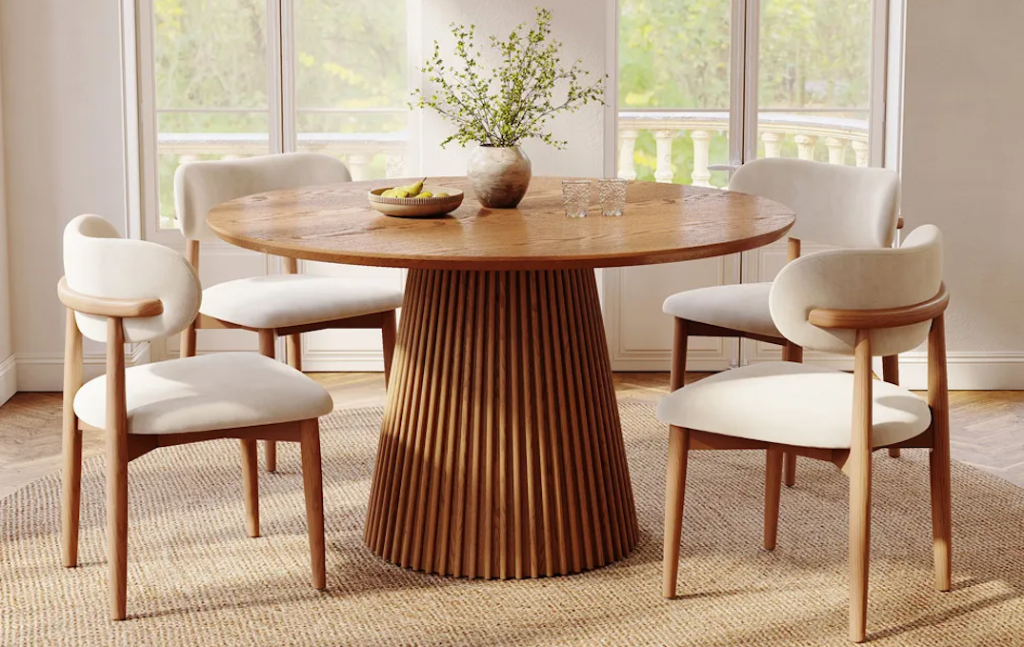
If your room is on the smaller side and you’ve fallen in love with a 72-inch table, an oval or a pedestal base usually buys you more livable space than a four-leg rectangle — corners are where people bruise their hips.
Best Homes and Routines for Wood Dining Tables
A wood dining table isn’t universal. It rewards some routines and punishes others. Here’s where it actually shines.
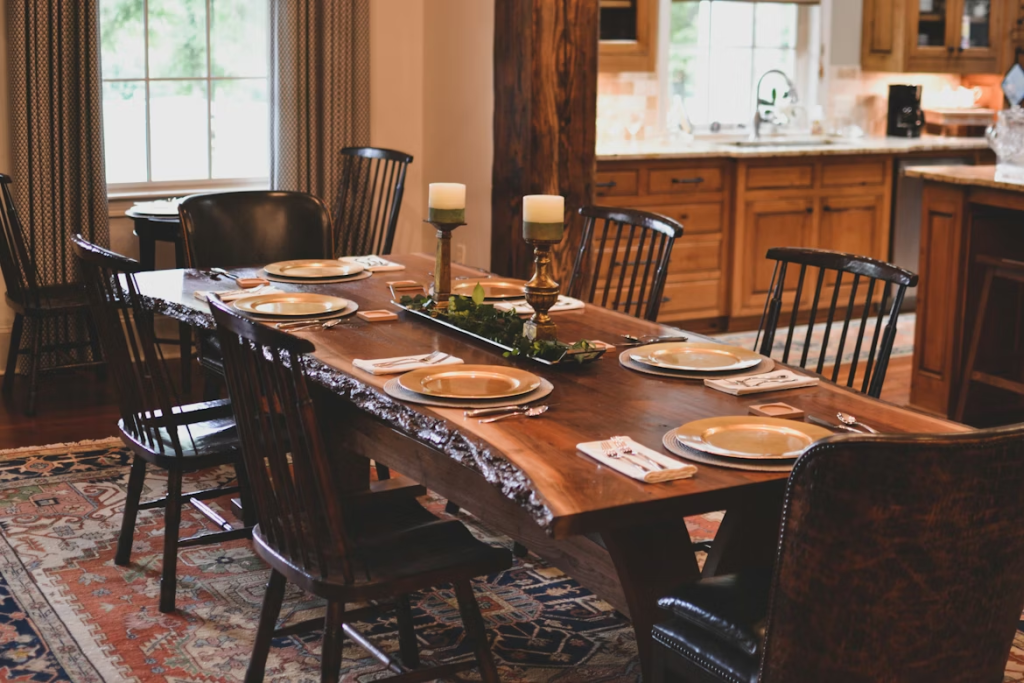
Family Dining Rooms
If your table doubles as a homework desk, an art station, a Lego construction site, and occasionally a buffet, wood is the most forgiving material you can pick. Stone scratches when a ceramic plate slides wrong. Glass shows every fingerprint. Wood absorbs the chaos — and the marks it does pick up read as “patina,” not damage.
In our house, the table sees about 4 meals a day (2 adults working from home + 2 kids + a dog who thinks she’s the fifth chair). Eighteen months in, the only visible mark is one shallow dent from a dropped phone, which honestly blends in with the grain unless I point it out.
For families, I’d lean toward:
- Oval or rounded-corner shapes (fewer hip bruises for small kids running by)
- Matte or satin finishes (gloss shows every smudge from sticky fingers)
- Solid wood tops, not veneer (veneer can chip if a kid bangs a Hot Wheels track on it)
Warm Modern Dining Spaces
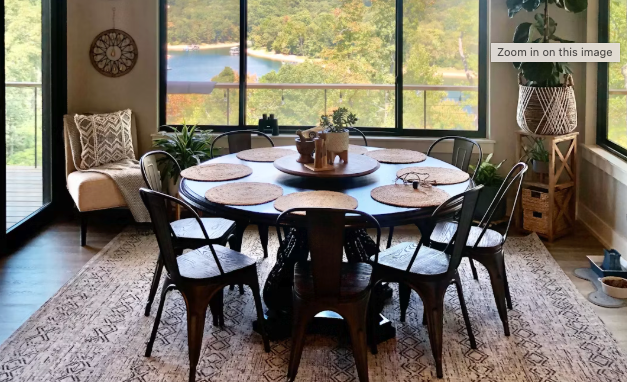
The second sweet spot for a wood dining table is what I think of as the “warm modern” room — open floor plan, lots of white walls, maybe concrete or pale tile floors. Spaces like that can read cold or showroom-y. A walnut or oak table is what makes the room feel like someone actually lives there.
This is also where coordinated sets earn their price tag. When the dining table, chairs, and sideboard all pull from the same finish family, the room reads as designed instead of assembled. POVISON’s dining tables collection is built around this principle — matching finishes across pieces, so you’re not playing wood-stain roulette across three different retailers.
Oak vs Walnut vs Other Wood Looks
This is the part most articles get wrong. They show you a finish swatch and call it a day. What you actually need is hardness, color stability, and how the wood will look in 5 years — not just on day one.
The benchmark scientists use measures the force needed to dent a wood sample with a steel ball. Higher number = harder to dent. Here’s how the most common dining table woods stack up:
| Wood | Janka (lbf) | Color | Aging | Best for |
| White Oak | 1,360 | Pale honey, grey undertones | Darkens slightly | Heavy daily use, families |
| Red Oak | 1,290 | Warm pinkish-brown | Mellows to amber | Budget-friendly, durable |
| Walnut | 1,010 | Rich chocolate brown | Lightens with sun | Showcase rooms, lower-traffic |
| Acacia | 1,750 | Highly varied grain | Stable | High-traffic, dramatic look |
| Rubberwood | 960 | Pale, even tone | Stable | Budget builds, kid-friendly |
| Pine (soft) | 380–870 | Yellow-cream | Yellows with age | Farmhouse style only |
Quick takeaways:
- Oak is the practical winner for most homes — 1,290–1,360 Janka means it shrugs off the daily stuff.
- Walnut is softer than people assume. It’s stunning, but if you’re a “table as art” household, choose it. If you’re a “table as battlefield” household, oak holds up better.
- “Wood-look” laminate or wood veneer isn’t the same animal. They can look beautiful, but a deep scratch goes through to a different material underneath. Solid wood can be sanded and refinished. Veneer usually can’t.
The other thing you want is a credible sustainability story. FSC-certified wood means the timber came from forests managed to protect biodiversity, workers, and Indigenous rights. There are now more than 6,000 FSC-certified companies in the indoor furniture sector globally — so the certification is meaningful, not rare. If a brand can’t tell you where the wood comes from, that’s a flag.
Solid Wood vs Veneer vs Wood-Look: How to Tell
This trips up almost every first-time buyer. A product page that says “wood” can mean any of three very different things.
| Type | What it is | Lifespan | Refinishable? |
| Solid wood | Single species, top to bottom | 15–25+ years | Yes, multiple times |
| Wood veneer | Thin real-wood layer over engineered core | 10–15 years | Once, very carefully |
| Wood-look (laminate) | Printed pattern on engineered board | 5–8 years | No |
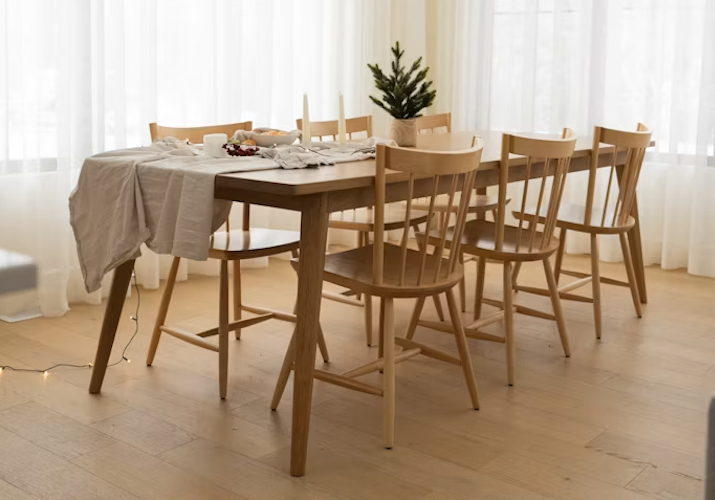
A trick I use: look at the edge of the tabletop in product photos. Solid wood shows continuous grain wrapping the edge. Veneer shows a thin seam. Laminate shows a flat, printed edge — no grain depth at all. If the listing won’t show you a clear edge shot, ask the brand directly.
Scratches, Heat, Water, and Daily Wear
Time for the part nobody else will be honest about. Yes, wood scratches. Yes, water can leave marks. Yes, heat can damage the finish. Here’s what 18 months of real-world use has actually taught me.
Scratches. A normal cutlery slide won’t scratch a properly-finished oak or walnut table. A ceramic plate dragged sideways might leave a faint mark. A house key dropped from waist height? Yes, that dents. The fix: a matte or satin polyurethane finish hides the small stuff. For the bigger marks, a $12 walnut-blend furniture pen camouflages them in 30 seconds.
Heat. A hot mug? Fine. A hot pan straight from the stove (around 400°F)? Will leave a white ring on most finishes. Always use a trivet — I keep two on the table at all times so nobody has to “go find one.”
Water. A water glass on a finished wood table for 4 hours: no mark. Same glass for 24 hours: faint ring. Standing puddle from a spilled juice cup: wipe within 5 minutes and you’re fine. The enemy isn’t water — it’s water that’s allowed to sit overnight.
My actual daily maintenance routine:
- Wipe with a damp microfiber cloth after each meal (10 seconds)
- Apply a thin coat of [wood polish or conditioner] once every 3 months
- Use coasters for cold drinks, trivets for anything hot
- Place felt pads under decorative objects you don’t move often
That’s it. No oiling rituals. No special soaps. No covering it in a tablecloth like an antique. Modern furniture-grade polyurethane finishes are durable enough that this is the entire program.
What I’d warn against: avoid Pledge or other silicone-based sprays — they build up over time and can cause finish problems if you ever want to refinish. Avoid leaving anything acidic (lemon juice, vinegar, tomato sauce) sitting on the surface. Avoid placing the table directly in afternoon sun day after day, which can lighten walnut noticeably over a few years.
What to Check Before Buying Online
Buying a wood dining table online sounds risky. It doesn’t have to be — if you know what to ask before clicking buy.
My pre-purchase checklist:
- Solid wood or veneer? Listing must explicitly state. “Hardwood” alone is too vague.
- Wood species named? “Oak” or “walnut” — not “wood” or “premium hardwood.”
- Finish type listed? Polyurethane, lacquer, oil, or wax. Each ages differently.
- Weight given? A real solid wood 6-seat table weighs 90–150 lbs. Anything under 60 lbs is likely engineered with veneer.
- Dimensions to the quarter-inch? Vague dimensions = vague product.
- Emissions standard cited? Look for CARB Phase 2 or TSCA Title VI compliance — these are the EPA-enforced standards that limit formaldehyde emissions from any engineered wood components. Worth caring about if anyone in your home has respiratory issues.
- Assembly required? This is bigger than people think.
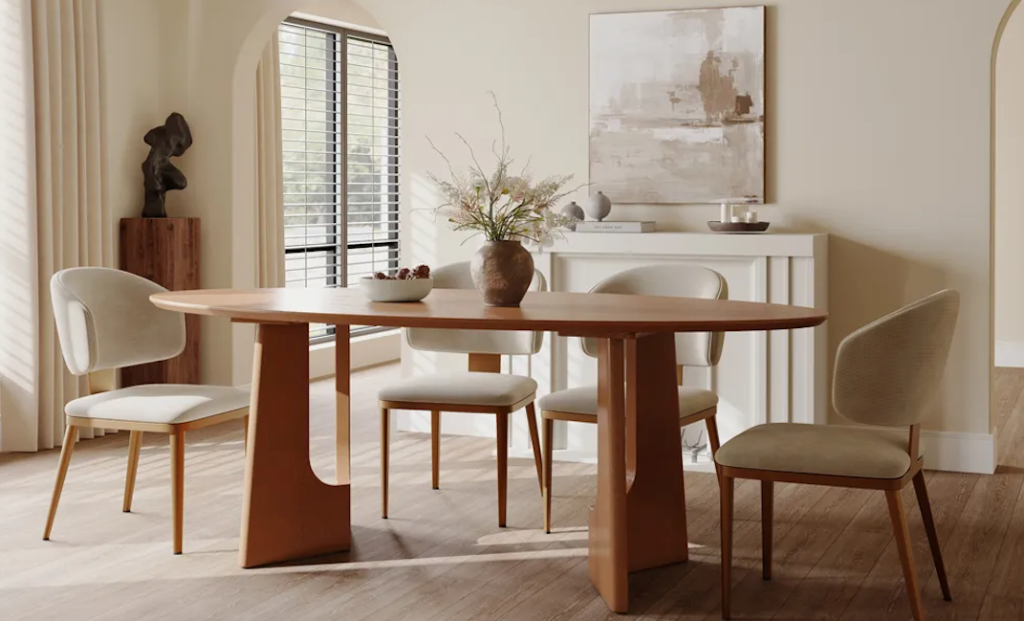
On that last point: most flat-pack dining tables take 30–60 minutes to assemble, require a partner to flip the base under the top, and include 20+ pieces of hardware. POVISON ships dining tables fully assembled — the table arrives ready to position, no tools, no swearing on a Saturday afternoon. For a piece of furniture that’s going to live in your home for 15+ years, the difference between “weekend project” and “tea while it gets carried in” is real.
Delivery considerations: A solid oak 6-seat table is heavy — typically 100–140 lbs. Confirm:
- White-glove delivery available (in-home placement, not curbside drop)
- Damage policy clearly stated (replacement, not just refund)
- Lead time honest (3–8 weeks is normal; “ships immediately” on a custom finish often isn’t)
If a brand can answer all seven of those questions clearly, you’re working with someone who actually understands their product.
FAQ
Is a wood dining table practical for everyday family meals?
Yes — and arguably more practical than stone, glass, or laminate alternatives. A wood dining table absorbs the normal chaos of family life (cutlery slides, spilled juice, occasional dropped utensils) better than harder, more brittle materials, and the minor marks it picks up integrate into the grain instead of looking like damage. Choose oak (Janka 1,290+) for the highest daily-use durability, and pick a matte or satin finish to hide small scratches naturally.
Is oak or walnut better for a dining table that gets heavy daily use?
Oak is the better choice for heavy daily use. White oak measures around 1,360 lbf on the Janka hardness scale versus walnut at 1,010 lbf, meaning oak resists dents and scratches roughly 35% better. Walnut is genuinely beautiful and ages gracefully, but it’s a softer wood — better suited to lower-traffic dining rooms or households without small kids and pets. If your table is going to see daily meals plus homework, art projects, and laptop use, oak is the safer pick.
Do wood dining tables scratch and stain easily in real life?
Wood dining tables can scratch and stain, but modern furniture-grade finishes (polyurethane, lacquer) make this far less of a daily issue than most people expect. In my 18 months of testing, normal use — cutlery, plates, cold drinks, occasional spills wiped within minutes — left zero permanent marks. The vulnerabilities are specific: hot pans without trivets cause white rings, standing water for 24+ hours causes faint marks, and acidic foods like lemon or tomato sauce can dull the finish if left overnight. A matte or satin finish hides minor wear better than gloss.
How do I protect a wood dining table from heat, water, and daily wear?
Protect a wood dining table with four simple habits: use trivets for anything hotter than a coffee mug (around 200°F+), use coasters for cold drinks that sweat, wipe spills within 5 minutes before moisture penetrates the finish, and apply a thin coat of wood conditioner every 3 months. Avoid silicone-based polishes like Pledge — they build up over time. Avoid placing the table in direct afternoon sun, which can lighten walnut noticeably over a few years. With this routine, a quality oak or walnut table will look great for 15–20 years.
Conclusion
A wood dining table isn’t fragile, and it isn’t precious. It’s a piece of furniture designed to live in the middle of your daily life — meals, homework, game nights, accidental wine spills, all of it. The mistake most people make is treating it like a museum object during the first month, then resenting it forever after the first inevitable scratch.
The real version: pick the right species for your routine (oak for heavy use, walnut for showcase rooms), match the table to your room with proper clearance, verify it’s solid wood with credible certifications, and lean on a finish that’s built to take wear. Do those four things, and the table that arrives in week one will still anchor your dining room in year fifteen.
Ready to find one that actually fits your room and your routine? Browse POVISON’s fully-assembled wood dining tables — they arrive ready to place, no weekend assembly project required, with the species and finish spelled out so you know exactly what you’re buying.
Related Reading:


