 By Kelvin
Introduction
A small living room can feel hard to arrange when the sofa, TV, coffee table, storage, and walkway all compete for the same few feet. This guide helps you build a small living room layout that works for daily life, not just photos. Instead of starting with decor, you will learn how to choose the room’s main function, match the setup to your room type, check key measurements, and pick furniture that supports comfort, storage, and easy movement.
Table of Contents
What Should a Small Living Room Layout Solve First?
Before choosing a sofa or moving the TV, decide what the room needs to do every day. A small room usually cannot support every possible function equally, so the layout should solve the most important problems first: seating, viewing, movement, and storage.
A strong layout should answer four questions:
- Where will people sit most often?
- What is the main focal point?
- Where is the clearest walking path?
- Where will everyday clutter go?
The best small living room furniture layout is not always the one with the most furniture. It is the one that lets someone sit down, reach a surface, watch TV, open a drawer, and walk through the room without shifting things around.
If your living room is used mainly for TV, the sofa and media wall should lead the plan. If it is used for conversation, seating should face inward around a rug or coffee table. If it also works as a guest room, you need to measure the room in both daytime and overnight modes.
Which Layout Fits Your Room Type?
Small rooms fail when the layout ignores how the space is actually used. A compact apartment living room, a studio, and a doorway-heavy room all need different choices. Use the room type first, then decide what kind of sofa, table, and storage can support the layout.
| Room Type | Best Layout | Why It Works |
| Long or narrow living room | Sofa on the long wall + slim TV stand | Keeps one clear walking path and avoids a crowded hallway feel |
| Open-plan apartment | Floating sofa + rug zone | Separates the living area from the kitchen or dining space |
| Studio apartment | Sofa bed or compact sofa + movable table | Lets one room support sitting, sleeping, working, and hosting |
| TV-focused small room | Sofa facing a simple media wall | Improves viewing comfort without adding extra furniture |
| Doorway-heavy room | Loveseat + round or nesting table | Reduces blocked paths near doors and entry points |
| Guest-ready small living room | Sofa bed + storage table | Adds overnight function without needing a separate guest room |
For a strong small living room layout, choose the setup that solves your room’s biggest limit first: narrow traffic flow, no separate bedroom, too many doorways, or a TV wall that takes over the space. A thoughtful layout is less about copying a photo and more about matching furniture size, movement, and daily function. When the first sofa position feels unclear, practical rules for how to arrange furniture in a small living room can support your walkway and seating decisions without turning the room into a furniture puzzle.
What Furniture Makes a Small Layout Work Harder?
Furniture in a small room has to earn its footprint. That does not mean every piece must be tiny. It means each piece should support the layout instead of creating another obstacle. Think about depth, corners, storage, movement, TV placement, and how the room changes during the day.
Choose Seating by Depth, Not Just Width
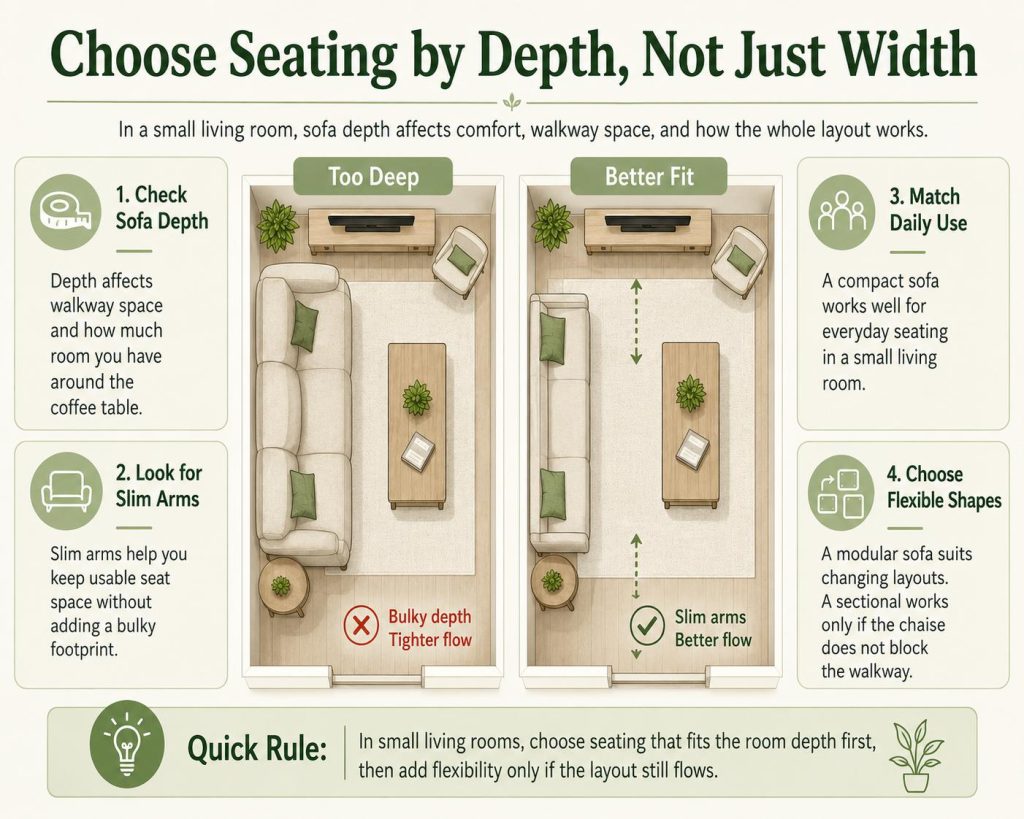
Many buyers only check sofa width, but depth often matters more in a compact layout. A sofa that is not too deep leaves more room for a coffee table and walkway. Slim arms can also give you more usable seat space without increasing the overall footprint.
A compact sofa works well for everyday seating. A modular sofa works better if your room changes often, such as when you host friends, move between apartments, or need to shift seating for movie nights. A sectional can work in a small room, but only when the chaise direction protects the main walkway.
Plan the TV Wall Around Storage and Flow
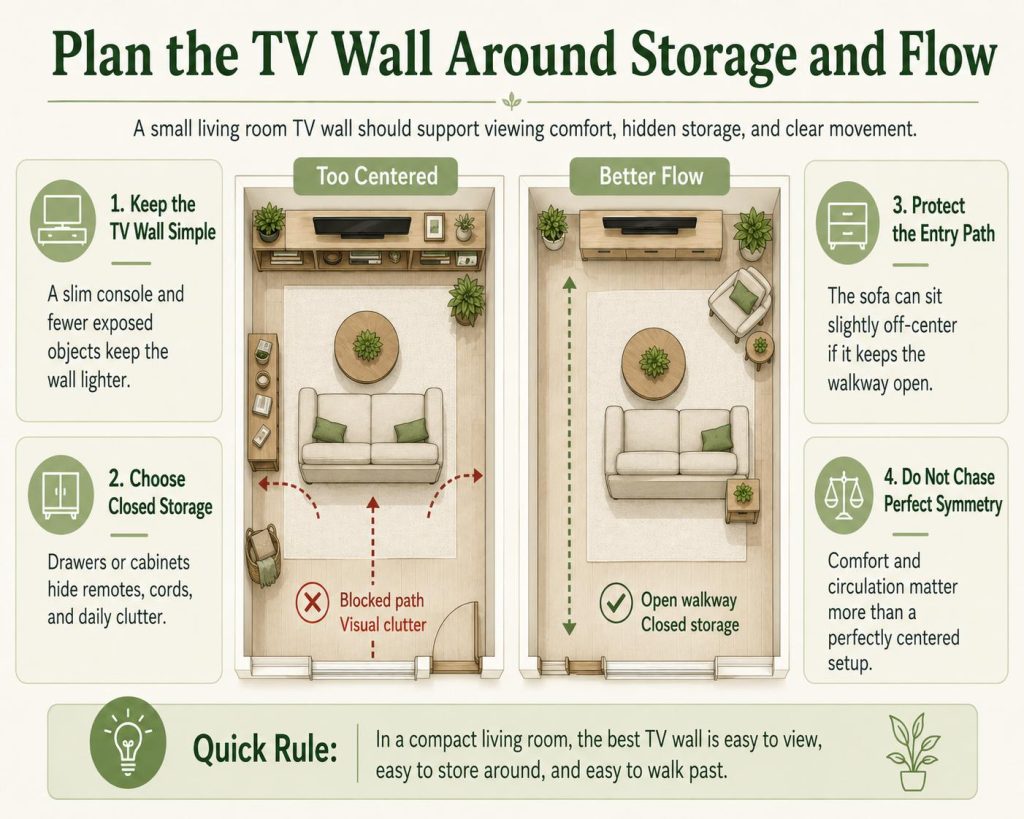
A TV often becomes the real focal point in a small living room, but it should not decide every furniture placement. Keep the media wall simple, choose a TV stand that is not too deep, and avoid open storage that collects visible clutter.
If the sofa needs to sit slightly off-center to keep the entry path open, that is usually better than forcing a perfectly centered TV setup. In many small living room layouts, comfort depends more on clear movement than perfect symmetry.
A TV-focused room also needs a place for remotes, devices, cords, and small daily items. Closed drawers or cabinets near the media wall usually work better than open shelves, especially in a compact room where visual clutter spreads quickly.
Use a Coffee Table That Improves Movement
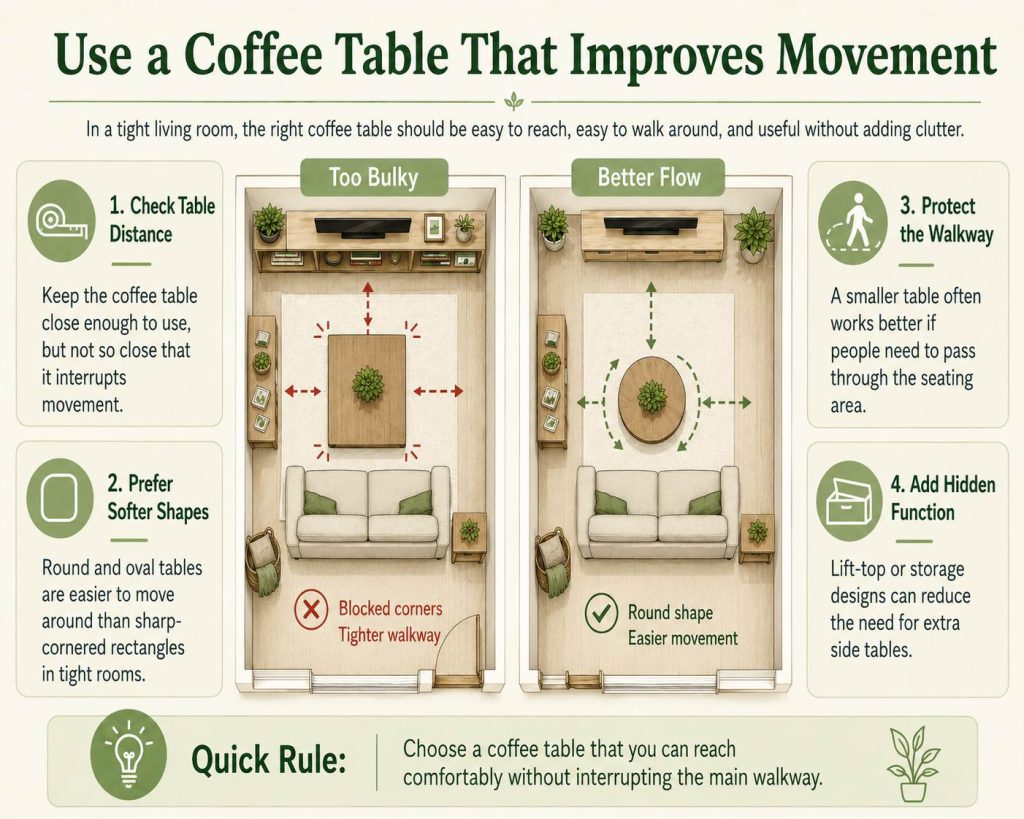
A coffee table should sit close enough to use but not so close that knees hit it every time someone stands. In tight rooms, round and oval tables are easier to move around than sharp-cornered rectangles. Lift-top or storage designs can also reduce the need for extra side tables.
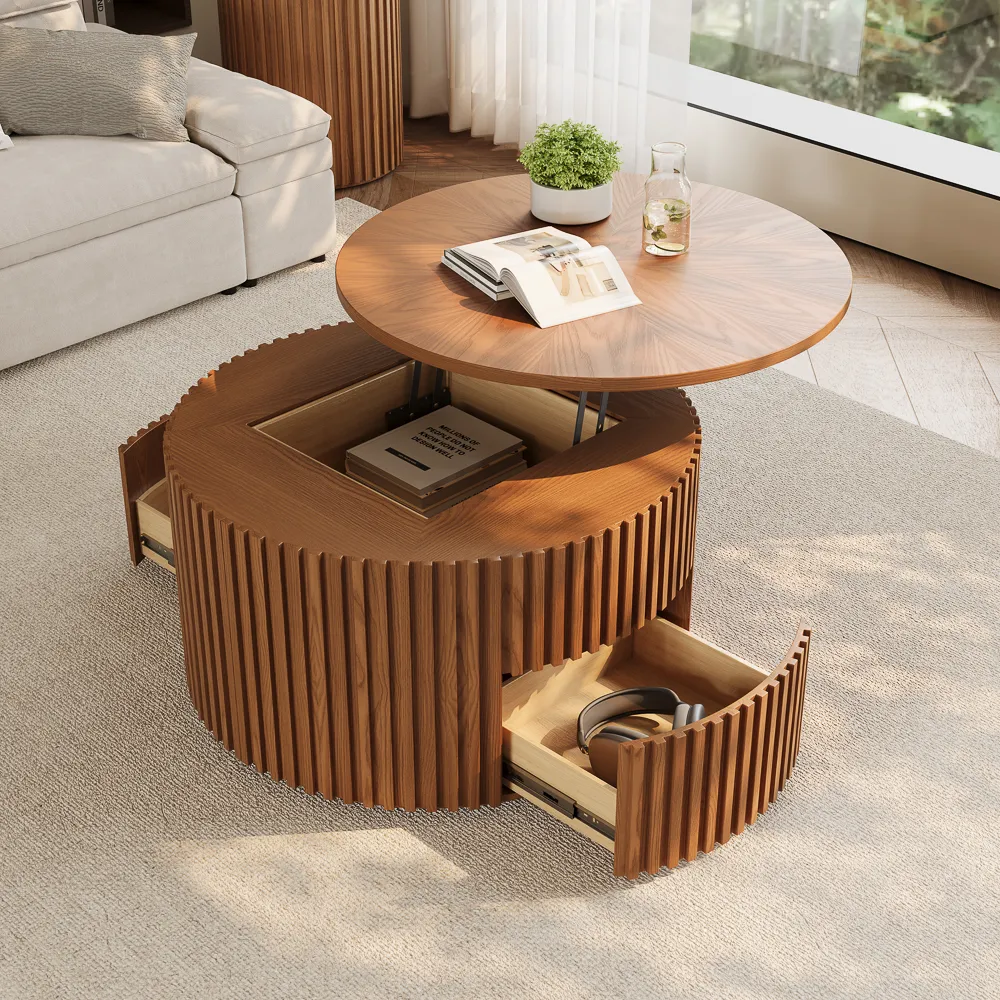
The Silva-31.5” Lifting Top Round Coffee Table suits small seating zones where the center table needs to do more than hold decor. Its round 31.5-inch shape is easier to walk around, while the lift top, hidden storage, and two drawers help keep remotes, chargers, and small items off the surface.
When table size is the main layout problem, choosing coffee tables for small living rooms becomes less about style and more about clearance, storage, and how easily people can move through the seating area.
Let One Piece Handle More Than One Job
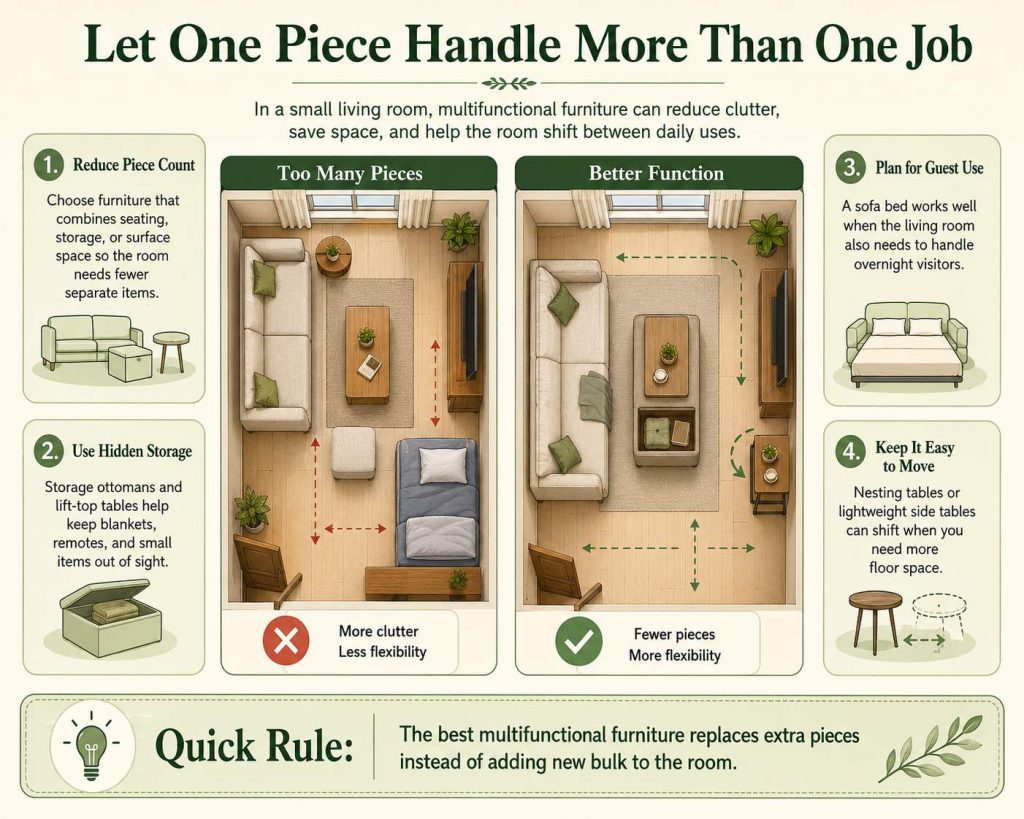
A small living room often doubles as a TV room, reading spot, work corner, and guest space. In that case, dual-purpose furniture can make the layout simpler. A storage ottoman can replace a table. A nesting table can move when guests arrive. A sofa bed can remove the need for a separate guest mattress.
The key is to choose multifunctional furniture that reduces the number of pieces in the room, not furniture that adds another bulky function. A sofa bed, storage coffee table, or movable side table should make the room easier to use in more than one daily scenario.
What Measurements Should You Check Before Buying?
A beautiful layout can still fail if the measurements are wrong. Before buying furniture, mark the floor with painter’s tape or boxes. This makes the room’s limits visible before a sofa, table, or TV stand arrives.
Use these practical checks:
- Leave about 30–36 inches for the main walking path when possible.
- Keep about 16–18 inches between the sofa and coffee table.
- Check TV stand depth, not just width.
- Make sure cabinet doors and drawers can open.
- Measure the rug in relation to the sofa, not the whole room.
- Check recliner, sleeper, or extendable sofa depth when open.
- Measure doorways, stairs, elevators, and hallway turns before delivery.
The most common mistake is measuring only the wall. A wall may fit an 84-inch sofa, but the room may not fit that sofa plus a coffee table, walkway, floor lamp, and TV stand.
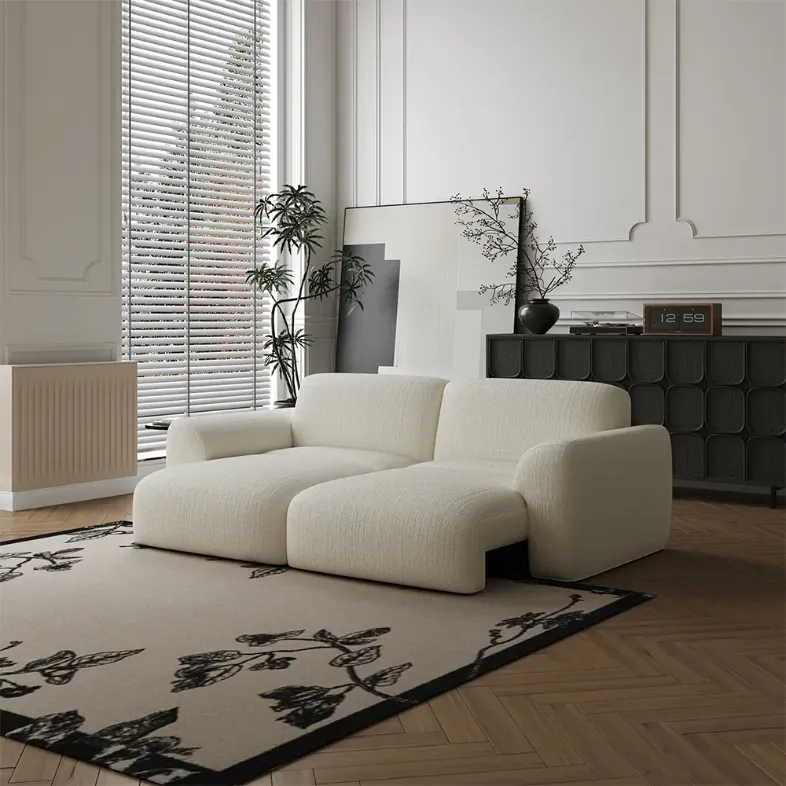
The Aurora-Power Sofa Bed fits layouts where the living room also needs a lounge or guest function. Its remote-controlled extension lets the seat depth adjust from sofa mode to deeper lounging, while the soft chenille fabric options support daily sitting. It works best when the open depth is measured before buying.
A family with kids may need a wider walkway around the coffee table because toys and quick movement are part of daily life. Someone living alone in a studio may accept a tighter setup if the furniture can move easily.
What Layout Mistakes Make a Small Living Room Feel Smaller?
Some layout mistakes are easy to miss because each individual piece seems reasonable. The problem appears only when everything is in the room together. Focus on how the whole setup works, not whether each item looks good by itself.
Avoid these common mistakes:
- Buying furniture before measuring open and closed positions.
- Choosing too many small pieces instead of fewer useful pieces.
- Blocking the only clear path through the room.
- Letting the TV decide every furniture placement.
- Using a coffee table that is too deep for the walkway.
- Placing open storage where clutter is most visible.
- Choosing a rug that floats without connecting the seating.
Do not assume a small room needs the smallest possible furniture. A loveseat, one chair, and a storage coffee table may work better than four tiny accent pieces. Fewer pieces with clearer functions usually create a calmer furniture layout for a small living room.
If the room still feels crowded after the floor plan works, the issue may be visual weight rather than placement. Low profiles, visible legs, lighter materials, and closed storage can make the same layout feel more open without moving every piece again.
Conclusion
A good small living room layout starts with function, not decoration. Decide how the room is used most often, choose one focal point, place the sofa first, and protect the main walkway before adding tables, chairs, or storage. The right pieces should make daily life easier: a slimmer TV stand, a round or lift-top coffee table, flexible seating, or a sofa bed that works in more than one mode. When the measurements and furniture roles are clear, even a compact living room can feel comfortable, useful, and easy to live in.
FAQ
Can a sectional work in a small living room?
Yes, a sectional can work if the chaise direction protects the main walkway. Choose a compact or modular sectional instead of an oversized deep model. Before buying, tape the full footprint on the floor and check whether people can still reach the door, TV stand, and coffee table comfortably.
What should I use instead of a coffee table?
Use a storage ottoman, nesting tables, C-table, or small round table if a standard coffee table blocks movement. The right substitute depends on your habits. If you eat or work from the sofa, choose a stable surface. If you mainly need flexibility, nesting tables are easier to move.
How do I keep a small living room flexible?
Keep at least one or two pieces easy to move. A nesting table, storage ottoman, lightweight accent chair, or modular seat can help the room shift between TV watching, hosting, working, and relaxing. Fixed large pieces should stay limited, so the layout can change without making the room feel crowded.
How do I plan a layout for guests?
Choose furniture that works in both daily and guest modes. A sofa bed, storage ottoman, and movable side table can turn a living room into a temporary sleep space. Measure the sofa bed when fully open, and decide where the coffee table or floor lamp will move at night.
Should all furniture touch the rug?
No, not all furniture has to touch the rug. In a small room, it is usually enough for the front legs of the sofa and chair to sit on or near the rug. This connects the seating zone without forcing you to buy a rug that overwhelms the room.
How much seating is enough for a small living room?
Most small living rooms work best with one main sofa and one flexible extra seat. That could be an accent chair, ottoman, pouf, or dining chair pulled in when guests arrive. If the room feels crowded with permanent seating, choose pieces that move easily instead of adding another fixed chair.


[…] feel more comfortable. For shoppers comparing furniture proportions across a space, understanding a small living room furniture layout can help avoid choosing pieces that compete for limited floor […]
[…] tight spaces, small living room layout ideas for better flow can help compare a loveseat, compact sofa, sectional, and movable chairs. Tape the main footprints […]
[…] the room has multiple entrances or an awkward shape, small living room layout ideas for better flow can help address more complicated furniture […]