 By Charles
Last spring, my brother-in-law called me three days before her housewarming. She’d just moved into a Brooklyn brownstone with a narrow dining room and had ordered a 78-inch rectangular dining table online — without measuring. The table arrived in a crate the size of a small refrigerator. She couldn’t get it past the hallway. The return shipping quote was $340.
That phone call is the reason I write these guides. A modern dining table is one of the highest-stakes purchases in a home — high price, hard to move, harder to return — and most of the buying advice online is either pure inspiration or pure spec-sheet. This one is built to actually decide.
If you’re upgrading a dining area for 2026, or setting one up fresh in a new home, here’s how I’d approach it from scratch — room first, shape second, material third, and the boring stuff (delivery, returns, weight capacity) treated like the dealbreakers they actually are.
How to Choose a Modern Dining Table in 2026
A modern dining table works when three things line up: it fits the room, it seats the people you actually have over (not the people you imagine), and it survives the way you live — laptops, hot pans, kids’ markers, all of it.
The order matters. Most people start with style (“I want an oval pedestal table in walnut”), then try to force-fit it to a room. That’s how you end up with a beautiful table you can’t pull chairs out of. Start with the room — then style choices become a filter, not a wishlist.
Three questions to answer before you open any product page:
- How much clear floor space do you have? Measure wall-to-wall and subtract the path you need to walk around it.
- How many people sit down on a typical weeknight, and how many for the biggest meal of the year? The gap between those two numbers tells you whether you need an extendable.
- What will the table actually deal with? Daily homework and hot plates are different jobs from “wine and cheese twice a year.”
Get those three answered honestly and the rest of this guide does the heavy lifting.
Start With Room Size and Seating Needs
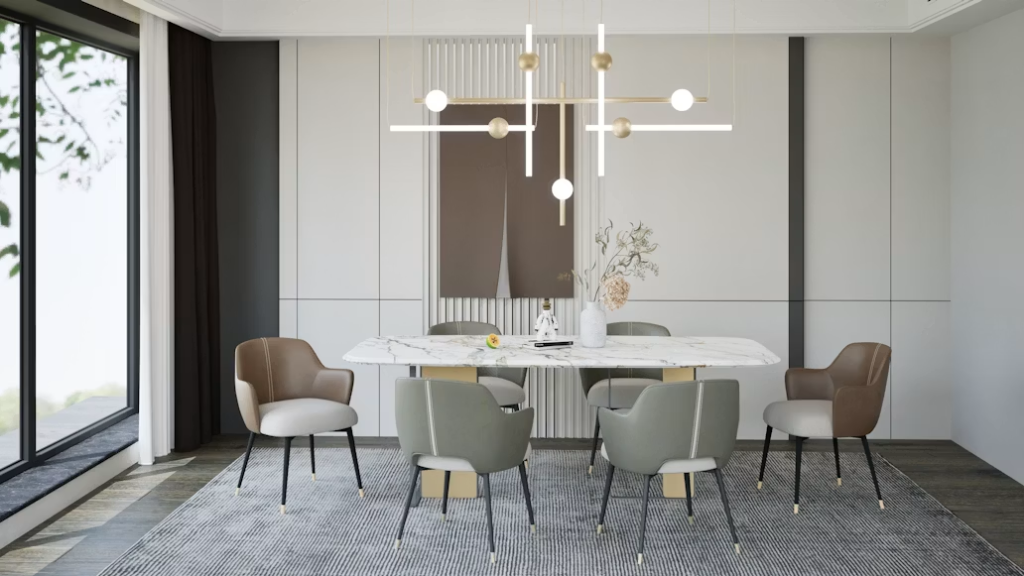
Here’s the single most useful number in dining furniture: 36 inches of clearance between the table edge and the nearest wall, sideboard, or piece of furniture. That’s the seating clearance standard from the National Kitchen & Bath Association’s Planning Guidelines (Guideline 9) — enough for chairs to pull back and people to walk past comfortably. If a walkway runs behind a seated diner, the NKBA bumps that to 44 inches.
This one number ends most of the “will it fit?” debate before it starts.
My tape-out trick: before buying, mark the exact outer footprint of the table you’re considering on the floor with painter’s tape. Then place chairs at the tape edge, pulled fully back. Walk the room normally for two days. If you keep bumping the tape, the table’s too big. This costs nothing and prevents the $340 return situation.
Apartments and Small Dining Rooms
If you’re in an apartment, a one-bedroom condo, or a brownstone with a narrow dining strip, the realistic envelope looks like this:
- 2 people daily, occasional 4: 36–42″ round, or a 47″ square. A round dining table softens corners and lets you tuck one against a wall without losing seats.
- 4 people daily: 48″ round seats four comfortably; a 55–60″ rectangle works if the room is at least 8 feet wide (table + two 36″ clearance zones).
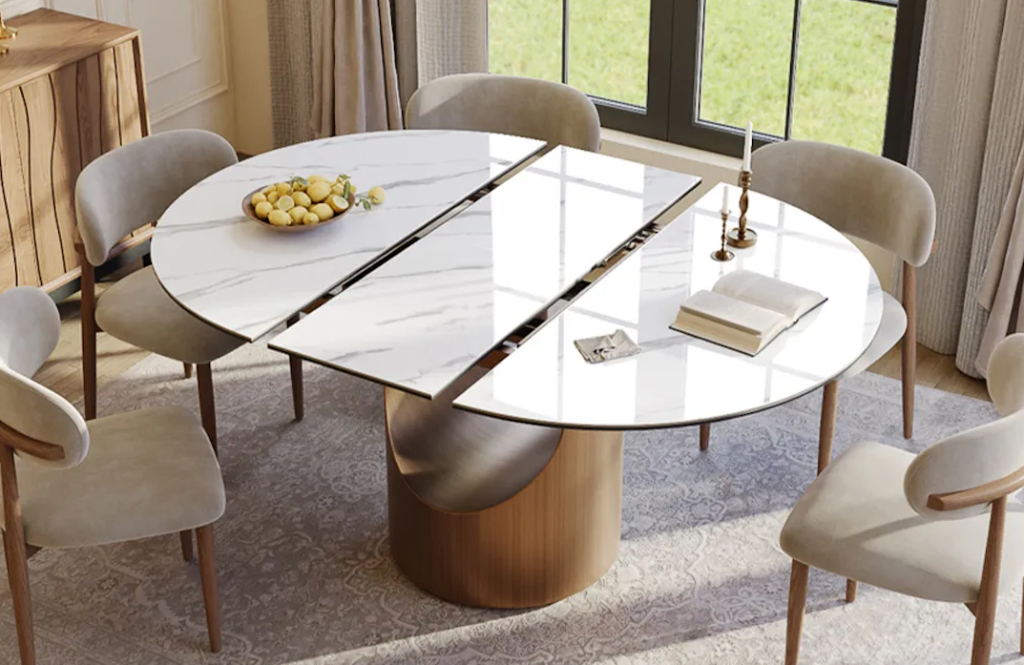
- Want occasional 6 without the daily footprint? This is where a compact extendable earns its keep. A 47″ round that opens to 63″ buys you a Thanksgiving without the daily commitment. Mechanism quality matters more than top material here — butterfly leaf, slide-out, and drop-leaf each behave differently in tight rooms.
A real number: standard dining chairs need about 24 inches of pull-back space to get out of without contorting. Upholstered chairs with arms need 30. Check chair specs, not just table specs. Dimensions.com’s furniture clearance reference has the standard depths if you want to verify.
Family Dining Rooms
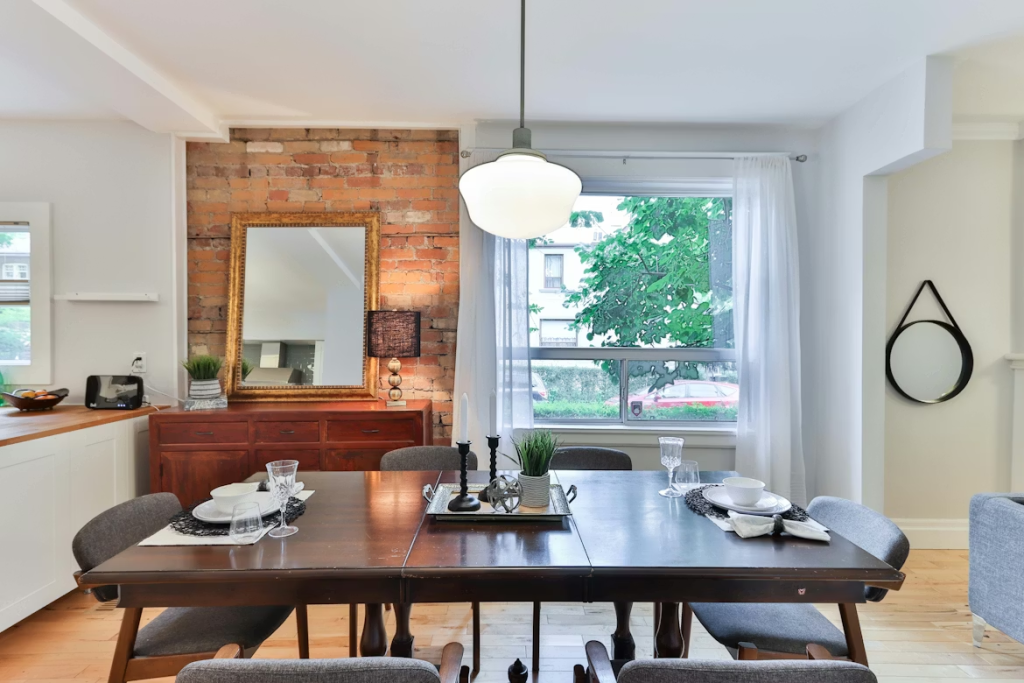
If you have a dedicated dining room — call it 12 × 14 feet or larger — the math changes. You’re solving for “everyone over” more than “everyday.”
- 6 people daily: A 72″ rectangle or a 60″ round are the sweet spots. The rectangle works better against a wall; the round works better as the centerpiece of an open room.
- 8 people daily, 10–12 for holidays: A 78–84″ rectangle, or a 72″ round that can extend. Solid wood tends to be the practical choice at this size — engineered tops above 78″ can have noticeable seam sag over time.
- Kids under 10 in the household: Avoid sharp 90-degree corners at toddler-eye height. Oval and round shapes are forgiving here. Sintered stone and properly sealed solid wood handle the daily war zone of crayon, juice, and snack-with-laptop better than untreated woods or glass.
One thing I’d push back on: don’t oversize for the once-a-year Thanksgiving. A table you can’t comfortably walk around the other 364 days isn’t worth it. That’s literally what extendables exist for.
Round, Rectangular, Oval, or Extendable: Which Shape Fits Best
Shape isn’t a style decision — it’s a flow decision. Here’s how I’d break it down for the four main shapes:
| Shape | Best Room Type | Seats Comfortably | Conversation Feel | Watch Out For |
| Round | Compact, square, or open-plan | 2–6 (up to 60″ diameter) | Everyone faces center; easiest for groups of 4–5 | Above 60″ diameter, reaching the center gets awkward at dinner |
| Rectangular | Long rooms, formal dining rooms | 4–10 | Best for “host at the end” dinners; quieter for side conversations | Sharp corners in tight rooms; head/foot seats feel separate |
| Oval | Same situations as rectangular | 4–8 | Softer than rectangular; easier to slip around | Slightly trickier to pair with benches than a true rectangle |
| Extendable | Compact daily, frequent gatherings | Varies (often 4 → 6 or 6 → 8) | Compact mode for daily, expanded for events | Mechanism quality matters more than top material; check hardware specs |
A few honest rules of thumb I use:
- Narrow room, square footprint? Round wins almost every time.
- Long, gallery-style dining room? Rectangle or oval.
- Open-plan kitchen-dining where the table sits parallel to the island? Rectangle visually echoes the island and keeps the flow clean.
- Lifestyle that swings hard between “just us” and “twelve people”? Extendable, every time. Pay extra for good hardware.
If your lifestyle leans toward “compact most days, expanded for events,” it’s worth browsing the POVISON extendable dining tables collection — every product page lists fully extended dimensions, mechanism type, and the seat count for both modes, which is the spec sheet that actually matters here.
Materials Compared: Real-World Pros and Cons
This is where most buying guides get vague (“solid wood is timeless!”) and stop being useful. Here’s the version I actually use when I help friends decide.
| Material | Durability | Maintenance | Weight | Price Tier | Best For |
| Solid Wood (oak, walnut, ash) | Excellent; refinishable; lasts 15–25+ years | Oil or wax every 6–12 months; wipe spills fast | Heavy (60–120 lb tops) | $$$ | Long-haul households; families who want a piece to refinish, not replace |
| Wood Veneer | Good; not refinishable if worn through | Wipe-clean; protect from heat | Medium (40–70 lb) | $$ | Renters, first apartments, lower-budget upgrades |
| Sintered Stone | Excellent; heat-, scratch-, stain-resistant | Just wipe — no sealing | Heavy (often 80–150+ lb) | $$$ | Kids, hot pans, laptop households, low-maintenance lovers |
| Marble | Excellent if sealed; vulnerable to acid stains | Annual sealing; immediate spill cleanup | Very heavy (100–180+ lb) | $$$$ | Aesthetic-first households without small kids; light dining use |
| Tempered Glass | Good; visible fingerprints/scratches | Daily wiping; shows everything | Medium-heavy | $$ | Small rooms (visually opens space); adult households |
A few things worth knowing that you won’t see on most product pages:
On wood: “Solid wood” should mean the top is solid, not just the legs. Some listings hide engineered cores under thin solid veneer caps. Read the construction notes carefully, or ask. For health-conscious households, look for FSC-certified timber — that’s the label that means the wood came from responsibly managed forests, not vague “sustainable” claims.
On finishes: This matters more than people realize, especially with kids. Look for CARB Phase 2 compliance — that’s California’s formaldehyde emissions standard, which is one of the strictest in North America. If a finish meets CARB Phase 2, you can sit a toddler at the table without thinking about it. If the product page doesn’t mention emissions standards at all, that’s the answer to your question.
On sintered stone: This has quietly become the practical winner for families in the last three years. It handles heat (you can set a hot pan directly on it), resists scratches from utensils, and doesn’t stain from red wine, coffee, or tomato sauce. The trade-off is weight — you’re committed to where it sits once it’s installed.
On marble: Beautiful, and absolutely real. Just know what you’re signing up for. Lemon juice will etch it. A red wine spill needs to be wiped in under 60 seconds. If that sounds like a relationship you’re ready for, great. If not, sintered stone gets you 90% of the look with none of the anxiety.
Critical Checks Before Buying Online
This is the part most guides skip, and it’s where most regret happens. Before you click “add to cart” on any modern dining table, run through this:
- Confirm assembly status. This is the single biggest hidden cost in online furniture. A flat-pack dining table can take 90–180 minutes to assemble — sometimes longer if the hardware is mediocre or the holes don’t line up. POVISON ships dining tables fully assembled to your room of choice. No leg-bolting, no leveling guesswork, no two-person wrestling match. For a piece this heavy, that’s the difference between “done in 10 minutes” and “lost the whole Saturday.”
- Verify weight capacity. A solid dining table should support real loads — full meal service, leaning weight, kids climbing on it (it happens). Look for explicit weight ratings. Reputable brands publish these. Vague brands don’t. If you want the standard, BIFMA’s furniture testing standards define what commercial-grade strength looks like; residential furniture from quality brands often meets the same benchmarks.
- Check delivery method. A 100+ lb dining table delivered curbside is not actually delivered. Look for white-glove delivery — meaning the team brings it inside, places it in the room, and inspects it before leaving. POVISON includes this for larger pieces. If a brand makes you choose between curbside and a $300 upcharge, that’s a real cost to factor in.
- Read the return policy specifically for oversize items. Standard return policies often exclude large furniture, or charge return shipping that can hit $200–500 for dining tables. Confirm the policy in writing before ordering. Look for damage-replacement language — what happens if it arrives with a corner chipped? Good brands will replace, not refund-minus-shipping.
- Confirm lead time. Most quality dining tables ship in 3–8 weeks. If you’re buying before a specific event, build in buffer. “In stock” doesn’t always mean “arriving Tuesday” — clarify dispatch vs delivery dates.
If you want to browse with all of these boxes already checked, the POVISON dining tables collection lists weight capacity, materials, and delivery details on every product page — which is exactly what you should expect from a brand that doesn’t hide the fine print.
FAQ
What size modern dining table do I actually need for my room and family size?
Start with how many people you seat on a typical weeknight, then add 36 inches of clearance on every side of the table. A 4-person household usually needs a 48″ round or 55–60″ rectangle. A 6-person household needs 60–72″ rectangular or 60″ round. For 8+, go 78–84″ rectangular, or extendable. Always verify your room can host the table plus 36″ clearance on at least three sides — that’s the NKBA minimum for chairs to function.
Which dining table shape is best for a small apartment or narrow dining area?
A round dining table is almost always the right answer for small apartments and narrow dining areas. Round shapes have no corners to navigate, soften circulation in tight rooms, and seat 4 people in roughly the same footprint a rectangle uses for 2. If you occasionally need to host more, a round extendable opens to seat 6 without taking permanent floor space.
Is an extendable dining table worth it if I only host occasionally?
An extendable dining table is worth it if the gap between your daily seating and your peak hosting is more than two seats. If you eat as 2 and host 6 a few times a year, yes — extendable. If you eat as 4 and host 5 once a year, no — buy a fixed table sized for 4 and add a folding chair when needed. Quality of the mechanism matters more than top material; check for metal rails and solid locking hardware, not plastic.
What should I check before buying a modern dining table online?
Before buying a modern dining table online, check five things: (1) assembly status — fully assembled vs flat-pack changes the experience completely; (2) weight capacity, published explicitly; (3) delivery method — white-glove for anything over 100 lbs; (4) return policy specifically for oversize items, including damage-replacement terms; (5) realistic lead time, separating dispatch from delivery dates. If a product page hides any of these, it’s a signal worth listening to.
Conclusion
A modern dining table is a 10-year purchase — sometimes a 25-year one if you pick solid wood and treat it right. The mistakes that hurt aren’t usually about style. They’re about size (too big for the room), material (wrong job for the household), or delivery (a beautiful table you can’t get inside the door). Get those three right and the style choices fall into place.
If you remember nothing else: tape the footprint on your floor, leave 36 inches of clearance, and read the spec sheet like it owes you an answer. Everything else is fine-tuning.
For the matching pieces — chairs, sideboards, lighting, the rest of the room — building from the table outward keeps the room cohesive instead of feeling like an assembled-from-Pinterest set. That’s where a coordinated approach beats piecing it together from five different brands, and where shopping a single-source collection actually saves you the second round of decision fatigue.
Related Reading:


