 By Kelvin
Introduction
If you are asking are leather couches comfortable, you are probably not looking for a simple yes or no. You want to know whether a leather couch will feel good during real daily use: watching TV, sitting after work, hosting guests, or stretching out on weekends. The honest answer is yes, leather couches can be very comfortable, but comfort depends on more than the upholstery. Cushion support, seat depth, leather type, room temperature, and how you like to sit all matter.
Are Leather Couches Comfortable for Everyday Use?
Yes, leather couches are comfortable for everyday use when they are built with the right cushion support, seat depth, and leather finish. A leather couch usually feels more structured than a soft fabric sofa. Instead of giving you an instant sink-in feeling, it often gives steady support that becomes more flexible with use.
That difference matters. Some people love a plush sofa that feels soft from the first minute. Others prefer a couch that holds its shape, supports the back, and does not feel saggy after a few months. Leather is often better for the second type of comfort.
A well-made leather couch can work especially well for:
- Daily sitting in a living room or family room
- Movie nights where people sit for more than an hour
- Homes where spills, crumbs, or pet hair are common
- Buyers who want a more supportive, polished seating feel
- Rooms where the sofa needs to look clean and structured over time
The main mistake is assuming all leather sofas feel the same. A low-quality leather couch with thin cushions may feel stiff, slippery, or flat. A better-built one with medium-firm cushions, a supportive frame, and softer top-grain leather can feel comfortable for years.
What Makes a Leather Couch Feel Comfortable?
A comfortable leather couch is not comfortable because of leather alone. The leather affects surface feel, but the real sitting experience comes from the full structure: cushion fill, seat depth, back angle, arm height, and how the sofa supports your body.
When judging whether are leather couches comfortable applies to a specific sofa, look beyond the product photo. The right question is not “Is this leather?” but “Does this leather sofa support the way I actually sit?”
Leather Quality and Finish
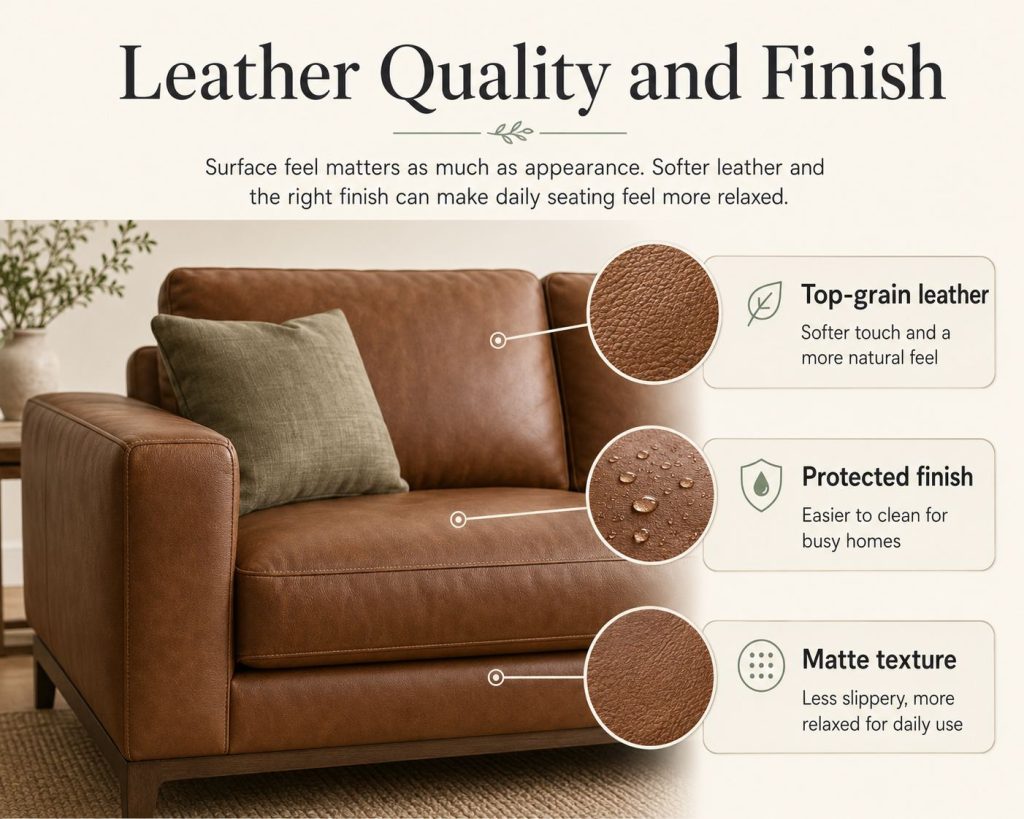
A comfortable leather couch is not comfortable because of leather alone. The leather affects surface feel, but the real sitting experience comes from the full structure: cushion fill, seat depth, back angle, arm height, and how the sofa supports your body.
When judging whether are leather couches comfortable applies to a specific sofa, look beyond the product photo. The right question is not “Is this leather?” but “Does this leather sofa support the way I actually sit?”
Cushion Fill and Firmness
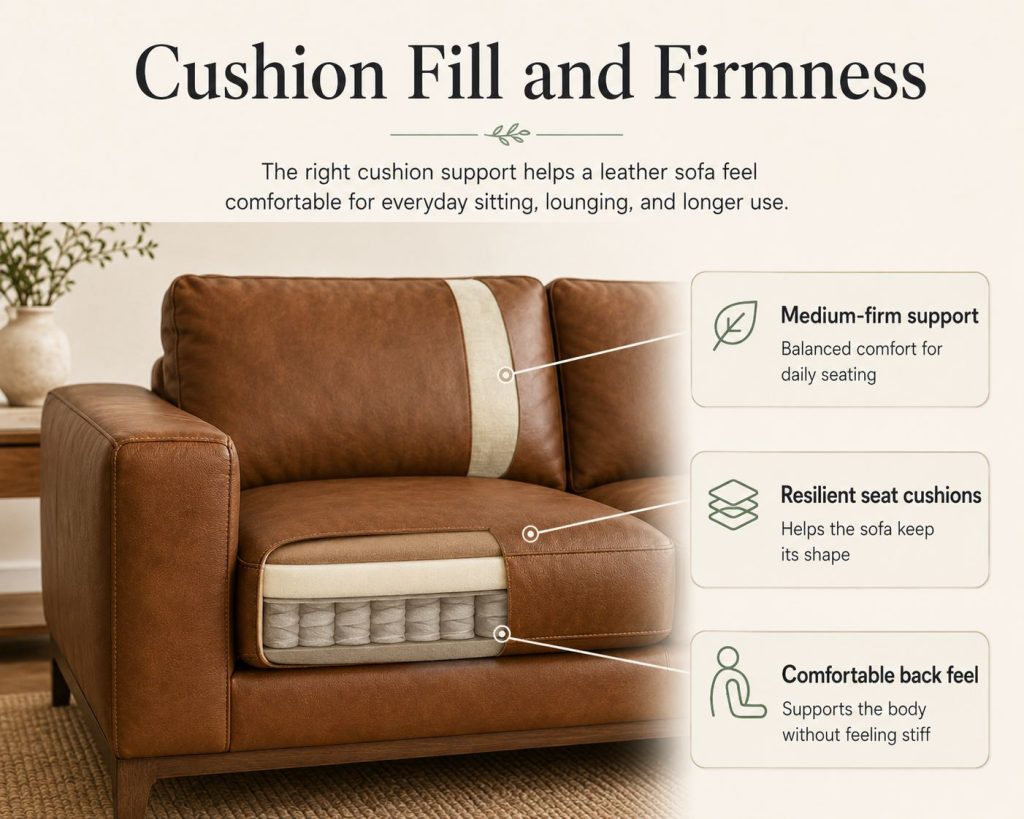
Cushions decide whether a leather couch feels supportive or stiff. Medium-firm cushions are often the safest choice for daily use because they support the hips and lower back without feeling hard. Very soft cushions may feel cozy at first, but they can lose shape faster or make it harder to sit upright.
For a living room sofa, look for cushions that feel stable when you sit down. You should not feel like you are sliding forward, sinking too deeply, or perching on top of the seat.
A comfortable leather couch should let you shift positions easily. You should be able to sit upright, lean back, or curl one leg under you without fighting the sofa shape.
Seat Depth, Height, and Back Support
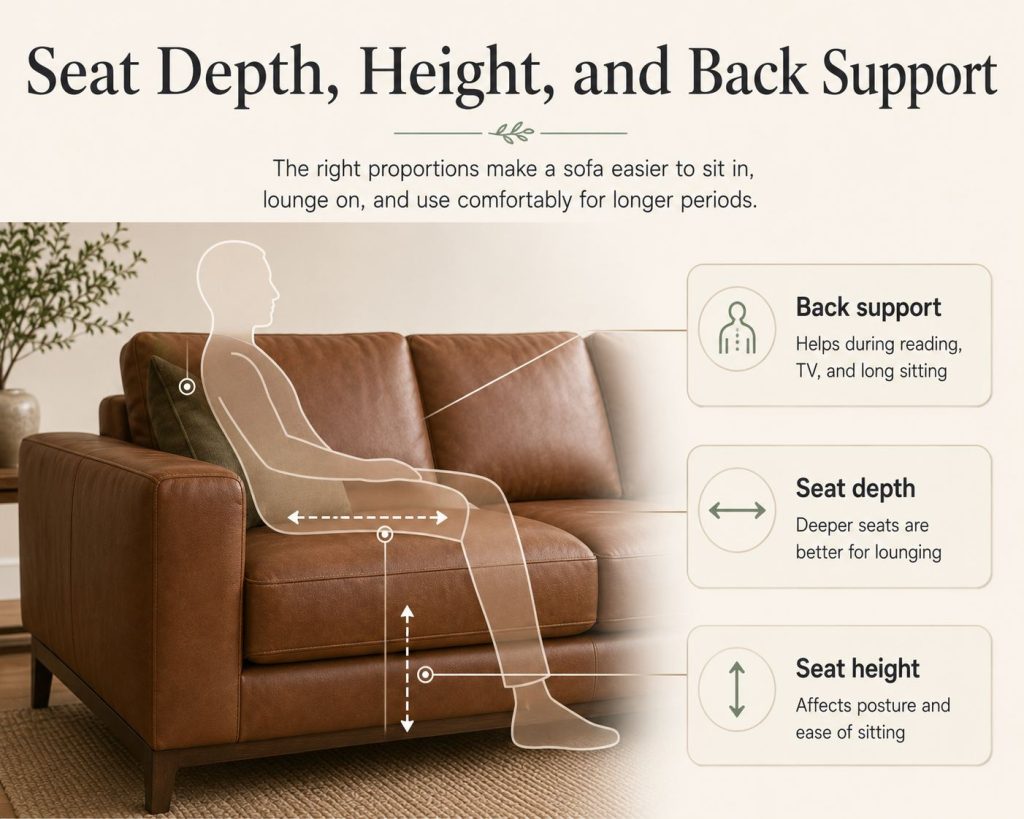
Seat depth is one of the most overlooked comfort details. A shallow seat is easier for upright sitting, especially for shorter users or formal living rooms. A deep seat works better for lounging, movie nights, and stretching out.
Back support matters just as much. Low-back leather sofas can look sleek, but they may not feel supportive during long sitting. Higher backs, angled backs, or adjustable headrests are better for people who read, watch TV, or work from the couch.
Use this quick comfort checklist before buying:
| Comfort Factor | What to Check | Why It Matters |
| Seat depth | Standard for upright sitting, deeper for lounging | Affects whether you feel supported or swallowed by the sofa |
| Cushion firmness | Medium-firm for daily use | Helps prevent sagging and lower-back discomfort |
| Back height | Higher or adjustable for longer sitting | Supports shoulders, neck, and upper back |
| Leather finish | Matte, textured, protected, or performance | Affects softness, breathability, and grip |
| Arm height | Low for lounging, higher for upright sitting | Changes comfort for napping, reading, or using pillows |
| Room fit | Check walkway and coffee table clearance | Prevents a comfortable sofa from making the room hard to use |
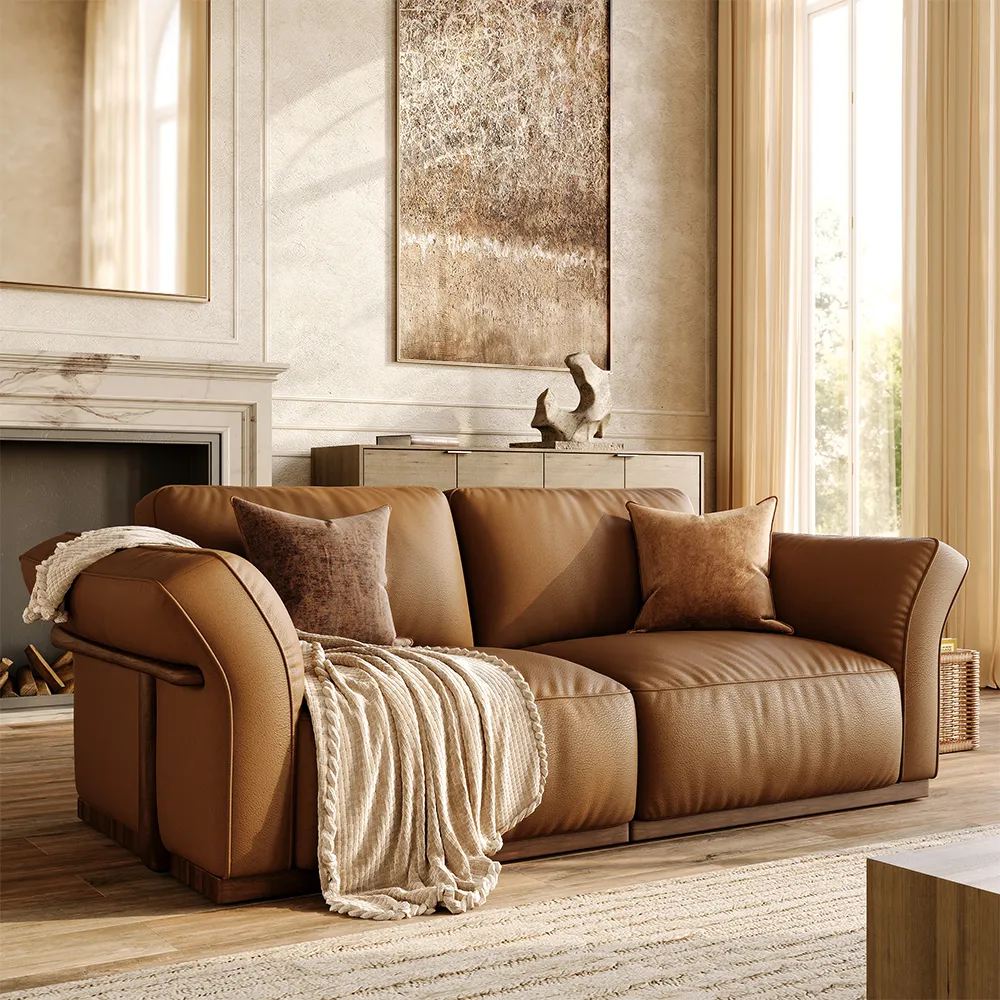
For a room where people gather, stretch out, and move around often, modular seating can also help. The Cronus-Brown Genuine Leather Modular Sofa suits living rooms that need flexible seating without losing a structured leather feel. Its top-grain leather, natural wood frame, and modular layout help solve the common problem of wanting both support and adaptable room flow.
Do Leather Couches Feel Hot, Cold, or Sticky?
Temperature feel is one of the biggest concerns behind the question are leather sofas comfortable. Leather can feel cool when you first sit down, especially in winter or in an air-conditioned room. It usually warms up with your body after a short time.
In summer, leather can feel warmer or slightly sticky if the room is humid, the sofa sits in direct sun, or the surface has a very smooth finish. This does not mean leather is always uncomfortable. It means the room environment and leather finish matter.
Here is a practical way to judge it:
If leather feels cold at first:
This is usually caused by winter air, air conditioning, or a cool room temperature. A soft throw blanket or textured pillow can make the first touch feel warmer and more inviting.
If leather feels sticky:
Humidity, bare skin, and a very glossy finish are usually the main reasons. Better airflow, lighter clothing, a matte leather surface, or a small textile layer can make daily lounging more comfortable.
If leather feels hot:
Direct sunlight and darker leather colors can make the surface warmer. Moving the sofa away from strong sun, adding curtains, or choosing a lighter leather tone can help reduce heat buildup.
If leather feels slippery:
A smooth finish, angled seat, or certain clothing fabrics can make the sofa feel less stable. A lumbar pillow, throw blanket, or lightly textured leather finish can improve grip and sitting comfort.
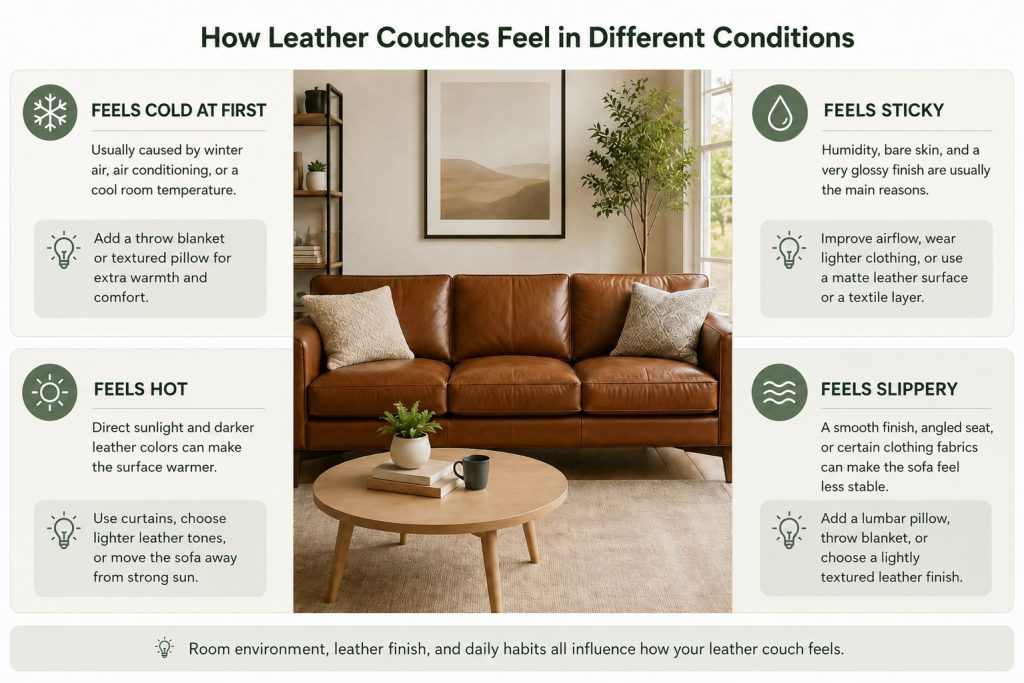
A leather couch placed near a sunny window may feel very different from the same couch in a shaded, climate-controlled family room. If your living room gets strong afternoon sun, lighter leather tones, curtains, or a new sofa placement can make a big difference.
A real-life example: in a family room where everyone gathers after dinner, a brown leather sofa can feel comfortable because spills wipe up quickly and the surface stays clean. But if the same sofa sits under direct sun all afternoon, the first few minutes of sitting may feel warmer than expected.
Leather vs Fabric Comfort: Which One Fits You Better?
Leather and fabric can both be comfortable, but they create different kinds of comfort. Fabric usually feels softer and warmer at first touch. Leather often feels smoother, more structured, and easier to keep clean.
If your top priority is a soft, blanket-like feel, fabric may be more natural for you. If your priority is support, durability, and easy cleanup, leather may be the better fit. For a deeper material comparison, the decision often comes down to leather vs fabric sofa comfort, not just style.
Here is a simple comparison:
| Need | Leather Couch | Fabric Sofa |
| Soft first impression | Usually more structured | Usually softer |
| Easy cleanup | Strong advantage | Depends on fabric type |
| Pet hair | Easier to wipe away | Can cling to fibers |
| Long sitting | Good if cushions support well | Good if cushions do not sag |
| Temperature feel | More affected by room conditions | More consistent textile feel |
| Visual style | Polished and clean | Casual, cozy, varied |
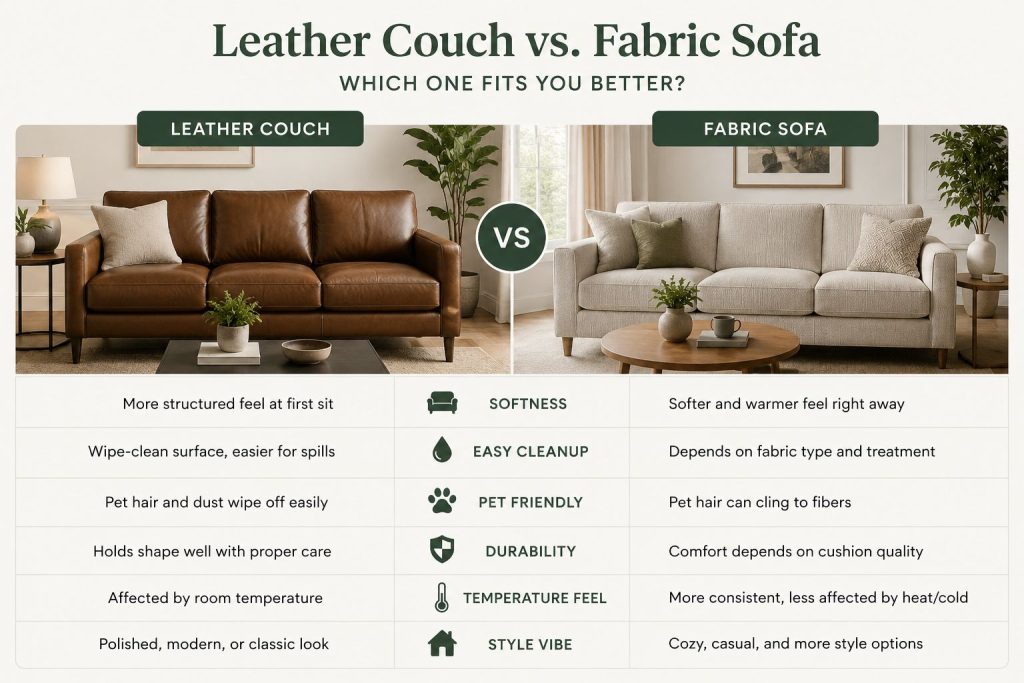
The right choice depends on what you mean by comfort. For some buyers, comfort means soft and warm. For others, it means supportive, clean, and easy to live with.
When Is a Leather Couch the Right Choice?
A leather couch is a strong choice when you want comfort that feels supportive rather than overly plush. It is especially useful in rooms where the sofa gets used every day and needs to stay presentable.
Leather may be right for you if:
- You like a sofa that holds its shape
- You want easier cleanup after snacks or drinks
- You have pets and want less trapped hair
- You prefer a polished modern, mid-century, or warm classic look
- You sit upright as often as you lounge
- You want the sofa to age with character instead of looking worn too quickly
Leather is also worth considering for movie-night spaces, especially when paired with reclining features. A standard fixed sofa can feel fine for short sitting, but a reclining design gives more options for leg support, head support, and posture changes. If back and neck support are part of your decision, a reclining leather sofa supports your back more effectively when it has adjustable angles and proper lumbar contact.
A leather couch may not be the right choice if you want a very soft, sink-in texture from the first day, live in a very humid home without good airflow, or dislike the cool first-touch feeling of leather.
What Should You Check Before Buying a Leather Couch?
Before buying, test the sofa around how you live, not just how it looks online. A stylish leather couch can still be uncomfortable if the seat is too deep, the back is too low, or the cushions are too thin.
Use this buying checklist:
- Sitting style: Do you sit upright, lounge, nap, or watch TV for hours?
- Seat depth: Choose standard depth for upright sitting and deeper seats for lounging.
- Cushion support: Medium-firm cushions usually work best for everyday comfort.
- Back support: Look for enough height or adjustability if you sit for long periods.
- Leather surface: Choose softer, matte, or textured leather if slipperiness worries you.
- Room temperature: Avoid placing leather directly in strong sun or near heat vents.
- Cleaning needs: Choose protected or performance finishes for busy homes.
- Room layout: Measure walkways, doorways, stairs, and the distance to the coffee table.
- Lifestyle fit: Pets, kids, guests, and eating habits should all influence the material.
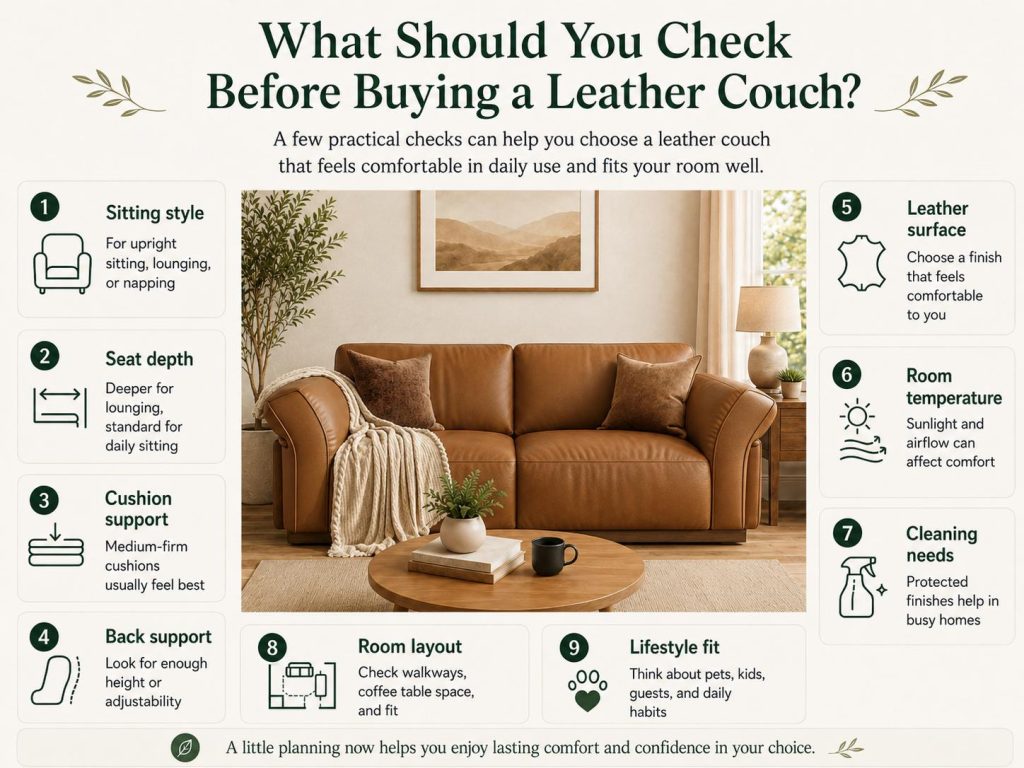
For daily living, comfort is not only about how the sofa feels in the first five minutes. It is also about whether the couch stays easy to use after months of sitting, cleaning, rearranging pillows, and moving around it. A leather sofa that fits the room and your habits will usually feel better than one chosen only for appearance.
Conclusion
So, are leather couches comfortable? Yes, they can be, but the best ones are comfortable because of the whole design, not just the leather surface. Look for supportive cushions, the right seat depth, a leather finish that matches your climate, and a frame that fits how you sit every day. Fabric may feel softer at first, but leather can offer a cleaner, more structured, and long-lasting kind of comfort. The right leather couch should support your routine, your room, and the way your home actually gets used.
FAQ
How long does it take for a leather couch to break in?
A leather couch may take a few weeks to a few months to break in, depending on leather type, cushion firmness, and use frequency. High-quality leather often softens gradually. However, if the frame, seat depth, or cushion support feels wrong from the start, break-in time will not fully fix the problem.
Can a leather couch be comfortable for napping?
Yes, a leather couch can be comfortable for napping if it has enough seat depth, stable cushions, and armrests that do not sit too high or too hard. A chaise, ottoman, or reclining feature helps because your legs and back can rest in a more natural position.
Are performance leather couches comfortable?
Performance leather couches can be comfortable, especially for homes that need easy cleaning and a leather-like look. They may not feel as naturally breathable as top-grain leather, but many options offer a smooth surface, practical durability, and softer cushioning. Always check the cushion structure, not only the material name.
How can I tell if a leather couch will be comfortable when shopping online?
Check the seat depth, cushion firmness, back height, arm height, and upholstery description before buying online. A comfortable leather couch usually has medium-support cushions, enough back support, and a seat depth that matches how you sit. Product photos can show style, but dimensions and cushion details tell you more about daily comfort.
What makes a leather couch uncomfortable over time?
A leather couch usually becomes uncomfortable over time because of cushion sagging, poor frame support, dried leather, wrong seat depth, or weak back support. The upholstery alone is rarely the only issue. Before buying, prioritize cushion quality, frame construction, and body fit so the sofa supports daily use after the first few months.
What seat depth works best for a leather couch used for lounging?
A deeper seat usually works better for lounging, while a standard seat is better for upright sitting. If you like curling up, watching movies, or using the sofa for casual naps, compare the listed seat depth with your body height and room layout. A u003ca href=u0022https://www.povison.com/blog/buying-guide/how-to-choose-the-right-deep-seated-sofa.htmlu0022 target=u0022_blanku0022 rel=u0022noreferrer noopeneru0022u003edeep seated sofa measurement guideu003c/au003e can help you judge fit before buying.


