 By Kelvin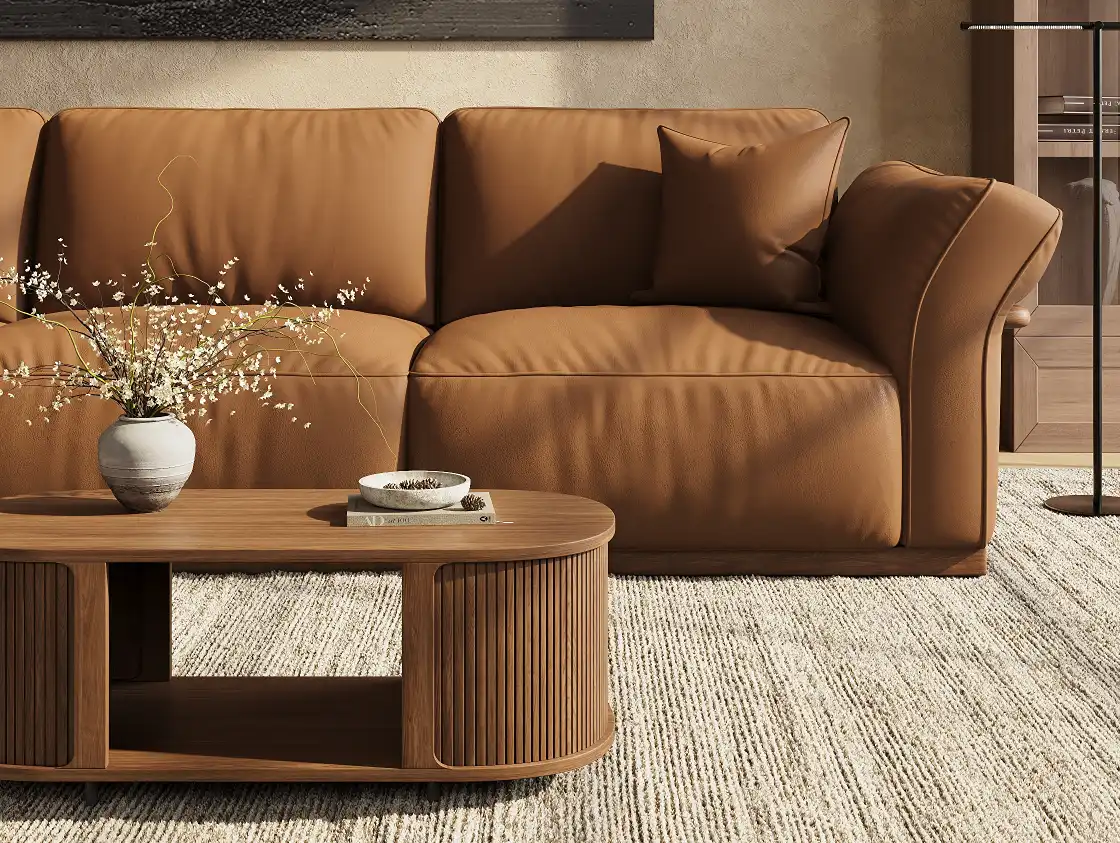
Choosing the best leather for a sofa means looking beyond price or softness. The right choice depends on how the leather handles daily wear, spills, sunlight, pets, and routine care. This guide explains how leather grade and finish work together, then helps you match the right combination to your home.
Table of Contents
What Is the Best Leather for a Sofa?
For most homes, the best leather for a sofa is top-grain leather with a semi-aniline or protected finish. Top-grain leather provides a strong balance of comfort, durability, and appearance. A semi-aniline finish preserves more natural texture, while a protected or pigmented finish offers greater resistance to spills, stains, and visible wear.
- Best overall: top-grain leather with a semi-aniline finish
- Best for pets and kids: protected or pigmented top-grain leather
- Best for natural character: full-grain leather
- Best for low-maintenance use: protected top-grain leather
- Less suitable for a main sofa: bonded leather or products with unclear leather content
The highest grade is not automatically the most practical choice. Grade describes the leather itself, while finish has a greater influence on cleaning, stain resistance, and scratch visibility.
Which Leather Grades Matter Most for a Sofa?
Leather grade describes which part of the hide is used and how much of its natural surface remains. It affects strength, texture, appearance, aging, and price. However, labels such as “genuine leather” do not reveal the complete quality of a sofa. You also need to know the finish and which parts of the sofa are covered in real leather.
| Leather Grade | Best For | Main Advantage | Watch Out For |
|---|---|---|---|
| Full-grain leather | Premium sofas and buyers who value natural aging | Retains the natural grain and develops patina | Expensive and more likely to show marks |
| Top-grain leather | Everyday sofas requiring quality and practicality | Durable, refined, and available in several finishes | Quality still varies by finish and coverage |
| Corrected-grain leather | Busy homes that prefer a uniform, protected surface | Consistent appearance and easier maintenance | Less natural texture than minimally treated leather |
| Split leather | Occasional-use or lower-cost furniture | Real leather at a lower price | Less durable than full-grain or top-grain leather |
| Bonded leather | Short-term, budget-focused use | Low initial cost | Greater risk of peeling, cracking, and uneven wear |
“Genuine leather” means that real leather is present, but it does not identify the hide layer, finish, thickness, or panel coverage. When a product uses this label, ask whether the material is top-grain, corrected-grain, or split leather and where it appears on the sofa.
If you are comparing the two most common premium options, this top grain vs full grain leather sofa guide explains how they differ in texture, aging, scratch visibility, and care.
Which Leather Finish Fits Daily Use?
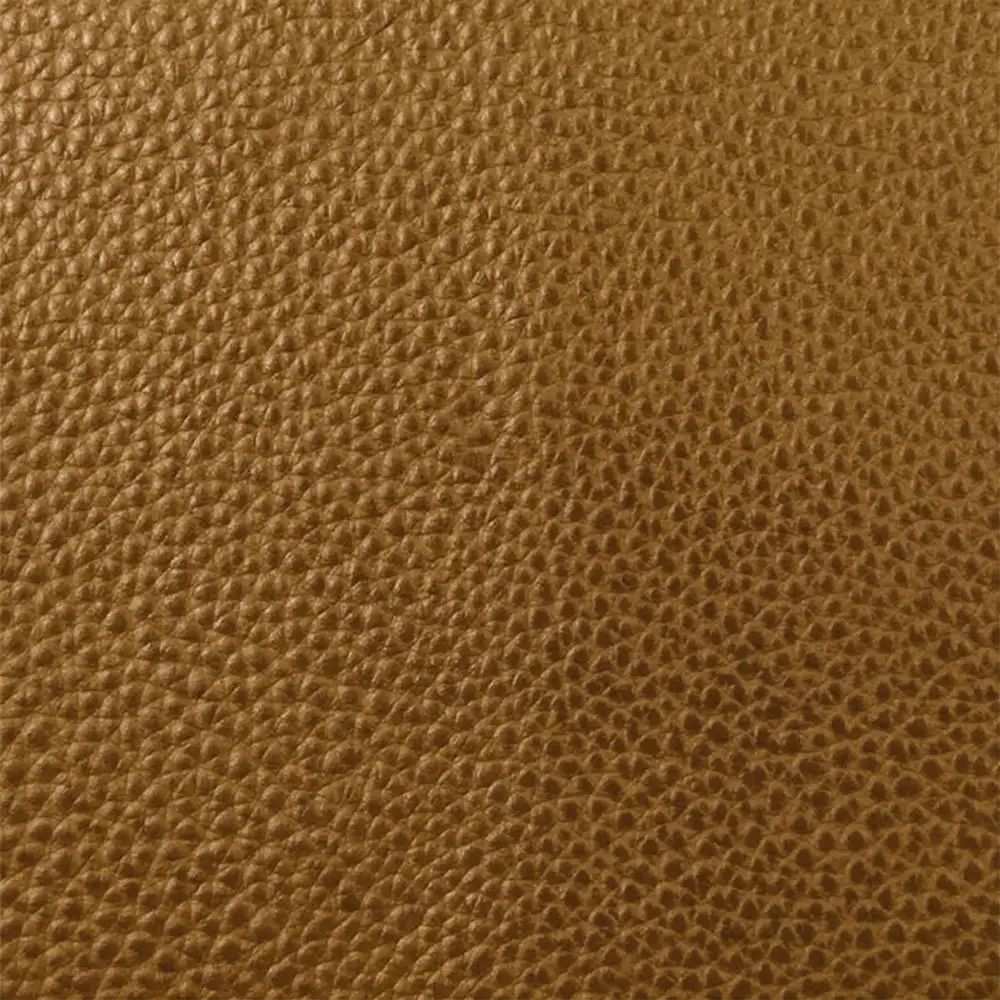
Leather finish describes how the surface is dyed, treated, and protected. It affects softness, stain resistance, color consistency, cleaning, and how easily scratches appear. This is why two top-grain leather sofas can perform very differently in the same home.
| Leather Finish | Best For | Main Advantage | Watch Out For |
|---|---|---|---|
| Aniline leather | Low-traffic rooms and buyers who prefer a natural feel | Soft texture and visible natural grain | Absorbs spills and shows scratches more easily |
| Semi-aniline leather | Daily-use sofas that still need a premium feel | Balances softness with light surface protection | Less stain-resistant than fully protected leather |
| Pigmented or protected leather | Pets, children, and high-traffic living rooms | Easier to clean and more resistant to stains and fading | Feels less natural than aniline leather |
| Faux leather | Budget-conscious or animal-free households | Consistent appearance and easy routine cleaning | Durability and breathability vary by material quality |
“Performance leather” is not a standardized leather grade. Depending on the seller, it may describe protected real leather, coated leather, leather match, or a synthetic material. Before buying, confirm the material composition, surface treatment, and leather coverage instead of relying on the performance label alone.
If you are interested in a more natural leather finish, this aniline leather guide explains its appearance, softness, maintenance needs, and why it is usually better suited to lower-traffic spaces.
How Should You Choose Leather by Room and Daily Use?
A sofa is not used the same way in every home. A leather couch in a quiet reading room has different needs from a sectional in a media room. This section connects leather choice to real-life use, so the decision is less about labels and more about what happens on the sofa every week.
For a Busy Family Room
For a sofa used throughout the day, prioritize a protected or semi-aniline top-grain leather that can handle repeated contact, body oils, and occasional spills. Check the care instructions before buying, since even durable leather may require spills to be blotted immediately.
Medium tones such as camel, brown, taupe, or khaki usually conceal minor scuffs and uneven wear better than white or very dark colors. They are especially practical when family members repeatedly use the same seat.
For Pets and Kids
Choose protected or pigmented leather with a lightly textured surface. The protective coating gives you more time to address spills, while subtle texture can make small claw marks and scuffs less noticeable. Avoid delicate aniline leather if visible scratches would bother you.
Before buying, request a swatch and ask whether pet damage, dye transfer, or household spills are excluded from the warranty. No real leather is claw-proof, so the finish, color, and warranty matter more than a general “pet-friendly” claim.
For Formal Living Rooms
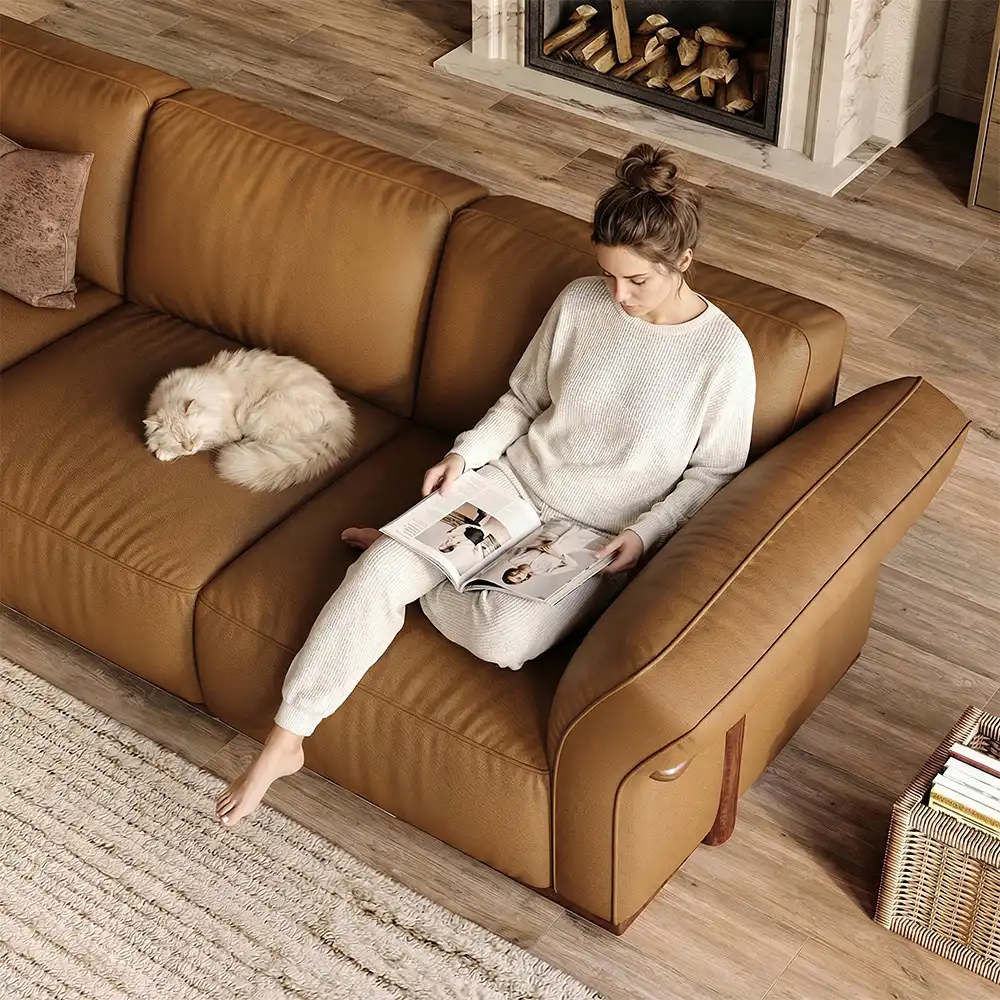
A lower-traffic living room gives you more freedom to prioritize natural texture and aging. Choose full-grain or aniline leather if you appreciate visible markings and patina. Choose top-grain leather when you want a smoother, more uniform appearance with less visual variation.
The Cronus Genuine Leather Modular Sofa offers the more uniform route. Its premium top-grain leather creates a soft, refined surface that grows more supple over time. Modular pieces allow the seating arrangement to change with the room, while the 26-inch seat depth supports relaxed conversation and reading. It suits buyers who value natural leather character but prefer a cleaner, more consistent appearance.
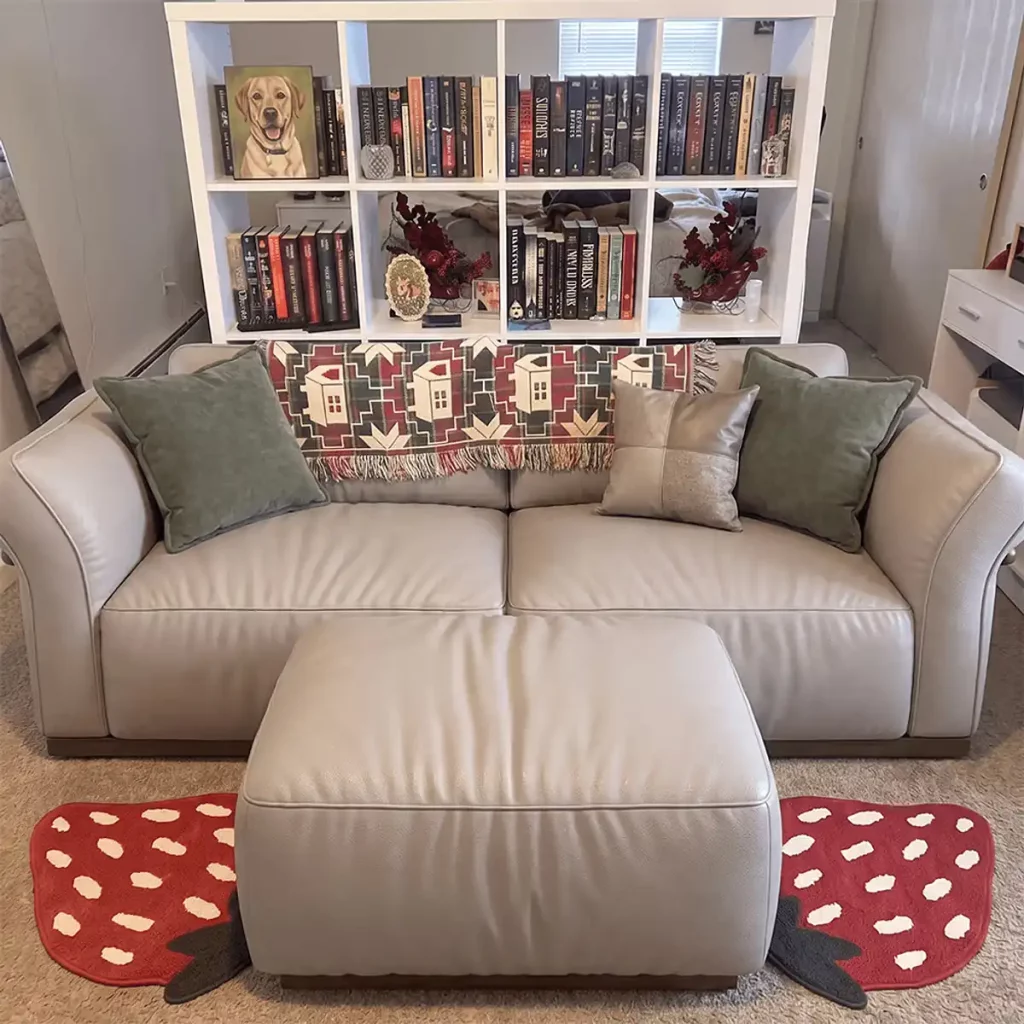
Cronus Genuine Leather Modular Sofa
A smart choice for shoppers who want real leather character with a cleaner, more uniform look than full-grain leather.
For Media Rooms or Reclining Setups
Reclining sofas experience additional friction around footrests, headrests, folds, and seat fronts. Check that the leather type is clearly identified, then consider whether the cushioning and adjustment range will remain comfortable during extended sitting. Dark or medium tones can also make wear around moving sections less noticeable.
The Cygnus Power Sofa Bed combines top-grain leather with powered lounge, recline, and sleep modes. Its wide, deep seating allows users to change positions instead of remaining upright for extended periods, while high-density foam and a reinforced frame provide continued support. The leather upholstery supplies the softness expected from premium leather, making Cygnus suitable for buyers who want both material quality and adjustable comfort.
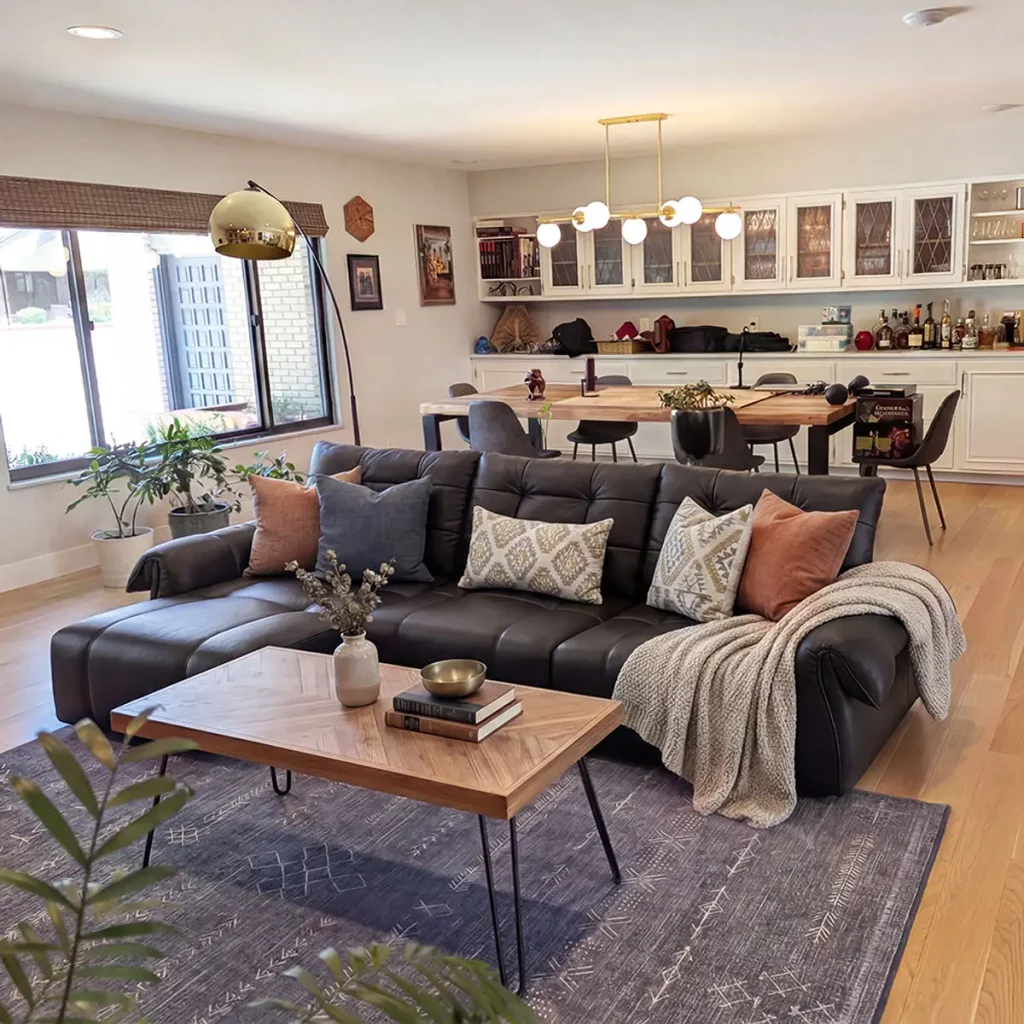
Cygnus Power Sleeper Sofa
A strong choice when premium leather needs to support everyday lounging, not just formal seating.
What Should You Check Before Buying a Leather Sofa?
Product pages often use similar leather terms, but two sofas with the same label may differ significantly in finish, coverage, maintenance, and long-term performance. Confirm the following details before buying:
- Leather grade: Ask whether the upholstery is full-grain, top-grain, corrected-grain, split, or bonded leather.
- Surface finish: Confirm whether the leather is aniline, semi-aniline, pigmented, or otherwise protected.
- Leather coverage: Confirm whether real leather covers the entire sofa, all visible surfaces, or only the seating areas. If the sofa uses leather match, ask whether the sides and back are synthetic.
- Care requirements: Review the approved cleaning and conditioning instructions before choosing.
- Material sample: Request a swatch when possible so you can compare the color, texture, and surface protection in your room.
Watch for these warning signs:
- The description only says “genuine leather.”
- The leather grade or finish is not disclosed.
- The product does not identify which panels use real leather.
- The seller uses “Italian leather” or “performance leather” without explaining the material.
- The product claims that real leather is completely scratch-proof.
- No material-specific care instructions are provided.
For daily use, prioritize clear material information over luxury language. A reliable product description should explain the leather grade, finish, panel coverage, and cleaning requirements.
Conclusion
For most households, the best leather for a sofa is top-grain leather with a finish suited to the room. Semi-aniline offers a balance of natural feel and light protection, while pigmented or protected leather is more practical for spills, pets, and frequent use. Full-grain leather remains better suited to buyers who value natural variation and patina.
Whatever you choose, verify the grade, finish, leather coverage, and care instructions rather than relying on terms such as “genuine,” “Italian,” or “performance” leather.
Q&A
Is leather match a bad sign on a sofa?
Leather match is not always bad, but it should be clearly explained before you buy. It usually means real leather is used on touch points, while matching synthetic material is used on sides or backs. This can lower cost, but it may age differently, so check panel details if the sofa will sit in an open layout.
Should I choose real leather or faux leather for a low-use room?
Faux leather can make sense for a low-use room, small apartment, home office, or budget setup. It usually costs less and can be easy to wipe, but durability and breathability vary. For a main family sofa used every day, real top-grain or protected leather is usually a stronger long-term direction.
Do all leather sofas need conditioner?
No. Some real leather benefits from occasional conditioning, but protected leather, performance leather, and faux leather may not need traditional conditioner. Always follow the brand’s care instructions first. Over-conditioning can leave residue, attract dust, or change the surface feel.
Does bonded leather peel over time?
Bonded leather can peel or crack because it is made from leather fibers bonded to a backing and covered with a surface coating. Heat, friction, body oils, and frequent use can cause that coating to separate over time. It may suit temporary or low-use furniture, but it is generally not the best choice for a main sofa used every day.


[…] while top-grain leather usually offers a more refined, practical balance for daily use. This guide to choosing the best leather for a sofa explains grades and finishes in more […]
[…] strong frames, comfortable support, realistic dimensions, and clear care guidance. A full grain leather sofa may appeal to buyers who love natural character, while top grain leather sofas often of… homes. For shoppers who want leather comfort, modular function, and a more ready-to-live-in […]
[…] more serious material failure. If you want to compare leather grades against actual household use, best leather for a sofa by daily use separates grade and finish instead of treating all real leather as one […]
[…] a fuller material comparison, choosing the best leather for a sofa by daily use explains how grade and finish affect everyday […]
[…] best leather for a sofa based on daily use should therefore be evaluated alongside the frame, cushion system, seams, and expected traffic. A […]