 By Kelvin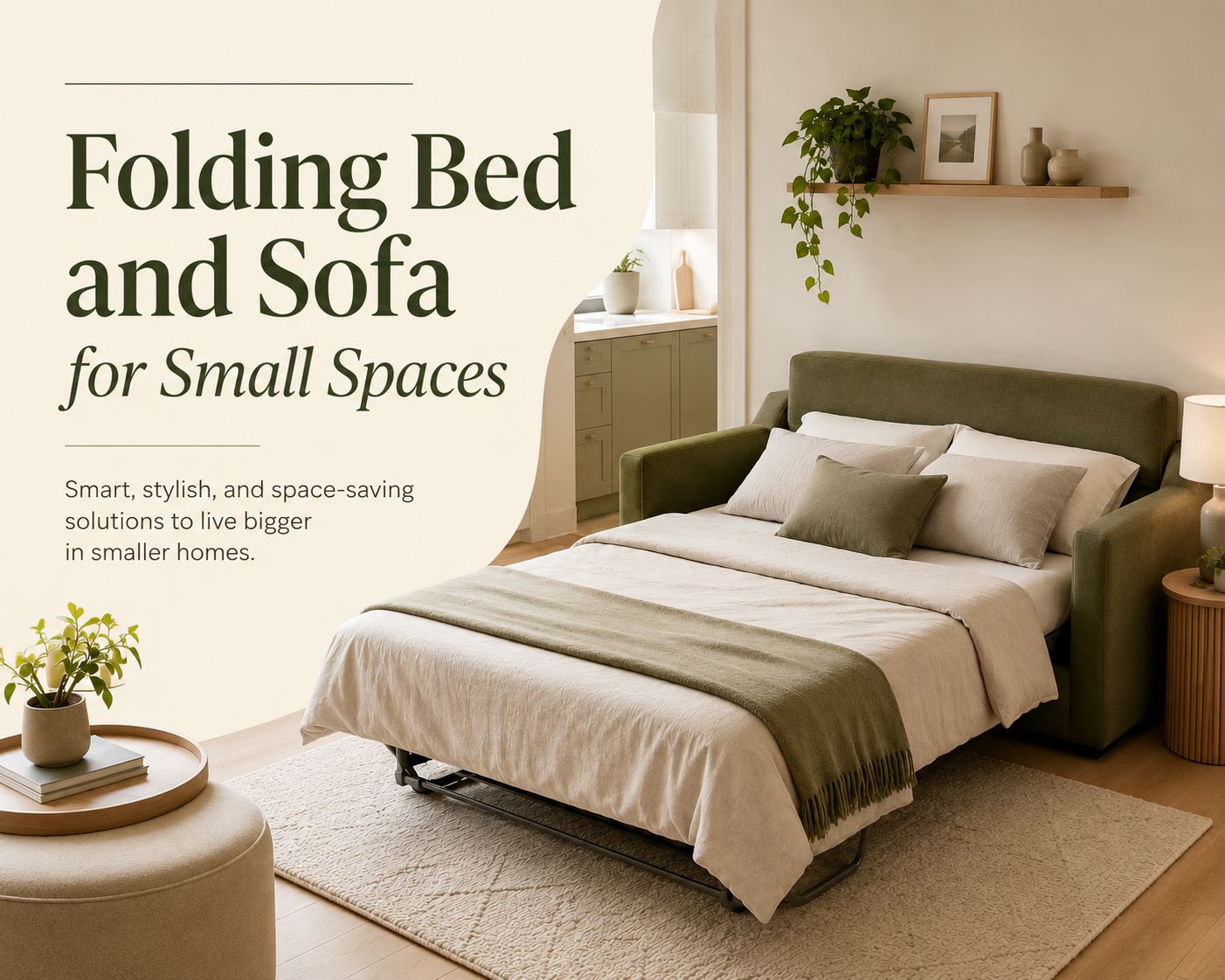
Introduction
When you do not have a guest room, every overnight visit becomes a space problem. A folding bed and sofa can help if you need one piece of furniture that works as daily seating and a temporary sleep spot without making your living room feel crowded. This guide focuses on the real questions buyers ask before choosing one: Will guests sleep comfortably? Will it open in a small room? Is it easier than an air mattress? And what should you check before buying so the sofa bed actually fits the way you live?
Table of Contents
When Does a Folding Bed and Sofa Make Sense?
A sofa bed is not useful just because it folds. It becomes useful when it solves a specific problem in your home. Before looking at style, fabric, or price, think about how often you host, who will sleep on it, and how much floor space you can give up at night.
You Do Not Have a Guest Room
If your parents visit twice a year, a friend stays over after dinner, or your sibling needs a weekend place to sleep, keeping a separate bed may not make sense. A guest-ready sofa lets your living room handle occasional sleep without turning part of your home into an unused bedroom.
This is where a sofa bed for small spaces works better than a spare mattress in a closet. It earns its place every day as seating, then becomes a bed only when needed.
Your Living Room Has to Do More
Small apartments often ask one room to do several jobs. The same area may be a TV room, reading corner, home office, and guest space. A regular sofa can handle sitting and lounging, but it usually cannot give an adult a flat, supportive place to sleep.
A space saving sofa bed is most useful when it still looks like a real sofa when closed. If it only feels like backup bedding, you may get the sleep function but lose the everyday comfort you actually use most.
You Want Something Less Temporary Than an Air Mattress
Air mattresses are easy to store, but they can feel like an emergency plan. They need setup time, floor space, bedding, inflation, and deflation. They can also lose firmness overnight.
A folding sofa bed feels more permanent because it is already part of the room. For a couple in a one-bedroom apartment who hosts family during the holidays, that difference matters. The guest setup can be ready in minutes without pulling boxes from storage.
Where Small-Space Sofa Beds Usually Go Wrong
Most regrets come from the same problem: the buyer checked how the sofa looked, but not how it worked when open. A small-space sleeper should be judged in both modes. It has to sit well during the day, sleep well at night, and move between the two without becoming a chore.
| Common Problem | What to Check Before Buying |
| Too thin for sleeping | Cushion thickness, foam support, and whether the sleep surface feels flat |
| Hard to open or close | Manual pull-out, click-clack, trundle, or power mechanism |
| Larger than expected | Full open depth, not just closed sofa width |
| Awkward in the room | Coffee table placement, walkway clearance, and TV distance |
| Looks too temporary | Arm shape, upholstery, back design, and closed sofa silhouette |
The Sleep Surface Feels Too Thin
A thin cushion may be fine for one night, but guests will notice pressure points if the surface is uneven or too firm. Check whether the sofa bed uses a real mattress, layered foam, or the same seat cushions as the bed surface. Also check if there is a hard bar, deep seam, or gap in the middle.
The Room Works by Day but Not by Night
A sofa can look perfectly sized when closed and still become a problem when opened. Before buying, mark the full open depth on the floor with painter’s tape. Then move around it as if you were walking to the kitchen, bathroom, or hallway at night. If you have to step over the bed, the size is wrong for that spot.
The Mechanism Feels Like Work
Some sofa beds are easy to open once in a showroom but annoying at home. In a tight room, pulling, lifting, and aligning the frame can feel harder because you are working around a rug, table, or wall.
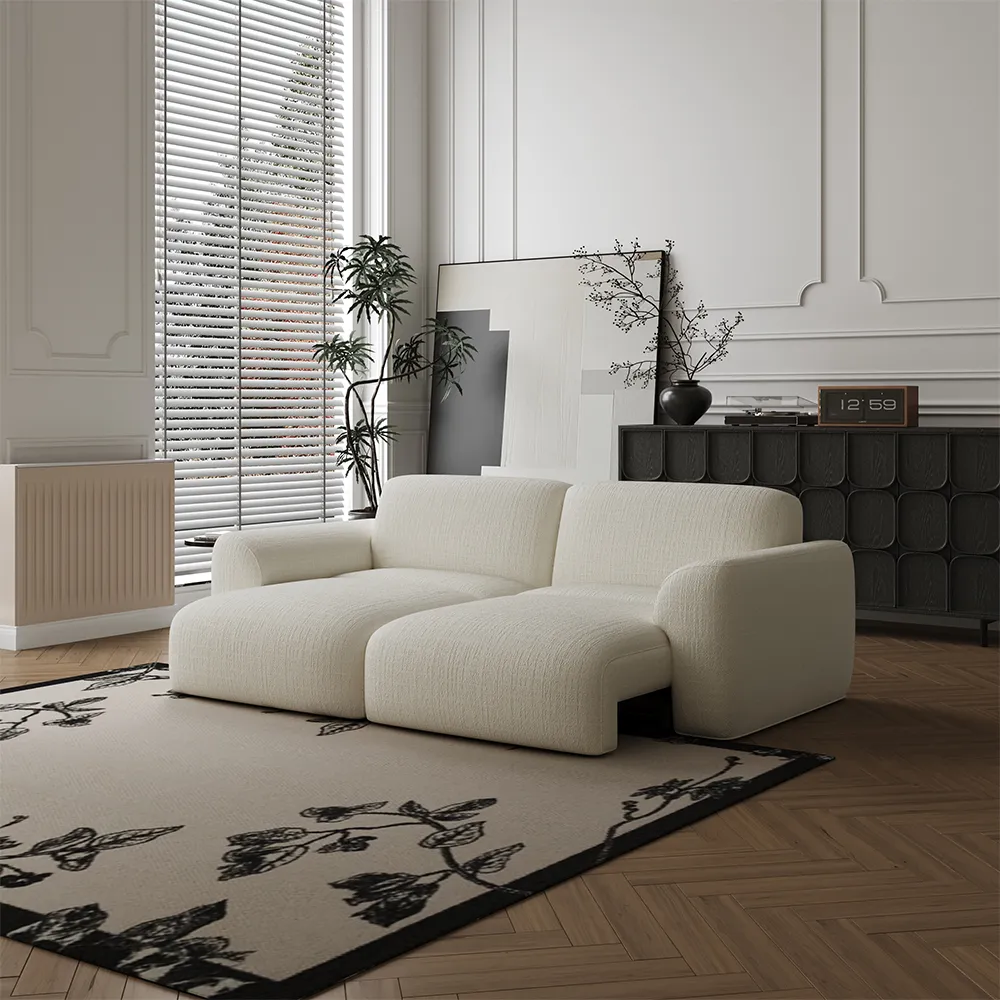
If your main concern is daily convenience, a power model can solve a different problem than a manual sleeper. The Aurora-Power Sofa Bed suits living rooms where guests stay occasionally but lounging happens often. Its remote-controlled retractable design reduces manual pulling, while the soft chenille fabric offers water-resistant, scratch-resistant, and pet-friendly practicality for busy homes.
How to Choose One That Sleeps Better
Comfort is the biggest difference between a sofa bed people use and one they avoid. For guest use, the goal is not hotel-level luxury. The goal is a stable surface, enough length, enough width, and no obvious pressure points after a full night’s sleep.
Look for these details:
- A sleep surface wide enough for the actual guest, not just the product label
- Cushioning that does not collapse at the edge
- A frame that feels stable when someone turns over
- A flat transition between seat, back, and extension areas
- Fabric that feels comfortable against sheets or light bedding
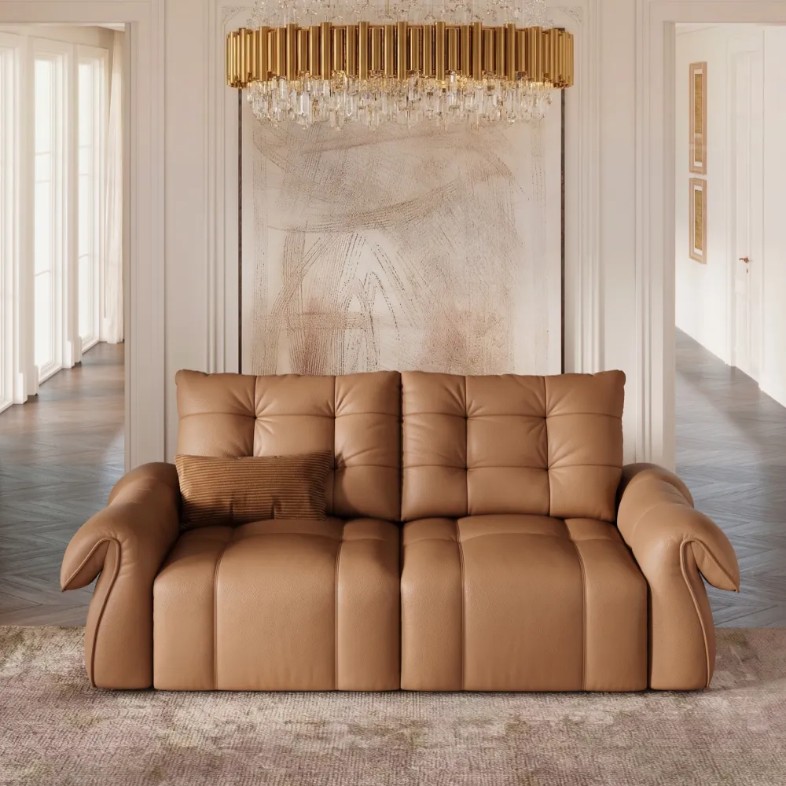
For homes that want a more polished main-sofa look, the Cygnus-Power Sofa Bed fits the “daily living room, occasional guest bed” scenario. It combines top-grain leather, remote-controlled conversion, deep seating, and a near-queen sleep surface, so it feels less like a hidden emergency bed and more like a sofa designed for real use.
If the sofa bed will be used by two adults, pay extra attention to the actual open dimensions and weight capacity. Product names such as queen, full, or oversized can be helpful, but they should not replace measurements.
How Much Space Do You Need to Open It?
A folding bed and sofa should be measured twice: once as a sofa and once as a bed. The open footprint is the number that decides whether it will work in a small apartment, home office, or living room.
Use this simple measuring process:
1. Measure the wall where the sofa will sit.
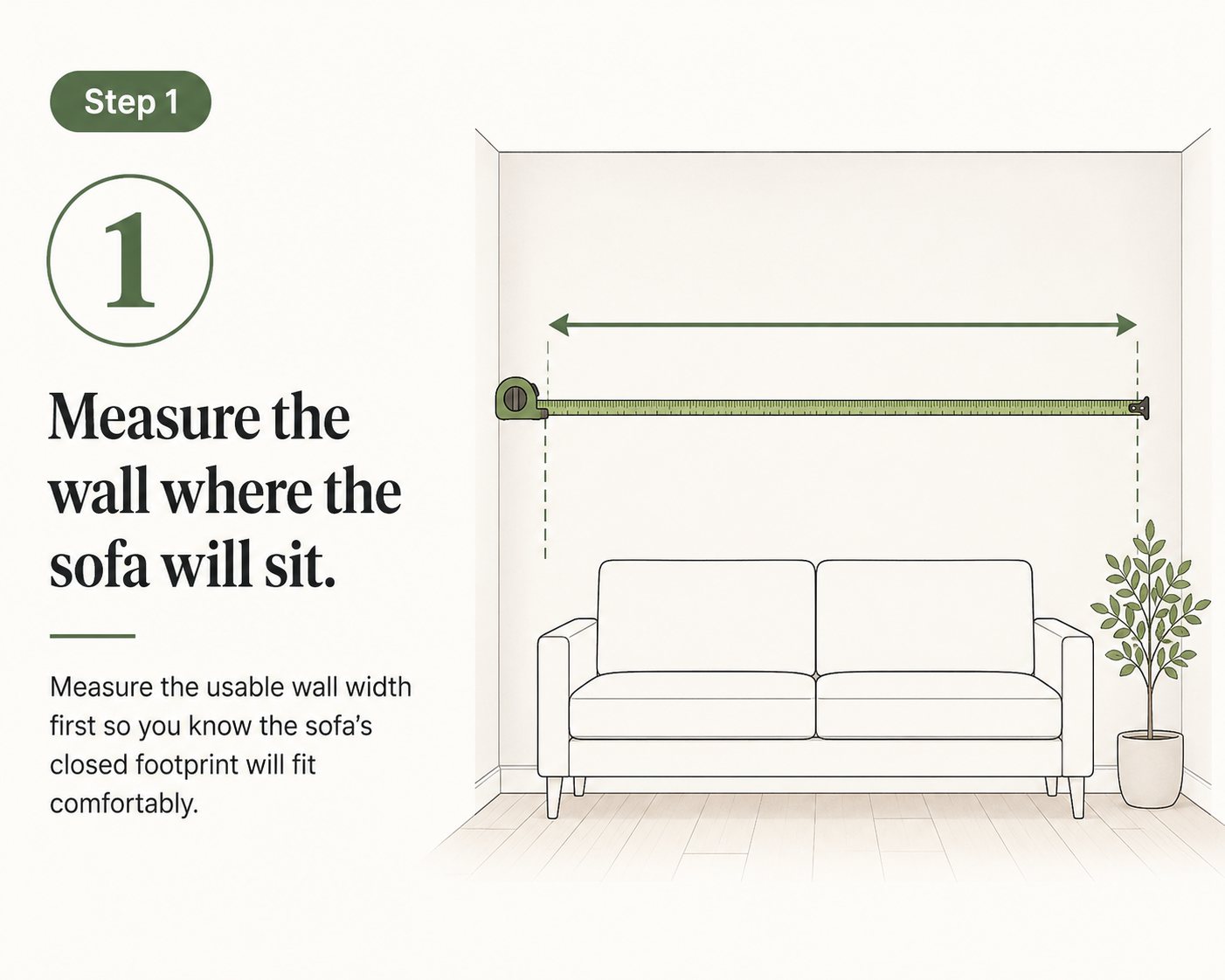
Measure the wall where the sofa will sit before checking any product size. This helps you understand the usable width of the room and avoid choosing a sofa that feels too large once placed against the wall. Leave some breathing room on both sides if you plan to add a side table, floor lamp, or plant nearby.
2. Check the sofa’s closed width and depth.
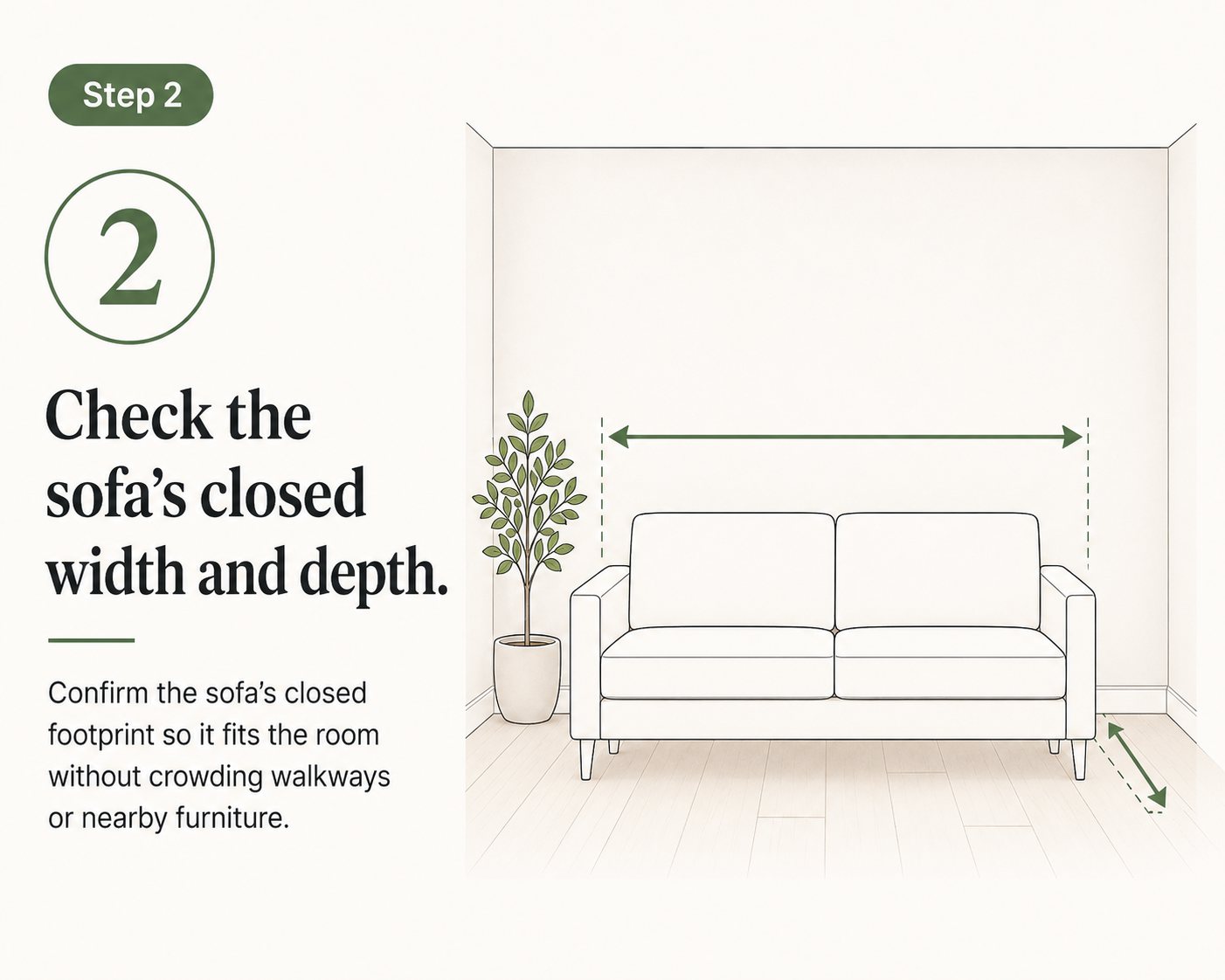
Next, check the sofa’s closed width and depth. A folding sofa bed should still work comfortably as a regular sofa during the day, so make sure it does not block walkways, crowd nearby furniture, or make the room feel tight before it is even opened.
3. Check the full open depth from the back of the sofa to the front edge of the bed.
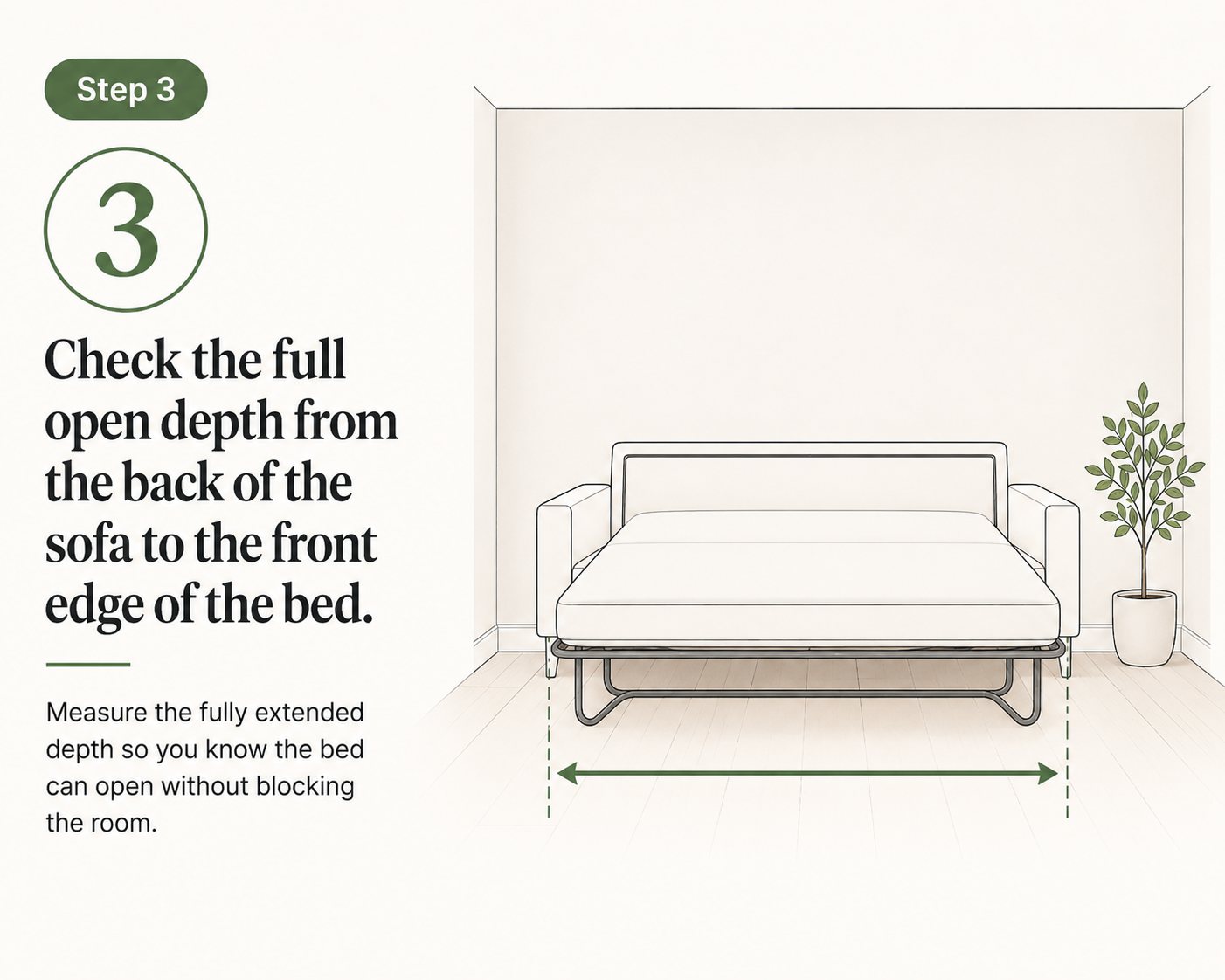
The most important measurement is the full open depth from the back of the sofa to the front edge of the bed. This tells you whether the sleeper function can fully extend without hitting a coffee table, TV stand, wall, or doorway. For small spaces, open depth matters more than the sofa’s closed size.
4. Leave a walkway around at least one side if guests need to get up at night.
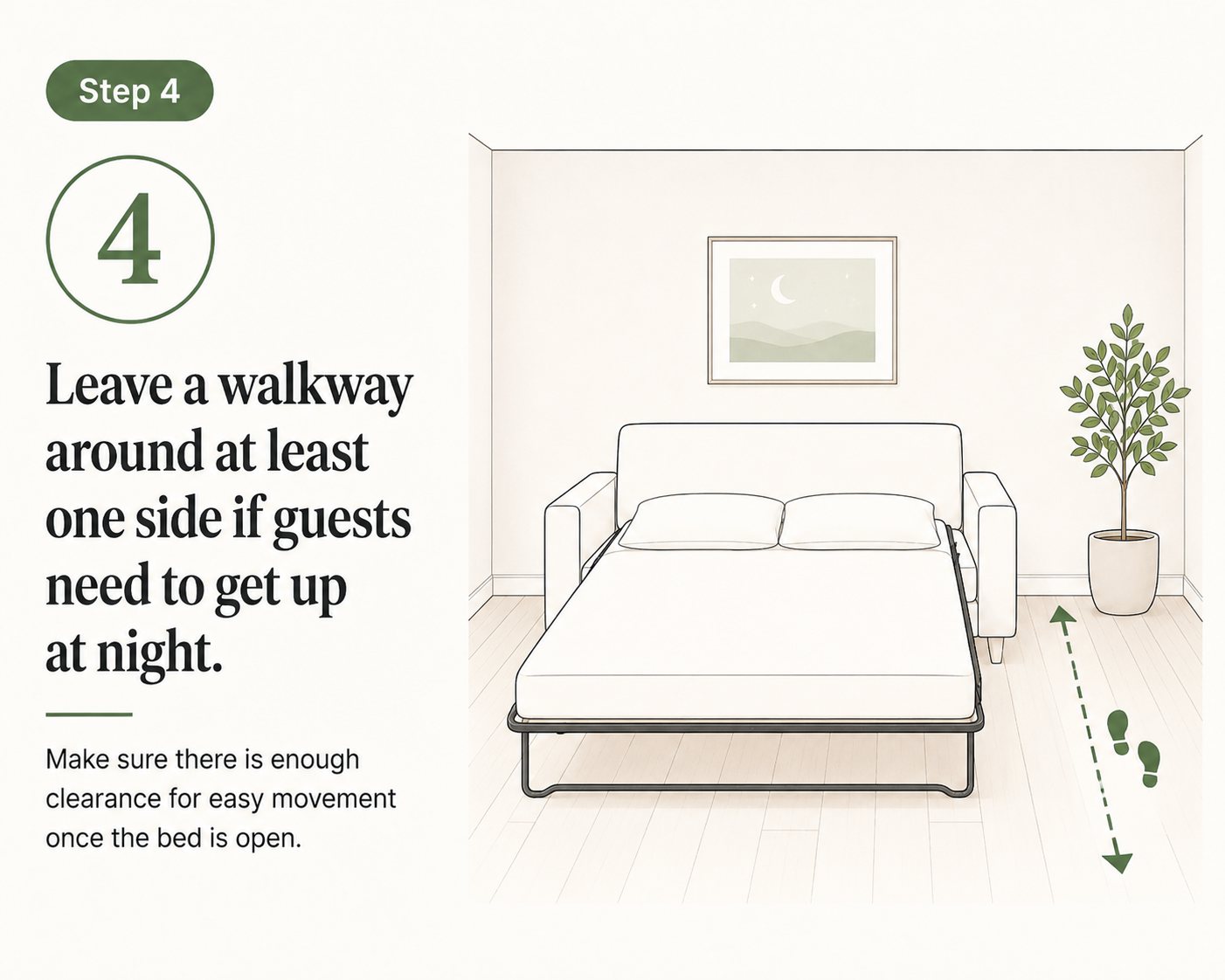
Once the sofa bed is open, leave enough walking space on at least one side. Guests should be able to get in and out of bed without stepping over furniture or climbing across the mattress. This is especially important if the sofa bed will be used by older guests, couples, or anyone staying more than one night.
5. Decide where the coffee table, ottoman, or floor lamp will move.
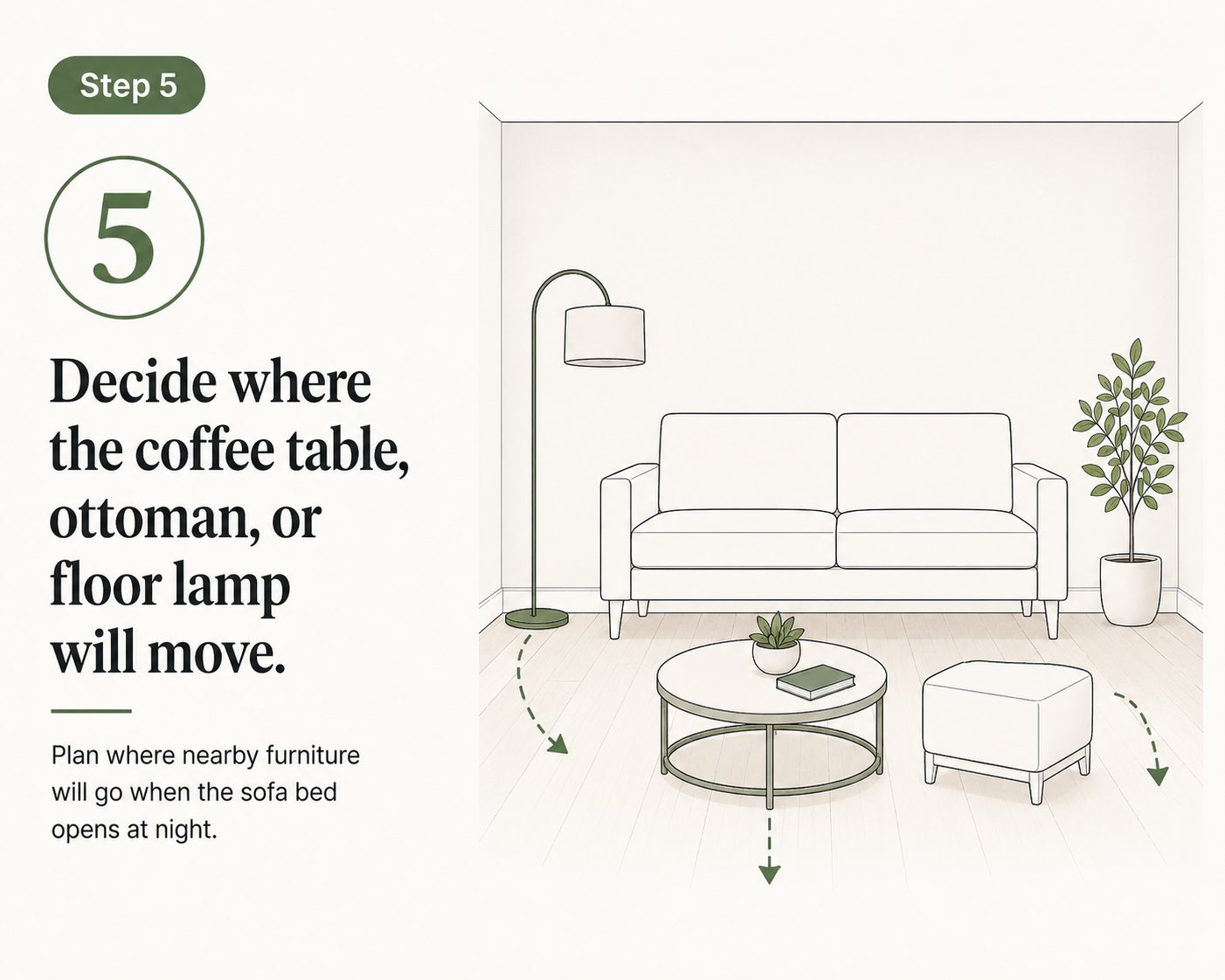
Before buying, decide where the coffee table, ottoman, floor lamp, or side table will move when the sofa bed opens. A sofa bed may technically fit the room, but it will feel inconvenient if every use requires heavy lifting or rearranging too much furniture. Lightweight, movable pieces work better in small rooms.
6. Measure the delivery path, including doors, stairs, elevator, and hallway turns.
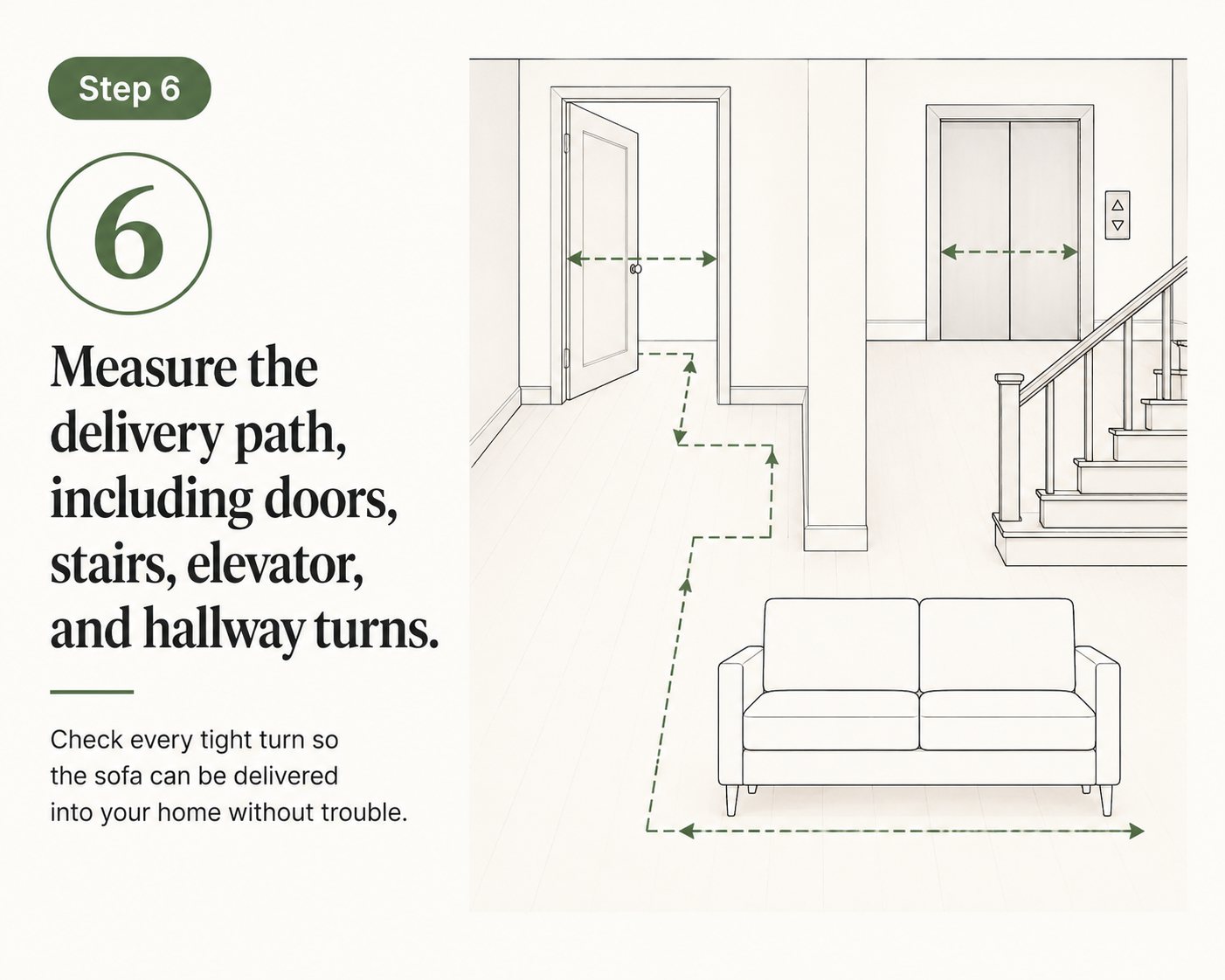
Finally, measure the full delivery path, not just the room. Check doorways, hallway turns, stairs, elevators, and tight corners to make sure the sofa can actually enter your home. This step is easy to overlook, but it can prevent delivery delays, returns, or installation problems after purchase.
Many buyers focus on the sofa’s closed size because that is what they see in product images. But for a sleeper sofa for small spaces, open dimensions matter more. A few extra inches can decide whether the bed clears the coffee table or blocks the room completely.
A useful rule: do not buy the largest sleep surface your room can technically hold. Buy the largest one your room can still move around when it is open.
Manual or Power: Which Solves Your Real Problem?
Manual sofa beds work well for occasional guests if the frame is simple, the room has enough clearance, and the person opening it has no trouble lifting or pulling. But if you use the sofa bed often, the mechanism becomes part of daily life.
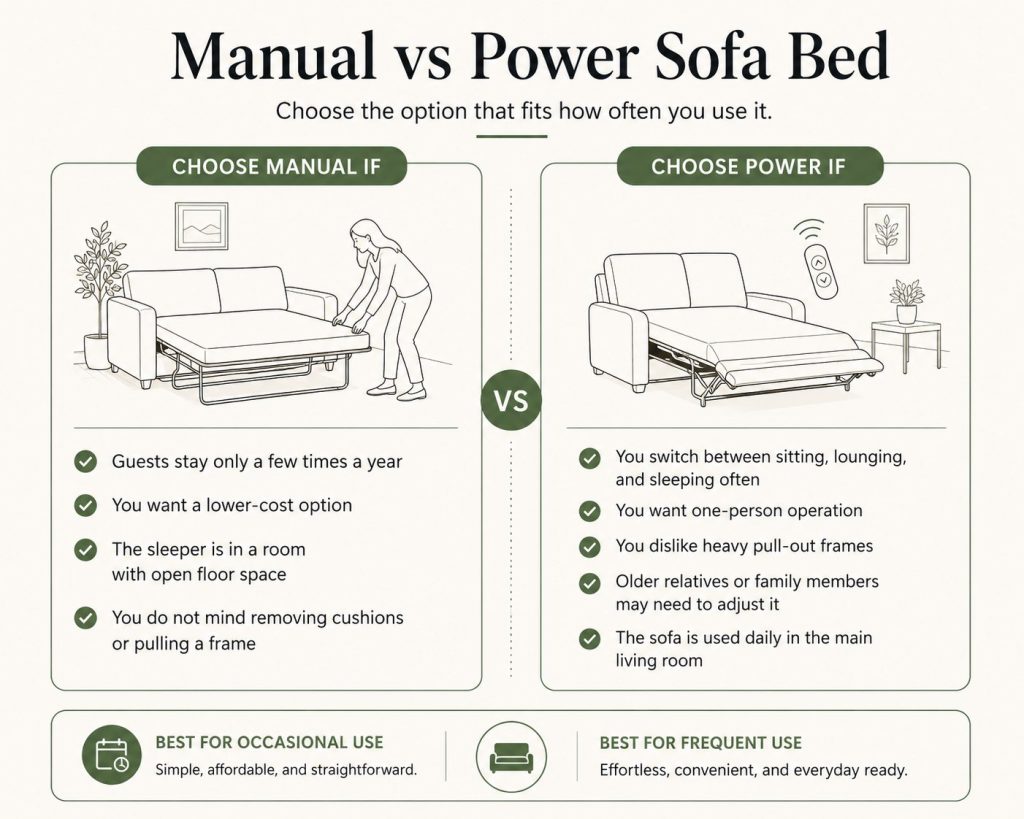
| Choose manual if: | Choose power if: |
- Guests stay only a few times a year
- You want a lower-cost option
- The sleeper is in a room with open floor space
- You do not mind removing cushions or pulling a frame
- You switch between sitting, lounging, and sleeping often
- You want one-person operation
- You dislike heavy pull-out frames
- Older relatives or family members may need to adjust it
- The sofa is used daily in the main living room
The value of an electric sofa bed for everyday use is not just the motor. It reduces the friction of using the sleep function. If opening the bed feels annoying, you will use it less, even if the sofa itself is comfortable.
Is It Better Than a Futon, Daybed, or Air Mattress?
The right answer depends on how your home is used. A futon, daybed, and air mattress can all solve guest sleeping, but each one creates a different trade-off.
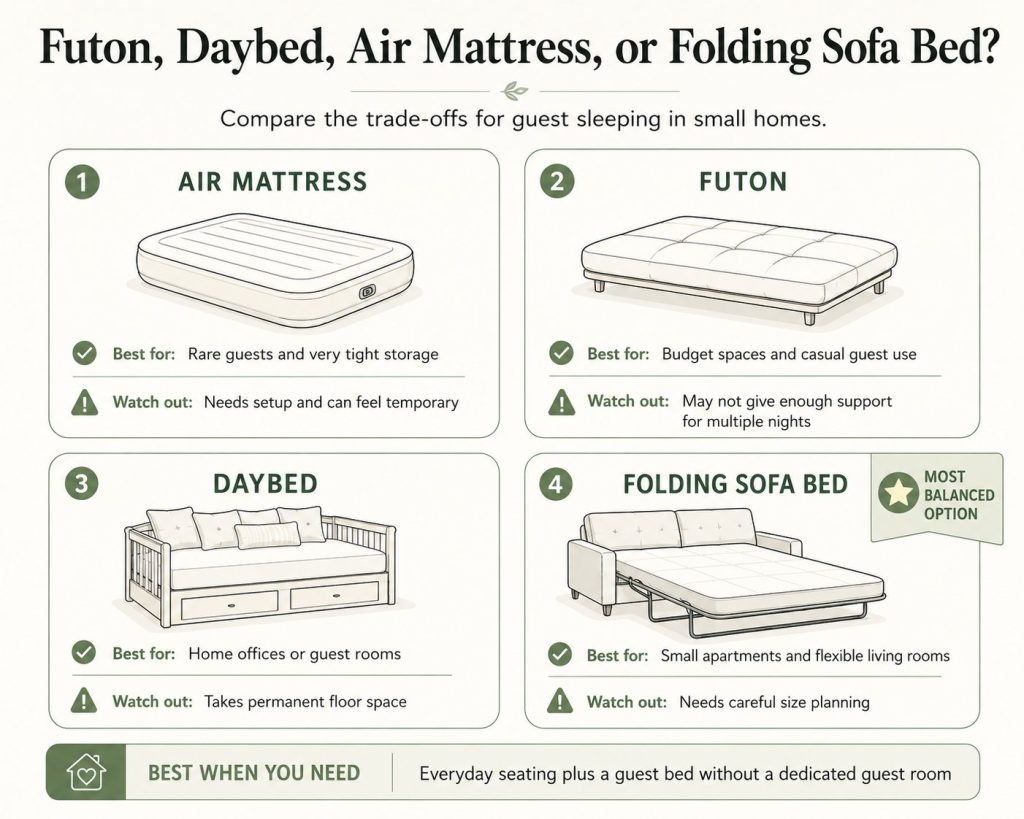
An air mattress is best for rare guests and very tight storage. It is not ideal if you want a room to feel prepared and comfortable without setup.
A futon is simple and affordable, but it can look casual and may not offer enough support for adult guests over multiple nights.
A daybed gives a more bed-like feel, but it takes permanent floor space. That works in a home office or guest room, not always in a main living room.
A folding sofa bed works best when the furniture needs to look like seating every day and act like a guest bed sometimes. It is the most balanced option for small apartments, flexible living rooms, and homes without a dedicated guest room.
What to Check Before You Buy
Before buying, move from “I like the look” to “I know it will work here.” This step prevents the most common small-space mistakes.
Check these details:
- Open dimensions: Confirm the full footprint when extended.
- Sleeping area: Look at width and length, not just product naming.
- Cushion support: Avoid very thin surfaces for adult guests.
- Mechanism: Decide if manual, pull-out, trundle, or power fits your routine.
- Fabric: Choose easy-clean upholstery if the sofa will handle pets, kids, food, or daily lounging.
- Coffee table plan: Know where nearby furniture goes at night.
- Delivery path: Measure doorways and stairs before ordering.
- Bedding storage: Plan where sheets, pillows, and blankets will live.
- Closing process: If it is manual, learn how to fold a sofa bed safely so bedding, uneven pressure, or trapped fabric does not damage the frame.
This is also where product photos are not enough. Look for clear specs, real open dimensions, material notes, and care instructions. A sofa bed is a moving piece of furniture, so the details matter more than they would on a regular couch.
Conclusion
A folding bed and sofa makes the most sense when it solves a real space problem: no guest room, limited storage, and a living room that needs to stay comfortable every day. The best option is not always the largest or cheapest one. It is the sofa bed that fits your open floor plan, feels supportive enough for guests, and uses a mechanism you will not avoid. Before choosing, measure carefully, check the sleep surface, compare manual and power options, and make sure the piece works as both seating and sleeping space.
FAQ
Is built-in storage worth it in a sofa bed for small spaces?
Built-in storage is worth it when your bedding has no dedicated home. It keeps sheets, pillows, and a lightweight blanket close to the sofa bed, which makes setup faster and keeps closets free. Skip storage only if it adds too much bulk, raises the seat height awkwardly, or makes the sofa harder to move.
Can I leave sheets or a mattress topper on a folding sofa bed when it closes?
Usually, you should not leave thick bedding or a mattress topper inside a folding sofa bed when it closes. Extra layers can strain the mechanism, create uneven pressure, or stop the sofa from closing flat. A thin fitted sheet may work on some designs, but always check product instructions and store bulky bedding separately.
What upholstery is easiest to maintain on a sofa bed used often?
Performance fabric, microfiber, treated chenille, and wipeable leather alternatives are easier to maintain on a sofa bed used often. The best choice depends on your household: pets need tighter weaves or scratch-resistant surfaces, kids need spill-friendly fabrics, and frequent guests need materials that feel comfortable under sheets without trapping lint or odors.
How can I make a sofa bed feel more private for overnight guests?
Give guests a small, defined sleep zone, even in a living room. A nearby side table, reading lamp, outlet access, basket for bedding, and partial visual divider can make the setup feel intentional instead of temporary. Privacy matters most in studio apartments or open living rooms where guests sleep near daily household activity.
What sleeper size works best for tall guests in a small room?
Choose the longest actual sleep surface your room can open safely, not the largest product label. Tall guests usually need enough length to avoid sleeping diagonally, so check the open bed dimensions, mattress length, and pillow space. Some sleeper sofa mattresses run shorter than standard bed mattresses, so confirm the listed sleep size before ordering.


