 By Kelvin
Introduction
If you are searching for leather and fabric, you are probably not looking for a material dictionary. You want to know whether these two upholstery types can work together in a real living room, and how to choose the right sofa, chair, or sectional without making the space feel mismatched. The simple answer: yes, leather and fabric can work beautifully together when you balance color, texture, scale, comfort, and daily use. This guide shows how to mix them naturally and what to check before buying.
Table of Contents
Can You Mix Leather and Fabric Furniture?
Yes, you can mix leather and fabric furniture. The key is to make the mix look intentional, not accidental. Leather usually brings structure, polish, and visual weight. Fabric adds softness, texture, color options, and a more relaxed feel. Together, they can make a living room feel layered instead of flat.
A strong mix usually starts with one clear “anchor” piece. That could be a leather sofa, a fabric sectional, a leather accent chair, or a fabric sofa bed. The other pieces should support that anchor instead of competing with it.
A few simple rules help:
- Let one material take the lead.
- Repeat at least one color across the room.
- Match the furniture style, not just the material.
- Use rugs, pillows, throws, wood tones, or coffee tables to connect both surfaces.
For example, a brown leather sofa can work with cream fabric chairs if the room also includes a warm rug, walnut wood table, or beige pillows. A soft fabric sofa can also work with a leather chair if the chair feels like an accent rather than a second heavy centerpiece.
Leather and Fabric: What Is the Real Difference?
Before choosing a fabric and leather combination, understand what each material actually does in a room. This is not only about appearance. Upholstery affects cleaning, comfort, durability, temperature feel, and how much visual weight the furniture adds.
If you already know you want only one material, a detailed leather vs fabric sofa comparison can help. But if you are mixing both, the better question is not “Which one is better?” It is “Which one should take the main role in my room?”
| Factor | Leather | Fabric | Best Use in a Mixed Room |
| Visual effect | Structured, polished, heavier | Soft, relaxed, flexible | Use leather as the anchor, fabric as the softener |
| Comfort feel | Smooth, cooler at first touch | Warmer, softer, more cushioned | Use fabric where people lounge most often |
| Cleaning | Easier to wipe, but can scratch | Depends on weave and treatment | Choose based on pets, spills, and care habits |
| Color range | Classic tones, rich neutrals | Wider color and texture options | Use fabric to add contrast or lighten the room |
| Long-term look | Can develop patina | May fade, pill, or stain depending on quality | Match material quality to daily use |
| Style role | Strong focal point | Easy to blend or layer | Use leather for structure, fabric for balance |
A leather and fabric sofa setup works best when each material has a clear purpose. Leather can make the room feel grounded. Fabric can make the same room feel warmer and easier to live in.
How Do You Make Leather and Fabric Look Cohesive?
A mixed-material living room looks right when the eye can move from one piece to another without feeling a break. That does not mean everything has to match. It means the colors, shapes, proportions, and textures should have something in common.
Start With One Anchor Piece
Choose the largest or most noticeable furniture item first. In many homes, that is the sofa. If the room needs a stronger design statement, a leather sofa can become the anchor. If the room needs more softness or flexible seating, a fabric sectional or sofa bed may be the better base.
For a leather-led room, the Cronus Brown Genuine Leather Modular Sofa suits open living rooms or media spaces where the sofa needs to feel substantial without looking bulky. Its top-grain leather, modular layout, solid wood frame, and deep seating make it useful as the main anchor piece when fabric chairs, pillows, or rugs are added to soften the room.
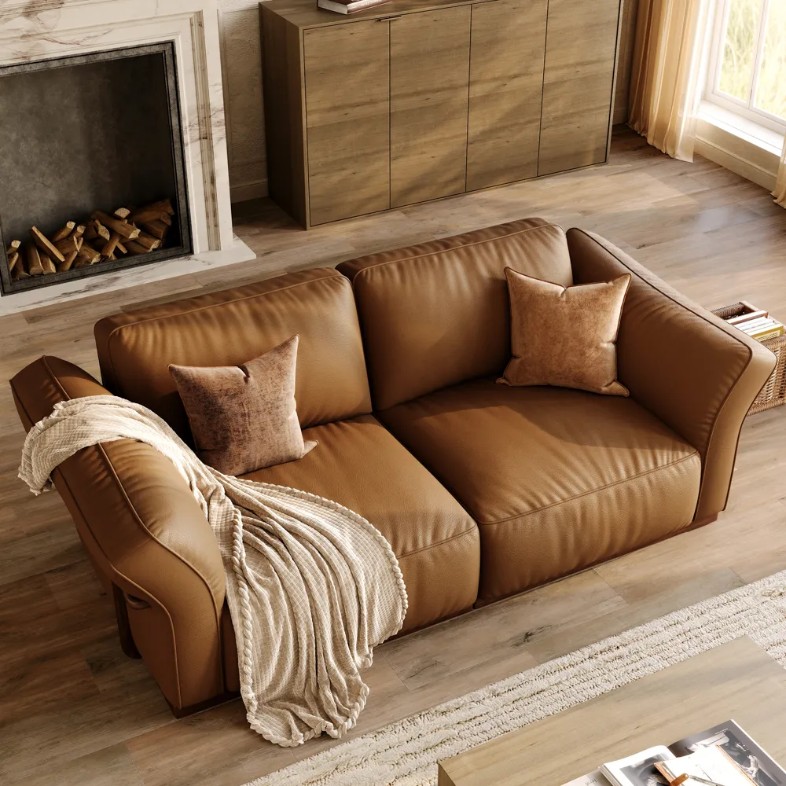
Cronus Genuine Leather Modular Sofa
A refined leather foundation makes mixed-material seating arrangements feel intentionally coordinated.
👍 Best for: Leather-led rooms with fabric accents
✨ Refined pebble-grain matte leather finish
✨ Generous 26-inch seat depth
✨ 250–350 lbs capacity per seat
Repeat One Color Twice
A room feels more connected when a color appears in at least two places. If you have a green leather sofa, repeat green in artwork, a patterned rug, or a small decor piece. If you choose a cream fabric sofa, repeat cream in curtains, pillows, or wall art.
This works especially well with brown, tan, black, cream, gray, and olive. You do not need exact color matching. You need visual conversation.
Match Style Before Material
A modern leather sofa will usually look better with clean-lined fabric chairs than with a very traditional floral armchair. A rolled-arm leather couch may work better with transitional fabric seating than with a sharp, low-profile modular piece.
When mixing leather and fabric, style alignment matters more than material matching. Look at:
- Arm shape
- Leg style
- Seat height
- Back height
- Overall silhouette
- Level of formality
If two pieces share the same design language, different materials will feel natural.
Use Texture as a Bridge
Texture helps leather and fabric speak the same language. Smooth leather can feel too stark next to flat cotton or thin upholstery. A woven rug, boucle pillow, chenille throw, or wood coffee table can create a middle layer.
For a family room with a leather sofa, add textured fabric pillows instead of shiny decorative cushions. For a fabric sectional, add a leather ottoman or leather accent chair to bring structure without overwhelming the space.
What Leather and Fabric Combinations Work Best?
The best combination depends on the room size, how often the seating is used, and whether the space needs to feel polished, cozy, flexible, or guest-ready. Instead of forcing equal amounts of both materials, let one material carry the main function and the other add contrast.
Brown Leather Sofa + Cream Fabric Chairs
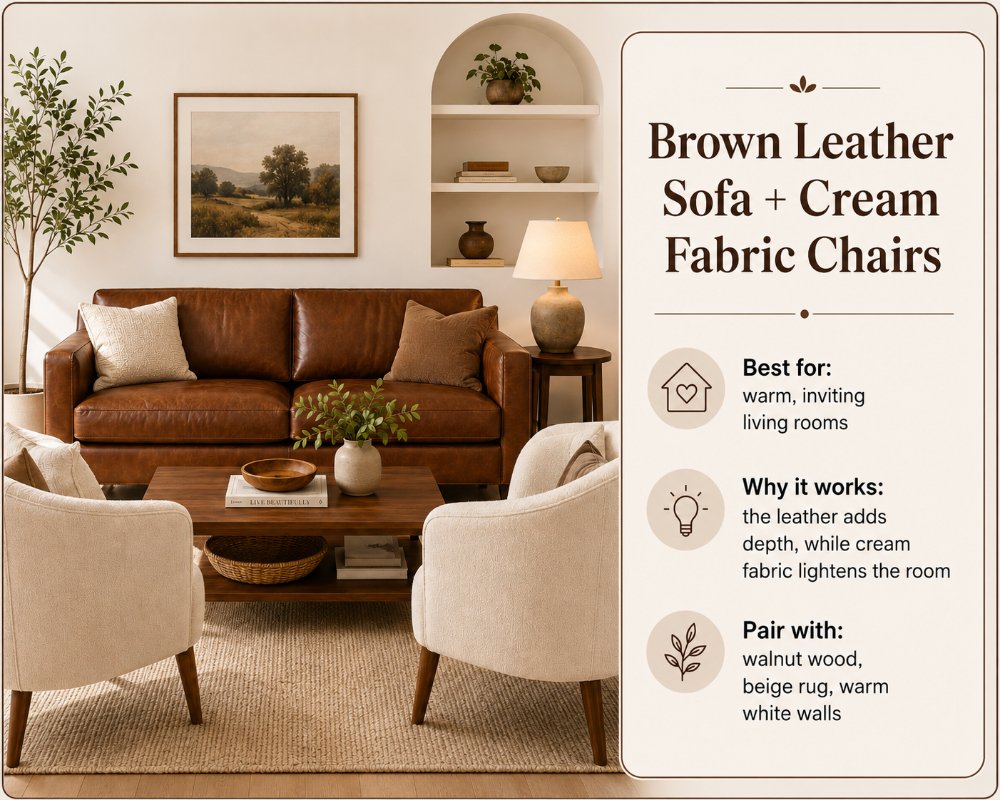
This is one of the easiest combinations. Brown leather adds warmth and weight, while cream fabric keeps the room from feeling dark. It works well with walnut, oak, black metal, beige rugs, and warm white walls.
Fabric Sofa + Leather Accent Chair
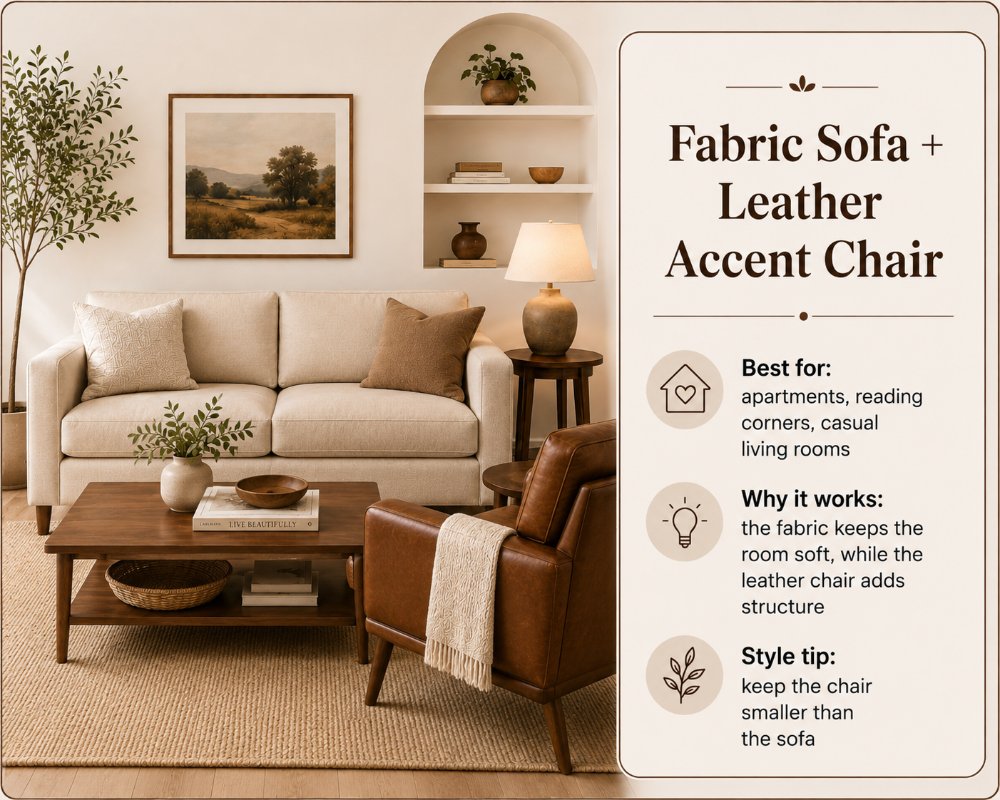
This is useful when the room already feels soft or casual. A leather chair adds structure without replacing the comfort of a fabric sofa. It works especially well in apartments, reading corners, and open living rooms where the accent chair can define a second seating zone.
Black Leather + Gray or Ivory Fabric
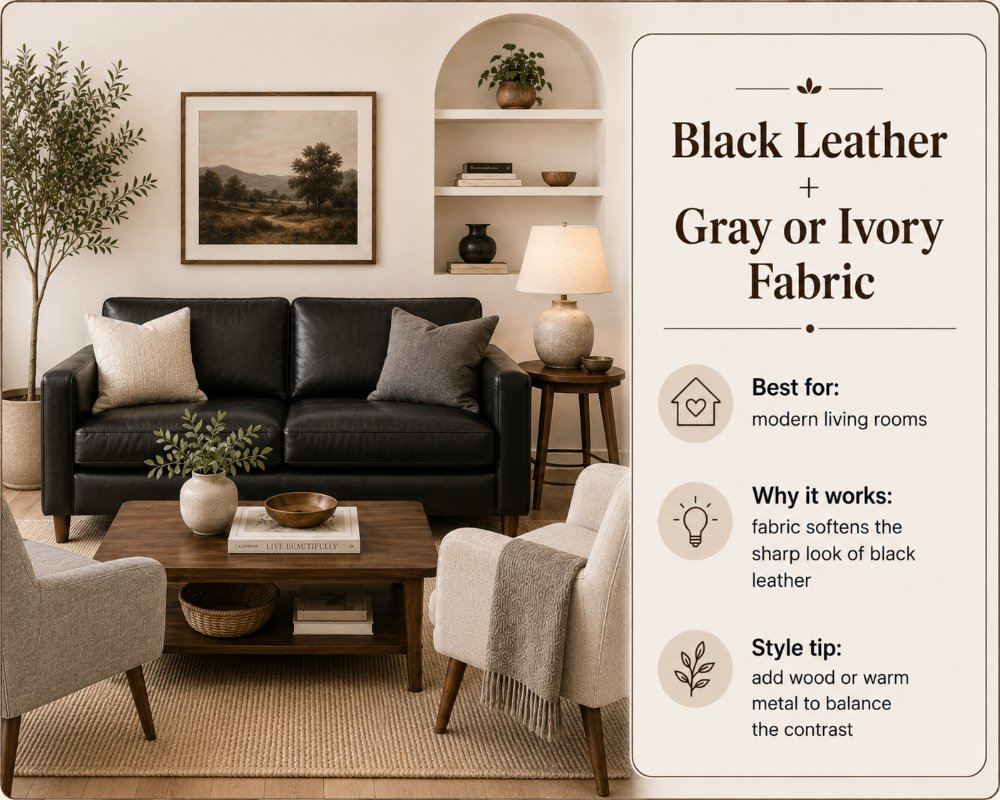
Black leather can look sharp, but it needs balance. Gray fabric creates a cooler, modern room. Ivory fabric softens the contrast and makes the space feel lighter. Add wood or warm metal if the room starts to feel too cold.
Tan Leather + Textured Neutral Fabric
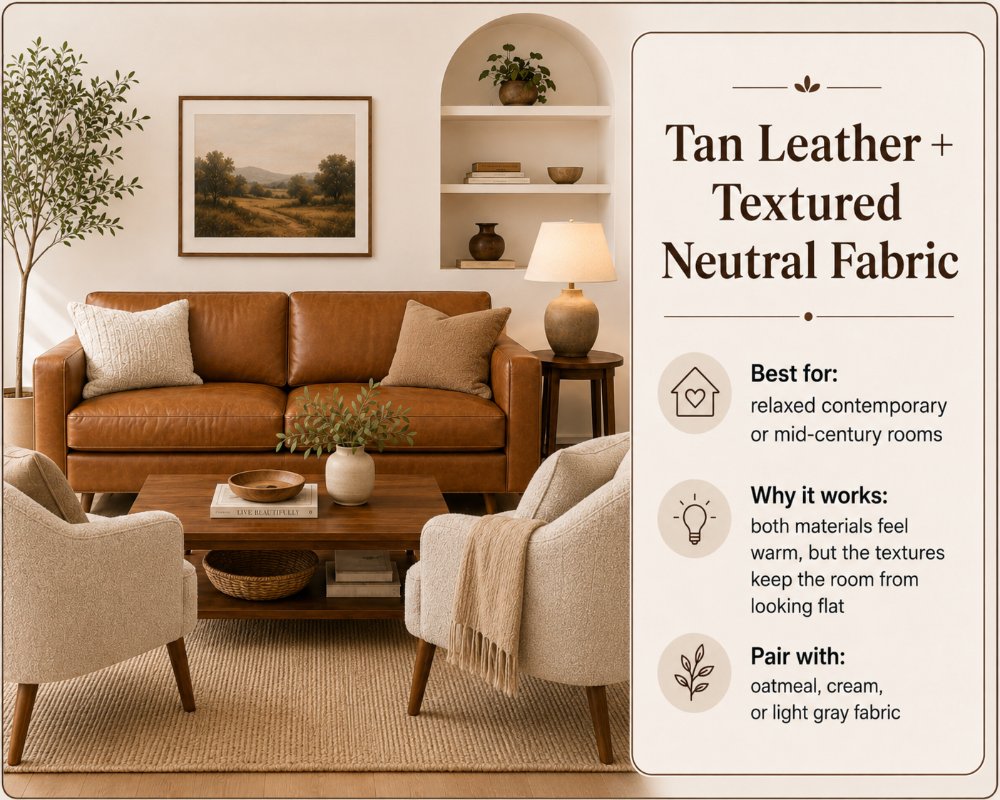
Tan leather pairs well with beige, oatmeal, cream, light gray, or olive fabric. The result feels casual, warm, and easy to style. This is a strong direction for mid-century, modern organic, or relaxed contemporary living rooms.
Fabric Sofa Bed + Leather Details
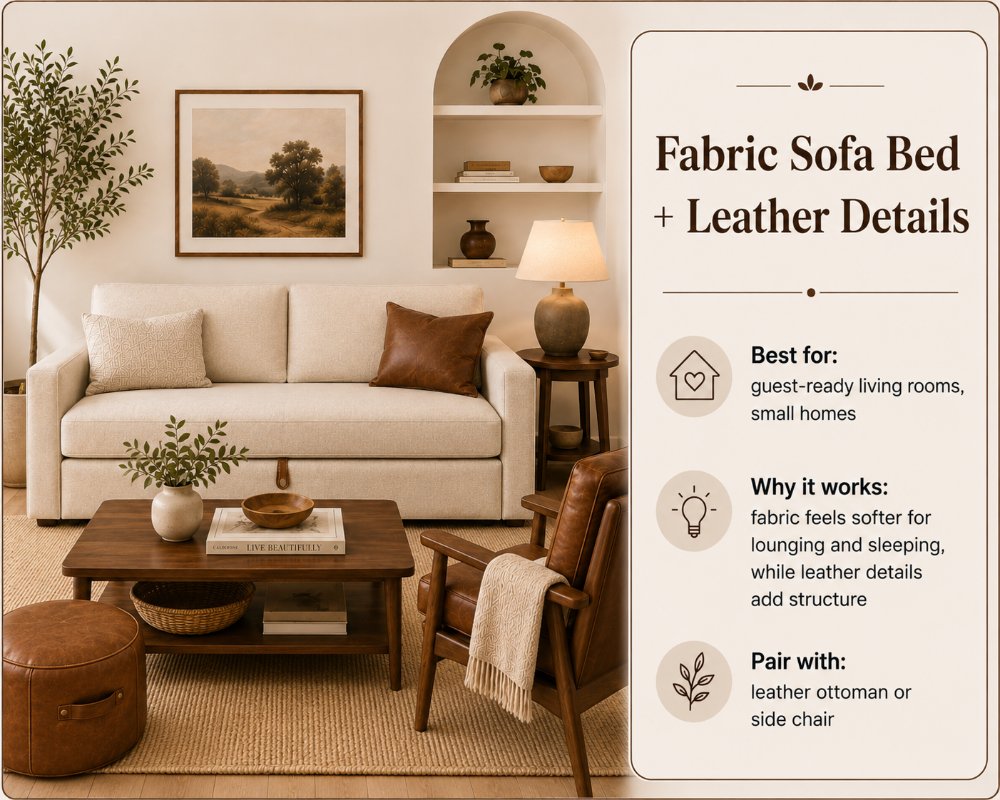
If your living room also needs to host guests, a fabric sofa bed can make more sense than a full leather sofa. Fabric feels softer for lounging and sleeping, while leather can appear in smaller accents like an ottoman, side chair, or storage bench.
The Aurora Power Sofa Bed fits this kind of fabric-first room. Its chenille fabric, one-touch lounge/recline/sleep modes, 83-inch width, high-resilience foam, and 500-lb-per-seat capacity make it practical for apartments, guest-ready living rooms, or movie nights where comfort and function matter more than a formal leather look.
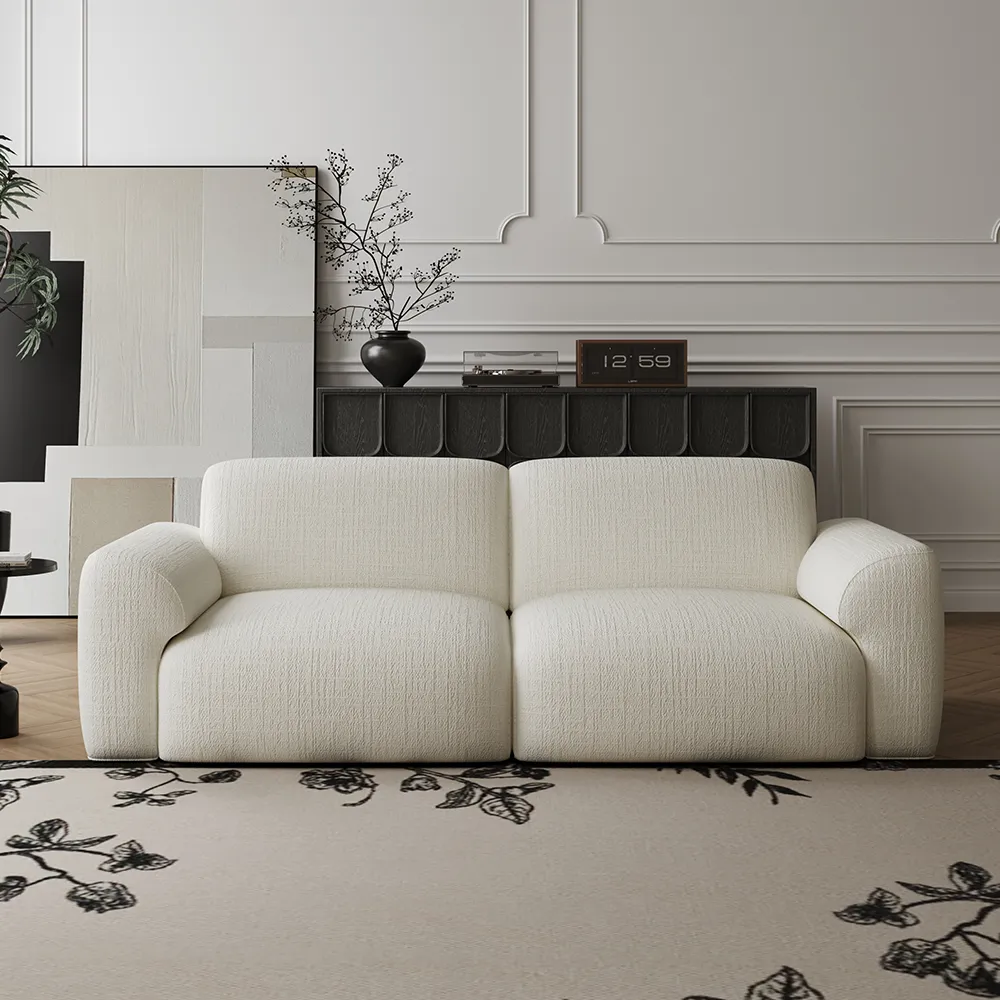
Aurora Power Sofa Bed
A flexible fabric sofa creates guest-ready seating beside leather accent furniture.
👍 Best for: Fabric-first rooms with leather accents
✨ Water-resistant, scratch-resistant chenille upholstery
✨ 27–45.5″ electric seat-depth adjustment
✨ Zero-clearance placement near walls
What Else Affects Comfort Besides Upholstery?
Leather and fabric decide how a sofa feels on the surface, but they do not decide everything. Cushion filling, seat depth, back support, and frame structure often matter more for daily comfort.
A fabric and leather couch can look beautiful online and still feel wrong if the seat is too shallow, the cushions flatten quickly, or the back angle does not support how you sit. Before buying, check the inside details as carefully as the outside material.
Important comfort checks include:
- Seat depth: Deeper seats work better for lounging, movie nights, and taller users.
- Cushion filling: High-resilience foam gives support and shape retention; softer fillings feel plush but may need more fluffing.
- Back height: Low backs look modern, but high or supportive backs are better for upright sitting.
- Arm height: Higher arms are useful for leaning; lower arms feel more open.
- Frame material: A strong frame helps the sofa keep its shape over time.
In a home where one person works from the sofa and another uses it for evening TV, surface material is only part of the decision. A soft fabric seat with poor support may feel worse after two hours than a leather sofa with better cushioning and a deeper seat.
How to Mix Leather and Fabric in a Small Living Room
Small rooms need fewer competing elements. A large leather sofa and a bulky fabric chair can make the room feel crowded, even if both pieces look good separately. In compact spaces, the goal is to keep one main seating piece and use the second material in a lighter way.
A small living room usually works best with:
- One main sofa, not two oversized pieces
- Slim arms or visible legs
- A lighter fabric if the leather piece is dark
- A rug that connects both materials
- Compact tables instead of heavy block shapes
- A clear walkway around the seating area
If you are using a sectional, layout matters as much as material. A sectional sofa layout guide can help you decide whether an L-shaped, modular, chaise, or sleeper format fits the room before you choose leather or fabric upholstery.
A practical small-room setup might be a cream fabric sofa bed, one leather accent chair, a light rug, and a slim wood coffee table. This keeps the room functional for guests while avoiding the heavy feel of multiple dark upholstered pieces.
Common Mistakes When Mixing Leather and Fabric
Mixing materials usually goes wrong because the room lacks a clear hierarchy. The pieces may be individually attractive, but they do not support the same style, color story, or scale.
Mistake 1: Using Two Heavy Pieces Together
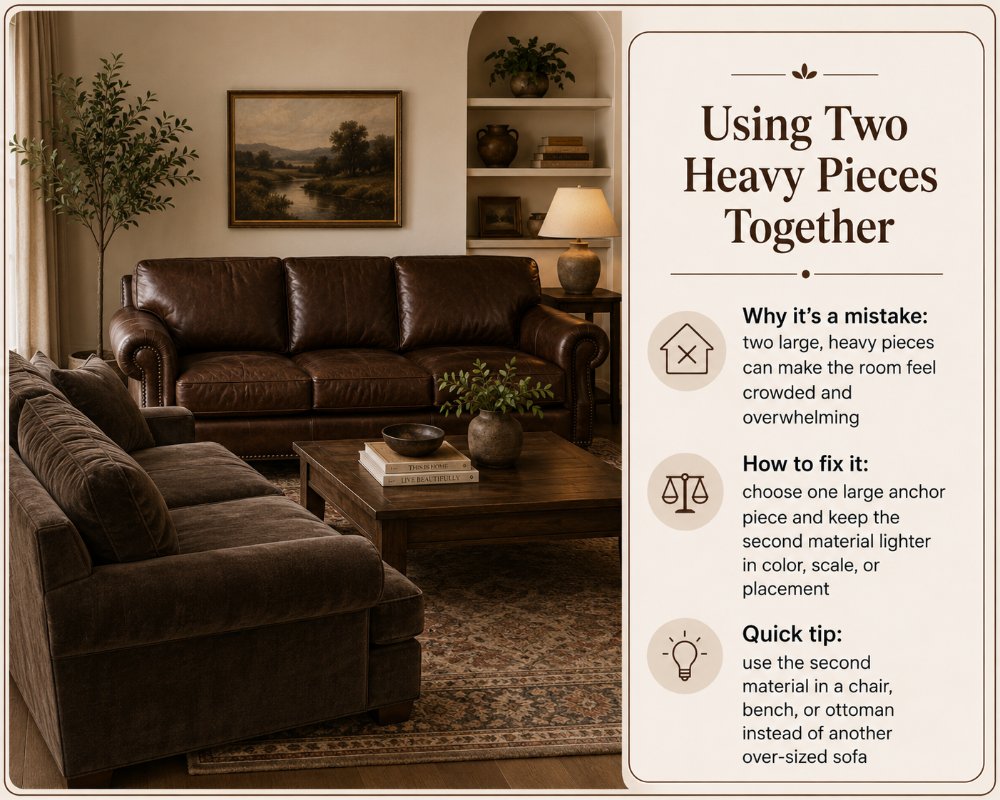
A large dark leather sofa and an oversized dark fabric sectional can make the room feel crowded. Fix it by choosing one large anchor and making the second material lighter in color, scale, or placement.
Mistake 2: Ignoring Undertones
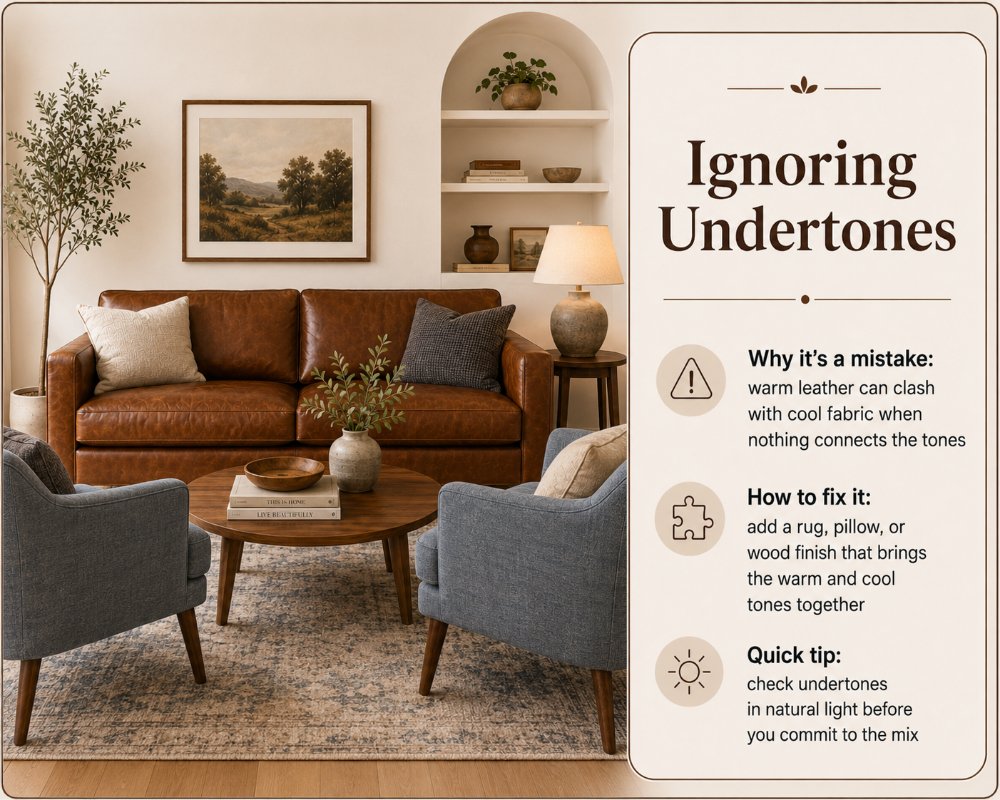
Warm brown leather may clash with a cool blue-gray fabric if nothing connects them. Add a rug, pillow, or wood finish that includes both warm and cool tones.
Mistake 3: Matching Color but Not Style
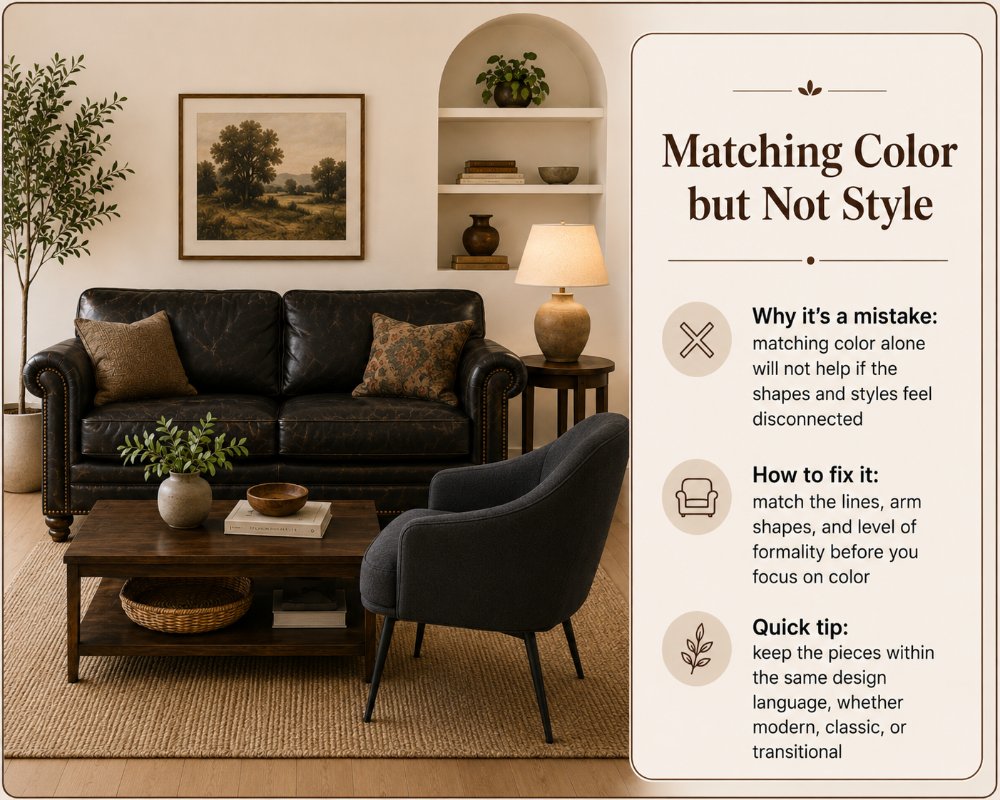
A black leather sofa and a black fabric chair can still look wrong if one is modern and the other is traditional. Match the shapes first, then fine-tune color.
Mistake 4: Forgetting Maintenance
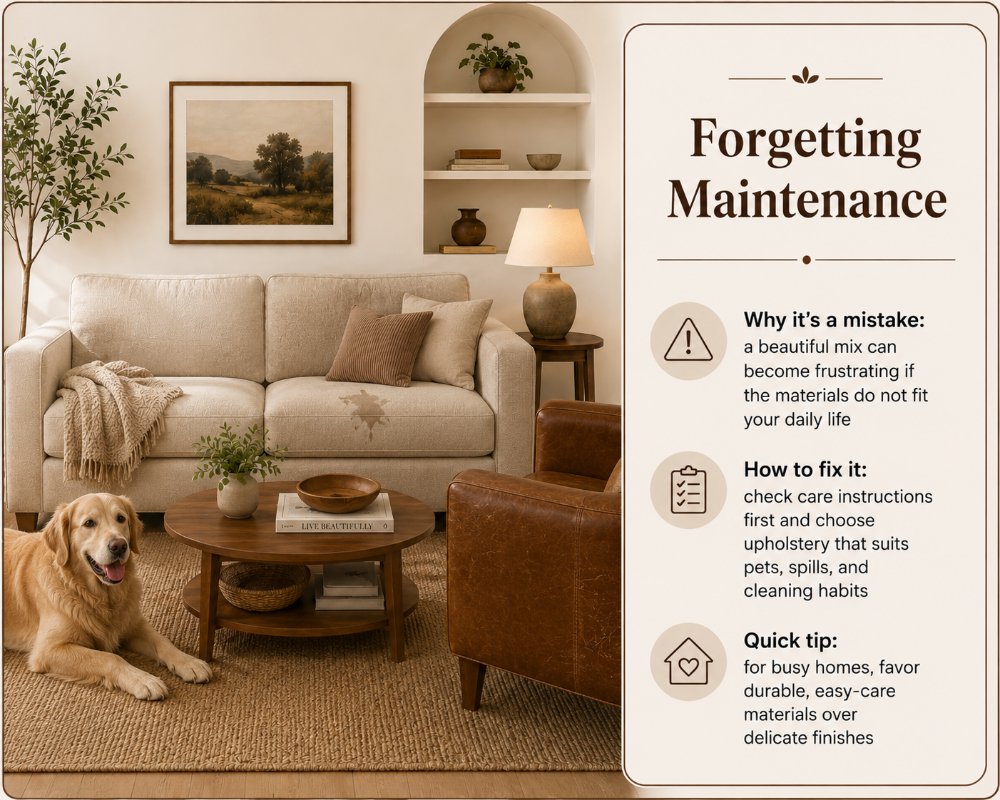
A room can look beautiful but become frustrating if the material does not fit your routine. If your sofa handles snacks, pets, kids, or daily naps, check the care instructions before choosing the upholstery. A safe couch cleaning routine is especially important when leather and fabric pieces sit in the same high-use area.
Mistake 5: Treating Fabric as Decoration Only
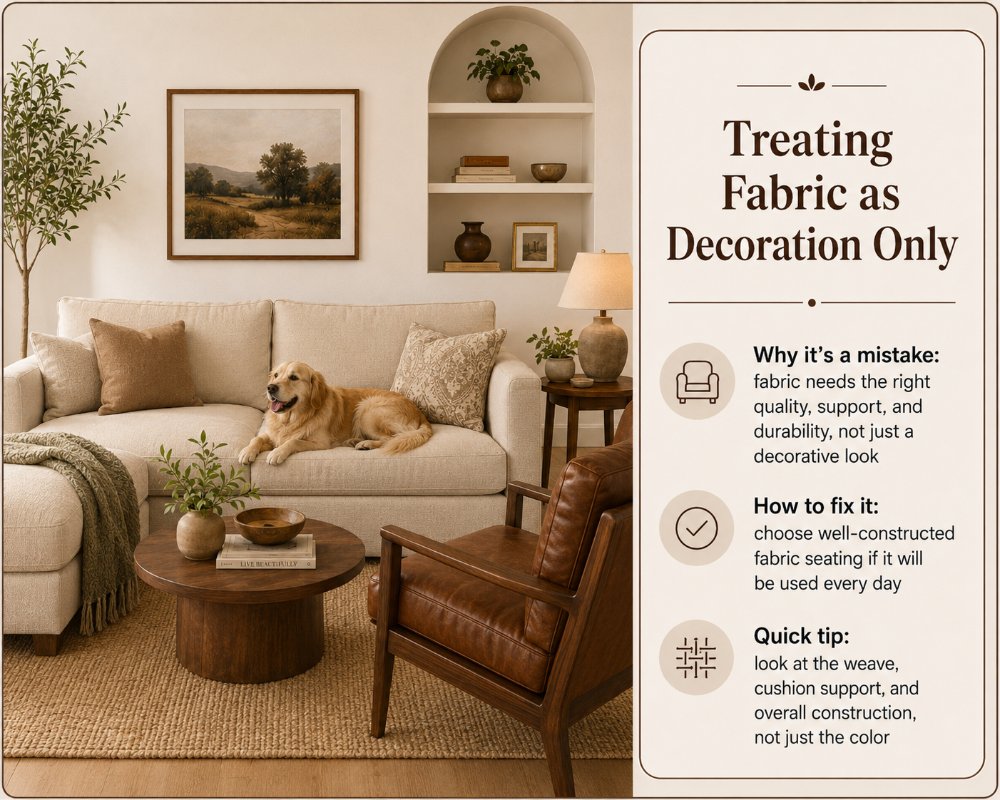
Fabric is not just the “soft” material. It still needs the right weave, cushion support, and color durability. If the fabric sofa or chair is used every day, choose it with the same seriousness as leather.
Buying Checklist Before Choosing Leather and Fabric Furniture
Before buying, look at the room as a full system: seating, traffic flow, lighting, cleaning needs, and how people actually use the space. A sofa that looks right in a product image may not work if it blocks a walkway or needs more care than your household can realistically manage.
Use this checklist:
- Decide which material will be the anchor.
- Choose leather for structure, polish, and easier wipe-down care.
- Choose fabric for softness, color flexibility, and a warmer everyday feel.
- Check seat depth, cushion filling, and back support.
- Compare care instructions before buying.
- Look at the material color in natural and evening light.
- Keep at least one repeated color across the sofa, rug, pillows, or chairs.
- Avoid pairing two oversized pieces unless the room is large.
- Think about pets, kids, guests, and daily lounging before style.
- Measure doorways, wall width, and walking paths.
For most homes, the best leather and fabric mix is not 50/50. It is usually one main material supported by smaller touches of the other.
Conclusion
A successful leather and fabric room is not about choosing one material over the other. It is about knowing what each material should do. Leather can anchor the room with structure and durability, while fabric can add softness, warmth, and flexibility. Start with your lifestyle, choose one main material, repeat color thoughtfully, and check comfort details beyond upholstery. When the mix supports how you actually live, a leather and fabric combination can feel practical, balanced, and easy to keep using every day.
FAQ
Which piece should be leather if I only want one leather item?
Choose leather for the piece that needs the most structure or easiest wipe-down care. In many living rooms, that means the main sofa, recliner, accent chair, or ottoman. If you prefer a softer daily lounging seat, keep the sofa fabric and use leather as the accent piece.
What should I check before buying a leather and fabric sofa online?
Check the upholstery description, cushion filling, seat depth, product dimensions, cleaning instructions, and return policy before buying online. Photos can show color and style, but they do not always reveal fabric weave, leather grade, cushion firmness, or real scale. Always measure your room and delivery path first.
Will leather and fabric furniture age differently?
Yes, leather and fabric usually age differently. Leather may develop creases, patina, or surface marks, while fabric may show fading, pilling, stains, or cushion wear depending on quality and use. This is not always a problem, but high-use rooms need durable materials with similar care expectations.
Should I use leather as an accent chair or an ottoman?
Use a leather accent chair when you need extra seating, and choose a leather ottoman when the room needs flexibility without adding another large seat. An accent chair works better for reading corners or conversation layouts. An ottoman is better for small rooms, family rooms, or spaces where you want a footrest, tray surface, or softer traffic flow.
How large should the rug be when mixing leather and fabric seating?
Choose a rug large enough to connect the main seating pieces visually. Ideally, the front legs of the sofa and chairs should sit on the rug, so leather and fabric pieces feel like one seating zone. A rug that is too small can make mixed materials look scattered.
Who should avoid mixing leather and fabric furniture?
Avoid mixing leather and fabric if you want a highly uniform, formal, matching-set look. It may also be harder in very small rooms with bulky furniture, limited natural light, or no rug to connect the pieces. In those cases, use one main upholstery and add contrast through pillows or decor.
Is a fabric and leather couch better than buying separate pieces?
A fabric and leather couch can work if the design already balances both materials well, but separate pieces usually give you more control. Separate seating lets you adjust color, scale, texture, and layout over time. For long-term flexibility, a fabric sofa with leather accents or chairs is often easier to style.


