 By Charles
A friend texted me last month: “Help. Pottery Barn ottoman or normal coffee table? Kids are 3 and 6. We host a lot. I’m two cocktails deep and need an answer.”
I get this question constantly. People treat it like a style debate — soft and cozy vs. clean and modern — when it’s actually a lifestyle decision with real trade-offs. Drinks slide. Velvet stains. A wood corner finds a 3-year-old’s forehead at 7 a.m. on a Tuesday.
So here’s the honest 2026 breakdown. No mood boards. Just what each piece actually does — and fails at — when real life happens on top of it.
Ottoman Coffee Table vs Standard Coffee Table
The short version: an ottoman coffee table is an upholstered, padded-top piece you can also use as a footrest or extra seat. A standard coffee table is a hard-surface piece — wood, stone, glass, metal — built primarily to hold things.
That’s the headline. The differences that matter live underneath.
| Feature | Ottoman Coffee Table | Standard Coffee Table |
| Top surface | Soft, upholstered, slightly pillowy | Hard, flat, fully rigid |
| Drinks without a tray | Risky — uneven, stains | Stable — set and forget |
| Doubles as seating | Yes, supports 250–300 lb on most quality builds | No |
| Doubles as footrest | Yes, comfortably | No (people do it anyway) |
| Sharp corner risk for kids | Very low — soft edges | Moderate to high, depending on shape |
| Hidden storage | Often, via hinged lid | Often, via lift-top, drawer, or shelf |
| Cleaning a spilled red wine | Spot-clean fabric, possible permanent mark | Wipe with cloth, gone in 30 seconds |
| Visual “finish” of the room | Casual, cozy, layered | Structured, anchored, defined |
| Best paired with | Sectionals, family rooms, sofas with kids/pets | Three-seat sofas, formal layouts, hosting setups |
Neither one wins outright. They solve different problems. The right question isn’t “which is better” — it’s “which problem is louder in my living room?”
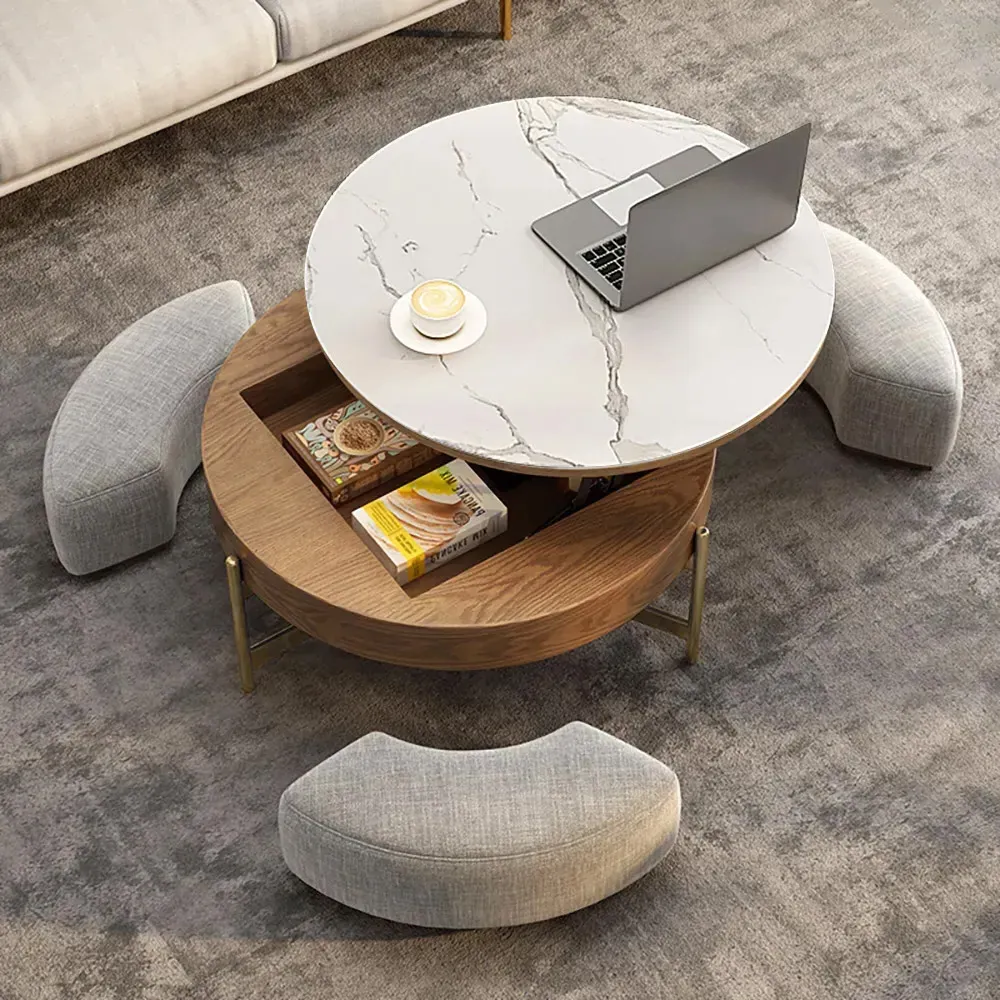
Which One Fits Your Living Room Better
I tested both pieces in two different homes over six months — my own and my sister’s. Same kids age range (small humans, sticky), different room layouts. Here’s what actually happened.
Family Rooms and Movie Nights
This is where ottomans quietly win.
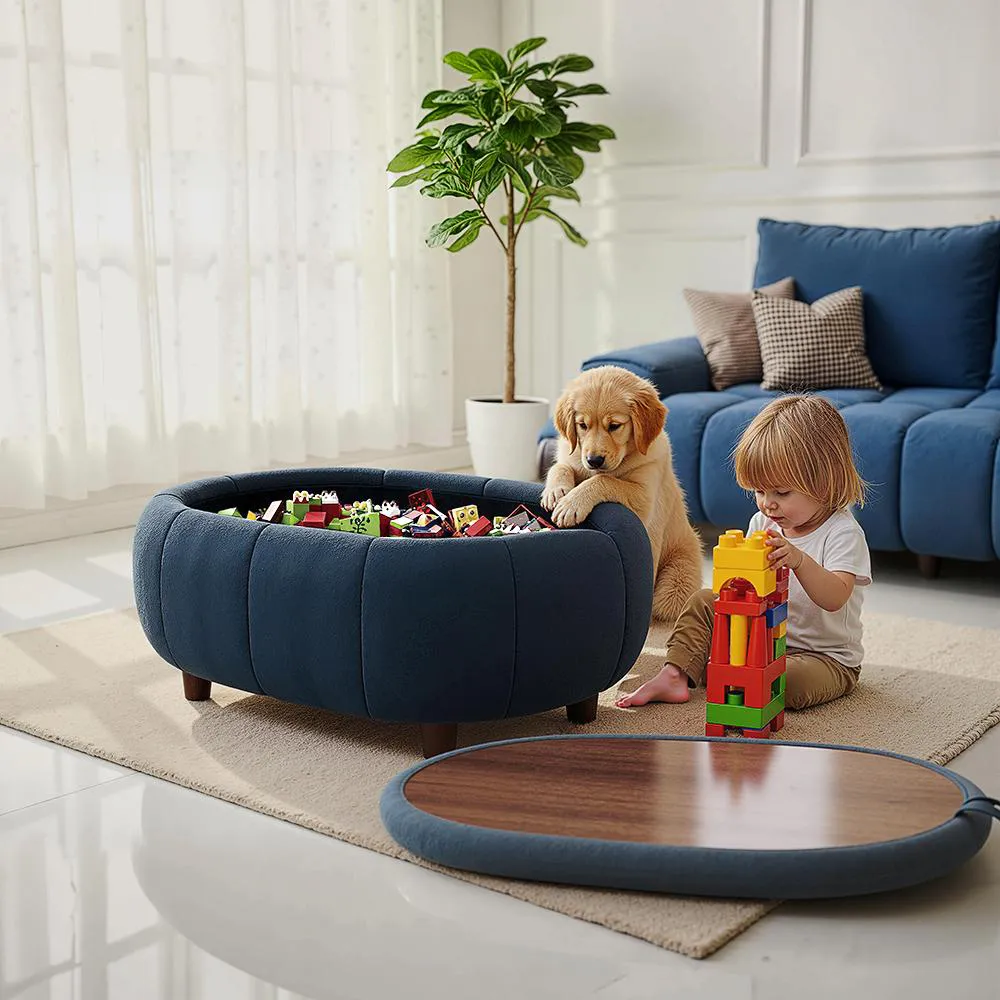
In a casual family room, your coffee table mostly catches feet, snack bowls, the occasional laptop, and one Lego avalanche per week. Sharp corners turn into liabilities fast — the U.S. Consumer Product Safety Commission recommends corner and edge bumpers on living-room furniture specifically because falls into hard furniture edges are one of the most common indoor injuries for kids under 5. An ottoman skips that problem entirely. The whole top is padded. There’s no edge to bumper-tape.
For movie nights specifically, ottomans are the better hardware. You can prop your feet up without doing the awkward “is this rude” calculation about putting socks on a wood surface. You can perch a guest on it when seven people show up for football. With a tray, you can still hold drinks and snacks — just not as freely as on a wood top.
The trade-off you accept: drink stability is genuinely worse. A glass of wine on a soft cushioned surface tips a lot easier than people admit. The fix is a wide, weighted tray (I use a 20-inch rectangular tray with anti-slip felt on the bottom — no wobble, but it does take up most of the usable surface). If you eat dinner in front of the TV three nights a week, that constant tray is a tax. Decide if you’re willing to pay it.
More Formal Living Rooms
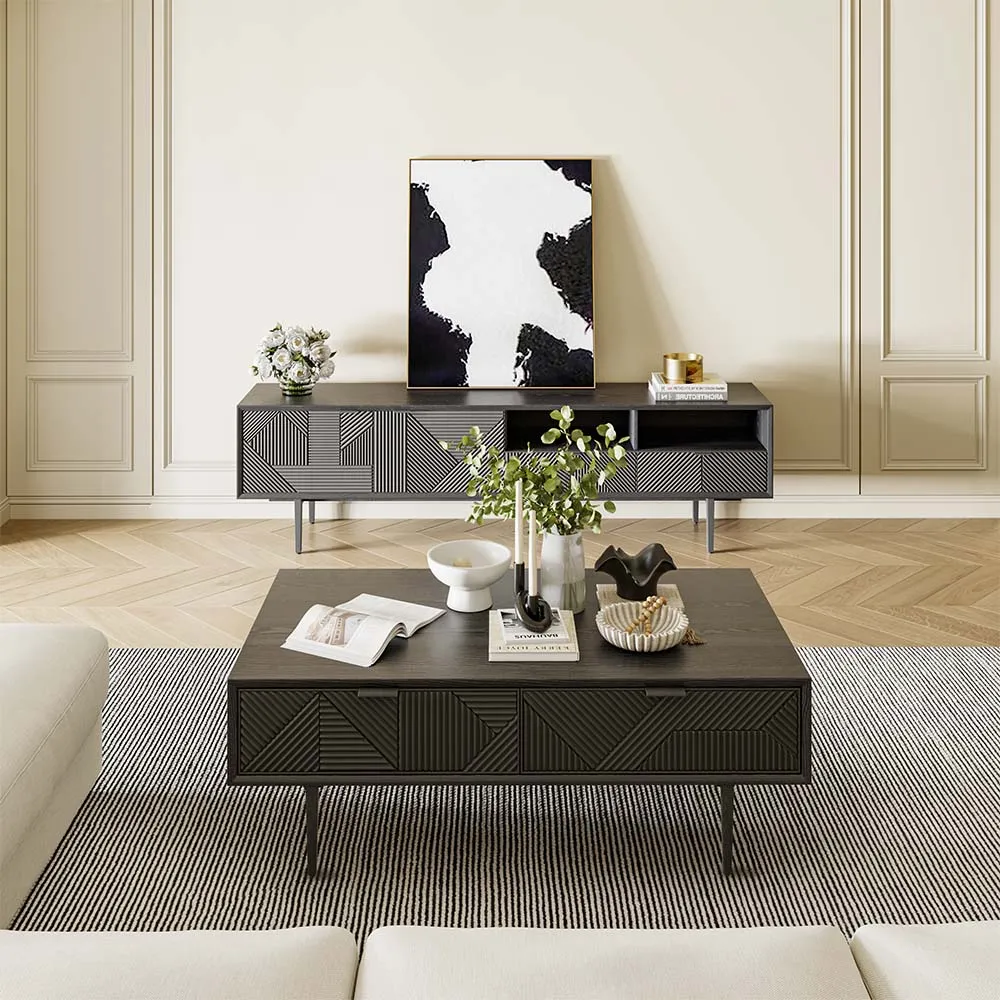
For a living room that doubles as a hosting space — the room you actually walk guests into — a hard-surface coffee table almost always reads better.
Two reasons. First, structure. A wood or stone coffee table draws a clean horizontal line that anchors a sofa, two chairs, and a rug into one composition. An ottoman blurs that line because it’s visually soft. In a more formal room, that softness can read as unfinished. Second, surface confidence. When you’re handing someone a glass of cabernet, you want a top that doesn’t require a coaster and a tray and a prayer.
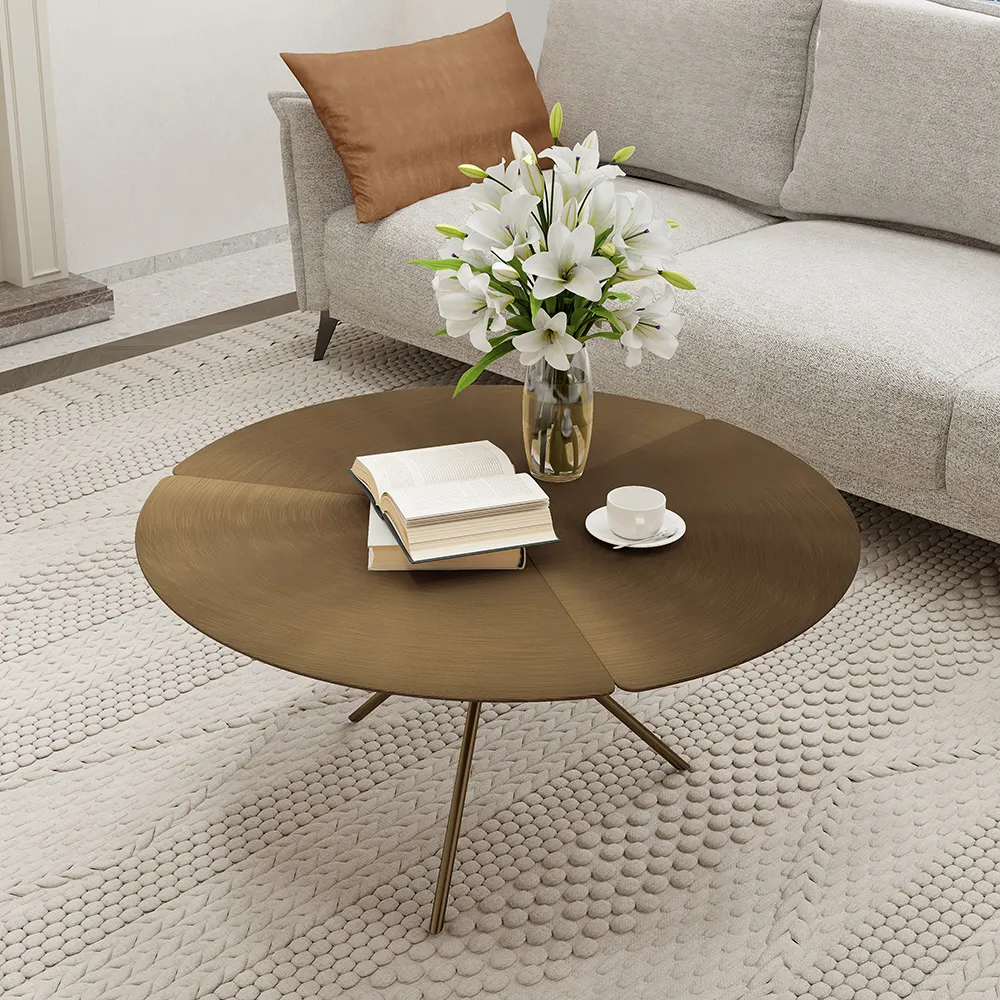
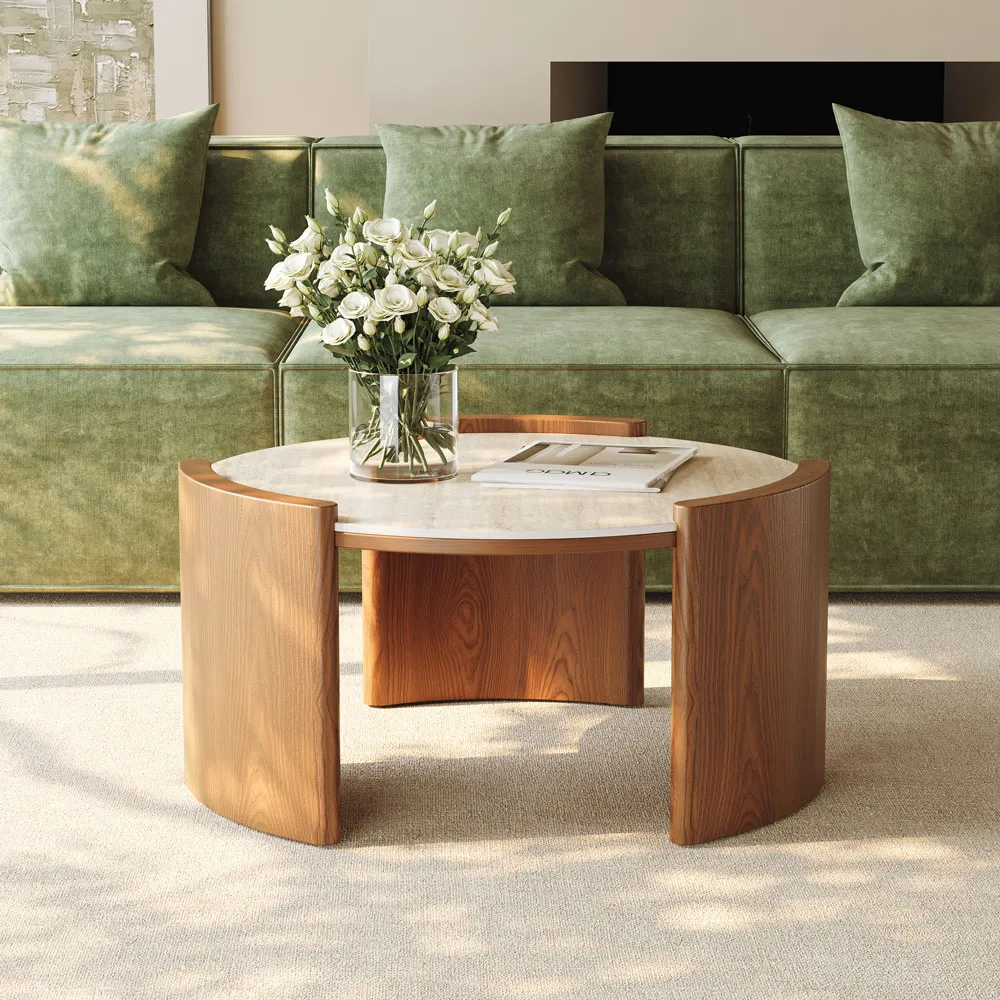
There’s a midpoint worth knowing about: a coffee table with rounded corners and a soft-rectangle silhouette gives you most of the “kid-friendlier” benefit without giving up the hard surface. If you want help calibrating proportions for that style, the POVISON coffee table height guide walks through the seat-height math in plain language.
The honest read: if more than half of your living-room time is hosting adults, snacking with cocktails, or working from the sofa with a laptop — go hard surface. If more than half is feet-up, kids on the rug, blanket forts and unscheduled chaos — go ottoman.
Storage, Surface Stability, and Cleaning
This is the section where the marketing photos stop being useful and the real differences show up.
Storage capacity. Both options can include hidden storage, but the dimensions are different. An ottoman with a hinged lid usually offers a single deep cavity — great for blankets, throw pillows, large stuffed animals, board games. A wood coffee table with a lift-top or drawer typically gives you shallower but more organized space — better for remotes, magazines, charging cables, papers. If your real clutter is bulky soft stuff, the ottoman wins. If your real clutter is small flat stuff, the lift-top or drawer wins.
Surface stability. A standard coffee table holds whatever you put on it, full stop. An ottoman needs a tray for any liquid that isn’t in a sealed bottle. The tray itself has to be at least 16×20 inches with a flat bottom and ideally a non-slip backing — anything smaller wobbles the moment a kid leans on the cushion. Don’t trust the tiny decorative trays you see in styled photos. Those work for one candle and a coffee-table book. They do not work for an actual evening of drinks.
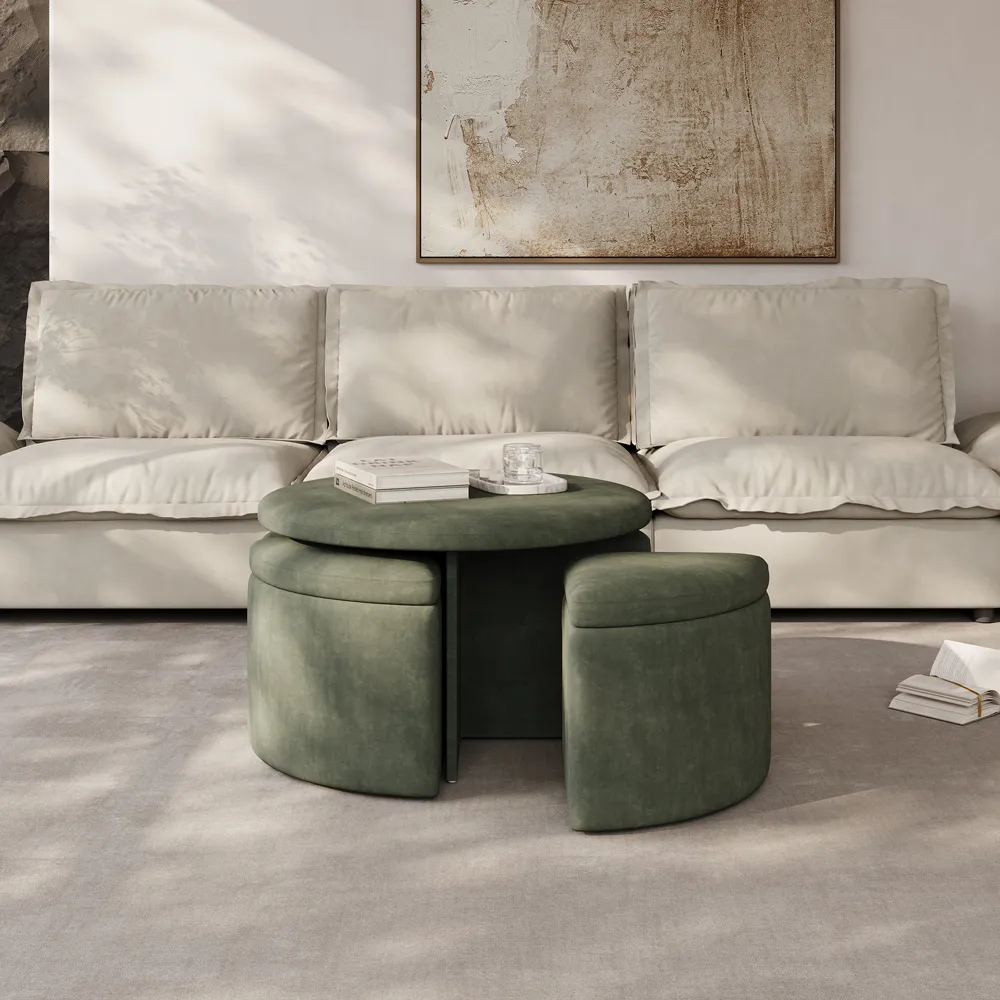
Cleaning. This is where a lot of ottoman buyers get blindsided. A wood coffee table cleans in 30 seconds with a damp cloth. A glass top wipes in 10. An upholstered ottoman cleans like upholstery — which is to say, it depends entirely on the fabric, and a real spill (red wine, marinara, kid’s juice box) might not come out fully. Look for fabric that’s certified to a textile-safety standard like OEKO-TEX Standard 100 so you at least know what’s not in the dye and finish, and prioritize removable, washable covers if you have kids or pets. POVISON’s Ergopals storage ottoman, for example, uses an OEKO-TEX certified cotton-blend velvet with covers you can take off and toss in the wash — a feature I’d consider non-negotiable for a soft-top piece in a family room. If a brand can’t tell you whether the covers come off, that’s your answer about how the ottoman will look in two years.
Anchoring and stability. Quick safety note: per CPSC’s STURDY framework and anchoring guidance, tip-over risk lives mostly with tall storage units, but a heavy lift-top coffee table can still pinch fingers if the lid mechanism isn’t smooth. Test it in store, or ask the brand for the lid-weight spec, before you commit.
When Each Option Makes More Sense
Here’s the decision framework I actually use when friends ask:
Choose an ottoman coffee table if:
- Kids under 6 are running circuits around your living room
- You watch TV more than you host
- You need extra seating once a month and don’t have room for a fifth chair
- Your storage problem is bulky soft items (throws, pillows, toys)
- You’re styling a sectional or curved sofa where a soft shape adds flow
- You’re willing to live with a permanent tray on top
Choose a standard coffee table if:
- You host more than three times a month
- You work from your sofa with a laptop daily
- You eat in front of the TV regularly
- Your storage problem is small flat items (remotes, magazines, mail)
- Your room reads more formal or tailored
- You don’t want to think about tray placement every time you set down a glass
Get both if you have the floor space. A 5×7-foot rug area can hold a smaller coffee table plus a single-seat ottoman, giving you a hard surface for daily use and a soft option for movie nights. This is what most designers actually recommend when budget allows.
FAQ
Is an ottoman better than a coffee table?
An ottoman is better than a coffee table for casual family rooms, homes with young children or pets, and movie-night-heavy households where soft edges, footrest function, and extra seating matter more than a stable hard surface. A coffee table is better for hosting-heavy households, formal living rooms, and homes where you need to set down drinks, food, or a laptop without using a tray. Neither is universally better — match the choice to how you actually live in the space.
Can I use an ottoman as a coffee table every day?
Yes, you can use an ottoman as a coffee table every day, but with two adjustments. First, you need a wide, weighted tray (at least 16×20 inches with a flat, non-slip bottom) permanently in place to act as your stable surface for drinks and snacks. Second, you need fabric you can clean easily — ideally removable, washable covers, and dark or textured patterns that hide spills. Without those two adjustments, daily ottoman-as-table use leads to stained upholstery within the first year.
Is an ottoman coffee table good for my kids?
Yes, ottoman coffee tables are generally safer for households with children under 6 because they have no sharp corners and a padded top. The U.S. Consumer Product Safety Commission specifically lists corner and edge bumpers on hard furniture as a recommended childproofing measure — an ottoman avoids that need entirely. The trade-off is cleaning: fabric tops absorb spills that a wood or stone surface would shrug off, so prioritize ottomans with removable, washable covers and certified non-toxic fabric for daily family use.
Do I need a tray on an ottoman coffee table?
Yes, you need a tray on an ottoman coffee table for any practical daily use. The padded top isn’t level enough to hold a glass without tipping risk, and direct contact between drinks, food, or hot mugs and the upholstery causes stains and wear. The right tray is at least 16×20 inches, has a flat rigid bottom, and ideally includes a non-slip felt or rubber backing. Skip the tiny decorative mini-trays — they only work for styling, not for hosting an actual evening at home.
Conclusion
The ottoman vs. coffee table question is really a question about how your living room earns its keep. If it’s a comfort zone first and a hosting zone second, the soft-top piece is honestly more useful — assuming you accept the tray and the fabric maintenance. If it’s a hosting zone first and a comfort zone second, a hard-surface coffee table will quietly do its job for the next ten years without complaint.
What I’d avoid is buying based on the styled photo. The styled photo is a single moment. The piece you’re choosing has to survive Tuesday night chaos, Saturday morning coffee, and the dinner party where someone gestures with a full glass of red. Pick for the Tuesday version of your life, not the Saturday one.
If you’re leaning ottoman and want one with washable, OEKO-TEX certified covers and storage built in, POVISON’s Ergopals Storage & Coffee Table Ottoman is the one I keep recommending to friends — it ships fully assembled, so you skip the screws-on-the-floor afternoon. If you’re leaning hard-surface, POVISON’s coffee tables collection has fully assembled options across rounded, lift-top, and storage configurations, all built to be Ready To Live In the day they arrive.
Whichever you pick, measure your sofa, check the height math, and tape-out the footprint on your floor before you order. That single 10-minute habit prevents about 80% of the regret emails I get.
Related Reading:


