 By Charles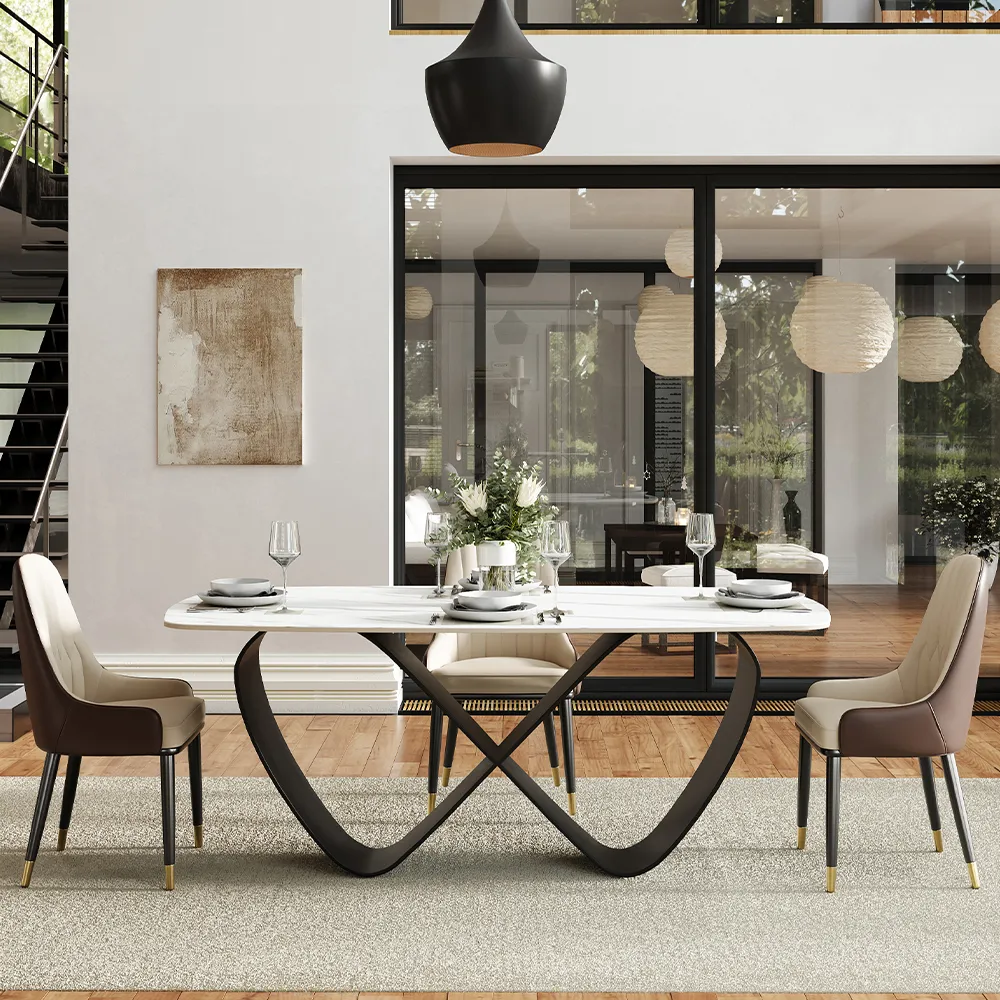
Here’s something I’ve noticed after helping a lot of people with their dining room: the ones who end up happiest didn’t start by searching for a specific table. They started by figuring out what kind of dining area they actually needed — and then went looking.
The ones who did it backwards? They fell for a table, bought it, and then spent three weeks dealing with the fact that it doesn’t fit the room, the chairs wobble on their floor type, or the delivery experience was nothing like they expected.
This guide is about getting the sequence right. We’re going to work through the decisions in the order they should actually happen — before you’ve committed to anything.
Why Dining Sets Simplify Room Planning
When people ask me whether to buy a matched dining set or mix a table and chairs separately, I almost always say: start with a set.
Not because mixing is wrong — it can look genuinely great — but because it requires design fluency that most people underestimate. Chair seat height has to align with table height (you want 10–12 inches between the seat surface and the underside of the table apron). Leg styles need to feel like they belong in the same universe. Finishes that look fine in separate product photos often clash in the same room.
A matched set removes all of that from the equation. The proportions are already solved. The finishes coordinate. The chair depth is calibrated to the table. You open the boxes, place everything, and the room has a coherent look in an afternoon rather than three rounds of returns.
For buyers who are time-short, setting up a first home, or simply don’t want to audition 12 individual chairs — a dining set is the more practical starting point. The question isn’t whether sets are “better.” It’s whether your situation calls for that structure or that flexibility.
If a matched set sounds right for your situation, POVISON’s full dining room sets collection lets you filter by seating count, shape, and material from the start — so you’re comparing options that actually fit your room, not the whole catalog.
Start With Room Size and Daily Use
Before any shape, style, or material conversation, two questions matter most: How much floor space do you actually have? And how do you use the dining area on a regular Tuesday?
On space: the National Kitchen & Bath Association’s planning guidelines recommend a minimum of 36 inches of clearance from the table edge to the wall on sides where people pass behind seated diners — and 44 inches if it’s a main traffic corridor. That clearance requirement hits fast. A 48-inch rectangular table needs roughly 120 inches (10 feet) of room length to breathe properly. A 60-inch round table needs close to 12 feet in each direction.
Measure your room before you do anything else. Subtract those clearances. What’s left is your real maximum table size — not the size you wish you could fit.
On daily use: this shapes everything from material choice to chair style. A household that eats dinner together every night, does homework at the table, and has kids or pets needs a different setup than a couple who primarily uses the table for weekend brunches. The “daily reality” version of your dining table tends to survive longer and serve you better than the “dinner party” version.
A good rule of thumb from our dining table sizing guide: allow 24 inches of table edge per person for everyday comfort. That’s your seating calculator. Everything else — shape, style, finish — follows from those two constraints.
Choose Shape, Seating Count, and Chair Style
Once you know your floor space and daily headcount, shape becomes a decision rather than a preference.
Rectangular suits long rooms, open-plan layouts where a clear axis helps the space read cleanly, and families who occasionally need to add seats at the ends. It’s the most forgiving shape for different room types and scales well from 4-seat to 6-seat to 8-seat as family size changes.
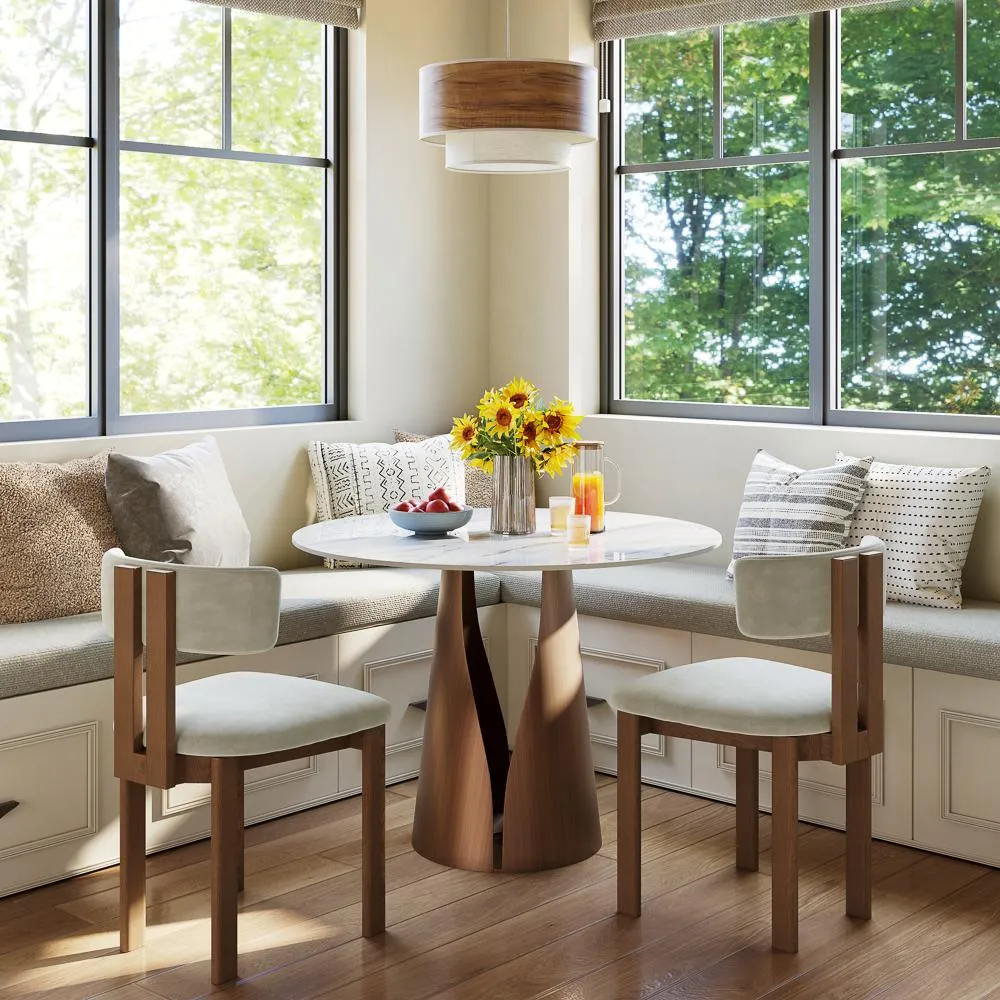
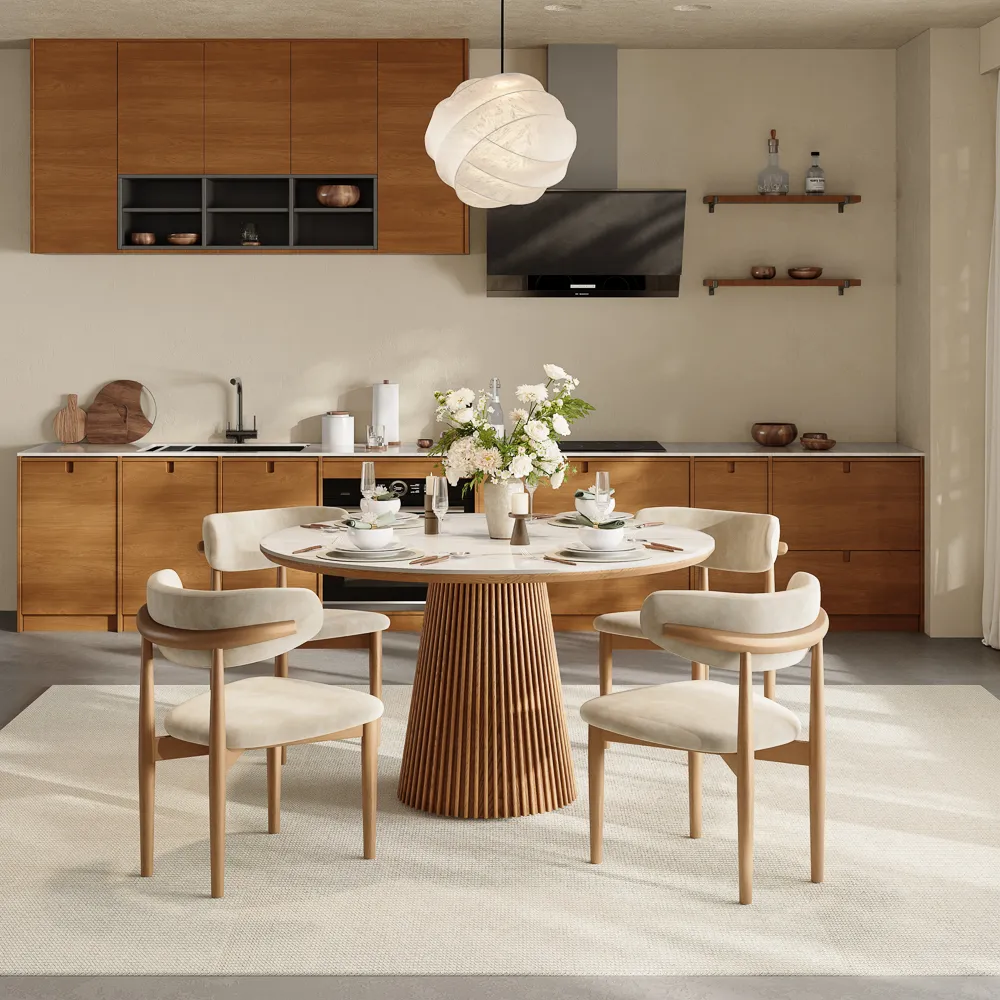
Round works best in square or nearly square rooms, small apartments, and households where everyone-talks-to-everyone matters more than maximum seating. The trade-off: a round table that seats 6 takes up significantly more square footage than a rectangular table of equivalent capacity. A 60-inch round needs roughly a 12-by-12-foot room to have proper clearance. Size for size, round tables are also harder to add a seat to informally.
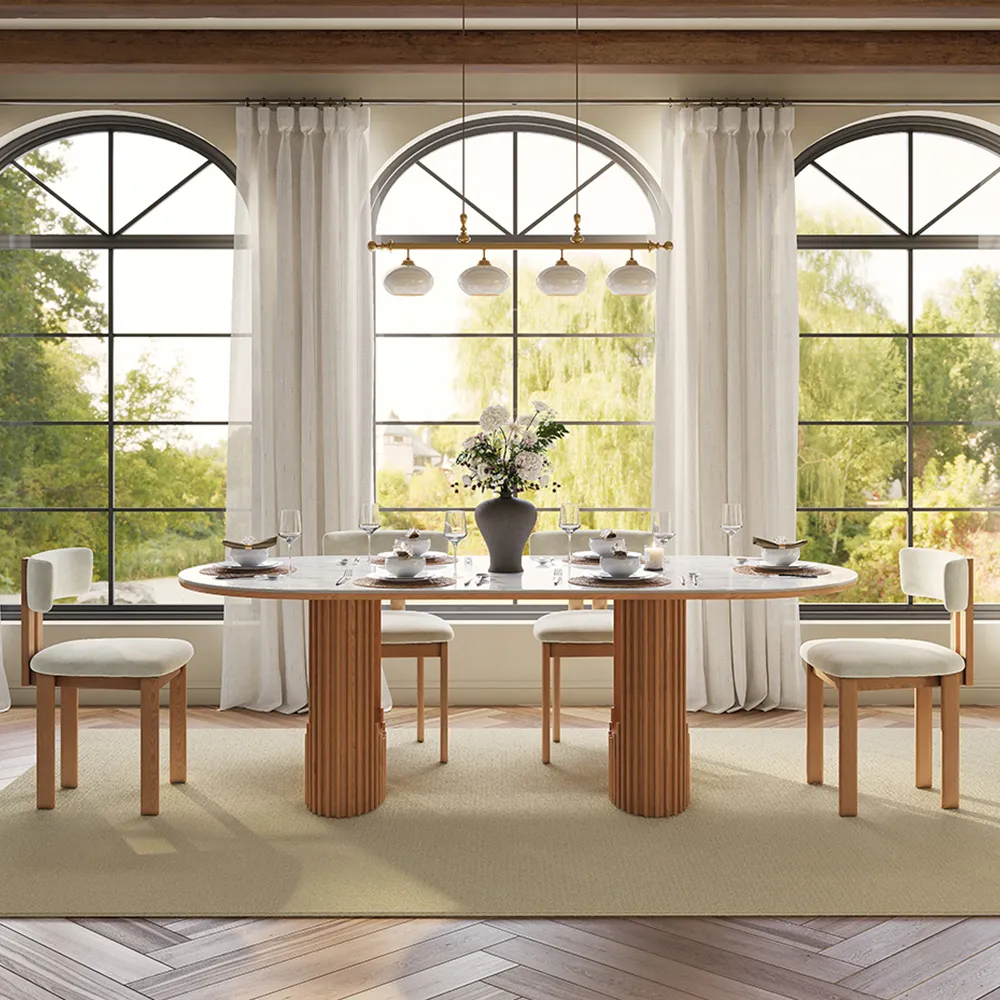
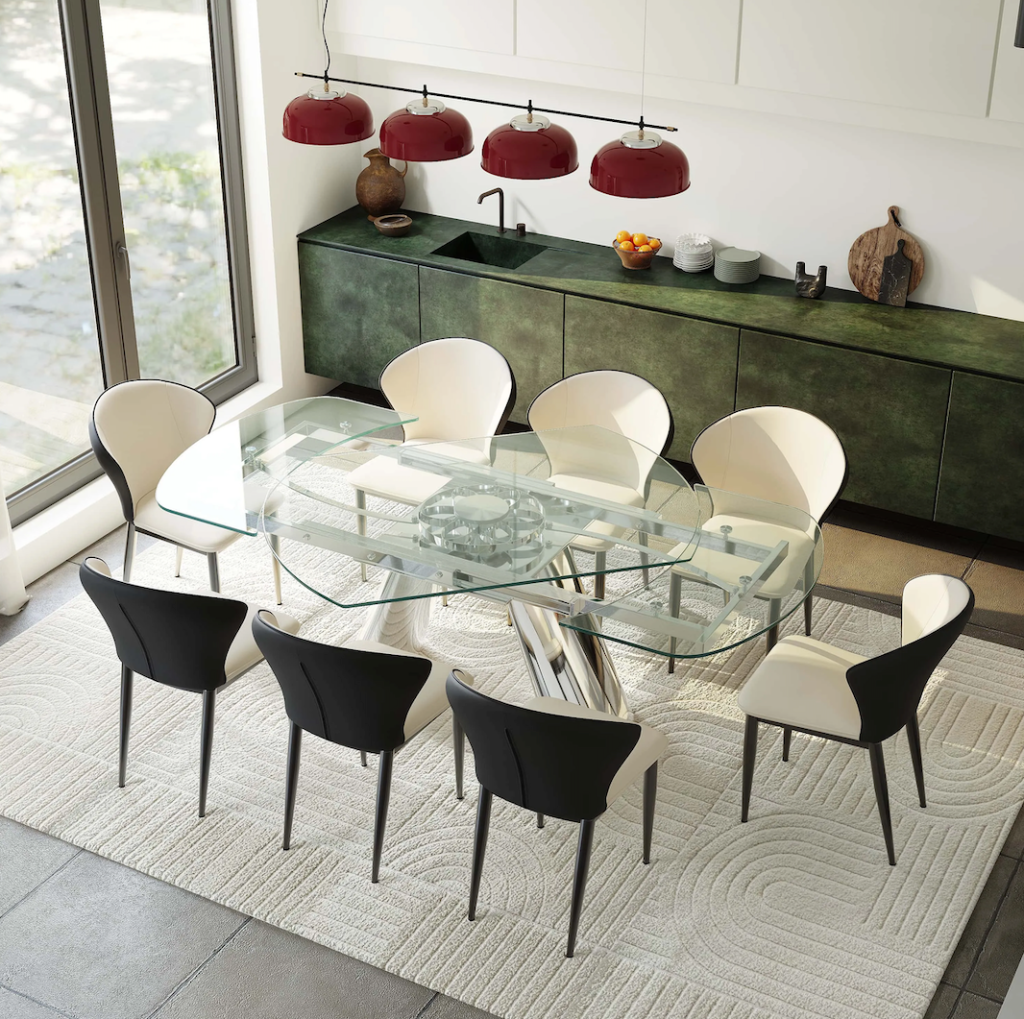
Oval is chronically underrated. It gives you the curved-corner friendliness of round — no sharp corners in walkways, better traffic flow — with the rectangular room efficiency that round loses. An oval around 72–78 inches long seats 6 without demanding a near-square room to do it. If your household has kids, pets, or anyone who circulates around the table frequently, oval often outperforms both rectangle and round in real use.
Counter height (36-inch table, 24–26-inch stool) is worth considering if your dining area connects directly to a kitchen island, or if you’re working with a compact footprint where the visual lightness of stools helps the room feel larger. The practical trade-off: less comfortable for long meals, and not ideal for young children whose feet dangle.
For chair style, the single most overlooked factor is whether the chairs have arms. Armchairs feel generous and look good in photos. But in actual daily use, armless chairs tuck further under the table (freeing walkway space), fit more people per linear foot, and are significantly easier to clean around. For family tables especially, the practical case for armless chairs is strong.
Best Sets for Small Spaces
Small space dining is about compression without sacrifice. The goal is a setup that functions for daily use without dominating the room it’s in.
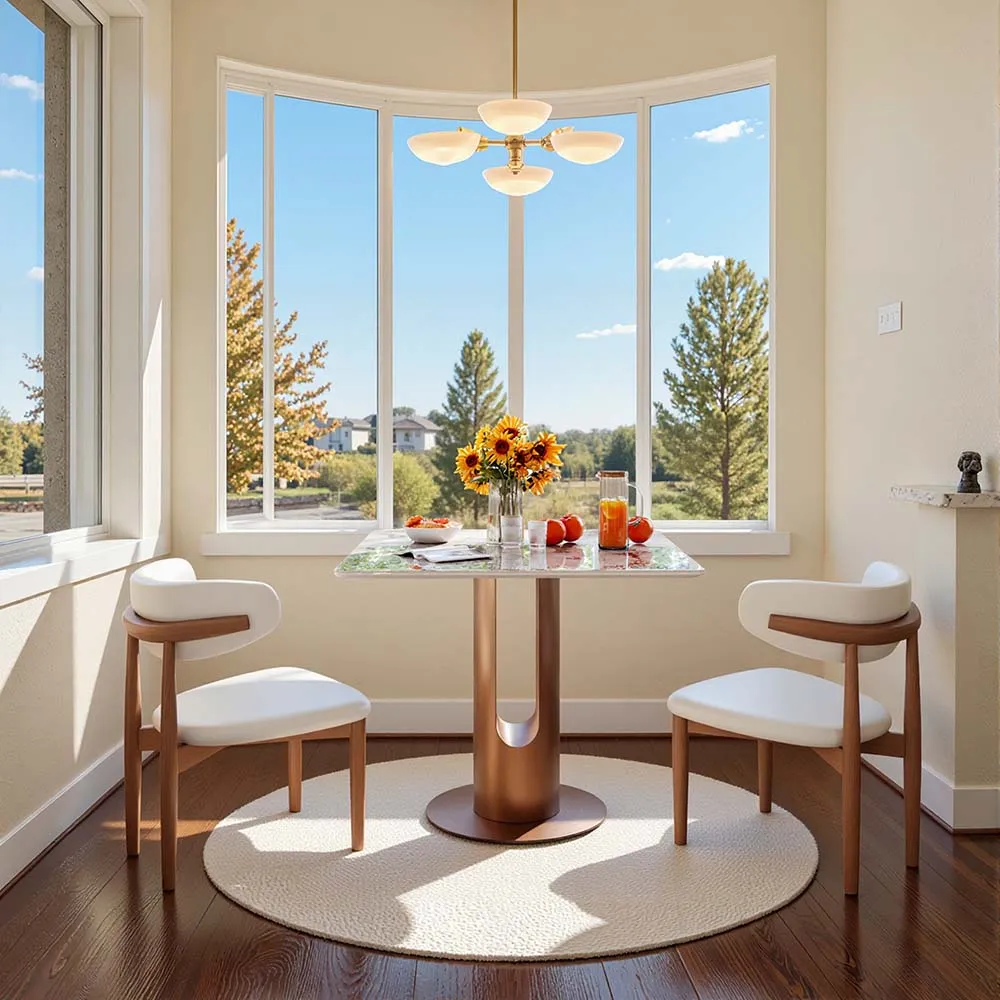
Round or oval tables with pedestal bases are almost always the right answer for tight rooms — no corner legs blocking chairs, no sharp edges creating pedestrian hazards, and the single-base design reveals more floor visually. A 40–48-inch round seats 4 and can genuinely fit in a 9-by-9-foot room with workable clearance. That’s smaller than most people assume is possible.
Counter-height sets also deserve attention in small apartments. The vertical proportion of a 36-inch table with stools can make a low-ceilinged room feel taller, and the stools tuck completely under the table when not in use — recovering floor space that standard dining chairs don’t give back.
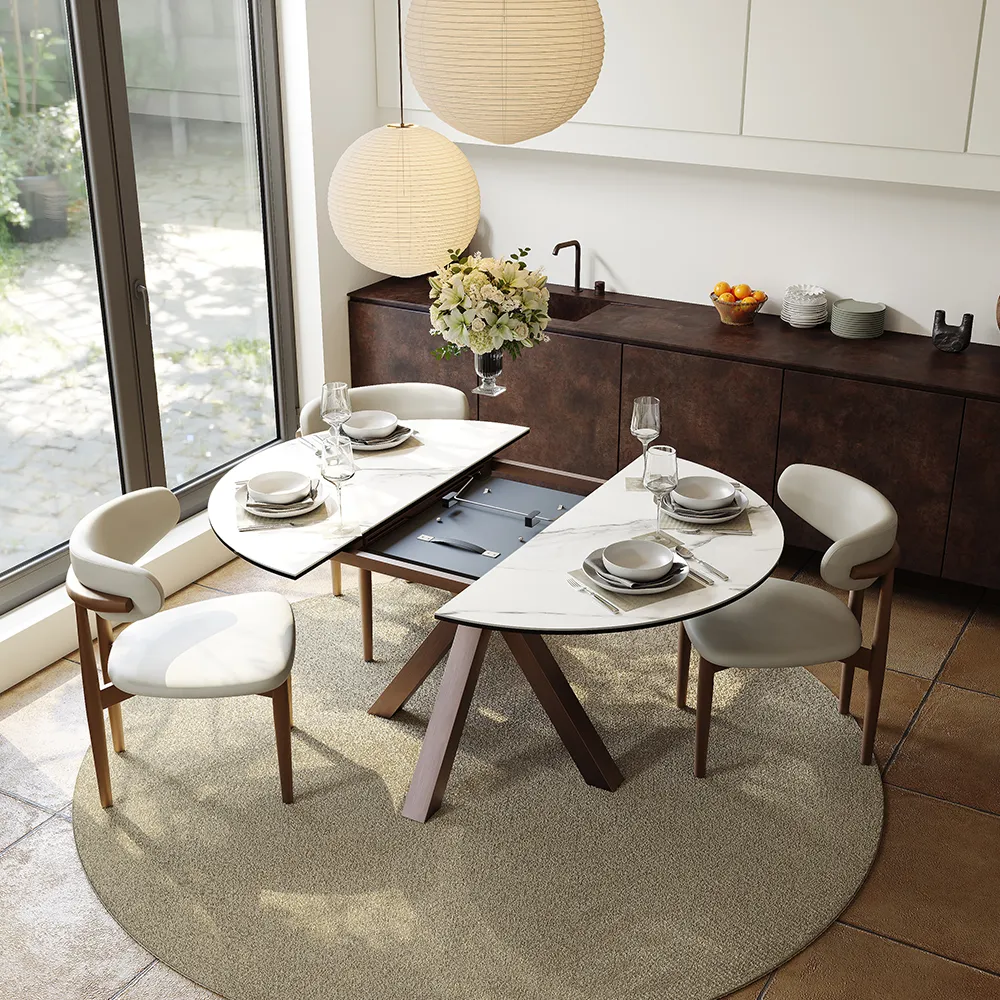
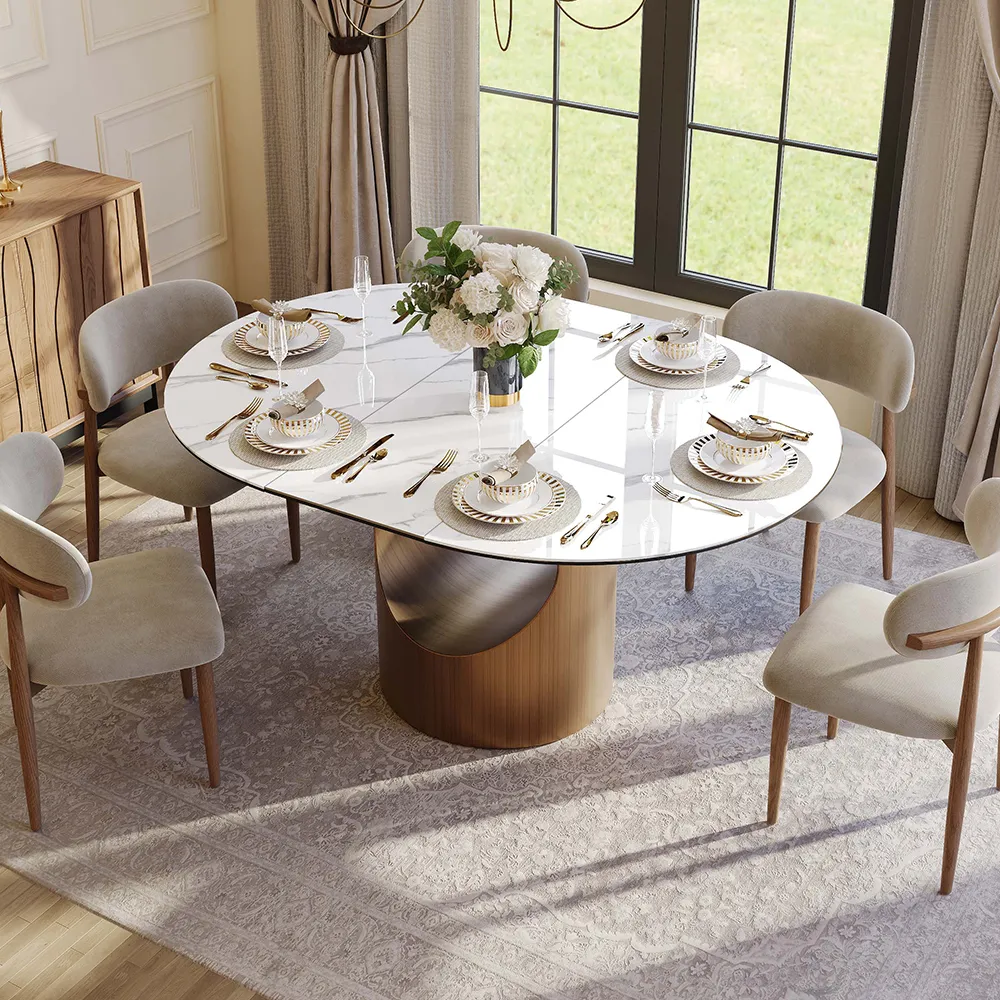
Extendable tables are the small-space best friend that more people should use. Live compact every day, expand for guests when it actually matters. The trade-off is that most extension mechanisms create a visible seam in the tabletop — worth knowing before you expect a seamless surface.
Best Sets for Family Use
Family use means the table has to work for dinner, homework, crafts, laptop sessions, and the occasional dinner party — often on the same day, in that order. The design criteria are different from what most furniture editorial covers.
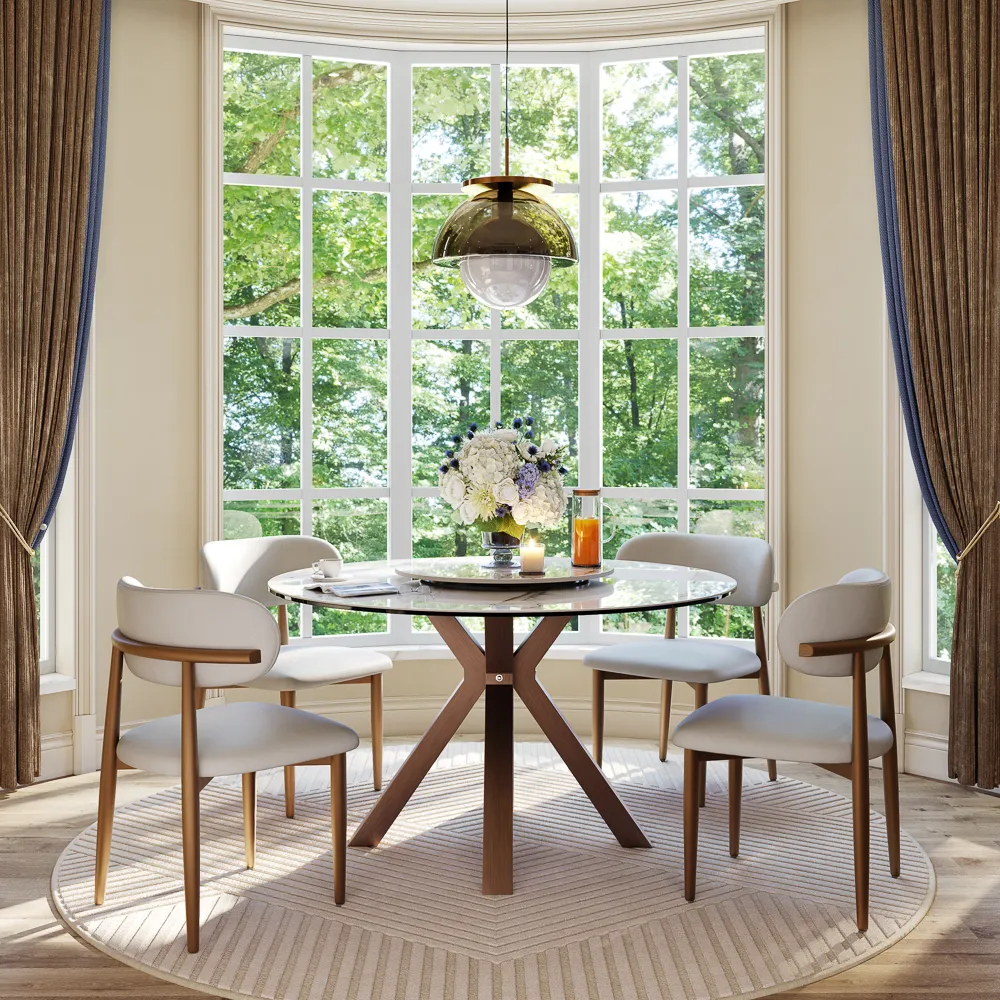
Material is the first honest conversation. Sintered stone tops handle heat, spills, and scratches without needing coasters, trivets, or regular oiling. You wipe them down. Done. Solid wood, particularly FSC-certified walnut, develops character over time and can be refinished — but it needs more daily attention and doesn’t love standing water. Both are legitimate choices; they just require different household habits.
Pedestal or trestle bases outperform four-leg corner bases for family tables. Anyone sitting at a corner of a four-leg table eventually fights the table leg for legroom — a minor irritation that becomes a daily one over ten years. A pedestal base eliminates that entirely.
For seating, benches along one side are underrated for families with young kids. A bench seats more people per linear foot than individual chairs, kids can slide in and out without dragging a chair, and a bench pushed flush against the wall frees significant circulation space when the table isn’t in use.
For families specifically, POVISON’s dining sets with bench seating include options that pair a sintered stone or solid walnut table with a bench on one side — the combination that tends to work best in real family households over the long run.
What Modern Buyers Should Compare Online
Buying a dining set without sitting in the chairs is a real limitation. Here’s how to compensate.
Read specifications, not descriptions. The product description will tell you the table is “spacious” and the chairs are “comfortable.” The specification table will tell you actual dimensions, weight capacity, seat height, seat depth, and materials. Those numbers are the actual purchase decision.
Understand the material claims. “Wood-look finish” and “solid wood” are not the same thing. Solid wood can be refinished; MDF or particle board cannot. “Sintered stone” and “faux stone” are not the same thing. If the listing doesn’t clearly specify material composition — not just finish appearance — that ambiguity is itself a red flag.
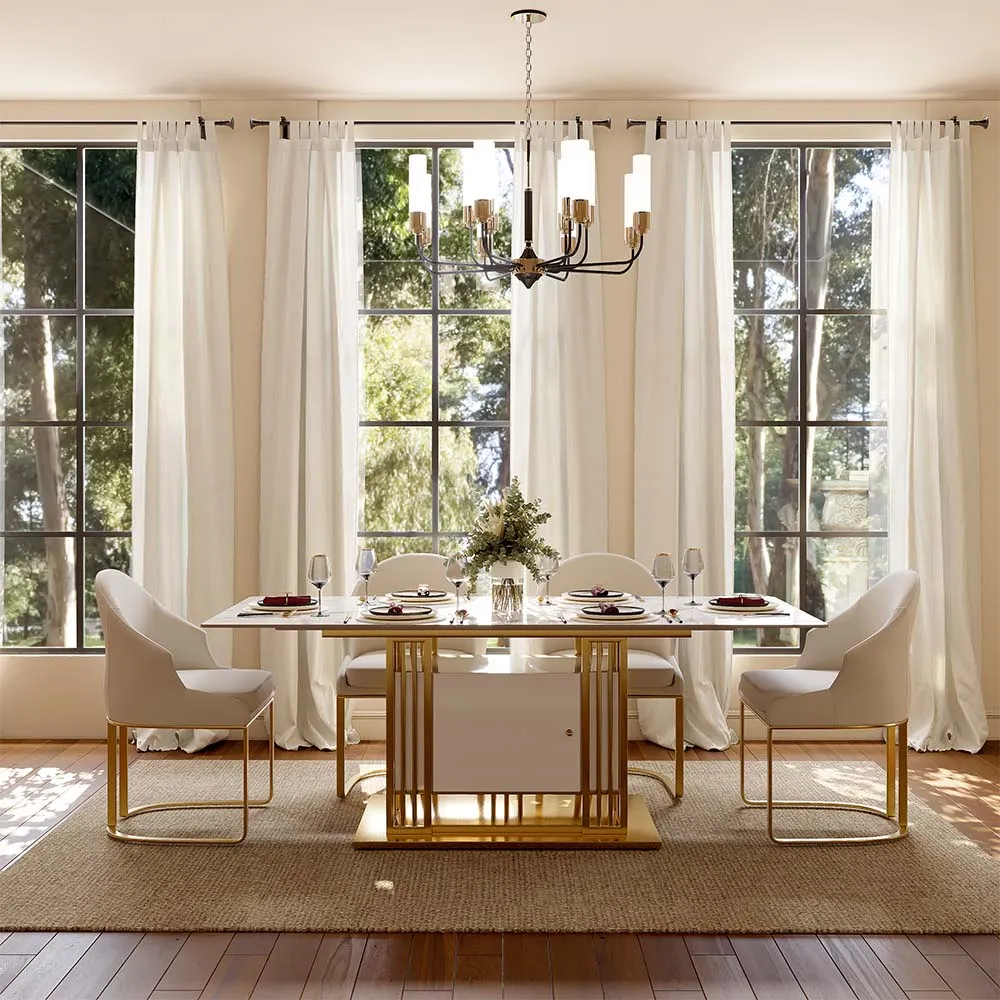
Check real customer photos. Staged product photography is lit, styled, and color-corrected. Customer photos from actual homes tell you what the finish actually looks like in normal lighting, and whether the proportions read right in a real room. Pay particular attention to photos from rooms that look similar to yours.
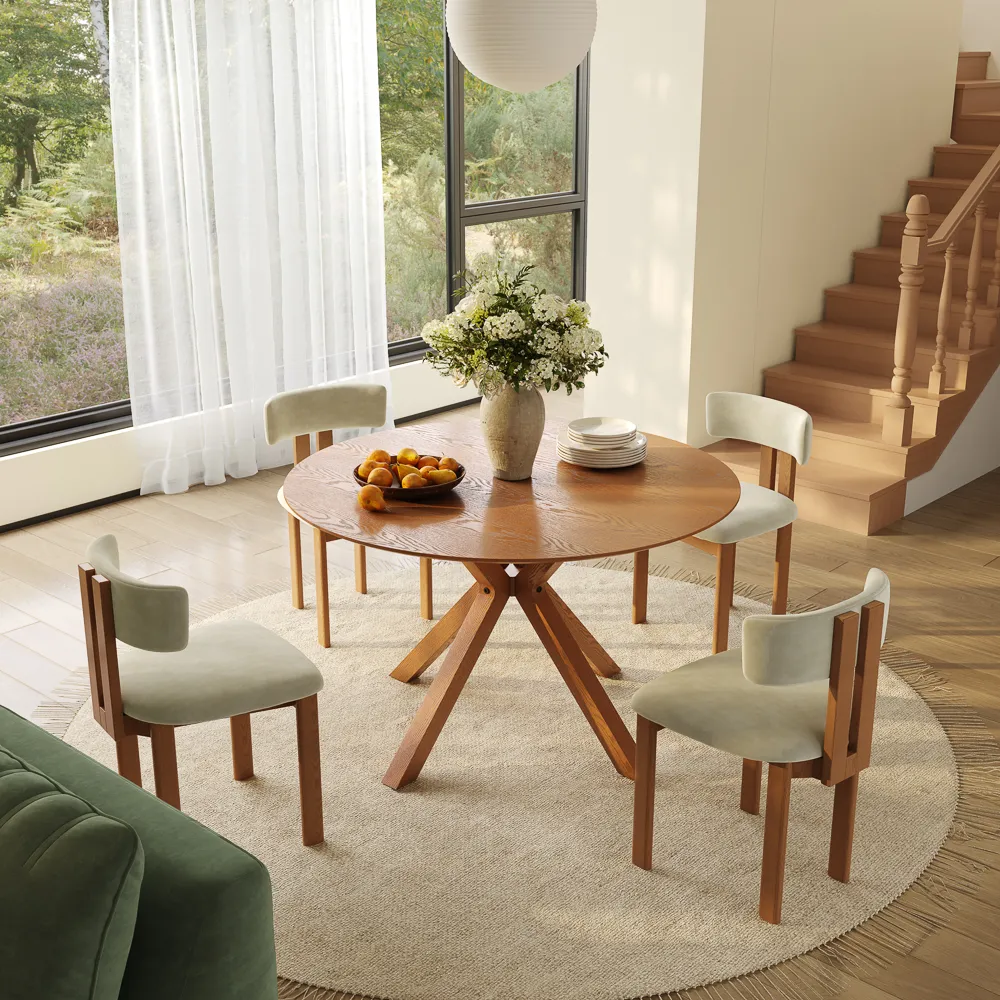
Verify the delivery terms before ordering. “Free delivery” can mean curbside drop-off (you move it inside yourself), threshold delivery (just inside the front door), or white-glove service (placed in the room). For a dining set — which is heavy, multi-piece, and awkward to maneuver — the difference between these options is significant, especially if you’re above the ground floor or have tight hallways. Always confirm the specific delivery service before completing an order.
Know the return terms in full. What’s the return window? Who pays return shipping on a 200-lb set? Is there a restocking fee? Is packaging required to be intact? These details matter far more than they seem when you’re browsing — and they matter enormously if something arrives damaged or doesn’t work in the room.
POVISON’s sets ship fully assembled where possible, which removes the assembly variable entirely and changes the delivery experience significantly. That “zero tools” arrival is genuinely useful for large sets — not a marketing claim.
Common Mistakes That Slow Down Room Completion
I’ve seen the same mistakes derail dining room projects repeatedly. These are the ones worth avoiding before you’re in the middle of them.
Buying the table before measuring the room. It seems obvious until you’re standing in a showroom and the table looks great. Tape out the footprint first. Walk around it. Live with the masking tape outline for a day before committing to the actual piece.
Underestimating assembly complexity. A dining set that requires significant assembly takes time, tools, and patience — usually more than the instructions suggest. If you’re not someone who genuinely enjoys furniture assembly, this is worth factoring into your decision, not ignoring it.
Choosing chairs for looks without sitting in them. Chair comfort is deeply personal. Seat depth, back angle, and cushion firmness all affect whether you actually want to sit in the chair for a ninety-minute dinner. Photos tell you nothing about this. If you can’t sit in the chair before buying, read reviews specifically about long-meal comfort, not just “looks great in the room.”
Buying a size up “for hosting” when the daily footprint doesn’t work. A table that’s too big for the room every day is a worse outcome than a table that occasionally feels tight when you have guests. Prioritize the daily use case.
Not checking return windows early enough. Most dining sets have a return window of 30 days or less. If your room takes three weeks to paint, your furniture gets delivered, and you realize it doesn’t work — the clock was already running.
One way to reduce several of these risks at once: sets that arrive fully assembled remove the assembly mistake entirely, and seeing the complete piece in your actual room on day one — rather than gradually building toward it — makes sizing and fit issues obvious while the return window is still open.
FAQ
Are dining sets better than mixing pieces?
Sets are better when you want faster room completion, guaranteed proportion alignment between table and chairs, and less design decision-making. Mixing is better when you have a specific vision, enjoy the curation process, and have the time to audition pieces. Neither is objectively superior. The decision depends on how you prefer to work and how specific your requirements are. For a thorough comparison: mid-century modern dining set vs. mixing and matching walks through both approaches honestly.
What style works best in modern homes?
“Modern” covers a wider range than the word suggests — mid-century modern, contemporary minimalist, Japandi, and transitional all fall under the umbrella. The more useful question is what materials and finishes already exist in your home. Warm walnut tones pair well with mid-century silhouettes and softer upholstered chairs. Cooler stone tops and metal bases lean contemporary. For shape-to-style matching, choosing a dining table shape for your lifestyle covers the style compatibility piece in practical terms.
Are dining sets good for apartments?
Yes — often better suited to apartments than buying pieces separately. Sets are calibrated for specific footprints, the proportions are pre-solved, and many apartment-sized sets are designed specifically for smaller rooms. Round or oval sets with pedestal bases and armless chairs are the most space-efficient configurations for compact apartments. Counter-height sets work well where ceiling height allows. For specific small-space options: modern dining table set ideas for small spaces covers layouts and configurations in detail.
What should buyers know about delivery and returns?
Three things matter most. First: confirm your specific delivery service — curbside, threshold, and white-glove are meaningfully different, especially for multi-piece sets above the ground floor. Second: inspect everything before the delivery crew leaves and document any damage photographically before signing off. Third: read the full return policy before ordering, not after. Know the window, the restocking fee, if any, and whether packaging must be intact. For large furniture, return logistics are rarely as simple as the return policy page makes them sound.
Conclusion
The dining room set decision has more surface area than it initially appears — room size, daily use, shape, material, delivery logistics, and return terms all factor in before you get to what anything actually looks like.
The sequence matters. Measure first. Establish your real daily use case. Then narrow by shape and seating count. Material and style choices are the last step, not the first.
If you know your room can handle a 4-seat setup, start with our best dining sets for 4. If you’re working with a 6-person household or a larger space, the dining room sets for 6 guide goes deep on specific products and room requirements. And if you’re still working out which shape makes sense for how your household actually lives, the dining table shape guide is the right next read.
Related Reading:


