 By Charles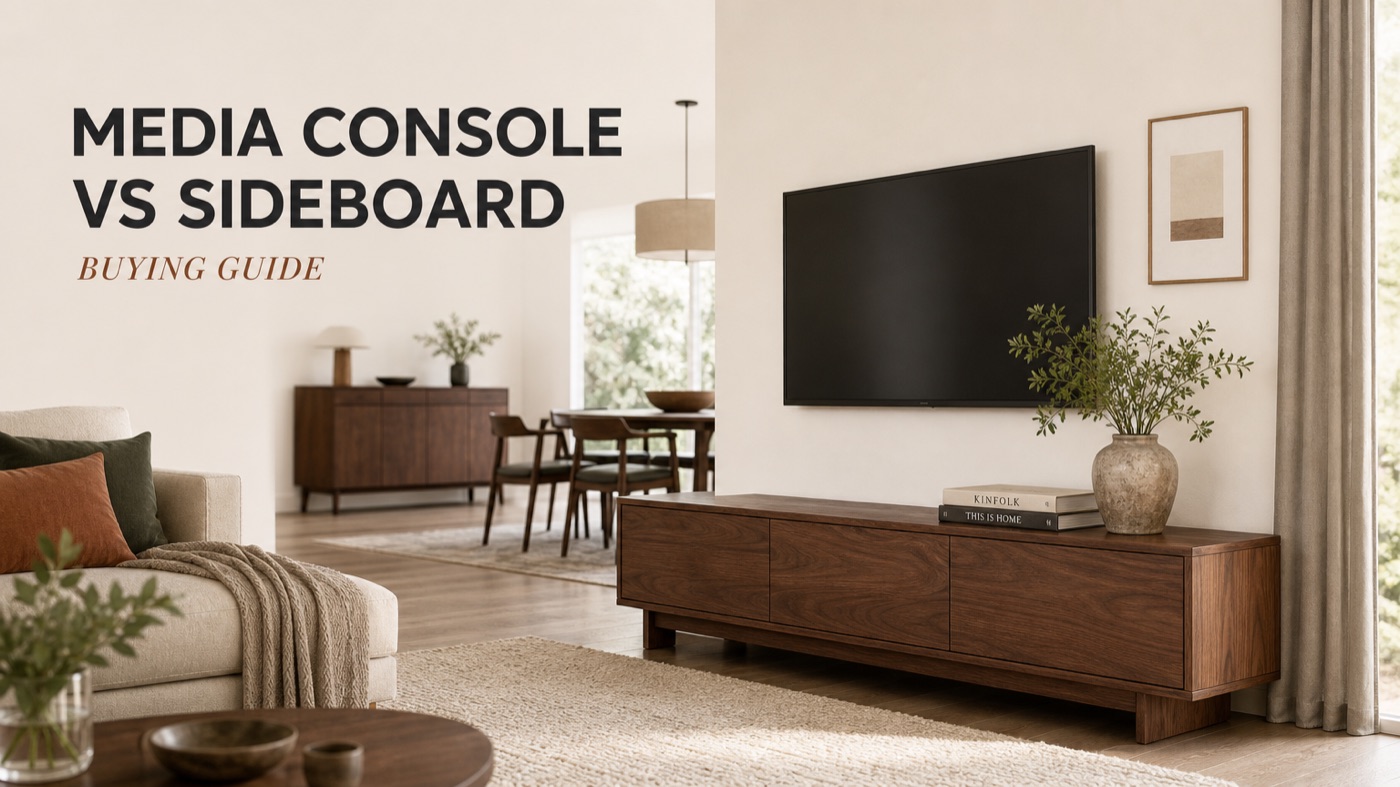
A media console is designed mainly for TVs, electronics, and cable management, while a sideboard is designed mainly for storage and display. The two can look similar, but their best use depends on what you need to store.
Compare them this way:
- Media console: Usually lower, wider, and built with cord cutouts, open shelves, or ventilated storage for electronics.
- Sideboard: Often taller or more cabinet-like, with drawers and doors for dining items, decor, books, or general storage.
- Shared use: A sideboard can sometimes hold a TV, but only if it is stable, wide enough, and has a safe cable route.
If you use game consoles, routers, streaming devices, or a soundbar, a media console is usually more practical. It keeps devices accessible and helps manage heat and wires. If you mainly need closed storage in a dining room, entryway, or living room, a sideboard may be the better fit.
Height is another clue. Media consoles are usually low enough to keep the TV at a comfortable viewing height.
Sideboards may sit higher, which can make a TV feel too elevated for relaxed viewing.
For POVISON, compare media storage here: POVISON TV stands and sideboard-style storage here: POVISON storage cabinets.


