 By Kelvin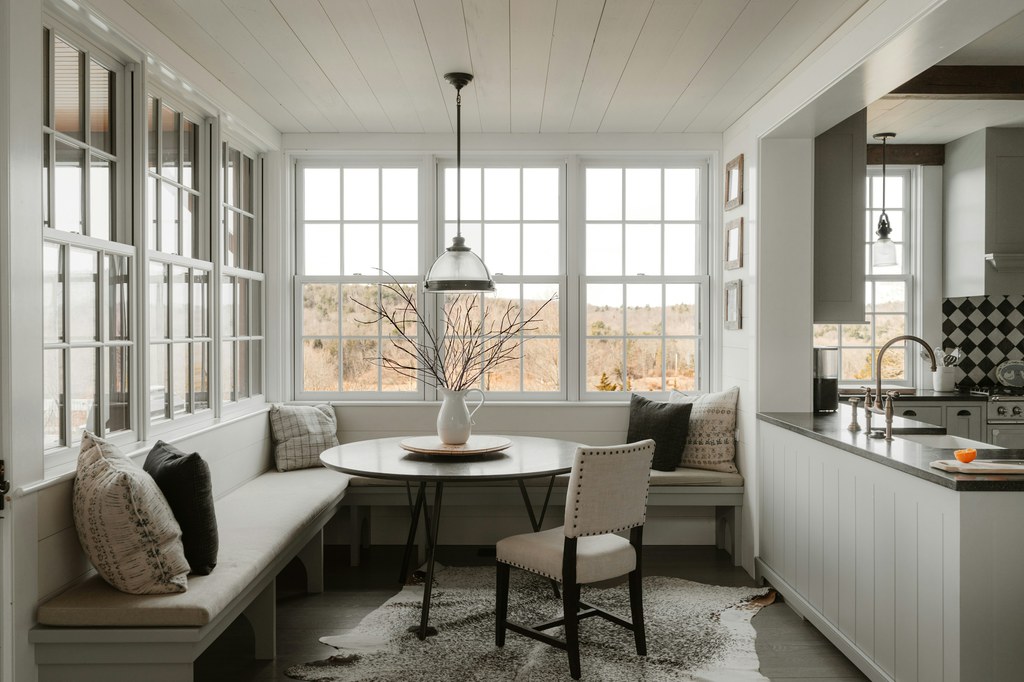
Introduction
Choosing a dining table shape is easier when you stop asking which one looks better and start asking how the room has to work. A round or square dining table can both seat four people, yet one may keep a busy kitchen path open while the other makes a window corner or breakfast nook more useful. This guide compares the two by dining-zone position, chair movement, everyday routines, and the number of people who actually sit down most weeks. It is written for homes where the table needs to do more than look good for one dinner.
Table of Contents
Round or Square Dining Table: What Is the Fast Answer?
Choose a round table when the dining area sits in the middle of an open room and people need to pass it from several directions. Choose a square table when the dining area has firm edges—such as a wall, window, banquette, or kitchen corner—and your household normally seats two to four. Neither is automatically better for every small room. The usable space comes from the table, chairs, and walking paths working together.
| Your Space or Routine | Better Starting Point | Why |
| Dining zone floats between the kitchen and living area | Round | Curved edges keep routes open from more than one side. |
| Compact, almost-square dining room for two to four | Round or square | Let chair clearance and daily use make the final call. |
| Window corner, wall-side area, or built-in banquette | Square | Straight sides use defined edges with less leftover space. |
| Table also handles laptops, homework, or projects | Square | Each person gets a clear, straight work edge. |
| Family-style meals, children, or frequent drop-in guests | Round, ideally with a pedestal | No sharp corners and seats can move more flexibly. |
| Six or more people most weeks | Neither | An oval or rectangular table usually gives better reach and seating. |
Which Shape Fits Where Your Dining Zone Sits?
Start with where the table lives, not the room’s total square footage. A table in the center of an open kitchen-living area behaves differently from one beside a window or between two walls. The first needs clear circulation from several directions; the second needs to use its boundaries efficiently. Those conditions can change the answer even when the two rooms are the same size.
Open-Plan Dining Zone in the Middle of the Room
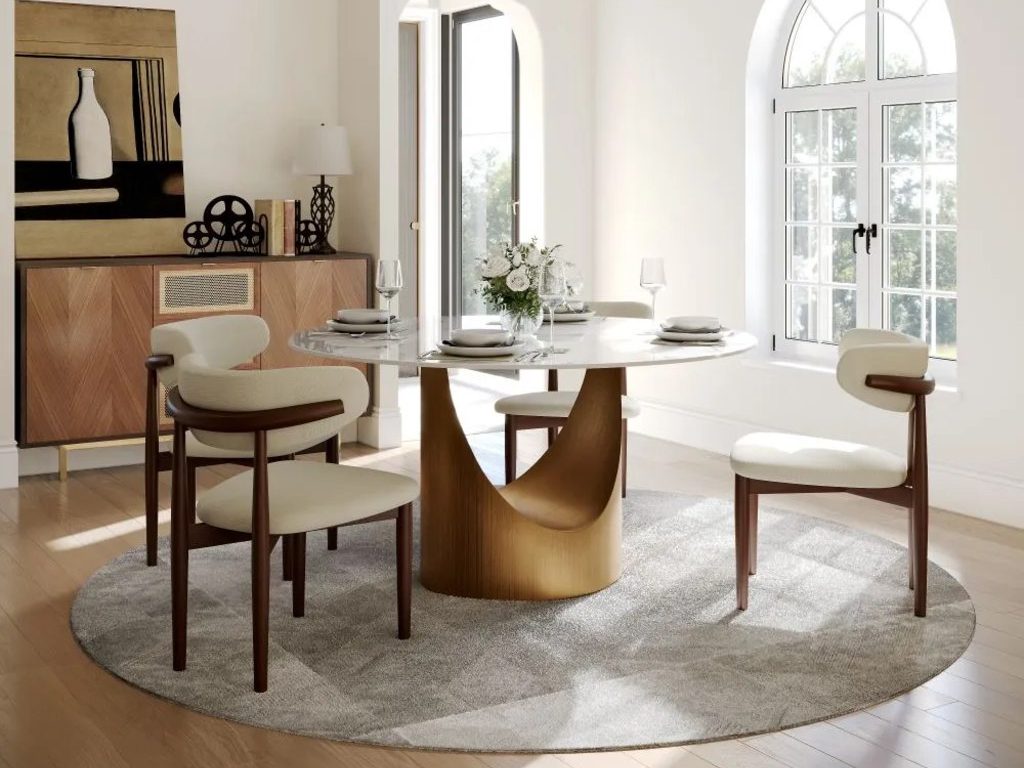
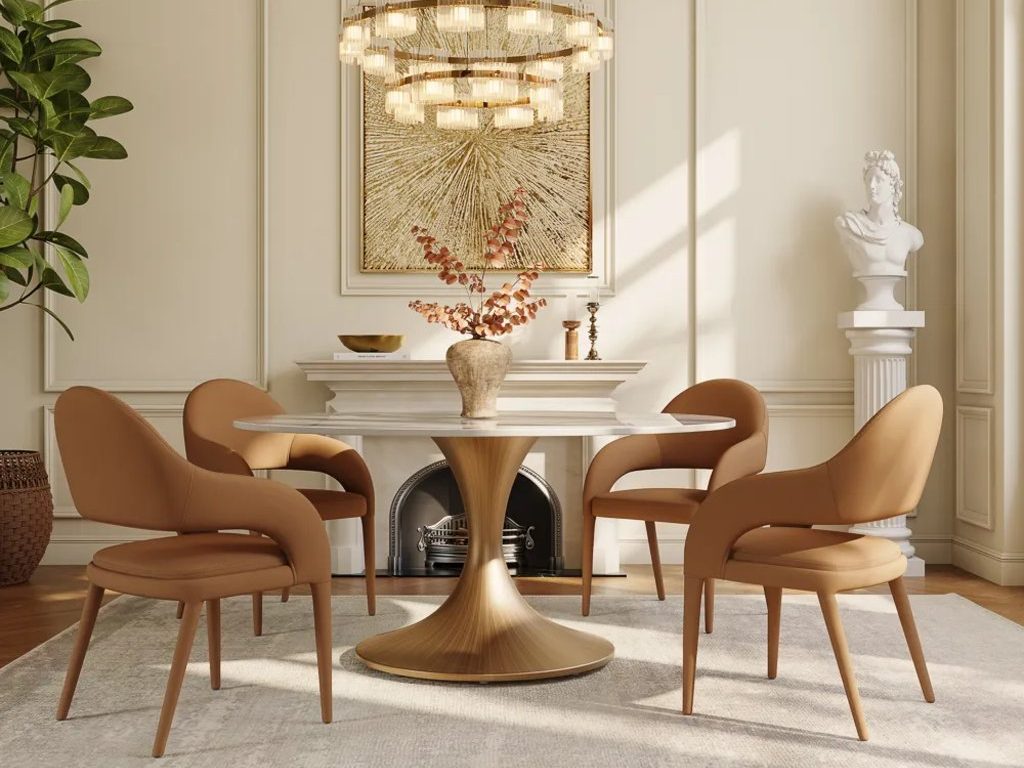
A round dining table often earns its place when the table sits between the island, sofa, and patio door. Without corners, it is easier to pass when somebody is carrying dinner from the kitchen or heading outside with a drink. A square table can still work when a rug, pendant, or sideboard clearly frames the dining area, but its corners should not point into the main route.
The broader question of how to choose a dining table for an open-plan space also depends on keeping the zone visually connected without closing off movement.
For a household of four in this kind of floating zone, the Hobart-Round Glossy Sintered Stone Dining Table keeps the footprint compact while avoiding hard corners in a shared walkway. Its sintered stone top is designed for everyday meals and hot serving dishes, while the metal pedestal leaves the space under the top more open for moving chairs when friends linger after dinner.
Dedicated Square Dining Room
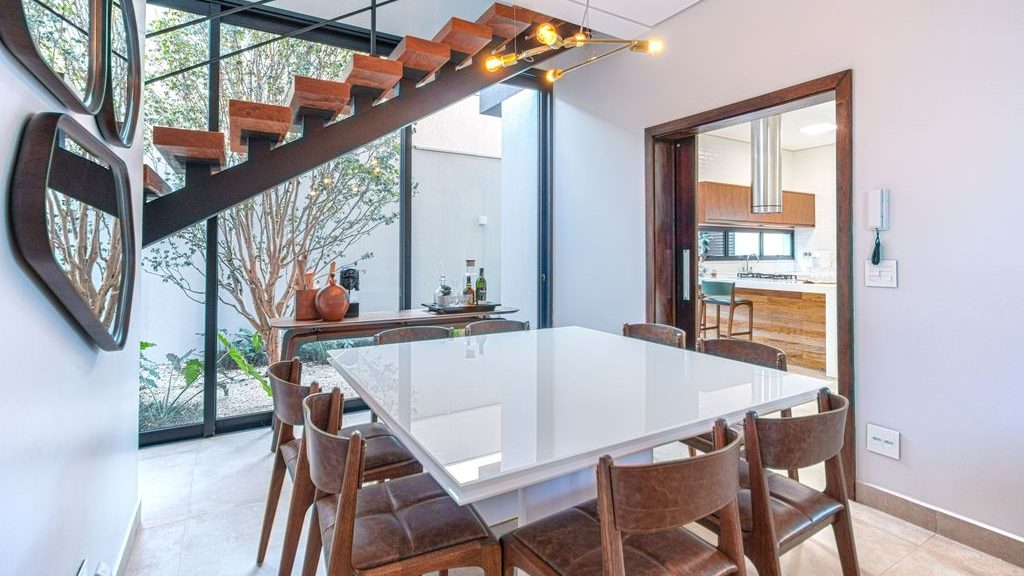
In a separate dining room that is close to square, both dining table shapes deserve consideration. Start with a round table if you want everyone facing inward, a softer visual center, or the option to shift an extra armless chair into place. Start with a square dining table when four regular seats, straight place settings, and a balanced layout matter more.
A square top also has a practical advantage when it shares duties with a laptop, school papers, or a board game. Each seat has a natural work zone instead of a curved edge. For a household that eats together most nights but uses the table for homework after dinner, that clear division can matter more than the visual softness of a round top.
Breakfast Nook, Window Corner, or Wall-Side Area
A small room does not always call for a round table. When one or two sides of the dining area meet a wall, window, or built-in bench, a square table can sit nearer to those edges and make the remaining side more useful as a walkway. It can also pair cleanly with a bench on one side and two chairs on the others.
Choose round when the nook is open on several sides or when people regularly slide around the table to reach another part of the room. The deciding factor is access, not just the number of inches on a floor plan.
How Do Flow and Chair Space Change the Choice?
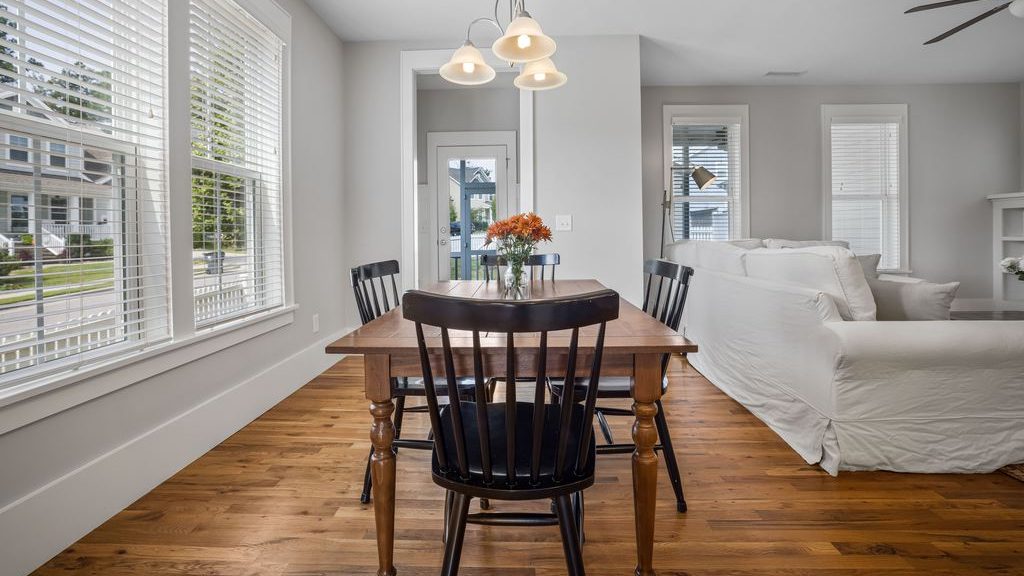
A table can fit on paper and still make dinner frustrating once chairs are pulled out. Measure from the table edge, not from the legs, to the nearest wall, island, sideboard, or sofa. For everyday chair movement, plan for at least 36 inches. Where people pass behind seated diners—especially between an island and the living room—42 to 48 inches feels more comfortable.
That is the same clearance logic behind how much space to leave around a dining table.
Before ordering, tape out both options on the floor:
- Mark the proposed diameter for the round table and the full width and depth for the square table.
- Add the depth of pulled-out chairs, not just the tabletop.
- Open nearby cabinet doors or the patio door.
- Walk from the kitchen to each seat as you would when carrying plates.
- Choose the shape that stays easy to pass when someone is already sitting down.
A round top helps most when the route needs to bend around the dining zone. A square top helps most when its straight edge can sit close to a boundary without interfering with chair access.
Which Shape Suits Your Everyday Routine?
Think about the 80 percent of meals that are ordinary. On a Tuesday night, a square table gives two people enough straight-edge space for a laptop, a worksheet, and dinner plates at the same time. It also keeps four regular place settings orderly when the table is used as a family work surface between meals.
A round table changes the experience of a slower meal. Everyone faces the center, dishes travel more naturally, and there is no seat that feels pushed to an end. It is especially comfortable for brunches where people stay at the table after the plates are cleared. If flexibility matters, a pedestal base can matter as much as the top shape: it removes corner legs that can limit knee room or prevent a spare chair from fitting.
For homes with young children or a dog that circles the table during breakfast, the absence of corners can be a useful practical benefit. That does not mean round is automatically safer or smaller in every room. A wall-side square table with clear chair space may be the calmer daily layout than a round table squeezed into the same corner.

When Should You Choose Neither?
Move beyond round versus square when the room or guest count asks for a different geometry. A dining area that is clearly longer than it is wide usually benefits from an oval or rectangular top. The same is true when six people gather most weeks, when you prefer a bench along one side, or when platters need to stay within easy reach.
Among common dining table shapes, oval and rectangular options are often the better answer for long rooms because they follow the room’s axis instead of making the center feel crowded. It also helps to consider whether an extendable dining table is worth it before choosing a permanently oversized table.
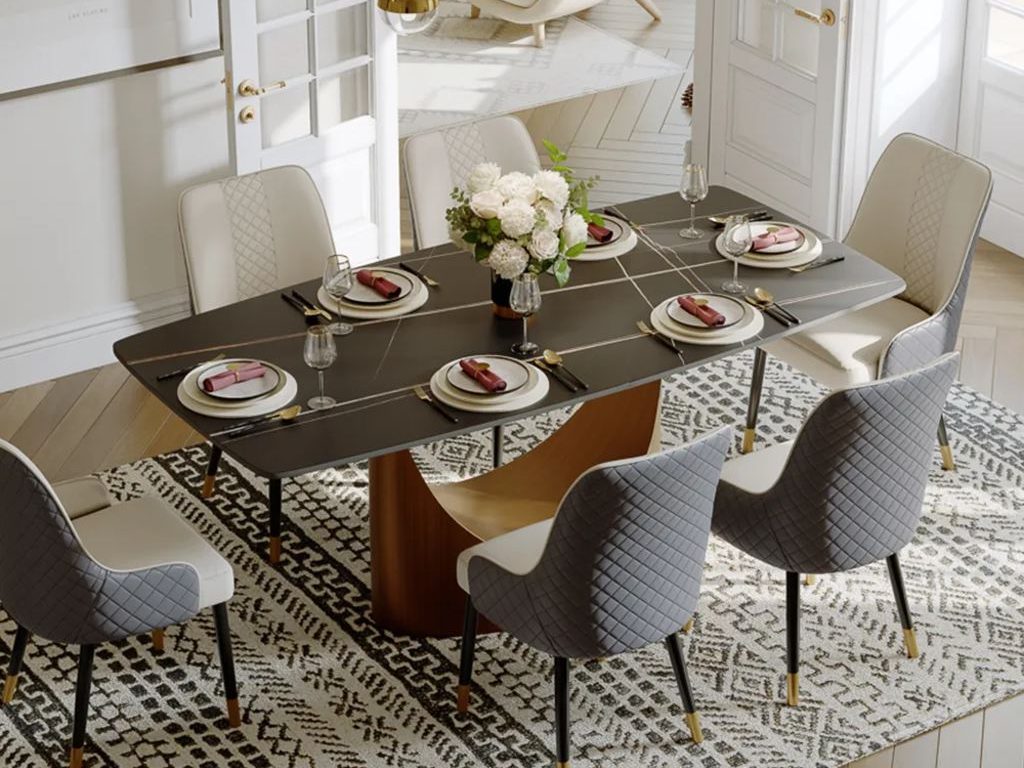
For a long, defined dining bay, the Hobart-Rectangular Sintered Stone Dining Table offers a roughly 63-by-35-inch surface for four to six people. Its matte sintered stone top is designed to resist scratches, heat, and stains, while the long edge can align with a kitchen island or wall. That helps a narrow room stay organized when a square footprint would leave awkward gaps.
Conclusion
The right round or square dining table is the one that works after chairs are pulled out, dinner is on the table, and someone needs to pass behind a seated guest. Favor round for a floating dining zone, shared circulation, and sociable meals. Favor square for a wall-side nook, a fixed four-person routine, or a table that also needs to handle work and homework. When the room is long or the guest list is regularly larger, step outside the comparison and choose a shape that matches the real layout.
FAQ
Do I Need a Round Rug Under a Round Dining Table?
No. A round rug can echo a round dining table, but the rug shape should follow the room and furniture zone first. In a long open-plan space, a rectangular rug may define the dining area more clearly, even under a round table. The rug should extend far enough for chairs to stay on it when pulled back.
Can Upholstered Chairs Fit Around a 47-Inch Round Dining Table?
They can, as long as the chairs are not overly wide or heavily armed. A 47-inch round dining table is generally more comfortable with four standard dining chairs than with four oversized lounge-style chairs. Check each chair’s full width and leave enough space for people to sit without their elbows or chair arms touching.
Do All Four Chairs Need to Match Around a Square Dining Table?
No. Matching chairs create a more formal, symmetrical look, but a square dining table can also work with two side chairs and two different end chairs. Keep the seat heights close and avoid mixing chairs with dramatically different visual weight, or the table may start to feel uneven rather than collected.
What Should I Measure Before a Dining Table Is Delivered?
Measure the delivery path as carefully as the dining area. Check the front door, elevator, hallway turns, stair landings, and the room entrance. For a round table, confirm the boxed diameter can clear tight corners. For a square table, measure both the tabletop width and the packaged depth, especially in apartments with narrow hallways.
Should the Dining Light Match the Table Shape?
It does not have to match exactly, but the fixture should cover the usable tabletop without crowding the room. A single centered pendant usually suits a round or square table. Over a larger square table, choose a fixture wide enough to light all four place settings rather than creating a bright spot only in the middle.


