 By Jenny Smith
Introduction
We’ve all seen it: a flimsy, wobbly stand under a big TV, doors skewed, cables everywhere, and a subtle fear it might tip. A high quality tv stand feels totally different—solid when you lean on it, smooth to the touch, quietly stylish, and safe for kids and pets. True quality blends stability, long-term durability, thoughtful design, and healthy materials. In this guide, you’ll learn how to judge materials, construction, finish, function, long-term value, and how to evaluate stands both in-store and online.
Materials First: The Foundation of a High Quality TV Stand
Solid Wood, Engineered Wood & Metal – What Lasts and What Warps
Solid hardwoods like oak, walnut, and maple stay flatter, hold screws better, and age gracefully with small dents instead of big chips. Cheaper softwoods and low-grade particleboard are lighter, easier to damage, and more likely to sag under a large TV. High-quality plywood or dense MDF is fine for shelves and interior panels if edges are sealed and the case is based or frames add great stability to extra-wide stands, especially for 70–80 inch TVs.
Quick material comparison
| Material | Durability | Moisture Resistance |
| Solid hardwood | Excellent | Good (sealed) |
| High-grade plywood | Very good | Good |
| High-density MDF | Good | Fair–Good |
| Low-grade particleboard | Poor | Poor |
| Metal frame + wood | Excellent (frame) | Excellent (frame) |
Sustainable, Low-VOC Choices for a Healthier Living Room
A genuinely high quality tv stand also respects your indoor air. Furniture finishes and glues can release VOCs (volatile organic compounds), and indoor VOC concentrations can be up to ten times higher than outdoors if a space isn’t well ventilated (data from the U.S. Environmental Protection Agency, 2025). Look for FSC-certified wood, CARB-compliant panels, and “low-VOC” or “water-based” finishes in the specs.
When I switched my own media wall to low-VOC pieces, that harsh “new furniture smell” faded in days instead of weeks, and the room felt immediately more livable. Sustainability also lines up with demand: 81% of furniture buyers say they’d pay more for sustainable items (fall/winter furniture study by Provoke Insights, 2023).
Joinery & Construction: How Your TV Stand Is Actually Built
How to Spot Strong Construction in a High Quality TV Stand
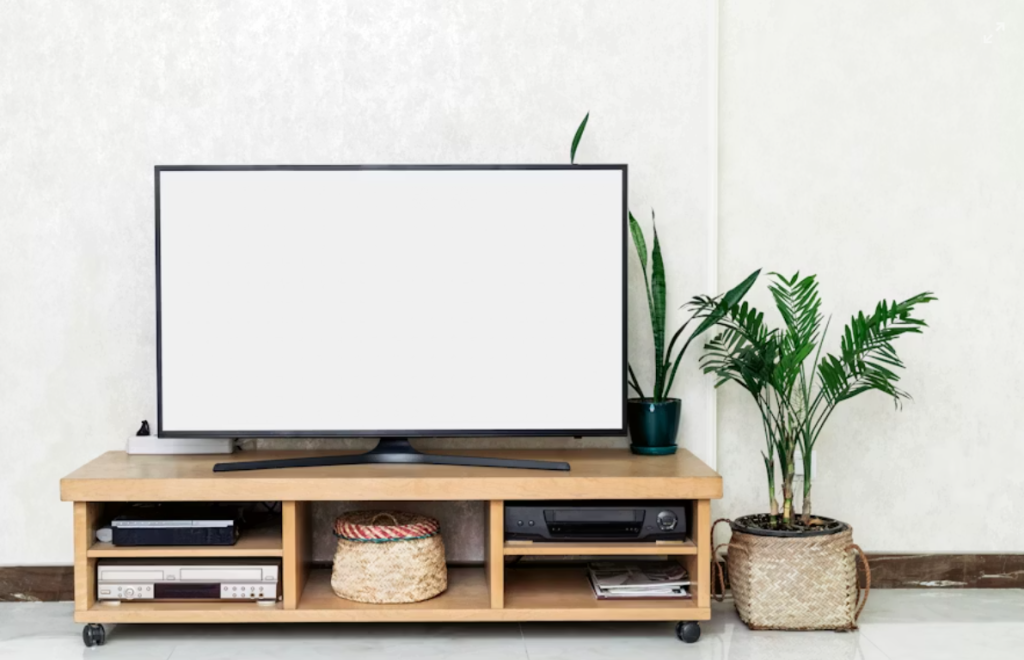
Under the pretty exterior, joints do the real work. Strong signs include dovetail drawer boxes, mortise-and-tenon or dowel-and-screw frames, and solid corner blocks tying the base together. Cheap shortcuts look like thin cam locks, visible staples, and butt joints where panels just butt and rely on a few screws. In person, press sideways on the stand: it shouldn’t rack or twist, and joints shouldn’t open into hairline gaps. For long, low stands, check that there’s a center support or leg so the top doesn’t bow over time.
Hardware, Assembly & Overall Stability
Hardware is where daily life either feels smooth or annoying. Quality signs include soft-close hinges, full-extension drawer slides, metal corner brackets, and adjustable levelers on the feet so the stand doesn’t rock on slightly uneven floors. Fully assembled stands often have stronger, factory-set joinery and arrive square; flat-pack is fine if panels are thick, hardware is metal (not flimsy plastic), and instructions show plenty of cross-bracing. When I helped a friend assemble a bargain flat-pack stand, we spent two hours tightening cam locks—and it still wobbled if you nudged one corner. At home, do a gentle shake test, open all doors and drawers together, and press diagonally on the top to see if anything twists.
Finish Quality: The Details You See and Feel Every Day
Surface Smoothness, Color Consistency & Edge Treatment
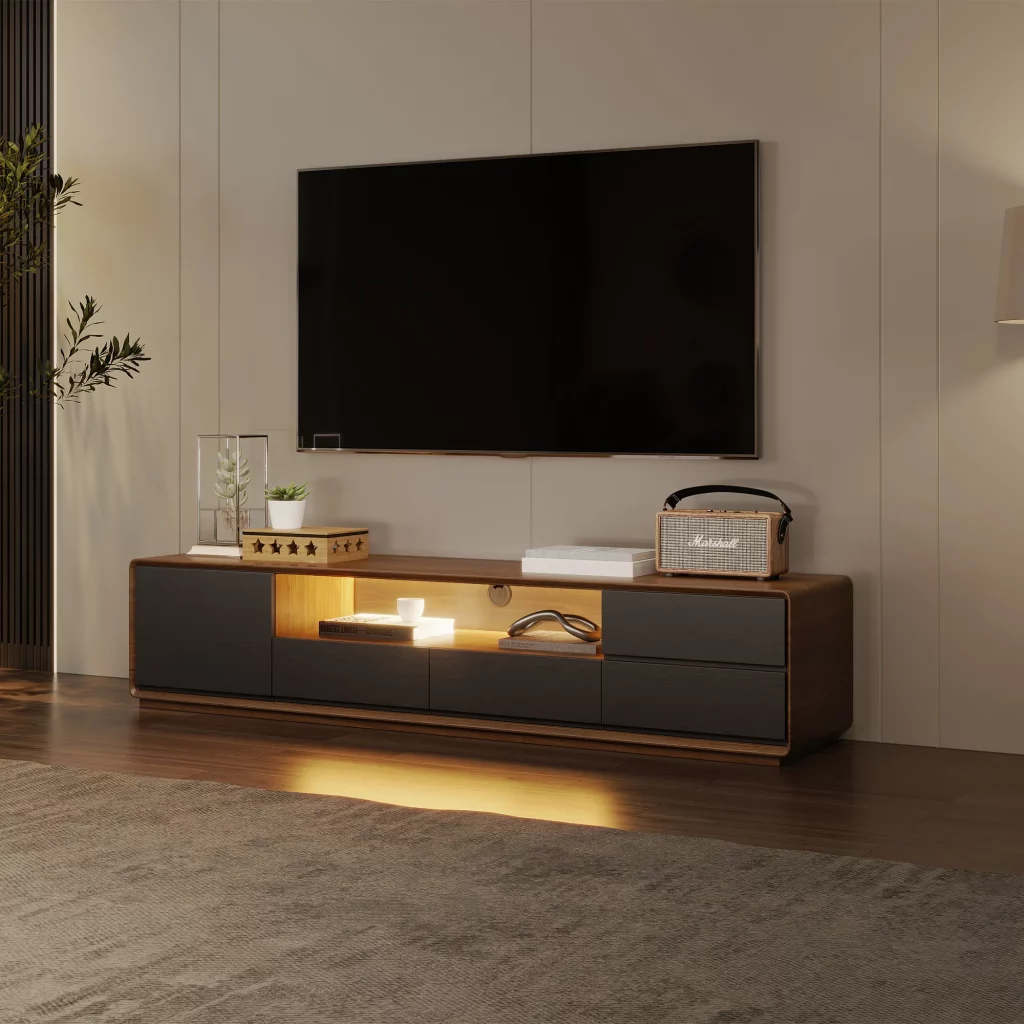
Even the best wood looks cheap under a sloppy finish. Run your hand along the top and edges; they should feel smooth, with no sharp corners or rough patches. Look across the surface in good light to check for an even sheen instead of dull and shiny patches. Stain or paint should match between doors, drawer fronts, and side panels, with no obvious overspray lines. Inside, quality stands have sealed or fully finished drawer sides and shelves instead of raw, splintery particleboard. Your mental checklist: smooth to the touch, consistent color, and no flaking or cloudy patches around edges or corners.
Protective Coatings, Scratch Resistance & Everyday Wear
A decorative single-coat finish looks good in photos but fails fast in real life. Higher-quality stands use multi-layer coatings—often a stain plus clear lacquer or polyurethane—that resist scratches and cup rings. If you’re in a store, do a discreet fingernail or pressure test on the underside or back corner; it shouldn’t mark easily. At home, coasters, felt pads under decor, and a soft cloth for dusting go a long way. Avoid harsh cleaners or magic eraser pads on painted fronts; they can burnish or dull the sheen, even on a high quality tv stand.
Functional Design & User Experience: Beyond Looks
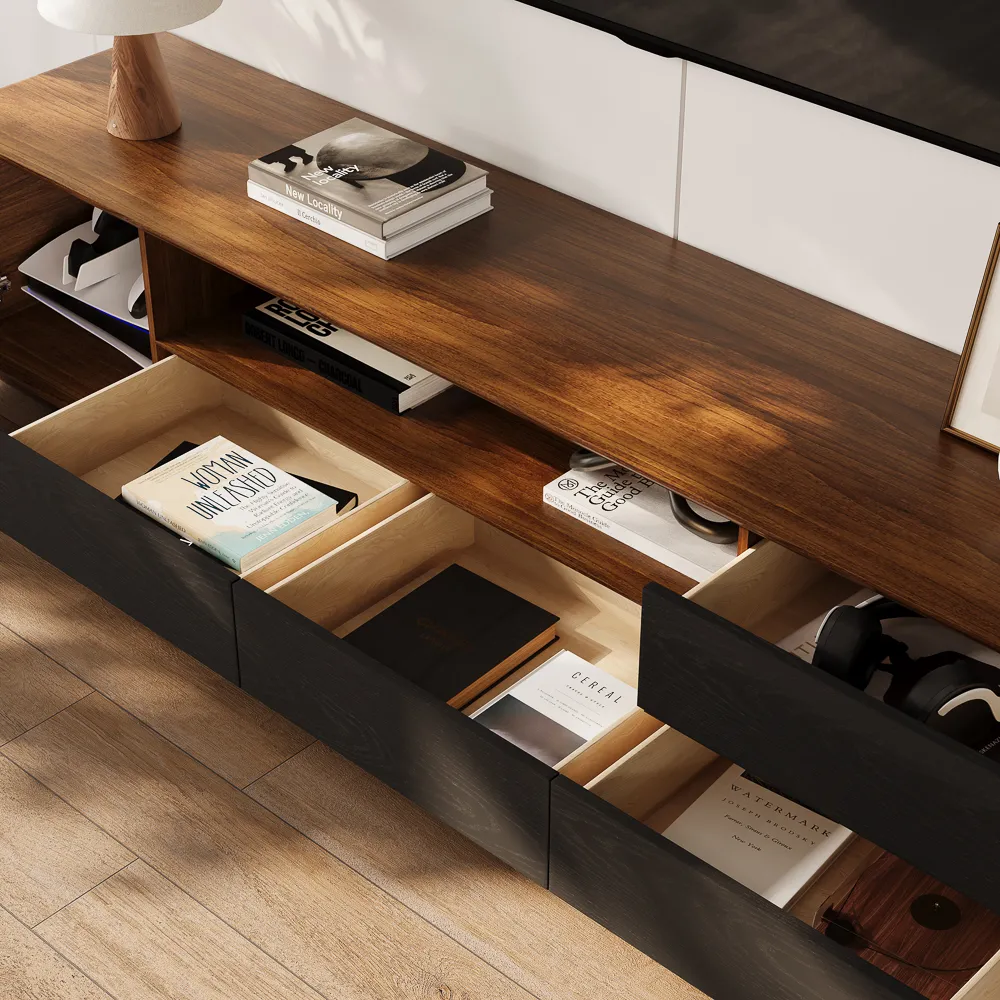
Good craftsmanship also means good thinking. Look for generous cable cutouts near each shelf, channels or clips to route wires, and a sensible spot for a power strip so you’re not snaking cords across the floor. Devices like gaming consoles and receivers run warm, so open shelving or back panels with large vents help them breathe. Door style matters too: glass allows remote signals through; slatted fronts give airflow and some visual concealment; solid doors look minimal but may need IR passthroughs or open use.
Long-Term Value: Calculating the Real Cost of Your TV Stand
Durability, Warranty & Cost-Per-Year of Use
Price tags tell only part of the story. Imagine a $200 stand that lasts three years versus a $700 stand that feels solid for at least ten. The cheaper piece costs about $67 per year; the better one drops to about $70 per year at ten years—and keeps delivering value beyond that, with fewer replacements, less hassle, and fewer landfill trips. Check warranties too: structure coverage (frame, legs, joints) matters more than a short surface-only promise. The global television stand market is projected to grow from about $2.84 billion in 2025 to $4.33 billion by 2032, a 6.2% CAGR, so there’s no shortage of options—but also a lot of disposable products to filter out (Coherent Market Insights, 2025).
Resale, Style Longevity & Impact on Your Whole Space
A high quality tv stand quietly upgrades everything around it. Clean lines, real materials, and a balanced silhouette make your living room feel more considered, even if you keep the rest simple. Choose timeless finishes—natural wood tones, matte black, or soft neutrals—that can work with future sofas and rugs instead of chasing a fleeting trend color. If you ever move, a well-made stand can slide into a bedroom as a dresser or become a hallway console, and good pieces photograph beautifully for home sale listings or resale platforms. For styling ideas that keep a classic piece feeling current, this modern TV stand guide is a helpful next read.
How to Evaluate a TV Stand In-Store or Online (Practical Checklist)
In-Store “5-Minute Craftsmanship Check”
Use this quick routine when you’re standing in front of a candidate:
- Check materials with your hands and eyes (solid vs. veneer, panel thickness).
- Push from the side and press the top corners to test stability.
- Open and close every door and drawer, feeling for smooth motion and alignment.
- Look underneath and behind for leg attachment, center supports, and a solid back panel.
- Step back in bright light and scan the finish for color consistency and rough spots.
Online Shopping Checklist: Specs, Reviews & Certifications
Online, your best tools are the spec sheet and the zoom button. Confirm overall dimensions, panel thickness, real material names (not just “wood”), stated weight capacity, and whether it arrives fully assembled or flat-pack. Zoom photos to inspect corners, edge banding, and hardware; blurry or overly staged images can be a red flag. In reviews, search for phrases like “no wobble,” “after 1 year,” or “assembly issues” to see long-term performance. Look for certifications such as FSC, CARB, or clearly labeled low-VOC finishes. If you want to skip some guesswork, brands like Povison offer high-quality tv stands that combine solid construction with clean, modern design.
Conclusion – Choosing a TV Stand You’ll Be Proud of for Years
Spotting a high quality tv stand comes down to a few pillars: honest materials, strong joinery and construction, smooth and protective finishes, functional details that fit your devices and routines, and long-term value beyond the price tag. When you’re shopping, don’t rely on styled photos alone—use the checklists above, run your hands over the details, and read the fine print. Invest once in a stand that feels solid, looks timeless, and helps your living room feel like a calm, ready-to-live-in space for everyday evenings and big movie nights alike.
Q&A
What is the most important sign of a high quality tv stand?
The strongest single sign is overall stability. If a stand feels rock solid when you push from the side, joints stay tight, drawers run smoothly, and the finish looks even up close, you’re usually looking at quality. All the nice styling in the world can’t compensate for a piece that wobbles under your TV.
Is solid wood always better than engineered wood?
Not always. Solid hardwood is fantastic for legs, frames, and tops, but high-grade plywood or dense MDF can be excellent for shelves and internal panels. What matters is thickness, how well panels are supported, and whether edges and surfaces are properly sealed. Cheap, thin particleboard is the material to avoid, not engineered wood in general.
How wide should my TV stand be compared to my TV?
As a rule of thumb, choose a stand at least as wide as your TV, and ideally 4–10 inches wider on each side. That extra width looks more balanced, gives you space for decor or speakers, and reduces the chance of someone bumping the screen. For very large TVs, a wider, lower stand also helps everything feel visually grounded.
Are fully assembled TV stands worth the higher price?
They often are, especially if you value time and long-term stability. Factory-assembled stands usually have stronger joinery, better squareness, and fewer loose fasteners than DIY flat-pack options. You also avoid the risk of mis-assembly and save a weekend of work. Flat-pack can still be fine—just be extra picky about materials, hardware, and reviews mentioning wobble.


