 By Hana
A wood coffee table is often the quiet “anchor” of the living room. It gives you somewhere to drop your mug, stack your books, and pull everyone in around a single, welcoming surface. Beyond function, the grain, tone, and subtle imperfections add natural warmth that metal or glass rarely match. In this guide, we’ll walk through wood types, durability and maintenance, matching with other furniture, sizing and shape, sustainability, plus a few standout options from POVISON to inspire your next living room update.
Why Choose a Wood Coffee Table?
The Emotional & Visual Appeal of Wood
A wood coffee table adds depth and “lived-in” character in a way that smooth glass or cold metal can’t. Grain patterns, knots, and color shifts soften straight sofa lines and make a space feel more relaxed and human. It’s no coincidence that wooden pieces account for about 39% of the U.S. furniture market, thanks to their timeless look and versatility (Grand View Research 2024). In a family room, that warmth also makes styling easier—trays, candles, and books look “at home” instead of staged.
Solid Wood vs Veneer vs Engineered Wood
Solid wood is one piece of real wood all the way through. It feels substantial, can often be sanded and refinished, and ages with a patina—but it’s heavier and usually more expensive. Veneer uses a thin layer of real wood over a core like MDF or plywood, giving you the look of a solid wood coffee table with better price and stability. Engineered wood (like MDF) is budget-friendly and resists warping, though it can’t be refinished in the same way.
| Type | Durability & Feel | Refinishable? | Ideal For |
| Solid wood | Hefty, authentic, ages nicely | Yes (often) | Long-term homes, heirloom-minded buyers |
| Wood veneer | Real-wood look, stable core | Sometimes | Style + value, renters, modern designs |
| Engineered | Smooth, stable, lightweight | Rarely | Tight budgets, trend pieces, kids’ spaces |
Choosing veneer or engineered wood makes sense if weight, cost, or climate changes are a concern—especially in apartments or high-rise buildings.
Popular Wood Types Compared
Hardwood vs Softwood at a Glance
“Hardwood” and “softwood” don’t just describe feel—they affect how your wooden coffee table behaves day to day. Hardwoods like oak, walnut, and maple resist dents and hold their shape over years of use, making them great for busy homes with kids, pets, or lots of entertaining. Softwoods like pine or fir are lighter and easier to dent, better suited to low-traffic or more decorative spaces where a few marks feel charming rather than stressful.
Signature Woods for Coffee Tables (and How They Age)
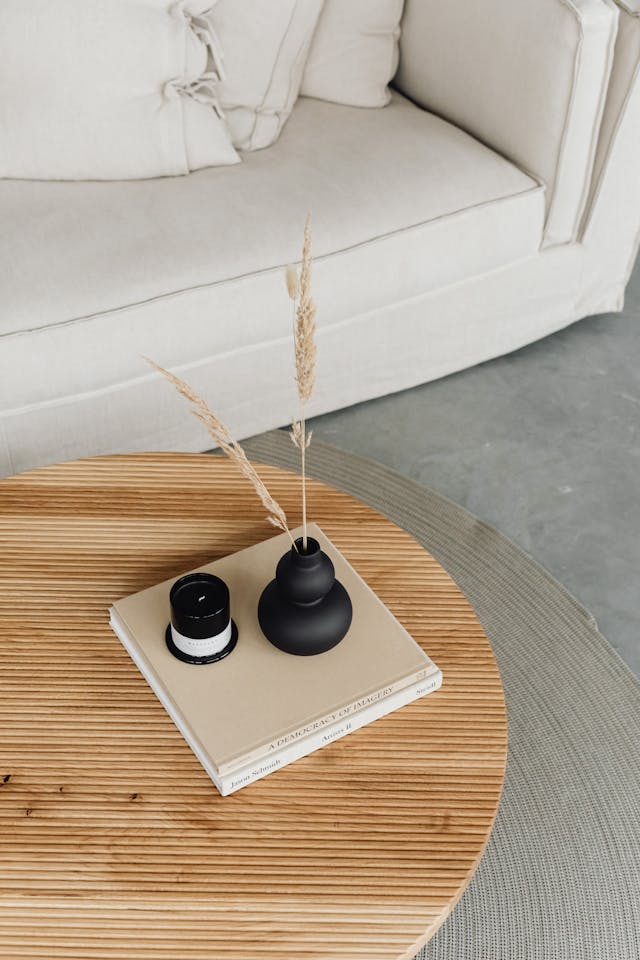
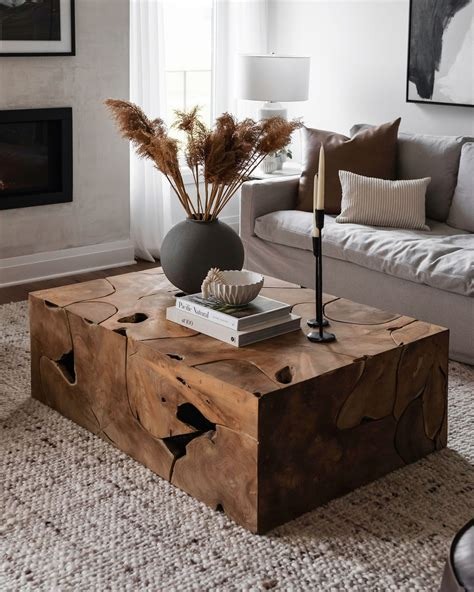
Oak is classic, with a visible grain that hides everyday scuffs; it tends to mellow a bit darker over time, suiting busy family rooms. Walnut brings rich chocolate tones and a more sophisticated look that works beautifully in modern or mid-century spaces; it can lighten slightly as it’s exposed to sun. Maple feels smooth and pale, perfect for airy Scandinavian or Japandi rooms, slowly warming to a honey tone. Acacia, mango, and reclaimed woods lean more rustic and boho, with knots and color variation that only get more interesting as the surface collects subtle wear.
Durability & Maintenance (Keep Your Wood Coffee Table Beautiful)
Everyday Protection Habits That Actually Matter
The simplest habits make the biggest difference: use coasters for hot or icy drinks, drop a tray under candles and planters, and wipe spills as soon as you notice them. Tiny “micro-scratches” come from sliding decor around, board-game boxes, and laptops, so felt pads under everything are your secret weapon. I like to imagine a game night where pieces, bowls, and remotes all have their tray—when the guests leave, you just lift the tray and wipe once instead of chasing rings across the wood.
Cleaning & Long-Term Care by Finish Type
Oil-finished tables love a gentle, pH-neutral cleaner and an occasional re-oil to keep the surface nourished. Lacquer and matte polyurethane are tougher; a slightly damp cloth followed by a dry one is usually enough, avoiding harsh chemicals that dull the sheen. Open-pore rustic finishes hide crumbs and fingerprints better but may need more frequent dusting. For homes with kids and pets, go for low-sheen finishes that disguise smudges; glossy tops highlight every paw print. When you see deep stains or worn patches that cleaning can’t fix, it’s time to call in a pro or consider refinishing rather than replacing.
Matching With Other Furniture
Mix or Match? Wood Tones 101
Instead of obsessing over exact color matches, focus on undertones: warm (yellow, red), cool (gray), or neutral. Matching undertones makes a dark wood coffee table work with lighter floors without feeling clashy. A helpful shortcut is “one hero wood, one supporting, one accent.” For example, oak floors as the hero, a medium walnut coffee table as the supporting tone, and a black side table as the accent. For deeper guidance on balancing tones, you can dive into Povison’s post on mixing wood furniture in your living room.
Style Pairing Ideas for Different Living Rooms
In a modern or minimal room, a low walnut wood coffee table with slim legs and a simple top keeps the focus on form and negative space. Farmhouse or rustic interiors suit reclaimed wood coffee tables with chunky profiles that can handle everyday scuffs. Japandi or Scandi spaces look best with rounded, light wood coffee tables that echo the softness of linen and pale walls. If your style is mid-century, look for tapered legs, warm walnut, and compact sizes. A mid-tone, simple oak table is the “safe choice” that quietly works with most sofas and rugs.

Size, Shape & Function: Getting the Perfect Fit
Pro Rules for Height, Length & Clearance
As a rule of thumb, aim for a coffee table that’s about one-half to two-thirds the length of your main sofa and sits level with the seat or up to 2 inches lower. Leave roughly 16–18 inches (40–45 cm) between sofa and table so you can sit and walk comfortably, and keep 24–30 inches (60–75 cm) clear for main walkways—this tracks with expert sizing guides like Povison’s own coffee table size rules. In tight rooms, consider a round wood coffee table to smooth traffic flow.
Storage, Multi-Function & Everyday Life
Lift-top designs, drawers, and open shelves turn a wood coffee table into stealth storage for remotes, chargers, puzzles, and kids’ toys. In my favorite “Sunday reset” scenario, everything on the floor ends up inside the table in five minutes—no extra baskets required. Nesting or round wooden coffee tables are ideal for small spaces: pull one out for guests, tuck it back after. If you’re constantly juggling laptops and snacks, a storage coffee table is worth exploring, and Povison’s guide to coffee tables with storage types breaks down which style hides clutter best.
Top POVISON Wood Coffee Tables to Consider
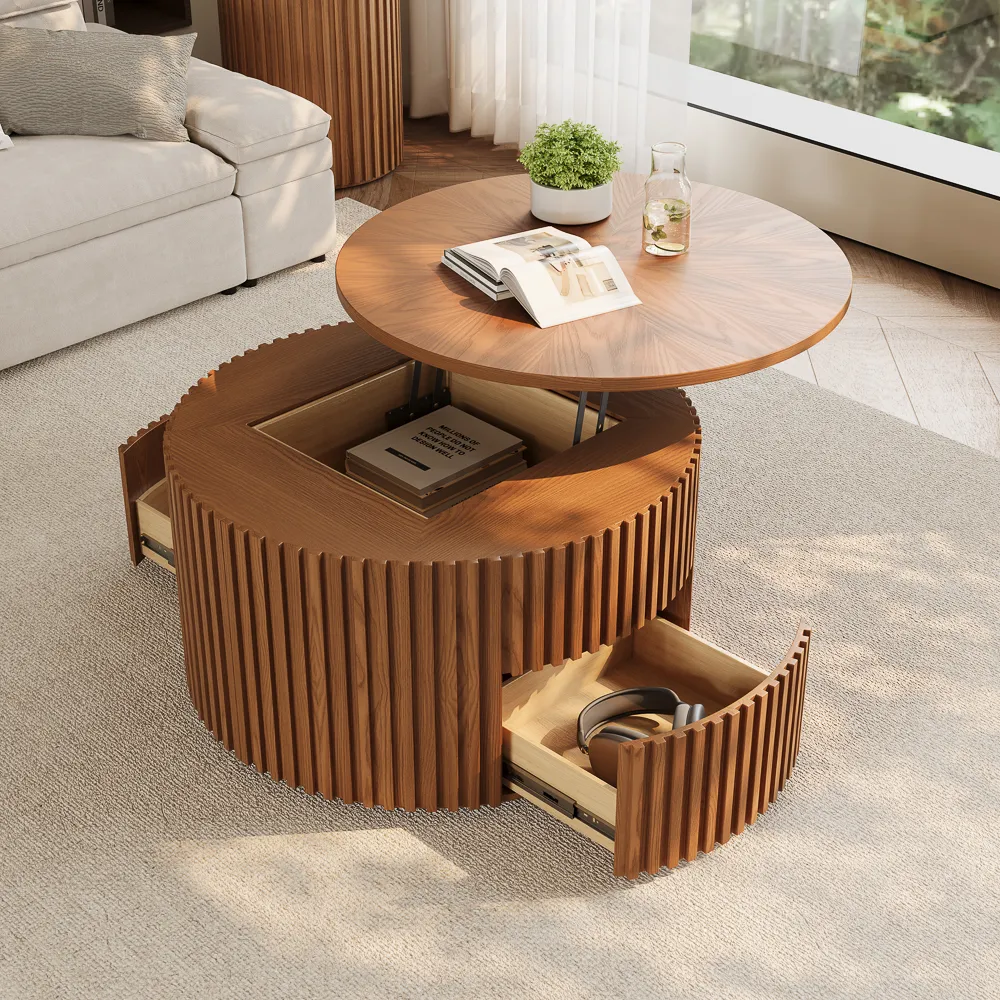
POVISON Silva 31.5” Lifting Top Round Coffee Table — Smart Storage Centerpiece
Price: $799
Best For: Small to medium living rooms where you work, snack, and host movie nights from the same sofa.
- Highlights: Lift-top work surface; hidden storage + drawer; fluted base with walnut color veneer; no assembly; 2-year warranty.
Features (with soft comparison)
This round wooden coffee table lifts smoothly from 16.9″ to 23.2″, creating a sturdy laptop or dining surface while hiding remote chaos underneath. The fluted apron is crafted from solid wood, and the veneer is designed to be wear-resistant and easy to wipe. Compared with many generic lift-top tables that use thin veneers and clunky hinges, this design feels more substantial and arrives fully assembled, which adds serious value if you’re short on time or tools. One reviewer wrote, “Great table! Took 0 work to assemble and looks great… the top glides down rather than slamming so you won’t catch your fingers!” (Bailey, 10/30/2025).
Imagine a weeknight where you raise the top for a quick Zoom call, push it back down, and instantly switch to popcorn and a movie—no need to drag out a folding desk or TV trays.
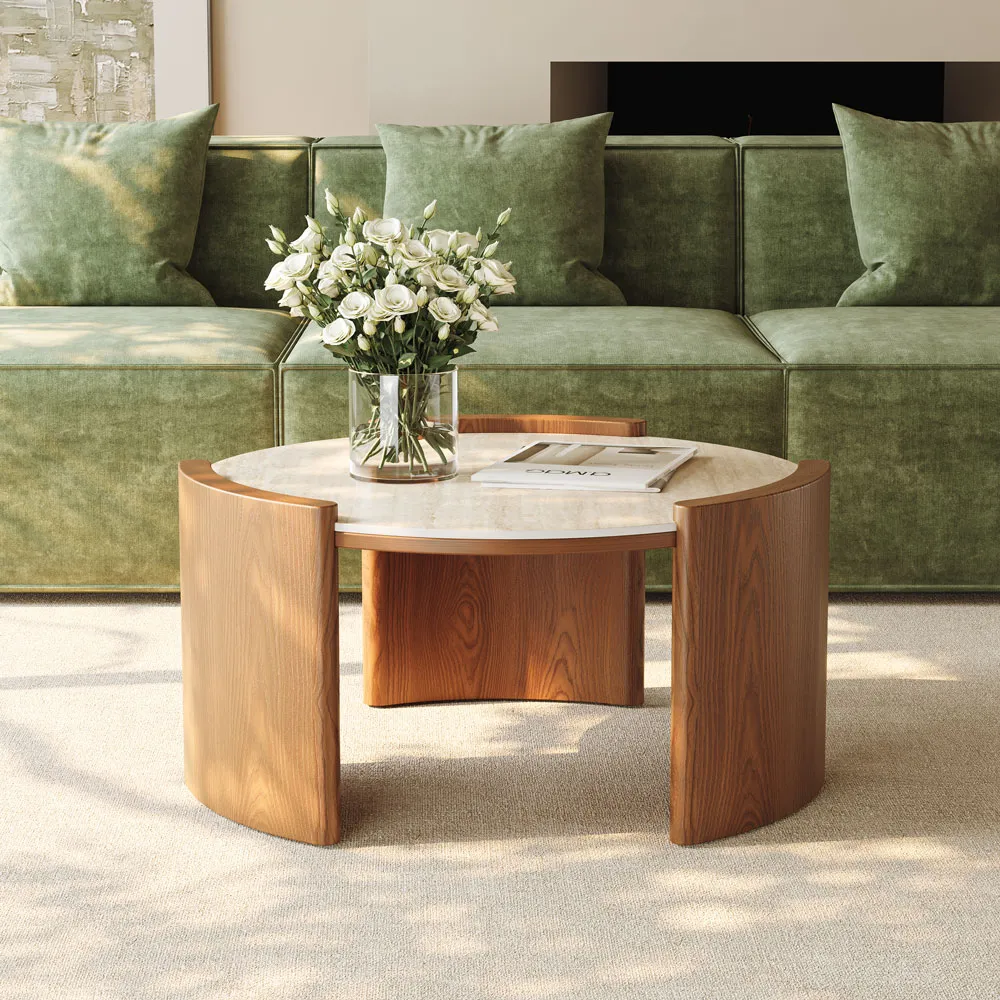
POVISON 31″ Round Matte Sintered Stone Coffee Table — Wood & Stone Statement Piece
Price: $499
Best For: Design-focused spaces wanting a natural-looking stone top with warm walnut tones underneath.
Features
This round wood and stone coffee table pairs a travertine-look sintered stone top with tripod legs in FSC-certified engineered wood and ash veneer, blending durability with eco-conscious materials. The matte surface resists stains better than many natural stones, and partial assembly takes about 10 minutes. A reviewer put it perfectly: “This is exactly as pictured… The surface is sturdy too! The color goes well with my other piece from Povison.” (Burgess, 08/31/2025).
Picture a quiet evening where this table holds a heavy art book and a stoneware mug; if a few drops of coffee land on top, you simply wipe and move on instead of worrying about etching.
POVISON 35″ Square Wood Coffee Table with Storage — Fully Assembled Storage Hero
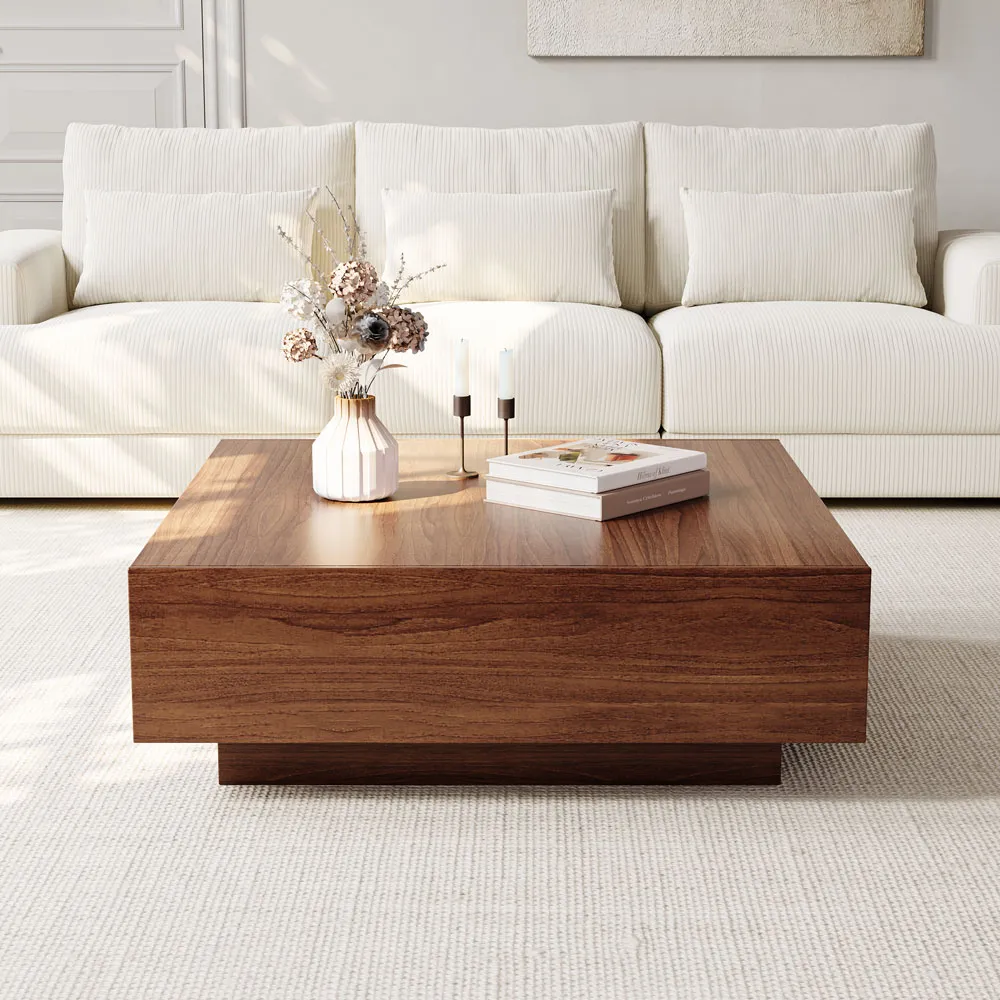
Price: $799
Best For: Family rooms needing serious storage and a broad, low surface for games, snacks, and decor.
Features
This square wood coffee table arrives fully assembled, with two deep drawers and a 35.43″ x 35.43″ top that can handle up to 180 lbs—plenty for charcuterie boards or sprawling LEGO projects. Built from sturdy MDF with an FSC recycled material badge, it combines a clean modern silhouette with practical durability. One customer raves, “It’s perfect… the texture, the size, shape and just the sheer elegance of [this] coffee table makes you want to stare at it with such pride.” (Mahry, 01/03/2023).
When you compare it to a typical flat-pack square table from another brand—often thinner, lighter, and more prone to wobbling—this fully assembled build and deep drawers usually win on both daily usability and long-term value, especially if you hate re-tightening screws every few months.
As a contrast, imagine a budget engineered-wood table from a big-box store: the finish looks good on day one, but the edges chip fast and drawers feel flimsy when packed with games. That kind of experience is exactly why investing in a sturdier piece from Povison tends to pay off over years, not months.
Sustainable & Healthy Choices in Wood Coffee Tables
Certifications, Finishes & Indoor Air Quality
If your coffee table sits at the literal center of family life, the materials and finishes matter. Look for responsibly sourced wood (FSC or similar) and low-VOC finishes, which help reduce indoor air pollutants. The global wooden furniture market is increasingly shaped by sustainable sourcing and eco-friendly design, as consumers seek furniture that is both durable and environmentally responsible (Future Market Insights 2025). Water-based finishes and sintered-stone/wood combos can be good choices if you’re sensitive to chemical smells or have young kids playing at floor level.
Buying Once, Using for Years
Sustainability isn’t only about labels; it’s also about how often you replace things. A well-built solid wood or high-quality veneer table with a timeless silhouette will outlast several “fast-furniture” pieces. In one furniture-buyer study, 81% of shoppers said they’d pay more for sustainable items, with most willing to spend up to 9% extra (Provoke Insights 2023). To decide if a design will adapt over time, ask yourself before clicking “buy”: Will this wood tone work if I repaint the walls? Does the shape fit both my current sofa and a future one? Can the style bridge different rugs or accent colors as my taste evolves?
Conclusion – Bringing Natural Warmth Home
A wood coffee table is both a hard-working surface and a long-term style anchor for your living room. When you choose the right size and shape, match wood undertones with your existing furniture, and think honestly about durability, storage, and maintenance, you end up with a piece that feels like it was made for your life. If sustainability and everyday comfort matter to you, investing in a well-built table, like the fully assembled, storage-rich options from Povison, is one of the simplest ways to finally start that living room refresh you’ve been putting off.
FAQs About Wood Coffee Tables
Q1. What is the most durable wood for a coffee table?
Hardwoods like oak, maple, and walnut are usually the most durable for a coffee table because they resist dents and keep their shape over time. Oak is great for busy family rooms, maple works well in light, airy spaces, and walnut adds richness in more formal or modern interiors.
Q2. How do I protect my wood coffee table from water rings and stains?
Always use coasters for drinks and a tray under anything that sweats, drips, or could scratch, like plants or candles. Wipe spills immediately with a soft cloth, avoid strong cleaners, and consider a protective mat for laptops. For extra insurance, a low-sheen polyurethane or hardwax-oil finish adds a discreet barrier against everyday accidents.
Q3. Can I mix a dark wood coffee table with light wood floors?
Yes—just match undertones rather than exact shades. A dark wood coffee table with a warm undertone can look beautiful on pale oak floors if you repeat the darker tone in smaller accents like picture frames or side tables. A lighter rug under the table also keeps the overall look from feeling too heavy.
Q4. How do I choose between round, oval, and rectangular shapes?
Round and oval tables soften sharp lines and are ideal for tight walkways or homes with kids, since there are fewer corners to bump into. Rectangular or square tables maximize surface area in front of long sofas and sectionals. If your seating wraps around three sides, a round or soft-square table usually keeps the space feeling more open.
Q5. Is a solid wood coffee table worth the higher price, and how often should I oil the top?
If you plan to keep your table for many years, a solid wood coffee table is often worth the investment because it can be refinished as styles change and wear accumulates. For oil-finished tops, light maintenance every 6–12 months is usually enough—clean the surface, apply a thin coat of the recommended oil, and buff dry so the wood stays hydrated and protected.


[…] Round and oval coffee tables usually look and feel best 1–2 in (2–5 cm) below the sofa seat height. Without sharp corners, they’re easier to navigate in tight walkways and family homes, and the slightly lower profile keeps them from dominating the center of the room. Lift-top designs should sit within your usual range when closed, then rise to roughly 22–24 in (56–61 cm) when lifted so the surface hits near your elbow while seated—perfect for laptops or a casual dinner. In my own test of a lift-top table in a small apartment, raising the top during a Sunday night Zoom call and lowering it back for popcorn felt like switching rooms without moving a single chair. For material and style inspiration, explore Povison’s Wood Coffee Table Guide: Natural Warmth & Style. […]