 By Stephanie

If you’re comparing suede vs leather for a sofa, you’re likely weighing more than appearance. The surface you choose affects how seat cushions show everyday contact, how visible marks become, and how much care the upholstery needs. Natural suede and smooth leather respond differently to pressure, spills, and cleaning, but the result also depends on the leather finish and the sofa’s construction. This guide compares genuine suede with smooth leather and explains what to verify before buying.
Table of Contents
What Is the Difference Between Suede and Smooth Leather?
People often use “leather” to mean smooth-finished leather, even though suede is also genuine leather. The useful comparison is between suede’s napped surface and leather that retains the hide’s grain side. Understanding that distinction helps you compare like with like instead of treating suede as a non-leather alternative.
Suede Is a Type of Leather
Natural suede is made from the flesh side of a hide or a split layer. Its surface is buffed to create a short nap that feels velvety and looks matte. Because the fibers lie in a direction, brushing them one way or another can make the shade appear lighter or darker.
When shoppers search for “suede leather vs leather,” they usually mean suede compared with smooth, grain-side leather. Technically, suede is also leather; the distinction is the side of the hide used and the finish created from it. One important exception: a sofa described as “suede fabric” may use polyester or another textile rather than animal hide. Check the material composition before assuming it is genuine suede.

Smooth Leather Uses the Grain Side
Smooth leather generally presents the outer grain side of the hide. It may be full-grain or top-grain, with finishes ranging from minimally treated to more protective. The grain creates the surface pattern; the finish affects sheen, feel, and resistance to spills.
A protected top-grain sofa and an untreated aniline sofa can react very differently, so check the specific finish rather than relying on the word leather. The differences between leather types for sofas can affect both wear and care.

How Do Suede and Leather Hold Up on a Sofa?
Judge durability by looking at the sofa’s highest-contact areas: seat fronts, arm tops, and back cushions. These spots take repeated friction, body oils, and occasional spills. The material matters, but hide quality, surface treatment, construction, and care also affect how well the upholstery holds up.
Suede: Flattening, Shading, and Stains
Repeated sitting can press down the nap in the center of a suede seat or along its front edge. The area may look lighter or darker as the fibers change direction. A dry suede brush can refresh some surface shading, but deep stains or worn patches may not return to their original appearance.
Natural suede is more absorbent than many protected leathers, so drinks or oily snacks can leave marks. It can still work for seating, but the room’s use and the owner’s willingness to follow suede-specific care matter.
Smooth Leather: Creases, Scratches, and Scuffs
Smooth leather has no raised nap to flatten, but it can develop creases, scuffs, scratches, or changes in sheen. Protected or pigmented finishes are generally easier to wipe than absorbent, minimally finished leather. No leather sofa is completely scratch-proof or stain-proof.
When considering suede vs leather durability, do not assume every leather will outlast every suede. Compare the leather finish with the suede’s construction and any protective treatment; a well-made, properly maintained upholstery can outperform a poorly specified alternative.
| Everyday issue | Natural suede | Smooth leather |
| Repeated sitting | Nap can flatten or change direction | Creases and surface scuffs may develop |
| Liquid spills | More likely to absorb moisture | Resistance depends on the finish |
| Oils and lotions | Can leave visible marks in the nap | Can darken or stain, especially on absorbent finishes |
| Long-term appearance | May show shading and worn contact areas | May develop creases, scratches, or patina |
| Maintenance needs | Requires suede-specific care | Requires care suited to its finish |
How Does Each Surface Feel During Everyday Use?
The difference between suede and smooth leather is noticeable through direct contact. Suede has a brushed surface that feels soft and slightly textured, while smooth leather offers a more continuous feel shaped by its natural grain and finish. Neither has one fixed level of softness; the specific surface treatment makes a difference.
Suede Has a Soft, Directional Texture
Suede’s short nap creates a velvety feel with subtle resistance when you run your hand across it. Moving your hand in opposite directions can produce slightly different sensations and change how the surface looks under light. This gives suede a more tactile, matte character than smooth-finished leather.
Pebbled Leather Has Texture Without Feeling Rough
Smooth leather does not have to feel flat or slick. A pebbled grain adds subtle texture, while a matte finish keeps the surface understated. That combination of texture and softness carries through to Cronus Genuine Leather Modular Sofa. Its top-grain leather undergoes thousands of tumbling cycles over more than ten hours, helping soften the hide while preserving its fine pebble grain. Premium down-filled cushions create a plush, relaxed feel, while the 26-inch seat depth gives you room to stretch out, curl up, or tuck your legs under.

POVISON Cronus Genuine Leather Sofa
Worth considering if you love the character of genuine leather but prefer a more relaxed, inviting feel for everyday lounging.
How to Compare a Suede or Leather Sofa Before Buying
A product title alone may not tell you exactly what covers the seat, arms, and back. Before choosing, compare the upholstery description and care requirements side by side. The checks below help you avoid treating different leather finishes—or natural and synthetic suede—as if they were the same material.
| What to Verify | Natural Suede | Smooth Leather |
| Material | Confirm it is genuine hide suede, not polyester suede fabric | Confirm the leather grade and hide coverage |
| Surface | Ask whether any protective treatment has been applied | Check whether it is aniline, semi-aniline, or protected leather |
| High-contact areas | Confirm the seat, front edge, and armrests use the specified material | Check whether the seating and arm panels use the same leather |
| Care requirements | Ask which suede-specific products and methods are approved | Follow the care requirements for the actual leather finish |
How to Care for Suede and Leather Sofas
Care is part of the ownership decision. Suede and smooth leather need different products, so never transfer a cleaner or conditioner from one to the other. Check the upholstery label, test an approved product on a hidden area, and deal with spills promptly.
For suede, blot fresh spills without rubbing, let the area dry as directed, and use a clean suede brush only when the surface is dry. Avoid soaking upholstery or applying ordinary leather conditioner. If you need a step-by-step method, follow advice on cleaning a suede sofa without leaving water marks.
For smooth leather, dust with a soft, dry cloth and dab spills immediately. Use only products approved for the specific finish; harsh household cleaners can damage the surface. Leather is a natural material, so color and texture may vary between hides.
Conclusion
Choosing between suede and smooth leather comes down to the surface you want to live with and the care you are prepared to give it. Natural suede offers a soft, matte nap but can show pressure marks and absorb spills more readily. Smooth leather provides a more continuous surface and may be easier to wipe when it has a protective finish, though it can still scratch or fade. Before ordering, confirm the exact upholstery, finish, and care instructions, then judge cushion comfort and seat dimensions separately from the material covering the sofa. That gives you a more reliable basis for comparing similar sofas.
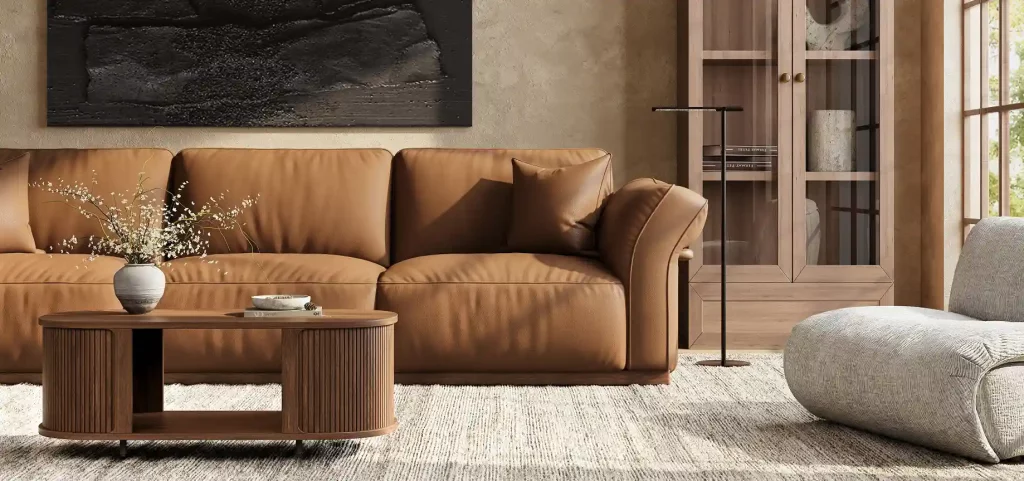
Find a Leather Sofa That Feels Right
Explore genuine leather textures, plush cushioning, and relaxed seating for everyday living.
FAQ
Is nubuck the same as suede?
No. Both have a soft, napped surface, but nubuck is made by lightly buffing the grain side of the hide, while suede comes from the flesh side or a split layer. Because the surfaces are made differently, their texture, wear, and care requirements are not interchangeable.
Can suede and leather upholstery be used together on one sofa?
Yes, if the manufacturer designs the combination and identifies which panels use each material. A suede seat with leather sides or arms may age differently and requires two care approaches. Ask whether the panels use genuine hide or synthetic suede and follow the care instructions for each.
Does direct sunlight affect suede and leather differently?
Both can fade with prolonged direct sunlight, but the visible changes may differ. Suede can develop uneven color, while leather may fade or dry depending on its finish. Use window coverings and keep the sofa away from strong direct sunlight and nearby heat sources.
Can denim dye transfer onto light-colored suede or leather?
Yes. Dark denim and other dye-releasing fabrics can transfer color through repeated friction, especially onto pale upholstery. The risk varies with the material and finish. If transfer occurs, avoid household solvents or vigorous rubbing. Check the care instructions or contact an upholstery specialist.
Can pet claws damage suede and leather upholstery?
Yes. Pet claws can roughen suede’s nap or scratch leather surfaces. Neither material is completely scratch-proof. A protected leather finish may be easier to wipe clean, but it does not prevent claw marks. Consider your pet’s habits, upholstery finish, and warranty exclusions before buying.


