 By Stephanie

If you searched for “couch back too low,” you likely want more than another decorative pillow: you need the backrest to support the part of your body that currently has nowhere to rest. Start by identifying whether the problem comes from the backrest frame, worn cushions, or a seating position that keeps you from reaching the back. This guide shows you how to measure usable backrest height, add support that stays in place, and decide whether modifying your existing sofa is worth the effort.
Table of Contents
Why Does Your Couch Back Feel Too Low?
A low-feeling backrest can result from a short frame, compressed cushions, or excessive seat depth. Check when the problem started and how your sofa is constructed before choosing a solution.
| What You Notice | Likely Cause | What to Check | Practical Approach |
| Backrest has always ended below your shoulders. | Frame is too short. | Check where the backrest reaches when you sit fully back. | Consider a taller custom cushion or freestanding support. |
| Back cushions have gradually flattened. | Compressed or shifted filling. | Remove a cushion and see whether it regains its shape. | Check whether the insert can be restored or replaced. |
| You slide forward to sit comfortably. | Seat may be too deep. | Check whether your feet reach the floor with your hips against the backrest. | Address seat depth rather than adding more back cushions. See how to fix a couch that is too deep. |
If your cushions have lost their shape, fixing sagging couch cushions may restore support. However, replacing the filling will not increase the height of a frame that was originally too short.
How Can You Make a Sofa Back Higher?
The best way to make a sofa back higher depends on how much support is missing and how the backrest is constructed. Before buying extra pillows or modifying the upholstery, measure the usable backrest height and identify whether you need more upper-back support, a taller back cushion, or better support for your lower back.
Step 1: Measure How Much Additional Support You Need
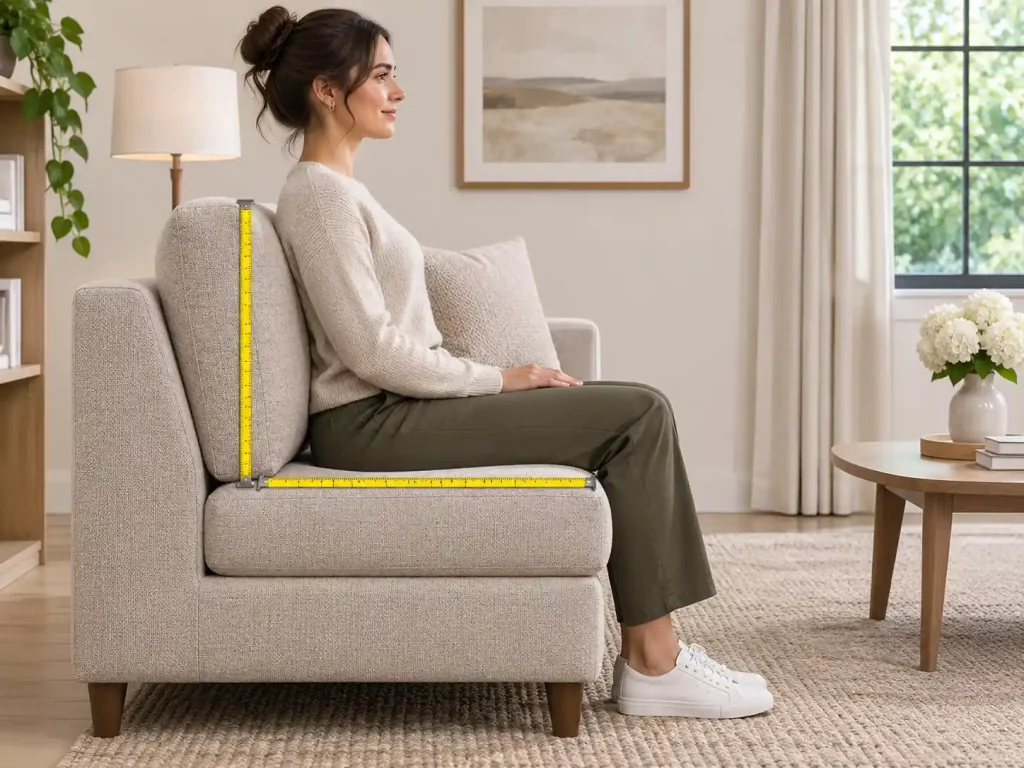
Start by checking the sofa’s inside back height, which is the distance from the top of the seat cushion to the top of the back cushion. Measure with the cushions in their normal positions, then sit with your hips against the backrest and your feet comfortably supported.
Ask someone to check where the top of the backrest reaches your body. Does it stop below your shoulder blades, leave your shoulders unsupported, or simply fail to provide a comfortable place to rest your head? These are different support needs and may require different cushion heights.
Also note how much usable seat depth remains. A thicker back cushion can reduce the space available for sitting, so adding height should not force you too close to the front edge of the sofa.
Step 2: Add Firm, Taller Back Cushions
If the sofa frame is sound but the backrest does not reach high enough, a taller support cushion can increase its usable height without modifying the furniture.
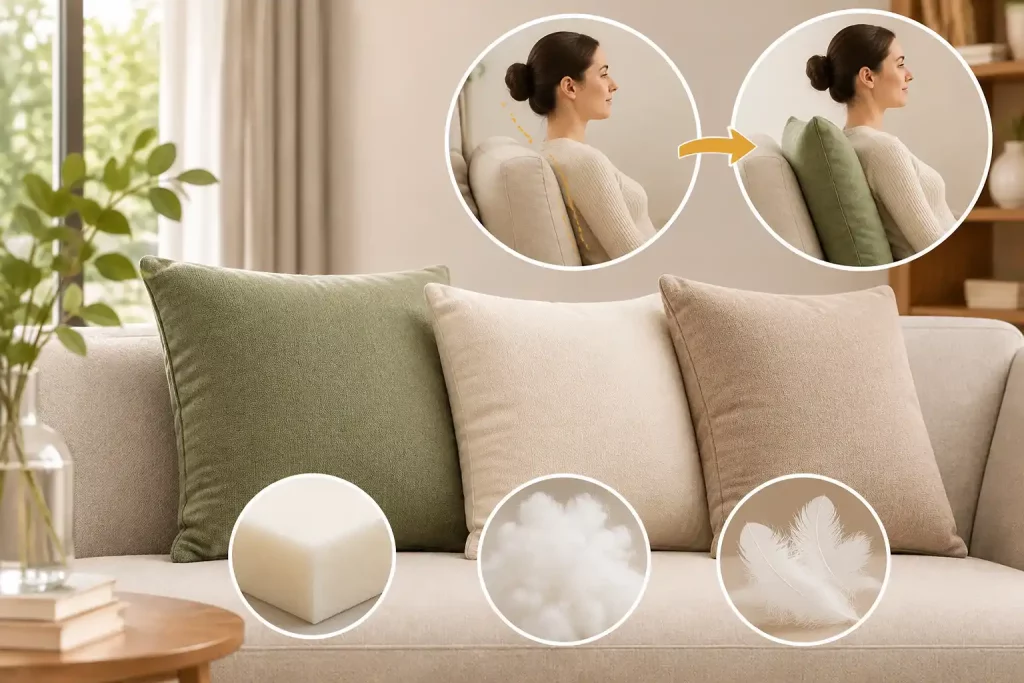
Choose a cushion based on how much additional support you need, not just its advertised dimensions. Its actual support height depends on the filling and how much it compresses when you lean against it.
Pay attention to the filling:
- High-resilience foam: Holds its shape under repeated pressure and provides more consistent support.
- Fiberfill: Offers a softer feel but may need regular fluffing to maintain its shape.
- Down or feather filling: Feels soft and flexible but tends to compress more under body weight.
Before buying, check three things:
- Height: Reaches the part of your back or shoulders that lacks support.
- Thickness: Does not push your torso too far forward or make the seat feel cramped.
- Compression: Retains enough height when you lean against it to support your upper back.
For example, if you regularly watch TV on a low-back sofa, a firm, taller cushion behind your shoulders can provide more consistent support than a small decorative pillow that needs constant repositioning.
Step 3: Replace or Customize the Existing Back Cushion
If the original back cushion is too short for the available frame space, replacing it with a taller custom insert may provide a more integrated solution than stacking additional pillows. The right approach depends on how the sofa back is constructed.
| Sofa Back Construction | What Can Be Changed | Practical Approach |
| Loose, removable back cushions | Cushion height and insert dimensions | Measure the available space and consider a taller custom insert. |
| Semi-attached cushions with a zipper or service opening | Accessible cushion insert, if the manufacturer allows replacement | Check whether a taller insert can fit without stretching the cover or seams. |
| Tight upholstered back | External support or professional upholstery | Use a freestanding support cushion or consult an upholsterer about modifying the backrest. |
For removable cushions, measure the available space on the sofa rather than relying only on the dimensions of an old, worn cushion. Check the width, finished height, thickness, and cover fit before ordering a replacement.
For a tightly upholstered or fixed wooden back, avoid cutting the fabric or adding loose filling behind the upholstery. A taller backrest may require changes to the foam, frame, seams, and upholstery, so professional assessment is a safer option.
Step 4: Add Lumbar Support Only If Your Lower Back Needs It
A lumbar cushion can fill the gap between your lower back and the sofa, but it does not increase backrest height. Use one only when your lower back lacks contact with the cushion, positioning it around the natural inward curve just above the seat.
If your shoulders or upper back remain unsupported, a taller back cushion is the more relevant solution. Adding more lumbar pillows will not make a short backrest reach higher.
Step 5: Secure the Added Cushion and Test Its Stability
A taller cushion only works as intended if it stays in position when you lean against it. The right setup depends on whether the sofa sits against a wall or stands freely in the room.
For a sofa against a wall, the wall can help prevent a cushion from tipping backward, but it may not stop the cushion from sliding downward or forward. A freestanding sofa may need a furniture-compatible non-slip liner or a manufacturer-approved cushion retainer to keep additional support in place.
After positioning the cushion, sit back normally, lean against it, stand up, and sit down again. Check for these problems:
- The top tilts backward when you lean against it.
- The bottom slides forward or downward.
- The cushion compresses until the extra height is no longer useful.
- Its thickness pushes your shoulders or torso forward.
- You have to reposition it every time you sit down.
If the cushion keeps moving, try a different insert shape or a more suitable non-slip support. Test any liner on an inconspicuous area first to check for color transfer or surface damage. Never attach straps or clips to a recliner’s moving parts, electrical components, or upholstery that is not designed to support them.
A High-Back Sofa Bed Alternative to Low-Back Couches
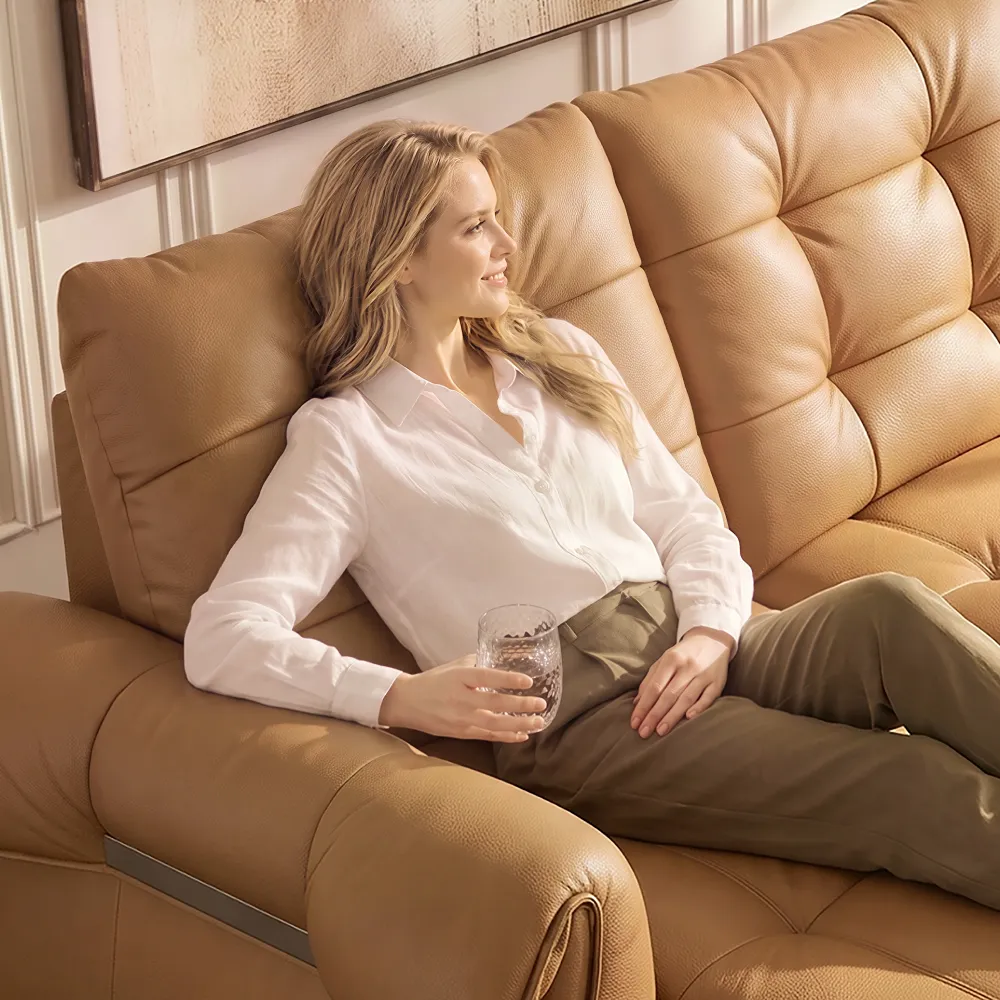
If adding cushions or modifying the existing backrest still does not provide enough support, replacing your sofa may be a more practical solution. A high-back power sofa bed offers more than a taller backrest. Its motorized mechanism adjusts the seating depth, allowing you to switch between everyday sitting, extended lounging, and sleeping without manually rearranging the sofa.
The POVISON Aurora Power Sofa Bed combines a high-back design with responsive, high-resilience foam cushions, offering a more supportive seating profile than a low-back sofa. Its motorized seat-depth adjustment lets you keep a more compact setup for everyday sitting or extend the seating surface when you want more room to stretch out. One-touch lounge, recline, and sleep modes also make it easier to switch between relaxing, movie nights, and accommodating overnight guests.

Aurora High-Back Sofa Bed
A worthwhile upgrade when extra cushions no longer provide the back support you need without compromising your seating space.
Conclusion
Before replacing a couch back that feels too low, determine whether a taller cushion can provide enough support without compromising your seating space. If the frame itself limits the adjustments you can make, consider a higher-back alternative that better matches your sitting habits. Compare the actual backrest design and seating proportions rather than relying on overall sofa height alone.
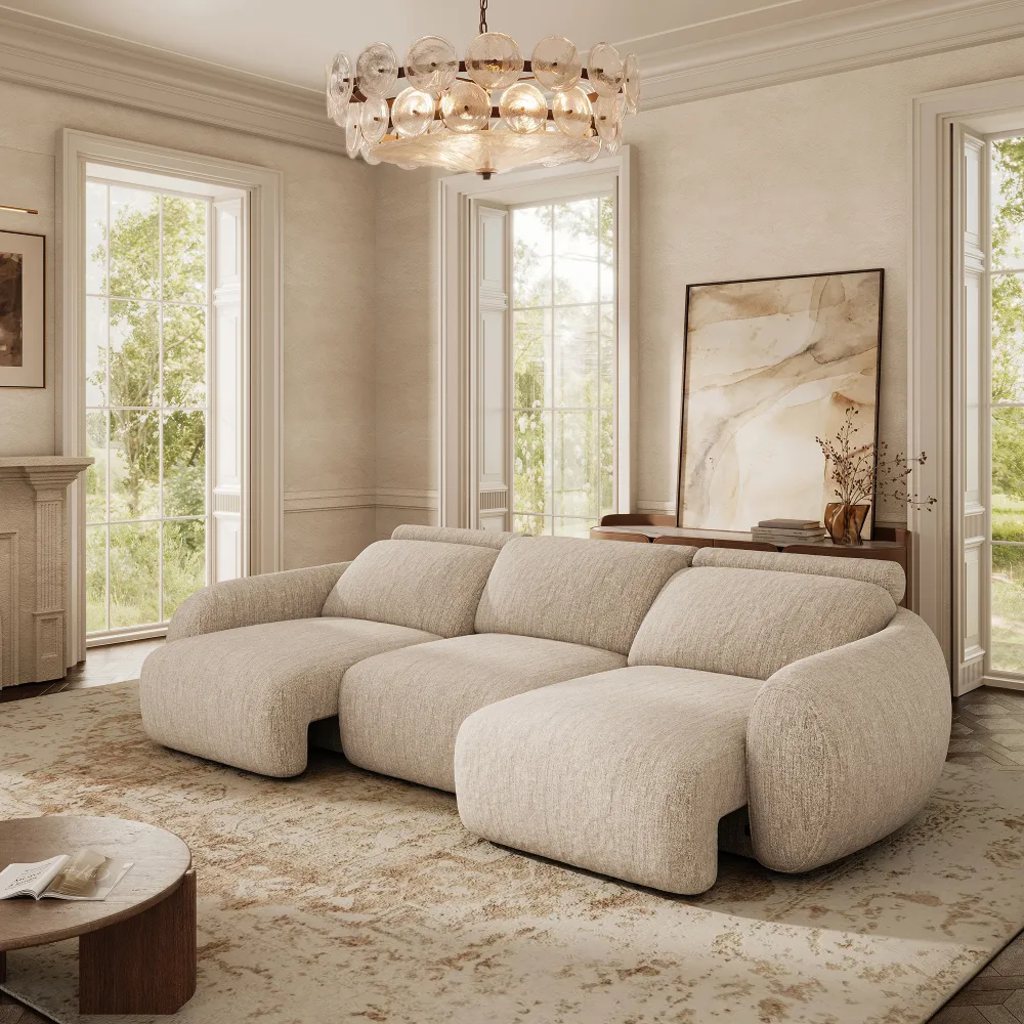
More Support, More Room to Relax
Explore high-back sofa beds that combine everyday sitting comfort, flexible lounging space, and room for overnight guests.
Q&A
Is One Wide Back Cushion Better Than Two Smaller Pillows?
One wide cushion provides more continuous support across a seat, while two smaller pillows let each person adjust their position independently. For shared sofas, separate cushions are often more practical when users have different sitting preferences.
Can I Use a Body Pillow as Temporary Back Support?
Yes, especially for lounging. However, a soft body pillow may fold or shift during upright sitting. For regular use, choose a firmer support cushion that maintains its shape when you lean against it.
How Can I Add Support to Only One Seat of a Sectional Couch?
Use a cushion sized for the individual seat rather than extending support across the entire sectional. For corner sections, check the backrest angle and available width to ensure the added cushion does not interfere with the adjoining seat.
Can I Add a Headrest to a Sofa With a Fixed Back?
Some freestanding or clamp-on headrests may work, but compatibility depends on the frame and upholstery. Check the attachment requirements first, and avoid clamps that could stretch the fabric or damage the frame.
Can I Add Extra Back Cushions to a Sleeper Sofa?
Yes, but keep removable support cushions clear of the folding or pull-out mechanism. Remove them before converting the sofa into a bed, and never attach straps or clips where they could interfere with moving parts.


