 By Stephanie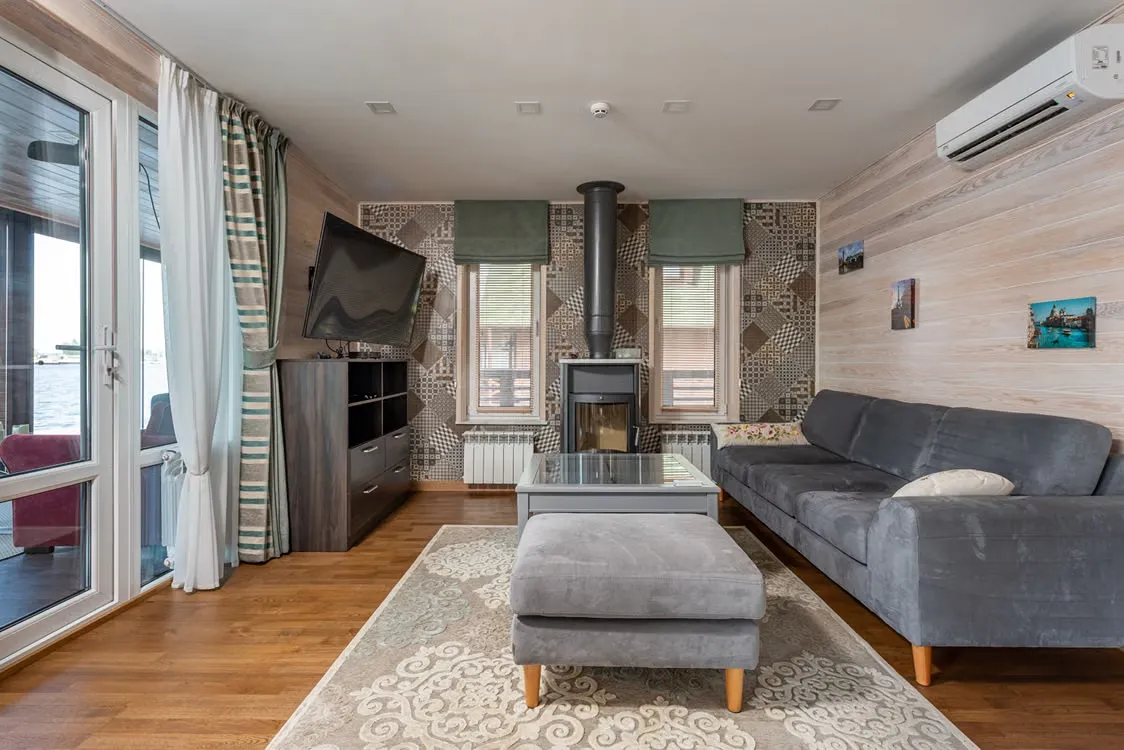
If you’re figuring out how to decorate with dark furniture, the problem usually is not the furniture color by itself. A dark brown sofa may feel balanced in one living room and overwhelming in another because the floor, wall, nearby furniture, and available light all change how it reads. Instead of automatically adding white walls and pale accessories, first identify where the darkness is concentrating. Then you can decide whether the room needs contrast behind the furniture, separation below it, a lighter piece nearby, or simply better light.
Table of Contents
Which Part of the Room Is Actually Too Dark?
Before changing the palette, identify what is creating the heavy impression. The useful question is not “Do I have too much dark furniture?” but “Where are the dark surfaces starting to blend together?” Looking at the room this way helps separate a color problem from a layout or lighting problem and can prevent unnecessary purchases.
Look first at the piece that occupies the most visual space. A sectional covered in dark upholstery affects the room differently from a black side table, even if both are equally dark.
Then look beyond the furniture itself. A dark sofa can feel much heavier when it sits directly on dark hardwood, while the same sofa on a lighter rug may read as a clear focal point. A black media cabinet may disappear against a charcoal wall but feel sharply defined against warm plaster or light wood paneling.
Use this quick check before making changes:
| What You Notice | Likely Cause | What to Address First |
| Furniture seems to blend into the floor | Similar values directly touch | Create separation below the furniture |
| One wall feels like a solid dark block | Furniture and background are too similar | Add contrast behind the furniture |
| The room looks noticeably darker after sunset | Lighting may be the main issue | Compare the room in daylight and at night |
| The center of the room feels dense | Too many heavy surfaces meet in one area | Change the material or tone of a central piece |
| Only a compact room feels crowded | Furniture footprint or layout | Recheck scale and open floor space |
If room size is the main issue, using dark furniture in a small room without making it feel heavy requires a more specific look at furniture scale, exposed floor, and circulation rather than another general color fix.
The most useful way to approach how to decorate with dark furniture is to identify the source of the visual weight before deciding what to change.
Where Should You Add Contrast Around Dark Furniture?
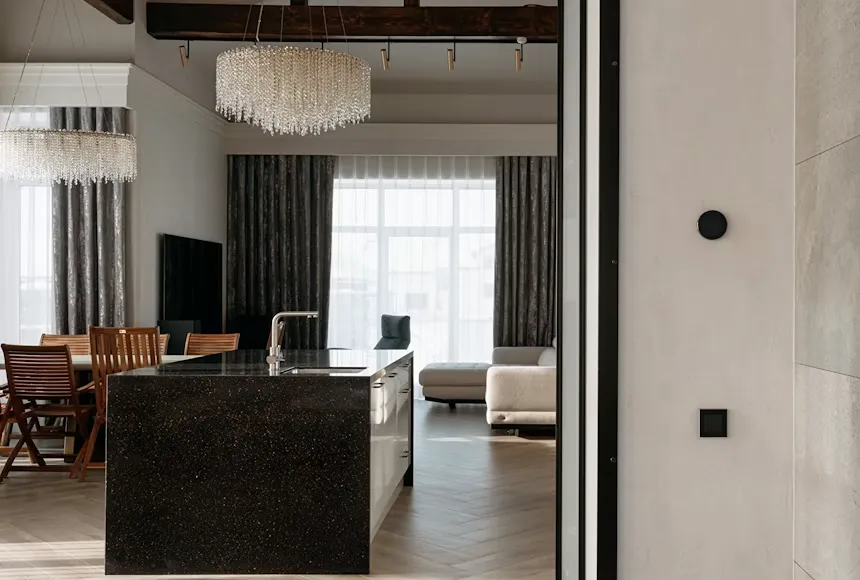
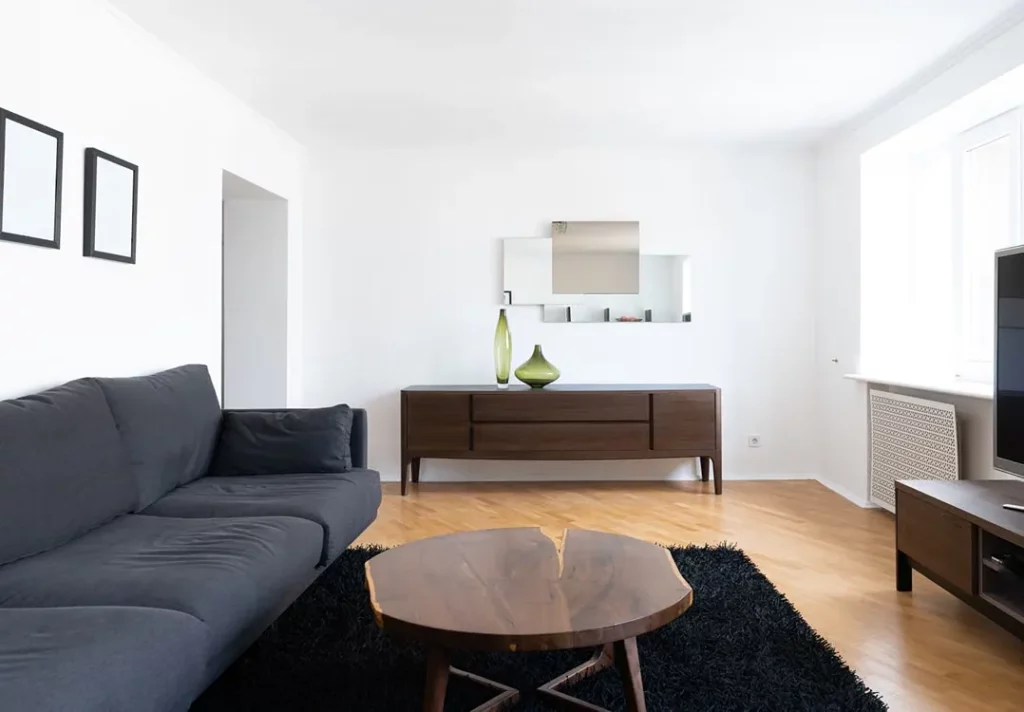
Contrast works best where two similar dark surfaces meet, so first decide whether the room needs separation behind, below, or beside the main piece.
- Behind the furniture: If a black cabinet disappears against a charcoal wall, create a clearer background. Warm greige, muted clay, soft green, or another medium-value wall color can provide enough contrast without turning the room white.
- Below the furniture: If a dark sofa blends into walnut or dark hardwood flooring, use a lighter or softly patterned rug to create a visible boundary around the seating area.
- Beside or in front of the furniture: If the wall and floor already provide enough contrast, change the material of a nearby major piece instead. Stone, glass, lighter wood, or lighter upholstery can break up several dark furniture surfaces.
When deciding what colors go with dark furniture, undertone matters more than choosing from a fixed color list. Warm walnut and dark brown tend to work naturally with cream, camel, clay, and muted earthy tones, while charcoal and cooler blacks can handle cleaner gray or off-white contrast.
A dark sofa paired with a dark media wall, for example, may benefit more from changing the coffee table than from repainting the room. The POVISON Round Matte Sintered Stone Coffee Table uses a 31.5-inch round travertine-look sintered-stone top with ash-veneer wood legs. Its lighter surface creates a substantial break between dark furniture, while the round shape interrupts the long horizontal lines of a sofa and media console.
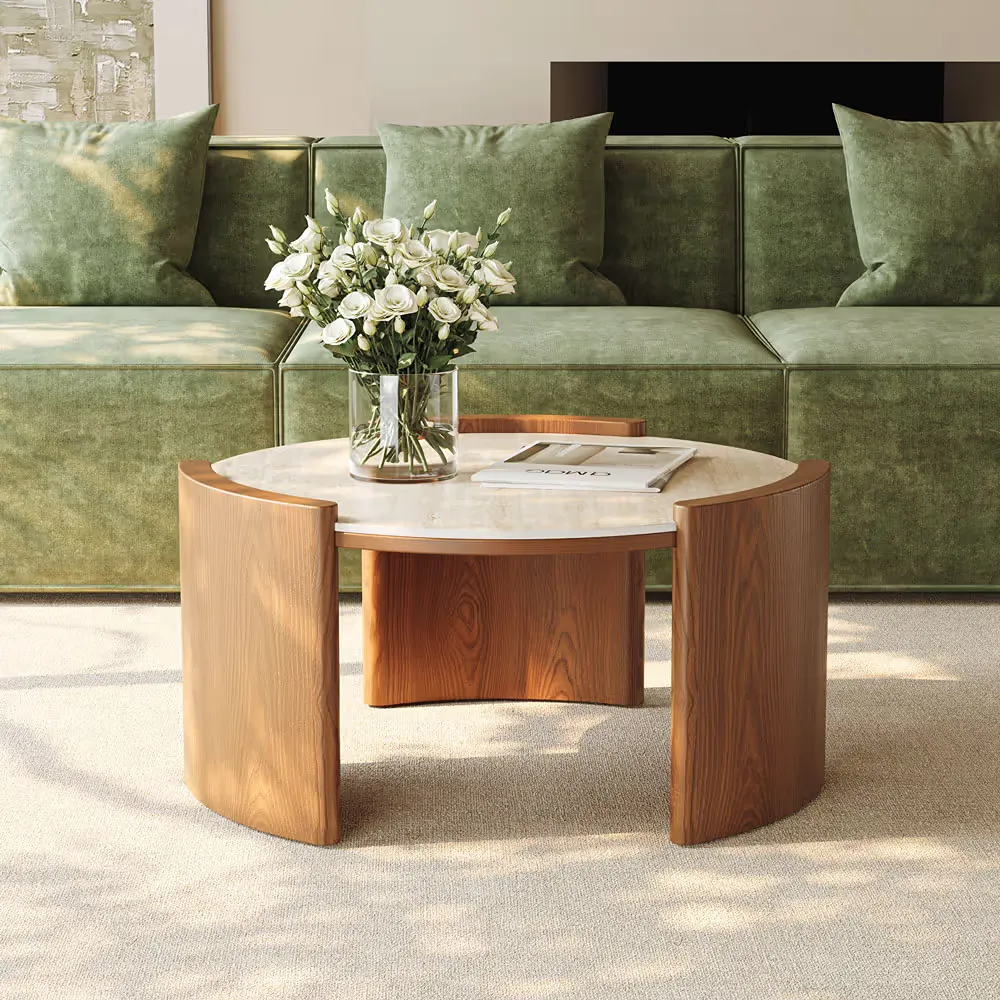
POVISON Round Matte Sintered Stone Coffee Table
A lighter center surface can separate a dark sofa from a dark media wall without changing either piece.
How Do You Lighten a Room With Dark Furniture?
The most practical answer to how to lighten a room with dark furniture is to first determine when the room feels too dark.
Check it in daylight. If a dark sofa or media cabinet remains in shadow even with a reasonable-size window, look for heavy curtains, tall furniture, or other objects blocking the path of natural light. The goal is not maximum brightness; it is enough daylight to reveal the furniture’s edges, grain, and upholstery texture.
Then check the room again after sunset. If it feels balanced during the day but turns into a flat dark mass at night, treat that as a lighting problem rather than changing the furniture palette. Add light near the areas where furniture edges disappear or everyday activities take place.
For rooms that need a more detailed lighting plan, living room lighting ideas for dark corners, seating areas, and the TV wall can help determine where ambient, task, and accent lighting belong.
A family room that works well at 2 p.m. but relies on one ceiling fixture after dinner does not necessarily need a lighter sofa or rug. It needs better evening illumination.
Do Dark Leather, Dark Wood, and Black Finishes Need Different Styling?
Not all dark furniture creates the same visual effect. Leather has sheen and natural texture, wood has grain and undertones, while a uniform black finish often reads as a cleaner, flatter shape. Treating all three the same is one reason generic decorating advice can feel unhelpful. Start with what the material is already contributing before deciding what should surround it.
Dark Leather: Add Material Contrast, Not Just Color Contrast
Dark leather already has visual movement, especially when the surface has visible grain rather than a flat, uniform finish.
The POVISON Cronus Genuine Leather Modular Sofa comes in dark brown top-grain leather with a fine pebble grain and matte finish. That visible texture keeps the dark upholstery from reading as one flat, heavy surface, while stone, woven textiles, or a different wood finish can add material contrast without forcing the room into a high-contrast black-and-white palette.
For a leather sofa, therefore, look beyond whether the coffee table is “light enough.” Ask whether its material is sufficiently different from the smooth upholstered surface.
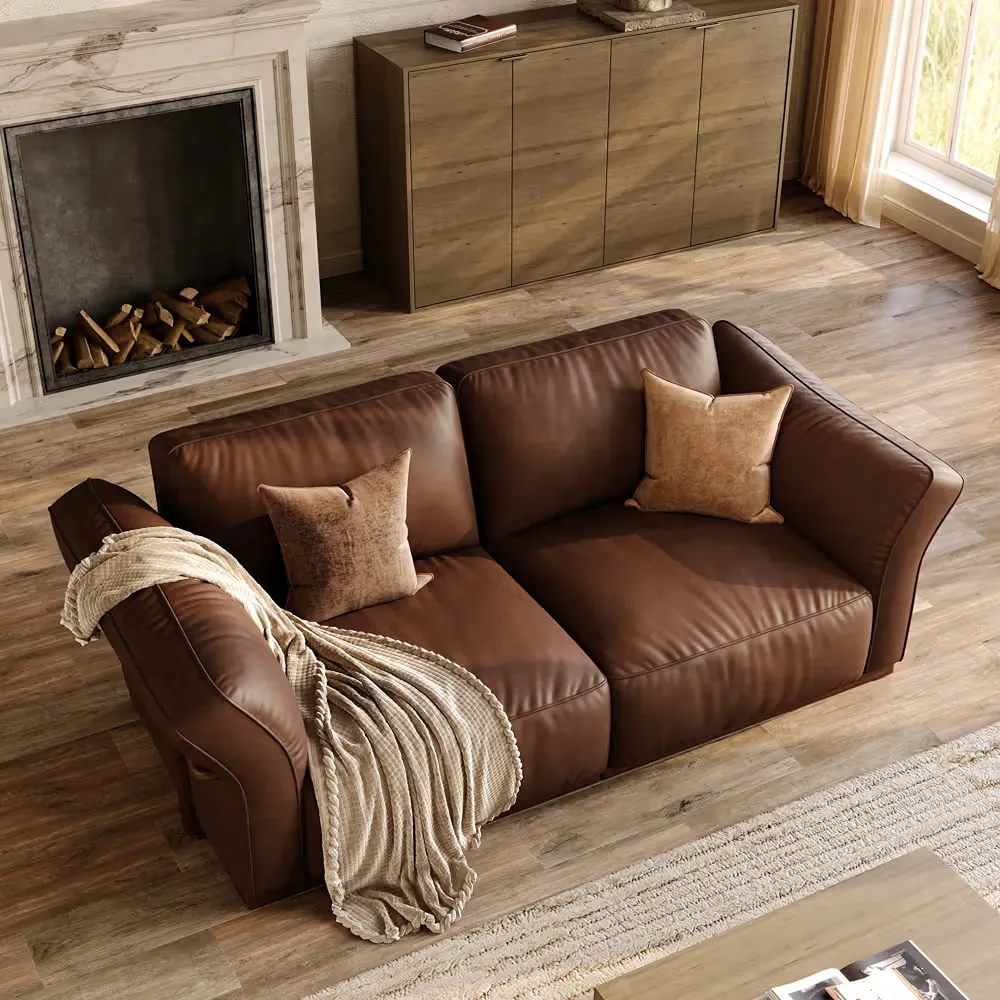
POVISON Cronus Genuine Leather Modular Sofa
Dark leather works better when the room adds contrast through material, not just color.
Dark Wood: Read the Grain and Undertone First
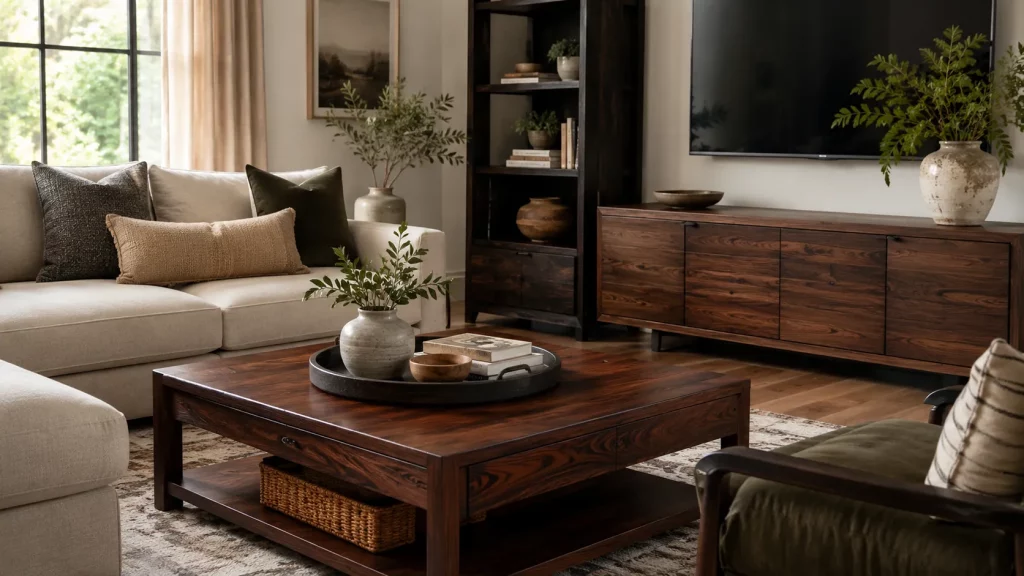
Walnut, espresso, reddish brown, and ashier dark woods should not automatically be treated as one color family.
The visible grain already breaks up a large cabinet or table surface, while the undertone determines which nearby woods feel related. If your floor and new furniture are both wood, comparing warm versus cool undertones is more useful than trying to find an exact digital color match.
When several wood pieces need to coexist, how to mix wood tones in a living room provides the more detailed decision process for dominant finishes, secondary tones, and material separation.
Flat Black Furniture: Watch the Outer Shape
Black painted or uniform dark finishes often create stronger outlines than textured leather or visibly grained wood.
That can work especially well for a single media cabinet, shelving unit, or accent table. Problems usually begin when several large black rectangles line up across the same wall or when a black cabinet sits directly beneath a black TV against a similarly dark background.
In those rooms, solve the outline first. A different wall value, visible gaps between pieces, or a neighboring material such as stone or fabric often does more than introducing additional black decor elsewhere.
What Job Should the Next Furniture Piece Do?
Once the existing room is diagnosed, the next purchase should solve one clear problem rather than simply match the finish you already own. Before ordering another sofa, table, or cabinet, decide whether that piece needs to separate, lighten, or consolidate.
| What the Room Needs | What the New Piece Should Do | Practical Example |
| Two dark surfaces visually run together | Separate | Place a lighter rug or stone table between a dark sofa and dark floor or media wall |
| The center of the room feels dense | Lighten | Replace another dark central surface with stone, glass, lighter wood, or lighter upholstery |
| The room feels busy because equipment and storage are scattered | Consolidate | Use one functional cabinet to contain gear, cords, and smaller storage pieces |
For a separating piece to work, it needs enough visual area to register from normal seating distance. A small white tray may add contrast on a tabletop, but it will not change how a dark sofa relates to a dark floor. A full-size rug or coffee table can affect that larger relationship.
A larger dark cabinet can actually make a media area feel more organized when it replaces several smaller pieces and keeps equipment out of sight. The POVISON Delven Verse TV Stand offers 18.3 inches of usable interior depth for larger AV components, along with six internal and three rear cable openings for cleaner wire routing. Before choosing a shallower console just because it looks visually lighter, measure your receiver or processor—including rear cable plugs—to make sure the cabinet can contain the setup instead of leaving equipment exposed around it.
The question is therefore not simply whether the next piece is dark or light. It is whether it improves a specific relationship in the room.
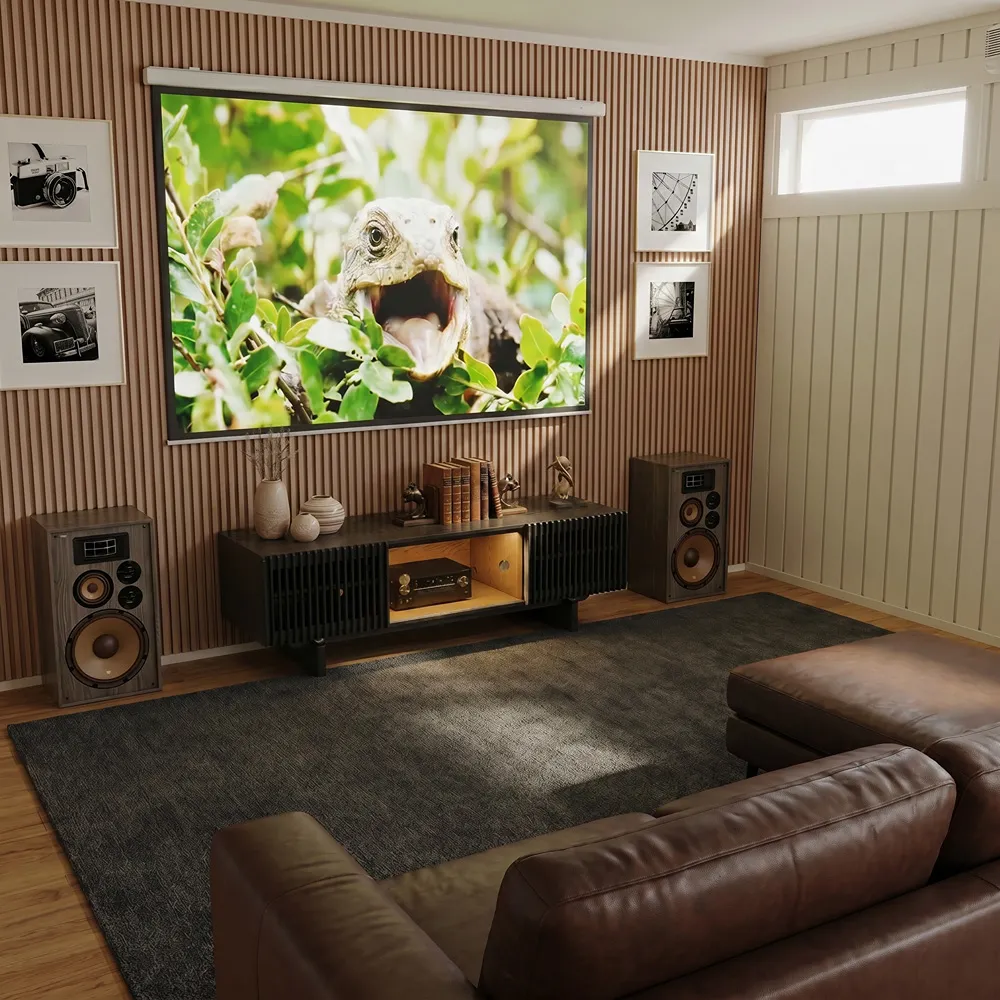
POVISON Delven Verse Media Console
A larger dark console can feel cleaner than several smaller pieces when it keeps AV gear and wiring contained.
Conclusion
Once you know how to decorate with dark furniture, the goal is not to make everything around it lighter. Find where dark surfaces are connecting, then decide whether the room needs contrast behind, below, or beside the main furniture. Treat leather, wood, and flat black finishes according to their own texture and visual weight, and make the next furniture purchase solve a specific job. A focused change to one major surface or furniture relationship usually does more than adding another layer of decorative accessories.
Q&A
Will light pet hair show more on dark furniture?
Usually, yes. Light pet hair is easier to notice when it creates strong contrast against black or dark brown upholstery. If shedding is frequent, consider how easily the actual surface can be vacuumed or wiped rather than choosing by color alone. A washable throw can also protect the most-used seating area.
How large should a rug be under dark furniture?
Choose a rug large enough to connect the main seating pieces, not one that floats by itself in the center. At minimum, placing the sofa’s front legs on the rug usually creates a clearer boundary between dark upholstery and dark flooring. Check door swings and walking paths before sizing up.
What if I cannot replace a dark floor or rug?
Keep the fixed dark surface and create separation somewhere else. A lighter coffee table, upholstered chair, curtains, or wall finish can provide enough contrast without replacing the floor or rug. Prioritize the largest visible surface next to the dark furniture instead of adding several small pale accessories.
Can two large dark furniture pieces work in one room?
Yes, if they do not visually merge into one continuous block. Separate them with a different material, lighter floor layer, or enough open space that each piece keeps a clear outline. If both pieces are large and nearly identical in finish, avoid adding another matching dark surface between them.


