 By Kelvin
Introduction
A TV stand for a 75-inch TV needs to support the television’s actual weight, accommodate its installed base, and provide a stable surface for everything else placed on top. The screen-size label cannot confirm those requirements.
Two televisions marketed as 75 inches can have different weights, foot positions, and front-to-back dimensions. A cabinet advertised as suitable for a 75-inch screen may still be unsuitable if its tabletop rating is too low or its usable surface does not accommodate the entire base.
The better question is not simply whether a stand fits a 75-inch television. It is whether that specific cabinet supports your exact television, your additional equipment, and the way the setup will be used.
Table of Contents
How Wide Does a TV Stand for a 75-Inch TV Need to Be?
A 75-inch television is measured diagonally, not horizontally. A cabinet measuring approximately 70–75 inches wide can accommodate many 75-inch televisions when the entire base fits on the usable tabletop. Wider consoles provide additional room around the screen, but a wider cabinet is not automatically stronger.
For a television measuring 66 inches across:
- A 71-inch console leaves approximately 2.5 inches on either side.
- A 75-inch console leaves approximately 4.5 inches on either side.
- An 80-inch console leaves approximately 7 inches on either side.
These measurements describe visual clearance, not structural safety. The television’s feet or center pedestal must still rest completely on the usable surface, and the cabinet must have an appropriate published tabletop rating.
Checking actual TV dimensions by screen size helps separate screen diagonal from the dimensions that determine furniture compatibility.
What Weight Capacity Does a 75-Inch TV Stand Actually Need?
The required TV stand weight capacity depends on the television’s weight with the stand attached plus anything else resting on the same tabletop. Do not use shipping weight, which includes packaging and does not represent the actual load on the cabinet.
Screen size alone is not enough. For example, Sony lists the 75-inch X80K at 73.6 pounds with its stand. Add the weight of a soundbar, center speaker, or décor placed on the same surface to determine the actual tabletop load.
TV weight with stand + other tabletop items = actual tabletop load
A higher published tabletop rating provides more room for equipment changes or a future TV upgrade, but it should not be treated as proof of overall cabinet sturdiness.
Why Does the Difference Between Total and Tabletop Capacity Matter?
A furniture listing may advertise a 200-pound capacity without explaining whether that figure applies to the tabletop or the complete cabinet.
These are different claims:
- 200-pound tabletop capacity: The manufacturer identifies the surface supporting the television.
- 200-pound total capacity: The figure may include weight distributed across the tabletop, shelves, drawers, and compartments.
- 200-pound shelf capacity: The rating applies only to the named shelf and does not establish the television surface limit.
A heavy television should never be assigned an assumed portion of an unspecified overall furniture rating. When a listing does not identify the relevant load-bearing surface, ask the manufacturer before purchasing.
This distinction also explains why a cabinet marketed for a 75-inch television may be a poor match for a particular model: screen-size compatibility does not replace a clearly identified tabletop rating.
A clearly identified tabletop rating is therefore an important first check, but it still tells you only how much the surface is rated to carry—not how the cabinet controls span, bending, or side-to-side movement.
Can a 71-Inch TV Stand Fit a 75-Inch TV?
A 71-inch cabinet can work when the television’s exterior width, base dimensions, installed weight, and tabletop load all fit the specific furniture.
The 75-inch Sony X80K provides a useful real-world example. Sony lists the following measurements:
- Television width: 66 inches.
- Stand width: 52.375 inches.
- Installed depth: 16.25 inches.
- Weight with stand: 73.6 pounds.
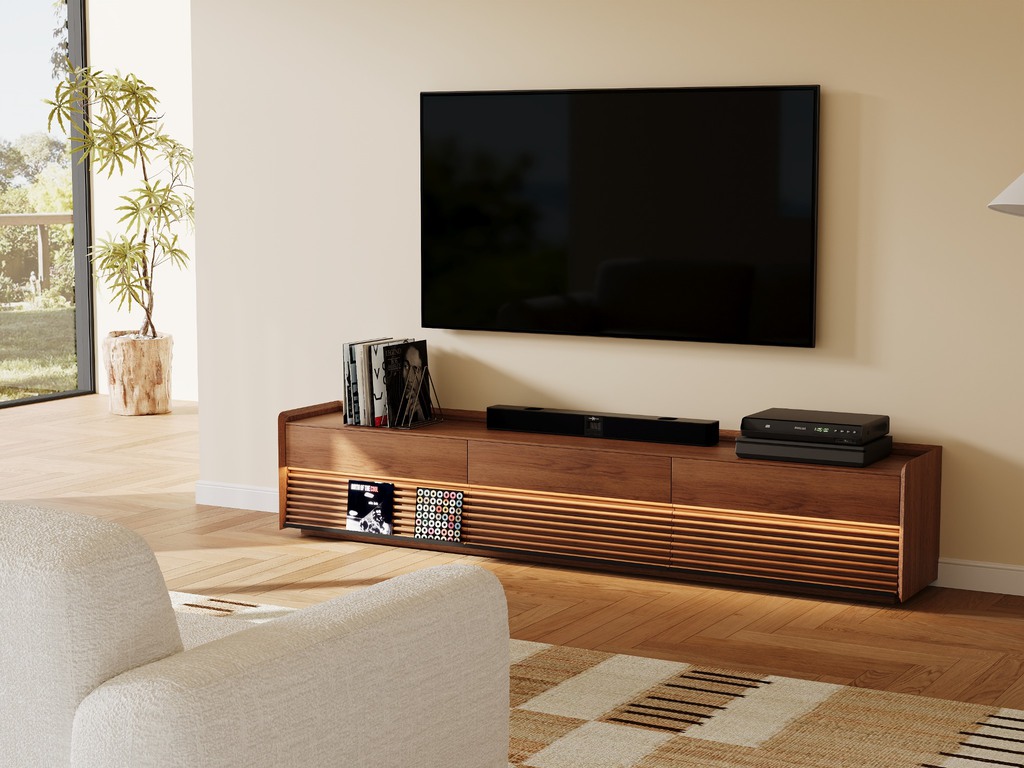
The POVISON Ansel Mid-Century TV Stand measures 70.86 inches wide and 17.72 inches deep, with a published 200-pound tabletop capacity.
| Compatibility Check | Sony 75-Inch X80K | POVISON Ansel | What to Check |
|---|---|---|---|
| Overall width | 66 in | 70.86 in | About 2.43 in of visual space per side when centered |
| TV foot span | 52.375 in | 70.86-in cabinet width | Confirm the feet remain inside the actual flat tabletop |
| Installed depth | 16.25 in | 17.72 in overall depth | Verify usable tabletop depth, not exterior depth alone |
| Weight with stand | 73.6 lb | 200-lb desktop rating | Leaves rated capacity for other permitted tabletop items |
The depth comparison deserves particular attention. The 1.47-inch difference is the total difference between the television’s installed depth and the cabinet’s stated exterior depth, not guaranteed clearance behind the TV. Buyers should verify the actual flat tabletop area and leave the television’s entire base supported.
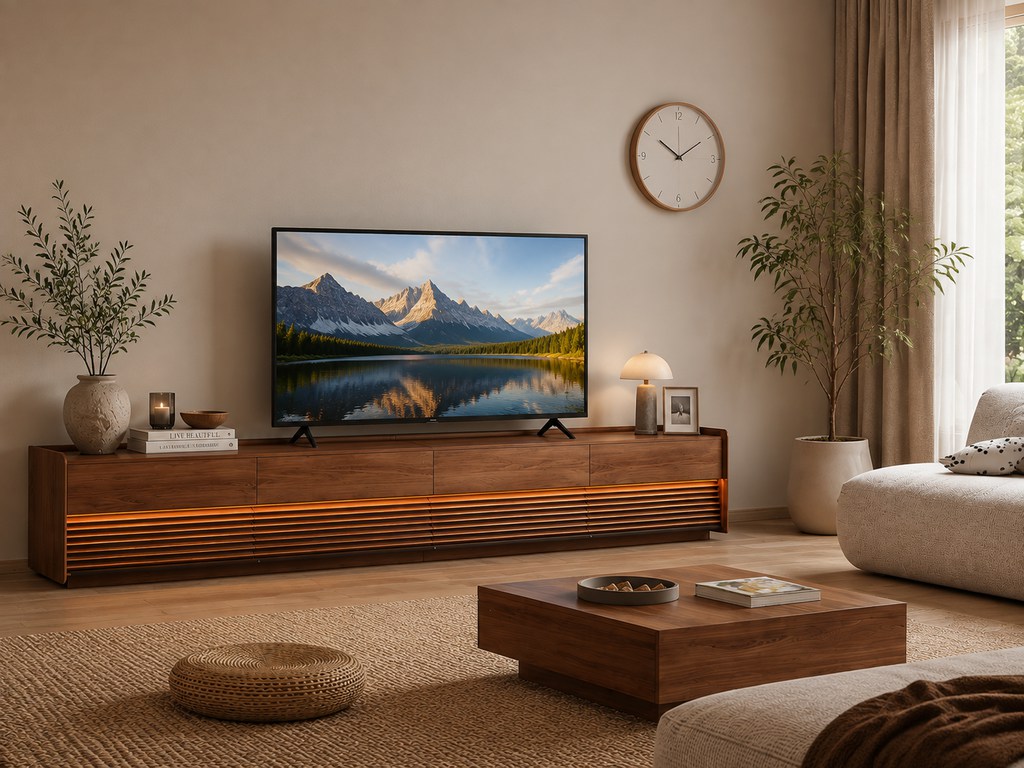
A low-profile TV stand for large screens can also help keep a large display from sitting unnecessarily high, especially in a living room with lower seating.
Which Structural Details Matter Beyond the Weight Rating?
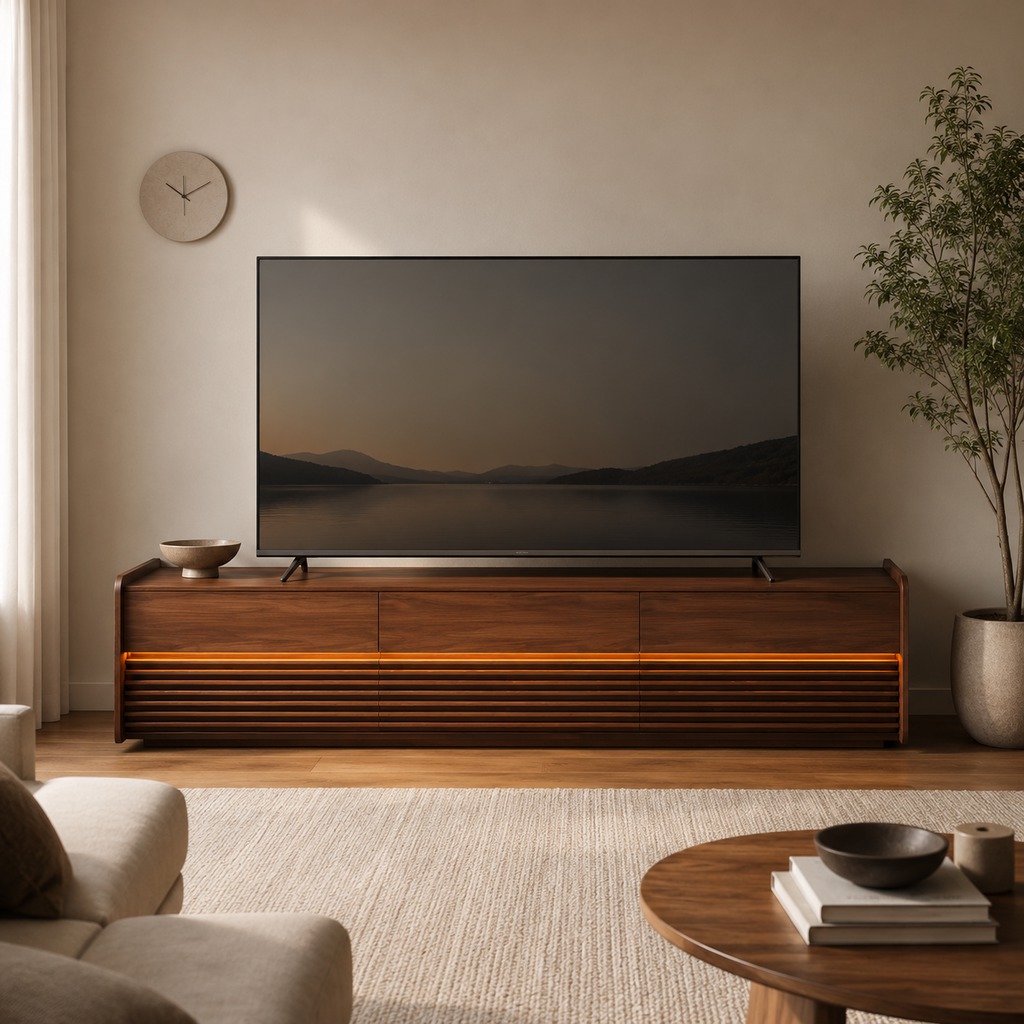
A published tabletop capacity tells you how much load the surface is rated to support. It does not show how that load is supported through the rest of the cabinet. For a sturdy TV stand, also check supported span, cabinet rigidity, and structural connections.
Support Beneath the Tabletop
Where the TV load lands matters. A center pedestal concentrates weight near the middle, while widely spaced feet create two separate load points. Longer unsupported spans are generally more susceptible to deflection, so internal dividers or supports beneath heavily loaded areas can be meaningful structural details. The USDA Forest Service’s Wood Handbook identifies span and bending stiffness as important variables in structural performance.
Cabinet Rigidity
A sturdy cabinet should resist more than downward load. It also needs enough cabinet rigidity to limit bending, twisting, or side-to-side distortion. Material alone does not prove strength; panel thickness, support layout, span, and joint design also affect how rigid the cabinet remains under load.
Structural Connections
Joints and assembly quality affect how well the cabinet holds its geometry. Loose fasteners, misaligned panels, or incomplete connections can reduce rigidity even when the materials are adequate. Fully assembled construction removes much of this customer-assembly variation by reducing dependence on customer-installed structural joints.
Understanding flimsy vs. sturdy TV stand construction can help shoppers compare support layout, cabinet rigidity, structural connections, and published weight limits together.
How Ansel Combines Capacity, Structure, and Fit
The POVISON Ansel Mid-Century TV Stand makes a stronger case when its specifications are considered together rather than treating the 200-pound rating as the only evidence. POVISON specifies a 200-pound desktop capacity, plywood cabinet construction, fully assembled delivery, and overall dimensions of 70.86 W × 17.72 D × 19.29 H inches.
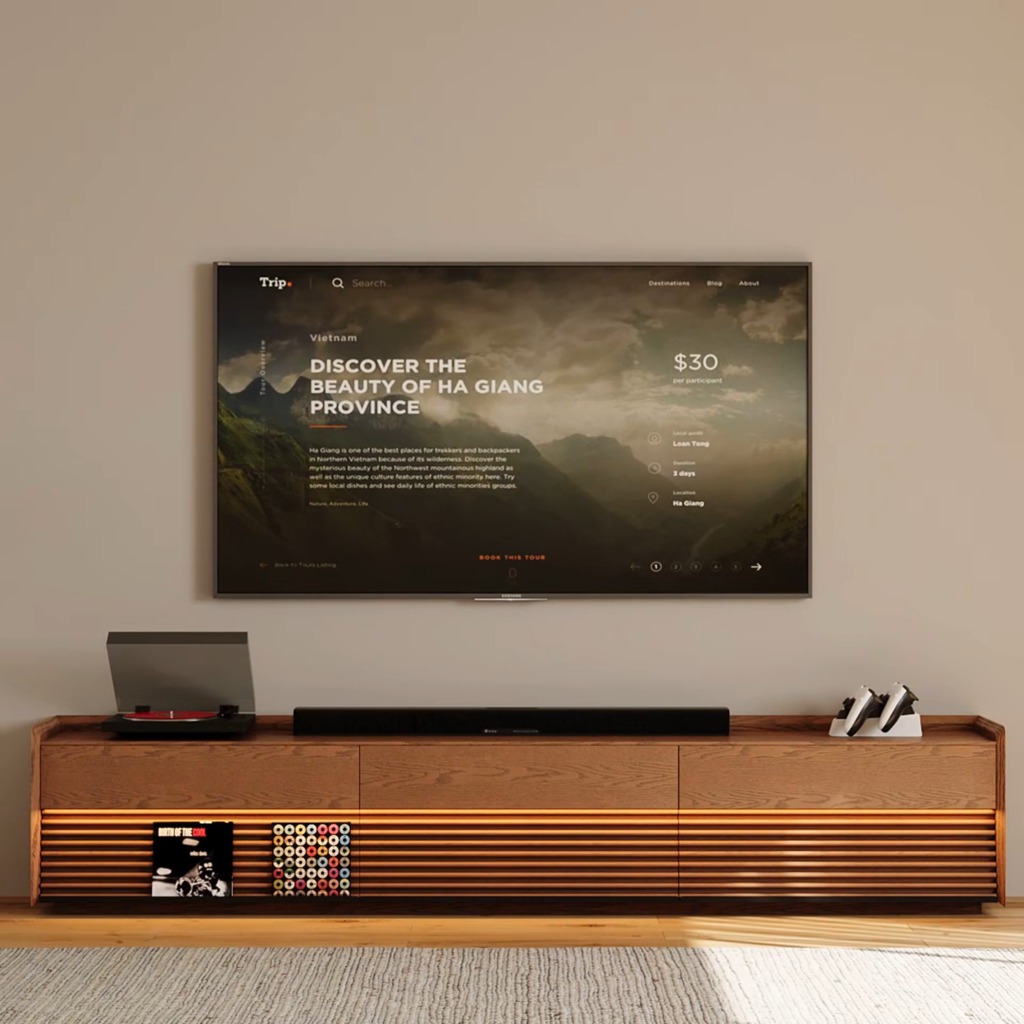
Ansel Mid-Century TV Stand
👍 Best for: Low-profile 75-inch TV setups
✨ 200-pound rated desktop
✨ Fully assembled plywood cabinet
✨ 70.86 × 17.72 × 19.29-inch profile
✨ Six concealed storage drawers
Each specification answers a different buying question. The desktop rating documents supported load; the plywood specification identifies the cabinet material; and fully assembled construction means the primary cabinet structure does not depend on the buyer aligning and tightening the main structural connections at home. Its low 19.29-inch height also keeps a large-screen setup from becoming unnecessarily tall.
These details should still be evaluated together. A weight rating does not by itself prove resistance to bending or side-to-side movement, and material alone does not reveal the support layout beneath the top.
When Should You Choose a Wider or Higher-Capacity Stand?
Choose a wider cabinet when the television’s feet approach the edges, the screen is wider than expected, or the setup needs additional space for speakers placed beside the display.
Choose a higher-capacity tabletop when the combined load already approaches the published limit or when a future television upgrade may introduce more weight.
Choose a deeper cabinet when the television’s installed base occupies most of the available surface. A stand can have enough width and weight capacity while still failing because the feet extend too far toward the front or back.
For a 75-inch television, the best furniture size is the one that passes all three checks together: the screen fits the room, the base fits the surface, and the actual load remains within the manufacturer’s stated tabletop limit.
Structural documentation matters more as the setup becomes heavier or the television concentrates load near the middle of a long tabletop. If two cabinets meet the same size and weight requirements, favor the one that provides clearer information about support beneath the top, cabinet construction, and assembly method rather than assuming the wider or heavier-looking option is sturdier.
Conclusion
Choosing a sturdy TV stand for a 75-inch TV means looking beyond screen size or a single weight-capacity number. Start with the TV’s actual dimensions and weight with its stand, then confirm usable tabletop space and the published desktop rating. Structural details such as support beneath the tabletop, unsupported span, cabinet rigidity, and structural connections also help show how well the furniture is built. A low-profile, fully assembled cabinet can add useful advantages, but the best choice comes from evaluating these factors together rather than relying on one specification alone.
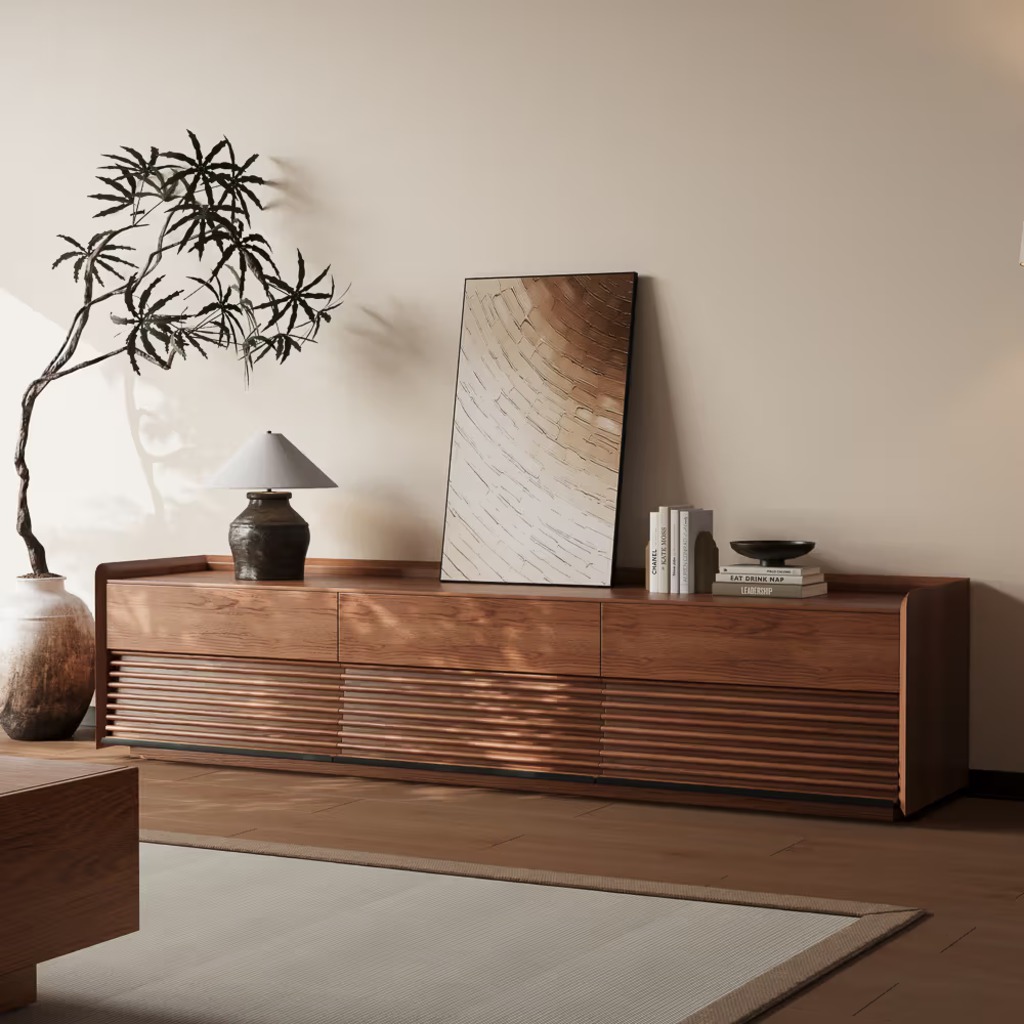
Find the Right TV Stand
Explore designs for different room sizes, layouts, and everyday needs.
Frequently Asked Questions
Does wall-mounting change the cabinet’s required weight capacity?
Yes. When the television is properly wall-mounted, its weight should be supported by the wall mount and wall structure rather than the cabinet. The furniture still needs sufficient capacity for soundbars, speakers, and decorative items, while the wall mount must be rated for the specific television’s weight and mounting pattern.
Can a soundbar interfere with a tabletop television?
Yes. A soundbar can block the television’s remote-control sensor, lower screen edge, or subtitles if its height exceeds the clearance beneath the display. Measure the space between the tabletop and the bottom of the screen, then confirm the soundbar fits without forcing the television’s feet toward the cabinet edge.
Is a 200-pound capacity necessary for every 75-inch TV?
No. The required TV stand weight capacity depends on the TV’s actual weight with its stand plus other items placed on the tabletop. A 200-pound rating may provide useful room for additional equipment or future upgrades, but a lighter setup does not automatically require that much capacity.
Can the same cabinet support a future 85-inch television?
Possibly, but a cabinet that fits a 75-inch screen may be too narrow for an 85-inch television, which can measure approximately 74 inches or more across. Confirm the future model’s exterior width, foot spacing, base depth, and installed weight before assuming the current furniture can accommodate the upgrade.
Does a heavier TV stand mean it can support more weight?
Not necessarily. Furniture weight describes how heavy the cabinet itself is, while tabletop weight capacity describes the load that a specific surface is rated to support. When comparing sturdy TV stands, prioritize a documented tabletop rating together with support layout, cabinet rigidity, and structural connections rather than cabinet weight alone.


[…] Mistake 3: Ignoring weight capacity in the spec sheet […]