 By Kelvin
Introduction
Choosing between a soft and firm couch is really a question about how you want to feel after sitting for more than a few minutes. This couch firmness guide compares firm sofa vs soft sofa for comfort, from initial sink-in feel to upright stability, position changes, and everyday lounging. You will also learn why cushion density does not automatically tell you firmness, how seat depth changes the experience, and what to check online or in a showroom before committing to a sofa.
Table of Contents
Is a Firm or Soft Sofa More Comfortable?
For a firm sofa vs soft sofa for comfort decision, neither side wins for everyone. A softer sofa generally gives more immediate contouring and sink-in comfort. A firmer seat resists deeper compression, which can make upright sitting, changing positions, and standing up feel easier.
A firm vs soft couch comparison becomes more useful when you define the type of comfort you want rather than treating softness as a comfort score.
| Comfort Priority | Softer Sofa | Medium | Firmer Sofa |
| Immediate plushness | Strongest | Moderate | Lowest |
| Upright stability | Lower | Balanced | Strongest |
| Curling up or side sitting | Strong fit | Strong fit | Less flexible |
| Frequent position changes | Can require more effort | Balanced | Usually easier |
| Getting up from the seat | More effort if you sink deeply | Usually manageable | Usually easiest |
| Mixed everyday use | Preference-dependent | Flexible starting point | Better for upright-focused use |
Consider someone who spends part of the evening sitting upright with a laptop and later stretches out with a book. An extremely soft seat may feel inviting at first but less stable for the upright portion. A very firm seat may solve that problem but feel less accommodating when curling up. A moderate middle ground can better handle both behaviors.
Comfort also changes over time. The sofa that feels plushest in the first 30 seconds is not automatically the one you will prefer after an hour. Pressure distribution, back contact, seat depth, and how often you need to reposition all affect sustained comfort.
What Makes a Sofa Feel Soft or Firm?
Firmness is created by the complete seating system, not one material. Cushion core, softer wrapping layers, springs or webbing below the cushion, upholstery tension, and seat geometry all influence what you feel when you sit down.
One particularly useful distinction is density versus firmness. The Polyurethane Foam Association notes that foam firmness is independent of density. Density measures mass per unit volume, while firmness describes resistance to indentation. A higher-density foam is therefore not automatically a firmer foam.
That matters in a firm sofa vs soft sofa for comfort comparison because product descriptions often emphasize high-density foam without giving a standardized firmness rating. Look at the whole cushion construction rather than turning one specification into a comfort conclusion.
Surface softness and underlying support can also coexist. A soft upper layer can compress around the body while a more resilient layer below prevents continued sinking. If you want to understand the tradeoffs between memory foam, resilient foam, fibers, and other cushion materials, the best fillings for couch cushions and seats are better considered as parts of a layered system rather than simple soft-or-firm labels.
Which Firmness Fits the Way You Actually Sit?
Instead of asking whether a firm vs soft sofa is universally better, start with your most common sitting position. Firmness should make that position easier to maintain rather than forcing you to repeatedly scoot forward, rebuild pillows, or push yourself out of a deep cushion.
Start softer or around medium-soft when you usually:
- Curl up or sit sideways with your legs on the sofa.
- Prefer noticeable cushion contouring around the hips and legs.
- Use the sofa mainly for relaxed lounging rather than upright tasks.
- Do not mind occasionally reshaping softer cushions.
Start around medium or medium-firm when you:
- Alternate between upright sitting and lounging.
- Share the sofa with people who sit differently.
- Change positions frequently.
- Want some surface give without feeling deeply enclosed by the cushion.
Consider firmer seating when you:
- Spend most of your sofa time sitting upright.
- Dislike the sensation of your hips dropping substantially into the seat.
- Get up and sit down frequently.
- Prefer a stable front edge and a more structured sitting position.
The goal is not to assign every sitting habit one rigid firmness level. Use these patterns to establish a starting point, then check whether the actual seat dimensions and construction reinforce the comfort you want.

Why Can Two Medium-Firm Sofas Feel Completely Different?
“Medium-firm” is useful shorthand, but it is not a universal measurement shared across furniture brands. Two sofas carrying the same description can behave differently once you account for the layers above the core and the geometry around it.
Seat depth is especially important. A relatively shallow seat lets many users keep their feet on the floor and their back close to the backrest, creating a more upright experience. A much deeper seat gives the body room to recline, tuck up the legs, or move away from the backrest. That can make even a resistant cushion feel more lounge-oriented.
The same principle applies to seat height, back angle, loose versus fixed back cushions, and upholstery tension. The sofa seat depth and height comfort guide is useful when the firmness sounds right but the dimensions may put your body in the wrong position.
How Can You Judge Sofa Firmness Before Buying?
A five-second sit tells you mainly about initial softness. A better comfort check looks at what happens after your body settles into the sofa and starts moving naturally.
When testing in person:
- Sit fully back instead of perching on the front edge.
- Notice how much the seat compresses during the first minute.
- Check whether your back comfortably reaches the back cushion.
- Put your feet where you normally would rather than forcing an ideal posture.
- Shift from upright sitting into your usual relaxed position.
- Stand up without deliberately using extra momentum.
- After you leave the seat, notice whether the cushion begins recovering evenly.
When shopping online, use an evidence hierarchy. Start with the manufacturer’s own firmness or comfort rating when one exists. Then examine cushion layers, the support system below them, usable seat depth and height, and repeated patterns in customer feedback. Product photography alone is weak evidence: a sofa can look cloud-like while using a comparatively resistant seat core.
Also check return or trial terms before assuming a seat will “break in” enough to solve a poor match. If your routine clearly points toward a more resistant seat, comparing firm sofas for support without the sink-in feel can narrow the product stage of the decision without reopening the soft-versus-firm question.

Best Povison Sofas for Different Firmness Preferences
Once you know which type of comfort suits the way you sit, these three Povison sofas offer distinctly different directions. Prices shown are original listed prices and may vary by region, configuration, availability, discounts, and other promotions.
Best for Soft Leather Lounging: Cronus Genuine Leather Modular Sofa
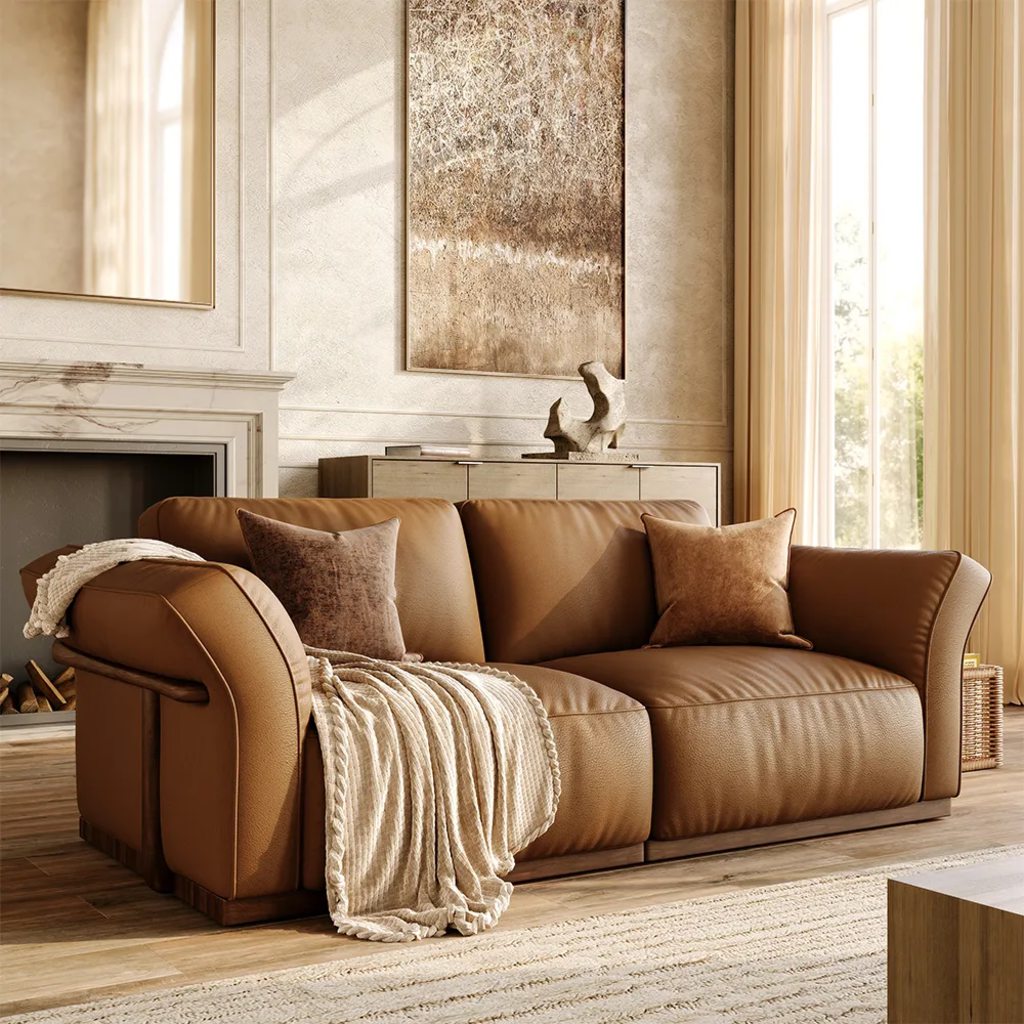
POVISON Cronus Genuine Leather Modular Sofa
Down-filled cushioning and soft top-grain leather create an enveloping feel for relaxed lounging in larger, flexible living areas.
👍 Best for: Soft leather lounging in modular living rooms
✨ Highlights
- Premium down filling delivers noticeable softness with quick bounce-back.
- Top-grain leather has a smooth, supple surface that softens further with use.
- Modular construction supports flexible seating arrangements.
- A 26-inch seat depth leaves room to sit back or stretch out.
🎯 Features: Cronus is the softest-leaning pick of the three for shoppers who prefer noticeable body contouring over a tightly structured seat. Premium down creates a plush response while recovering after use, and the top-grain leather adds a soft surface feel rather than the stiffness some buyers associate with leather seating. Its modular format also suits larger living rooms where relaxed seating may need to adapt around different layouts.
🗨️ Buyer Review“The leather is very soft and delicate, and it provides a great sense of wrapping when you sit on it.” — Roger
Best for Deep Lounging With Firmer Support: Silva Velvet Tufted Sofa
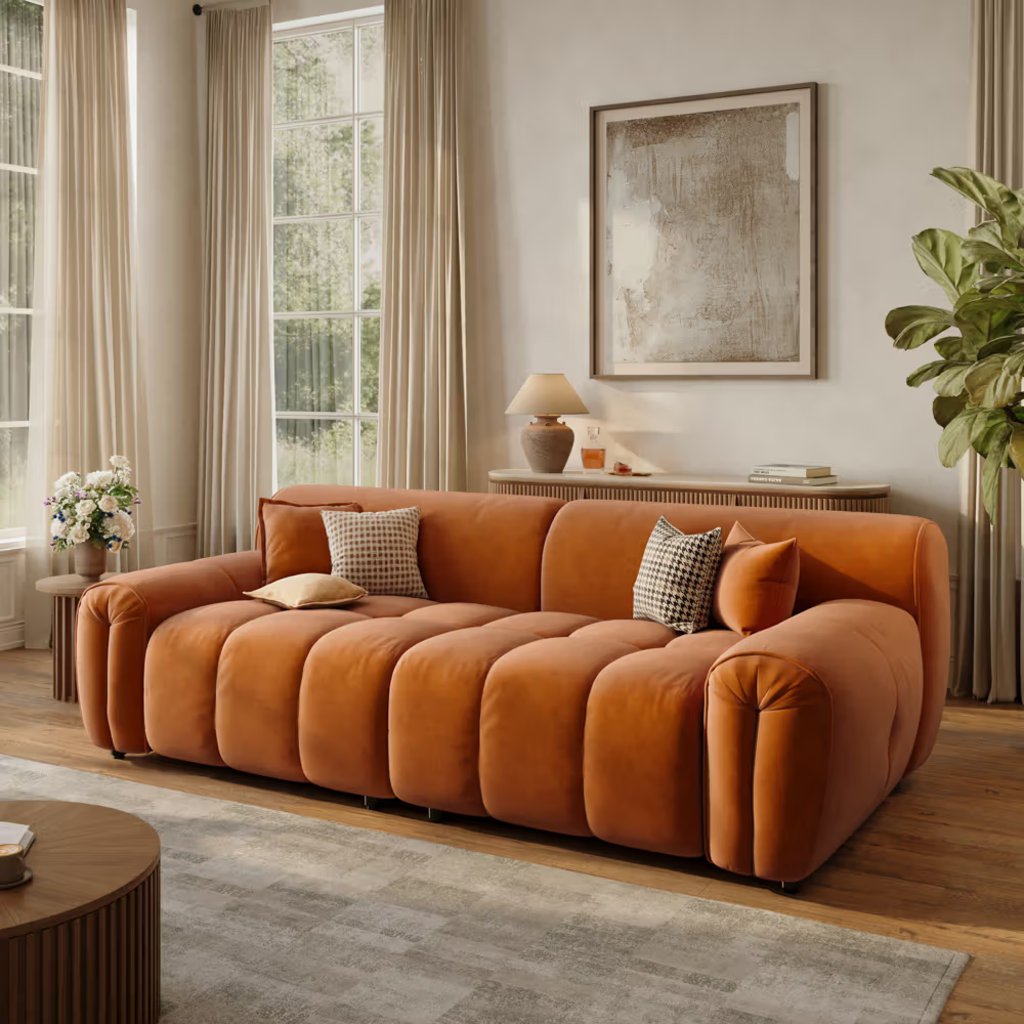
POVISON Silva Velvet Tufted Sofa
An extra-deep seat pairs relaxed curl-up room with resilient cushioning for shoppers who want softness without excessive sinking.
👍 Best for: Cross-legged lounging with stronger underlying support
✨ Highlights
- Approximately 29.5-inch extra-deep seating accommodates curled-up and cross-legged positions.
- Multilayer cushioning is designed to rebound rather than retain a deep impression.
- Hand-tufted construction helps keep the seating surface more controlled.
- Water- and scratch-resistant upholstery supports everyday family use.
🎯 Features Silva fits shoppers caught between a soft and firm sofa: they want enough depth and surface give to curl up comfortably, but not a cushion that keeps collapsing underneath them. Its extra-deep seat opens more lounging positions, while multilayer cushioning and tufted construction add rebound and shape retention. That combination makes it particularly relevant to a firm sofa vs soft sofa for comfort decision when deep seating matters as much as firmness.
🗨️ Buyer Review“Soft to the touch, firm yet pillowy when you sit. Beautiful.” — Charles
Best for Firmer Everyday Sitting: Atticus Mid-Century Sofa
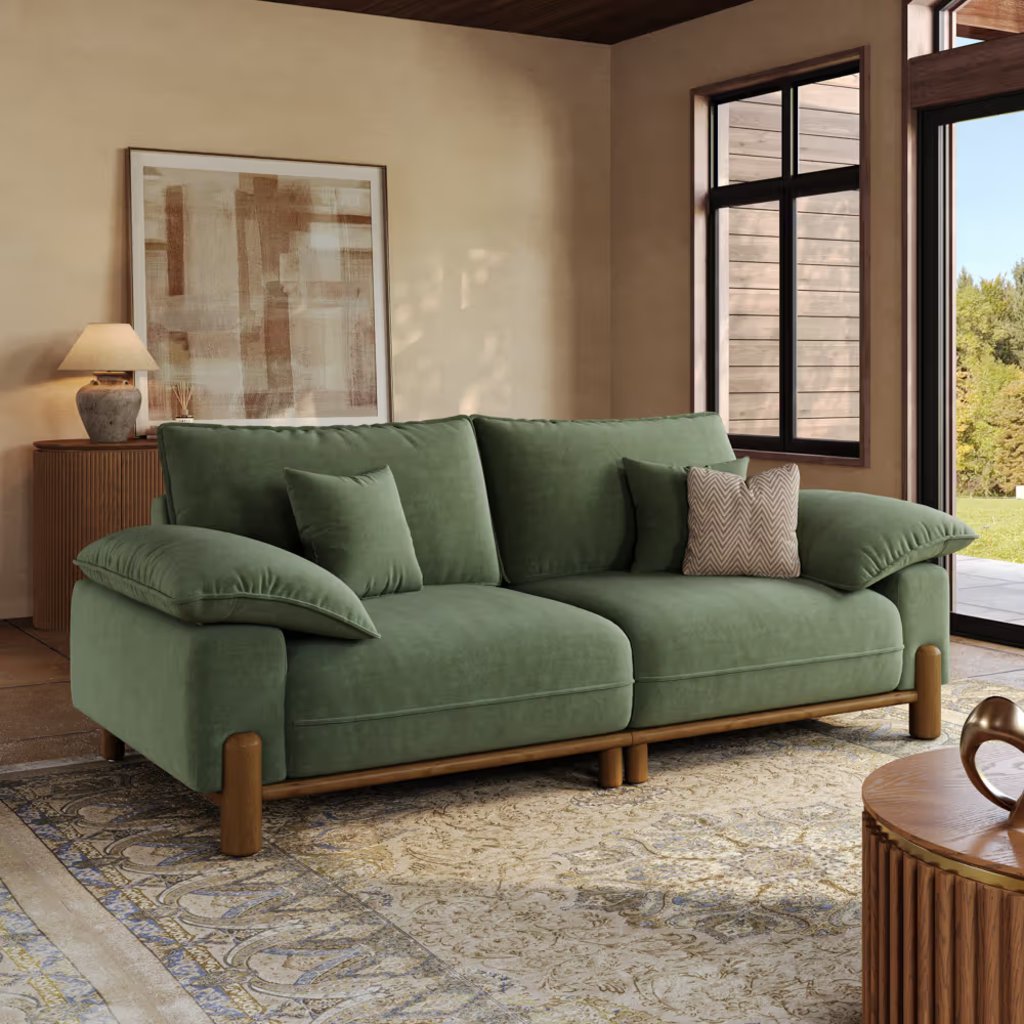
POVISON Atticus Mid-Century Sofa
Layered foam and a supportive base keep the seat stable for buyers who prefer less sink during everyday sitting.
👍 Best for: Upright everyday sitting with limited sink-in
✨ Highlights
- Layered foam combines contouring memory foam with higher-rebound cushioning.
- Supportive base is designed to keep the sitter stable instead of deeply sunken.
- Splash- and scratch-resistant pet-friendly fabric simplifies everyday upkeep.
- Five-inch leg clearance allows a robot vacuum to clean underneath.
🎯 Features Atticus is the firmer-leaning option for people who would rather stay more on top of the cushion than settle deeply into it. Memory foam adds some contouring, while high-resiliency foam contributes rebound and the supportive lower layer limits sink. That more controlled response suits upright conversation, reading, or frequent sit-to-stand use, while pet-friendly upholstery makes the sofa practical for busy shared living rooms.
🗨️ Buyer Review“Firm, supportive, stylish, & very easy to put together. Plenty of room for 2 adults to relax comfortably.” — Maggi
Conclusion
The firm sofa vs soft sofa for comfort question becomes easier when firmness stops being a simple measure of quality. Start softer if you value contouring and relaxed sink-in comfort, firmer if you prefer stability and easier movement, and somewhere between the two for mixed daily use. Then verify cushion construction, usable seat depth, and how the sofa supports your normal posture. The right couch is not automatically the softest or firmest—it is the one whose complete seating system matches the way you actually sit.
Q&A
Does body weight change how firm a sofa feels?
Yes. A lighter sitter may compress the cushion less and experience it as firmer, while a heavier sitter may engage deeper layers sooner. If two regular users differ noticeably in weight, both should test the sofa or compare feedback from similarly built users before settling on one firmness level.
Should removable seat cushions affect your firmness choice?
They matter more for maintenance than initial comfort. Removable or reversible cushions can be rotated to spread wear and reduce uneven compression over time. They will not turn an overly soft seat into a firm one, so choose the right firmness first and treat reversibility as a long-term upkeep advantage.
What firmness works for a guest-room sofa?
Medium to medium-firm is usually a practical starting point when different guests will use the same seat. If the sofa also serves for reading, laptop work, or putting on shoes, avoid an extremely deep, highly compressible seat. For sleeper sofas, evaluate daytime seat firmness separately from the sleeping surface.
Can a chaise feel different from the main sectional seats?
Yes. A chaise may use different cushion dimensions, support underneath, or a longer uninterrupted seating surface, so its comfort can differ from the adjacent sofa seats even within one sectional. If you plan to spend most of your time on the chaise, evaluate that section separately rather than relying on the sofa’s overall firmness label.
Do fixed seat cushions feel firmer than loose cushions?
Not necessarily. Fixed cushions may feel more controlled because they cannot shift, while loose cushions can move or require occasional repositioning, but attachment style alone does not determine firmness. Compare the cushion core and support underneath first, then use fixed versus loose construction as a maintenance and stability consideration.


[…] the cushion still looks healthy but you simply prefer more resistance, firm sofa vs soft sofa for comfort can help separate a firmness preference from an actual repair […]