 By Stephanie
Table of Contents
An old money living room should feel collected, comfortable, and quietly established—not like a showroom assembled in one weekend. This guide focuses on how to build that effect in a modern home, where the room still needs to handle everyday seating, a TV, storage, guests, and easy upkeep. The goal is not to imitate a historic estate. It is to choose one strong furniture anchor, layer materials with depth, keep the palette restrained, and add personal objects slowly so the room gains character without feeling staged.
What Makes the Style Feel Authentic?
The clearest rule is collected, not matched. Furniture should feel related without looking like it came from one coordinated set. A brown leather sofa can sit with a walnut cabinet, a lighter stone table, a patterned rug, and framed art as long as the colors share a warm undertone and the visual weight is balanced.
Old-money style also depends on materials that look better with use. Leather, wood grain, stone, wool, linen, and aged metal bring more depth than glossy surfaces or decorative finishes designed to look expensive. If you prefer a broader classic foundation, traditional interior design for modern homes provides useful context on balancing classic shapes with current-day comfort.
The room should still work for normal routines. A formal-looking sofa that no one wants to sit on, or a cabinet that cannot hold daily clutter, weakens the result.
How Should You Choose Old Money Living Room Furniture?
Choose furniture by scale, daily use, and material behavior before decorative style. A strong old-money piece should look appropriate after the room is simplified, not only when surrounded by rugs, art, and styled accessories.
Before buying, check three things:
- Room fit: Measure the full footprint and protect the main walkway.
- Daily function: Decide whether the piece needs to support lounging, guests, storage, or electronics.
- Material behavior: Consider how leather, wood, stone, or upholstery will clean and age with regular use.
These practical checks also help when you choose timeless furniture for long-term use, because a piece should remain useful even if the surrounding decor changes.
5 Ideas That Work in Real Homes
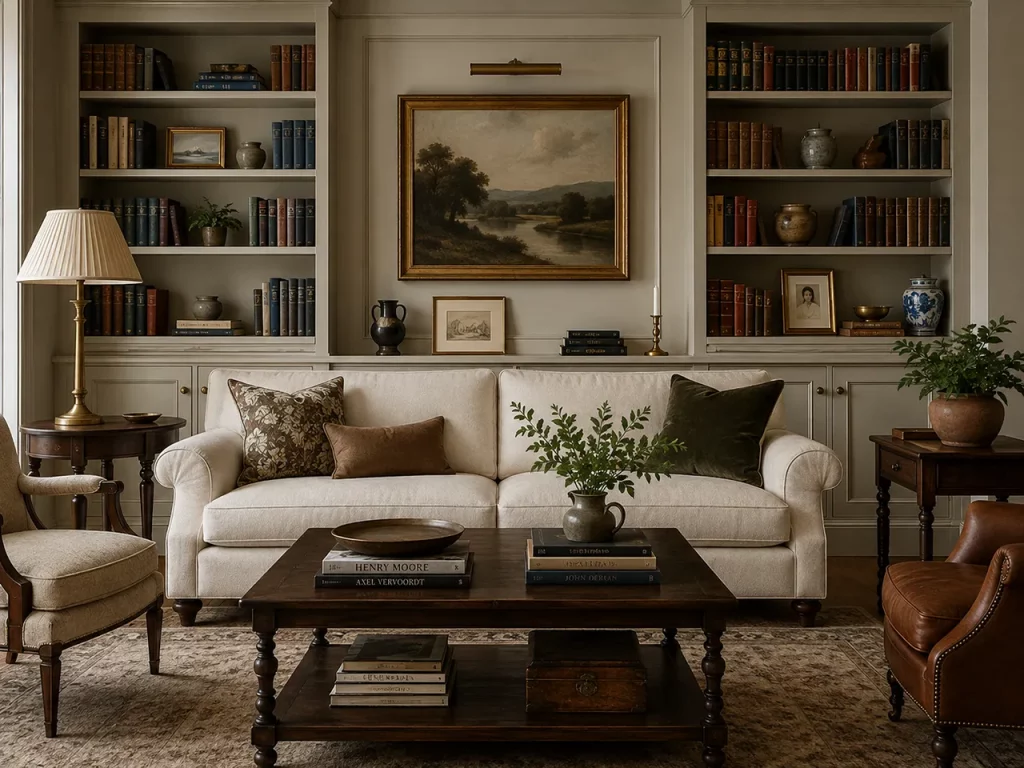
The five ideas below follow a simple order: establish the room with one visual anchor, connect materials and color, then add personality and modern function. That order matters. If decor comes first, the space can look themed. If the largest furniture is selected first and the smaller layers respond to it, the result usually feels more settled.
Start With One Strong Anchor Piece
Choose one large item to carry most of the heritage character. A brown leather sofa, a substantial wood cabinet, or a tailored upholstered sofa can do that job. The surrounding pieces can be simpler.
This prevents the room from becoming a collection of competing “traditional” details. Deep tufting, rolled arms, carved legs, dark wood, and brass do not all need to appear at once. If the sofa carries the strongest classic signal, a cleaner coffee table and media console can keep the room livable. Buyers comparing traditional sofas for living rooms should also consider usable seating and cleaning effort, not silhouette alone.
Layer Leather, Walnut, Stone, and Soft Textiles
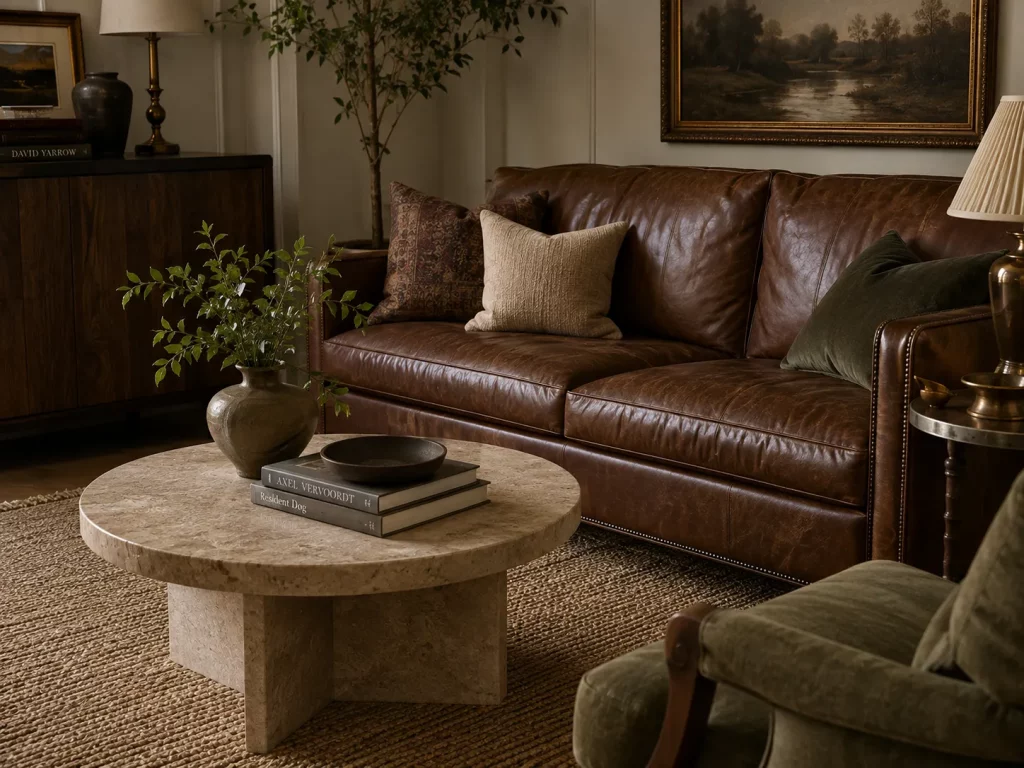
Material contrast creates depth more effectively than repeating the same finish. Start with the material of the anchor piece, then add one harder surface and one softer layer. A leather sofa, for example, can be balanced by a stone-topped coffee table, walnut storage, and a wool or woven rug.
| Anchor Material | Pair With | Watch For |
| Brown leather | Cream textiles + walnut | Too many dark surfaces |
| Walnut wood | Stone + linen or wool | A full matching wood set |
| Light stone | Warm wood + textured upholstery | Too many hard, pale surfaces |
This approach also makes old money living room decor easier to edit: books, art, lamps, and objects can support the room instead of carrying the entire style.
Use a Warm, Restrained Color Story
Use a simple formula: one warm neutral base, one darker anchor, and one muted accent. Cream walls with walnut and olive, camel upholstery with stone and burgundy, or ivory with chocolate brown and navy can all work without making the room feel dim.
Repeat the accent only a few times. An olive chair might connect to a small pattern in the rug and a ceramic object on a shelf. Avoid making every curtain, pillow, and accessory the same accent color. The room should look coordinated at a glance but reveal variation up close.
Add Books, Art, and Aged Accents Slowly
Personal layers are what keep a newly furnished room from looking newly decorated. Use books you actually read, framed art that can stay for years, ceramics, travel finds, family objects, or a few aged-metal accents. Leave some shelves partly open rather than filling every gap.
A living room used for coffee with friends may need the table surface clear most days. Keep a tray or a small stack of books there, then let closed storage handle remotes, chargers, and less attractive necessities. The styling should support use instead of creating another surface that has to be cleared.
Keep the TV Area Quiet and Conversation-Friendly
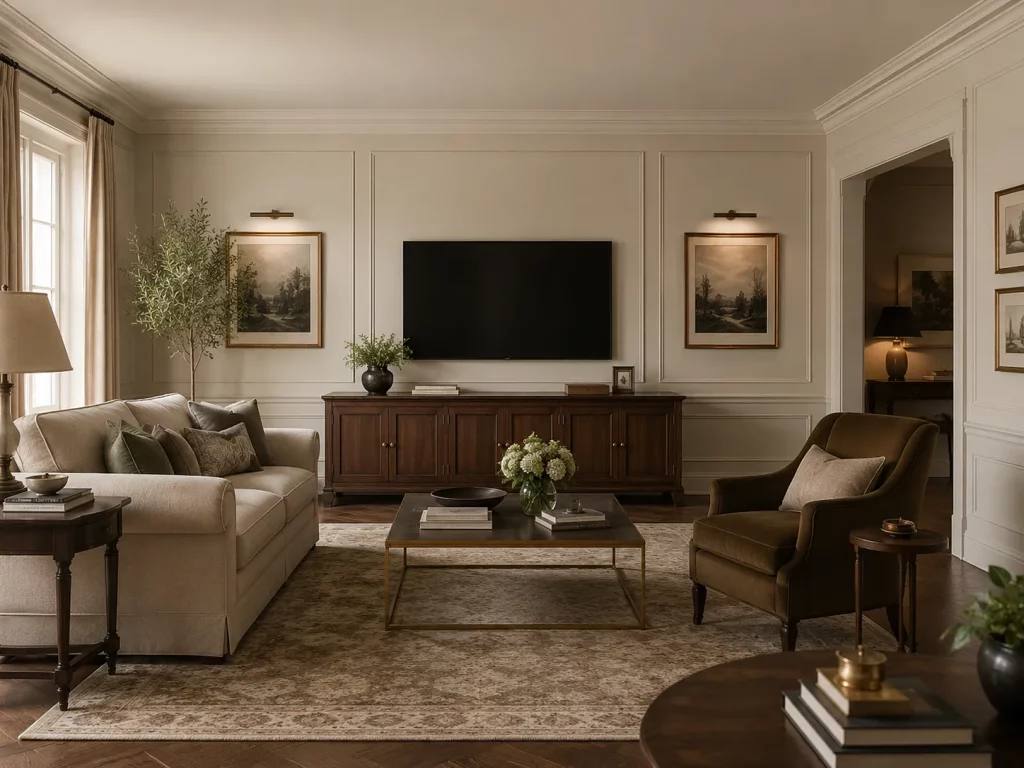
A modern room can keep its TV without allowing electronics to dominate the design. Use a warm wood console, contain visible cables, and keep smaller components behind doors where ventilation and remote access still work. Avoid surrounding the screen with several unrelated decorative objects just to make it disappear.
The seating layout should support both TV viewing and conversation. In a family room, the main sofa can face the media wall while one chair turns slightly inward toward the coffee table. When guests arrive, that chair already participates in the seating group rather than feeling like a dedicated TV seat.
POVISON Picks for a Collected Living Room
These three pieces serve different roles rather than forming a matching set. One provides the visual anchor, one bridges wood and stone, and one handles modern electronics. That mix supports a layered room while keeping daily functions—sitting, setting down drinks, storing equipment, and managing cables—clear and practical.
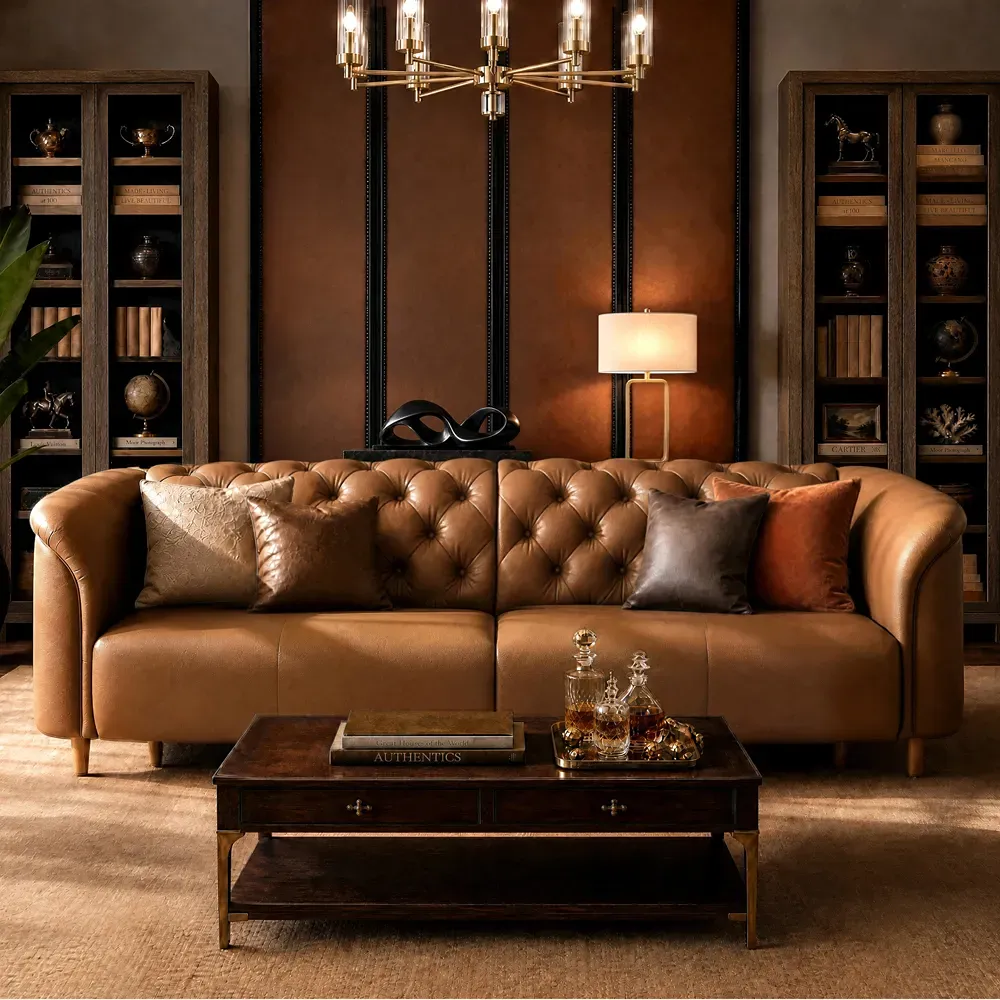
Harrington Chesterfield Sofa
Heritage Anchor
- Width: 110.6″
- Upholstery: Brown top-grain leather
- Comfort: High-density foam
- Design: Rolled arms + deep button tufting
In a larger living room, the Harrington Chesterfield Sofa can carry most of the heritage character on its own. Its 110.6-inch frame, rolled arms, and deep button tufting establish a strong Chesterfield profile, while high-density foam keeps the seat supportive for everyday use. The brown top-grain leather is easy to wipe clean and gradually softens and develops a richer natural luster, giving the room more character over time.
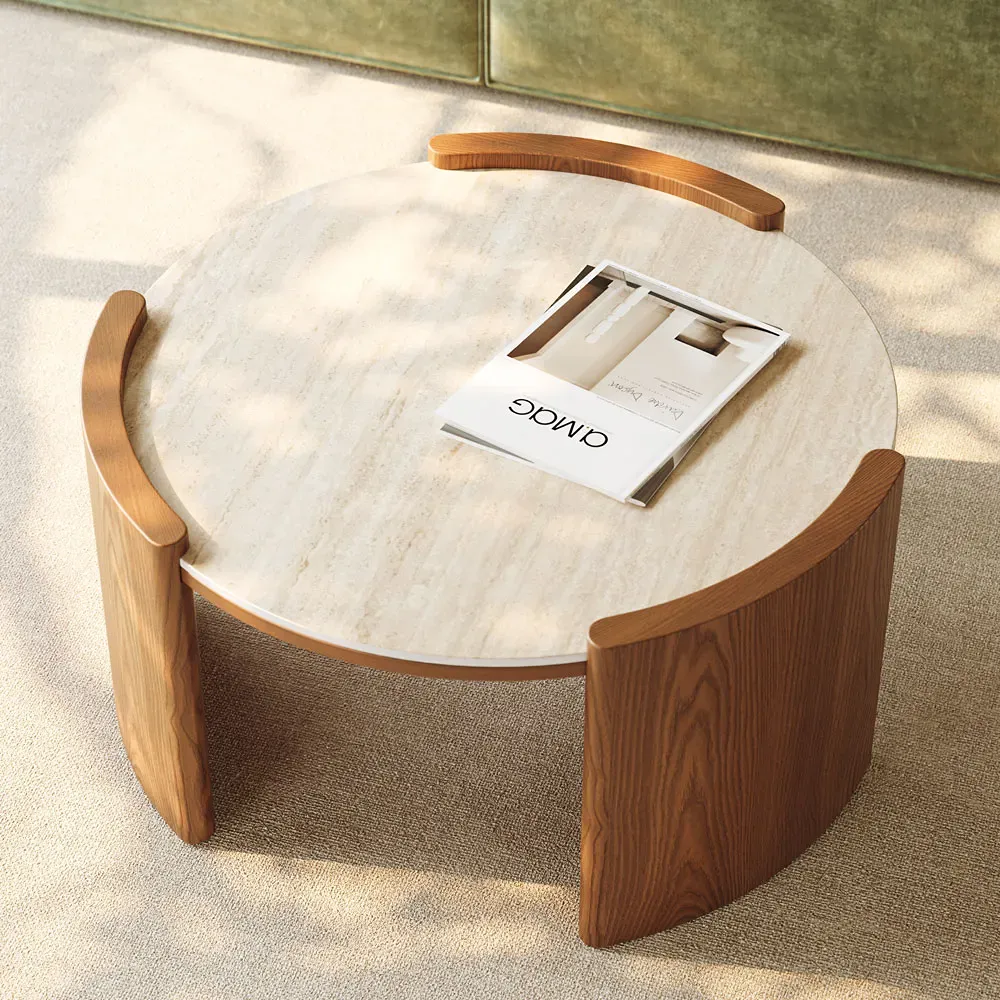
Round Matte Sintered Stone Coffee Table
Material Bridge
- Diameter: 31.5″
- Top: Travertine-look sintered stone
- Base: Walnut-toned ash veneer
- Weight Capacity: 200 lbs
When a leather sofa already gives the room visual weight, the Round Sintered Stone Coffee Table introduces contrast instead of repeating another dark wood block. Its travertine-look sintered-stone top and walnut-toned ash-veneer base connect stone and wood in one piece. The 31.5-inch round footprint softens a boxier seating layout, while the 200-lb weight capacity supports everyday books, trays, and serving pieces without making the table feel visually heavy.
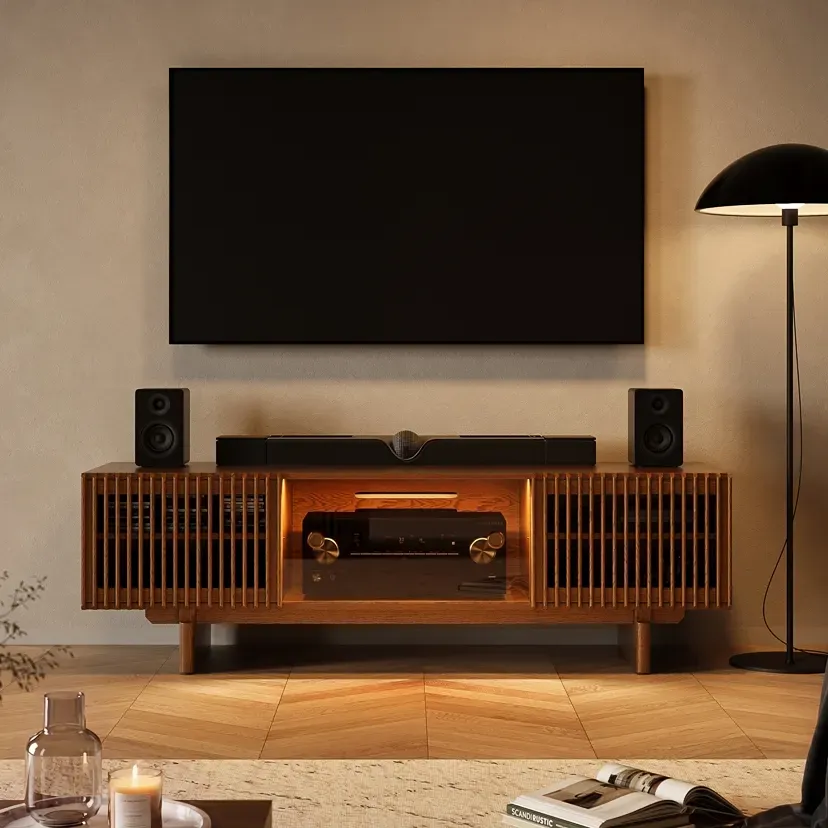
Arboren Mid-Century Modern TV Stand
Modern-Life Piece
- Usable Interior Depth: 18.3″
- Cable Openings: 6 internal + 3 rear
- Airflow: Rear ventilation
- Doors: Slatted side doors
For a living room with a TV, AV receiver, or game console, the Arboren Media Console keeps modern equipment functional without making it the visual focus. Its 18.3-inch usable interior depth leaves room for larger components and rear plugs, while six internal and three rear cable openings help control visible wiring. Rear ventilation and slatted side doors support airflow, so electronics can stay contained behind a warmer walnut-colored exterior.
What Makes the Room Look Forced?
The fastest way to lose the collected effect is to make every object announce the same theme. Before adding another “heritage” detail, check whether the room already has enough visual evidence.
Common warning signs include:
- Letting every major piece carry the same traditional details.
- Making every large furniture piece dark brown.
- Repeating brass or gold on nearly every fixture and accessory.
- Filling shelves with decorative books and objects that have no personal use.
- Choosing formal seating that does not suit everyday lounging or conversation.
- Distressing new furniture simply to make it look old.
A useful editing rule is to remove one decorative layer when the furniture, rug, artwork, and accessories are all competing for attention.
Conclusion
A successful old money living room is built gradually around function, material, and personal history rather than a checklist of expensive-looking details. Start with one furniture anchor, connect it to wood, stone, and softer textiles, then add art, books, and objects only where they support daily use. Modern elements such as a TV or media console do not need to be hidden from the room’s reality; they simply need to be visually controlled. The result should feel established because the pieces relate to one another—not because everything matches.
FAQs
Can this style work in a small living room?
Yes. Use one strong anchor instead of several oversized traditional pieces. Keep secondary furniture visually lighter, choose a coffee table that preserves circulation, and use wall art or textiles for character instead of another cabinet. Measure the main walkway before buying; if a piece narrows daily movement, scale down the furniture before reducing usable seating.
Do all wood tones need to match?
No. Two or three warm wood tones can work together when their undertones are compatible. Repeat the dominant tone at least twice—for example, a walnut console and a smaller walnut frame—then use a rug, stone surface, or upholstery between them. Avoid placing orange-toned wood directly beside a cool gray wood unless another material creates separation.
What rug works with old money furniture?
Choose a rug that adds age and softness without competing with the furniture. Muted Persian-inspired patterns, faded traditional motifs, or textured wool work well with leather and walnut. Size matters more than pattern: in most seating groups, the rug should reach at least the front legs of the main sofa and chairs.
Can renters create this look without renovations?
Yes. Focus on movable layers: a substantial sofa, freestanding wood storage, a patterned rug, curtains, table lamps, framed art, and books. Skip wall molding, built-ins, or permanent fireplace changes if the lease limits alterations. Large removable pieces can create most of the visual weight while remaining practical for a future move.
How do I keep leather from looking too formal?
Pair leather with softer, less polished materials. A wool or textured rug, linen-look curtains, a rounded wood or stone table, and relaxed cushions can reduce stiffness. Keep the seating area usable rather than symmetrical for symmetry’s sake. In homes with children or pets, also choose a leather finish whose care instructions match everyday cleaning needs.


[…] black furniture living room feels warm when dark pieces organize the room instead of overpowering it. Start with one black anchor […]