 By Stephanie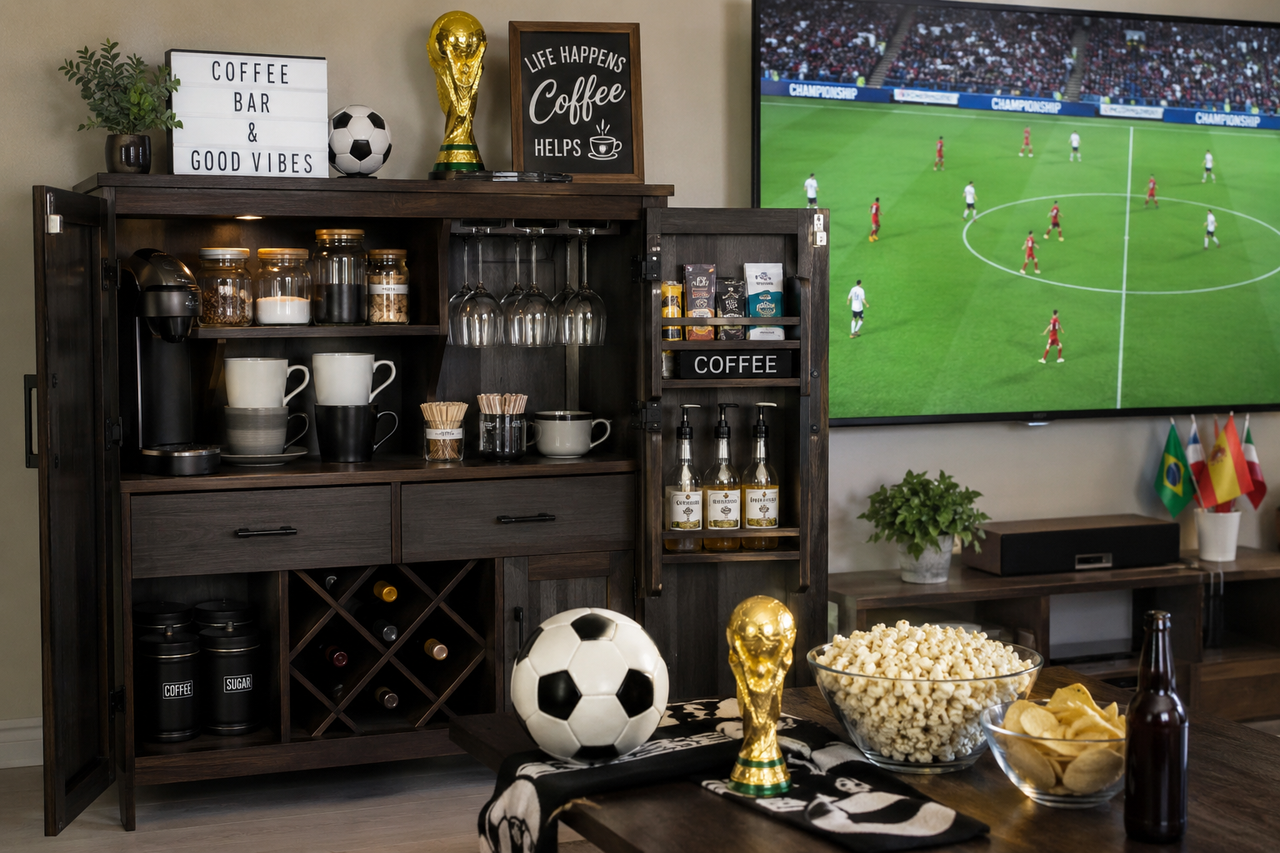
Most coffee bar cabinet ideas start with a styled photo. That is the wrong starting point for anyone who makes coffee every day. A cabinet has to hold the machine, support the movements around it, and still work when friends come over. This guide uses the Machine–Motion–Match-Day Check to help you choose furniture that works at 7 a.m., during a relaxed weekend brunch, and when friends arrive to watch the World Cup. The result is a coffee station that feels finished, functions clearly, and resets without effort every day.
Table of Contents
How to Choose a Coffee Bar Cabinet
Before comparing wood tones or hardware, test whether a cabinet can support three everyday moments: your equipment needs room, your movements stay easy, and guests can help themselves on match day. The Machine–Motion–Match-Day Check turns those needs into a practical filter, helping you reject beautiful cabinets that create friction once the coffee routine begins.
Machine: Build Around the Setup You Actually Use
List the equipment that needs a permanent home. A simple setup may include a pod machine, pods or filters, and two mugs. An espresso routine usually needs more: a machine, grinder, beans, portafilter, milk pitcher, tamper, scale, and a small cleanup zone. A shared beverage station may also need tea, cocoa, sweeteners, guest mugs, and backup supplies.
The key question is not, “Can the machine fit on top?” Ask, “Can the full routine stay together without taking over the room?”
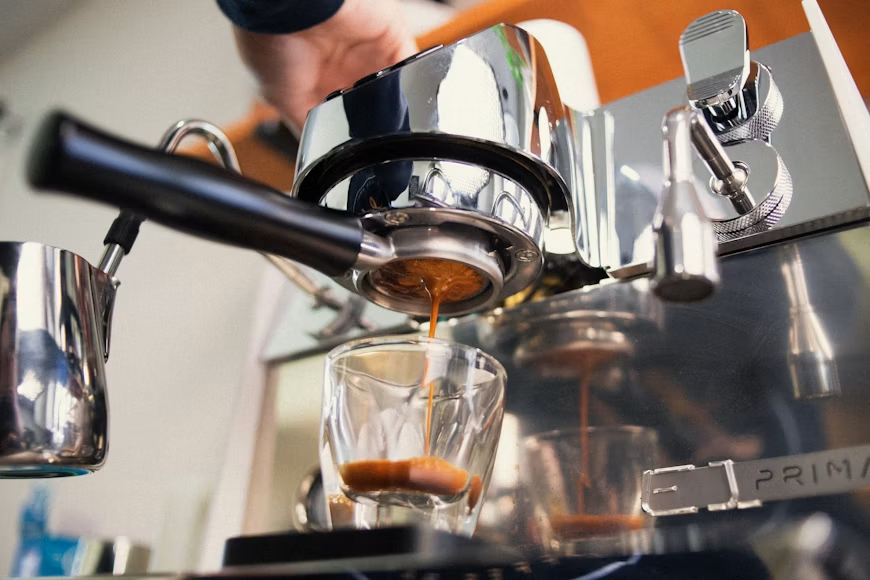
An espresso machine does not need more décor. It needs a stable surface, a safe place for the grinder, and a clear landing zone for the cup. At 7:20 on a Tuesday, two people should be able to make cappuccinos without opening three different cabinets, moving the kettle aside, or searching for beans.
Motion: Test the Four Moves That Happen Every Day
Once the equipment fits, test the routine in order: refill the machine, brew a drink, wipe a spill, and put supplies away. If one action makes you lift the machine, reach over a crowded surface, or step around an open door, the cabinet is not doing its job.
Give each task a defined zone:
- Brew: machine and grinder or kettle
- Land: clear room for a mug, pitcher, or used portafilter
- Reset: towel, tray, and small tools
- Reserve: closed storage for refills, packaging, and cleaning supplies
This keeps the working strip clear while allowing two people to use the station without getting in each other’s way.
Match Day: Check Whether Guests Can Use It Without Asking
Now picture a World Cup watch party, Sunday brunch, or movie night. Could a guest find a mug, make tea, grab a napkin, and refill a drink without asking where anything belongs?
A cabinet that passes the match-day check gives guests one obvious self-serve zone, keeps backup supplies out of sight until they are needed, and leaves the main route through the room open. It should make a weekday coffee routine easier first, then expand naturally when the house is fuller.

How to Measure a Coffee Station Cabinet Before You Buy
Once a cabinet passes the Machine–Motion–Match-Day Check, make sure it works in real life—not just in a product photo. A machine may fit when it is off but become awkward when you refill the tank, open the hopper, plug it in, or set down a drink. Measure the full working space before choosing a finish or style.
Measure the Machine in Its Working Position
Measure the coffee machine with its cord connected, its water tank or bean hopper open, and a mug in place. This gives you its working envelope—the space it needs to brew, refill, and clean comfortably.
Before shopping, note:
- Machine width, depth, and height
- Rear clearance for the plug and cable
- Vertical clearance for an open tank, hopper, or lid
- Side room for a grinder, kettle, or milk pitcher
- Front room for a mug, portafilter, or used grounds
- Clearance for nearby doors, drawers, and dining chairs
Follow the manufacturer’s guidance for ventilation and clearance. A cabinet is too shallow if the machine overhangs the front edge or must be pulled forward every time you refill it.
Picture your busiest weekday morning. Can you fill the machine, brew, set down a mug, and wipe a spill without moving equipment? If not, the cabinet fits the appliance, but not the routine.
Test the Cabinet’s Footprint in the Room
A cabinet can fit the wall and still interrupt the room. Mark its width and depth on the floor with painter’s tape, then test the routes people actually use. Pull out the nearest dining chair, open the refrigerator, walk from the kitchen to the sofa, and picture a guest carrying a drink during a World Cup match.
Check three things:
- Access: Can you reach the cabinet without blocking a door, appliance, or chair?
- Service: Can one person brew while another reaches for a mug?
- Traffic: Can guests pass without crossing the TV sightline or squeezing through a narrow gap?
This quick mock-up reveals problems that measurements alone can miss. It helps you choose a cabinet that works for weekday coffee and a fuller room when friends come over.
Which Coffee Cabinet Profile Fits Your Routine?
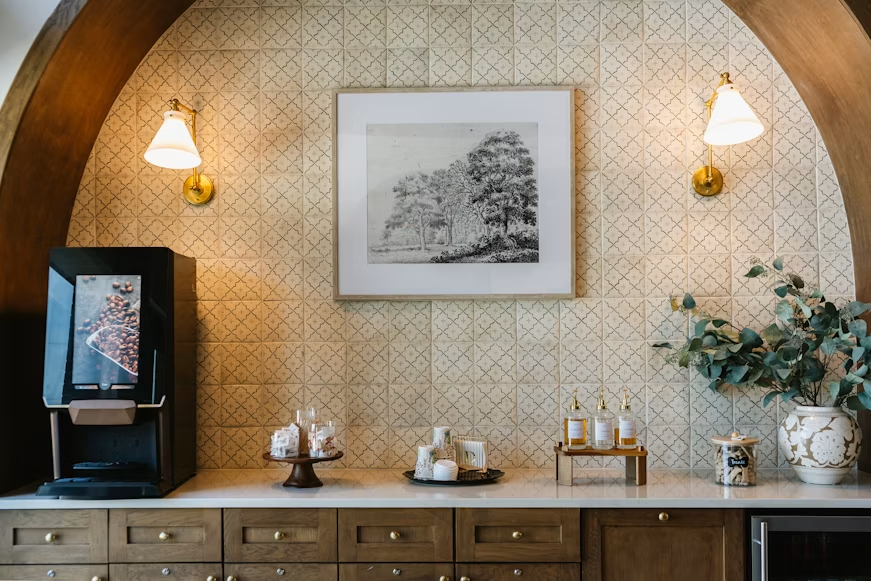
Once you know the machine fits and the movement works, choose the cabinet profile that solves your biggest daily problem. This keeps the decision focused on how you live, rather than asking you to copy a setup designed for someone else’s kitchen or dining room.
| Your Routine | What Must Fit | Best Cabinet Profile | Walk Away If… |
| Daily espresso for two | Machine, grinder, milk tools, and cup space | Espresso-First Cabinet | The water tank cannot open |
| One-machine small kitchen | Compact machine, pods, and two mugs | Small-Space Cabinet | The front edge feels crowded |
| Brunch and after-dinner coffee | Machine, tray, guest mugs, and napkins | Hosting-First Cabinet | Doors clash with dining chairs |
| World Cup drink service | Coffee, tea, cold drinks, cups, and napkins | Hosting-First Cabinet with concealed storage | The cabinet blocks the TV route |
The Espresso-First Cabinet
Choose this profile when the machine, grinder, and milk tools are used most days. It needs a stable, deep work surface with a clear cup landing zone and nearby closed storage for beans, filters, cleaning supplies, and backup mugs.
A wide sideboard or buffet often works well because it allows the machine to stay at one end while the rest of the surface remains usable. The cabinet should feel like one contained brewing station, not a machine on top of scattered storage.
The Small-Space Cabinet
Choose this profile when your main goal is getting the coffee setup off the kitchen counter. Limit the surface to one brewing method—a pod machine, kettle, or compact drip maker—and use drawers or doors for everything else.
A smaller cabinet works best when it protects movement through the kitchen. If the machine, grinder, and mug collection cannot fit without crowding the front edge, scale back the setup before buying a deeper piece.
The Hosting-First Cabinet
Choose this profile when coffee is part of brunch, dinner, movie nights, or World Cup watch parties. It should have a wide surface for the machine and a serving tray, plus enclosed storage for guest mugs, napkins, tea, cold drinks, and snacks.
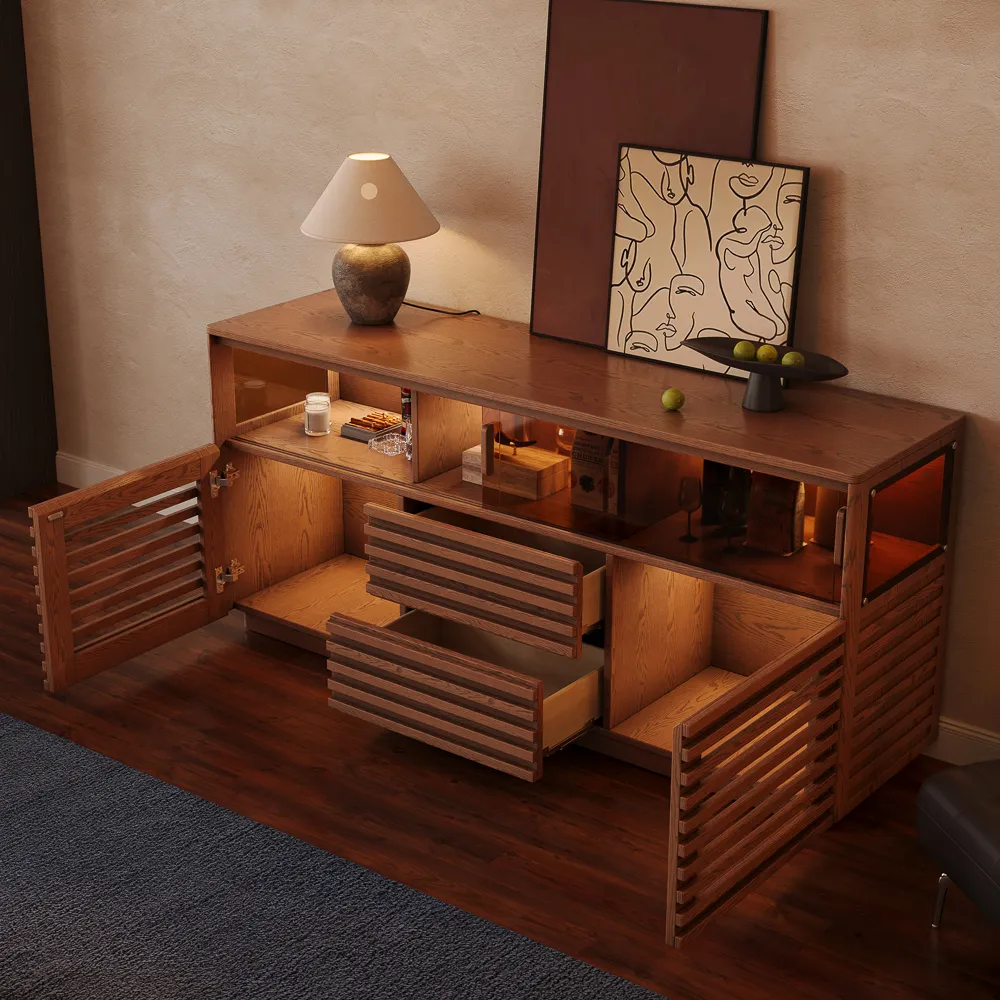
That mix of visible workspace and concealed storage matters in an open-plan dining room, where the cabinet needs to function as a coffee station by day and look like finished furniture at night. The Selene LED Mid-Century Modern Sideboard Cabinet offers a 70.9-inch-wide, 19.7-inch-deep top, five enclosed cabinet compartments, two drawers, and rear cable holes. Its adjustable LED lighting and acrylic-front display area can showcase a few mugs or glassware while refills, napkins, and match-day extras stay tucked away. It arrives fully assembled.
How a Coffee Cabinet Becomes a World Cup Drink Station
A World Cup watch party can turn a coffee cabinet into a self-serve drink station without adding a bar cart or crowding the coffee table. The goal is functional, not themed: make drinks, cups, and cleanup easy to manage before kickoff, during play, and at halftime while keeping the viewing area clear.
Before Kickoff: Set Up Three Simple Zones
Prepare the cabinet by timing, not by product category.
- Before kickoff: coffee, tea, clean mugs, and sweeteners
- During the match: water, napkins, and a discreet spot for used cups
- At halftime: cold drinks, snacks, backup cups, and one serving tray
Keep backup items inside the cabinet until people need them. The top should still have room for the coffee machine, cups, and a clear pickup area.
During the Match: Keep the TV Route Clear
Place the cabinet near the dining or kitchen side of the room, not between the sofa and screen. Guests can make coffee or pick up a cold drink without crossing the main viewing line.
In a smaller room, this matters even more. A World Cup layout works best when the TV view, the main walking route, and the drink station each have a separate job. A small living room furniture layout for World Cup guests follows the same principle: protect the TV view first, then build seating, snack access, and movement around it.
At Halftime: Refill Once, Then Reset Fast
Use one tray for halftime refills instead of placing every bottle, snack, and extra cup on the cabinet top. Bring out what is running low, then return unopened drinks and wrappers to storage before play resumes.
With six guests around the sofa, a sideboard near the dining edge gives everyone a refill point without blocking the screen. After the match, the tray goes back into a cabinet, the mugs go into the kitchen, and the furniture returns to its weekday role in minutes.
How to Keep a Coffee Cabinet Useful Every Day
A coffee cabinet should still work as well after a busy week or a World Cup watch party as it did on the first day. The goal is not to buy more organizers or add more décor. It is to give everyday tools, backup supplies, and temporary hosting items a clear place so the station stays easy to use and easy to reset.
Keep the working strip simple. Leave only what supports the next drink on the surface: the coffee machine, a grinder or kettle, two to four everyday mugs, a small tray, and a spoon container. This gives you a clear landing spot for a cup and keeps the cabinet from looking like an appliance pile.
Store supplies by the next task. Use a shallow drawer for filters, scoops, clips, tampers, and cleaning tablets. Keep beans, pods, tea, cocoa, and sweeteners together on a refill shelf. Reserve one cabinet section for guest mugs, napkins, serving trays, and cold-drink supplies, so hosting extras do not take over the daily setup.
Add personality without losing workspace. A single tray, a small lamp or framed print, and one favorite ceramic piece are usually enough. For a match, bring out team-color napkins or a snack bowl, then put them away afterward. The cabinet can feel lively for guests on Saturday and return to a calm coffee station on Sunday morning.
A quick reset keeps the system working: wipe the surface, return small tools to their drawer, restock tomorrow’s coffee supplies, and close away anything that does not need to stay visible.
Conclusion
The best coffee bar cabinet does not need a custom build or a shelf full of accessories. It needs to pass a simple test: your machine fits, your movements stay easy, and guests can use the station without disrupting the room. Measure before you shop, choose storage that separates daily tools from backup supplies, and build a match-day service edge outside the TV view. Then the cabinet can support a quick morning espresso, a long brunch, or a World Cup gathering—and still look ready for everyday life after the final whistle.
FAQs
Can a Coffee Bar Cabinet Double as a Dining Buffet?
Yes. Keep the coffee machine and daily tools on one end, then leave the center or opposite end open for a serving tray, dessert plates, or a carafe when guests arrive. Closed storage lets coffee supplies disappear so the piece can still function as dining furniture.
How Should I Manage Cords Behind a Coffee Cabinet?
Choose a cabinet that can sit close enough to an outlet without pinching cords against the wall. Rear cable holes help keep cables less visible. Avoid running cords across a walkway, and follow your coffee machine manufacturer’s instructions for safe electrical use.
Should a Coffee Cabinet Match the Dining Table Exactly?
No. Matching every wood tone can make a room feel too staged. Instead, connect the cabinet and table through one shared element, such as warm undertones, black hardware, rounded edges, or a similar visual weight. The goal is coordination, not a perfect set.
How Can I Keep Coffee Beans Fresh Inside a Coffee Cabinet?
Keep daily beans in an airtight, opaque container on a cool, dry shelf away from the coffee machine’s heat. Store only one open bag at a time, and keep backup bags behind closed doors until needed. This protects flavor while keeping the station easier to manage.


