 By Stephanie
A patio should make summer easier, not turn every meal or visit into a furniture shuffle. The strongest patio furniture layout ideas begin with the moments that already happen outside: iced coffee before work, dinner after a long day, or a conversation that lasts after the sun goes down. When the layout is built around those habits, furniture becomes more than decoration. It gives people a comfortable seat, a place for a drink, and a clear way to move through the patio—without blocking the door, crowding the view, or making the space feel overfilled.
Table of Contents
Start With the Summer Moments You Want Outside
Before choosing a sectional, dining set, or outdoor rug, decide what the patio needs to do most often between June and September. A clear purpose prevents a common mistake: buying several attractive pieces that leave no comfortable place to use them together.
Giving the Patio One Main Job
Choose one primary role and one secondary role. The primary role deserves the best location, the most floor area, and the largest furniture. The secondary role should rely on movable pieces, not another oversized set.
This keeps a compact patio from trying—and failing—to be a lounge, dining room, and plant display at the same time.
- Morning reset: Two comfortable seats, a drink surface, and nearby shade.
- Everyday dining: A table close to the kitchen with room to pull out chairs.
- Weekend hosting: A conversation zone plus one or two flexible seats.
- Family downtime: Sturdy seating around a shared table and an open route for kids or pets.
A patio used for dinner four nights a week should not lose its best square footage to a feature used only twice a month. Likewise, a patio used mainly for reading and catching up after work does not need a large dining table simply because one seems expected outdoors.
Put the Longest Activity in the Best Spot
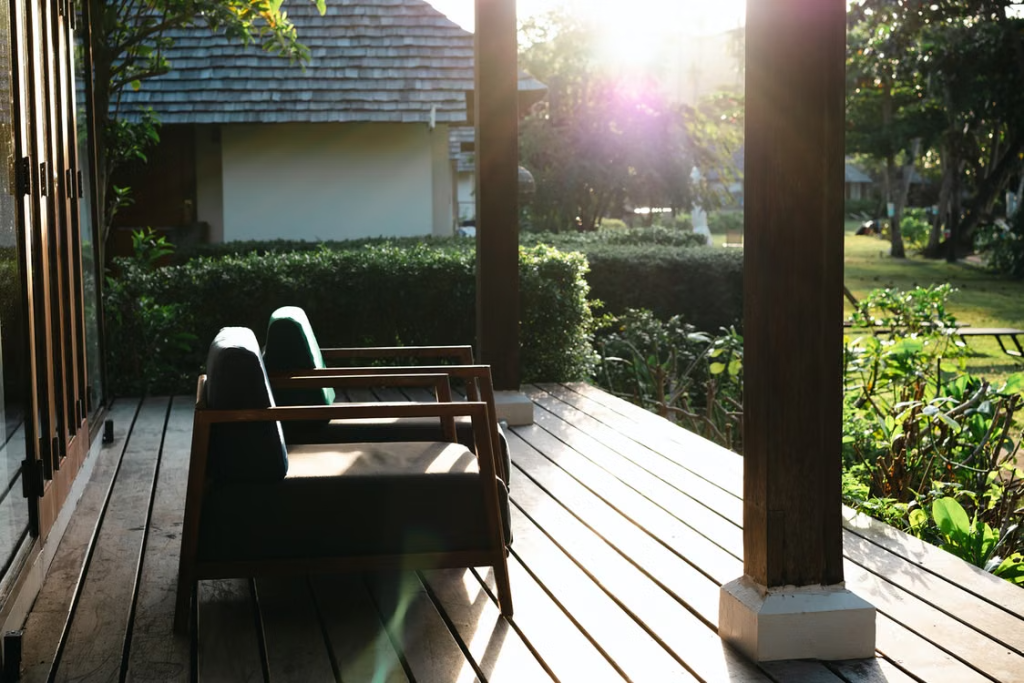
Match the best location to the activity that lasts longest. Put dining closest to the kitchen, where food, drinks, and cleanup travel the shortest distance. Put lounge seating where it catches the most comfortable late-day shade or the strongest view.
If one side is sunny and the other is shaded, do not divide furniture evenly. Give shade to the seats people will use after the meal ends. That decision often matters more than adding another decorative accessory.
At 6:30 on a July evening, a table near the kitchen makes a casual dinner feel natural. Afterward, chairs can turn toward the garden or a lounge zone instead of facing a wall. That small choice turns the patio into a place people stay, not a place they pass through.
Build the Layout Around Real Movement
A patio works when its structure is almost invisible. Guests should be able to walk outside carrying a tray, sit down without scraping a chair against a railing, and cross the space while someone is relaxing. Plan those routes before committing to furniture scale, especially near doors.
Protect the Door, Grill, and Yard Route
Draw the main route from the door to the yard, stairs, grill, or gate. Keep that line open from end to end instead of weaving it between chair legs. A 36-inch clear path is a useful comfort benchmark; it is also the minimum width used in the U.S. Access Board’s accessible-route guidance, although private residential patios may have different requirements.
Keep coffee tables out of the sliding-door landing zone. Do not make guests walk through a dining area to reach the grill. Where a route passes close to seating, place the most movable chair on that edge. This gives the layout room to flex when more people arrive.
Size Dining and Lounge Furniture in Use, Not at Rest
Measure a dining table with chairs pulled out, not tucked in. Leave about 30 inches behind a chair at a railing or wall, and aim for 36 inches when that area also serves as a walkway.
In a lounge zone, keep a coffee table roughly 14 to 18 inches from the seating. That range lets people get a drink without trapping their knees. It also makes the arrangement feel intentional rather than scattered.
| Layout Decision | Best Fit | Smart Choice | Skip This |
| Compact square patio | Coffee, reading, conversation | Two chairs + round table | Deep sofa + oversized coffee table |
| Kitchen-side patio | Frequent outdoor meals | Dining table near the door, outside the swing | Table blocking the exit |
| Long rectangular patio | Need a clear passage | Furniture along one long edge | Furniture centered in the middle |
| Wide hosting patio | Dining and lingering both matter | Two distinct zones | One oversized set filling the slab |
These same measurements matter when choosing an outdoor dining table for a patio.
Patio Furniture Layout Ideas by Space Type
The patio’s shape should guide the plan rather than limit it. A small square can become a real conversation corner, a long slab can keep a smooth route to the yard, and a wide patio can support both dinner and downtime. The key is to give each footprint a specific job.
Small Square Patio: Conversation Corner or Bistro Nook
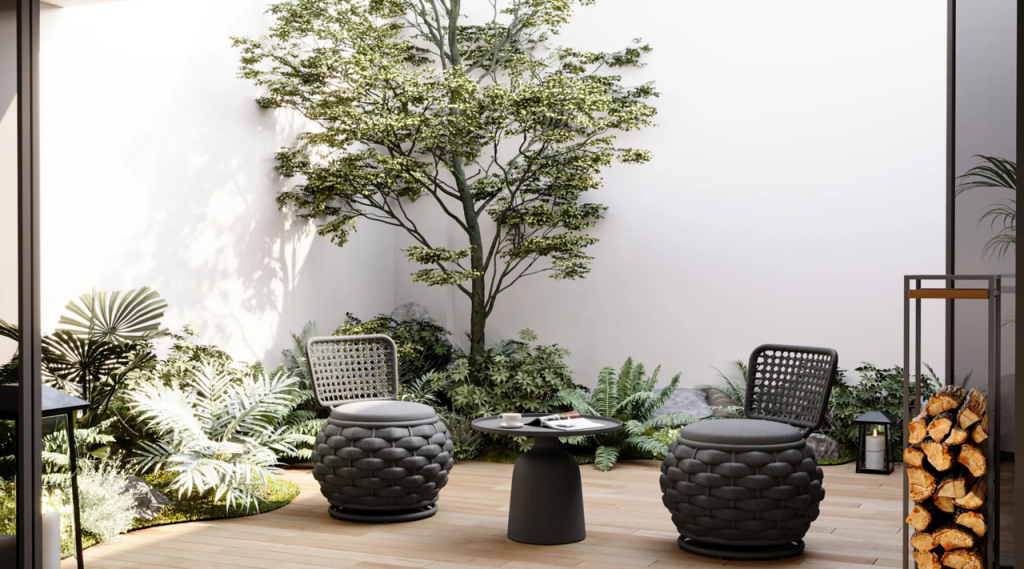
For a small square patio, the goal is not to recreate a full living room outdoors. It is to create two seats that feel comfortable for a real conversation without closing off the center of the space. Lounge chairs work especially well here because they leave visual breathing room and can turn toward either the garden or each other.
Once the seating position is set, look for chairs that can adapt without adding visual weight. Swivel seating is especially useful here because the chairs can face the garden during a quiet morning, then turn inward when a friend stops by. These modern round outdoor swivel lounge chairs keep that setup simple. Each chair measures 25.2 inches wide and arrives fully assembled, making it easier to create a finished two-seat retreat without introducing a deep sofa or extra pieces that compete for floor space.
Long Rectangular Patio: Dining Lane or Lounge Lane
A long patio usually works best with one furniture line along the longest edge and one open edge for movement. For a dining lane, run the table parallel to the wall and keep chair backs out of the path. For a lounge lane, position a sofa or two chairs along the wall, then keep the center open for crossing the patio.
This setup is especially useful when the patio connects the house to a grill or backyard gate. Dinner can move outside without guests threading through furniture. It also makes the space easier to sweep and lets a small summer gathering spread out without turning every chair into an obstacle.
When the patio is narrow, avoid a full dining set if pulled-out chairs would block the only usable route. A two-chair bistro setup or lounge chairs with side tables will serve the space better and make it easier to move through during busy summer evenings.
Wide or Covered Patio: Dinner Zone and Stay-After Zone
A broad patio can support both dining and lounging when each area has a clear anchor. Reserve the kitchen-side edge for meals, then orient the lounge toward the garden, pool, or the most comfortable late-day shade. Keep one direct route between the two zones instead of filling the space with scattered side tables.
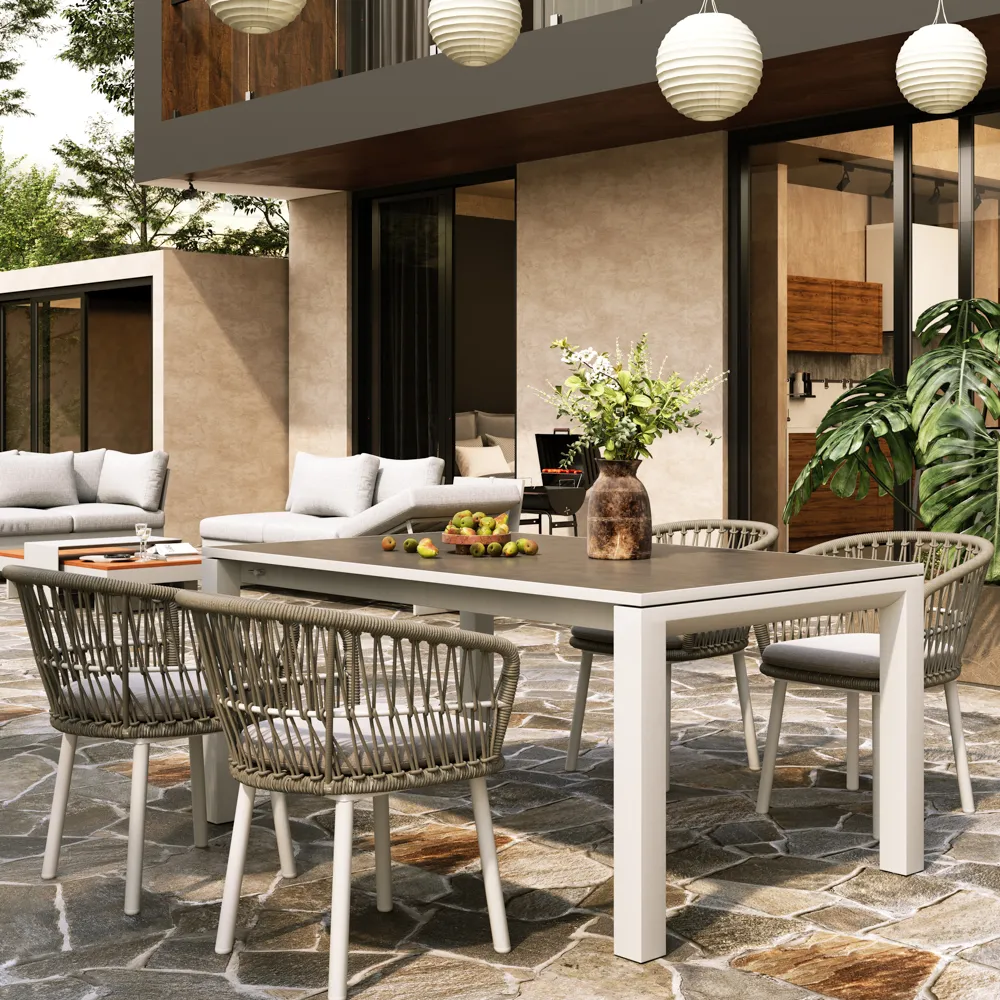
The dining zone should feel proportionate on an ordinary weeknight, then become more accommodating when friends stay for dinner. An extendable table supports that rhythm better than a permanently oversized setup. This outdoor dining set with an extendable table and four chairs gives the patio a defined four-person dining area while allowing the tabletop to expand when serving dishes, extra guests, or a longer summer meal call for more room. Leave chair pullback space clear, so the dining zone still feels easy to use once the table is extended.
At a Friday dinner, the table can handle the meal while the second zone gives people somewhere to settle once plates are cleared. That shift is what separates a patio with furniture from a patio designed for real summer hosting.
Furnish Each Zone for the Way It Will Be Used
Once the floor plan works, select furniture in the same order people will use it. Start with the main seat, add the table that supports it, and then bring in flexible extras. Rugs, pillows, lanterns, and planters belong at the end, when they can reinforce a layout that already works.
Anchor the Lounge Zone With Its Main Seat
A lounge zone needs one clear anchor before it needs extra seating. On a patio with a long, uninterrupted wall, place the main sofa first, then test the route back to the house before adding a coffee table or accent chair. This keeps the seating group grounded instead of letting it spill into the main circulation path.
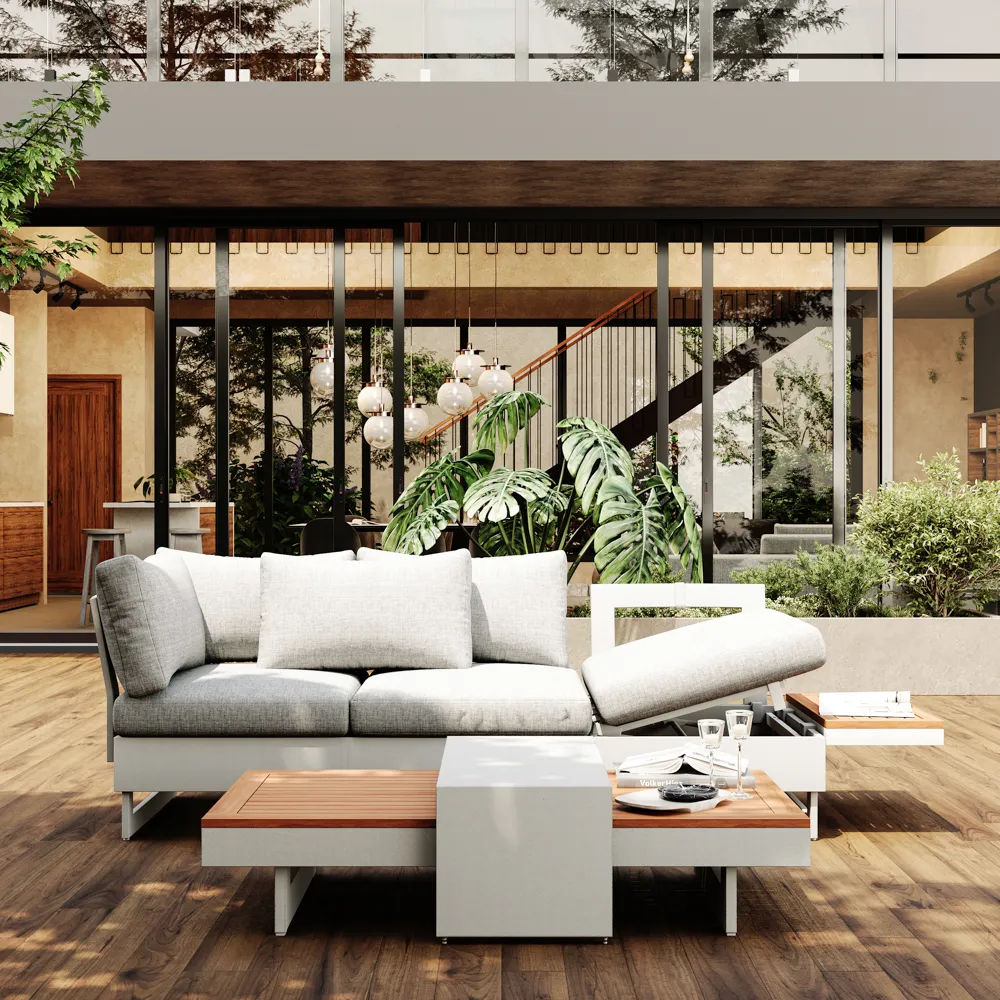
A three-seat outdoor sofa with a side table and reclining function is most useful in this kind of long-wall layout. Its 100.78-inch width gives three people a shared place to settle after dinner, while the integrated side table keeps drinks and books close without requiring another freestanding piece. Because the sofa requires partial assembly, mark its footprint on the patio first and confirm that a coffee table, one flexible chair, and a comfortable passage back to the house will still fit.
Add an accent chair only after the sofa and coffee table are in place. Position it on the outer edge of the lounge zone so it can turn toward conversation when guests arrive, then move aside when the patio needs to function as a route to the yard or grill.
Use Flexible Pieces for Real Summer Hosting
Extra seats should solve a real problem. A light chair can move into a conversation for game night, then slide aside when the patio becomes a dinner path. An ottoman can work as a footrest, a child’s perch, or an extra surface when topped with a tray.
Use this order to keep the layout focused:
- Place the main seats.
- Add the shared table.
- Test the main path with chairs pulled out.
- Add one or two flexible seats.
- Finish with shade, lighting, and textiles.
This sequence stops decorative items from dictating the room. It also gives the patio enough adaptability for a quiet weekday evening, an outdoor lunch, or friends dropping by unexpectedly.
Connect the Patio to the House
Repeat one indoor cue outdoors: warm wood, dark metal, rounded table edges, or a quiet cushion color. This creates outdoor living room ideas with more staying power than a theme-driven setup. A tray station near the door and lighting near steps make the connection practical as well as visual.
For open patios, choose frames and fabrics based on sun, rain, and wind—not just finish. Outdoor furniture materials for changing weather should guide decisions about cushions, frames, and covers.
The goal is simple: make the patio easy to use in July, not difficult to maintain by August.
Conclusion
The best patio furniture layout ideas make summer routines smoother. They keep a clear route from the house, give every seat a useful surface, and place the most-used activity in the patio’s best spot. Choose one main purpose, build around the furniture that serves it, and add flexible pieces only after movement feels easy. Whether the goal is a quiet two-chair corner or a dinner-to-lounge hosting setup, a patio works best when it is arranged for the life happening there—not just the look.
Patio Furniture Layout FAQs
Should an Outdoor Rug Go Under All the Furniture?
No. In a lounge zone, place the front legs of sofas and chairs on the rug to define the group. On a compact patio, a smaller rug under the coffee table may be enough. Keep rug edges outside door swings and main walking paths so they do not become a trip point.
How Should Furniture Be Arranged Around a Fire Pit?
Follow the fire pit manufacturer’s clearance instructions and local rules first. Then set chairs in a loose semicircle with one open entry point. Movable chairs work best because they can shift with wind direction, heat, and guest count without forcing anyone to climb around the seating.
Can Dining and Lounge Furniture Be Mixed on One Patio?
Yes, provided the groups have different jobs and one shared visual cue. Match a frame finish, cushion tone, or table shape, then let each zone use the scale it needs. A coordinated patio does not require a matching set; it requires intentional proportions and clear use.
How Can You Handle Harsh Afternoon Sun?
Give the shaded side to the seats people use longest, then provide an umbrella, canopy, or shade structure over dining as needed. Avoid placing metal surfaces where bare hands or legs will touch them during peak heat. Watch the sunlight for one full afternoon before locking in the layout.


