 By Stephanie
Bouclé adds soft texture and a sculptural look to sofas and accent chairs, but it is not the right choice for every home. So, what is boucle fabric? It is a looped textile made from fibers such as wool, cotton, polyester, or blends. Its feel, durability, and care needs depend on how it is made. Before buying, check the fiber content, weave, and cleaning instructions to see whether it suits your space and daily routine.
Table of Contents
What Is Boucle Fabric?
Bouclé—pronounced “boo-clay”—comes from the French word for curled or looped. The name can describe either the looped yarn or the finished textile. That distinction matters because two products labeled bouclé may have very different fibers, surfaces, performance, and care requirements.
How Boucle Gets Its Looped Texture
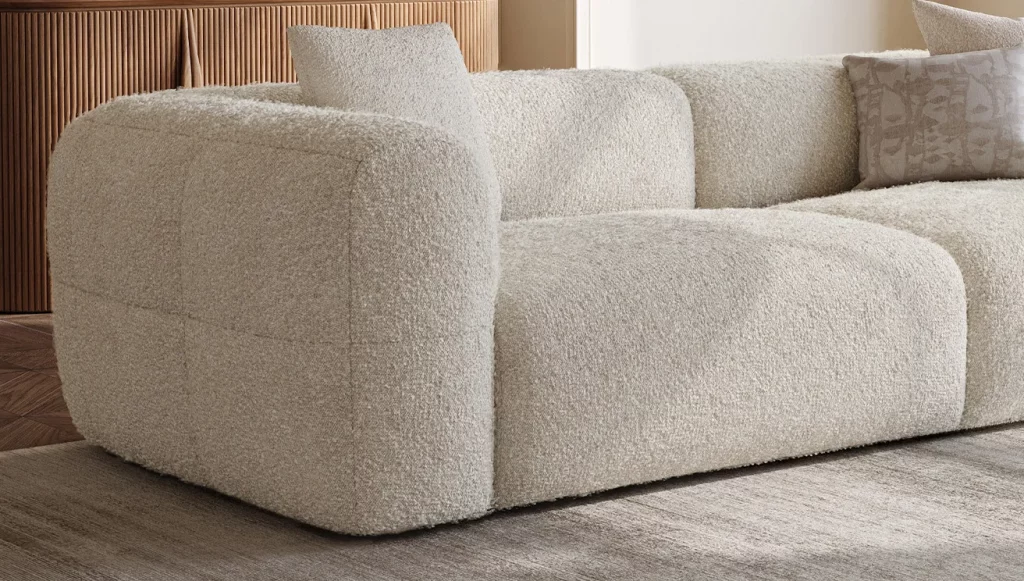
Manufacturers combine yarn strands at different tensions to create small loops, curls, and knots, then weave or knit them into fabric. Tight, compact loops produce a more controlled surface. Larger loops look softer and fluffier, but they are also more likely to catch on claws, jewelry, or clothing hardware.
What Is Boucle Fabric Made Of?
Boucle upholstery fabric may be made from wool, cotton, polyester, acrylic, mohair, or a blend of several fibers. Wool often feels warm and resilient, cotton tends to feel lighter, and polyester can offer more consistent color and easier care. The final feel also depends on the yarn thickness, loop density, backing, and finish.
Boucle Fabric for Sofas: Benefits and Drawbacks
Bouclé can work well on a sofa, but only when the upholstery grade matches how the room will be used. It brings warmth and visible texture, but the name alone is not a durability rating. A dense performance blend may work for daily seating, while a pale, open-loop wool version may suit lighter use.
Key Benefits of Boucle Upholstery
Bouclé works especially well on curved furniture because its nubby texture highlights rounded silhouettes without making them look overly formal. Its main advantages are:
- Rich texture without a busy pattern
- Warmth in neutral or minimalist rooms
- Compatibility with modern, Japandi, and mid-century spaces
- Adds visual interest to a sofa or boucle accent chair
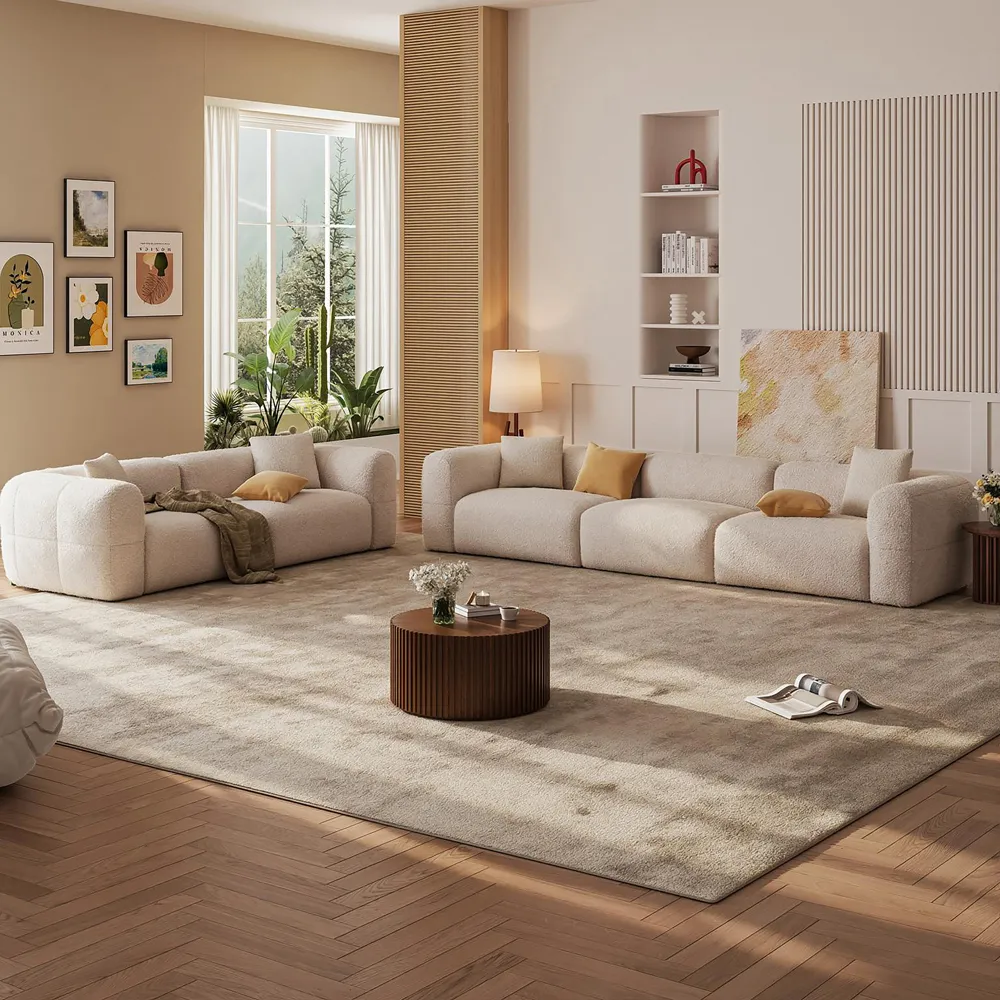
Those qualities are especially effective on rounded seating, where texture can soften the silhouette without adding a busy pattern. The Beige Bouclé Sofa and Loveseat Set pairs a curved silhouette with 100% polyester upholstery in a premium short-pile finish. The smooth, soft surface keeps the set looking refined, while the warm beige tone makes it easy to layer with wood, stone, linen, and other natural materials.
Common Drawbacks of Boucle Sofas
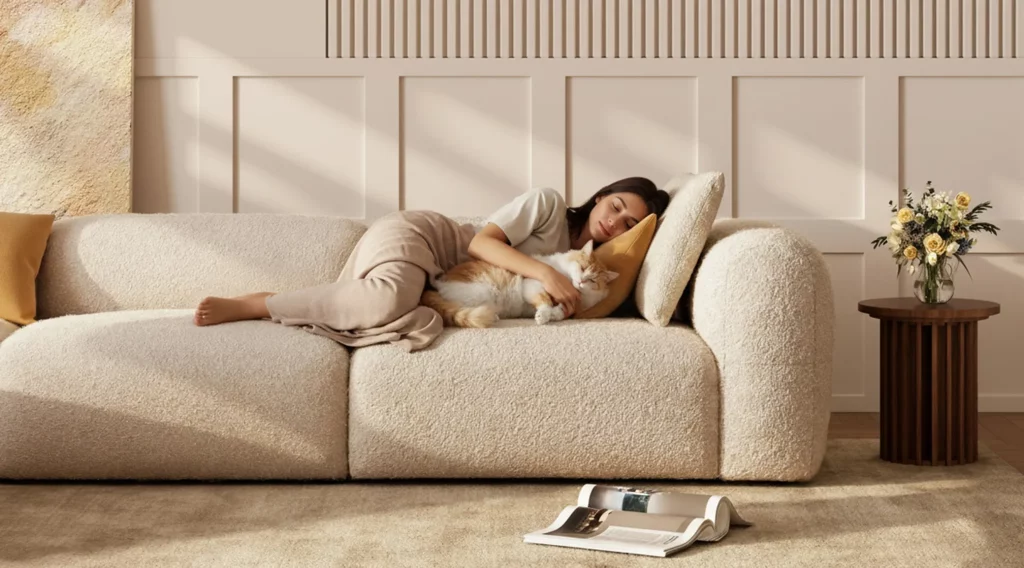
Open loops can catch claws, rings, or rough hardware. The surface may also hold crumbs and pet hair, while pale colors reveal spills. In busy family rooms, light-colored bouclé may quickly collect visible crumbs, lint, and pet hair. The same fabric is usually easier to maintain on an occasional chair in a quieter part of the home.
Busy households should compare tighter alternatives when choosing the best sofa fabric for homes with kids and pets.
Boucle vs. Chenille vs. Velvet
| Fabric | Surface | Snag Risk | Routine Care | Best Use |
| Bouclé | Looped and dimensional | Medium–high | Gentle vacuuming | Sculptural seating |
| Chenille | Plush and smoother | Low–medium | Vacuum and blot | Everyday lounging |
| Velvet | Smooth pile with sheen | Low, but may mark | Careful brushing | Statement furniture |
Boucle Fabric Cleaning and Maintenance
Always start with the manufacturer’s label because wool, cotton, polyester, and performance finishes react differently. Regular care keeps dust and grit from settling between the loops. When spills happen, the goal is to absorb the liquid without rubbing it deeper into the fabric, leaving cleaner behind, or crushing the texture.
A Simple Weekly Care Routine
- Vacuum weekly using low suction and a clean upholstery attachment.
- Work in one direction and avoid aggressive back-and-forth scrubbing.
- Blot spills immediately with a white, absorbent cloth.
- Use only cleaners allowed by the care code.
- Avoid soaking, heat, hard brushes, and unapproved sprays.
For performance upholstery, blot spills first, avoid oversaturating the fabric, remove any cleaning residue, and allow the area to air-dry. This blot-and-air-dry approach is also useful when learning how to clean a fabric sofa without damaging the upholstery.
When Professional Cleaning Is Necessary
Call a professional upholstery cleaner when a stain covers a large area, the fabric has no clear care code, or a home cleaning attempt has left water rings or caused dye transfer. Wool-rich bouclé can also be sensitive to excess moisture, heat, and friction, so expert treatment may be the safer option.
Professional help is especially worthwhile for oil-based stains, set-in spills, or discoloration that has spread beyond the original spot. These problems often need controlled cleaning methods that are difficult to manage at home without changing the fabric’s color or texture.
If a loop is pulled or damaged, do not cut it. The loose strand may be connected to the surrounding weave, and trimming it can make the snag worse. A furniture repair specialist may be able to work the yarn back into place or secure it with less visible damage.
Modern Bouclé Furniture Trends and Styling Ideas
Bouclé is still popular, but the look has moved beyond the all-white rooms that first made the fabric famous online. Too much cream bouclé can now feel overdone, while one textured piece in rust, olive, cocoa, blue-gray, or a flecked neutral feels fresher. Pair a bouclé chair or sofa with wood, leather, linen, stone, or metal to create contrast and keep the room looking layered rather than overly coordinated.
Conclusion
Bouclé works best when its texture and construction match the way the furniture will be used. Look for tight loops, clear fiber information, appropriate care instructions, and a swatch you can examine at home. A delicate wool bouclé may suit an occasional chair, while a family sofa needs stronger construction and easier maintenance. For homes with scratching cats, frequent spills, or little time for upkeep, chenille, microfiber, or another tightly woven fabric may be a more practical long-term choice.
FAQs About Boucle Fabric
Is Boucle Fabric Waterproof?
Standard bouclé is not waterproof. Some polyester or performance versions have moisture-resistant treatments, but “stain-resistant,” “water-repellent,” and “waterproof” do not mean the same thing. Check the exact product specification before assuming a drink will bead up or remain above the surface.
Is Boucle Fabric Expensive?
Bouclé covers a broad price range. Wool, mohair, complex blends, specialty yarns, and premium finishes generally cost more, while polyester options may be more accessible. A sofa’s final price also depends on its frame, cushions, construction, size, and delivery service.
Can Boucle Fabric Be Used Outdoors?
Only use bouclé outdoors when the manufacturer specifically rates it for exterior conditions. Indoor material may absorb moisture, fade under UV exposure, or develop mildew. Proper outdoor upholstery should include stated resistance to sunlight and moisture, plus cleaning directions for exterior use.
Is Boucle the Same as Sherpa or Teddy Fabric?
No. Bouclé is defined by looped or curled yarns that create a nubby surface. Sherpa and teddy fabrics usually imitate fleece or sheepskin with a denser, fuzzier pile. They can look similar from a distance, but their construction, touch, and care requirements differ.


