 By Charles
Let me tell you something embarrassing. I ordered counter stools for my kitchen island without measuring the counter height first. I just assumed “counter height” meant one universal thing — grabbed a set that looked great in the photos, waited three weeks, and then spent a Saturday afternoon staring at seats that landed about two inches below the counter surface. My knees basically disappeared under the overhang. Dinner at the island felt like eating at a child’s table.
That mistake cost me a return shipment and another four weeks of waiting. I’m writing this so you don’t repeat it.
This isn’t a style guide. It’s the practical stuff that actually determines whether your stools work: height math, spacing rules, back support decisions, and the buying mistakes that look obvious in hindsight but catch almost everyone off guard.
Start With Your Counter Height
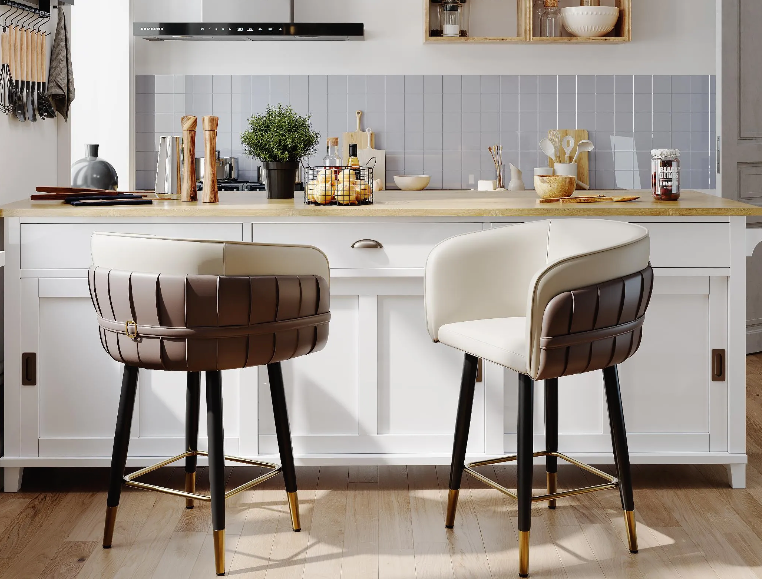
This is the only number that matters before anything else. Seat height should sit 9 to 12 inches below your counter surface — that’s the range that keeps your legs comfortable and your posture neutral while eating or working at the island.
Here’s the thing most product pages skip: there are two common “counter” heights, and they’re not interchangeable.
- Standard counter height: 34–36 inches. This is the most common kitchen island height. It pairs with 24–26 inch seat height stools.
- Bar height (or pub height): 40–42 inches. Less common in kitchens, more often seen in entertainment setups or elevated peninsulas. Needs 28–30 inch seat height stools.
Before you open a single product page, measure from the floor to the top of your island surface — not the underside, the top. Write it down. Then subtract 10 to 12 inches. That’s your target seat height range.
I know this sounds tedious. But a 30-inch stool at a 36-inch counter means your knees are hitting the underside on every sit-down. A 24-inch stool at a 42-inch bar means you’re eating at chin level. Neither is fixable without a return.
How Many Stools Your Island Can Really Fit
Once you’ve nailed the height, the next number to calculate is width — specifically, how many bodies you can fit without everyone bumping elbows.
Spacing Rules That Feel Comfortable
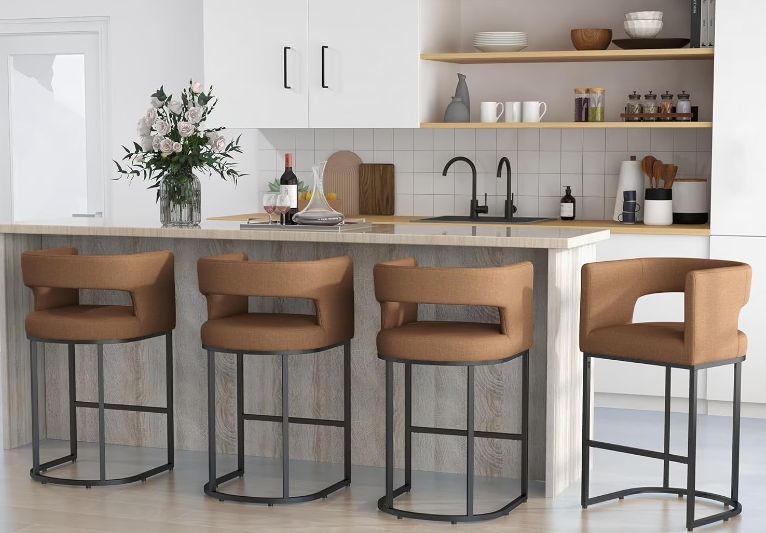
The standard rule: allow 26–28 inches per stool along the island’s seating edge. That’s measured center-to-center between stools, not stool-to-stool gap.
At 24 inches per person, things feel functional but tight — fine for kids, less comfortable for adults over a full meal. I’ve used 27 inches in my own setup and it’s the sweet spot: enough shoulder room that two adults can eat side by side without the awkward elbow dance.
So the math is simple: measure your island’s seating overhang length, divide by 27, round down. A 54-inch overhang comfortably fits two stools. An 80-inch island fits three.
One thing people forget: the stool seat width also matters. A slim, backless stool with a 14-inch seat occupies a different physical footprint than an upholstered seat at 18 inches wide. Check the product’s seat width, not just the stated center-to-center recommendation.
Walkway Clearance to Leave Around Stools
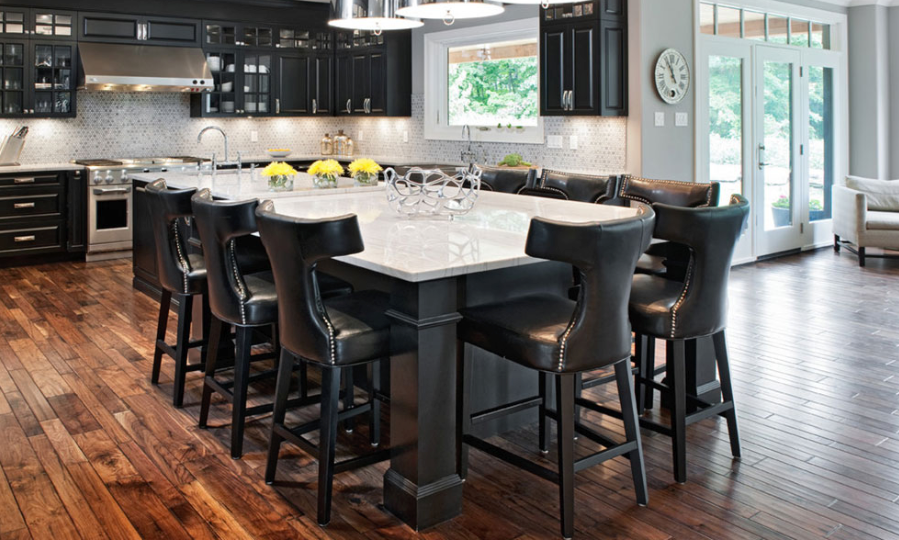
This one trips up apartment dwellers especially. The National Kitchen & Bath Association (NKBA) recommends at least 36 inches of clearance from the back of occupied stools to any wall or obstacle — enough to slide past comfortably. If people regularly walk behind the stools (like between the island and the dining table), bump that to 44 inches.
In a smaller kitchen, this can make or break your layout. I’ve seen islands where someone added a third stool, only to discover that opening the dishwasher or pulling out the fridge requires performing a sideways shuffle every single time. Test this with tape on the floor before you commit.
Should You Choose Backs, Swivel, or Upholstery?
These features get marketed as upgrades. Some genuinely earn their place. Others are just aesthetics. Here’s how I actually think about each.
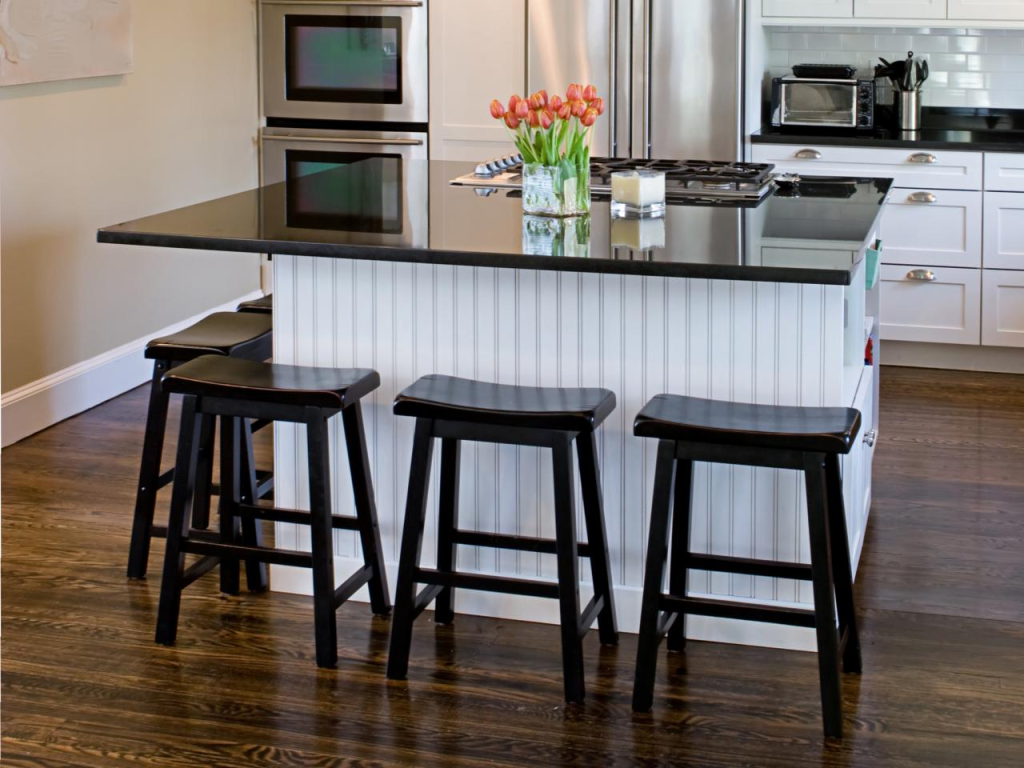
Backs vs. backless: Backless stools look clean — they tuck fully under the counter when not in use, so the kitchen reads as uncluttered. The real tradeoff is comfort. Most people start shifting position after 20–30 minutes at a backless stool. If your island is primarily for quick breakfasts or perching while someone else cooks, backless works fine. If it’s your main eating spot and dinners go long, a backed stool pays for itself in comfort.
Swivel: Genuinely useful in an open-plan space where you want to turn toward the living room mid-conversation without picking up the stool and repositioning it. Less useful in a tight kitchen where there’s nowhere to turn to. If your island faces a TV or opens onto a family room, I’d call swivel a real functional feature, not just a nice-to-have.
Upholstery: Adds comfort and warmth to the space. The honest downside is maintenance — fabric near a cooking area collects grease and spills. If you have kids or eat at the island daily, look for PU leather or performance fabric that wipes clean. I sniff-tested my current stools when they arrived: zero chemical smell, which matters when it’s near a food prep area. That’s one reason I look specifically for pieces using non-toxic finishes on any exposed wood components—as how VOCs from furniture affect indoor air quality is something the EPA documents pretty clearly, and it matters even more in a kitchen where you’re cooking and eating daily.
Footrests: Often overlooked but important. A stool without a footrest at counter height leaves your legs dangling — uncomfortable after more than a few minutes. Check that the footrest height actually aligns with your counter height. For a 36-inch island with 24–26 inch stools, a footrest at around 8–10 inches from the floor works well.
Best Setups for Apartments vs. Family Kitchens
These two situations pull in opposite directions.
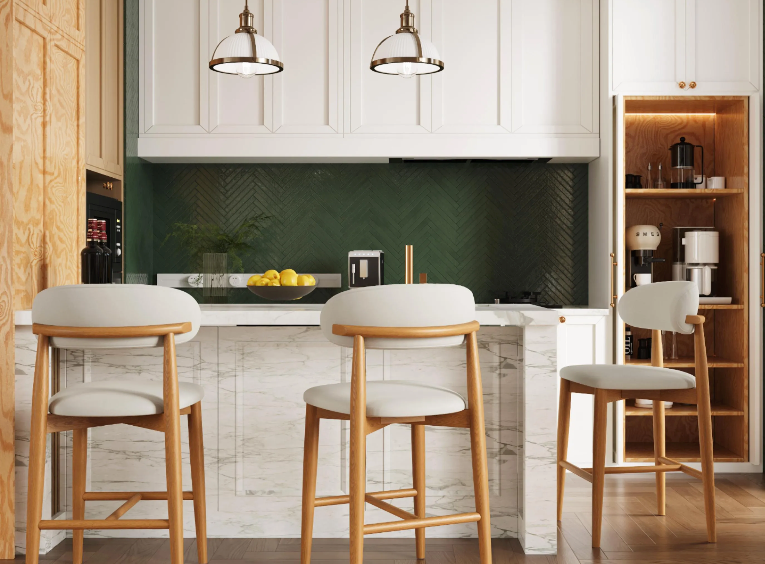
For apartments and smaller kitchens: Backless stools are your best friend. They disappear under the counter, keep the space visually light, and leave the walkway clear. A set of two is usually the right call — three stools in a compact kitchen creates a bottleneck fast. Look for a slim profile: under 16 inches of seat width, simple legs with no arms. Round seats over square tend to feel less intrusive in tight spots.
For family kitchens with kids: Backed stools win. Kids fidget — a back gives them something to lean against, and reduces the “fell off the stool” incidents. Look for a sturdy base, nothing too tippy, and a seat material that handles sticky hands. Weight capacity matters more than people admit: check the spec. A stool rated for 220 lbs is noticeably more solid than one rated for 150 lbs, even when no one above 150 lbs is sitting on it.
For the family kitchen, this is also where the whole-room picture matters. If your island stools are going to live in the same sight line as your dining chairs, matching the wood tone and leg profile makes the space feel intentional rather than assembled from multiple shopping carts. Everything in my living and kitchen zone now speaks the same visual language — that’s not an accident, it’s just planning one step ahead.
If you’re thinking about adding a counter height dining set nearby to extend your seating, Povison’s counter height dining collection pairs naturally with island stools when you match the material finish.

Common Buying Mistakes and Fixes
I’ve made most of these. Here’s the shortlist.
Mistake 1: Skipping the measurement. The most common, and the most expensive. Measure your counter height before anything else. Then measure the island’s seating length. Then measure your kitchen walkway. Three measurements, five minutes. Worth it.
Mistake 2: Only checking seat height, not leg clearance. Your knees need room under the overhang. The NKBA guideline for 36-inch counters is 15 inches of clear knee space depth. If your island has a narrow overhang or thick apron, a stool with a wide seat base or outward-splaying legs might not fit comfortably underneath.
Mistake 3: Buying based on looks in a styled photo. Product photos are shot with wide-angle lenses in spacious rooms. That stool that looked proportionate in the image may be enormous in your actual kitchen. Always check the seat dimensions: seat width, seat depth, and the overall footprint at the floor.
Mistake 4: Ignoring the weight capacity. Manufacturers list this in the specs, and most people scroll past it. A stool with a 220 lb capacity uses different joint construction than one at 150 lbs — you’ll feel the difference in how solid it sits.
Mistake 5: Assuming set-of-2 is always enough. For some islands it is. For others, it leaves a gap that looks unfinished or forces the third person to drag over a chair. Measure your island seating length first, calculate how many stools actually fit, then decide. Buying a second set later often means the finish has been updated and they won’t match exactly.
FAQ
What height counter stool do I need for a 36-inch island?
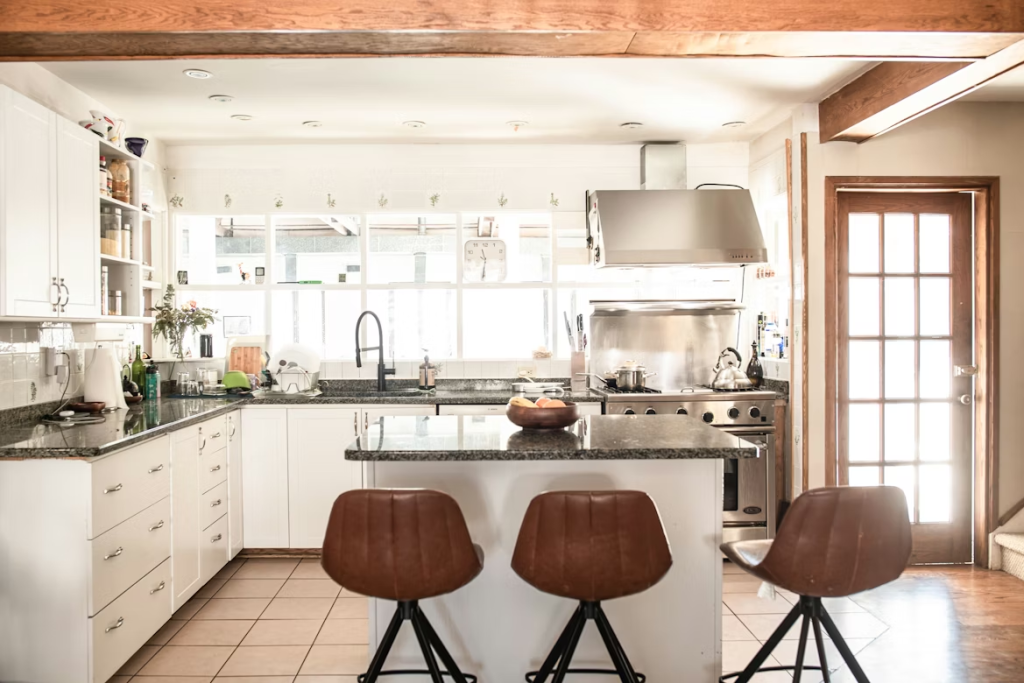
Standard kitchen islands measure 34–36 inches from floor to counter surface. For that height, you want counter stools with a seat height of 24–26 inches, leaving 9–12 inches of clearance for comfortable legroom. Always measure your specific counter before ordering — not all “standard” islands are identical.
Are backless counter stools comfortable enough for everyday use?
It depends on how you use them. Backless stools are better for kitchens where seating is occasional — a quick coffee, a perch while someone cooks — and where visual tidiness matters because they tuck fully under the counter. Backed stools are worth it when the island is your main eating spot, when kids are using them regularly, or when you spend 30+ minutes seated at the counter. The comfort difference becomes obvious fast.
How many stools can fit on a 60-inch kitchen island?
Two stools at 27 inches center-to-center typically fills the space well. For longer islands (70 inches and up), three stools fit more naturally and prevent the visual gap that makes a big island feel underused. Measure your overhang and divide it by 27 to check.
What if stools feel too tall after delivery?
Check your counter height against the stool’s seat height. The gap should be 9–12 inches. If the seat is too high, the stool is simply wrong for your counter — most counter stools are fixed height, not adjustable. Adjustable-height stools (gas lift mechanism) are available and worth considering if you have multiple counter heights in one space or family members with big height differences.
Conclusion
Honestly, most counter stool regrets come down to one thing: people buy on looks before checking the numbers. The math isn’t complicated — it’s just measuring twice before clicking “add to cart.”
Here’s the short version of what to check before you buy: counter height first, then seat height range, then island seating length divided by 27 inches per stool, then walkway clearance behind. Decide on back/backless and swivel based on how your household actually uses the island, not how it looks in a photo. And check the weight capacity — it tells you more about build quality than most spec sheet claims.
If you’re shopping for counter stools and want something that arrives ready to use without the weekend assembly battle, explore Povison’s fully assembled counter stools and seating — every piece ships pre-built, so placement is a few minutes, not an afternoon.
When you get the measurements right, stools stop being furniture you tolerate and start being a spot people actually want to sit at. My neighbor asked where I got mine after a dinner party. That’s the goal.
Related Reading:


