 By Kelvin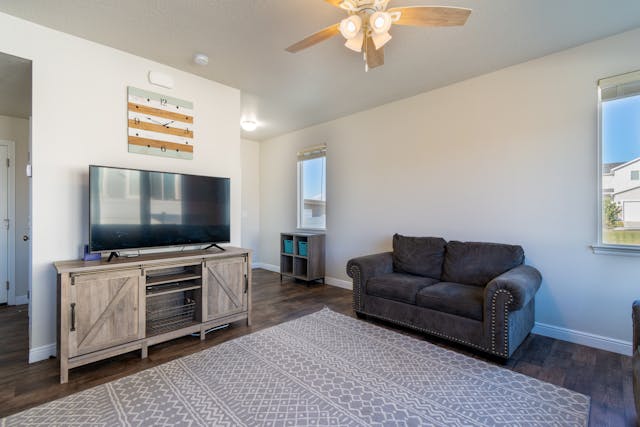
Introduction
A black sofa is easy to love but harder to style than many people expect. The biggest challenge is balance: too much contrast can feel sharp, while too many dark finishes can make the room look heavy. Black works as a strong neutral, so warm white, beige, soft gray, sage, terracotta, and even navy can all work well depending on the room’s size, natural light, and overall mood.
Table of Contents
What Colors and Wall Tones Work Best With a Black Sofa?
Choosing the right living room color with black sofa depends less on trends and more on what your room needs most. Some spaces need brightness, some need warmth, and some can handle a richer, moodier palette. The best results usually come from matching wall color to the room’s size, light level, and overall style, rather than choosing a color in isolation.
For most living rooms, warm white, beige, greige, sage, and muted earthy tones are the easiest colors to pair with a black sofa. Navy, emerald, and charcoal work better when the room gets plenty of natural light and has lighter surfaces elsewhere.
| Color family | What it does | Best for | Style boosters |
| Warm white / off-white | Brightens and sharpens contrast | Small or low-light rooms | Oak, linen, greenery |
| Beige / taupe | Softens black and adds warmth | Cozy, transitional rooms | Knit throws, brass, jute |
| Soft gray / greige | Keeps the look clean and calm | Modern or minimalist spaces | Glass, black accents, metal |
| Sage / olive | Adds color without feeling loud | Natural, layered rooms | Woven textures, wood tones |
| Terracotta / sand | Feels grounded and social | Warm, relaxed living rooms | Walnut, cream, clay decor |
| Navy / emerald | Creates depth and drama | Bright rooms with strong light | Gold accents, mirrors, art |
For small or low-light living rooms
If your room feels dim or compact, warm white, creamy beige, and light greige are usually the most reliable choices. These shades reflect more light and give the sofa room to stand out without making the whole space feel heavy. For many homeowners, this is the easiest way to make living room color with black sofa choices feel safer and brighter.
For modern and minimalist spaces
Soft gray, greige, and off-white work especially well in modern interiors. They keep the room crisp and uncluttered while allowing the black sofa to act as the visual anchor. This approach works best when the styling stays simple, with clean-lined furniture, restrained decor, and a few strong shapes instead of many small accessories.
For cozy and earthy living rooms
Taupe, sage, olive, and muted terracotta create a softer look around a black sofa. These shades feel warm, relaxed, and easy to live with, especially when paired with natural wood and woven textures. Many practical black sofa living room ideas rely on this kind of palette because it feels stylish without being overly polished or hard to maintain.
For bold or moody interiors
If the room gets strong natural light, darker wall colors can look beautiful with black seating. Navy, emerald, charcoal, and even deep accent walls can add depth and character. Among more dramatic black furniture living room ideas, the key is contrast: mirrors, brass, cream textiles, or glass surfaces help keep the room from feeling closed in.
How Do You Make a Black Sofa Feel Warm and Bright?
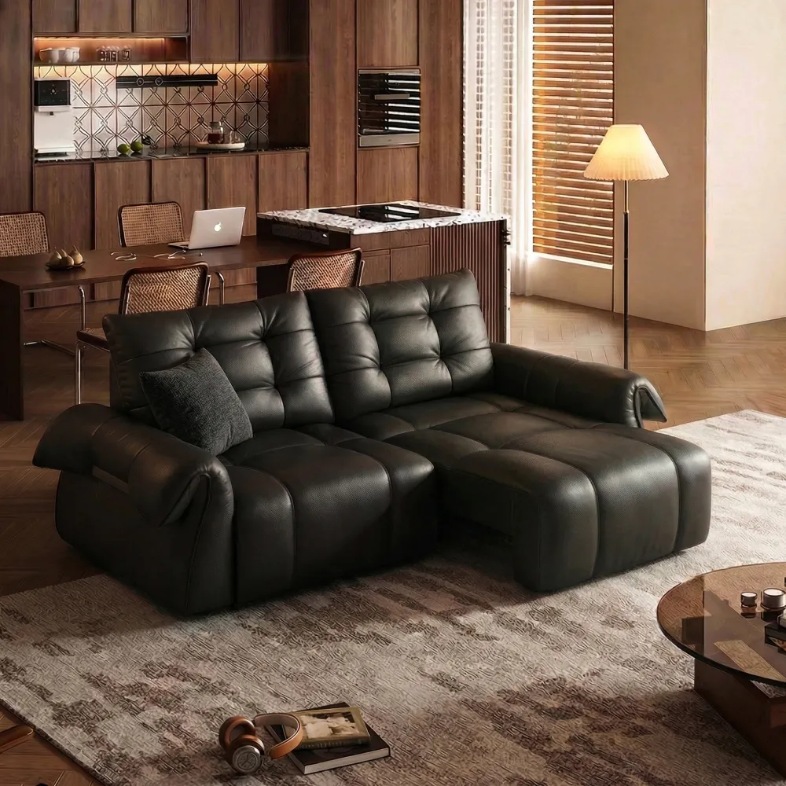
A black sofa usually feels too heavy because of the layers around it, not because black itself is difficult to use. Start by lightening the floor and window treatments, then add warmth through wood, texture, and layered lighting. This creates contrast without making the room feel stark or overly decorated.
- Use a light rug to lift the whole seating area. Cream, oatmeal, or soft gray works well.
- Add warm wood through a coffee table, side table, or shelving.
- Layer lighting with a floor lamp and table lamp, not just one ceiling fixture.
- Bring in soft textiles like linen curtains, boucle pillows, and a textured throw.
- Use greenery or warm metals to stop black-and-white rooms from feeling cold.
Curtains matter more than they may seem because they frame one of the brightest areas in the room. Cream, oatmeal, beige, and soft greige are the safest choices when the sofa already carries strong visual weight. Sage or muted blue can work in brighter rooms, while black or charcoal curtains are better reserved for spaces with generous daylight and lighter walls or rugs.
In a rental living room with a black leather sofa, a cream rug, walnut table, and oversized linen floor lamp can soften the room without changing the walls. The sofa stays visually strong, but the lighter ground and warmer materials keep it from feeling heavy or disconnected.
This is also why matching every major surface to the sofa usually works against the room. A black sofa paired with a black TV stand, dark rug, and dark curtains can make the space feel boxed in. Contrast is what keeps black furniture looking intentional rather than heavy.
How Can You Build a Balanced Color Palette Around a Black Sofa?
If you want the room to feel cohesive, it helps to understand how furniture color works with your home walls before you start buying pillows and art. A balanced living room color with black sofa usually needs one light layer, one warm or colored layer, and one smaller accent layer to keep the room from looking flat.
A simple way to build the palette is this:
- Base layer: wall color + large rug
- Middle layer: curtains + coffee table + accent chair
- Accent layer: pillows + art + throw + small decor
Try one of these easy formulas:
- Black sofa + warm white walls + oak wood + sage accents
- Black sofa + taupe walls + terracotta textiles + brass
- Black sofa + soft gray walls + navy details + glass or chrome
If you are still choosing the sofa itself, surface finish matters almost as much as color. Cronus Black Genuine Leather Modular Sofa can act as the room’s visual anchor while adding more texture than a flat black fabric or glossy finish. That makes it easier to keep the surrounding palette simple and rely on warm white, taupe, sage, or walnut for contrast.
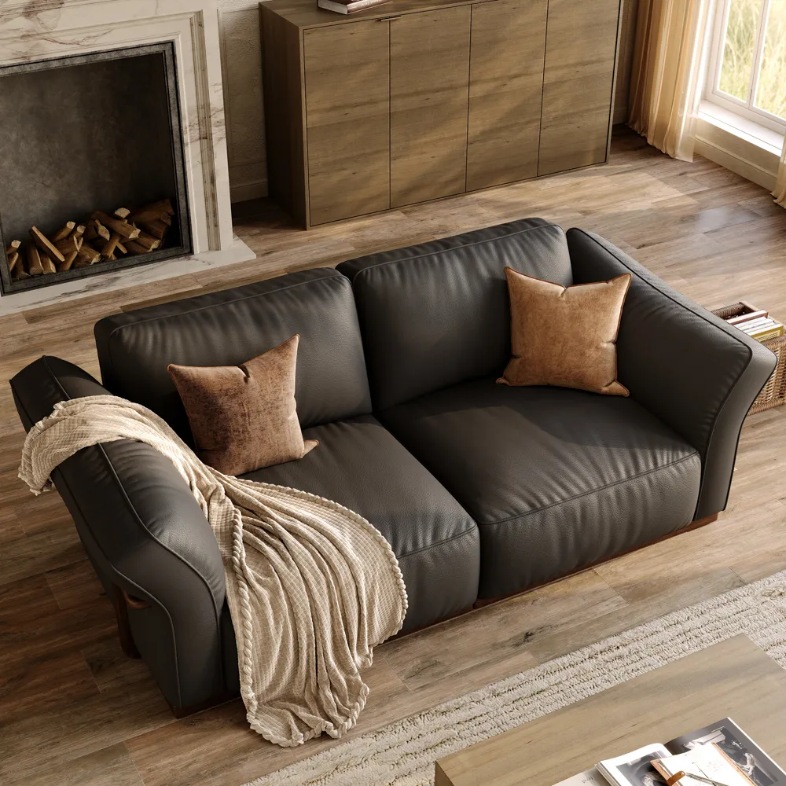
Cronus Genuine Leather Modular Sofa
Matte black leather adds texture while giving lighter walls and warm wood room to balance the palette.
✨ Matte top-grain leather
✨ Strong visual anchor
✨ Modular contemporary silhouette
What Mistakes Should You Avoid With a Black Sofa?
Most black-sofa rooms go wrong for predictable reasons. If the room still feels off after you adjust the palette, revisit small living room furniture layout tricks before assuming the paint color is the problem. Spacing, sightlines, and rug size often matter as much as wall color.
Common mistakes include:
- Using too many dark surfaces in a low-light room
Black sofa, dark rug, dark curtains, and dark wall paint can absorb too much light. - Choosing stark white without warmth
Very bright white can make the contrast feel cold unless you add wood, linen, or warm metals. - Ignoring texture
A room with smooth black leather, smooth paint, and glossy surfaces can feel flat fast. - Forgetting contrast below the sofa
A lighter or patterned rug often makes the whole seating zone feel more balanced.
These are the same reasons many weak black furniture living room ideas look stylish in one photo but uncomfortable in real life. A room should feel layered, not just coordinated.
Conclusion
The best black-sofa room is not the one with the boldest paint color. It is the one that feels balanced when you walk in and easy to live in every day. Start with the effect you want: brighter, softer, cozier, or moodier. Then build around the sofa with one clear wall color, a lighter grounding layer, and warmer textures. Whether you prefer warm white, taupe, sage, or navy, black works best when it has contrast, light, and something natural beside it.
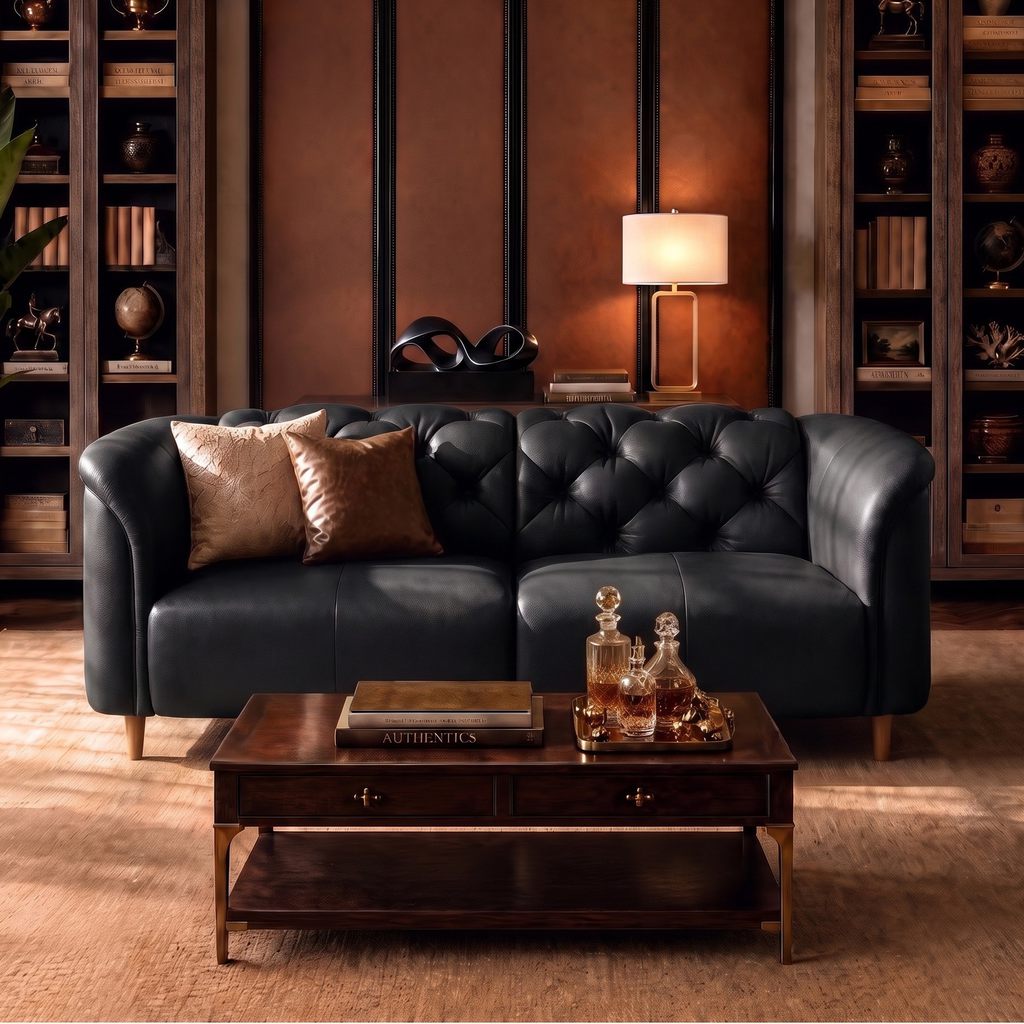
Find the Right Black Sofa
Explore black sofas for different room sizes, color palettes, and everyday living needs.
FAQ
Does a black sofa show dust, lint, or pet hair easily?
Yes, it can, especially if the upholstery is smooth or matte. Leather is usually easier to wipe clean, while fabric may hold onto lint or fur more visibly. If you have pets, choose textured upholstery or keep a soft brush and lint roller nearby for quick maintenance.
What lighting works best in a living room with a black sofa?
Warm lighting usually makes a black sofa feel more inviting than cool white bulbs. A mix of floor lamps, table lamps, and ambient lighting helps soften the contrast around the sofa. This matters even more in evening settings, when dark furniture can otherwise look heavier than it does during the day.
Can I use wallpaper in a room with a black sofa?
Yes, as long as the wallpaper does not make the room feel visually crowded. Subtle patterns, soft botanicals, textured neutrals, or muted geometric prints work best. A black sofa already has strong visual weight, so wallpaper should support the room rather than compete with it.
What Color Curtains Work Best With a Black Sofa?
Cream, oatmeal, beige, and soft greige are usually the easiest choices because they keep the window area light. Sage or muted blue can work in brighter rooms. Choose black or charcoal curtains only when the room has strong daylight and lighter surfaces elsewhere.


