 By Jenny Smith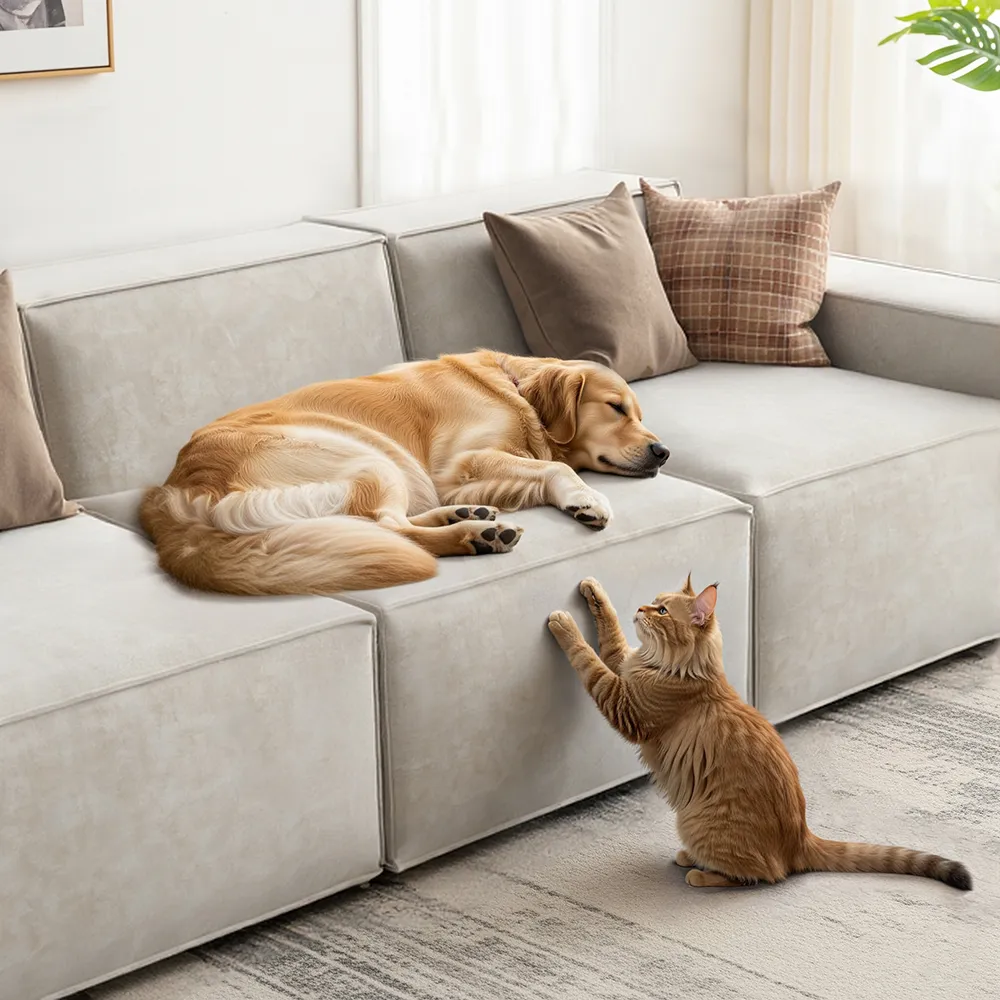
Living with a dog changes how a sofa wears over time. Fur collects in seams, paws bring in dirt, and even a calm dog can age the wrong upholstery faster than expected. That is why choosing the best sofa fabric for dogs is less about trends and more about real daily use. Some homes need easier hair cleanup, while others need better scratch resistance or stain control. This guide breaks down the most practical fabric choices, what to avoid, and how to find a sofa that keeps looking inviting in everyday life.
What Is the Best Sofa Fabric for Dogs Overall?
There is no single winner for every home, because dogs create more than one kind of wear. The smartest way to answer this question is to compare fabrics by the issues that matter most in daily life: fur, claws, cleanup, and comfort. In most homes, protected leather, microfiber, and performance fabric give the best balance, while tight-weave upholstery works as a durable backup when texture matters less than resilience.
For most households, the best couch material for dogs is usually one of these three:
- Protected leather for easy wipe-clean care and low fur cling
- Microfiber for value, durability, and easier day-to-day maintenance
- Performance fabric for the best overall balance of softness, stain resistance, and durability
| Fabric | Fur Control | Scratch Resistance | Easy Cleanup | Best For |
| Protected Leather | Excellent | Moderate | Excellent | Shedding, drool, muddy paws |
| Microfiber | Very good | Good | Very good | Budget-conscious dog homes |
| Performance Fabric | Good | Very good | Very good | Mixed wear, family rooms |
| Tight-Weave Fabric | Good | Good | Good | Durability-first spaces |
| Chenille / Bouclé | Poor | Poor | Moderate | Better avoided with dogs |
How Do You Choose the Right Sofa Fabric for Your Home?
Most dogs do not cause just one problem. A shedding dog may also scratch, drool, or run in after the yard. That means the right choice is usually not about finding one miracle material, but about deciding which problem bothers you most and choosing the fabric that handles that issue best without creating new ones.
What matters most: hair, claws, or stains?
Start by ranking the problem you notice first every week. If fur is everywhere, smooth surfaces matter more than plushness. If you hear nails digging into the seat before every jump, snag resistance matters more. If your dog leaves damp spots, muddy prints, or the occasional accident, cleanup speed matters most.
- Hair is the main issue: choose leather, microfiber, or a short-pile performance weave
- Claws are the main issue: avoid looped, loose, or highly textured upholstery
- Stains are the main issue: choose performance fabric or protected leather
- You want fewer compromises: look for mid-tone, tight-weave upholstery with removable covers
I once stayed with friends whose Labrador shed constantly and claimed the same sofa corner every evening after walks. What saved that room was not a magical fabric, but a medium-tone performance weave that hid fur well and let fresh paw marks wipe off before they settled in.
Which fabric works best when your dog has more than one habit?
This is where many buyers get stuck. A dog that sheds may also scratch, and a dog that drools may also nap in the same place every night. In those mixed-use homes, you are not chasing perfection. You are choosing the strongest overall compromise.
A practical way to think about it:
- Hair + easy cleaning: leather or microfiber
- Scratching + daily lounging: microfiber or performance fabric
- Drool + muddy paws: protected leather or performance fabric
- A little of everything: performance fabric is often the safest all-around answer
That is why many shoppers looking at dog friendly couches, best pet friendly couches, and best pet friendly sofas end up comparing not just softness, but how fast the sofa returns to looking clean after a normal week.
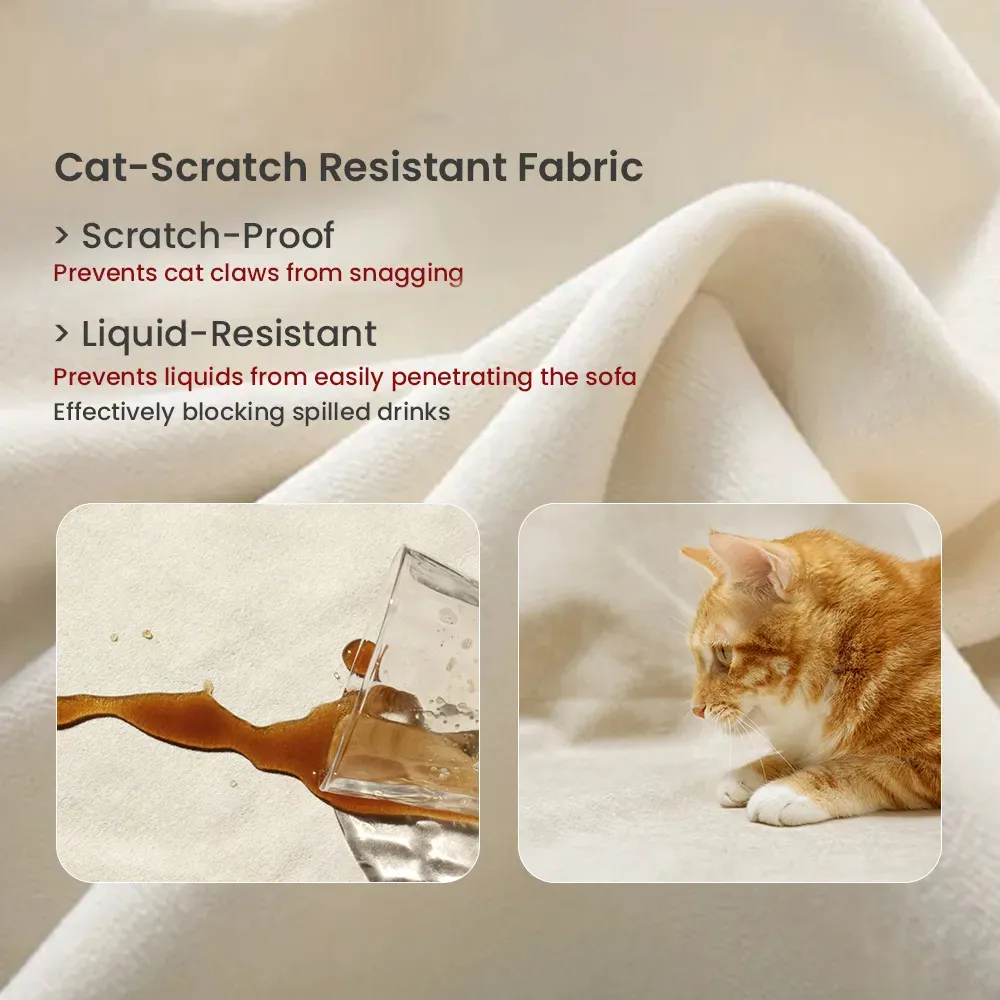
Best Sofa Fabrics for Dogs
Once you know your household’s main priorities, it becomes easier to judge fabrics by how they behave in real use. This section keeps the focus on the materials readers usually compare first. Instead of treating every dog as a separate category, it shows what each fabric does well, where it struggles, and who it suits best.
Leather
Protected leather is one of the easiest surfaces to live with if shedding and messy paws are your biggest frustrations. Fur tends to stay on top instead of weaving into the upholstery, and most everyday messes can be wiped away quickly. It also looks elevated, which helps if you want pet-friendly function without giving up a more polished room.
The trade-off is visibility. Claw marks can show, especially on softer finishes or in homes with big, active dogs. If you prefer leather, a gentle routine for how to clean a leather couch also helps the surface stay better-looking over time.
Microfiber
Microfiber remains one of the safest answers for buyers who want durability without paying premium leather prices. A good microfiber couch for dogs works because the surface is tight, relatively smooth, and easier to vacuum than fuzzier or more open fabrics. It is comfortable, practical, and forgiving in busy family rooms.
It also handles mixed-use homes well. If your dog jumps up often, sheds moderately, and occasionally tracks in dirt, microfiber usually gives you fewer headaches than delicate textured upholstery. It may not feel as elevated as leather, but it often wins on effort-to-value ratio.
Performance Fabric
Performance fabric is often the strongest all-around pick because it handles several problems at once. It usually gives you better stain resistance, better everyday resilience, and a softer, warmer hand than leather. For homes with dogs, kids, snacks, and regular lounging, that balance matters.
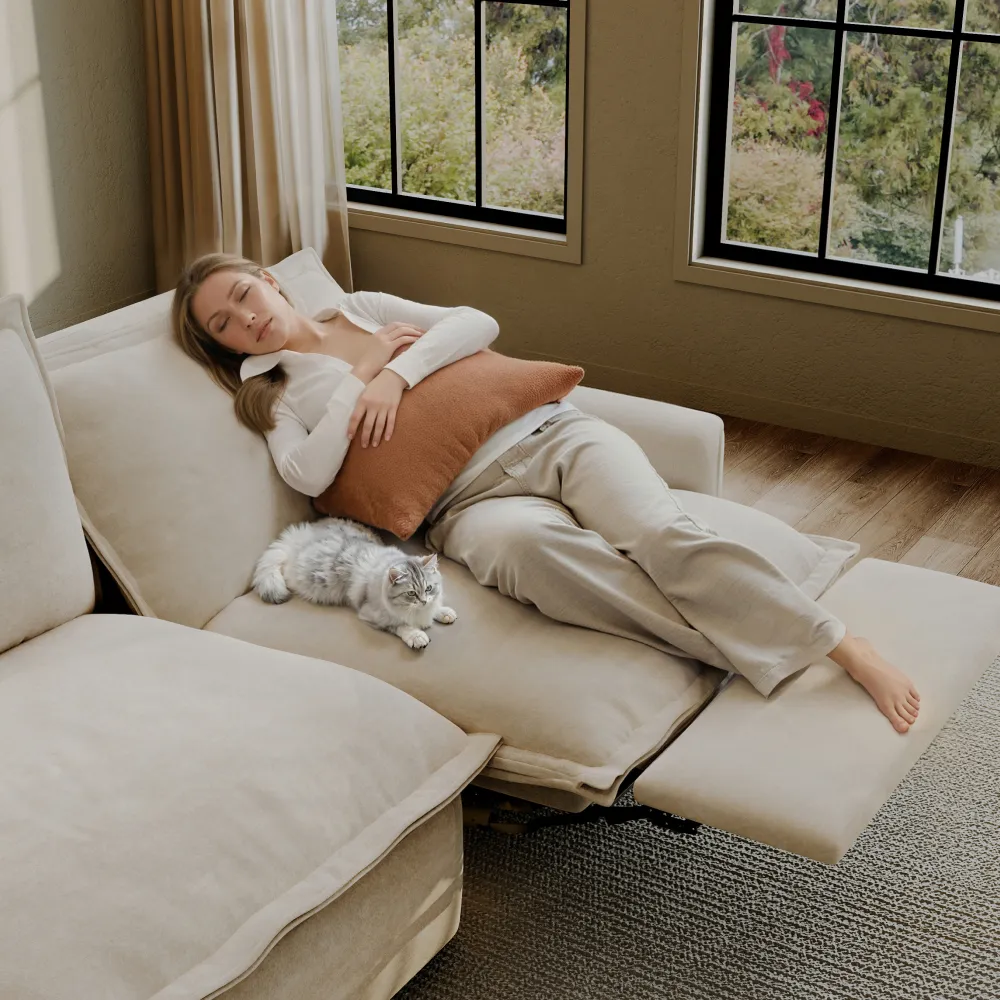
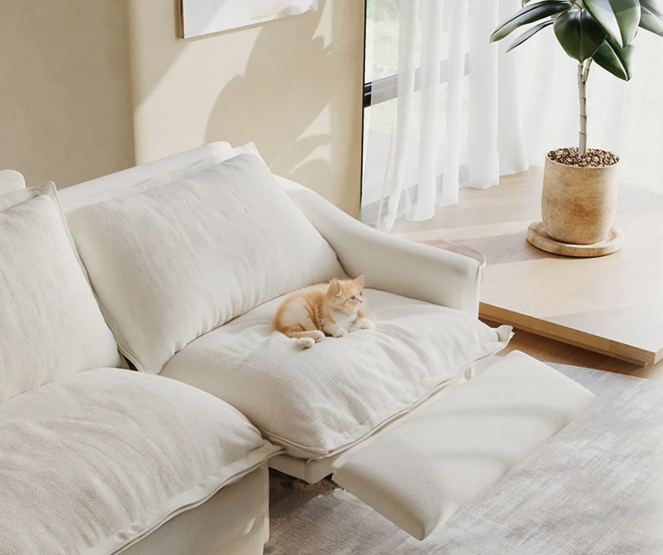
A good example is the Modern Power Reclining Loveseat Sofa. Its beige pet-friendly fabric is made from 100% polyester and finished with a soft short-pile texture, so it feels smooth and comfortable while releasing pet hair more easily than fuzzy or highly textured upholstery. The removable cushion covers also make routine cleaning more manageable in homes with dogs.
Tight-Weave Fabrics
Dense woven fabrics such as canvas-like or twill-like upholstery can also work well when durability matters more than plush texture. The key is not the marketing label but the construction. Tight weaves leave fewer openings for claws to catch and usually hold their shape better than loose, decorative fabrics.
These materials are especially useful in casual spaces where you want a more tailored fabric feel than microfiber but still need something tougher than delicate upholstery. They may not be the softest option, but they often age more predictably in dog-heavy homes.
Sofa Fabrics to Avoid If You Have Dogs
Knowing what to skip is just as useful as knowing what to buy. Many sofas look beautiful in a showroom because the fabric has rich texture, visual depth, or a soft hand. The problem is that those same qualities often collect fur, catch claws, and make cleanup harder in daily life.
Bouclé, chenille, and loose weaves
These fabrics are risky because their texture works against you. Bouclé and looped surfaces can snag easily, while chenille’s soft pile tends to trap hair and show wear faster in high-contact zones. If you already like plush upholstery, understanding what is chenille fabric also helps explain why it feels cozy but is not always ideal for active dog households.
Loose weaves are another weak spot. Even if they look understated, they can pull, fuzz, or catch at the first repeated claw contact. They are usually better suited to lower-traffic seating than to a sofa your dog treats like a daily landing pad.
Delicate or highly absorbent fabrics
Very delicate natural fabrics, silk-like blends, and upholstery that absorbs moisture quickly tend to create more maintenance than most dog owners want. They may stain faster, hold odor more easily, or require more careful cleaning than a real family room allows.
Standard velvet can also be hit or miss. Some performance velvets are practical, but soft decorative velvets often show pressure marks, collect fur, or feel too precious for dogs that leap up with speed and enthusiasm.
How to Make Any Sofa More Dog-Friendly
Fabric matters, but it is only part of the result. A smarter setup can make even a decent sofa perform better, while a poor setup can make a great fabric feel frustrating. Small decisions about color, covers, layout, and routine care often determine whether a sofa feels easy to live with or constantly one mess away from looking tired.
Design details that help
Some features quietly improve daily life with dogs more than people expect:
- Removable covers for easier deep cleaning
- Mid-tone colors that hide both light and dark fur better
- Short-pile or smooth textures that release hair more easily
- Raised legs that make vacuuming underneath simpler
- Washable throws over the seat your dog chooses most often
If your goal is broader pet friendly furniture rather than one perfect sofa, these construction and styling choices often matter almost as much as the upholstery itself.
Weekly habits that reduce hair, odor, and stains
Good habits stretch the life of any sofa. Vacuum once or twice a week, blot spills quickly, wash your throw regularly, and keep nails trimmed. If the issue is partly behavioral, routines related to how to keep a dog off the sofa can also reduce wear on one favorite cushion without turning the whole room into a rule battle.
Conclusion
The best sofa fabric for dogs is usually the one that handles your home’s most annoying problem with the fewest trade-offs. Leather is great for wipe-clean convenience, microfiber is a reliable value pick, and performance fabric is often the best all-around answer for mixed daily wear. Tight weaves can also work well when durability matters most. Instead of asking which fabric sounds nicest in theory, ask which one will still look good after shedding, lounging, muddy paws, and the small messes that come with sharing a real home with a dog.
FAQs
What couch color hides dog hair best?
Mid-tone shades usually work best because they soften contrast. Warm gray, greige, mushroom, camel, and muted olive tend to hide both dust and moderate shedding better than bright white or very dark upholstery. Matching the sofa roughly to your dog’s coat color also makes everyday fur less visually obvious.
Are removable covers worth paying more for?
Usually, yes. Removable covers make deep cleaning much easier after muddy paws, drool, or odor buildup. Even if you do not wash them often, being able to remove a cover for targeted care is more practical than trying to clean every issue directly on the sofa frame.
Can a recliner still be dog-friendly?
Yes, as long as the upholstery is durable and the design is easy to maintain. Smooth performance fabric, short-pile surfaces, and protected leather are stronger options than looped textures. It also helps when the recliner has fewer exposed details that can trap fur or make cleanup more awkward.
Should you keep dogs off the sofa if you want it to last?
Not always. A well-chosen sofa can handle daily dog use if the fabric is practical and the maintenance routine is consistent. The real difference usually comes from trimmed nails, washable layers, quick cleanup, and preventing one seat from taking all the wear week after week.


