 By Jenny Smith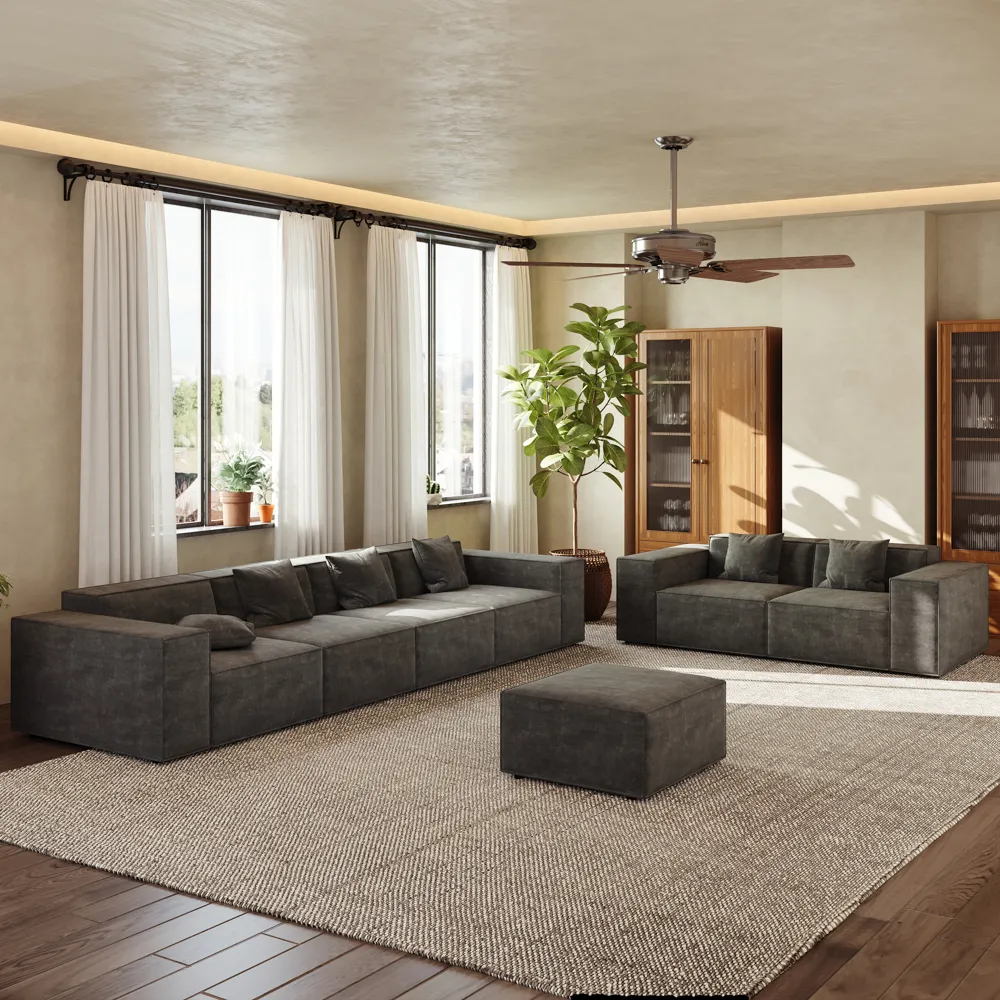
When you invest in a sectional sofa, the fabric you choose matters just as much as the shape. This is the surface your kids will climb on, your pets will nap on, and your guests will see first—so it needs to be comfortable and tough. In a global upholstered furniture market worth over USD 65 billion in 2025, fabric options can feel overwhelming (Mordor Intelligence, 2025). This guide focuses on durable fabrics for sectional sofas—how durability is measured, which materials really last, how to care for them, how to take apart a sectional for cleaning, and which ready-to-buy options are worth your money.
What Is a Sectional Sofa? (And How Durability Fits In)
A sectional sofa is a multi-piece sofa made of “sections” (like corner units, armless seats, chaises, and ottomans) that connect to create one larger seating area. Unlike a traditional three-seat sofa, you can configure a sectional into an L or U shape, stretch it along a wall, or float it in an open-plan room to define zones. Because sectional sofas usually become the main hangout spot, they see more spills, pet claws, and nap-time wear—so fabric durability is not just a bonus, it’s essential to how long your living room feels truly “move-in ready.”
Popular Types of Sectional Sofas & Their Use Cases
Most sectional sofas fall into a few familiar layouts. L-shaped sectionals are the classic choice for family TV rooms, giving everyone a place to stretch out while still facing the screen. U-shaped sectionals wrap further around the room, ideal for big families or those who host game days and need extra seating that encourages conversation. Modular sectionals use individual seats you can rearrange as your space or life changes—a lifesaver if you move often or mix rental and owned homes. Sleeper sectionals add a pull-out bed, turning the main sofa into a guest room in seconds, but also concentrating a lot of weight and motion on the same fabric zones, making durability even more important.
How Fabric Durability Is Measured on Sectional Sofas
When you see fabric described as “heavy duty” or “performance,” it usually refers to lab tests like Martindale or Wyzenbeek. Both tests essentially rub the fabric with an abrasive surface until threads break. The number of cycles (or “double rubs”) tells you how well a fabric stands up to real life: higher numbers mean it is less likely to wear thin or pill on your sectional’s high-traffic seats. For a sofa that will be used daily, especially in living rooms, look for upholstery fabrics rated for heavy residential use rather than decorative-only textiles.(Trivantage)
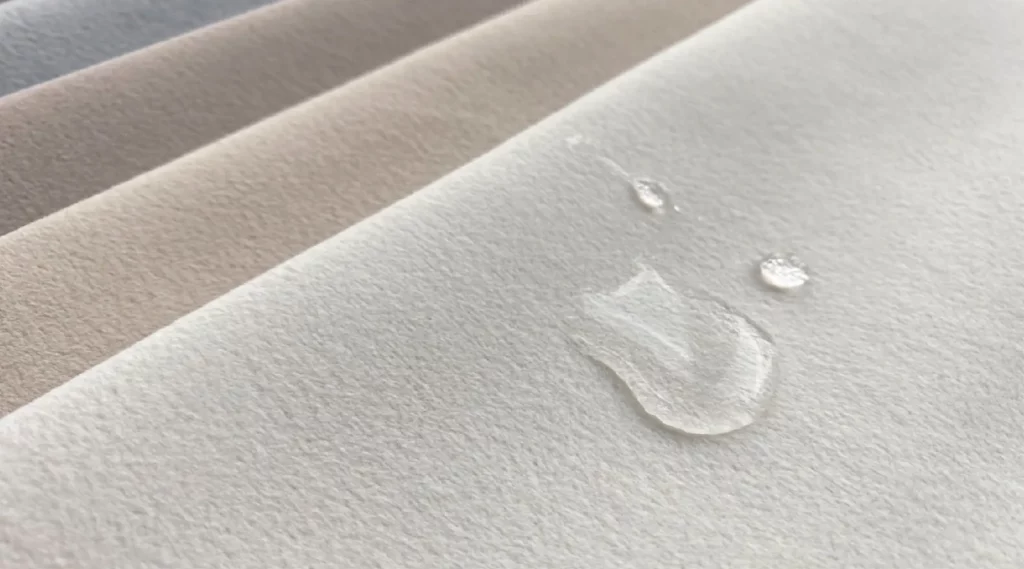
“Performance fabric” usually means a combination of durable fibers (like polyester or olefin), tight weaves, and special finishes that help resist stains, fading, and moisture. It’s not just a buzzword: research on furniture buyers shows that more than nine in ten stationary sofa shoppers say stain resistance is a top priority in fabric choice (Furniture Today & HGTV Consumer Views Survey, 2012).That’s exactly why performance fabrics have exploded in popularity for Sectional Sofas that see kids, snacks, and pets every day.
The Most Durable Fabrics for Sectional Sofas
Performance Fabrics: Microfiber, Polyester & Olefin
If durability is your non-negotiable, start with tightly woven synthetics like microfiber, polyester, and olefin. These fibers naturally resist abrasion, so they’re less likely to snag on rivets, toys, or jean seams. They also tend to be more stain-resistant and colorfast than pure cotton or linen, especially when treated at the yarn level. Microfiber has a soft, suede-like feel that works well in cozy, family-friendly rooms, while polyester and olefin blends are great for bright spaces because they hold color and resist fading. The trade-off is breathability: synthetic performance fabrics can feel a bit warmer than linen on bare skin, but for homes with kids, dogs, or rentals, the balance of comfort and durability is usually worth it.(Casa Italia)
Blends, Textured Weaves & Performance Velvet
If you want durability and a softer, more luxurious hand feel, look at fabric blends and textured weaves. Cotton-polyester blends, chenille, basket-weave fabrics, and performance velvet wrap strong synthetic yarns in plush textures that feel inviting the moment you sit down. Texture is your secret weapon: subtle slub, chenille pile, or heathered threads help camouflage everyday scuffs, pet hair, and the inevitable crumbs between cushions. Performance velvet, especially in polyester or poly-blend constructions, offers that rich, matte sheen people love without the high maintenance of traditional silk or rayon velvet. When shopping online for sectional sofas, scan the description for phrases like “pet-friendly fabric,” “performance upholstery,” “stain-resistant finish,” or “high abrasion rating” to spot fabrics designed to last.
Special Treatments: Stain-Resistant & Easy-Clean Finishes
Many modern upholstery fabrics are not only durable by fiber, but also enhanced with finishes that make daily life easier. These treatments can be baked into the yarn or applied as a topical coating that repels water and oil, slows down stains, or makes dirt easier to remove. They’re especially helpful on large Sectional Sofas, where one spill can hit several cushions at once. In general, look for a combination of good construction and smart finishing instead of relying on chemistry alone; a flimsy, loosely woven fabric with a coating will still wear out faster than a tightly woven performance textile. In busy households, however, that extra layer of “wipeability” can buy you valuable rescue time when juice, coffee, or red wine lands in the worst possible spot.
Common types of easy-clean treatments include:
- Water-repellent finishes that keep spills on the surface so you can blot before they soak in.
- Stain-resistant or soil-release coatings that help liquids bead up and make oily marks easier to lift.
- Anti-static or pet-hair-resistant finishes that keep fur from clinging to every cushion.
| Fabric Type | Durability (Abrasion / Pilling) | Stain Resistance & Cleaning | Comfort & Hand Feel | Pet & Kid Friendliness |
| Microfiber (Polyester) | Very high – tight weave resists wear and pilling | Naturally stain-resistant; most spills clean with mild soap and water | Soft, suede-like, cozy | Excellent – resists claws snagging, easy to vacuum hair |
| Woven Polyester / Poly Blends | High – strong synthetic fibers, holds shape well | Good; often treated as performance fabric, easy spot-clean | Smooth to slightly textured depending on weave | Very good – tough against rough play and daily use |
| Olefin / Polypropylene | Very high – excellent abrasion and fade resistance | High – naturally stain-resistant, great for liquids | Slightly crisp at first, softens over time | Very good – resists moisture and odors, great for pets |
| Cotton-Poly Blends | Medium to high – stronger than pure cotton | Moderate – better than cotton alone, less than full performance fabrics | Soft, familiar “sofa” feel | Good – forgiving, but claws and heavy wear still show over time |
| Chenille (Usually Poly Blend) | High – dense pile hides wear | Moderate to good – many have stain-resistant finishes | Plush, cozy, slightly fuzzy | Good – texture hides fur, but some cats may pull at the pile |
| Basket-Weave / Textured Weaves | Medium to high – depends on fiber content | Moderate – texture hides marks, but deeper texture can hold crumbs | Tactile, casual, slightly rustic | Good – texture hides minor snags and fur |
| Performance Velvet (Poly) | High – tight pile, good abrasion resistance | Good – many are treated; liquids can bead and wipe off quickly | Soft, plush, “luxury” feel | Good – short performance pile resists crushing better than traditional velvet |
| Linen or Linen Blends | Medium – strong fiber but prone to wrinkling | Low to moderate – absorbs liquids quickly, needs fast action | Cool, breathable, relaxed, slightly crisp | Fair – not ideal for rough pets or messy kids |
| Faux Leather / PU | High initially – wipeable surface, no pilling | Very high for liquids; wipes clean with damp cloth | Smooth, cool at first, warms with use | Good for fur and spills, but claws can puncture cheaper PU |
Editor’s Picks – Sectional Sofas with Durable Fabrics
POVISON Barrett Modular Sectional — Best Durable Sectional Sofa for Busy Families
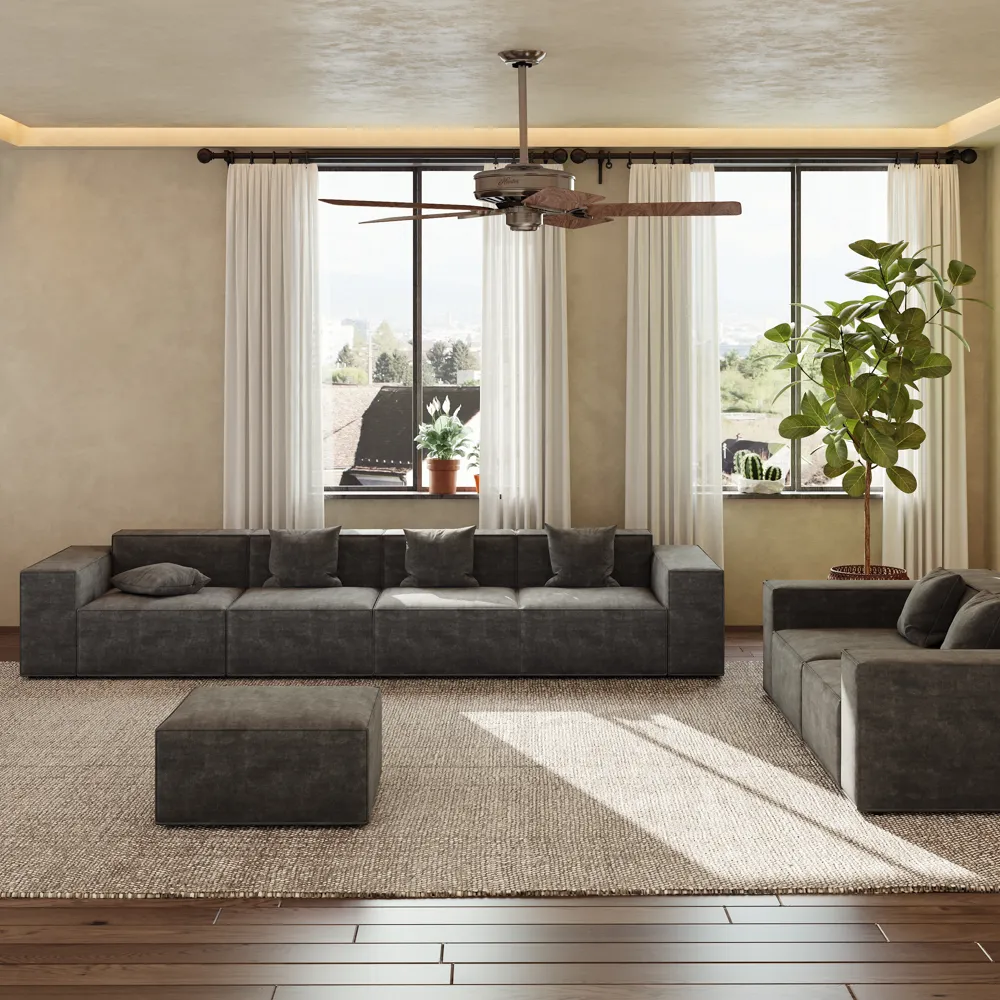
Price: $4198
Best For: Open-plan living rooms, households with kids and pets, and anyone who wants a flexible layout that can grow or change with their space.
The Barrett is a 2–4 seater modern modular sofa with ottoman, upholstered in pet-friendly short-pile 100% polyester that’s anti-scratch and water-repellent, so everyday friction, light dog claws, and spills are less of a worry. Its deep 25″ seating and wide ottoman turn the setup into a giant lounging island, while the modular design lets you rearrange pieces into L or U shapes or split them apart when you move. Partial assembly, no tools, and free shipping with 30-day returns and a 2-year warranty make it easier to commit. Imagine a Saturday night where everyone is stretched out across the two sofa modules and ottoman, pizza boxes on the coffee table, and a quick wipe handles any splashes before the next episode starts.
POVISON Cloud Pet-Friendly Sectional — Best Compact Sectional with Durable Performance Fabric
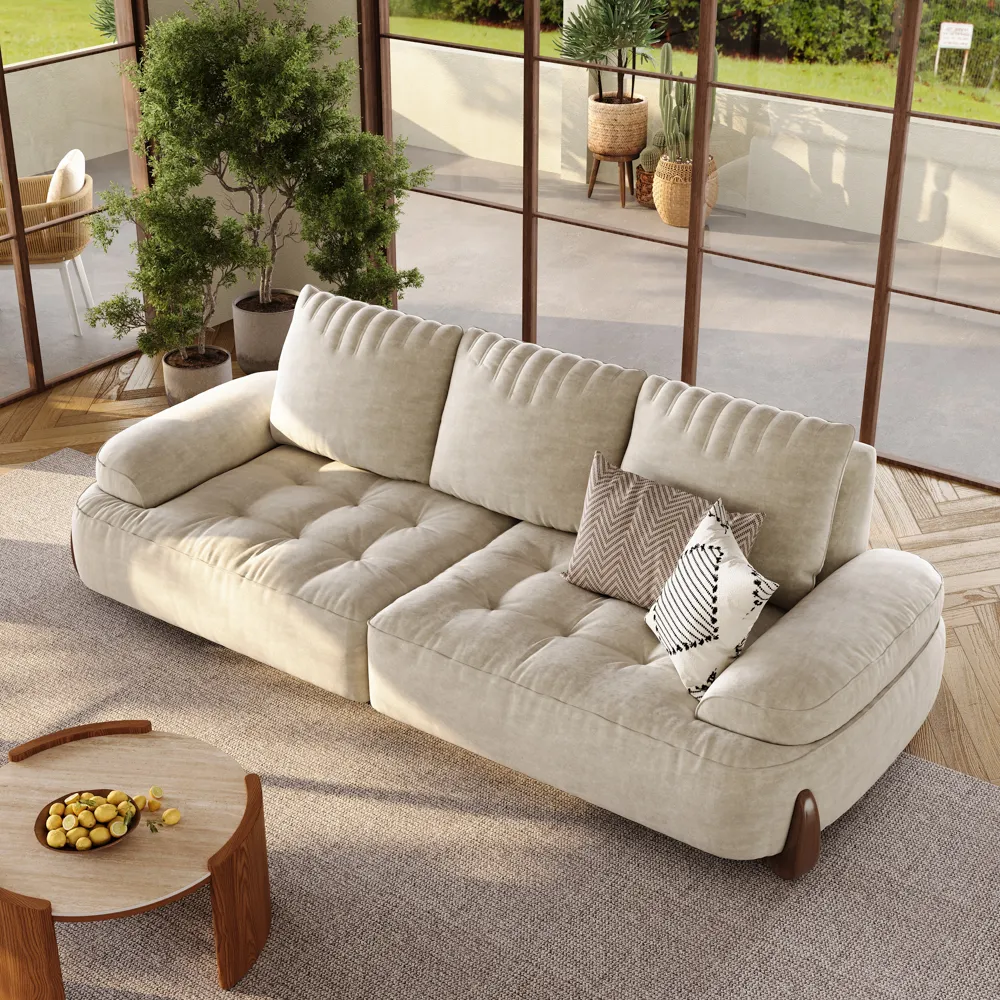
Price / Price Range: $2,399
Best For: Smaller living rooms or apartments that still need deep-seat comfort, as well as pet owners who want something soft yet resilient.
This modern beige sectional uses POVISON’s best-selling pet-friendly 100% polyester fabric with a premium short-pile texture, designed to feel soft and smooth while resisting everyday scuffs and dog claws. Deep seats, memory-foam comfort, and solid wood legs give it that “cloud” lounge feel without looking bulky, and the splash-resistant upholstery helps block daily spills like water, coffee, and juice before they soak in. In a real-life scenario, it’s the kind of sofa where three friends can crowd in for a weeknight movie and someone inevitably sloshes a drink—but instead of panicking, you blot it up and get back to the story, knowing the fabric is built for this.
POVISON Ergopals Power Reclining Loveseat Set — Best Budget-Friendly Reclining Sectional Alternative
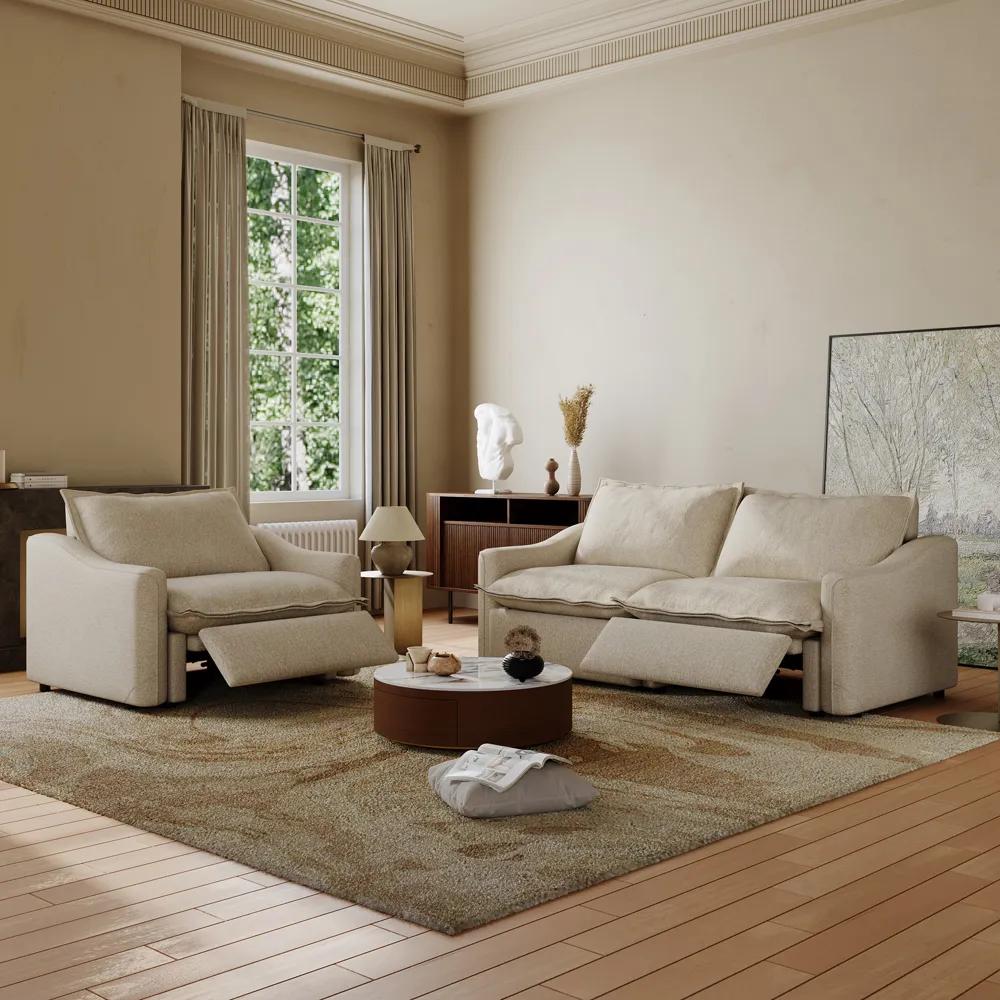
Price / Price Range: $3698
Best For: Buyers who want durable, fabric-upholstered reclining comfort in a more compact footprint—great for smaller living rooms, dens, or secondary TV spaces where you still want “the good seat” without a full-size sectional.
The Ergopals power reclining loveseat set features extra-wide, pet-friendly seating and performance poly-linen or velvet upholstery options that are both durable and easy to maintain. The performance poly-linen woven fabric blends polyester with a touch of linen, giving a sophisticated look while staying tough and water-repellent, with removable cushion covers for easier cleaning. With 90°–145° power recline, adjustable headrests, and USB ports, it offers true “sink in and stay there” comfort that holds up to real life. Think of a long workday ending with you fully reclined in zero-gravity mode, drink within reach, pet curled up at your feet, and washable, stain-resistant covers that make the setup feel genuinely low-stress over the long term.
How to Choose a Durable Sectional Sofa for Your Lifestyle
Match Sectional Sofa Fabrics to Your Household
The right fabric depends on how you actually live in your space. Homes with kids, frequent guests, or pets need performance fabrics that resist stains and abrasion, ideally in mid-tone colors and slightly textured weaves that hide daily wear. That’s a lot of households: about 66% of U.S. homes now include at least one pet, according to recent surveys (Forbes Advisor, citing APPA, 2025). For these families, a tightly woven polyester or polyester-olefin blend in a gray, beige, or warm taupe will age better than a delicate, loosely woven natural.
If you live in a small apartment, a compact sectional with light, neutral performance upholstery can make the room feel bigger while still standing up to kitchen-adjacent spills. For adults-only or low-traffic spaces, you can consider slightly more delicate options—like linen-blend performance fabrics or velvet—without sacrificing practicality. The key is to be honest about your habits: if you regularly eat dinner on the sofa or your dog considers the chaise its personal throne, buy as if that is not going to change.
Beyond Fabric: Frame, Cushions & Construction That Support Durability
Even the toughest fabric will fail early if it’s wrapped around a weak frame or sagging cushions. Look for kiln-dried hardwood or high-quality engineered wood frames; these resist warping, which keeps upholstery from stretching or wrinkling over time. High-density foam cores (often layered with softer fiber or down alternatives) help cushions bounce back after hours of lounging, rather than flattening and stressing the seams. Quality Sectional Sofas also use robust connectors between pieces—metal brackets or alligator clips—so the sections don’t creep apart and pull at the fabric. When you combine a solid frame, supportive cushions, and performance upholstery, you get a sectional that still looks inviting after years of movie nights instead of tired and slouchy after one busy season.
Care & Maintenance: Keeping Durable Fabric Sectionals Looking New
How to Clean Common Stains on Sectional Sofa Fabrics
Even the most durable sectional fabric needs basic care to stay fresh. Start by checking the cleaning code on the tag—W (water-based cleaner), S (solvent-based), WS (either), or X (vacuum only). For spills, move fast: blot (don’t rub) with a clean, absorbent cloth, working from the outside of the stain inward so it doesn’t spread. On performance fabrics, many everyday spills like water, soda, or milk will lift with mild soap and water, especially if you treat them while they’re still fresh.
For tougher stains—coffee, wine, pet accidents, or makeup—use cleaners recommended by the manufacturer and always test in a hidden spot first. With pet accidents, blot as much as possible, then use an enzyme-based cleaner safe for upholstery to help break down odor-causing proteins. Avoid over-saturating cushions, which can leave water rings or affect foam. If a stain covers a large area, or your sectional has special coatings you’re nervous about damaging, a professional upholstery cleaning once a year (or as needed) can refresh the fabric without stripping protective finishes.
How to Take Apart a Sectional Sofa (for Cleaning, Moving, or Cover Replacement)
If you’ve ever typed “how to take apart a sectional sofa” into a search bar the night before moving day, you’re not alone. Start by clearing off all cushions and pillows and taking photos of your current configuration from different angles. Flip or gently tip each piece to find the connection hardware—usually metal clips, brackets, or built-in hooks that lock the sections together. In many Sectional Sofas, you simply lift one piece straight up to release it from the clip on the neighboring section.
As you detach each module, label it with painter’s tape (“left arm,” “corner,” “armless 1”) and keep any loose hardware in a small labeled bag. This makes reassembly almost effortless later, and it also gives you the chance to vacuum crumbs and pet hair from every hidden gap. If your sofa has removable slipcovers, now is a good time to unzip or unclip them according to the care label—some performance covers are machine-washable on gentle cycles, while others need professional cleaning. When you set the sectional back up in your new space, use the photos you took earlier as a guide so the layout feels familiar and the connectors align correctly.
Conclusion: Choosing a Sectional Sofa You Can Really Live On
Durable fabric Sectional Sofas are more than a design trend—they’re a smart, long-term investment in how you actually use your home. When you choose performance fabrics with solid durability ratings, pair them with strong frames and supportive cushions, and maintain them with simple care habits, your sofa stops being “too precious” and starts being a place you can really live on. Less worry about stains or pet claws means more time for movie marathons, sleepovers, and lazy Sunday mornings. Use the fabric tips, durability metrics, and product picks in this guide to narrow your options and buy a sectional that will keep up with your life, not the other way around.
Q&A: Common Questions About Sectional Sofas & Durable Fabrics
1. Are sectional sofas a good idea for small living rooms?
Yes—if you choose the right proportions. A compact L-shaped sectional can actually open up a small room by hugging one corner and reducing the need for extra chairs. Look for low backs, slim arms, and light or mid-tone performance fabrics so the sectional feels airy instead of bulky.
2. Which fabric is best for sectional sofas with pets and kids?
Pet- and kid-friendly Sectional Sofas usually use tightly woven polyester, microfiber, or olefin, often labeled “performance fabric.” These resist snags, stains, and fading better than many natural fibers. Choose mid-tone, slightly textured fabrics to hide fur and fingerprints, and avoid very loose weaves or open boucle if your pets love to dig or scratch.
3. How long should a durable fabric sectional sofa last with daily use?
With quality construction and performance upholstery, a fabric sectional can easily last 7–10 years or more of daily use. Lifespan depends on frame materials, cushion density, and how well you care for it—regular vacuuming, prompt stain treatment, and occasionally rotating cushions will all help your sofa age more gracefully.
4. Can I wash sectional sofa covers in the washing machine?
Sometimes, but always check the tag first. Covers labeled W or WS may be machine-washable on a gentle cycle, while S or X codes usually require professional cleaning or vacuum-only care. When in doubt, wash a single cover as a test, use cold water, mild detergent, and air-dry to avoid shrinking or damaging performance finishes.
5. How often should I deep clean a fabric sectional sofa?
For busy households with pets or kids, aim for a professional deep clean or at-home steam clean about once a year, with spot cleaning as needed in between. Lower-traffic homes might stretch that to every 18–24 months. Regular vacuuming of cushions, seams, and under sections will keep dust and grit from prematurely wearing the fabric.
6. Is it hard to take apart and move a sectional sofa by myself?
Most modern sectionals are designed to come apart fairly easily. If you follow the steps in the “How to Take Apart a Sectional Sofa” section—photograph the layout, detach connectors one piece at a time, label every module, and bag hardware—you’ll make the process much smoother. For stairs or very heavy pieces, a second set of hands is still a good idea.


