 By Stephanie
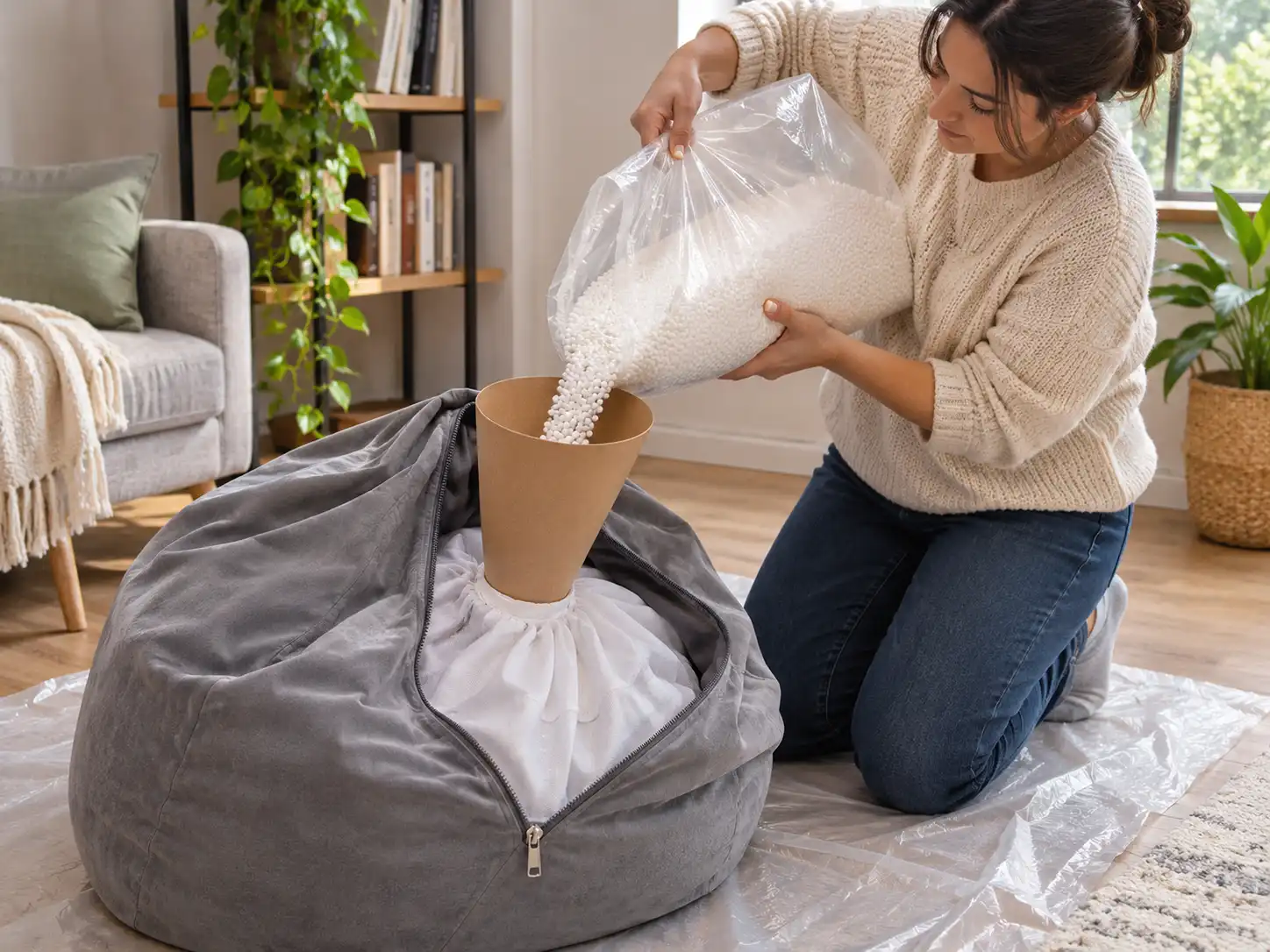
Knowing how to fill a bean bag chair correctly starts with choosing compatible filling, determining how much you need, and adding it gradually until the chair feels comfortable. Whether you’re filling an empty cover or restoring a chair that has flattened over time, the goal is to create enough support without losing the soft, flexible feel that makes bean bags appealing.
This guide explains how to choose the right filling, estimate how much to buy, prevent unnecessary mess, and adjust your chair for everyday activities like reading, gaming, and relaxing at home.
Table of Contents
What Should You Fill a Bean Bag Chair With?
The right filling depends on how your bean bag chair was designed. Before buying a refill, check the manufacturer’s care instructions, product label, and inner liner. Some chairs allow additional filling, while others contain sealed or proprietary foam inserts that aren’t designed to be opened.
| Filling Type | Suitable For | What to Check Before Buying |
| Expanded polystyrene (EPS) beads | Traditional, refillable bean bag chairs | Compatible bead size and recommended volume |
| Shredded foam | Foam-filled lounge chairs | Foam type, weight, and expansion instructions |
| Manufacturer-specific foam inserts | Chairs with proprietary or sealed filling systems | Approved replacement inserts or repair options |
EPS beads and shredded foam are not automatically interchangeable. Adding heavier foam to a liner designed for lightweight beads may strain the seams and change how the chair holds its shape. Stick with the original filling type unless the manufacturer approves a different material.
How Much Filling Does a Bean Bag Chair Need?
If you’re wondering, “How much bean bag filling do I need?” the answer depends on more than the chair’s dimensions. Two bean bags of the same width can require different amounts of filling because of their shape, height, and internal construction. The calculation also changes depending on whether you’re starting with an empty cover or replenishing an existing chair.
Filling an Empty Bean Bag Chair
Check the manufacturer’s recommended filling quantity and compare it with the amount in each package.
For EPS beads, US retailers may list filling in liters or cubic feet. One cubic foot equals approximately 28.3 liters (National Institute of Standards and Technology).
| Recommended Fill | Refill Package Size | Quantity to Buy |
| 150 L (5.3 cu. ft.) | 100 L | 2 bags |
| 300 L (10.6 cu. ft.) | 100 L | 3 bags |
| 350 L (12.4 cu. ft.) | 100 L | 4 bags |
These examples illustrate how to calculate package quantities, not how much every chair of a particular size requires.
For shredded foam sold by weight, use the manufacturer’s recommended weight rather than converting EPS volume directly into pounds of foam.
Refilling an Existing Bean Bag Chair
When learning how to refill a bean bag chair, first check whether your manufacturer recommends a specific refill pack for your model. A chair that has gradually lost volume typically needs a top-up rather than a complete replacement of its filling.
If no refill quantity is listed, check the cover label, order confirmation, or original product listing for the model and dimensions. Share these details and the original filling type with a refill supplier for a more accurate estimate.
When the required amount is uncertain, start with the smallest compatible refill pack. You can always purchase more if needed, rather than paying for filling you may never use.

5 Steps to Fill a Bean Bag Chair Without Making a Mess
Filling a bean bag is easier when you have enough room to handle both the chair and the refill packaging. Set aside a workspace where you can reach the filling opening without moving the chair repeatedly. The following five steps apply to chairs specifically designed for user filling or refilling.
Before starting, gather the following supplies:
- Compatible bean bag filling
- A wide funnel or rolled cardboard tube for EPS beads
- A large sheet or protective floor covering
- Any manufacturer-approved zipper tool
- A second person, if available

Step 1: Prepare the Filling Area
Choose a dry room with enough floor space to lay out the chair. Close windows, switch off nearby fans, and cover the floor with a sheet to catch stray filling.
Keep children and pets outside the room throughout the process. The U.S. Consumer Product Safety Commission has warned that accessible bean bag filling and unsecured openings can present choking and suffocation hazards to children (U.S. Consumer Product Safety Commission).
Step 2: Open the Refillable Liner
Locate the designated filling opening and access the inner liner according to the manufacturer’s instructions. Open it only as far as necessary to insert your funnel or add foam.
Inspect the seams, fabric, and closure before proceeding. If you find a split seam, damaged liner, or safety zipper that no longer locks securely, stop using the chair until it has been properly repaired or replaced. Never force open a permanently sealed insert.
Step 3: Add the Filling in Small Batches
For EPS beads, insert a funnel or cardboard tube into the liner and have someone hold it securely while you pour. If you’re working alone, position the chair so the filling opening faces upward and use a smaller container to transfer the beads in controlled amounts.
Use the refill bag’s pouring spout or cut a small opening if the packaging allows. If static causes the beads to cling to the funnel, work in a slightly more humid room while keeping the filling dry.
For shredded foam, loosen compressed pieces according to the supplier’s instructions and add them in manageable handfuls without packing them tightly.
Leave some filling in reserve in case further adjustments are needed after testing the chair.
Step 4: Distribute the Filling Evenly
Remove the funnel, if used, and close the filling opening before moving the chair. For EPS beads, gently tilt the chair from side to side, allowing the beads to spread into the edges and corners. For shredded foam, gently knead and fluff the chair from the outside to loosen clumps and distribute the foam throughout the liner.
Place the chair in its intended sitting position and run your hands over the surface. If you notice any unusually dense or empty areas, continue redistributing the filling before moving on to the final step.
Step 5: Close and Secure the Chair
Check the zipper track for trapped filling and make sure the liner and outer cover are completely closed. Restore any child-resistant locking mechanisms according to the manufacturer’s instructions.
Inspect the seams and surrounding floor for escaped beads or foam pieces. Remove any loose filling before allowing children or pets back into the room.
How Can You Tell If Your Bean Bag Chair Is Filled Correctly?
A properly filled bean bag chair should support your weight without letting you sink directly onto the floor, while remaining flexible enough to adjust to your body.
Once the liner and safety closures are fully secured, sit in the chair as you normally would. For compressed foam, wait until the manufacturer’s recommended expansion period has passed before making further adjustments.
| What You Notice | Likely Cause | What to Do |
| Your hips sink until you feel the floor | Insufficient or displaced filling | Redistribute first, then add filling if needed |
| The chair feels rigid or its seams appear strained | Possible overfilling | Remove a small amount if permitted |
| One side feels firmer than the other | Uneven distribution or incomplete foam expansion | Redistribute the filling or allow more recovery time |
| The chair loses volume unusually quickly | Possible leak or damaged liner | Check for escaping filling and inspect the seams |
A chair that feels comfortable at first may behave differently after several minutes of use. Test it during the activities you normally enjoy.
For reading, settle into the chair for several minutes with a book in your hands. Check whether you can maintain a comfortable reading position without using your arms to brace yourself or repeatedly sitting back up.
For gaming, try shifting between a feet-on-the-floor position and a more relaxed posture. The chair should accommodate these movements without requiring you to stand up and reshape it each time.
Change only one factor at a time: filling quantity or distribution. Secure all closures and repeat the same sitting test after each adjustment. If neither adjustment improves comfort, the chair’s shape or design may be the limiting factor.

Power Sofa Beds: An Alternative When Refilling Isn’t Enough
Refilling works well when lost volume is the main problem. However, if you want a seat that accommodates both upright sitting and full-body relaxation, changing the amount of filling may not be enough.
A power sofa bed designed for more ways to relax offers the flexibility of casual seating with the functionality of everyday furniture. Its structured seat and backrest provide defined support, while the extendable seating surface gives you more room to rest your legs or lie down. You can change your resting position without reshaping the seat or sacrificing its cushioning.
The POVISON Aurora Power Sofa Bed uses high-resilience foam that cushions your body and rebounds after you get up. Its remote-controlled seat depth adjusts from 27 to 45.5 inches, allowing you to sit cross-legged while reading, stretch your legs while watching TV, or extend the seat for an afternoon nap.
If you enjoy the casual comfort of a bean bag but need furniture that accommodates more everyday activities, exploring bean bag chair alternatives may be more worthwhile than investing in additional filling.

Aurora Supportive Sofa Bed
A practical upgrade for anyone who enjoys the relaxed comfort of a bean bag but needs more dependable support for everyday use.
Conclusion
Knowing how to fill a bean bag chair correctly helps you get more use out of your existing furniture without unnecessary expense. The right amount of filling is not necessarily the maximum the cover can hold, but the amount that allows the chair to function as intended. Whether you are filling a new cover or refreshing a well-used seat, use the manufacturer’s guidance and your everyday sitting habits to determine when the job is done. A comfortable, properly filled chair should need no further adjustment simply to feel fuller.

Go Beyond Bean Bag Comfort
Enjoy soft cushioning, stable support, and more ways to relax.
FAQ
Can You Mix Old and New Bean Bag Filling?
Yes. You can usually retain clean, dry filling when topping up a refillable bean bag with the same material. However, if the original filling has deteriorated into dust or hard clumps, adding fresh material may not restore an even seating surface. Check whether a full replacement is more appropriate.
Can You Fill a Bean Bag Chair with Old Clothes?
Old clothes can fill covers specifically designed for storing textiles, but they aren’t ideal for most conventional bean bag chairs. Fabric may bunch together, create uneven pressure points, and make the chair difficult to move. For everyday seating, use the filling material recommended for the cover’s construction.
Should You Buy More Filling If Your New Bean Bag Goes Flat Quickly?
Not immediately. If your new bean bag chair loses volume sooner than expected, contact the manufacturer before purchasing more filling. Some brands offer complimentary refills for eligible products. Keep your order confirmation and photos of the chair handy, as you may need them when requesting a replacement refill.
What Should You Do If Bean Bag Filling Gets Wet?
If only the outer cover is wet, remove and dry it according to its care label. If moisture reaches the inner filling, stop using the chair and follow the manufacturer’s cleaning and drying instructions. Replace contaminated filling when recommended, and do not reassemble the chair while any component remains damp.
How Should You Store Leftover Bean Bag Filling?
Keep unused filling in its original securely sealed packaging or a suitable sealed storage container. Label the material so you can identify it during future refills, and store it in a dry area away from heat sources, children, and pets. Avoid compressing foam unless its supplier recommends doing so.


