 By Stephanie

Couch cushions that look flat, feel uneven, or have lost their original shape don’t always need to be replaced. Learning how to restuff couch cushions can help restore fullness and comfort, whether you’re working with foam seat inserts or loose-filled back cushions. The method depends on what’s inside the cushion and how the cover opens. This guide walks you through choosing materials, measuring and replacing foam, adding fiberfill, handling cushions without zippers, and correcting common problems so your sofa feels comfortable again.
Table of Contents
How to Restuff Couch Seat Cushions With Foam
When learning how to restuff couch cushions, work on one seat cushion before changing the others. Most have a foam core wrapped in batting, and the replacement needs to fit the original cover without changing the seat’s shape. Keep a tape measure, scissors, and a clean work surface ready so you can check each layer as you remove it.
Step 1: Remove the Cover and Inspect the Foam
Find the zipper, usually along the back or underside of the cushion. Open it fully and carefully slide out the foam insert.
Check whether the foam has permanent dents, crumbling edges, or uneven compression. Also inspect the polyester batting wrapped around it.
Before removing the batting, note which surfaces it covers and how it folds around the front edge. Mark the front of the insert so you can return it to the same orientation during reassembly.
Step 2: Measure the Foam Before Ordering a Replacement
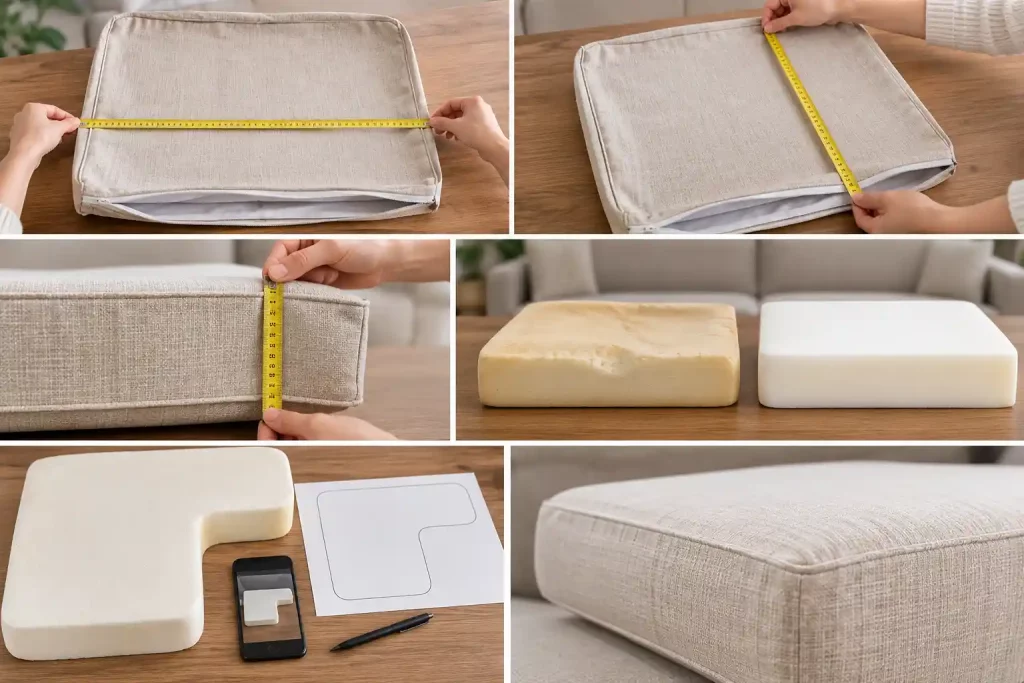
Lay the empty cushion cover flat without stretching it. Measure the width and depth from seam to seam. If the cover has boxed sides, measure the height of the side panel too.
Compare these measurements with the original foam, noting any rounded edges, tapered sides, or unusual corners. If the foam is badly compressed, use a less-worn matching cushion as a reference when available.
For cushions with an irregular outline, photograph the original insert and record its shape before discarding it. Share the cover measurements and photos with an upholstery foam supplier rather than ordering a replacement based only on the flattened foam.
Don’t automatically increase the foam’s thickness. The replacement must fit the cover without overstretching its seams.
Step 3: Add Batting or Replace the Foam
If the original foam is still in good condition, remove the worn batting and replace it with a fresh wrap. If you’re using new foam, check its fit inside the cover before adding batting.
Lay the batting flat, center the foam on top, and wrap it around the same surfaces covered by the original material. Smooth it toward the corners and trim any bulky overlaps where the cover seams will sit.
If adhesive is needed, use a product labeled safe for upholstery foam and follow its application instructions. Let it set as directed before reinstalling the insert.
Batting improves surface fullness but won’t restore a collapsed foam core. If the main problem is insufficient firmness rather than missing filling, make sofa cushions firmer by addressing the foam itself.
Step 4: Put the Foam Back Into the Cover
Fold or gently compress the foam as needed to guide it through the zipper opening. Align the corners before smoothing the cover over the insert.
For a snug cover, a thin temporary plastic sleeve can help the foam slide into place. Remove the plastic completely before closing the zipper.
Finally, place the cushion back on the sofa. Check that its front edge aligns with neighboring cushions and that no seams are stretched.
How to Restuff Couch Back Cushions With Polyfill
Back cushions often contain loose polyester fiberfill, feathers, or down rather than a solid foam core. Match the new filling to the original construction to preserve the intended feel. For polyester-filled cushions, the goal is to redistribute compressed fibers and add fresh polyfill where needed, without making the backrest too firm.
Step 1: Find the Opening
Check the bottom, back, and side seams for a zipper. Some attached back cushions have hidden openings even when they cannot be lifted off the sofa.
Open the cover carefully and check for an inner liner or separate filling compartments. Keep the filling inside its designated sections.
Step 2: Loosen the Existing Filling
Remove a small portion of the filling and separate any compressed clumps by hand.
If the polyester fibers loosen easily and regain some volume, reuse them. Replace material that remains badly matted, damaged, or contaminated.
Regularly fluffing sofa pillows and cushions can help redistribute loose filling between more substantial restuffing projects.
Step 3: Add Polyfill Gradually
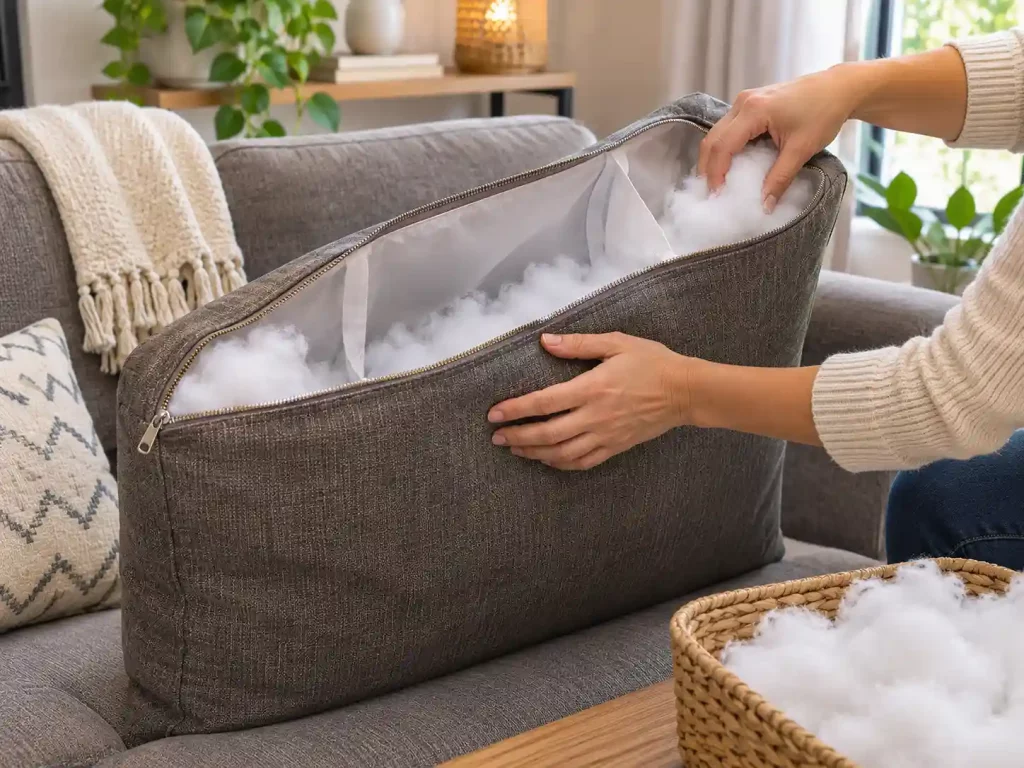
Keep new filling inside the original liner or compartments. Add small handfuls to the hollow corners and edges first, then work toward the center rather than packing everything into one area.
After each addition, hold the cushion upright as it normally sits on the sofa. Temporarily close the opening and press against it with your back in your usual seated position. If the middle pushes you forward or the corners bulge, remove some filling and redistribute it.
The amount needed depends on the cushion’s size and internal construction. Use the shape and seated feel to guide each adjustment instead of relying on a fixed weight of polyfill.
Step 4: Close and Reshape the Cushion
Close the inner liner first, making sure no loose fibers catch in the zipper or seam. Then close the outer cover and smooth the fabric along the edges.
Return the cushion to its original position and check that the seams lie flat without pulling or puckering. If the cover looks stretched, reopen it and adjust the filling before finishing.
How to Restuff Couch Cushions Without Zippers
If your cushions don’t have visible zippers, first determine whether the opening is concealed or the fabric is permanently sewn shut.
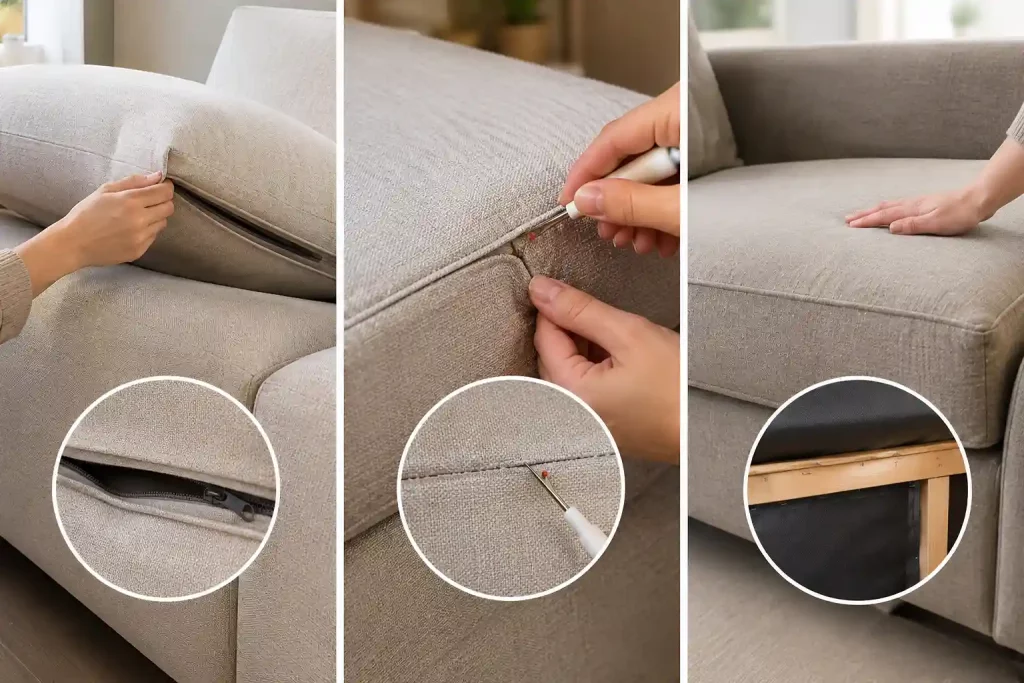
Hidden zipper: Check the underside, rear seam, and areas where the cushion meets the frame. An attached cushion may still have an accessible zipper.
Sewn-shut removable cushion: If you have sewing experience, you may be able to open a suitable section of the seam with a seam ripper. Work carefully, avoid cutting the fabric, and close the opening with strong, appropriate stitching after refilling.
Fully attached cushion: Do not cut into upholstery that is secured directly to the frame without confirming how it was constructed. Some fixed cushions require professional upholstery work.
Why Does a Restuffed Cushion Look Lumpy or Feel Too Firm?
Even after following the steps, a cushion may not look or feel right immediately. Before adding more filling, identify what changed during reassembly.
The back cushion looks lumpy. Open it and separate clumps of fiberfill. Redistribute the filling into empty areas rather than packing more material into the center.
The cushion feels too firm. For a polyfill back cushion, remove one small handful at a time and retest with the cover closed. For a foam seat cushion, check the replacement foam’s firmness and thickness. Removing batting won’t correct a foam core that’s too firm.
The cover won’t close. Check for folded batting, misaligned foam, or an oversized insert. Never force a zipper closed under excessive tension.
One corner stays empty. Reposition the insert or move loose filling into the corner. If the foam itself is misshapen, additional stuffing may not correct the outline.
The seat still sinks too deeply. If the replacement foam fits correctly but the seat still bottoms out, inspect the support underneath. Fixing sagging couch cushions may require repairing the seat foundation rather than adding more filling.
The most useful final test is how the cushion feels during normal sitting, not just how full it looks.
Power Sofa Beds as an Alternative to Repeated Cushion Repairs
Restuffing can restore cushion fullness but won’t fix worn-out seat support. If multiple cushions and the seat foundation need repairs, compare the total repair cost with replacing the sofa. A single flattened cushion, however, is usually worth repairing.
For households considering a replacement, a power sofa bed offers more than motorized convenience. It provides everyday sofa seating with an extendable seat that adjusts for lounging. This flexibility is worth considering when the old sofa no longer provides the support or seating depth you want.
For households replacing a sagging couch that’s also too shallow for relaxing, the POVISON Aurora Power Sofa Bed pairs high-resilience foam cushioning, designed to feel soft yet supportive, with a reinforced frame and adjustable seat depth of 27 to 45.5 inches. This supports everyday sitting comfort while giving the same sofa more room for movie-night lounging. It still needs normal cushion care and sufficient clearance to extend.

Aurora Power Sleeper Sofa | $2,699
A fresh start for everyday comfort, with more flexibility than a fixed-seat sofa.
Conclusion
Knowing how to restuff couch cushions starts with understanding what’s inside them. Foam seat cushions need accurately measured inserts and properly fitted batting, while loose-filled back cushions benefit from careful redistribution and gradual refilling. Work with the original cushion shape, avoid overstuffing, and check the result during everyday sitting. If the cushion remains uncomfortable after the correct repair, investigate the underlying support rather than adding more material. A well-planned repair can extend the life of a sofa you enjoy, while more extensive damage may make replacement the more practical option.

Ready for a More Comfortable Sofa?
Explore supportive sofa beds with flexible seating options for everyday comfort and relaxing.
FAQ
Can You Restuff a Couch Cushion With Tufting or Buttons?
Yes, but tufted cushions require extra care. Buttons and internal ties help maintain their shape, and adding too much filling can distort the tufting or pull against the fabric. Check how the buttons are secured before opening the cushion. Professional upholstery work may be safer for deeply tufted designs.
Can You Replace Feather Cushion Filling With Polyester?
You can, but the cushion may feel different. Feather and down filling tends to compress and shift differently from polyester fiberfill. Replacing it entirely can change the cushion’s softness, weight, and shape. For a sofa with compartmentalized feather cushions, preserve the original construction or ask an upholsterer about compatible replacement inserts.
How Do You Order Replacement Foam for T-Shaped Cushions?
Measure the full width, depth, and thickness, including the projecting corners of the T-shape. Trace the original foam onto paper if its outline is still intact. Give the template to a foam supplier that offers custom cutting. A standard rectangular insert may not fill the shaped cover correctly.
Can You Restuff Power Recliner or Sofa Bed Cushions?
Yes, if the manufacturer identifies an accessible, serviceable cushion compartment. Unplug the sofa before inspection, and never open motor housings, wiring channels, or moving seat assemblies to reach the filling. If the upholstery is fixed across the mechanism, request model-specific instructions or professional repair.
What If the Cushion’s Inner Liner Is Torn?
Repair or replace the liner before adding loose filling. A damaged liner allows fiberfill or feathers to escape into the outer cover, creating uneven areas and making future cleaning difficult. Small tears may be sewn closed if the fabric is sound. Replace liners that are extensively torn, brittle, or weakened.


