 By Stephanie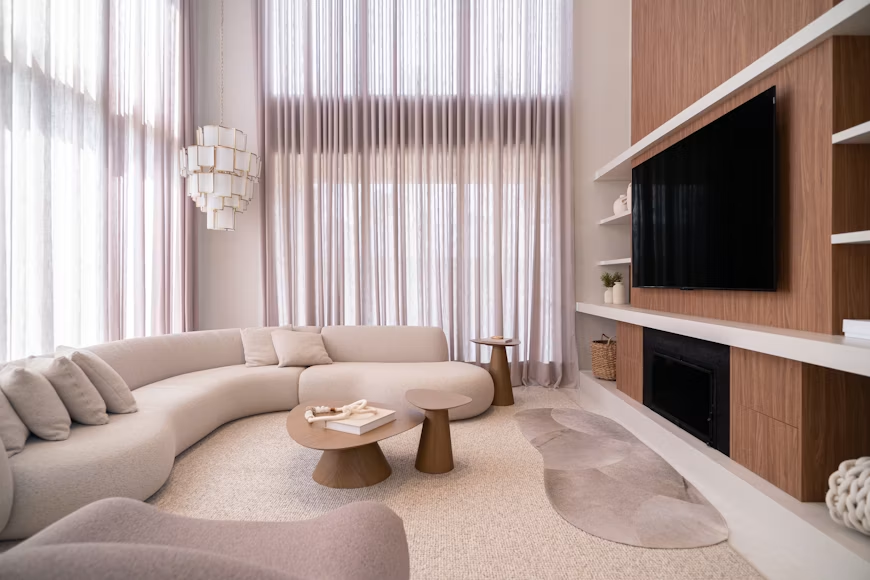
A dramatic chair or curving sofa can look like art online, then become an expensive problem once it reaches the living room. Sculptural furniture succeeds only when its shape supports the way people sit, eat, store belongings, and move through a home. This guide explains how to recognize a genuinely sculptural piece, test its everyday function, choose the right furniture category, and confirm that it fits before ordering. The goal is not a striking room alone. It is an artful space that remains comfortable, useful, and easy to live in.
Table of Contents
Sculptural Furniture Defined: Artful Form, Everyday Purpose
So, what is sculptural furniture? It is functional furniture whose three-dimensional form creates a strong visual presence. That form may come from a sweeping arm, an architectural base, an open frame, or doors that change the cabinet’s silhouette as they move.
Strong sculptural furniture design usually has:
- A recognizable shape from more than one angle
- Form created by the structure, not just surface decoration
- A clear balance between visual impact and everyday use
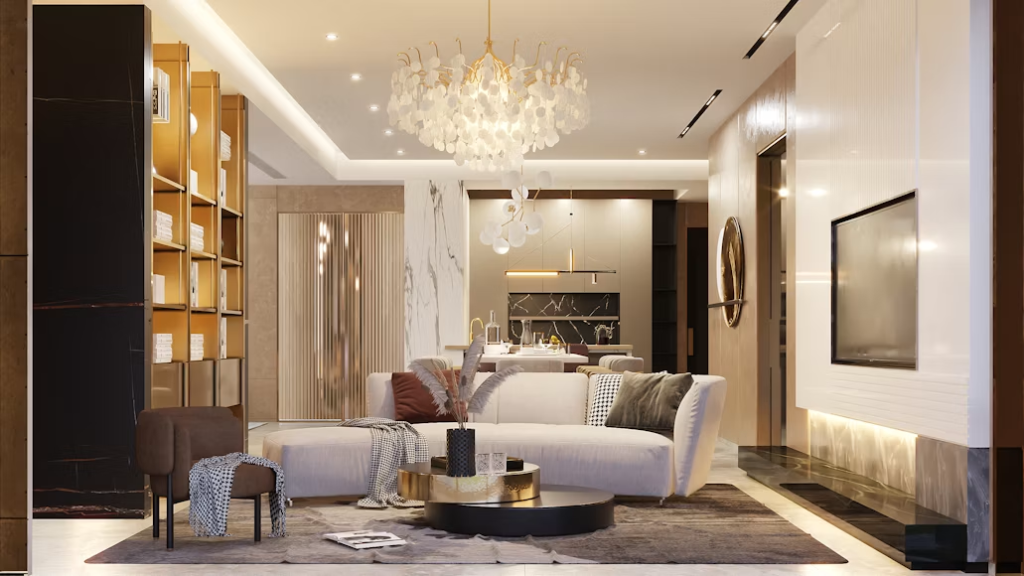
Curved furniture is not automatically sculptural, and statement furniture is not always structurally distinctive. A piece may attract attention through color, texture, or scale alone. Sculptural furniture earns its impact through the way its frame, volume, and negative space work together.
Curves remain part of 2026 furniture styles built around softer, comfort-first forms, but the best pieces do more than follow a trend. Their shape supports how the furniture is used and how it occupies the room.
This distinction helps shoppers avoid paying a design premium for decoration on an otherwise conventional frame.
The Form–Function–Footprint Buying Test
Before comparing colors or finishes, test whether the design comes from the structure, whether the piece still performs its daily job, and how much room the shape requires in use. These three checks separate lasting sculptural value from furniture that photographs well but creates problems at home.
Form: Inspect the Shape From Every Angle
Look for front, side, rear, overhead, and detailed images. In an open-plan room, the back of a sofa or chair may remain visible all day. A dining-table base should still look intentional when chairs surround it, not only when the table is empty.
Watch for these red flags:
- Only one heavily styled viewing angle
- No clear image of the back or underside
- No close-up showing how an unusual base connects to the top
- Wide arms or projecting bases that reduce usable space without adding support or stability
Mentally remove the color, fabric, and surface texture. If the silhouette still looks distinctive, the structure—not the styling—is creating the sculptural effect.
Function: Measure the Cost of the Shape
Every oversized arm, open base, or irregular curve uses space that could otherwise provide seating, storage, or surface area. Before paying for the silhouette, compare the furniture’s total size with the portion the household can actually use.
Start by writing down the room’s minimum requirements:
- How many people must the sofa seat?
- How many chairs must fit comfortably around the table?
- What must the coffee table hold during a normal evening?
- Which devices and accessories must fit inside the media console?
- Will the accent chair be used for reading, conversation, or occasional seating?
Reject any piece that falls below those minimums. The shape should use spare capacity, not consume capacity the household needs.
Then apply a sculptural efficiency check:
- Sofa: usable seat width compared with total width
- Dining table: comfortable seating positions compared with the full footprint
- Coffee table: stable surface area compared with the complete outline
- Media console: usable interior storage compared with the cabinet’s exterior volume
- Accent chair: supportive seat and back area compared with the size of the frame
Some loss of efficiency is reasonable when the form adds lasting visual value. The question is whether the result still supports the room’s daily routine.
A 90-inch sofa with wide arms may seat fewer people than a simpler model several inches shorter. An irregular coffee table may look generous from above but provide only one stable area for drinks. A dramatic dining base may force guests to place their feet around it.
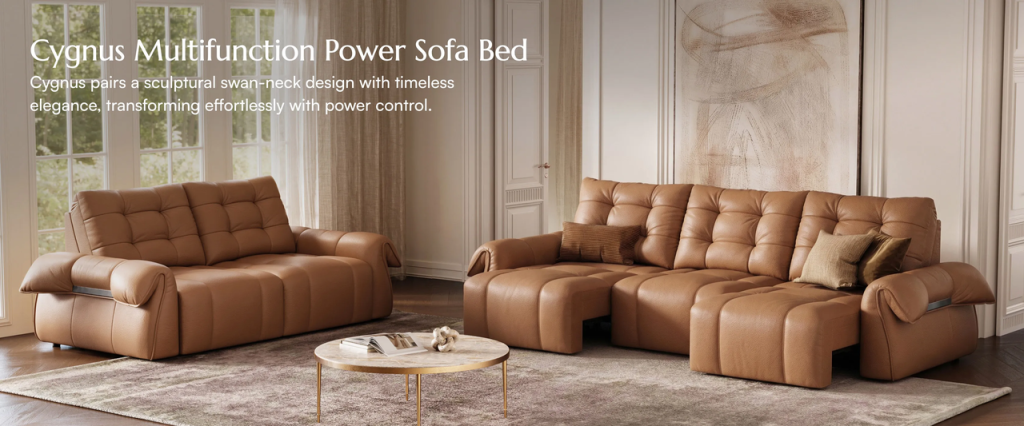
That trade-off can be worthwhile when the same footprint supports more than one routine. The Cygnus Power Sofa Bed shifts from upright seating to lounge, recline, and sleep modes with one-touch controls, allowing one sofa to support everyday sitting, relaxation, and occasional overnight use. Memory-foam cushioning adds daily comfort, while swan-neck arms and tufted top-grain leather give the multifunctional design a distinctive sculptural profile.
Footprint: Map Every Projection and Movement
Standard length and width do not show how sculptural furniture behaves once people begin using it. A projection map marks every part that extends, opens, rotates, or creates a hidden obstacle.
Use painter’s tape to mark:
- The outermost point of curved or flared arms
- The widest section of an irregular tabletop
- Base elements that extend beyond the top
- Recliners and sleepers in their fully open position
- Cabinet doors, tambour doors, and drawers while operating
- Dining chairs when someone is seated
- Low projections that may catch a foot
Walk the normal routes while carrying a laundry basket or serving tray. Check the path from the entry to the sofa, dining area, patio door, and storage. A kidney-shaped coffee table may look compact on paper, yet its widest curve can narrow the route to a balcony. Rotating the outline — or choosing a smaller size—may solve the problem before money is spent.
As an accessibility reference rather than a universal rule for every home, the U.S. Access Board uses a 36-inch continuous clear width for accessible routes. Homes with a wheelchair user, walker, or frequent carrying tasks may need similar or greater clearance.
Finally, compare the largest nonremovable furniture section with the entire delivery route. Include elevators, stair landings, hallway turns, door hardware, and low ceilings near tight corners.
Choosing the Right Sculptural Focal Point
When choosing sculptural furniture for living room use, start with the cost of a mistake rather than the most dramatic silhouette. A chair is relatively easy to move or replace, while a sofa or dining table affects more routines and is harder to return. Use the comparison below to choose the right level of commitment before comparing finishes.
| Furniture type | Choose it when | Main risk to check | Commitment |
| Accent chair | You want a movable focal point or reading seat | Comfort and viewing angle | Low |
| Coffee table | The seating layout is settled and needs a center | Stable surface and circulation | Medium |
| Dining table | Meals and hosting define the room | Chair count, knee room, and delivery | High |
| Sofa | One piece should anchor the entire living room | Seat count, comfort, and operating space | Very high |
| Media console | The TV wall needs storage and a stronger shape | Device fit, cable access, and door operation | Medium |
Lower-Risk Choices: Accent Chairs and Coffee Tables
Choose an accent chair when the layout may change or the room needs one distinctive form without replacing its main seating. A reading chair needs supportive posture and a nearby surface. A chair intended mainly for conversation can be shallower and more upright, but it should still remain comfortable for the length of a typical visit.
Choose a coffee table when the sofa and chairs are already in their final positions. Because the table sits inside the seating group, its outline affects both reach and circulation. The best coffee tables for modern living rooms in 2026 still depend on height, stable surface area, material, and comfortable access from the surrounding seats. An organic shape works only when its narrow sections do not remove the space needed for drinks, trays, or a laptop.
High-Commitment Choices: Sofas and Dining Tables
Choose a sculptural sofa only after confirming the required seat count, seat depth, back support, and fully extended footprint. It should also remain visible from more than one normal viewing position. When the strongest part of the silhouette faces a wall, a smaller sculptural chair may deliver more visual value with less risk.
A sculptural dining table is a stronger choice when meals and hosting are central to the household. Check the base while seated, not only while standing beside it. Every intended chair should fit without forcing guests to angle their knees, and chairs should tuck in far enough to keep the walkway open.
Sculptural Storage for the TV Wall
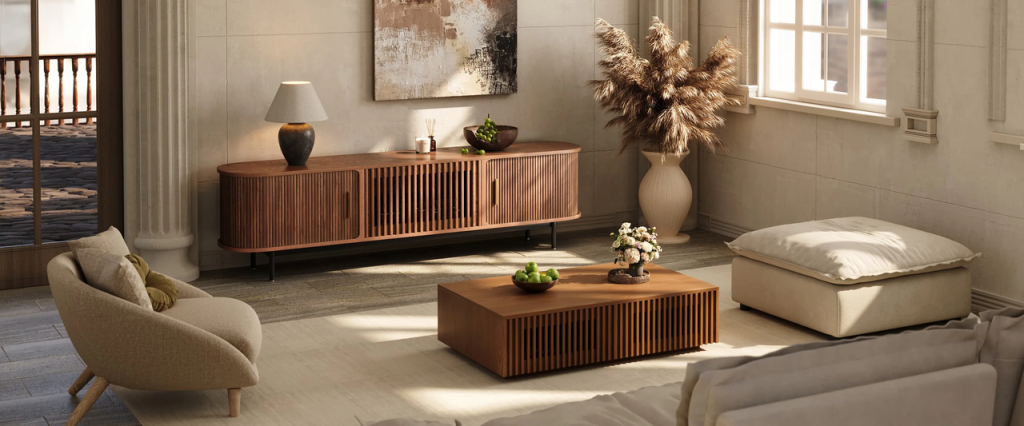
A TV wall needs enough storage for media equipment without feeling heavy or overly boxy. The Eos Mid-Century Modern Tambour Door TV Stand addresses that tension with curved ash tambour doors that create a continuous, flowing front. Behind them, three cabinets, two interior shelves, and cable openings keep media devices, remotes, and cords organized, so the sculptural form supports daily use rather than competing with it.
Online Checks That Prevent Expensive Mistakes
Shopping online means you cannot inspect the joints, test the moving parts, or compare the finish with the room in person. Once the piece has passed the Form–Function–Footprint test, use the product page to confirm that the seller provides enough evidence about construction, materials, delivery, care, and return risk.
Verify the Product Information
Look for a dimension drawing, plain-background photos, rear and underside views, construction close-ups, and video showing doors, drawers, recliners, or other moving parts.
Confirm that the page provides:
- The usable measurements identified in your earlier function test
- Weight limits and wall-anchoring requirements
- Package dimensions and the largest fixed section
- Clear material and finish descriptions
- Assembly requirements
- Images showing the furniture without heavy styling
Do not judge material from appearance alone. Confirm whether the surface is solid wood, veneer, stone, sintered stone, metal, laminate, or another applied finish. Similar-looking materials can differ significantly in weight, care, repairability, and resistance to stains.
Ask for any missing measurement or material detail in writing. If the seller cannot provide a clear answer, treat the missing information as a buying risk.
Review Delivery, Returns, and Long-Term Care
A piece can fit the room and still become difficult or expensive to own. Before checkout, confirm:
- Curbside, threshold, room-of-choice, or white-glove delivery
- Extra charges for stairs, elevators, or difficult access
- Damage-reporting deadlines
- Packaging requirements for a return
- Return freight and restocking fees
- Availability of replacement hardware or moving parts
- Approved cleaning methods
- Sealing, conditioning, or periodic maintenance requirements
- Repair options after the warranty ends
For cabinets, consoles, and other storage furniture, follow the U.S. Consumer Product Safety Commission’s furniture-anchoring guidance when applicable.
A higher-priced piece may still be the safer purchase when its construction, maintenance, delivery process, and return terms are clear. Missing information should be counted as part of the cost, not ignored because the furniture photographs well.
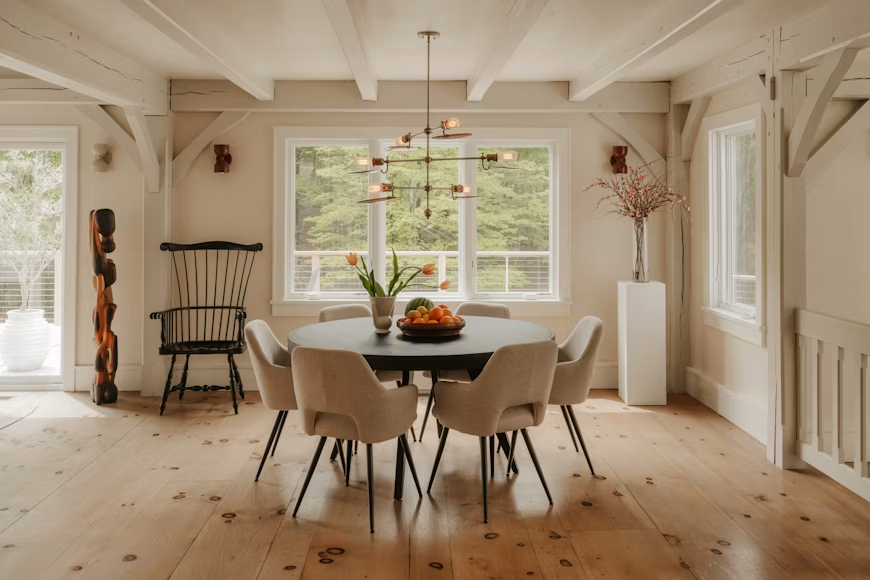
Using Sculptural Furniture Without Overloading the Room
Before adding another strong shape, stand at the room’s main entrance and identify the first two elements that attract attention. A fireplace, large television, kitchen island, staircase, oversized artwork, or existing curved sofa may already control the view.
When the room already has two dominant elements, choose a smaller sculptural chair, side table, or lamp instead of another large anchor. A quieter finish can also reduce competition without removing the shape.
In modern living room ideas with storage for open-plan homes, each zone works more clearly when storage, seating, and circulation have separate jobs. Apply the same principle here: the sculptural piece should define one area, not compete across the entire open plan.
Scale down the purchase when:
- The layout changes frequently
- Maximum seating or storage is the priority
- The strongest side would face a wall
- Moving or returning a one-piece item would be difficult
- The design needs more open space than the room can provide
The room has enough sculptural furniture when the main piece remains easy to see and use without making the surrounding furniture feel like competing displays.
Conclusion
The best sculptural furniture earns attention without creating daily compromises. Start by identifying the room’s main focal point, then test each candidate for structural form, practical function, and full operating footprint. Confirm usable dimensions, map moving parts, inspect materials and mechanisms, and review delivery and return terms before ordering. When those checks succeed, a sofa, table, chair, or console can shape the room while supporting meals, storage, conversation, rest, and movement. That balance—not novelty alone—is what makes a distinctive piece worth living with comfortably over time at home.
FAQs
Is sculptural furniture a passing trend?
No. Specific colors, fabrics, and silhouettes will move in and out of fashion, but furniture shaped through structure and three-dimensional form has a long design history. For better staying power, choose a clear silhouette, durable construction, and a material you can maintain instead of relying on one highly recognizable trend.
Can sculptural furniture work in a traditional interior?
Yes. Connect the new piece to the room through one shared element, such as walnut, brass, upholstery color, or overall scale. Keep nearby patterns restrained so the contrast feels intentional. In most traditional rooms, one contemporary sculptural chair or table works better than several unrelated statement pieces.
Is sculptural furniture always expensive?
Not always. Prices often rise with complex frames, molds, hand-finishing, heavy materials, or low production volume, but an unusual shape does not guarantee quality. Compare construction, usable space, warranty coverage, delivery costs, and repair options. A simpler molded chair may offer better long-term value than a decorative table with weak joinery.
Which materials suit homes with children or pets?
Sealed wood, metal with rounded edges, performance upholstery, and wipeable leather generally suit spills, claws, and frequent cleaning better. Avoid sharp projections, narrow unstable bases, delicate bouclé loops, and porous unsealed stone in busy rooms. Always check the product’s care instructions because similar-looking surfaces can require very different cleaning methods.


[…] curve-specific checks complement broader form, function, and footprint considerations for sculptural furniture, especially when a piece has an irregular silhouette or moving […]
[…] Choose a trend-driven piece when the feature is genuinely liked, the object still passes the use and material tests, and future restyling remains affordable. […]