 By Kelvin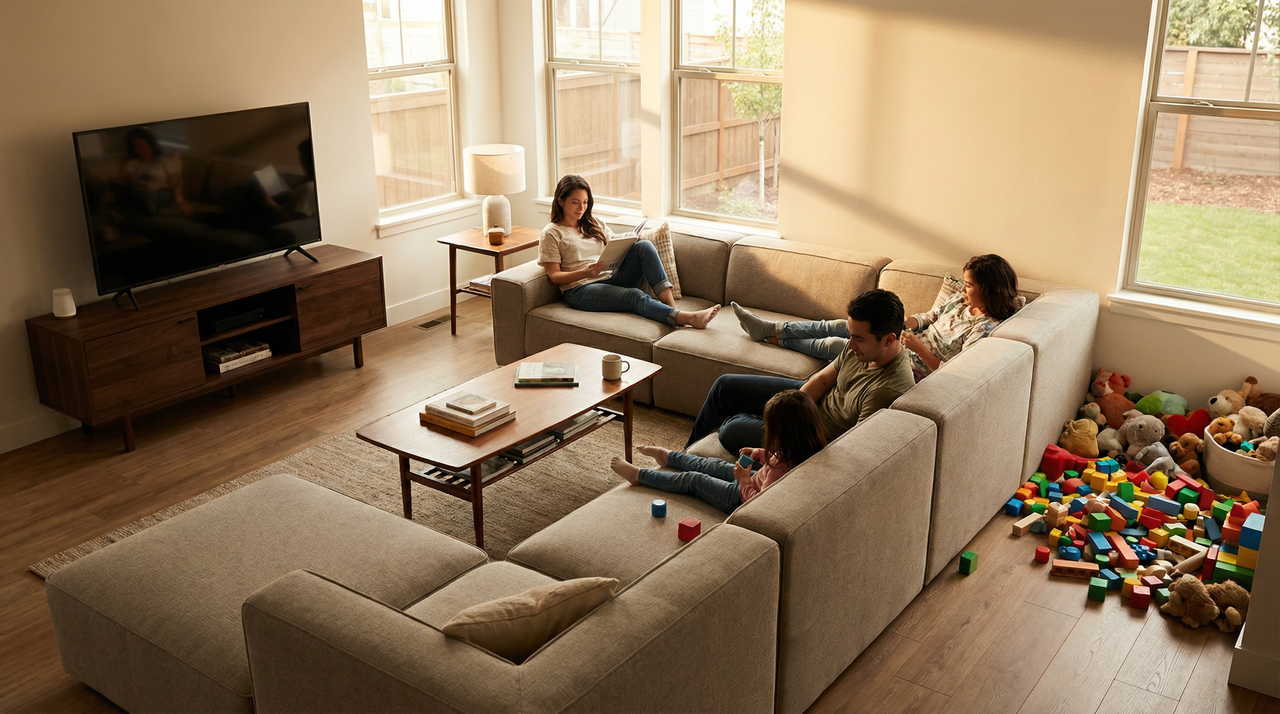
Introduction
A smart living room furniture layout can make the same room feel larger, calmer, and easier to use every day. It is not only about where the sofa goes; it is about how people walk through the room, where they sit, what they look at, and how clutter stays under control. Whether you are working with an open-plan home, a long narrow room, or a compact apartment, the right layout helps your living room support real life instead of just looking good in photos.
How Do You Start a Living Room Furniture Layout?
Before moving furniture, start with the way the room needs to function. A beautiful setup can still feel awkward if it ignores your routine, traffic flow, or main focal point. The best living room furniture layout begins with a simple plan: choose the room’s purpose, place the largest piece first, and build the rest around comfort.
Decide What the Room Needs to Do First
Ask one practical question: what happens here most often? Some living rooms are built around movie nights. Others need to handle guests, kids, reading, work calls, or open-plan movement between the kitchen and dining area.
Choose one primary function and one secondary function. For example:
- Primary: family TV time
- Secondary: casual conversation
- Primary: entertaining guests
- Secondary: reading and relaxing
- Primary: small apartment lounging
- Secondary: hidden storage and flexible seating
If your room also works as a dining, work, or guest area, ideas from apartment living room ideas can help you think beyond a single sofa-and-TV setup.
Find the Main Focal Point
Every room needs a visual anchor. It might be a TV, fireplace, large window, built-in shelves, artwork, or a beautiful coffee table. Once you know the focal point, seating becomes easier to arrange.
If your TV and fireplace compete, avoid forcing every seat to face only one wall. Angle chairs slightly inward, use a swivel chair, or let the sofa face the feature used most often.
Place the Largest Piece First
In most homes, the sofa or sectional sets the layout. Place it before choosing chairs, tables, lamps, or storage. The sofa should support the main activity without blocking windows, doorways, or walking paths.
In one narrow rental living room, I once moved the sofa just eight inches away from the longest wall. That tiny shift created enough breathing room behind the seating area for a clearer walkway and made the room feel less like a hallway.
What Is the Best Layout for Your Room Shape?
Room shape changes everything. A layout that works in a square room may feel cramped in a narrow room, while open-plan spaces often need furniture to create invisible boundaries. Instead of copying one inspiration photo, match your living room furniture layout plan to the shape and movement of your actual space.
| Room Type | Best Layout Idea | Why It Works |
| Small living room | Sofa against one wall + compact chair | Keeps the center open and reduces visual crowding |
| Square living room | Sofa + two chairs around a coffee table | Creates a balanced conversation zone |
| Long narrow living room | Two zones divided by rug or console | Breaks up the tunnel effect |
| Open-plan living room | Floating sofa or sectional | Separates living and dining without a wall |
| TV-focused room | Sofa centered to screen + angled chairs | Supports viewing and conversation |
| Fireplace room | Seating faces fireplace with flexible chairs | Keeps the feature wall intentional |
How to Arrange a Small Living Room
A good small living room furniture layout is not about using the tiniest furniture. It is about choosing fewer pieces that work harder. A slim sofa, round coffee table, storage ottoman, or wall-mounted TV can make the room feel open without sacrificing comfort.
Keep these points in mind:
- Leave one clear walking path.
- Use rounded pieces where corners feel tight.
- Choose storage furniture that hides daily clutter.
- Avoid oversized side tables on both ends of the sofa.
- Keep chair legs or sofa bases visually light when possible.
For compact rooms, small living room layout ideas often work best when the layout starts with flow, not decoration.
How to Arrange a Long or Narrow Living Room
Long rooms become awkward when every piece is pushed against the walls. Instead, divide the space into smaller zones. A sofa and coffee table can define the main seating area, while a console, reading chair, or sideboard can create a secondary zone.
Avoid placing the walkway through the middle of the seating area. If possible, let the walkway run behind the sofa or along one side of the room.
How to Arrange an Open-Concept Living Room
In an open-plan home, furniture becomes the wall. A floating sofa, L-shaped sectional, area rug, or long media console can define where the living room begins and ends.
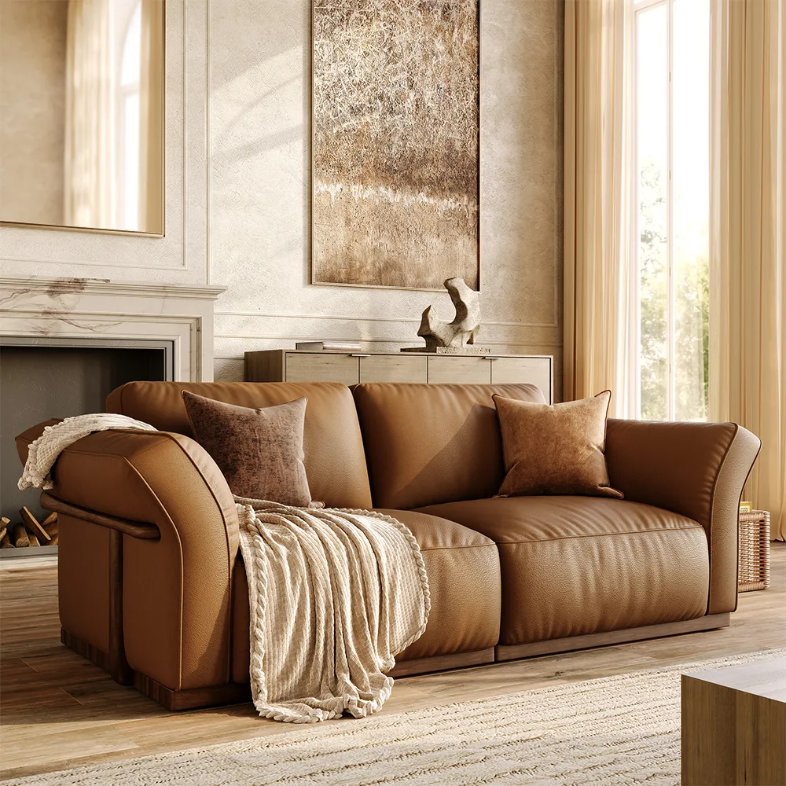
A modular sofa works especially well here because it can shape the seating zone without closing off the room. The Cronus-Brown Genuine Leather Modular Sofa brings a generous 81.5-inch frame, 26-inch seating depth, and top-grain leather surface, making it suitable for relaxed lounging while still giving the open living area a clear anchor.
Use lighting to strengthen each zone. A floor lamp near the sofa, pendant over the dining table, and low media lighting near the TV can make one open space feel organized instead of unfinished.
How Should Furniture Improve Comfort and Flow?
Comfort is not only about soft cushions. It also comes from reach, spacing, sightlines, and how easily people move around the room. A strong living room furniture layout should make every seat useful, every path natural, and every daily habit easier to repeat.
Keep Seating Close Enough for Conversation
A living room should not feel like a waiting room. Sofas and chairs should be close enough that people can talk without raising their voices. Two chairs angled toward a sofa often feel warmer than every seat facing the TV in a straight line.
If you host often, a sofa plus two movable accent chairs can work better than one oversized sectional. If your household loves lounging, a sectional may be the better anchor.
Make the Center Easy to Reach
The coffee table is more than decoration. It supports drinks, books, remotes, snacks, laptops, and weekend clutter. A round or oval table can soften movement in a tight room, while a lift-top table adds flexibility for working or casual dining.
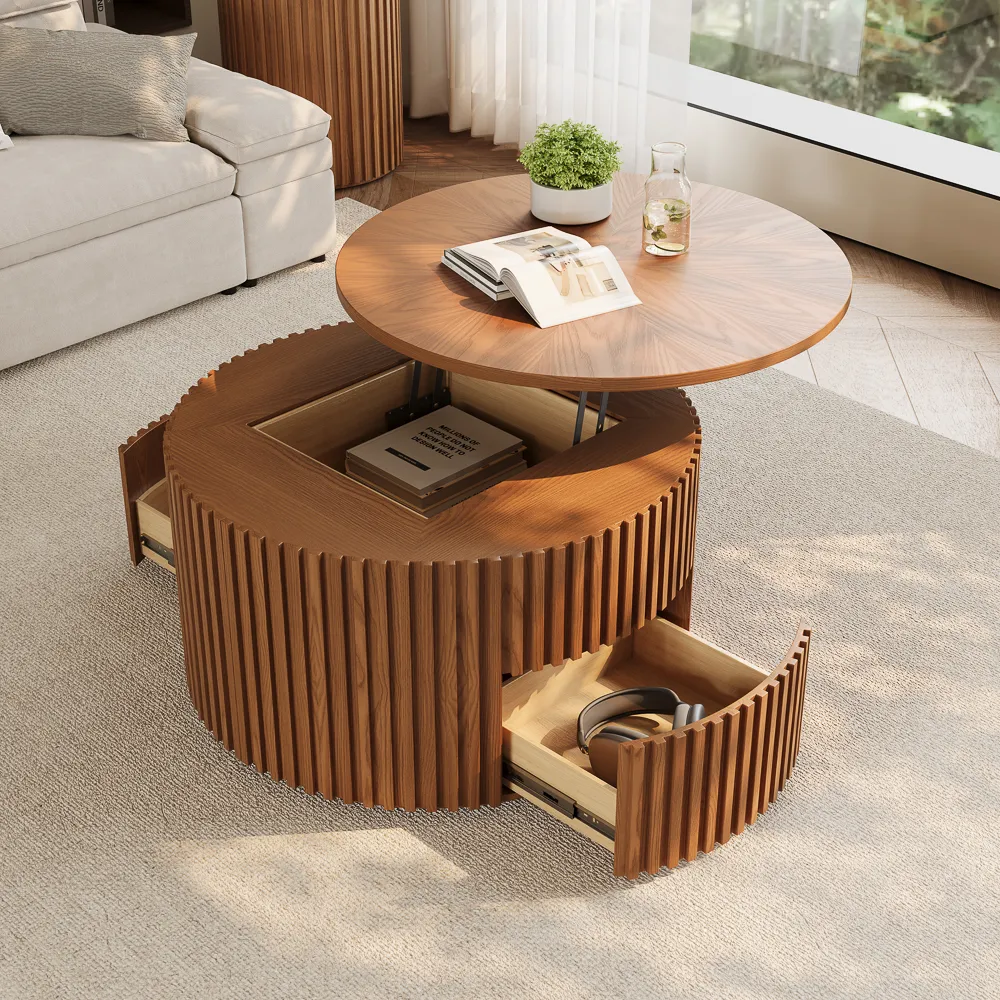
In a layout where the sofa, chairs, and table sit close together, the Silva 31.5” Lifting Top Round Coffee Table fits naturally into the center zone. Its rounded shape supports easier movement, while the lift top, hidden storage, drawer, and smooth edges help a compact living area stay useful without feeling crowded.
Keep Walkways Clear
The biggest layout mistake is making people walk through the conversation zone. If someone has to step between the sofa and coffee table to reach another room, the layout will feel inconvenient every day.
A simple rule: stand at the main entrance and trace the path to the sofa, TV, window, kitchen, and hallway. If the path zigzags around furniture, the layout needs editing.
What Furniture Pieces Matter Most in a Layout Plan?
Once the main arrangement works, individual furniture choices matter more. Each piece should earn its place through comfort, scale, storage, or flexibility. A thoughtful living room furniture layout plan connects the sofa, table, TV stand, rug, lighting, and storage into one easy-to-use system.
Sofa or Sectional
A sofa is usually more flexible and easier to reposition. A sectional is better for lounging, family rooms, and open spaces that need a strong boundary. Before buying either, measure the wall, walking path, and distance from the TV.
For a small space, avoid deep arms that waste seating width. For a large space, avoid a sofa that looks too small on the rug.
Coffee Table or Ottoman
The right table depends on the sofa shape and daily use. A rectangular coffee table suits a long sofa. A round table works well with compact rooms, curved seating, or families who want fewer sharp corners. An ottoman is better when softness and extra seating matter.
A deeper look at how to pick a coffee table can help balance height, reach, shape, and storage before the room feels finished.
TV Stand and Storage Furniture
The TV wall often becomes the most cluttered area in the room. Consoles, game systems, speakers, cables, routers, remotes, and décor all need a place to go. That is why storage depth matters as much as style.
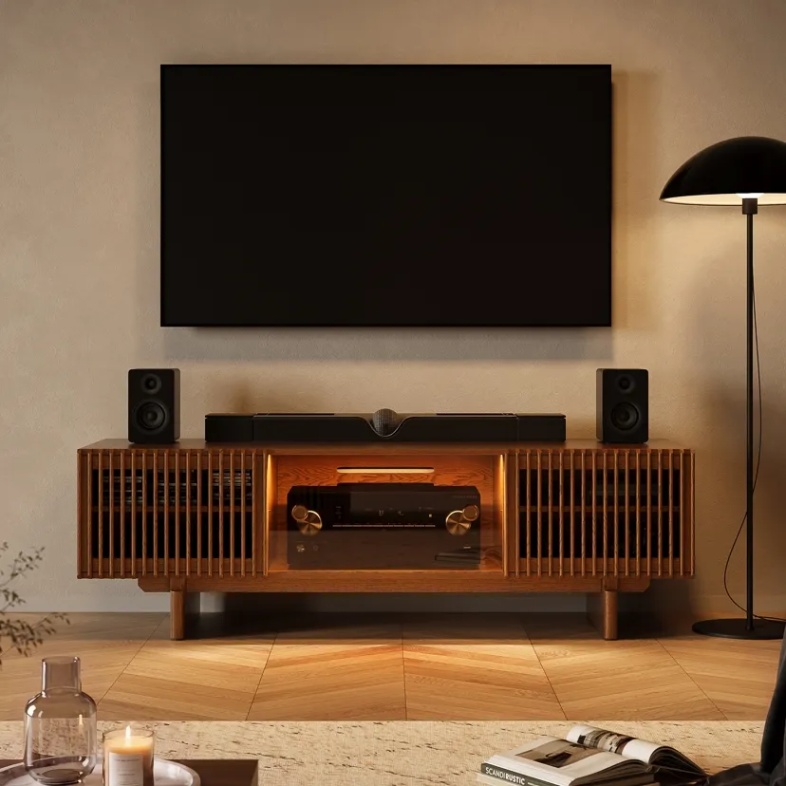
For media-heavy layouts, the Arboren 71” Mid-Century Modern TV Stand with storage works especially well because the deeper cabinet space can handle larger equipment, loose wires, and daily media accessories. The slatted doors keep the front visually clean while helping the TV zone feel intentional rather than crowded.
On Friday nights, this kind of setup feels especially practical: the room can shift from a tidy daytime living area to a movie-night space without dragging out extra bins or leaving controllers across the coffee table.
What Living Room Layout Mistakes Should You Avoid?
Even expensive furniture can feel wrong when the layout ignores proportion and movement. Most mistakes happen before shopping: the room is not measured, the walkway is unclear, or the focal point is chosen too late. Use this section as a quick check before finalizing the arrangement.
Common mistakes include:
- Pushing every piece against the wall
- Buying a sofa before measuring the room
- Choosing a rug that is too small
- Blocking windows, doors, or natural light
- Placing the TV too high
- Forgetting side tables or lamps
- Leaving no storage for daily clutter
- Using too many small pieces instead of fewer useful ones
- Making every seat face the TV with no conversation angle
A good test is to live with a layout for one week before adding new furniture. Notice where clutter gathers, which seat nobody uses, and where people naturally walk. Those details reveal more than a floor plan alone.
When Should You Rethink Your Current Layout?
A room does not need to be redesigned from scratch to work better. Sometimes one moved chair, a better coffee table, or a more useful media console can change the entire flow. If the room looks full but still feels uncomfortable, your layout may need a reset.
You should rethink the layout when:
- Guests are unsure where to sit.
- People walk through the middle of the seating area.
- The TV angle strains your neck.
- One corner collects clutter.
- The coffee table is always too far away.
- The sofa blocks light or movement.
- The room looks styled but does not feel relaxing.
Start with the biggest problem first. If movement feels awkward, fix the walkway. If clutter is the issue, add storage. If conversation feels stiff, angle chairs inward.
Conclusion
The perfect living room furniture layout is not one universal formula. It is the arrangement that supports your room shape, daily routine, focal point, and need for comfort. Start by deciding how the room should function, then place the largest furniture piece, protect the walkways, and choose tables, storage, rugs, and lighting that make every seat useful. Whether you are building a spacious open-plan setup or a small living room furniture layout, the best result is a room that feels easy to live in every day.
FAQ
How do I test a layout before buying new furniture?
Use painter’s tape to mark the sofa, coffee table, TV stand, and chair sizes on the floor. Walk through the room as you normally would. Open doors, sit down, reach for an imaginary table, and check whether the layout feels natural before spending money.
Can a small living room use a sectional?
Yes, if the sectional fits the room’s scale and does not block the main walkway. Choose a compact L-shape, low profile, or modular design. In some rooms, one right-sized sectional can feel cleaner than a sofa, chair, and ottoman combination.
Should all living room furniture match?
No. Matching every piece can make a room feel flat. A better approach is to repeat one or two elements, such as wood tone, metal finish, or soft neutral fabric, while allowing shapes and textures to vary slightly.
What is the easiest way to make a layout feel more comfortable?
Improve reach and lighting first. Add a table near every main seat, make sure lamps support reading or relaxing, and remove furniture that blocks movement. Comfort often improves more from better spacing than from adding more décor.
How far should the sofa be from the TV?
The right distance depends on screen size, but comfort matters more than a fixed rule. Sit where your eyes feel relaxed, your neck stays neutral, and the screen does not dominate the room. If the TV feels too close, choose a slimmer console or move seating slightly back.
How do I arrange furniture when the living room has multiple entrances?
Keep the main walking paths open first, then build the seating area between them. Avoid placing chairs or coffee tables where people naturally pass through. In rooms with two or more entrances, floating the sofa or using a rug to define the seating zone often works better than pushing everything against the wall.


[…] living room furniture layout with clear walkways should send the main path around the seating group rather than through it. If a power sofa floats […]