 By Kelvin
Introduction
A studio can feel charming, efficient, and easy to maintain—but only when every piece of furniture earns its place. The best studio apartment furniture ideas do more than fill a room; they help one open space work as a bedroom, living room, dining area, office, and storage zone. Instead of shrinking every item, the smarter move is choosing furniture with flexible functions, balanced scale, and clean traffic flow. This guide focuses on layout-first decisions that make tiny homes feel more comfortable, organized, and visually calm.
Table of Contents
What Furniture Works Best in a Studio Apartment?
Before choosing colors or decor, think about what your studio needs to do every day. A beautiful chair is not useful if it blocks the path to the kitchen, and a full-size dining table may be unnecessary if you usually eat at the coffee table. The strongest studio apartment furniture ideas begin with purpose, not style.
Choose pieces that do at least two jobs
In a studio, single-purpose furniture should be rare. A coffee table can also store remotes and blankets. A sofa can become a guest bed. An ottoman can serve as seating, storage, and a footrest.
The best furniture categories for a studio include:
- Sofa bed or daybed: works as seating during the day and a sleep solution at night.
- Storage bed: keeps bedding, off-season clothing, or luggage hidden.
- Lift-top coffee table: works for meals, laptops, and living room storage.
- Drop-leaf dining table: folds down when not in use.
- Nesting tables: add surface space only when needed.
- Slim media console: stores electronics without taking over the room.
- Open bookshelf: divides space while keeping light moving through.
One practical rule: if a piece only does one job, it should be essential, narrow, or visually light.
Use flexible furniture instead of mini furniture
Many people assume small homes need the smallest possible furniture. That can make a studio feel temporary or uncomfortable. Instead, choose fewer pieces with better function. A compact but supportive sofa is usually better than two tiny accent chairs that no one wants to sit in.
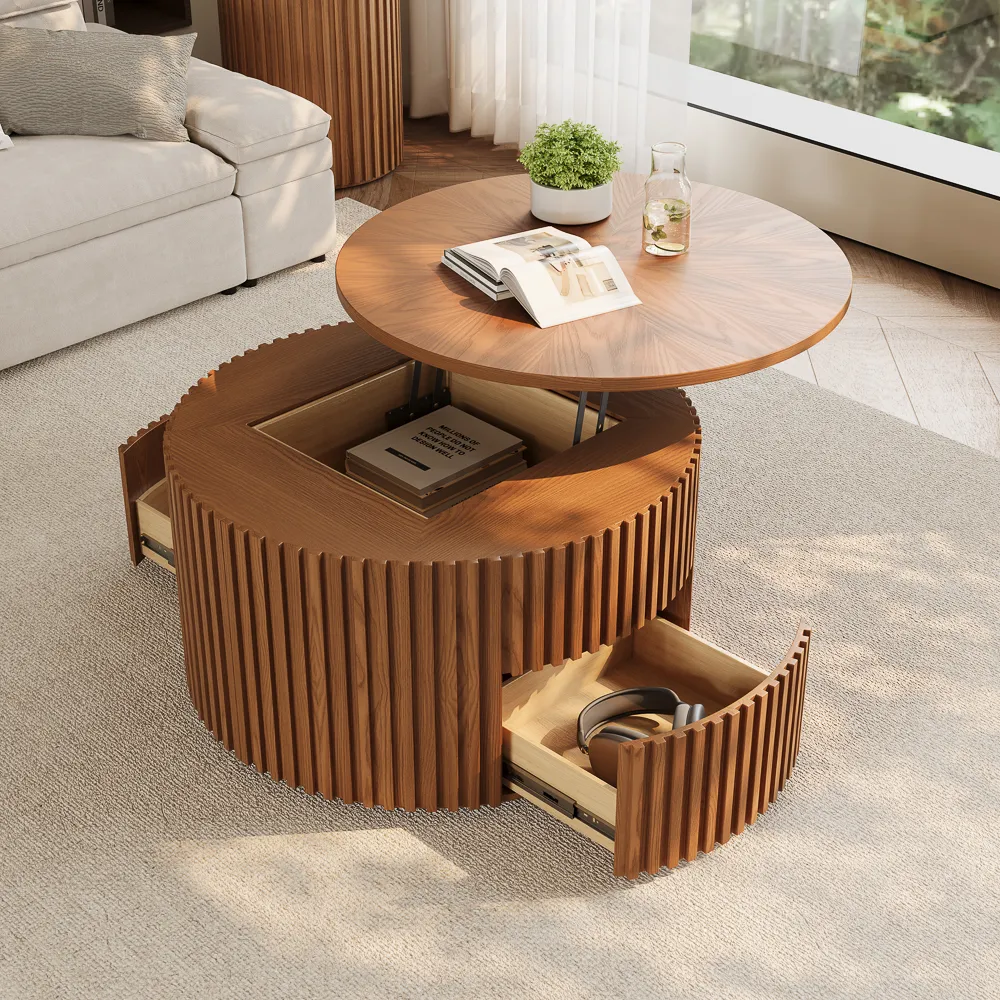
A round lift-top coffee table is especially useful in a studio because the curved shape improves traffic flow, while the lift mechanism creates a higher surface for laptops, snacks, or casual meals. The Silva-31.5” Lifting Top Round Coffee Table adds hidden storage and drawers without sharp corners, making it easier to move around a tight seating area.
How Should You Arrange Furniture in a Studio Apartment?
Layout matters more in a studio because there are no walls to correct bad furniture placement. The bed, sofa, table, and storage pieces all compete for the same open floor. A good efficiency apartment furniture layout starts by deciding which zone deserves the most space and which functions can overlap.
Start with the bed zone
The bed is usually the largest visual object in a studio. Place it first, then arrange everything else around it. If possible, tuck the bed into a corner, alcove, or wall farthest from the entry. This makes the studio feel less like a bedroom the moment someone walks in.
If you want separation, avoid heavy dividers at first. Try a curtain, low bookcase, or the back of a sofa. In one small rental I helped style, moving the bed from the center wall into the far corner instantly made the entrance feel like a living space instead of a sleep space.
Keep the main walkway open
A studio should have one clear path from the entrance to the kitchen, bathroom, window, and bed. If you have to turn sideways to pass between the sofa and coffee table, the layout is too tight.
A simple spacing guide:
- Leave enough space to open drawers fully.
- Keep the path to the bathroom unobstructed.
- Avoid placing tall furniture in front of windows.
- Use round or oval tables where corners create collisions.
- Keep frequently used storage near the area where items are used.
If your studio doubles as a living room, workspace, and guest area, small living room layout ideas can help you think through sofa placement, traffic flow, and focal points before buying extra furniture.
How Can You Divide a Studio Without Making It Feel Smaller?
Studio zoning should create definition without cutting off light. Many renters overcorrect by adding heavy screens, tall cabinets, or dark partitions, which can make the room feel smaller. Better zoning relies on soft boundaries: rugs, furniture backs, lighting, open shelves, and color shifts that guide the eye without blocking the room.
Use rugs to create visual rooms
A rug can define the living area without adding vertical clutter. Place the front legs of the sofa and coffee table on the rug so the seating zone feels intentional. A smaller rug beside the bed can signal a sleep zone without needing a physical divider.
For a tiny studio, avoid too many different rug styles. One main rug and one subtle bedside runner are usually enough.
Let furniture act as a divider
The back of a sofa can separate the bed from the living area. A low console behind the sofa can add storage and create a more finished edge. Open shelving can work too, as long as it is not packed so tightly that it blocks light.
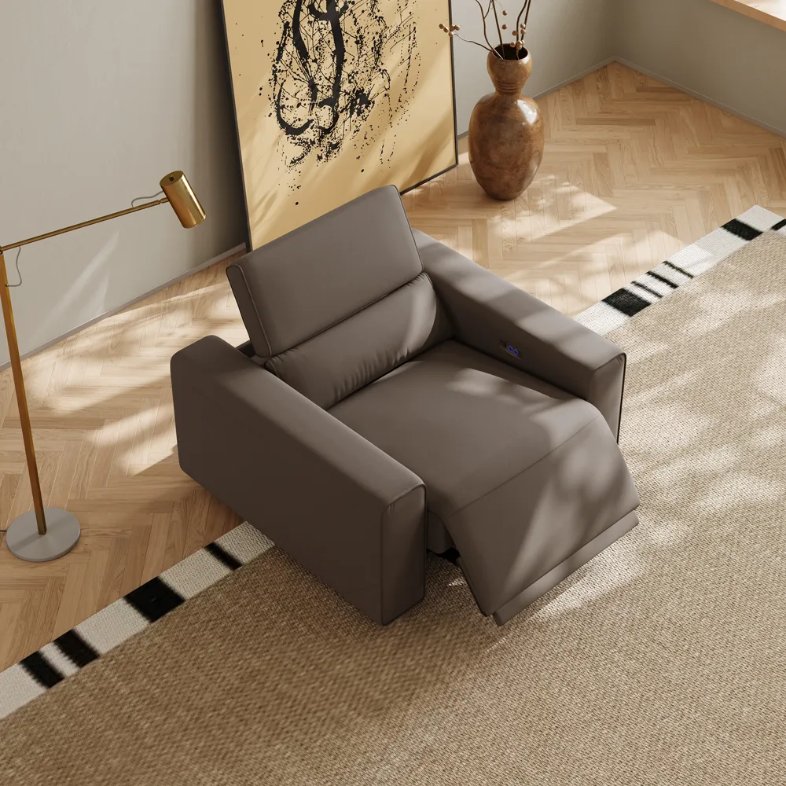
A modern power reclining seat can work in a studio when comfort is the top priority, but scale is important. The Benjamin-Power Recliner combines adjustable support, USB/Type-C charging, and a clean-lined profile, making it useful for movie nights, reading, and relaxing without adding a separate lounge chair.
What Storage Furniture Keeps a Studio Apartment Organized?
Storage is not just about having more boxes. In a studio, storage furniture should reduce visual noise, hide daily clutter, and support your routines. The smartest small studio apartment furniture ideas turn unused areas—under the bed, behind the sofa, above the desk, and inside tables—into practical storage zones.
Compare the best storage furniture for studio apartments
| Furniture Type | Best For | Space-Saving Benefit | Watch Out |
| Storage bed | Bedding, clothes, luggage | Replaces extra dressers | Check drawer clearance |
| Lift-top coffee table | Laptop, meals, remotes | Replaces desk or dining surface | Needs lift-up space |
| Storage ottoman | Throws, games, guest seating | Adds hidden storage and seating | Avoid oversized forms |
| Tall bookcase | Books, decor, baskets | Uses vertical wall space | Keep shelves edited |
| Slim media console | TV, cables, electronics | Hides visual clutter | Measure depth first |
| Entry bench | Shoes, bags, pet items | Creates a landing zone | Keep walkway clear |
Build storage around habits
Think about where clutter actually happens. If mail piles up near the door, add an entry bench or slim console. If chargers, remotes, and snacks always land near the sofa, a coffee table with storage is more useful than a decorative table with no hidden compartments.
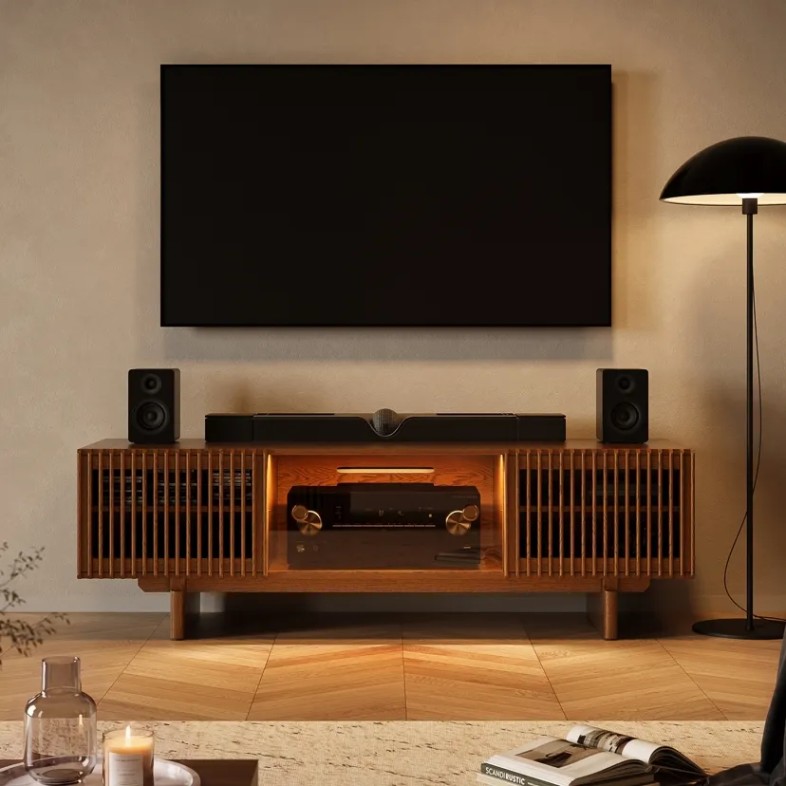
For studios with gaming consoles, speakers, routers, or streaming devices, media storage needs more than a shallow shelf. The Arboren-71” Mid-Century Modern TV Stand with storage uses slatted doors, adjustable storage bays, and rear ventilation to keep equipment accessible while hiding cable clutter, making it better suited to studios with a defined media wall and enough walking clearance.
A small basket under a lift-top table can hold laptop cables, while the drawer handles remotes and coasters. That tiny daily routine—open, drop, close—can make a studio look clean in under two minutes.
What Furniture Makes a Studio Feel Bigger and More Stylish?
A studio feels bigger when the eye can move easily across the floor, walls, and furniture lines. That does not mean every piece must be white or minimal. It means choosing furniture with the right visual weight, proportions, and finish so the apartment feels open instead of crowded.
Choose lighter profiles, not boring pieces
Furniture with visible legs helps expose more floor, which makes a room feel airier. Low-profile sofas, slim arms, rounded tables, and light wood finishes can make a compact room feel more relaxed.
Good visual choices include:
- Warm wood instead of heavy dark finishes everywhere
- Cream, beige, taupe, or light gray upholstery
- Rounded coffee tables and soft-edge storage pieces
- Mirrors across from windows or light sources
- Glass, cane, or open-frame details
- Wall-mounted shelves instead of bulky freestanding cabinets
Keep the palette connected
A studio has fewer walls, so clashing furniture stands out quickly. Repeat two or three materials across the room: walnut wood on the coffee table and media console, cream upholstery on the sofa and bedding, black metal in lighting and shelf brackets.
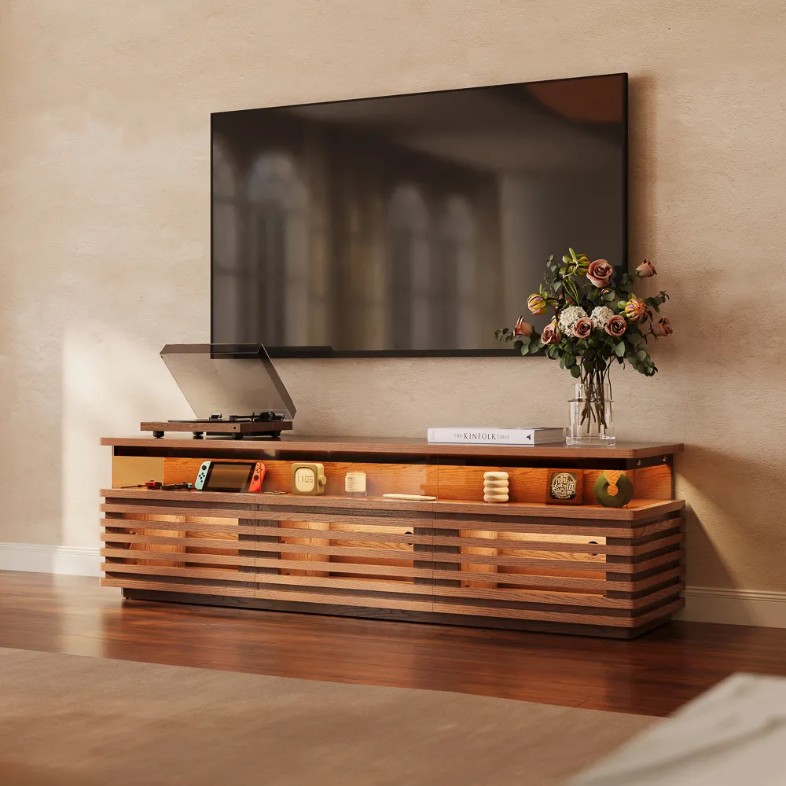
Lighting can also make one open room feel more layered. The Povison Selene-71″ Horizontal Slatted TV Stand with Adjustable LED Lights combines cabinet storage, cable management, remote-friendly slatted doors, and adjustable LED lighting, so the media area feels intentional at night without needing an extra floor lamp or bulky display cabinet.
This does not mean everything must match. It means the bed, sofa, storage, and dining area should feel like one apartment rather than four unrelated corners.
Which Studio Apartment Furniture Ideas Fit Your Lifestyle?
The best layout depends on how you actually live. Someone who works from home needs a different furniture plan than someone who hosts friends every weekend. Instead of copying a perfect online photo, choose studio apartment furniture ideas that match your schedule, habits, and comfort needs.
If you work from home
Prioritize a flexible work surface and supportive seating. A wall-mounted desk, lift-top coffee table, or narrow console desk can work better than a full office desk. Use a rolling file cart or closed cabinet so work items disappear at night.
If you like hosting
Choose movable furniture. Nesting tables, stools that tuck under a counter, a sleeper sofa, and a storage ottoman can help guests sit comfortably without permanently crowding the room.
If you live with a partner
Storage and boundaries matter more. Use a larger wardrobe, under-bed storage, two bedside surfaces if possible, and a rug or curtain to separate the sleep zone from the living zone.
If you rent
Focus on no-drill and reversible choices: freestanding shelves, tension rods, peel-and-stick hooks, lightweight dividers, folding tables, and modular seating. Rental-friendly furniture should move easily and adapt to the next home.
If you are on a budget
Start with the pieces that solve daily friction: a good sleep solution, one comfortable seat, one hidden storage piece, and one flexible surface. Decor can come later.
What Studio Apartment Furniture Mistakes Should You Avoid?
A studio apartment has little room for furniture mistakes, so editing matters as much as shopping. The most common problem is buying for a fantasy lifestyle instead of daily use. A full dining set may look beautiful online, but if you rarely host dinner, it may steal space from storage, movement, or comfort.
Avoid these mistakes:
- Buying too many single-use pieces
- Choosing a sofa that is too deep for the walkway
- Blocking natural light with tall furniture
- Using only open storage, which can look messy
- Placing every piece against the wall without a plan
- Buying a desk before testing whether a lift-top table works
- Forgetting cable management around the sofa and TV
- Choosing furniture by style before measuring
A useful test is simple: walk through your apartment carrying groceries, laundry, or a laptop. If the layout feels annoying during that test, it will feel worse every day.
Studio Apartment Furniture Checklist
Before finalizing your layout, use this checklist to make sure every major function is covered. You do not need every item on the list, but you do need a solution for sleeping, seating, storage, surfaces, and zoning. This is where studio apartment furniture ideas become a real plan instead of a mood board.
- One sleep solution: bed, daybed, sofa bed, or Murphy bed
- One lounge solution: sofa, loveseat, recliner, or accent chair
- One flexible surface: lift-top table, nesting table, or drop-leaf table
- One major storage piece: storage bed, wardrobe, dresser, or console
- One vertical solution: shelves, hooks, or tall bookcase
- One zoning tool: rug, curtain, sofa back, or open shelf
- One visual-expansion tool: mirror, light palette, or raised-leg furniture
Conclusion
A tiny home becomes easier to live in when furniture supports real routines instead of simply filling empty corners. The strongest studio apartment furniture ideas combine multi-functional pieces, clear zones, hidden storage, and a layout that keeps movement comfortable. Start with the biggest items first, measure your walkways, and choose flexible furniture that can shift between sleeping, lounging, working, and dining. With the right balance of function and visual lightness, even a small studio can feel calm, stylish, and fully livable.
FAQ
What is the first piece of furniture to buy for a studio apartment?
Start with the bed or main seating piece because it usually takes the most floor space. Once that anchor is placed, you can decide whether you still have room for a desk, dining table, storage cabinet, or lounge chair without blocking the main walkway.
Is a sofa bed better than a regular bed in a studio?
A sofa bed is useful if you need the room to feel like a living area during the day. A regular bed is better if sleep quality is your top priority. For daily use, choose based on comfort, mattress support, and how often you want to fold it away.
How do I create privacy in a studio apartment?
Use soft, flexible dividers instead of heavy partitions. Curtains, open shelving, plants, folding screens, and sofa placement can separate sleeping and living areas while keeping the space bright. Avoid blocking windows or creating narrow corners that make the studio feel smaller.
Can a large TV stand work in a studio apartment?
Yes, if it replaces several smaller storage pieces and does not block the main walkway. Measure both width and depth, then check whether drawers and doors can open comfortably. A media console works best when it also hides cables, devices, and daily living room clutter.
What is the best dining setup for a studio?
A drop-leaf table, wall-mounted table, counter-height bar, or small round table usually works best. The right choice depends on whether you eat alone, host guests, or also need the surface for work. Avoid large rectangular tables unless dining is a daily priority.


